Gray Versus Fox Squirrels in Tennessee
Many folks new to hunting in Tennessee, or even seasoned hunters focused on bigger game, often look at a squirrel and just see "a squirrel." But here in our beautiful state, we actually have two very distinct and common species of tree squirrels: the gray squirrel and the fox squirrel. Understanding their differences isn't just a matter of identification; it can drastically change how you scout, how you hunt, and ultimately, how successful you are. This guide will walk you through the key distinctions between these charismatic bushytails, their habits, and how you can tailor your approach to bag either of them in Tennessee's diverse woodlands.
Telling Apart Tennessee's Gray and Fox Squirrels
It's easy to assume all squirrels are the same, especially when they're zipping through the canopy or darting across a field edge. However, gray squirrels and fox squirrels have some pretty clear differences that, once you know what to look for, make them quite easy to tell apart. Think of it like recognizing the difference between a whitetail deer and an elk – both are cervids, but their size, shape, and behavior are unmistakable.
Physical Distinctions: Size, Color, and Build
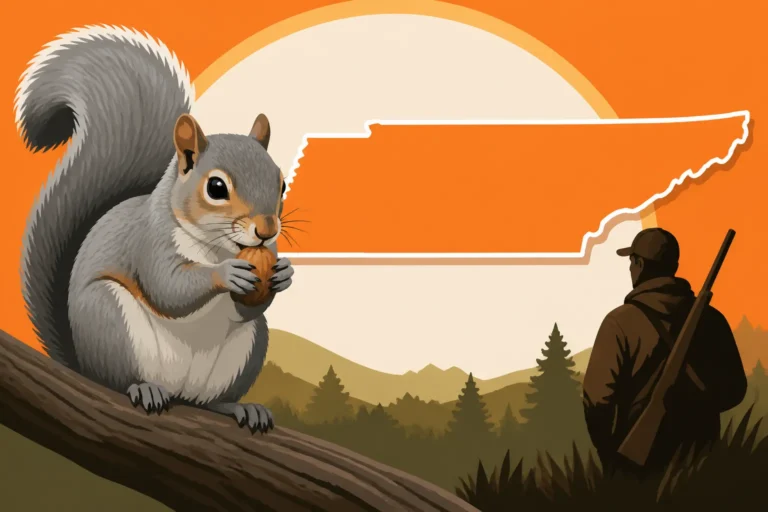
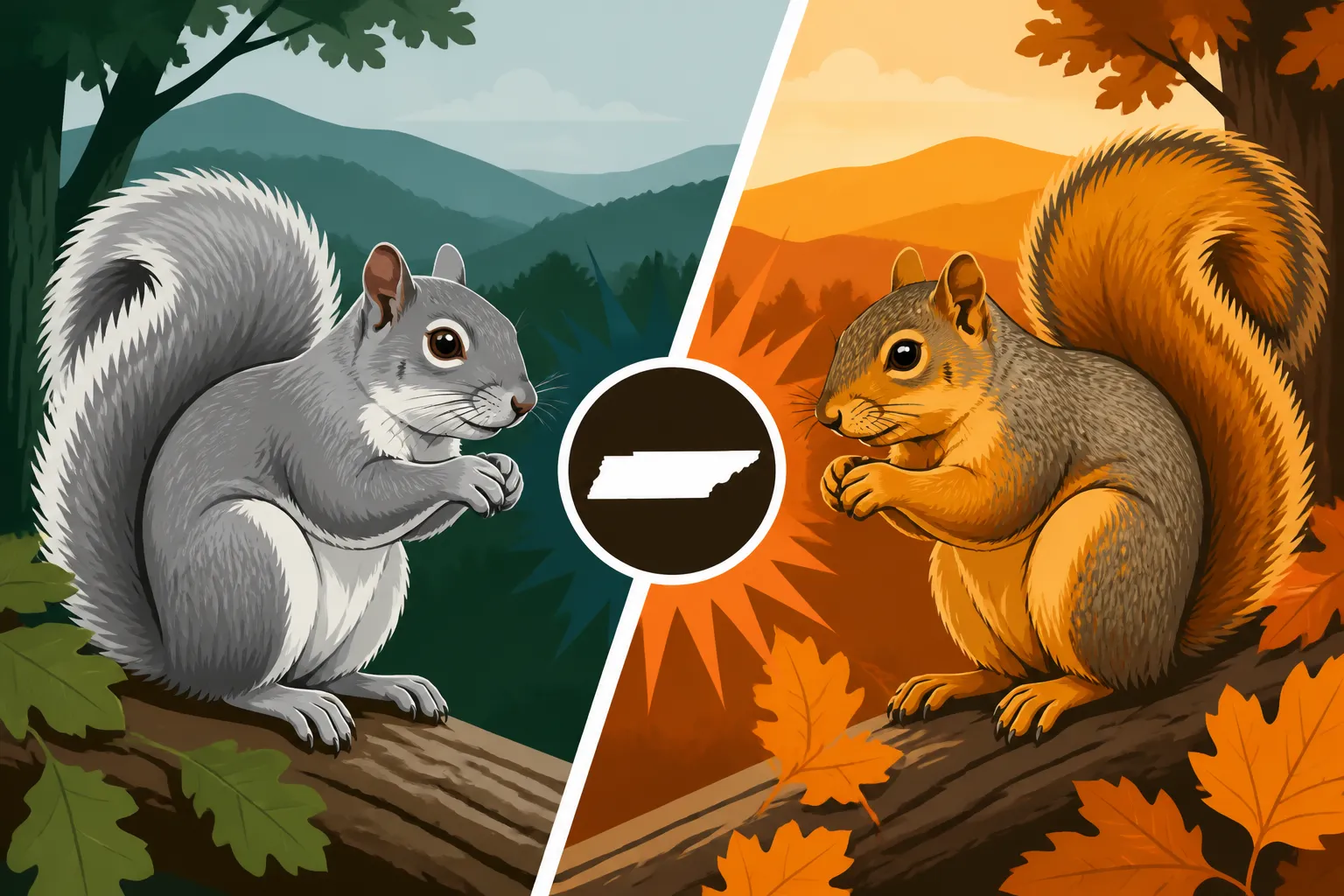
The most immediate and obvious difference between a gray squirrel and a fox squirrel is their size. Gray squirrels are generally smaller, more slender, and quicker in their movements. An average adult gray squirrel might weigh around a pound and have a body length of about 9-10 inches, plus another 8 inches or so for that long, bushy tail. Their fur is typically a grizzled gray on the back, with a whitish belly, and a distinct white fringe around their tail. Sometimes you'll see a slight reddish tinge on their flanks or head, especially in fall and winter.
Fox squirrels, on the other hand, are significantly larger and chunkier. They often weigh twice as much as a gray squirrel, sometimes pushing three pounds, and their body can be 12-15 inches long with a tail adding another 10-15 inches. Their build is more robust, almost stocky. Their coloring is also much more varied than gray squirrels, which can sometimes throw new hunters off. While some fox squirrels can be predominantly grayish with an orange or reddish belly, many have striking reddish-orange fur on their undersides, face, and feet. You might even encounter darker, almost melanistic (black) fox squirrels in certain parts of Tennessee, especially on the Cumberland Plateau. This variability in color is why size and build are often the more reliable identifiers.
Behavioral and Habitat Differences
Beyond looks, these two species behave quite differently, often occupying different niches within the same general habitat. Understanding these behavioral nuances is crucial for locating them.
Gray squirrels are your classic arboreal acrobats. They are masters of the canopy, spending the vast majority of their time in the trees. They're incredibly agile, leaping from limb to limb with astonishing speed and grace. When disturbed, a gray squirrel's first instinct is to run up a tree trunk and quickly put the tree between itself and the perceived threat, often peeking around from the backside. They prefer dense, mature hardwood forests with a good understory, especially oak, hickory, and beech stands where mast crops are plentiful. You'll often find them in groups, chattering loudly amongst themselves, especially in prime feeding areas. If you're walking through a big patch of timber in, say, the Cherokee National Forest Hunting area, and hear a cacophony of barks and chirps overhead, chances are you've stumbled into a gray squirrel convention.
Fox squirrels are a bit more terrestrial. While they can and do climb trees, they spend a considerable amount of time foraging on the ground, especially in more open woods, woodlots, and along field edges. They move with a slower, more deliberate gait than their gray cousins, often pausing to stand upright on their hind legs to survey their surroundings. When spooked, a fox squirrel might run up a tree, but it's just as likely to make a dash across the ground to the nearest cover. They tend to prefer habitats that are a mix of woods and open areas, like the timber patches bordering crop fields in West Tennessee, or even urban parks with scattered mature trees. They're often more solitary than gray squirrels, and their barks are typically deeper and more drawn out. When you're Hunting West Tennessee Bottomland Deer, don't be surprised to see a large, reddish squirrel emerge from a stand of timber and cautiously cross a field edge.
| Feature | Gray Squirrel (Sciurus carolinensis) | Fox Squirrel (Sciurus niger) |
|---|---|---|
| Size | Smaller, slender (approx. 1 lb) | Larger, robust (approx. 2-3 lbs) |
| Color | Grizzled gray back, white belly, white tail fringe | Highly variable: gray with reddish/orange belly, black, or red |
| Primary Habitat | Dense, mature hardwood forests, deep timber | Open woods, woodlots, field edges, scattered trees |
| Movement | Mostly arboreal, very agile, fast through canopy | Often terrestrial, slower, deliberate, climbs when necessary |
| Social Behavior | Often seen in groups, highly vocal | More solitary, quieter |
| Vocalizations | High-pitched chattering, chirps | Deeper, more drawn-out barks |
| Typical Diet Focus | Acorns, hickory nuts, beech nuts, tree buds | Wider variety including agricultural crops, larger nuts |
Prime Hunting Grounds and Tactics for Each Species
Once you can tell the difference between gray and fox squirrels, the next step is to use that knowledge to your advantage in the woods. Both offer fantastic hunting opportunities, providing excellent table fare and a challenging, engaging hunt, especially during the early archery season for deer or when the woods are quiet. Remember to always check the Tennessee Squirrel Season Dates and local regulations before heading out.
Hunting Gray Squirrels: The Canopy Challengers
If you're after gray squirrels, you want to focus on dense, mature hardwood stands. Areas with a strong presence of oak, hickory, and beech trees are key, as these provide their primary food sources. Think about those big timber blocks in East Tennessee or the deeper sections of Hunting the Cumberland Plateau where the canopy is thick and the understory provides plenty of cover.
Tactics for Gray Squirrels:
- Still-Hunting: This is my favorite method for gray squirrels. Move slowly through the woods, pausing frequently (every 20-30 yards) for several minutes to scan the trees. Gray squirrels are incredibly good at freezing when they sense danger. If you move, stop, and wait, they often give themselves away with a twitch of a tail, a rustle of leaves, or a tell-tale chatter. This method works beautifully in the early morning or late afternoon when they are most active. Pay close attention to the tops of trees, looking for the sway of a branch or the distinct shape of a squirrel nest.
- Ambushing: Find a productive area with lots of cuttings (shells of nuts on the ground), or a concentration of mast-producing trees. Set up against a wide tree for cover and patiently wait. This is particularly effective near water sources or along natural funnels where squirrels might travel. You'll often see them moving from tree to tree, then dropping to the ground for a quick snack.
- Squirrel Dogs: If you're really serious about high-volume gray squirrel hunting, a good squirrel dog is invaluable. They'll locate and bark at squirrels, keeping them "treed" and focused on the dog, giving you an easier shot. This is especially fun and effective in areas with thick canopy.
- Calling: While not as common as for turkeys or deer, some hunters use squirrel calls (barking or chattering calls) to get a gray squirrel to reveal its position or even come closer. It's an advanced tactic, but can add another layer of challenge.
Remember, gray squirrels are fast! Shots can be tricky as they dart around branches. A .22 rifle or a small-gauge shotgun (like a .410 or 20 gauge) with fine shot are excellent choices. Headshots with a .22 are challenging but rewarding, preserving more meat.
Hunting Fox Squirrels: The Ground Gamblers
For fox squirrels, you'll shift your focus to more open timber, woodlots, and areas bordering agricultural fields. The mixed habitats found in Middle and West Tennessee, like the edge of a standing cornfield or a fencerow bordering a small woodlot, are ideal. Hunting West Tennessee River Bottoms can be great for fox squirrels too, especially where the timber isn't too dense and there are open areas.
Tactics for Fox Squirrels:
- Stalking: Since fox squirrels spend more time on the ground and are less prone to frantic, high-speed tree acrobatics, stalking can be very effective. Move slowly and deliberately, scanning ahead and to the sides. Look for movement on the forest floor, or the distinct shape of a fox squirrel sitting on a limb. Their larger size makes them a bit easier to spot from a distance.
- Field Edge Ambush: Many fox squirrels will venture out into fields of corn, soybeans, or even winter wheat to feed. Find a good vantage point overlooking a field edge next to some timber, especially in the morning or late afternoon. You might use a ground blind for concealment if you're serious.
- Spot and Stalk: In more open timber with good visibility, you can spot a fox squirrel from a distance, then carefully plan your approach to get within range. This works well with binoculars, especially if you're using a brand like GoHunt to scout areas beforehand to identify open timber and field edges from aerial maps.
- Still-Hunting (Patience is Key): While still-hunting for fox squirrels, you'll want to be even more patient. They might not react as quickly as a gray squirrel, often taking their time to assess a threat. This slower pace allows you to cover ground more thoroughly and might even allow a second shot if the first doesn't connect cleanly.
Fox squirrels present a larger target, making them a bit more forgiving for less experienced hunters or those using a .22 rifle. A .22 or a 20-gauge shotgun are excellent choices, depending on your preferred hunting style and range.
Preparing for a Successful Tennessee Squirrel Hunt
Regardless of which squirrel species you're targeting, some general preparations will set you up for success and ensure you're hunting legally and safely in Tennessee.
Essential Gear and Safety
Your gear for squirrel hunting is relatively minimal, which is part of its charm. A good .22 rifle or a shotgun, appropriate ammunition, and a pair of binoculars are really all you need for the basics. However, a few other items can greatly enhance your experience.
- Optics: A good pair of 8x or 10x binoculars can make a huge difference in spotting squirrels, especially if they're holding still. A small rangefinder can also be useful for confirming distances if you're shooting a .22.
- Clothing: Dress in quiet, comfortable layers. Squirrels have excellent hearing, so rustly fabrics will hinder your stalk. Camouflage isn't strictly necessary but can help break up your outline. Depending on the season, you might need Clothing for a Tennessee Late Season or lighter gear for early fall. Don't forget your hunter orange if required during gun deer season overlap. Check the Tennessee Small Game Season Rules for specifics.
- Game Bag/Vest: A small game bag or a hunting vest with a large pouch will be invaluable for carrying your harvest.
- Navigation: While not often "deep wilderness" hunting, it's always smart to have a map or a GPS app (like those available through GoHunt) on your phone to know your location, especially on public lands like a Tennessee Wildlife Management Areas or parts of the Land Between the Lakes Hunting.
- First Aid Kit: Always a good idea to have one, even for short hunts.
- Bug Spray: Tennessee woods can be buggy, especially in the early season.
Safety is paramount. Always know your target and what is beyond it, especially when shooting into trees. Be mindful of others in the woods, particularly during overlapping seasons like How Tennessee's Deer Season Runs Archery to January.
Licensing and Regulations
Before you even step foot in the woods, make sure you're properly licensed. Tennessee requires all hunters to possess a valid hunting license. You can easily purchase these online through the Go Outdoors Tennessee website or at authorized vendors.
Here's a quick rundown of what you'll typically need:
- Basic Hunting License: This is your fundamental license to hunt small game. You can find information on Tennessee Hunting Licenses and What They Cost.
- Migratory Bird Certification (HIP): While squirrels aren't migratory birds, if you plan to hunt anything else migratory (like dove or ducks) on the same outing, you'll need this.
- Big Game Permit (if applicable): If you're squirrel hunting during an open big game season and might have opportunities for deer, make sure you have the appropriate permits.
- WMA Permit (if applicable): If you're hunting on a Wildlife Management Area, you might need an additional WMA permit. Always check the specific WMA regulations, as they can vary.
If you're a younger hunter, or new to the sport, make sure to understand Tennessee Hunter Education Requirements. It's a fantastic way to learn about safety, regulations, and ethical hunting practices, ensuring you have a positive and responsible experience afield.
Squirrel hunting is a cherished tradition for many Tennesseans, offering a great way to introduce new hunters to the outdoors, hone your shooting skills, and put some delicious meat on the table. By understanding the distinct characteristics and behaviors of gray and fox squirrels, you'll be well on your way to a successful and enjoyable hunt.
Disclaimer
This article is for general informational purposes only and does not constitute professional advice. Laws, prices and regulations vary by location and change over time. Consult a qualified professional for guidance on your specific situation.