Tennessee Cottontail Population Trend
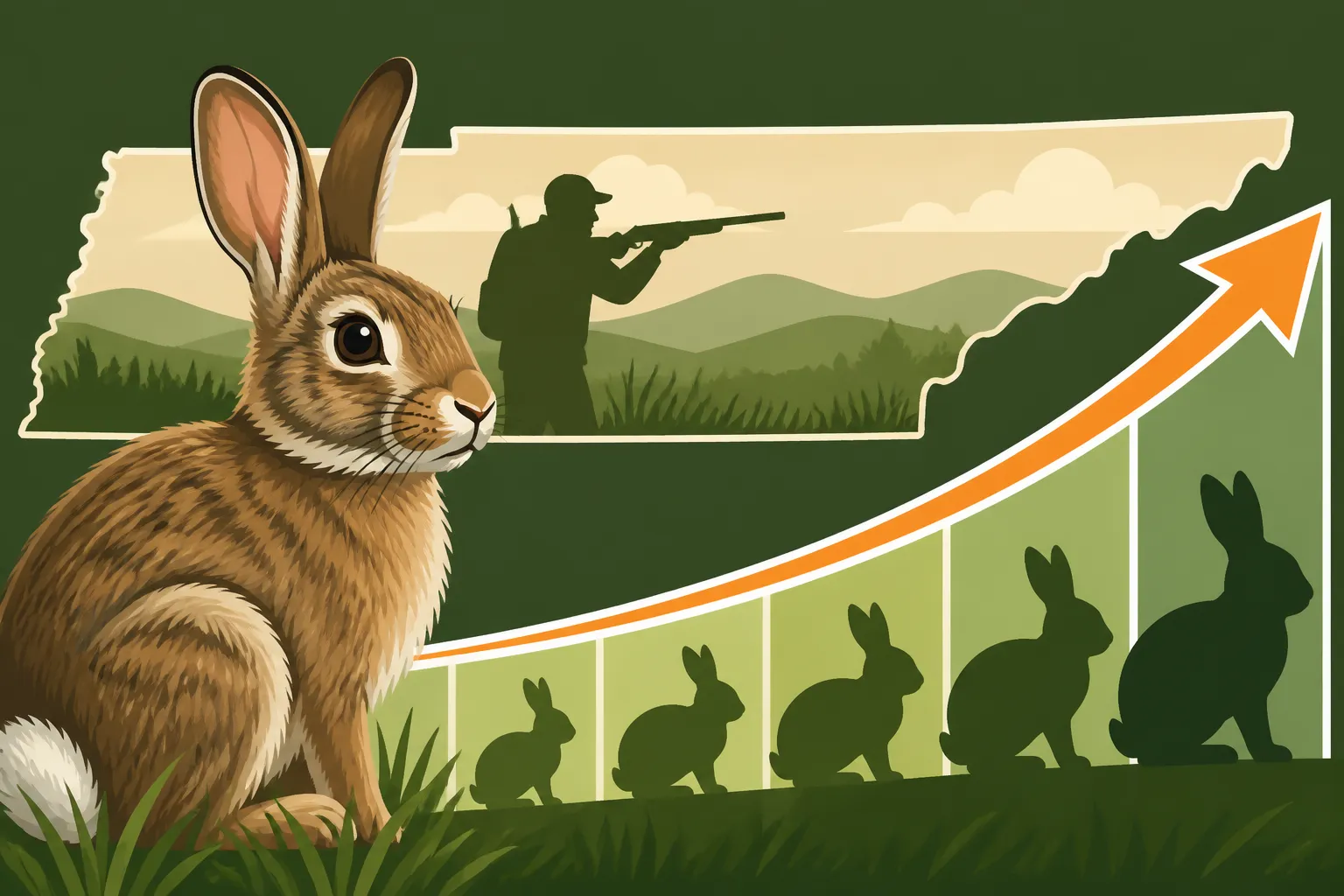
If you've spent any time chasing cottontails across a frost-covered Tennessee field or through a thicket of briars, you've likely noticed that some years feel more bountiful than others. It's frustrating when you recall seasons past where every brush pile held a rabbit, only to find quieter woods now. This guide aims to demystify the fluctuating fortunes of the Tennessee cottontail population, explaining the trends, challenges, and what these mean for hunters and conservation efforts in our state.
Understanding the Historical Arc of Tennessee Cottontail Populations
Rabbit hunting has long been a cherished tradition in Tennessee, a rite of passage for many young hunters and a social event for seasoned outdoorsmen. The cottontail rabbit, with its quick bursts of speed and elusive nature, has always provided a challenging and rewarding pursuit. However, the populations we see today are certainly not what our grandparents experienced.
A Look Back at Abundance and Early Changes
For generations, cottontails thrived across Tennessee, finding ample habitat in the patchwork of small farms, hedgerows, and mixed woodlands that characterized much of the state. These were simpler times, with less intensive agriculture and more diverse landscapes providing the "edge" habitat that rabbits adore. Think of the old farmsteads where neglected apple orchards bordered overgrown fencerows, leading into a field of corn stubble — prime rabbit country. Hunters often spoke of flushing dozens of rabbits in a single outing, making for lively hunts with their beagles. This abundance was, in part, due to the very nature of rabbit biology; they're prolific breeders, capable of rebounding quickly under ideal conditions.
As agricultural practices began to shift in the mid-20th century, with larger fields, fewer fencerows, and more monoculture crops, the subtle changes started to impact these small game species. While still plentiful, the sheer numbers began to see localized dips. It wasn't a sudden crash, but a gradual erosion of optimal habitat that went largely unnoticed by many, as there were still plenty of rabbits to be found if you knew where to look. Hunters just had to work a little harder, and the idea of "just walking out the back door" to a limit of rabbits became more of a nostalgic memory than a common reality for many.
The Impact of Modern Land Use and Urbanization
Fast forward to today, and the landscape has changed dramatically. The sprawling growth of our cities and towns has swallowed up vast tracts of rural land, replacing prime rabbit habitat with subdivisions, shopping centers, and industrial parks. Even in our more rural areas, much of the remaining farmland has become highly industrialized, leaving little room for the brushy cover, diverse forage, and protective escape routes that cottontails need to survive.
Imagine an old family farm that's been in your family for generations. Where once there was a mix of pastures, small grain fields, and thickets, now a single large soybean field stretches as far as the eye can see, bordered by clean fencerows and perhaps a small woodlot. This "clean farming" approach, while efficient for agriculture, drastically reduces the carrying capacity for rabbits. They simply don't have the safe zones to hide from predators, raise young, or find food consistently. The loss of these crucial transitional habitats—the "edge"—is arguably the single biggest factor contributing to the shifting Tennessee Cottontail Population Trend.
Current Challenges Impacting Rabbit Numbers in the Volunteer State
While rabbits are notoriously resilient, they face a gauntlet of challenges in modern Tennessee. These aren't always immediately obvious to the casual observer, but for those of us who spend time in the woods and fields, the signs can be unsettling.
Habitat Fragmentation and Loss
The continued fragmentation and outright loss of suitable habitat stand as the primary hurdles for Tennessee's cottontails. It's not just about losing acres, but losing quality acres. Rabbits require a diverse mosaic of short grasses for feeding, dense brambles and brush for escape cover, and woody thickets for nesting and winter refuge. When these elements are separated by roads, large fields, or developed areas, the rabbits become isolated in small, vulnerable pockets.
Consider a small woodlot surrounded by suburban homes or vast agricultural fields. Rabbits in that woodlot might have decent cover, but their ability to disperse and find new mates or forage can be severely limited. They become susceptible to "island effects," where genetics can suffer, and populations are more easily wiped out by localized events like disease outbreaks or increased predation. This fragmentation also means that a rabbit often has to expose itself for longer periods to cross open ground, making it an easy target for predators. Even in areas where habitat appears to exist, if it's not contiguous or diverse enough, it simply won't sustain robust rabbit numbers. Tools like GoHunt can help you visualize these changes in land use over time, allowing hunters to see how critical habitat has shifted.
Predation, Disease, and Environmental Factors
Cottontails are a vital food source for a wide array of predators, and a healthy predator population can keep rabbit numbers in check, especially when habitat is scarce. Tennessee is home to a robust population of coyotes, foxes, bobcats, hawks, owls, and even domestic dogs and cats, all of which readily prey on rabbits. When rabbits are forced into smaller, more exposed habitats, their vulnerability to these predators dramatically increases. A well-fed hawk or coyote doesn't have to work as hard to find a meal when rabbits are concentrated in a few small thickets.
Beyond predation, diseases can sweep through rabbit populations, sometimes with devastating effects. Tularemia, for example, is a bacterial disease that can affect rabbits and humans. While not always widespread, localized outbreaks can significantly reduce populations. Weather patterns also play a critical role. Extremely wet spring conditions can lead to high fawn mortality in deer, and similarly, cold, wet springs can devastate young rabbit litters. Conversely, harsh winters with prolonged snow cover can make it difficult for rabbits to find food and escape predators, leading to increased mortality. The combination of these natural pressures, when coupled with habitat decline, creates a compounding effect that puts stress on rabbit populations. This is why understanding Tennessee Squirrel and Rabbit Populations is so crucial, as their survival often hinges on similar habitat factors.
| Factor | Impact on Cottontail Populations | Severity (Current Tennessee Context) |
|---|---|---|
| Habitat Loss | Reduction in dense cover, diverse forage, and safe nesting sites | High |
| Habitat Fragmentation | Isolation of populations, increased predation risk | High |
| Predation | Natural regulation; amplified by poor cover | Moderate to High |
| Disease (e.g., Tularemia) | Localized outbreaks can cause significant mortality | Low to Moderate |
| Weather Extremes | Cold/wet springs, harsh winters affect reproduction/survival | Moderate |
| Pesticide Use | Reduction in insect food sources for young, direct poisoning | Low to Moderate |
| Intensive Agriculture | Monoculture, clean farming reduces diverse habitat | High |
Regional Differences in Tennessee's Cottontail Distribution and Hunting Opportunities
Tennessee is a diverse state, from the rugged mountains in the east to the rolling hills of the Highland Rim and the flat, fertile delta of West Tennessee. This geographical variety means that rabbit populations and hunting opportunities aren't uniform across the state.
East Tennessee: Mountains and Mixed Habitats
In East Tennessee, especially in areas bordering the Appalachian Mountains or within the Cherokee National Forest Hunting region, cottontail populations can be more localized and tied to specific habitat types. You'll often find them in old clear-cuts, along power line rights-of-way that provide brushy edges, or around abandoned homesteads within larger timber blocks. The steep terrain and dense forests don't always offer the ideal mix of open foraging ground and thick cover that rabbits prefer.
However, pockets of excellent habitat exist. Agricultural valleys and river bottoms can be strongholds, offering a mix of farm fields and dense riparian corridors. Hunters in these areas often find success focusing on the transition zones where timber meets fields, or exploring the edges of private land parcels. Finding private land permission can be key here, as public land might be less productive for rabbits unless it's actively managed for early successional habitat.
Middle Tennessee: Rolling Hills and Agricultural Shifts
Middle Tennessee, with its rolling hills, limestone glades, and a mix of agriculture and burgeoning suburban development, presents a varied picture. In areas still dominated by smaller farms and diverse agricultural practices, rabbit numbers can be quite respectable. Think of counties where cattle grazing maintains open pastures, bordered by fencerows and small woodlots. These areas provide the mosaic habitat that rabbits crave.
However, as you move closer to rapidly developing urban centers like Nashville or Murfreesboro, the story changes. Here, habitat is shrinking rapidly, and rabbit hunting opportunities are becoming increasingly scarce. Hunters often lament the loss of familiar rabbit hunting grounds to new housing developments or large-scale clean farming operations. For many in Middle Tennessee, finding good rabbit hunting means driving further out into less developed areas or securing hard-to-get private land access. This is where researching Hunting Small Private Tracts in Tennessee becomes vital.
West Tennessee: Delta Farmland and River Bottoms
West Tennessee historically boasted some of the state's best rabbit hunting, particularly in the fertile delta regions and around the expansive river bottoms like the Mississippi, Tennessee, and Hatchie. The rich soil supports dense vegetation, and the presence of bottomland hardwood forests interspersed with agricultural fields created ideal conditions. Hunting West Tennessee Bottomland Deer might come to mind, but these areas are equally vital for small game.
While still strong in many rural pockets, even West Tennessee has seen changes. Large-scale row cropping and the conversion of marginal lands have impacted some areas. However, many state and federal public lands, like those around Reelfoot Lake Waterfowl Access or the Hatchie National Wildlife Refuge, continue to manage for diverse habitats that benefit rabbits and other small game. Hunters here often focus on drainage ditches, levee systems, cutover timber, and the edges of large agricultural fields for the best success. These areas still offer the chance for traditional beagle hunts, where the dogs can truly shine in pushing rabbits from thick cover.
What Hunters Can Do to Support Healthy Rabbit Populations
The good news is that hunters aren't just passive observers of these population trends. There are concrete steps we can take, both individually and collectively, to help ensure healthy cottontail populations for future generations.
Habitat Improvement on Private Lands
For those who own land or have access to private property, creating and maintaining rabbit habitat is one of the most impactful things you can do. It doesn't require a massive budget or heavy equipment. Simple actions like leaving brush piles, planting native thorny shrubs (think blackberry, elderberry, or even wild plum), and allowing fencerows to grow thick can make a huge difference. Consider establishing small patches of annual food plots specifically designed for rabbits, such as clover, winter wheat, or even brassicas, near dense cover.
The key is to think "edge and cover." Where do fields meet timber? What areas are currently too open or too dense? By breaking up large, homogeneous areas and creating diverse structures, you provide both food and protection. Even small efforts, when multiplied across many landowners, can create crucial habitat corridors. If you're working with a landowner, perhaps suggest leaving some standing crops unharvested along field edges, or delaying mowing of certain areas until after the nesting season. For personalized advice, resources like the TWRA website or local conservation groups can be invaluable, and GoHunt's mapping features can help identify potential habitat improvement areas.
Responsible Hunting Practices and Advocacy
As hunters, our ethics and practices play a significant role. Adhering to Tennessee Small Game Season Rules and bag limits is paramount. While rabbit populations are generally resilient to hunting pressure, responsible harvesting ensures a healthy breeding stock. Participating in hunter education courses, even as an adult, reinforces these ethical considerations. Tennessee Hunter Education Requirements exist to ensure safe and responsible hunting for all.
Beyond the hunt itself, we can become advocates for habitat conservation. Support organizations that work to restore and manage wildlife habitat, whether through donations, volunteering, or simply spreading awareness. Engage with local government and land-use planning initiatives to voice the importance of maintaining natural areas and wildlife corridors. The more we speak up for small game and the habitats they depend on, the more likely these species will thrive. Even simple conversations with non-hunting friends and neighbors about the value of brush piles or diverse landscapes can sow seeds of conservation. It's about being an active participant in conservation, not just a consumer of the resource.
Utilizing Resources for Better Scouting and Planning
In today's world, technology can be a powerful ally for hunters. Tools like the GoHunt app or other mapping programs offer invaluable resources for scouting and planning your rabbit hunts. You can analyze aerial imagery to identify prime habitat – thickets, brushy fencerows, old field edges, and overgrown logging roads – even before you set foot in the woods. This can help you find areas that are likely to hold rabbits, especially in regions where habitat is more fragmented.
Moreover, these resources can help you understand public land boundaries, access points, and even show you terrain features that might concentrate rabbits, like creek bottoms or small draws. Combining this digital scouting with traditional boots-on-the-ground exploration is the most effective way to locate productive areas. Always remember that rabbit hunting is dynamic; populations can shift year to year, and good scouts are always adapting their approach based on current conditions and available sign. This continuous learning and adaptation are key to successful rabbit hunting in Tennessee, no matter the Tennessee Cottontail Population Trend.
Disclaimer
This article is for general informational purposes only and does not constitute professional advice. Laws, prices and regulations vary by location and change over time. Consult a qualified professional for guidance on your specific situation.