How Tennessee Quail Numbers Fell Since the 1960s
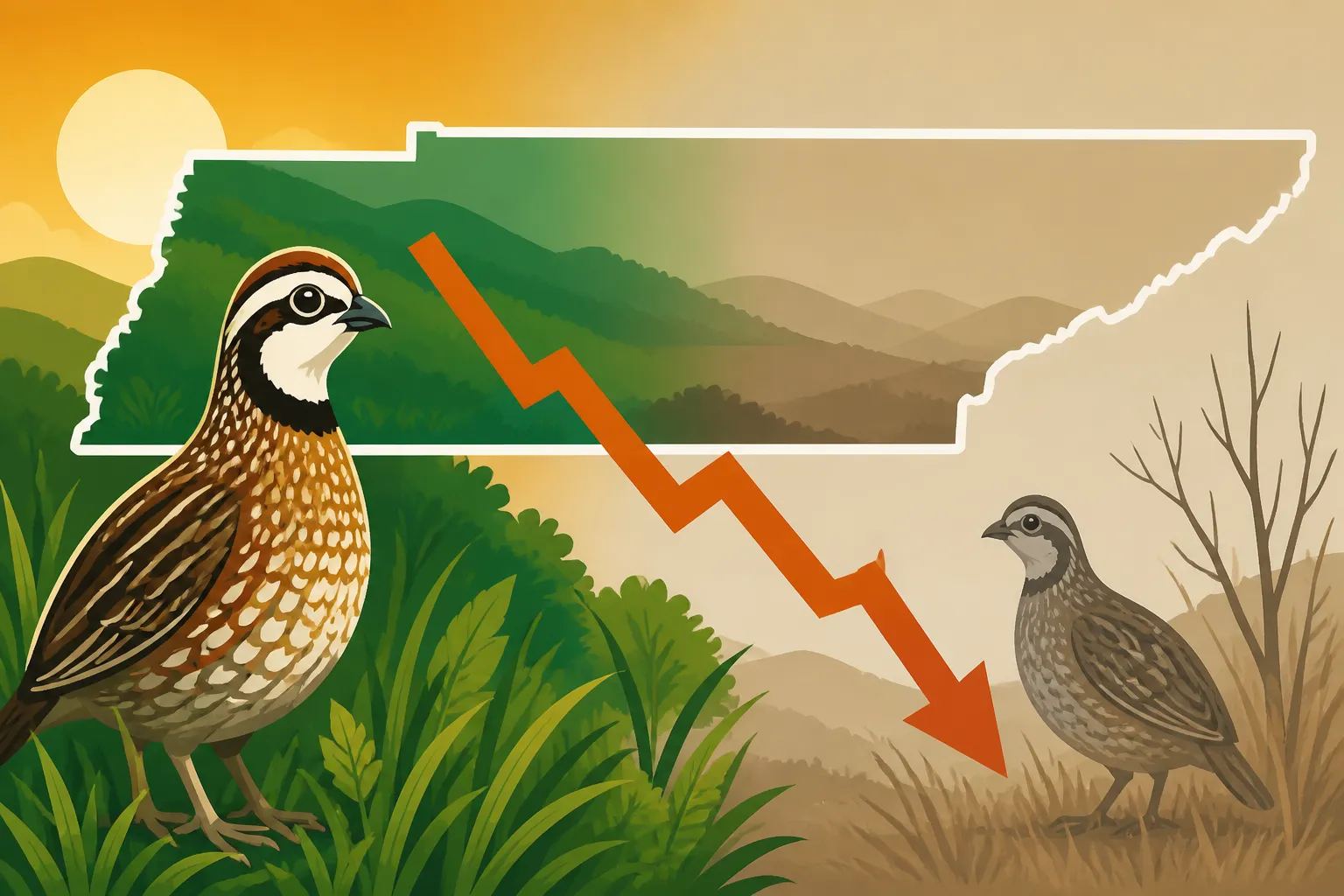
If you've spent any time at all around older hunters in Tennessee, you've almost certainly heard the stories: "Back in my day," they'll say, "you couldn't walk across a field without kicking up a dozen coveys of bobwhites." It’s a nostalgic lament, often followed by a sigh and a shake of the head, as they describe a quail hunting experience that feels utterly alien to those of us hunting today. For many of us, even finding a single covey can be a badge of honor. This guide will explore the profound and often heartbreaking reasons why Tennessee's bobwhite quail populations, once so abundant, have suffered such a dramatic decline since the mid-20th century, and what that means for the future of this iconic game bird.
The Golden Era: Quail Hunting Before the Decline
To truly understand the depth of the quail decline, we first have to paint a picture of what it was like when bobwhite populations were booming. The 1950s and 60s weren't just a time of widespread quail; they were a golden age, woven into the very fabric of rural life across Tennessee.
Widespread Farm Practices and Abundant Habitat
Imagine Tennessee's landscape in the post-war era. It was a mosaic of smaller, diversified farms. These weren't the massive monoculture operations we often see today. Instead, you'd find fields of corn, soybeans, and wheat interspersed with pastures, hayfields, and woodlots. Critically, these farms were often less "clean" than modern operations. They had brushy fence rows, weedy field borders, odd corners that weren't intensely cultivated, and plenty of fallow ground left to regenerate.
These seemingly haphazard features were a bobwhite paradise. Quail thrive on "edge habitat"—where different types of cover meet. The brushy fence rows provided crucial escape cover from predators and harsh weather, while also serving as travel corridors. The weedy field edges offered a buffet of seeds and insects, essential for both adult birds and growing chicks. Small woodlots provided roosting cover. This fragmented, diverse agricultural landscape naturally created an incredible amount of this vital edge habitat. Farmers back then didn't necessarily manage for quail, but their farming methods inadvertently created the perfect conditions for them to flourish, almost as a byproduct of their way of life.
A Culture Built Around Coveys
Quail hunting wasn't just a pastime; it was an integral part of community life. Sundays might involve going to church and then heading out to the back forty with a couple of bird dogs. Kids grew up knowing the distinctive "bob-white!" whistle and understood the thrill of a covey rise. Every rural family seemed to have a pointer or a setter, and tales of incredible flushes were common around dinner tables.
Hunters could often walk out their back door and find birds. There wasn't a need for extensive travel or specialized equipment beyond a good shotgun and a well-trained dog. It was an accessible sport for many, fostering a deep connection to the land and its wildlife. This culture also meant that local knowledge about covey locations was passed down through generations, making hunting a more predictable and often more social affair. It truly was a different world, one where the sight and sound of bobwhite quail were simply a given in the Tennessee countryside.
The Perfect Storm: Why Quail Habitat Vanished
The decline of the bobwhite quail isn't a single event but a cumulative result of numerous changes that have reshaped Tennessee's landscape. While many factors play a role, the overwhelming consensus points to one primary culprit: the massive loss and fragmentation of suitable habitat.
The Transformation of Agriculture
Perhaps the most significant blow to quail populations came from the sweeping changes in agricultural practices starting in the latter half of the 20th century. What was once a patchwork of small, diverse farms began consolidating into larger, more specialized operations. This shift brought with it a host of practices detrimental to quail:
- Bigger Fields, Fewer Edges: Modern farming prioritizes efficiency, which means larger fields and less "waste" space. Brushy fence rows, once vital, were often cleared to accommodate larger equipment like tractors and combines. This eliminated linear cover and greatly reduced the crucial edge habitat where quail spend most of their lives. Imagine a farmer needing to increase yield to stay competitive; every foot of unplanted ground felt like a lost opportunity. This led to the bulldozing of old hedgerows and tree lines that had been quail strongholds for decades.
- Monoculture and Chemical Use: The move towards growing single crops (monoculture) over vast areas, often corn or soybeans, drastically reduced the diversity of food sources and cover available to quail. Additionally, the widespread adoption of herbicides eliminated the very weeds and native plants that provided essential seeds and insect forage for quail, especially chicks. Insecticides, while targeting crop pests, also inadvertently reduced the insect populations that young quail rely on for protein during their critical early weeks. It was a double whammy: less food and less bug protein.
- "Clean Farming": The aesthetic of a perfectly clean field, tilled right up to the edge, became the norm. While efficient for crop production, it left no room for the natural vegetation that quail need to survive, nest, and hide. The ground was either bare earth, newly emerging crop, or mature crop – none of which offered the layered cover or diverse food sources that quail require year-round. A hunter using a tool like GoHunt to scout traditional farm country today would see vast, unbroken fields where fifty years ago there would have been dozens of small pockets of quail cover.
Development and Fragmentation of the Landscape
Beyond agriculture, Tennessee's growing population and subsequent development also ate away at crucial quail habitat. As towns expanded and suburbs sprawled, more and more rural land was converted into housing developments, shopping centers, roads, and industrial parks.
- Loss of Open Space: Every new subdivision meant acres of open fields, brush, and light timber were paved over or built upon. This directly removed habitat and further fragmented the remaining parcels, isolating coveys and making them more vulnerable. Think of a tract of prime quail habitat being sliced in half by a new highway or divided into 5-acre lots, each with a manicured lawn and no cover. These small, isolated pockets of habitat simply cannot sustain viable quail populations over the long term.
- Increased Human Activity: Even where development didn't completely eliminate habitat, increased human activity, traffic, and domestic predators (like feral cats and dogs) put additional pressure on quail. A covey that might have once thrived undisturbed on a quiet rural tract now faces constant disturbance, making it harder to nest successfully or evade predators. It's not just the physical loss of land, but the change in the character of the land.
Forest Succession and the Loss of Early Successional Habitat
Tennessee is a heavily forested state, and while forests are important for many species, bobwhite quail prefer early successional habitat – areas dominated by young plants, shrubs, and grasses, rather than mature trees. This type of habitat is often a result of disturbances like logging, fire, or old fields regenerating.
- Aging Forests: Over decades, many abandoned fields and pastures that once supported quail have grown into mature timber, losing their open, brushy character. Forest fire suppression, while beneficial for protecting structures, also prevented the natural disturbances that would reset forest stands to an early successional stage. This means large tracts of land became less suitable for quail over time as the canopy closed and the understory thinned out.
- Lack of Active Management: On many public and private lands, there hasn't been consistent, widespread management specifically for early successional habitat. Techniques like prescribed burning, disking, or selective timber harvest are crucial for creating and maintaining the brushy, weedy conditions that quail need. Without this active management, nature simply takes its course, often favoring mature timber over the dense, low cover preferred by bobwhites. This is a challenge for agencies trying to balance the needs of multiple species, though many Tennessee Wildlife Management Areas are actively working on small game habitat.
Beyond Habitat: Other Pressures on Tennessee's Quail
While habitat loss is the undeniable heavyweight champion of quail decline, it's not the only factor at play. Other pressures, often exacerbated by a lack of good habitat, have chipped away at bobwhite numbers, making their recovery even more challenging.
Increased Predation Pressure
In a healthy ecosystem with abundant, high-quality habitat, predation is a natural and manageable part of life for quail. However, when habitat becomes scarce and fragmented, quail become far more vulnerable.
- Habitat Exacerbates Predation: Imagine a covey trying to hide in a thin strip of cover next to a vast, open field. They're a much easier target for predators than a covey nestled deep within a sprawling, diverse habitat. Critically, the types of predators have changed too. Raccoon, opossum, and skunk populations, which are notorious nest predators, thrive in fragmented landscapes and often benefit from human proximity. Likewise, coyote populations have expanded across Tennessee, and while they might not exclusively target quail, they certainly contribute to overall pressure. Tennessee Coyote Range and Density shows how widespread these predators have become.
- Avian Predators: Birds of prey like hawks and owls are also efficient quail hunters. While these raptors are a natural part of the environment, a quail that can't quickly dive into dense, protective cover is an easy meal. In a landscape devoid of thickets and brush, their chances of survival plummet. It’s not necessarily that there are more predators, but that quail have fewer places to hide effectively from them.
The Silent Threat of Pesticides
As mentioned earlier, the rise of modern agriculture brought with it a heavy reliance on chemical pesticides, herbicides, and insecticides. While designed to protect crops, these chemicals have had unintended consequences for quail.
- Impact on Food Sources: Herbicides wipe out the broadleaf weeds that produce crucial seeds for adult quail, especially during the lean winter months. Insecticides drastically reduce the insect populations that newly hatched quail chicks absolutely depend on for protein to grow and develop. A quail chick needs a diet rich in insects for its first few weeks of life; without them, survival rates plummet. It’s a silent killer, as the absence of food isn’t as obvious as a predator strike.
- Direct and Indirect Poisoning: While less common for quail, direct ingestion of pesticides or consuming contaminated insects can also weaken birds, make them more susceptible to disease, or even be lethal. The cumulative effect of these chemical impacts on the food chain is a significant stressor on quail populations, making it harder for them to thrive even when some cover is present.
Disease, Weather, and Population Dynamics
Like any wildlife population, quail are also susceptible to disease and the vagaries of weather, both of which can have a more pronounced impact when populations are already stressed by habitat loss.
- Disease Vulnerability: When populations are small and isolated, any disease outbreak can be devastating, wiping out an entire covey or more before it has a chance to reproduce. While specific quail diseases aren't as widely publicized as, say, Chronic Wasting Disease in Tennessee Deer, they are still a factor. Stress from poor nutrition due to habitat loss can also make birds more susceptible to illness.
- Weather Extremes: Severe winters with prolonged snow cover can make it impossible for quail to find food and escape freezing temperatures, especially without dense, insulating cover. Conversely, unusually wet springs can lead to higher chick mortality, as young birds are vulnerable to chilling and disease in damp conditions. Droughts can also impact food availability. In a robust population with excellent habitat, some coveys might be hit by bad weather, but the overall population can absorb the losses. In a fragile population, such events can be catastrophic.
- Population Bottlenecks: When quail numbers drop drastically, they can enter a "population bottleneck" where genetic diversity is reduced. This can make them less adaptable to environmental changes and more vulnerable to future challenges, making recovery harder even if habitat is restored.
| Factor | Impact in 1960s | Impact Today |
|---|---|---|
| Agricultural Practices | Small, diverse farms; brushy fencerows, fallow land; limited chemicals. | Large, monoculture farms; "clean" edges; heavy chemical use. |
| Habitat Availability | Abundant edge habitat; diverse food sources; widespread cover. | Fragmented, isolated pockets; reduced food diversity; limited escape cover. |
| Predation Pressure | Natural levels; quail had ample cover for escape. | Higher effective pressure due to reduced cover; more adaptable predators. |
| Pesticide Use | Minimal impact on food chain. | Significant reduction in insect and seed availability. |
| Forest Cover | More early successional areas from past logging/farming. | More mature forests; less active management for young growth. |
A Path Forward: Restoring Tennessee's Quail
The story of the bobwhite quail's decline is undeniably a tough one, but it's not without hope. Across Tennessee, dedicated conservationists, landowners, and hunters are working tirelessly to bring this iconic bird back. It's a long road, but understanding the past is the first step toward a brighter future.
Conservation Initiatives and Landowner Programs
The Tennessee Wildlife Resources Agency (TWRA) and various conservation organizations are at the forefront of quail recovery efforts. They recognize that the key is habitat, habitat, habitat.
- TWRA Programs: The TWRA has programs aimed at restoring and managing habitat specifically for bobwhites. This often involves prescribed burning, planting native grasses and wildflowers, disking fields to promote "weedy" growth, and creating brush piles. They also work with landowners to offer technical assistance and even financial incentives to implement these practices on private land, which is crucial given how much of Tennessee is privately owned. Tools like the GoHunt app, while not specific to TWRA, can help hunters identify areas where these types of habitat improvements might be taking place, especially on public lands like certain WMAs.
- Partnerships and Nongovernmental Organizations: Groups like Quail Forever work hand-in-hand with landowners and agencies, providing expertise and resources. They often establish local chapters to focus efforts on specific regions, providing on-the-ground support for habitat projects. These initiatives are not just about planting seeds; they're about educating landowners, sharing best practices, and creating a network of people committed to quail recovery. Often, these groups will host field days demonstrating techniques like prescribed burning or native warm-season grass plantings.
- Focus on Early Successional Habitat: The core of these efforts is to recreate and maintain that critical early successional habitat that has been lost. This means actively managing land to prevent it from becoming a mature forest or a barren agricultural field. It’s a constant battle against natural succession and conventional farming practices. Habitat Work on Tennessee WMAs is a good example of places where these efforts are concentrated.
The Hunter's Role in Quail Recovery
Hunters, perhaps more than anyone, have a vested interest in seeing quail populations rebound. Our passion for the sport often translates into a powerful force for conservation.
- Advocacy and Financial Support: Simply put, buying a Tennessee Hunting Licenses and What They Cost and stamps contributes directly to wildlife conservation through funding mechanisms like the Pittman-Robertson Act. Beyond that, joining and supporting organizations like Quail Forever or the National Wild Turkey Federation (which also champions early successional habitat) provides vital financial and volunteer resources. Your voice matters too – advocating for sound wildlife management policies can make a real difference.
- Land Management on Private Land: For those who own land, even a small parcel, there are actionable steps. Planting native warm-season grasses, creating brush piles, leaving uncultivated field borders, and implementing small-scale prescribed burns (with proper training and permits) can create immediate benefits for quail. Even simply not "cleaning up" every corner of your property can leave vital cover. Many private landowners are actively seeking to create small game habitat, not just for quail but also for Tennessee Squirrel and Rabbit Populations.
- Ethical Hunting and Data Collection: While hunting pressure is not a primary cause of decline, ethical hunting practices are always important. Also, participating in hunter surveys or reporting observations of quail (or their absence) can provide valuable data to wildlife agencies. Organizations use scouting data, which can sometimes be enhanced by tools like Reading Aerial Photos for Cumberland Plateau Deer to look for potential quail habitat. Learning Scouting Tennessee Public Land Before Season is also a way to identify areas that might still hold birds, guiding efforts to focus conservation where it's needed most.
The decline of the bobwhite quail in Tennessee is a sobering reminder of how interconnected our ecosystems are and how profoundly human activities can impact wildlife. It's a story of changing landscapes, shifting economies, and a gradual erosion of the conditions that once allowed these birds to thrive. However, with continued dedication to habitat restoration, smart land management, and the unwavering commitment of hunters and conservationists, there's still a chance to hear that cheerful "bob-white!" echoing across Tennessee's fields once again.
Disclaimer
This article is for general informational purposes only and does not constitute professional advice. Laws, prices and regulations vary by location and change over time. Consult a qualified professional for guidance on your specific situation.