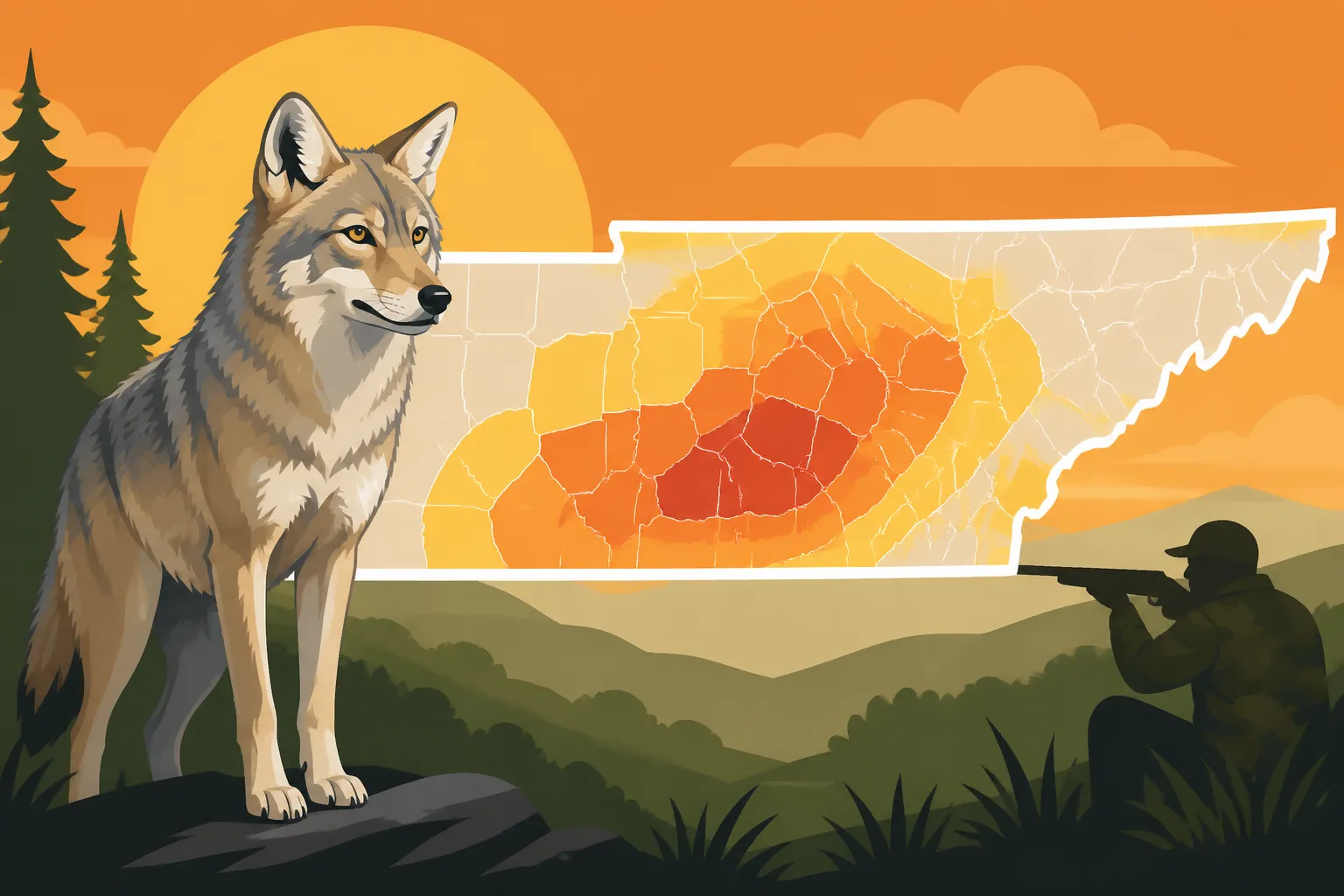
Tennessee Coyote Range and Density
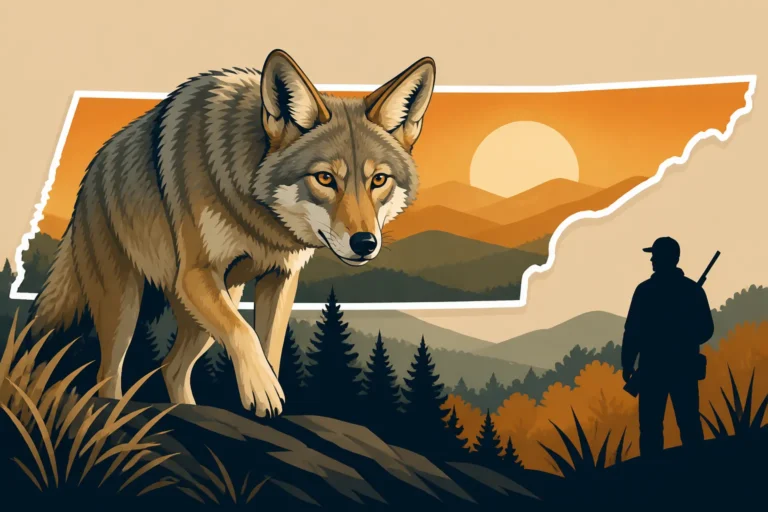
Anyone who spends time in Tennessee's outdoors, whether you're a deer hunter, a turkey enthusiast, or a rural landowner, has likely encountered the distinctive howl or elusive tracks of a coyote. These highly adaptable predators are a fixture across our beautiful state, and understanding their range and density is crucial for hunters managing game populations, and for landowners looking to protect livestock or pets. This guide will walk you through where coyotes live in Tennessee, how their numbers vary by region, and what their pervasive presence means for our wildlife and communities.
Understanding the Widespread Presence of Coyotes in Tennessee
It's easy to assume coyotes are just "out there" in the wild, but the reality is they're probably closer than you think, thriving in an incredible diversity of landscapes right here in Tennessee. Their adaptability is truly remarkable, allowing them to carve out a living in almost any environment you can imagine.
From Forest to Farmland: Coyote Habitats in the Volunteer State
Coyotes in Tennessee aren't picky when it comes to real estate. You'll find them haunting the dense, steep hollers of the Cherokee National Forest, where they navigate the rugged terrain with ease, often using old logging roads and creek bottoms as travel corridors. In these areas, they'll prey on everything from small rodents to deer fawns, showcasing their opportunistic nature. But just as readily, you'll find them roaming the expansive agricultural fields of West Tennessee, blending seamlessly into the hedgerows, ditches, and woodlots that break up the vast stretches of corn and soybeans.
Their presence in these varied habitats means that whether you're deer hunting the Cumberland Plateau ridges or scouting West Tennessee river bottoms, coyote sign is something you're almost guaranteed to encounter. They’re masters of camouflage and stealth, often going unseen even when they’re right under your nose. This widespread distribution means their impact, good or bad, is felt across all corners of the state.
Why Coyotes Are Here to Stay
The idea of "getting rid" of coyotes is a common sentiment among those who view them as a nuisance, especially farmers and deer hunters. However, the truth is, coyotes are a permanent part of Tennessee's wild tapestry. Unlike some invasive species that were intentionally or accidentally introduced, coyotes naturally expanded their range eastward over many decades, filling an ecological niche left open by the historical extirpation of larger predators like red wolves. They are a native species to North America, simply reclaiming and expanding their historical territory.
Their reproductive capacity and intelligence are astounding. Females can adjust litter sizes based on available resources, and they are incredibly adept at learning and avoiding human pressures. This resilience means that even in areas with high hunting and trapping pressure, coyote populations tend to rebound quickly. It's a testament to their evolutionary success, and it means that rather than eradication, our efforts must focus on coexistence and thoughtful management.
Historical Arrival and Expansion of Coyotes Across Tennessee
The story of coyotes in Tennessee isn't one of sudden invasion, but a fascinating narrative of ecological shifts and gradual adaptation. For many years, hunters and naturalists in the eastern states rarely, if ever, saw a coyote. They were creatures of the American West.
The Slow Eastward Migration
Coyotes began their systematic eastward expansion in the early to mid-20th century, largely moving into areas where their primary competitor, the wolf, had been eliminated. As forests were cleared for agriculture and human settlements expanded, coyotes, being highly adaptable generalists, found new opportunities. They followed river corridors, treelines, and even abandoned rail lines, slowly but surely making their way across the continent. Early sightings in Tennessee were sporadic, often dismissed as stray dogs or wolf hybrids, but by the latter half of the 20th century, their distinctive calls and unmistakable tracks became undeniable.
Initially, their presence was most noticeable in West Tennessee, an area characterized by its open farmland and river bottoms, which mirrored some of the more open western landscapes where coyotes thrive. From there, they continued their march, establishing populations across the Middle Tennessee region and eventually colonizing the rugged mountains of East Tennessee. This wasn't a coordinated "invasion" but a slow, almost imperceptible spread, guided by natural expansion and the availability of suitable habitat and prey.
Filling an Ecological Niche
The arrival of coyotes in Tennessee wasn't just about a new predator moving in; it represented a significant ecological shift. With the historical disappearance of apex predators like the red wolf, a critical niche in the food chain had been left vacant. Coyotes, being smaller and more generalist predators, stepped in to fill this role as the dominant meso-predator. This meant they began to exert significant pressure on prey species that might have previously experienced less predation from larger carnivores.
Their presence has reshaped some of the predator-prey dynamics in the state. For example, they now play a considerable role in regulating populations of small mammals, providing a natural check on rodent and rabbit numbers. However, their opportunistic nature also means they readily prey on deer fawns, turkey poults, and other ground-nesting birds, which can sometimes bring them into conflict with human interests, particularly those of hunters and game managers. Understanding this role helps us contextualize their impact and informs discussions around management strategies.
Regional Variations in Coyote Density Across the State
While coyotes are found in all 95 counties of Tennessee, their populations aren't uniformly distributed. Factors like habitat type, prey availability, and human population density all play a role in how many coyotes you might encounter in a given area.
West Tennessee's Open Lands and High Concentrations
If you spend time hunting or living in West Tennessee, you’re likely very familiar with coyotes. This region, characterized by its vast agricultural fields, interspersed with dense bottomland hardwoods and winding river systems like the Mississippi and the Hatchie, provides an ideal environment for coyotes to thrive. The mosaic of cover and open hunting grounds, combined with an abundant food source of rodents, rabbits, and especially deer fawns, allows for some of the highest coyote densities in the state.
Hunters focusing on deer in counties like Madison, Haywood, or Lauderdale often report frequent sightings, hear them howling at dusk and dawn, and regularly find their tracks and scat along field edges, drainage ditches, and river bottom funnels. The challenges here often revolve around protecting livestock, especially smaller animals like chickens and calves, and managing their impact on deer fawn recruitment.
Middle Tennessee's Diverse Landscape
Middle Tennessee presents a more varied picture when it comes to coyote populations. This region encompasses everything from the rolling farmland of the Highland Rim to the suburban sprawl around Nashville, Murfreesboro, and Clarksville. In rural areas with a good mix of pasture, woodlots, and small agricultural fields, coyote densities can be quite high, mirroring those found in parts of West Tennessee. Landowners in counties like Maury, Giles, or Rutherford frequently report coyote activity.
However, as you move closer to denser human populations, coyotes tend to become more secretive. They are still present, adapting to life in greenways, parks, industrial fringes, and undeveloped tracts. These "urban coyotes" are masters of stealth, often going unseen for long periods, though their presence sometimes makes news when they're spotted in unexpected places or interact with pets. Managing coyotes in these mixed-use areas often requires a nuanced approach, balancing public safety concerns with wildlife management.
East Tennessee's Mountainous Terrain
The rugged, mountainous terrain of East Tennessee, including vast stretches of the Cherokee National Forest and the Cumberland Plateau, also supports a healthy coyote population. While the sheer scale of the wilderness might suggest lower densities, coyotes are remarkably adept at navigating steep slopes, dense timber, and remote hollers. They often utilize logging roads, powerline cuts, and stream bottoms as travel corridors and hunting grounds. Hunters pursuing bear, deer, or even grouse in counties like Polk, Monroe, or Campbell will attest to encountering coyote sign or hearing their eerie howls echoing through the valleys.
In some of the highest, most remote elevations, coyote densities might be slightly lower than in the fertile agricultural lowlands, simply due to harsher conditions and potentially less diverse prey availability. However, anywhere there's a mix of cover, water, and prey, coyotes will establish themselves. Their presence adds another layer of challenge and excitement to hunting in these beautiful, wild parts of the state. If you are scouting Tennessee public land before season, you will want to watch for tracks, scat, and even rub or scratch marks that coyotes often leave behind.
The Impact of Coyote Populations on Tennessee's Ecosystem
The widespread presence of coyotes has undeniable impacts on Tennessee's ecosystems, influencing everything from deer populations to the safety of domestic animals. It's a complex web, and understanding these interactions is key to appreciating their role.
Predation on Deer Fawns
One of the most significant concerns for Tennessee deer hunters and wildlife managers revolves around coyote predation on deer fawns. Coyotes are opportunistic predators, and while adult, healthy deer are generally too quick and strong for a single coyote, newborn fawns are incredibly vulnerable. In the spring and early summer, when fawns are dropped, they can become a substantial food source for breeding coyotes and their pups.
Studies across the Southeast have shown that coyote predation can be a significant factor in fawn recruitment rates – that is, the number of fawns that survive to adulthood. Many hunters lament seeing fewer young deer, often pointing to coyotes as a primary culprit. While other factors like habitat quality, nutrition, and disease also play crucial roles in deer population dynamics, there's no doubt that coyotes are a formidable predator of young deer, particularly in areas with high coyote numbers or stressed deer herds. This is why discussions around Tennessee Predator Impact on Fawn Recruitment are so common.
Balancing Small Game Populations
Beyond deer, coyotes are also important predators of a variety of small game species. Rabbits, various rodent species, and even ground-nesting birds like turkeys and quail all fall within a coyote's diverse diet. On one hand, this can be beneficial, helping to control populations of animals that might otherwise become agricultural pests. A healthy coyote population can keep rodent numbers in check, for instance.
On the other hand, coyotes can also impact game bird populations, especially during nesting season when they might prey on eggs or vulnerable poults. The balance is delicate, and their influence is just one piece of a much larger puzzle involving other predators like bobcats, foxes, and raptors, as well as habitat quality and weather events. For those interested in Tennessee Small Game Season Rules, understanding the local predator-prey dynamics can offer a more complete picture of what to expect in the field.
Interaction with Domestic Animals
For rural landowners and those living on the fringes of urban areas, coyote interactions with domestic animals are a very real and often heartbreaking concern. Being opportunistic, coyotes will readily predate on easy targets such as free-ranging chickens, ducks, or even young calves and lambs. The loss of livestock can be a significant financial and emotional burden for farmers.
Furthermore, unattended pets, especially small dogs and cats, can become targets. This leads to a lot of frustration and fear, driving many communities and individuals to seek out methods for deterring or removing coyotes from their properties. It's a stark reminder that while coyotes are a natural part of the ecosystem, their presence requires careful management to minimize conflicts with human livelihoods and beloved companions.
Living Alongside Coyotes: Coexistence and Management Strategies
Given that coyotes are here to stay, learning to coexist with them and managing their populations responsibly becomes paramount. This involves a mix of proactive deterrence, effective hunting and trapping, and a solid understanding of their behavior.
Deterrence and Prevention for Landowners
For landowners facing potential conflicts with coyotes, deterrence and prevention are often the first and most effective lines of defense. The goal isn't to eliminate every coyote but to make your property less appealing and less accessible to them. This means securing livestock pens with sturdy, coyote-proof fencing – often requiring buried mesh or electric strands to prevent digging under or jumping over. Removing attractants is also crucial: never leave pet food outdoors overnight, secure trash cans, and clear away brush piles or abandoned structures that could serve as denning sites or cover.
Supervising pets, especially smaller ones, is vital, particularly during dawn and dusk when coyotes are most active. Bringing pets indoors at night or keeping them in secure kennels can significantly reduce risks. Understanding Tennessee Coyote Attacks on Livestock and taking proactive steps can help mitigate these frustrating encounters. By making your property a harder target, you encourage coyotes to move on to areas with easier pickings, minimizing potential conflicts without resorting to lethal measures unless absolutely necessary.
Hunting and Trapping as Management Tools
When deterrence isn't enough, or as part of a broader management strategy, hunting and trapping are legal and widely utilized methods for controlling coyote populations in Tennessee. Unlike many game species, coyotes in Tennessee often have very liberal, even year-round, hunting seasons, recognizing their classification as a nuisance animal that impacts other wildlife and livestock. Techniques like calling – using electronic or mouth calls to mimic prey in distress or other coyote vocalizations – can be incredibly effective, especially in open country or over snow. Some hunters also engage in night hunting, often employing spotlights or thermal imaging equipment where legal, to target coyotes in agricultural fields.
Trapping, using snares or foothold traps, is another highly effective method, particularly for removing problem coyotes from specific areas. It requires skill, knowledge of coyote behavior, and adherence to specific regulations. For hunters looking to get serious about coyote control, tools like GoHunt can be invaluable. Its mapping features can help pinpoint likely coyote travel corridors and denning areas on public lands, or even help you visualize terrain features on private land you're permitted to hunt, aiding in strategic stand placement or calling setups. You might also want to explore Coyote Calling in Tennessee Farm Country or Night Hunting Rules for Tennessee Coyotes for more specific advice on these techniques. For those leaning towards trapping, understanding Running a Trapline in Rural Tennessee and Tennessee Trapping License Requirements is essential.
Understanding Their Place in the Ecosystem
Ultimately, the most realistic and sustainable approach to coyotes in Tennessee is one of understanding and informed management. They are an entrenched part of our natural world, and any efforts aimed at complete eradication are likely to be futile and potentially disrupt other ecological balances. Instead, accepting their presence and focusing on targeted management where conflicts arise is the most practical path forward.
This means appreciating their role as a natural predator, while also acknowledging and addressing the very real challenges they present to farmers, pet owners, and game managers. By educating ourselves on their behavior, implementing smart preventative measures, and utilizing hunting and trapping as responsible management tools, we can strive for a balance that allows both humans and coyotes to thrive in the Volunteer State. It's about recognizing that every species has its place, even the ones that sometimes make life a little more complicated.
| Region | Typical Habitat | Reported Density/Activity | Common Challenges | Management Approaches |
|---|---|---|---|---|
| West Tennessee | Farmland, bottomland hardwoods, river systems | Generally High | Livestock predation, fawn impact | Trapping, calling, opportunistic hunting |
| Middle Tennessee | Mixed farmland, rolling hills, suburban fringe | Moderate to High, variable | Pet safety, sporadic livestock | Deterrence, hunting, trapping (with caution near populated areas) |
| East Tennessee | Mountainous forests, clear-cuts, stream bottoms | Moderate, lower in high elevations | Fawn impact, occasional livestock | Opportunistic hunting, calling, remote trapping |
Disclaimer
This article is for general informational purposes only and does not constitute professional advice. Laws, prices and regulations vary by location and change over time. Consult a qualified professional for guidance on your specific situation.