Coyote Calling in Tennessee Farm Country
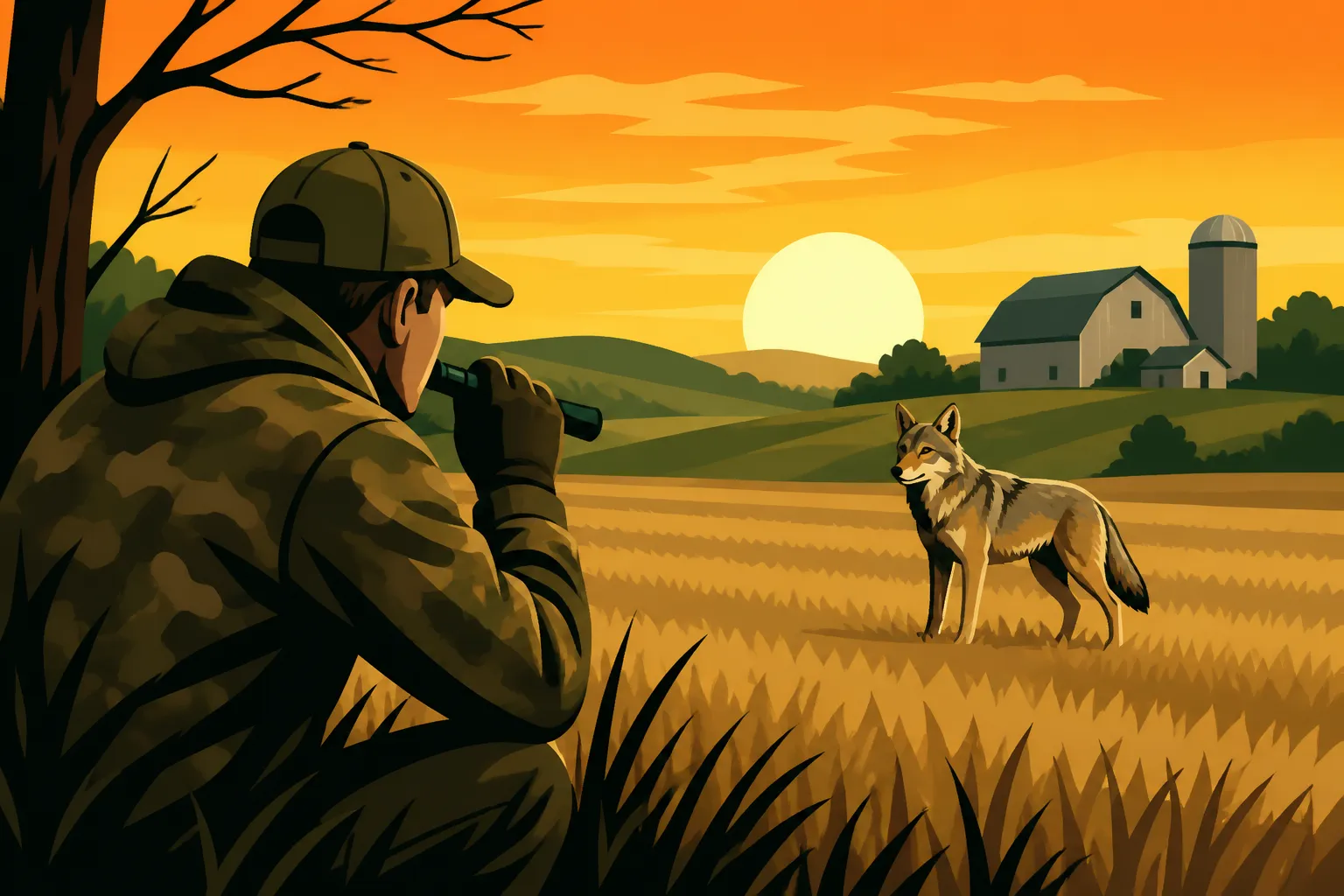
If you've spent any time at all chasing deer or turkeys in Tennessee, especially across our rolling farm country, you've probably noticed it: the increasing presence of coyotes. These highly adaptable predators can be a real headache for landowners and hunters alike, impacting everything from deer fawn survival to turkey poult recruitment. This guide is all about equipping you with the knowledge and tactics to effectively call coyotes in Tennessee's agricultural landscapes, helping you manage their numbers and protect local game.
Understanding the Tennessee Coyote in Farm Country
Coyotes have become an undeniable fixture across Tennessee, and nowhere is their presence more keenly felt than in our vast farm country. While often associated with the wilderness, these intelligent canids thrive in agricultural settings, finding abundant food sources and cover among fields, fencerows, and small woodlots. They're incredibly opportunistic, a trait that allows them to adapt quickly to changing environments and prey availability. For hunters, understanding their behavior in these specific habitats is the first step toward successful calling.
In West Tennessee, for instance, where endless fields of soybeans and corn stretch out, coyotes use the dense vegetation for concealment during the day and as travel corridors. During harvest season, when these fields are cut, their cover disappears, often concentrating them in remaining brushy areas or timber blocks. Meanwhile, in the Highland Rim and Central Basin, a mix of pastures, hayfields, and fragmented timber offers a different kind of patchwork habitat. Understanding these local nuances is key; a coyote in a row crop field might behave differently than one along a creek bottom bordered by pasture. If you're looking to gain an edge, using mapping tools like GoHunt can help you identify these specific habitat types and predict coyote movement patterns, giving you a serious leg up before you even step foot in the field.
Their diet in farm country is incredibly varied, making them a significant concern for game populations. While rodents like voles, mice, and rabbits form a large part of their diet, they are notorious for preying on deer fawns in the spring and turkey poults. A sudden influx of coyotes in an area can drastically reduce the number of young game animals that make it to adulthood. Furthermore, they're not above taking down older, sick, or injured deer, and unfortunately, they can also pose a threat to livestock, especially small calves, lambs, or chickens, which creates friction with farmers. Knowing what they're eating and when, often indicated by scat or tracks around kill sites, helps you choose the most effective calling sounds to pique their interest.
Coyotes are generally most active during dawn, dusk, and throughout the night, aligning with the activity patterns of their primary prey. However, it's not uncommon to see them moving during broad daylight, especially during colder months when they need to forage more, or when they're particularly hungry. In Tennessee's farm country, where human activity is constant, they can become more nocturnal to avoid detection. However, don't let that deter you from midday calling; a coyote caught off guard during a quiet afternoon might be just as susceptible to a well-placed call. Factors like breeding season (late winter), pup-rearing season (spring and early summer), and hunting pressure can all influence their daily movement and responsiveness to calls. Paying attention to these seasonal shifts can significantly improve your chances of success.
Essential Gear for Coyote Calling in Tennessee
Getting set up for coyote calling in Tennessee farm country means more than just a call and a gun. You need a thoughtful selection of gear designed to give you an edge in these open, often exposed environments. Unlike hunting deep woods, farm fields demand a different approach to camouflage, optics, and even the type of calls you employ.
First off, your calling equipment is paramount. You'll find two main categories: mouth calls and electronic calls (e-calls). Mouth calls, including distress calls (like rabbit in distress or fawn bleats), howlers, and pup-in-distress calls, are incredibly versatile and allow for immediate, nuanced sound changes. Brands like Primos and Foxpro offer a wide array of options that are popular with Tennessee callers. The downside is that you have to operate them with your hands, which can be tricky when trying to remain still. Electronic calls, on the other hand, offer a vast library of realistic sounds, remote operation, and the ability to place the speaker away from your position, drawing the coyote's attention away from you. This can be a game-changer when coyotes are wary or approach from an unexpected direction. When selecting an e-call, consider battery life, range of sounds, and ease of use. Having a good mix of both — a reliable e-call with a few go-to mouth calls for backup or subtle finishing touches — gives you the most flexibility.
| Call Type | Primary Sound | Best Use | Considerations |
|---|---|---|---|
| Rabbit Distress | High-pitched squeals | Most effective all year, mimics injured prey. Great for attracting hungry coyotes. | Start soft, then increase volume; vary the intensity. |
| Fawn Distress | Soft bleats, bawls | Spring/Summer, mimics young deer in trouble. Irresistible to coyotes. | Use sparingly to avoid spooking deer or does. |
| Coyote Howls | Various howls | Locating coyotes, challenging territorial males. | Can alert coyotes to your presence, use strategically. |
| Pup Distress | Crying, whimpering | Late Spring/Summer, triggers maternal instincts or competitive responses. | Can draw in both males and females. |
| K-9 Disturbance | Fights, chirps, growls | Mimics coyotes fighting or interacting. Can draw in curious individuals. | Good for wary coyotes who ignore distress calls. |
Next, let's talk about optics and firearms. In open farm fields, where coyotes might appear at extended ranges or subtly skirt cover, good optics are non-negotiable. A quality pair of binoculars, perhaps 10×42, will help you scan the distant treelines, fencerows, and field edges for movement. When it comes to your firearm, versatility is key. Many Tennessee hunters favor a flat-shooting rifle like a .223 Remington or a 6.5 Creedmoor for coyotes, especially when they might be across a wide field. These calibers offer the accuracy and reach needed for longer shots. However, for those brushy fencerows or small woodlots, a shotgun loaded with buckshot (like Federal Premium or Winchester Super-X) can be incredibly effective for close-range, fast-action encounters. Remember to consider your effective range with both platforms and practice regularly. For hunting at night, which is legal for coyotes in Tennessee with certain restrictions, a good thermal or night vision optic can greatly increase your success, though be sure to check the latest regulations on Night Hunting Rules for Tennessee Coyotes with the TWRA.
Finally, don't underestimate camouflage and scent control. Coyotes have incredible eyesight and an even more impressive sense of smell. Full camouflage, including face masks and gloves, is crucial to break up your silhouette. Patterns that blend with the local vegetation, whether it's the browns of dormant winter fields or the greens of summer crops, will serve you well. More importantly, meticulous scent control can make or break your hunt. Use scent-eliminating sprays, wash your hunting clothes in scent-free detergent, and avoid handling anything with strong odors before heading out. Even a slight human odor on the breeze can send a wary coyote backtracking into the next county. When scouting new areas, mapping tools like GoHunt can help you identify wind patterns and terrain features that might help you manage your scent. They even offer overlays that show property lines, crucial for ensuring you're always on land where you have Asking a Tennessee Farmer for Permission to hunt.
Calling Tactics for Tennessee Farm Fields
Successfully calling coyotes in Tennessee's farm country demands a blend of strategy, patience, and adaptability. These aren't deep woods deer where you might just sit and wait; here, you're actively trying to draw in a wary predator across open ground. Every setup, every call sequence, and every environmental factor plays a critical role in whether a coyote commits or vanishes into thin air.
One of the most crucial elements is stand selection. In farm country, you're often dealing with limited cover. Look for elevated positions that offer a good view of the surrounding fields, like the edge of a timber block overlooking a large crop field, a small rise in a pasture, or a fencerow with tall grass. Crucially, always consider the wind. Coyotes almost always circle downwind to get a whiff of whatever is making the noise before committing. Position yourself so the prevailing wind carries your scent away from where you expect the coyote to approach. This often means having the wind at your back, or angling slightly crosswind, with your shooting lanes covering the downwind approach. Try to pick a spot with a natural backstop for your shots, like a distant hillside or thick timber, ensuring safety in these often populated areas. For help understanding terrain and potential stand locations, tools that allow you to analyze aerial photos can be invaluable, similar to how you would for Reading Aerial Photos for Cumberland Plateau Deer.
When it comes to the actual calling, variety and realism are your best friends. Start with a relatively soft, short series of distress calls, like a rabbit in distress, to gauge their interest without immediately alerting every coyote in the area. Wait a few minutes, scanning the field edges intently. If nothing appears, slowly increase the volume and duration of your calls. A typical sequence might involve 30-60 seconds of calling, followed by 2-3 minutes of silence and observation. If you get a response or a visual, you might switch to pup distress calls to exploit their maternal or competitive instincts, or try a few howls to challenge a dominant male. Don't be afraid to experiment. Sometimes, a series of short, choppy barks can pique curiosity. Other times, a long, drawn-out howl will get them to commit. Be dynamic, react to what the coyotes are telling you, and always be ready for a shot at any moment.
Visuals can also be a massive advantage in farm country. A simple decoy, even just a piece of white cloth tied to a stick or a commercially available motion decoy, can draw a coyote's attention away from your hiding spot and give them something to focus on as they approach. Position your decoy 20-50 yards out from your position, ideally where it's visible from multiple approach angles. This can be particularly effective with an e-caller, as the sound and motion are emanating from the same location, making the setup more convincing.
Patience, above all else, is vital. Don't call for five minutes and then pack up. A good coyote stand should last at least 20-30 minutes, sometimes longer, especially if you're targeting wary animals or if the weather is cold, causing coyotes to move slower. Many coyotes will hang up at a distance, trying to locate the source of the sound or circling for a scent check. Your job is to stay absolutely still, scan constantly, and be prepared to take a shot at a moment's notice. Often, a coyote will appear out of nowhere, seemingly materializing from the tall grass or a distant treeline. Even after you've taken a shot, stay on stand for a few more minutes; sometimes, a curious second coyote might be drawn in by the commotion, offering another opportunity. Remember to always be aware of your surroundings, especially if you're on Hunting Small Private Tracts in Tennessee and need to be mindful of property lines.
Ethical Considerations and Safety in Farm Country
Hunting coyotes, especially in the nuanced environment of Tennessee's farm country, comes with significant ethical responsibilities and safety considerations that go beyond just making the shot. Unlike vast public lands, you're often operating in close proximity to homes, livestock, and active agricultural operations. Respect for landowners, adherence to regulations, and a commitment to safe practices are paramount. Failing to uphold these can not only jeopardize your hunting privileges but also damage the reputation of all hunters.
First and foremost, landowner permission is non-negotiable. This is perhaps the single most critical ethical consideration when hunting in farm country. Many of the prime coyote hunting spots are on private land. You absolutely must have explicit permission from the landowner before stepping foot on their property. This isn't just a courtesy; it's a legal requirement in Tennessee, as detailed in Tennessee Trespass and Permission Law. Don't assume. Always ask, even if you've hunted there before. A good relationship with landowners is golden and ensures continued access. When you're granted permission, clarify boundaries, ask about any specific areas to avoid (like livestock pastures or near residences), and confirm their preferences for when and how you hunt. Showing respect and gratitude goes a long way.
Safety, particularly concerning your backstop and shot placement, is amplified in agricultural areas. Unlike dense woods where trees might catch a stray bullet, farm fields often offer clear sightlines but minimal natural backstops. Every shot you take must have a safe bullet trajectory and a confirmed, distant backstop. Be acutely aware of houses, barns, roads, and especially livestock that might be out of sight beyond a rise. A coyote is never worth risking human safety or damaging property. Always identify your target clearly and be 100% certain of what's beyond it before squeezing the trigger. Knowing your effective range with your chosen firearm is also crucial; don't attempt shots beyond your comfortable and accurate limits, especially if you're using a Rifle Setups for Tennessee Deer Hunting that might have different performance characteristics.
Respecting the property itself is another key element of ethical hunting. This means closing gates, not driving across planted fields, avoiding disturbing livestock, and leaving no trash behind. If you're using a ground blind, ensure it's not obstructing farm equipment paths and is secured properly. The goal is to leave the property in the same or better condition than you found it. Remember, hunters are guests on private land, and our actions directly reflect on the broader hunting community. Any negative impression can lead to lost access for everyone.
Finally, familiarize yourself with all relevant Tennessee Wildlife Resources Agency (TWRA) regulations, including Tennessee Coyote Hunting Season Rules and any specific rules for hunting on private land. While coyotes can often be hunted year-round without bag limits in Tennessee, there might be specific rules regarding legal hunting hours, methods of take, or the use of certain equipment, particularly if you're considering Night Hunting Rules for Tennessee Coyotes. Ignorance of the law is not an excuse, and violations can result in hefty fines or loss of hunting privileges, as outlined in Tennessee Wildlife Violation Penalties. Responsible and ethical hunting is about more than just the pursuit of game; it's about being a steward of the land and a respectful member of the community.
Disclaimer
Always consult the latest Tennessee Wildlife Resources Agency (TWRA) regulations before heading into the field, as rules and seasons can change. The information provided here is for general guidance and educational purposes only.