Hunting the Tennessee Rut in Early November
There are few things more frustrating for a Tennessee deer hunter than hitting the woods in prime time, during the first week of November, only to feel like you're missing something crucial. The bucks should be moving, chasing does, making mistakes, but sometimes it just doesn't seem to happen for us. This comprehensive guide is here to unravel the mysteries of hunting the Tennessee rut in early November, helping you understand deer behavior, refine your strategies, and make the most of this exciting, albeit sometimes unpredictable, period.
Understanding Tennessee's Rut Timeline
You've heard the whispers, read the articles, and seen the big bucks on social media — early November is the time for the rut in Tennessee. But what does that really mean for us hunters on the ground? It's not a light switch, but rather a complex, unfolding drama influenced by everything from genetics to weather.
When the Rut Really Kicks Off
While there can be some "pre-rut" activity throughout October, with bucks starting to cruise, make scrapes, and spar, early November is typically when things really start to heat up. This is the period when most does are coming into estrus, triggering an intense biological imperative in bucks. We often see the earliest signs of this shift right after When Tennessee's Archery Season Opens in late September, with bucks laying down sign, but by November 1st, it's game on. That sudden drop in temperature, especially after a warm October, can send a jolt through the deer herd, kicking off more visible chasing. It’s not just a myth; cold mornings really do seem to get bucks on their feet looking for does, often covering more ground than they have all year.
Regional Variations in Rut Activity
Tennessee is a long, diverse state, stretching from the Mississippi River bottoms to the Appalachian Mountains. It’s only natural that the deer rut doesn’t happen at the exact same moment everywhere. While early November is generally accepted as peak seeking and breeding activity across most of the state, there can be subtle differences. In the western counties, particularly in the fertile river bottomlands, the rut can sometimes feel a bit more drawn out or even peak slightly later than in the Cumberland Plateau or eastern mountains. Conversely, some folks swear they see more intense, compressed rut activity in the colder, more rugged eastern terrain. Understanding these nuances, which are often tied to local deer population dynamics and genetics, can help you fine-tune your timing. For instance, deer in some of the more isolated areas may experience a more intense, shorter rut because there are fewer bucks to cover a broader area of estrus does.
Decoding Buck Behavior During the Peak Rut
The early November rut is a whirlwind of activity, driven by bucks' relentless pursuit of receptive does. Understanding the distinct phases of this pursuit can dramatically improve your hunting success. It’s not just random running around; there’s a method to their madness.
The Search Phase and Cruising Bucks
As early November begins, bucks enter what's often called the "seeking" or "search" phase. This is arguably the most exciting time to be in the woods for a deer hunter. Mature bucks, which have been relatively nocturnal or patternable in previous weeks, suddenly become bold and unpredictable. They are actively covering ground, often traveling great distances in daylight, searching for the first estrus does. These cruising bucks will move through timber, along creek bottoms, and across open fields, constantly scent-checking for does. You'll see them making fresh Scrape Lines Along a Logging Road and rubbing trees with increased vigor, marking their territory and leaving calling cards. This is when patience and strategic stand placement pay off, because these bucks aren't tied to a specific food source as much as they are driven by the urge to find a mate. They're literally sniffing out their future.
Chasing and Breeding Activity
Once a buck finds a receptive doe, the intensity ratchets up. You'll witness full-blown chasing, sometimes for hours, as the buck attempts to "tend" the doe and ward off competitors. This can be frantic, with deer running through cover, grunting, and even crashing through brush. It's a loud, often visible spectacle. When the doe finally stands to be bred, they will often "lock down" in a secluded area, sometimes for 24-48 hours. During this lockdown phase, the buck will stay right with the doe, often bedded nearby, rarely moving more than a few hundred yards. This period can make hunting tough because the buck isn't actively cruising. However, the next estrus doe in the area will attract other bucks, often drawing them to the periphery of where the locked-down pair is hiding. Keep an eye out for fresh sign and secondary scrapes around these secluded bedding areas.
Post-Breeding Movement and Recovery
After a buck has successfully bred a doe, he will typically move on to find another. However, he might take a brief recovery period. This isn't a long break, but a few hours or a day where he might hit a preferred food source, rest up, and then get back to the grind. These post-breeding movements are less frantic than the seeking phase, but still offer opportunities. Bucks might appear slightly bedraggled or less cautious. They've expended a tremendous amount of energy, and their guard might be down slightly. Understanding Tennessee Buck Age Structure helps here, as older, more dominant bucks often breed multiple does and will be on the move longer than younger bucks. It's a marathon for them, and they need to refuel to keep going.
Effective Hunting Strategies for Early November
Hunting the rut requires a different mindset than early season or late season. It's less about predicting specific feeding patterns and more about capitalizing on bucks' unpredictable, rut-driven movements. You need to be adaptable and ready to seize opportunities.
Stand Placement Near Travel Corridors
During the peak rut, bucks are travelers. They're using natural travel corridors to move efficiently across the landscape. Think about saddles on ridgelines, creek bottoms, pinch points between fields and thickets, and even subtle changes in elevation that make for easier walking. These are prime spots for stand placement. Instead of focusing on a specific oak tree dropping acorns, look for the "highway" bucks are using to get from one bedding area to another, or from a general area where does are to another. In areas like the Cumberland Plateau, learning to decipher Reading a Ridge for East Tennessee Deer to find these saddles and benches can be a game-changer. For public land hunters, this might mean walking farther than others to find these less-pressured travel routes, remembering that Hunting Pressure on Tennessee Public Land can push deer into more secluded pathways.
Aggressive Calling and Decoy Tactics
The rut is one of the few times when aggressive calling can really pay off in Tennessee. Bucks are wired to find does and compete with other bucks. Grunt calls can simulate a buck tending a doe, drawing in curious or competitive bucks. Rattling antlers, especially when combined with grunts, can mimic two bucks fighting, appealing to a dominant buck's territorial instincts. If you're going to try Rattling and Grunting in Tennessee, make sure you understand the nuances of volume and timing. For example, Grunt Calls in Mature Tennessee Timber need to be realistic and not overdone, especially on public land where deer are wary. Decoys can also be highly effective, particularly a doe decoy to entice cruising bucks, or a small buck decoy to challenge a dominant one. Just remember your surroundings and position your decoy safely.
Still-Hunting and Scouting on the Move
While sitting on stand is often the go-to, the unpredictability of the rut also lends itself well to still-hunting. This involves moving slowly, deliberately, and quietly through the woods, stopping frequently to glass and listen. You're essentially bringing the hunt to the deer, rather than waiting for them to come to you. This is especially effective in big blocks of timber or areas with diverse terrain where deer might be locked down. As you move, you're constantly scouting, looking for fresh rubs, scrapes, and tracks. If you encounter a fresh Scrape Lines Along a Logging Road or hear distant grunting, you can adjust your approach immediately. This fluid approach allows you to cover more ground and potentially intercept a cruising buck you might have otherwise missed. Think of it as active hunting, always probing and adapting.
Leveraging Terrain and Habitat to Your Advantage
Knowing where bucks are likely to be during the rut is as important as knowing how they behave. The landscape itself, with its natural features and cover, funnels and directs deer movement in predictable ways.
Funnels and Pinch Points
These are critical locations during the rut. A funnel is any natural or man-made feature that concentrates deer movement into a smaller area. This could be a narrow strip of timber between two large fields, a saddle in a ridge, a small island of woods surrounded by water, or even a fence row that guides deer along a specific path. A pinch point is an even tighter constriction, forcing deer to pass through a very specific spot. Think of a small bottleneck where two steep hills meet, or where a thicket narrows significantly. Setting up near Hunting a Funnel Between Two Bottoms can give you an incredible advantage, as bucks are almost guaranteed to pass through these areas as they cruise for does. These areas are high-traffic zones because deer, like us, prefer the path of least resistance.
Food Sources and Staging Areas
While bucks are less food-focused during the peak rut, they still need to eat, and does certainly do. Setting up stands overlooking key food sources, especially those near bedding areas, can be productive, particularly in the mornings and evenings when deer are moving to or from these areas. This could be a standing bean field, a plot of winter wheat, or a late-dropping oak flat. More importantly, look for "staging areas" adjacent to these food sources. These are typically thicker cover spots where deer will mill around, scent-check, and feel secure before stepping out into the open. Bucks will often cruise the edges of these staging areas, scent-checking for does about to enter or leave a feeding area. Even when they're not actively feeding, they're monitoring these spots for does.
Bedding Cover and Sanctuary Zones
During the rut, bucks will often run does into thick cover to breed them. This could be a dense briar patch, a cedar thicket, a stand of regenerating timber, or even a steep, inaccessible hollow. These are their sanctuary zones. While it can be tempting to bust into these areas, it's often more effective to hunt the edges. Identify the natural entry and exit points, or the subtle travel lanes that lead into and out of these thickets. Bucks will often cruise these edges, looking for does either going into or coming out of the bedding cover. For hunters operating in regions like West Tennessee, understanding the nuances of Hunting West Tennessee Bottomland Deer where thick, flooded timber can act as dense bedding cover, is paramount. Knowing how to approach these areas without spooking deer is key to success.
Gear and Preparedness for Peak Rut Hunting
Your gear choices can significantly impact your comfort and effectiveness during the rut. From spotting those cruising bucks to staying hidden, every piece of equipment plays a role.
Optics for Spotting Cruising Bucks
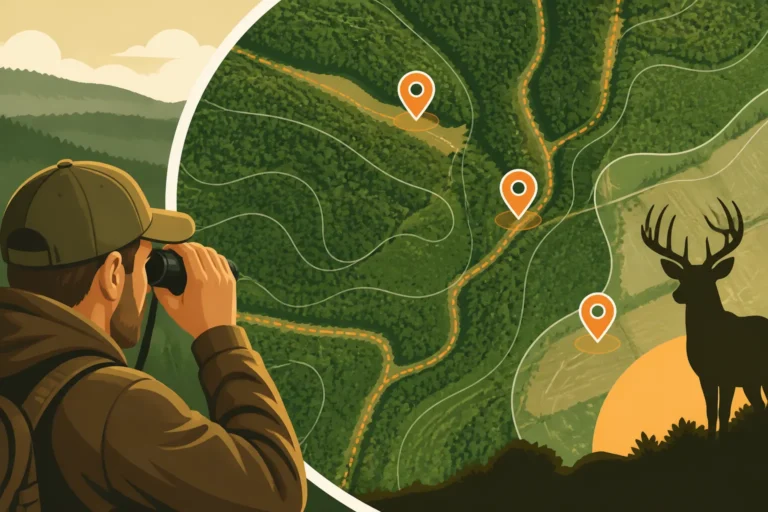
During the rut, especially in open country or on long ridgelines, high-quality optics are your best friend. Bucks are on the move, and often they're not in a hurry, giving you a chance to spot them from a distance before they spot you. A good pair of 10×42 binoculars is usually ideal, offering a wide field of view and enough magnification to pick apart distant cover. In the vastness of the Cumberland Plateau, for example, excellent Optics for Cumberland Plateau Ridges can make the difference between seeing a distant buck and having him slip by unnoticed. A rangefinder is also crucial, not just for shot placement, but for judging distances to potential travel corridors or identifying terrain features. Don't skimp on your glass; it's an investment that pays dividends, allowing you to identify deer movement patterns that are simply invisible to the naked eye.
Scent Control and Concealment
Even though bucks are less cautious during the rut, they still rely heavily on their nose. Scent control remains incredibly important. This means using scent-eliminating sprays, washing your hunting clothes in unscented detergent, and being mindful of wind direction. Consider investing in high-quality scent-control clothing or storing your hunting clothes in airtight containers. If you're still-hunting or moving frequently, pay extra attention to what you're tracking into the woods. A good strategy is to use the wind to your advantage, always trying to keep it in your face or quartering. Concealment is also key. While blaze orange is required during gun season, make sure your camo pattern blends effectively with the early November Tennessee woods, which often feature fallen leaves and bare branches. Don't forget a face mask and gloves to break up your human outline.
Weather-Appropriate Clothing and Safety
Early November weather in Tennessee can be fickle. You might start the morning in freezing temperatures, only to have it warm up significantly by midday, or a sudden cold front could roll in, bringing rain or even snow. Layering is crucial. A good base layer, a warm mid-layer (like fleece or wool), and a waterproof/windproof outer shell will allow you to adapt to changing conditions. For extended sits, especially in chilly temperatures, proper Layering for a Tennessee Deer Stand can prevent you from cutting your hunt short due to discomfort. Don't forget insulated, waterproof boots, especially if you're hunting damp creek bottoms or wet timber. Safety is paramount: always wear your harness when in a treestand, carry a first-aid kit, and let someone know where you're hunting and when you expect to return. Being prepared for anything will keep you safer and allow you to stay in the woods longer, increasing your odds. For those who like detailed maps and land data, a subscription to a mapping app like GoHunt can be invaluable for pinpointing property lines, identifying potential pinch points, and understanding terrain features before you even step foot in the woods. This foresight can save you hours of unproductive scouting.
| Rut Activity Phase | Typical Buck Behavior | Best Hunting Strategy | Recommended Gear |
|---|---|---|---|
| Seeking Phase | Actively cruising for does, scent-checking, making rubs/scrapes. Covering long distances. | Stand placement on travel corridors, funnels, ridge saddles. Still-hunting. | Quality binoculars, rangefinder, scent control. |
| Chasing/Breeding | Frantic pursuit of does, "tending" behavior, potential lockdown. | Hunt edges of thick cover/bedding areas. Aggressive calling (grunts, rattling). | Grunt tube, rattling antlers, doe decoy (optional). |
| Post-Breeding | Brief recovery, then continued seeking for other does. Can be slightly less cautious. | Hunt food sources near bedding, subtle travel routes, secondary scrapes. | Same as seeking phase, remain patient. |
Disclaimer
Hunting involves inherent risks, and conditions in the field can change rapidly. Always prioritize safety, adhere to all Tennessee Wildlife Resources Agency (TWRA) regulations, and consider local weather conditions before and during your hunt. The information provided here is for general guidance and educational purposes only.