Scrape Lines Along a Logging Road
It can be incredibly frustrating to scout for deer sign, only to feel like you're missing the nuances of what deer are actually telling you. Many hunters walk past prime opportunities without realizing the hidden gems logging roads can hold for rutting activity. This guide is here to unravel the mystery of scrape lines found along logging roads in Tennessee, giving you the insights and strategies you need to effectively hunt these overlooked hot spots.
Understanding Deer Scrapes and Logging Roads
Deer sign is a language, and scrape lines are one of the most expressive sentences a buck can write in the dirt. But just like any language, you need to understand the context. When these "messages" appear on logging roads, it adds another layer to their meaning and potential.
Why Deer Create Scrapes
At its heart, a deer scrape is a communication hub. Bucks, especially during the pre-rut and peak rut, create these bare patches of earth, often by pawing away leaves and debris with their front hooves. The ground is then scented with urine, sometimes mixed with tarsal gland secretions, creating a potent olfactory message for other deer. Above these scrapes, you'll almost always find an overhanging branch, known as a licking branch. Bucks will rub their pre-orbital glands and forehead on this branch, chew on it, and even urinate on it, adding another layer of scent.
These aren't just random acts; scrapes serve multiple purposes. They visually advertise a buck's presence and dominance, signaling his readiness to breed. Olfactorily, they're like a social media post for deer, sharing crucial information about who's in the area and their reproductive status. While bucks are the primary creators, does will also visit scrapes, leaving their own scent, checking for information, and signaling their receptiveness. Some scrapes are "primary" or community scrapes, used by multiple deer repeatedly, while others might be smaller, secondary scrapes, indicating a buck's travel route or a temporary stop.
The Allure of Logging Roads for Deer
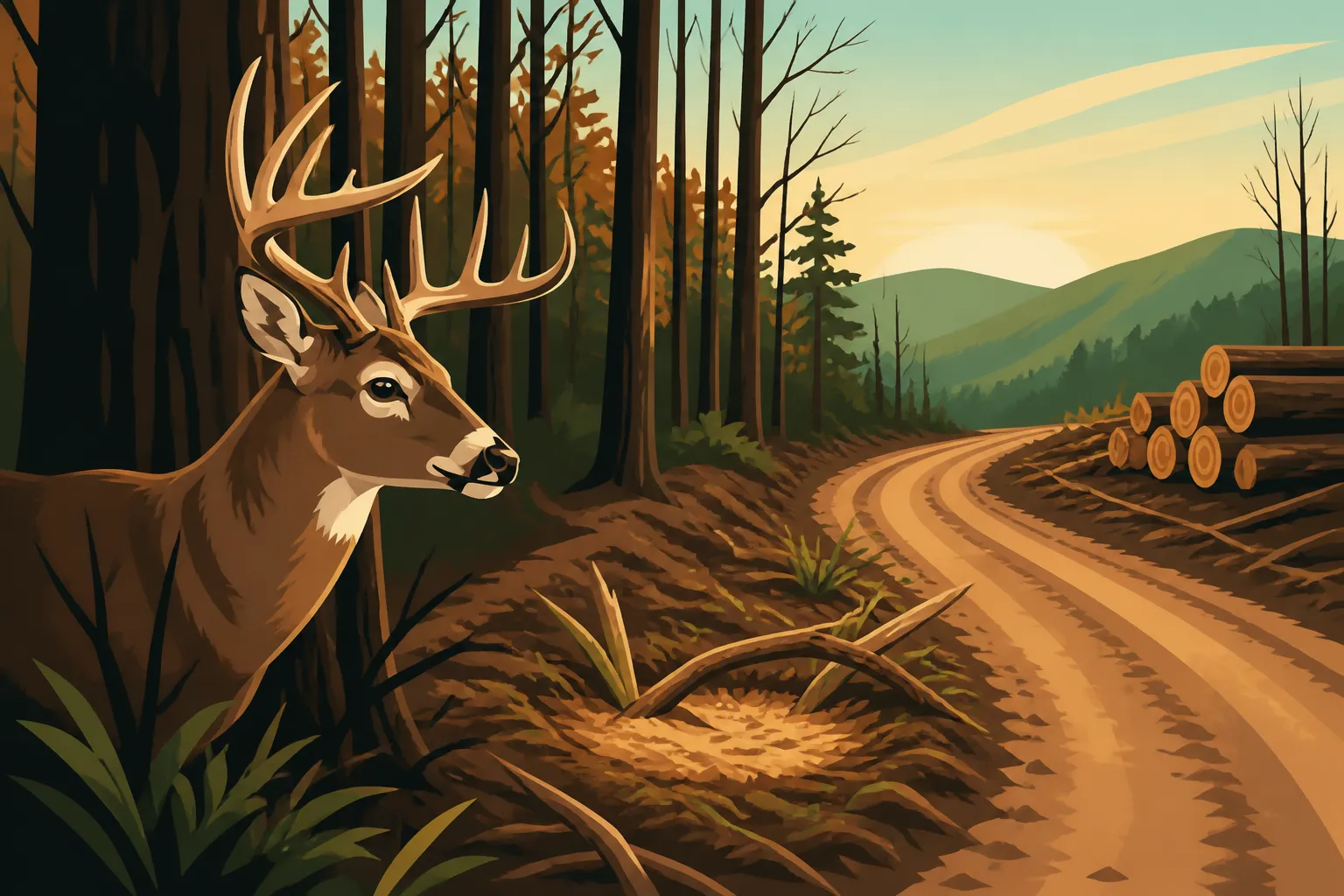
Logging roads, whether active or long abandoned, possess a unique appeal to deer, especially cruising bucks during the rut. Imagine trying to navigate through dense, tangled undergrowth when you could just stroll down a clear path. That's essentially what a logging road offers: an easy travel corridor. They act as natural funnels, connecting different habitat types like bedding areas to food sources, or allowing bucks to efficiently patrol their territory.
These roads often create distinct "edge" habitats. One side might be mature timber, offering security and cover, while the other could be younger regrowth, clear-cuts, or even planted fields. This edge provides both safety and visibility for a buck looking to leave his mark. The ground on a logging road is typically softer, clearer, and more exposed than the leaf-littered forest floor, making it ideal for creating highly visible scrapes that won't be quickly covered up. This is particularly true on many public lands like the Cherokee National Forest or sections of the North Cumberland Wildlife Management Area, where logging has historically created extensive road networks that deer now readily utilize.
Identifying and Interpreting Logging Road Scrape Lines
Finding a scrape is one thing; understanding its significance and freshness is another. On a logging road, these signs can be even more pronounced and easier to read if you know what you're looking for.
What to Look For
When you're walking a logging road, especially in late October or November, keep your eyes peeled for distinct bare earth patches. These are your scrapes. They'll often be circular or oval, usually 1-3 feet in diameter, and meticulously cleared of leaves and debris. The key differentiator for a quality scrape is the presence of an overhanging branch, the "licking branch." This branch will show signs of chewing, rubbing, or breaking, indicating consistent use. Freshness is paramount: look for moist, dark earth, clear hoof prints (especially of larger deer), and a strong, musky odor – often described as a mix of ammonia and earthy urine.
You'll also want to note the presence of rub lines nearby. Bucks often create rubs (where they strip bark off trees with their antlers) along their travel corridors, often leading directly to or from a scrape line. A scrape line accompanied by fresh rubs is a strong indicator of active buck movement. Don't be fooled by incidental pawings, which might just be a deer rooting around for acorns; a true scrape will have that defined, cleared patch and a licking branch. Use tools like the GoHunt app to meticulously mark each scrape location you find. This creates a digital breadcrumb trail that helps you visualize the scrape line and identify patterns over time, which is invaluable for your future hunting plans.
Interpreting the "Message Board"
Once you've identified a scrape, it's time to become a detective. The licking branch above a scrape is truly the "message board" for deer. The scent left on it, combined with the urine in the pawed earth, creates a complex bouquet of information. If the licking branch is chewed, broken, or heavily rubbed, it indicates a highly active scrape. The height of these rubs on the branch can even give you a rough idea of the size of the deer making them.
The location of the scrape line along the logging road is also crucial. Is it near a transition line between thick cover and more open timber? Does it connect two different habitat types known for bedding and feeding? Scrape lines along logging roads are strategically placed, often acting as boundary markers for a buck's territory or as a definitive stop along a cruising route. A long logging road might have several scrapes forming a clear "line," indicating a regular patrol route. It's also vital to consider the prevailing wind. Bucks will typically approach scrapes, especially during daylight, from downwind to scent-check the area before committing. Understanding this will be key to your stand placement, a tactic we cover in depth in our guide on Wind and Thermals on a Ridge System.
Hunting Strategies for Logging Road Scrapes
Finding an active scrape line on a logging road is a golden opportunity, but it's only half the battle. The real success comes from knowing how to hunt it effectively without alerting the wary buck who made it.
Optimal Stand Placement
When hunting scrape lines along logging roads, your stand placement is paramount. The number one rule is almost always to set up downwind of the scrape. This allows any buck approaching the scrape to naturally walk into your scent cone, while your scent is carried away from the scrape itself. Consider the likely approach routes a buck might take – often parallel to the logging road from within the cover, or directly down the road itself. You want to intercept him before he reaches the scrape, or as he checks it, but never allow him to smell you.
Logging roads often offer good tree cover on their edges, providing ideal spots for a treestand. A hang-on stand with climbing sticks is often versatile enough for the variety of trees found along these edges, but a climber can also work if you find suitable, straight timber. For areas with less vertical cover, a well-brushed-in ground blind can be incredibly effective, especially if positioned off the road slightly, blending into the surrounding foliage. Our detailed guide on Using a Ground Blind on Tennessee Public Land offers excellent insights here. Remember to plan your entry and exit routes meticulously, ensuring you can get to and from your stand without disturbing the area around the scrape line. This might mean taking a slightly longer, circuitous route to stay hidden. For ideas on more general stand placement, you might find useful tips in our article about Hanging a Stand on a Cumberland Ridge.
Calling and Scent Tactics
Once you're set up, you can enhance your chances by employing strategic calling and scent tactics. Deer scents can be incredibly effective when used judiciously around a scrape. Fresh estrus doe urine can be placed directly in the scrape to mimic a receptive doe, while dominant buck urine or tarsal gland scent can challenge an established buck to investigate. Just be mindful not to overdo it, as an excessive amount of scent can sometimes be unnatural or even alarming.
Calling can also be a game-changer. During the peak rut, a soft grunt call can pique the interest of a cruising buck, drawing him towards the scrape line. Sometimes, a short rattling sequence can emulate sparring bucks, creating curiosity. However, the volume and intensity of your calls should match the cover you're hunting. In thick timber along a logging road, less is often more. Our guides on Rattling Volume in Thick Cover and Grunt Calls in Mature Tennessee Timber offer excellent insights into these nuances. The timing of your hunt also plays a huge role; dawn and dusk are typically prime times for deer movement, but during the peak of the rut, bucks can be checking scrapes at any time of day, making midday sits surprisingly productive. This is particularly true when you consider Hunting the Rut in Early November in Tennessee.
Advanced Tips and Considerations
Taking your scrape line hunting to the next level requires a bit more planning and understanding, especially when dealing with the unique challenges of public land.
The Role of Trail Cameras
Trail cameras are your eyes and ears in the woods when you're not there. When targeting logging road scrape lines, they are indispensable. Place them strategically, angled slightly down the road or directly over the scrape, to capture activity without spooking deer. The goal is to confirm how often a scrape is being visited, at what times of day, and by which bucks. This intel is gold. A high-quality cellular trail camera can even send you real-time updates, letting you know when a buck is actively working the scrape.
By analyzing the timestamps and images, you can discern patterns: Is a specific buck checking the scrape at dawn, midday, or dusk? Is he approaching from the north or the south? This information allows you to fine-tune your stand placement and hunting times. The GoHunt app is fantastic for logging your camera data, overlaying it on maps, and helping you visualize the movement patterns of deer around your scrape lines. Understanding these patterns is critical for planning effective strategies, like knowing the best Entry Routes Through Standing Beans or how to best approach your stand. Before setting up, make sure you're familiar with the specific Trail Camera Rules on Tennessee Public Land for the area you're hunting, as regulations can vary.
Public Land Nuances
Hunting scrape lines on logging roads on public land in Tennessee, like the vast expanses of the Cherokee National Forest or any of the state's numerous Wildlife Management Areas, presents both opportunities and challenges. The main challenge is hunting pressure. Logging roads, being easily accessible, often see more hunter traffic. This can make bucks more nocturnal or push them into thicker cover.
To counter this, focus on finding scrape lines deeper in the woods, away from main roads and popular access points. Often, walking an extra half-mile or more down an old, overgrown logging road can get you into areas that see significantly less pressure. These are the spots where bucks might feel more comfortable tending to scrapes during daylight hours. Our article on Scouting Tennessee Public Land Before Season emphasizes the importance of early reconnaissance to find these less-pressured gems. It's about putting in the extra effort to find the ground others walk past, a strategy elaborated further in Finding Ground Others Walk Past. Always be aware of other hunters, wear blaze orange as required, and practice ethical hunting at all times.
| Scrape Freshness Indicator | Description | Implication |
|---|---|---|
| Moist, Dark Earth | The scraped earth appears damp and darker than the surrounding soil, indicating recent disturbance. | Very fresh; likely visited within the last 12-24 hours, especially if temperatures are cool. |
| Strong Musky Odor | A distinct, pungent smell of urine and tarsal gland secretions, sometimes described as earthy or ammonia-like. | Extremely fresh; a buck has recently worked the scrape and deposited scent. This is a prime hunting indicator. |
| Clear Hoof Prints | Sharp, well-defined deer tracks within the scrape, with no dried mud or leaf litter in the impressions. | Indicates recent activity, possibly within the last day or two. Look for larger prints to identify a mature buck. |
| Chewed/Broken Licking Branch | The overhanging branch shows fresh signs of chewing, fraying, or breakage. | A buck has recently interacted with the licking branch, depositing scent from his pre-orbital glands and mouth. |
| Covered by Leaves/Debris | The scrape is partially or fully covered by freshly fallen leaves or other natural debris. | Not actively used; typically indicates a scrape that hasn't been visited in several days, or has been abandoned. |
| Dried, Hardened Earth | The scraped earth is dry, cracked, and hard, without any noticeable moisture. | Older scrape; has not been worked in several days or more. Hunting it might be less productive. |
Disclaimer
Hunting is an inherently dangerous activity. Always follow all Tennessee Wildlife Resources Agency (TWRA) regulations, wear appropriate safety gear, and prioritize ethical and responsible hunting practices. The advice in this article is for informational purposes only and should be supplemented with your own thorough scouting, safety precautions, and understanding of local laws.