Grunt Calls in Mature Tennessee Timber
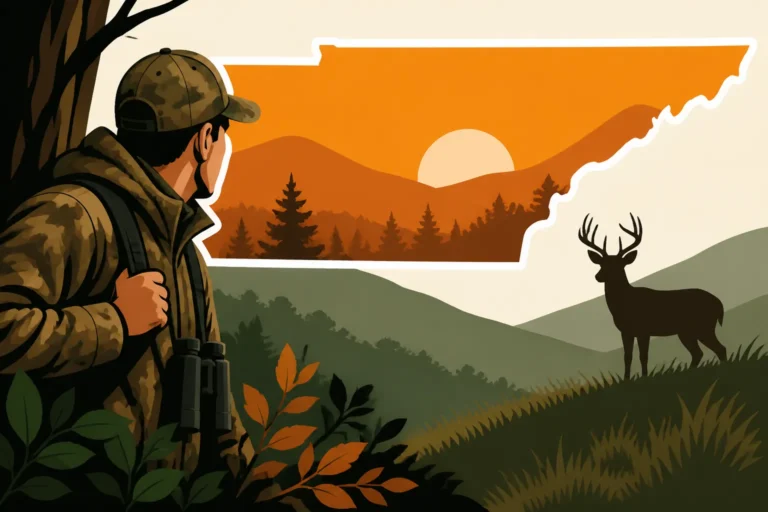
There's nothing quite like the immense satisfaction of a successful deer hunt in Tennessee, but let's be honest, hunting mature timber in our beautiful state can sometimes feel like trying to find a needle in a haystack blindfolded. Those expansive stretches of big woods, whether it's the rolling hills of the Cumberland Plateau or the dense hardwood bottoms, present a unique challenge. Deer here often feel like ghosts, moving silently, seemingly appearing and disappearing at will. This guide is all about tackling that specific frustration, diving deep into how grunt calls can become your secret weapon, helping you locate, attract, and ultimately harvest those elusive whitetails that call Tennessee's big timber home.
The Unique Challenges of Mature Tennessee Timber
Hunting in mature Tennessee timber isn't like hunting over a sprawling bean field in West Tennessee. It’s a different beast entirely, requiring a nuanced approach and a deep understanding of how deer behave in such environments. We often romanticize the idea of "big woods" hunting, but the reality is, it can be incredibly tough to consistently put yourself in front of deer when they have acres upon acres of dense cover to disappear into.
Visibility and Movement Constraints
One of the most obvious frustrations in mature timber is the sheer lack of visibility. You might be able to see 50 yards, maybe 70 on a good day, but often it's much less. This limited sightline dramatically impacts how you hunt. Spot-and-stalk is incredibly difficult unless you’re an absolute master of silent movement and reading subtle shifts in topography. More often, hunters resort to static stand setups, hoping a deer walks by. But in areas where deer can move through countless draws, benches, and thickets without ever crossing an open lane, your odds diminish significantly.
This limited visibility also means deer have the upper hand. They can detect your movement, or even just your silhouette, long before you ever see them. It creates a constant game of cat and mouse where the deer are almost always one step ahead. It’s enough to make even the most seasoned hunter pull their hair out, wondering if there are even any deer around.
Reading Deer Sign in Dense Woods
When you're hunting smaller woodlots or agricultural edges, reading deer sign is often straightforward. You find distinct scrape lines, heavily worn trails, and obvious rub lines along field edges or pinch points. In mature timber, especially vast tracts like those found in the Cherokee National Forest, it's a whole different ballgame. Deer sign can be incredibly spread out, less pronounced, and often difficult to interpret.
Instead of clear highways, you might find faint trails that spiderweb in every direction. Rubs might be scattered, not forming a definitive line, and scrapes can be anywhere, often under low-hanging branches in seemingly random spots. This makes it challenging to pinpoint consistent travel corridors or core bedding areas. You might spend hours still-hunting, traversing through what feels like endless woods, only to find sparse and confusing sign. Knowing how to interpret these subtle cues is paramount, and it often involves understanding how to scout Tennessee public land before season.
How Mature Timber Affects Deer Behavior
Deer, especially mature bucks, become masters of stealth and evasion in dense timber. They don't have the luxury of open fields where they can quickly assess danger from a distance. Instead, they rely heavily on their sense of smell and hearing, using the cover to move undetected. This often means they'll stick to the thickest draws, the densest laurel patches, or the most overgrown benches.
They become incredibly adept at circling downwind of perceived threats, using every bit of elevation and thermal current to their advantage. This hyper-awareness makes them incredibly challenging to approach or ambush. They might be bedded in an area that seems unhuntable, only to slip out like a phantom as soon as they catch a whiff of you. Understanding these evasive tactics is key to developing strategies, and it’s why a tool like a grunt call can be so effective in breaking through their natural caution.
Understanding Grunt Calls and Their Purpose
So, we've established that hunting mature timber can be a brutal mental game. But what if you could speak their language? What if you could cut through the endless trees with a sound that makes a deer stop, look, and even come investigate? That's precisely where a grunt call comes into its own. It's not a magic bullet, but it's a crucial tool that can level the playing field.
What a Grunt Call Mimics
A grunt call is designed to imitate the various vocalizations that deer make. The most common is the "buck grunt" – a short, guttural sound that a buck makes when communicating with other deer, often when trailing a doe, asserting dominance, or when agitated. But a good grunt tube can do more than that. You can often vary the pitch and length to mimic:
- Social Grunts: Softer, more contented grunts that indicate a deer is relaxed and moving through the woods. These are less aggressive and more conversational.
- Tending Grunts: Longer, more drawn-out grunts that a buck makes when actively pursuing a doe in estrus. These can be very intense and can often rile up other bucks in the area.
- Aggressive Grunts/Chuff Grunts: Short, loud, almost snorting grunts that signal agitation or a challenge. These are often made by dominant bucks to intimidate rivals.
The beauty of the grunt call is its versatility. It's not just one sound; it's a range of communication tools that, when used correctly, can tap into a deer's natural curiosity, territoriality, or breeding instincts.
Why Grunts Work in Dense Cover
In open country, visual cues like decoys can be highly effective. But in thick Tennessee timber, where your visibility is limited to a few dozen yards, a decoy is often useless unless a deer is already right on top of you. This is where sound reigns supreme. Sound travels through the dense woods, bouncing off trees and carrying further than any visual aid might.
A grunt call can penetrate the thick canopy and undergrowth, reaching deer that are out of sight and potentially out of earshot for natural sounds. It taps into their primary mode of communication within their dense habitat. A curious buck, hearing what sounds like another deer, especially a buck, in his territory, might feel compelled to investigate. It’s often the only way to get a deer's attention when they are moving through vast expanses of timber, completely unaware of your presence. Think of it as throwing out a line when you can’t see the fish; you’re hoping the bait, or in this case, the sound, brings them to you.
Choosing the Right Grunt Call
The market is flooded with grunt calls, and choosing the right one can feel a bit overwhelming. You’ve got everything from simple, fixed-reed calls to elaborate adjustable tubes. Here’s what to look for when you're trying to pick one for your Tennessee timber hunts:
- Versatility: Look for a call that allows you to vary the pitch and tone. Some calls have a sliding O-ring or rubber band that lets you adjust the reed tension, giving you a wider range of buck grunts, from young bucks to mature bruisers. Calls like those from Primos or Woods Wise often offer good versatility.
- Realism: This goes without saying, but you want a call that sounds like a real deer. Listen to demos online or at hunting stores. The sound should be rich and guttural, not tinny or forced. Sometimes, a simple, well-made call sounds far more realistic than a complicated one.
- Durability and Weather Resistance: You're hunting in Tennessee, which means you'll encounter everything from crisp, dry mornings to damp, foggy days, and even freezing rain. Your call needs to hold up. Plastic or rubberized calls tend to be more forgiving in wet weather than those with exposed wooden components. Make sure the reed system is designed to prevent sticking.
- Ease of Use: Can you operate it silently and effectively, even with cold hands or while wearing gloves? Some calls are more ergonomic than others. Test it out in the store, if possible. You don't want to be fumbling around when a deer is approaching.
When researching gear or looking for reviews, a platform like GoHunt can be invaluable. They often feature user reviews and expert breakdowns of various hunting equipment, including grunt calls, which can help you narrow down your choices based on what other hunters are finding effective in similar conditions. Don't be afraid to try a few different models until you find one that feels right in your hands and sounds right to your ears.
Tactical Grunting Strategies for Mature Timber
Now that we understand the "why" and "what" of grunt calls, let's get into the "how." Simply blowing into a call randomly isn't going to cut it. To truly leverage the power of a grunt call in dense Tennessee timber, you need strategy, patience, and a keen awareness of your surroundings.
Situational Calling: When and Where to Grunt
Knowing when to grunt is just as important as knowing how to grunt. In mature timber, you're constantly fighting limited visibility, so your calling strategy needs to be precise.
- Blind Calling: This is perhaps the most common use in big woods. When you’re set up in a promising area—maybe a saddle on a ridge system, a subtle funnel, or a transition line between different timber types—and haven't seen any deer, blind calling can stir things up. After a quiet 15-20 minutes, let out a series of 2-3 soft, social grunts. Wait 5 minutes, then repeat. If nothing responds, try a slightly more aggressive sequence. The key is patience. A curious buck might take 15-30 minutes to work his way in, especially if he's circling downwind.
- After a Sighting: This is perhaps the most exhilarating use. You catch a glimpse of a deer, but it’s moving away, or it’s just out of bow range. A well-timed grunt can stop it in its tracks or even turn it around. If it’s a buck, especially during the rut, an aggressive grunt can challenge him. If it’s a doe, a social grunt might peak her curiosity. The trick is to call immediately after you see them, before they disappear, using a sound that matches the situation.
- In Response to Rattling: While primarily a sound tactic itself, light rattling can be a great precursor to grunting. A few antler clacks, mimicking a mild skirmish, followed by some tending grunts, can sound incredibly realistic and pull in bucks looking for a fight or an easy doe. This tactic works particularly well during the peak of the rut, roughly from late October through mid-November in many parts of Tennessee. If you’re trying to call in a big buck, consider combining your grunts with some strategic rattling and then get ready. This is when Rattling and Grunting in Tennessee truly shines.
Volume, Cadence, and Tone Adjustments
Your grunt call isn't an "on/off" switch. It's an instrument, and you need to play it with finesse.
- Volume: In thick timber, sound gets absorbed, but you also don't want to blow out a deer that's already close. Start with softer grunts, especially if you're blind calling in a new area. If there's wind, you might need to increase the volume slightly to carry the sound. If you think a deer is close (within 75 yards), keep your grunts soft and subtle. If you're trying to reach a distant ridge, increase the volume.
- Cadence: This refers to the rhythm and spacing of your grunts. A buck trailing a doe might make a series of rhythmic, almost impatient tending grunts, "Grrr-unt… grrr-unt… grrr-unt." A social grunt might be a single, short "Grunt!" every few minutes. Mimic what you've heard real deer do. Avoid rapid-fire, unrealistic sequences.
- Tone: The pitch of your grunt matters. A deep, guttural grunt suggests a mature buck, while a higher-pitched, shorter grunt might sound like a younger buck or even a doe (some calls allow for doe bleats too). During the rut, using a deeper, more aggressive tone can challenge dominant bucks.
Remember to vary your sequences. Don't always do the same 3 grunts every time. Mix it up. A good technique is to start soft, wait, then try a more aggressive sequence, then perhaps a series of tending grunts if you're in a rutting area. The goal is to sound like a natural conversation happening in the woods.
Combining Grunts with Other Tactics
Grunt calls are powerful, but they are even more effective when used as part of a broader strategy. No single tactic guarantees success, especially in challenging environments like mature Tennessee timber.
- Scents: A well-placed doe-in-estrus scent wick or a dominant buck urine dripper can provide the olfactory "proof" that backs up your vocalizations. A buck hearing your grunts might then be drawn in by the smell, making him feel more secure in his approach. Just be mindful of wind direction when using scents – you want them to carry into the areas you expect deer to approach from.
- Light Rattling: As mentioned, combining grunts with light rattling can be deadly, especially during the peak of Hunting the Rut in Early November. Mimic a short, non-committal fight, then follow up with some tending grunts. This can convince a cruising buck that there’s a new buck muscling in on his territory.
- Still-Hunting: If you’re slowly still-hunting Cumberland Plateau ridges, pausing every 50-75 yards to glass and listen, a soft grunt can be incredibly effective. After a pause, let out a subtle grunt. It might cause a deer to pause, giving you a chance to spot it, or even pull a curious deer toward you. This is a great way to cover ground and actively hunt, rather than just waiting in a stand.
- Choosing Your Stand Location: A grunt call is most effective when you've already put yourself in a high-probability area. Think about natural funnels, pinch points, or bedding area edges. A stand setup in one of these locations, like a strategically placed Treestand Setups in Cherokee National Forest, combined with a grunt call, dramatically increases your odds of pulling a deer into shooting range.
Common Mistakes and How to Avoid Them
Even with the best grunt call and a solid strategy, it's easy to make mistakes that can spook deer rather than attract them. These errors are often magnified in dense timber where deer have every advantage. Learning from common pitfalls can turn a frustrating hunt into a successful one.
Overcalling and Under-calling
There’s a delicate balance when using a grunt call. On one hand, you need to call enough to get a deer's attention, especially in expansive timber. On the other hand, overcalling can quickly make your sounds seem unnatural or alarming, sending deer running in the opposite direction.
- Overcalling: Imagine a person shouting continuously in the woods. It sounds aggressive, unnatural, and might signal a distressed or highly agitated animal, which can put wary bucks on edge. If you're grunting every minute, you're likely overdoing it. A good rule of thumb is to call in short sequences (2-4 grunts) every 15-30 minutes when blind calling. If you get a response or see a deer, then you can adjust your cadence.
- Under-calling: Conversely, if you only grunt once every hour, the chances of a deer hearing you, especially in windy conditions or over long distances, are slim. In thick cover, you need to put enough sound out there to increase your odds of detection. If you're unsure, it's often better to start subtly and increase volume and frequency if you're not getting a response after a full calling sequence (e.g., three sets of grunts over an hour).
Patience is key. Deer don't always respond immediately. They might be bedded, moving slowly, or circling cautiously. Give your calls time to work their magic before you assume no deer are in the area.
Ignoring Wind and Thermals
This is arguably the biggest mistake any hunter can make, and it’s especially critical when using a grunt call in mature timber. Deer rely on their noses above all else. If they circle downwind and scent you, your hunt is over, regardless of how realistic your grunts were.
- Wind Direction: Always position yourself so the prevailing wind carries your scent away from where you expect deer to approach. If you're calling, a buck will often try to circle downwind to get a whiff of the "deer" he's hearing. This means you need to anticipate his approach and set up accordingly. This might mean moving your stand or changing your calling direction. Understanding Wind and Thermals on a Ridge System is non-negotiable for success in these areas.
- Thermals: In hilly or mountainous timber, thermals play a huge role, especially in the mornings and evenings. As the sun rises, thermals typically rise, carrying scent uphill. In the evenings, as the air cools, thermals drop, carrying scent downhill. You need to account for these shifts. If you're set up in a hollow and plan to call in the morning, your scent will likely rise, which might be okay if deer are expected on the ridge above you. But in the evening, that same setup could send your scent down to deer below you. Always check a weather app or use a wind checker frequently.
Impatience and Giving Up Too Soon
In the age of instant gratification, waiting patiently can feel like an eternity, but it's vital when deer hunting, particularly with calling. Bucks, especially mature ones, are often slow to respond to calls. They’ve survived multiple hunting seasons by being cautious.
- Slow Approaches: A buck hearing a grunt might not charge in like a bull. Instead, he might slowly work his way in, stopping to listen, checking the wind, and using every bit of cover available. He might take 15, 20, or even 30 minutes to cover what seems like a short distance. If you grunt and then immediately pack up because nothing showed up in five minutes, you could be leaving a deer that was actively working toward you.
- The "One More Try" Mentality: It's often the last call, the one you almost didn't make, that brings a deer in. Commitment to your calling sequence and an ample waiting period afterward are crucial. Before moving to a new spot, give each setup at least an hour, especially during the rut. If you're worried about missing opportunities, platforms like GoHunt can provide detailed topographical maps and satellite imagery to help you plan multiple strategic calling locations within a single area, ensuring you make the most of your time.
Real-World Scenarios and Success Stories
Theory is one thing, but how does this play out in the actual Tennessee woods? Let’s walk through some real-world scenarios where grunt calls can turn a quiet sit into an unforgettable encounter. These situations highlight the adaptability and effectiveness of vocalizations in our state's diverse timber landscapes.
Blind Calling a Ridge System
Picture this: It's a crisp November morning, and you've hiked into a secluded spot on the Cumberland Plateau, perched on a subtle saddle where two finger ridges merge. The visibility is limited to about 60 yards, typical of mature hardwoods. You've been sitting for 45 minutes, and aside from a few squirrels, it's been dead quiet. Frustration starts to creep in.
Instead of packing up, you decide to try a blind calling sequence. You grab your grunt tube and let out three soft, social grunts, followed by a pause. Five minutes later, you repeat, this time adding a slightly longer, more drawn-out tending grunt. Then, silence. You wait. Five minutes turns into ten, then fifteen. Just as you start to wonder, you catch a flicker of movement to your left, down the ridge. A mature buck, his head low, is slowly working his way up, pausing behind every tree. He heard your call and is now trying to pinpoint the "other buck" he detected. You stay still, let him come into range, and make your shot. This kind of patient, strategic calling can be incredibly effective when Hunting Cumberland Plateau Ridgelines.
Reacting to a Distant Rub or Crash
Imagine you're still-hunting through a vast expanse of bottomland timber near the Tennessee River, slowly picking your way through the fallen leaves. Suddenly, you hear a loud crash followed by the distinct sound of a buck raking a tree, a sure sign of a rub. It's too far to see, maybe 150 yards away, but the sound is clear. He's actively asserting his dominance or letting out some frustration.
This is your cue. Instead of trying to sneak in and potentially spook him, you stop, get steady, and let out a series of aggressive, guttural grunts. Mimic a challenge. You might even add a short, sharp rattle. The buck might respond immediately, or he might go silent, trying to figure out who's invading his space. Hold your ground, stay hidden, and be ready. If he's a dominant buck, his territorial instincts might just overcome his caution, and he'll come in to investigate the source of the challenge. This is especially true if you're in an area known for good deer genetics, like some of the West Tennessee bottomlands.
Grunting During the Tennessee Rut
The Tennessee rut, often peaking in early November, is prime time for grunt calling. Bucks are actively cruising, looking for does, and are more vulnerable to calls than at any other time of year. Their hormones are raging, making them more aggressive and less cautious.
Consider setting up on a main travel corridor between a bedding area and a known food source. You've seen scrapes and rubs in the area, indicating buck activity. You decide to employ a more aggressive calling strategy. Start with a few tending grunts, mimicking a buck hot on the trail of a doe. Follow it up with some moderate rattling. Then, go back to grunts, varying the tone from aggressive to social. This tells a story to any buck in the vicinity: there's a doe in the area, and another buck is moving in. A cruising buck, especially a dominant one, might not tolerate this perceived intrusion. He'll often come in to check out the commotion, giving you a chance. This tactic is especially potent during Hunting the Rut in Early November.
These real-world examples show that grunt calls, when used intelligently and patiently, are far more than just noise makers. They are a critical communication tool that can unlock opportunities in even the most challenging mature timber settings in Tennessee.
| Grunt Call Type | Best Use Cases in Timber | Key Characteristics |
|---|---|---|
| Basic Tube Call | Blind calling, stopping deer, general communication | Simple, easy to use, often fixed pitch |
| Adjustable Call | Mimicking varied deer, aggressive rut calling, social | Sliding O-ring or band for pitch/tone changes, versatile |
| Snort-Wheeze Call | Challenging dominant bucks, aggressive encounters | Short, sharp, loud snort; highly aggressive |
| Doe Bleat/Fawn Bawl | Attracting does, calming deer, curiosity calls | Higher pitch, often combined with grunt calls |
| Combo Call | All-in-one convenience, varied situations | Integrates grunt, bleat, and sometimes snort-wheeze |
Disclaimer
Hunting is an inherently dangerous activity. Always prioritize safety, understand and follow all Tennessee Wildlife Resources Agency (TWRA) regulations, and obtain proper licenses and permits before heading into the field. The information provided here is for educational and entertainment purposes only and should not be considered a substitute for official safety courses or regulations. Always verify current hunting seasons, bag limits, and specific rules for your chosen hunting area with the TWRA.