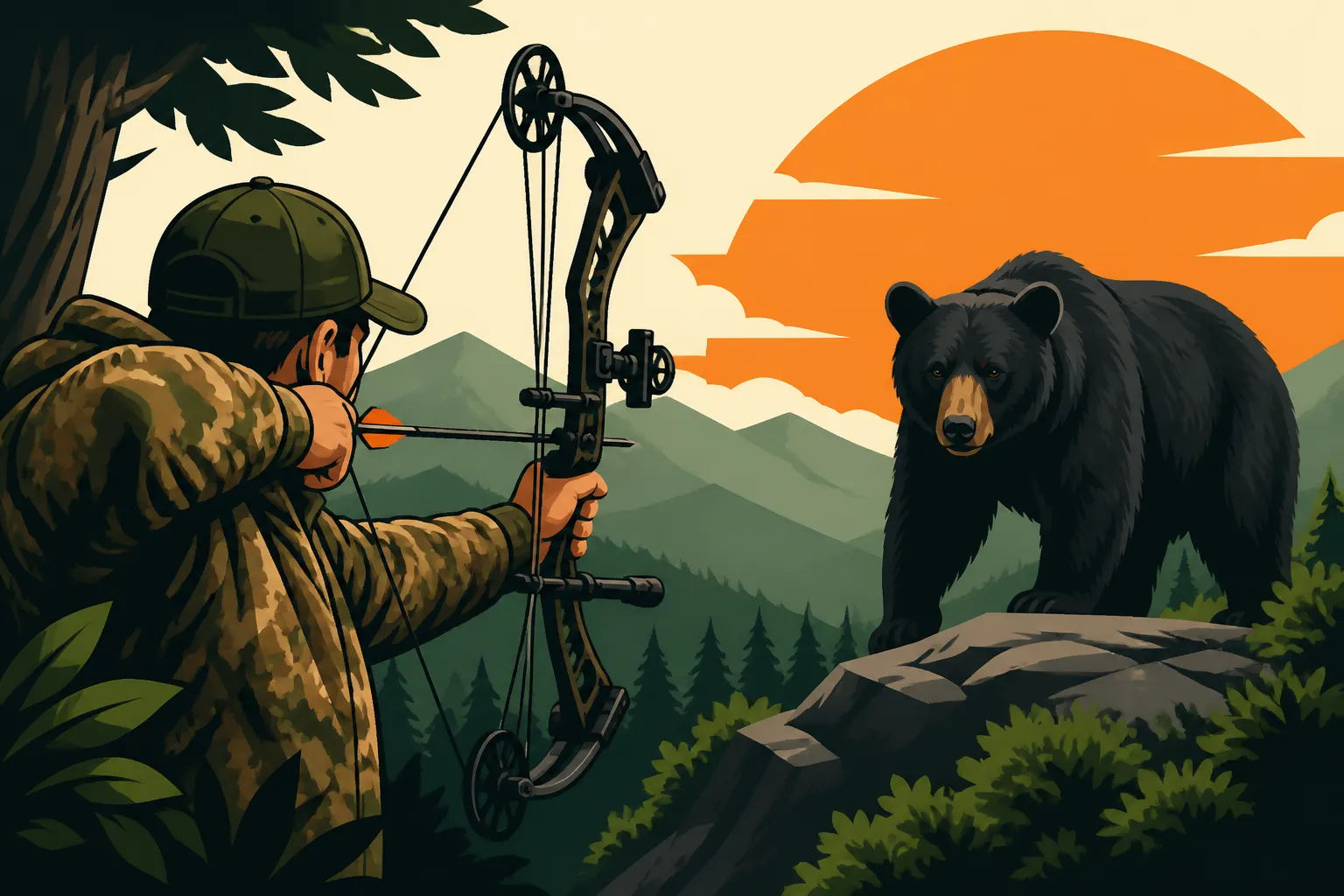
Bear Hunting Cherokee National Forest
Bear hunting in the vast, rugged expanses of the Cherokee National Forest is an experience unlike any other in Tennessee, often presenting significant challenges that can deter even seasoned hunters. The sheer scale of the terrain, combined with the elusive nature of black bears, can make finding and harvesting a bear feel like an impossible task. This comprehensive guide is designed to cut through that complexity, providing you with the detailed knowledge, practical strategies, and essential gear recommendations you'll need to confidently plan and execute a successful bear hunt in this truly wild corner of our state.
The Unique Challenge of Bear Hunting in Cherokee National Forest
The Cherokee National Forest isn't your typical deer woods; it's a sprawling, mountainous wilderness that demands respect, preparation, and a deep understanding of its unique environment. Hunting black bears here is a truly immersive backcountry experience, far removed from easy access and often requiring significant physical effort.
Understanding the Vastness and Rugged Terrain
Imagine endless ridges and hollows, steep ascents and descents, and a canopy that often feels like it's swallowing the sky. That's the Cherokee National Forest. It encompasses over 650,000 acres, stretching along the eastern border of Tennessee, making it the largest tract of public land in the state. This vastness is both its greatest appeal and its most daunting challenge. Bears have an enormous amount of room to roam, to feed, and to escape pressure, making their movements less predictable than in smaller, more confined habitats. The terrain itself is relentlessly steep and broken, covered in a mix of mature hardwoods, dense rhododendron thickets, and scattered pine stands. Navigating this landscape requires not just physical fitness, but also keen navigational skills and an intimate knowledge of how to read the topography. Forget easy road access; most productive bear hunting areas are deep in the backcountry, accessible only by foot, and often involve miles of walking on faint trails or through trackless woods.
This environment presents a significant mental and physical hurdle. It's easy to get disoriented, and the effort required to simply cover ground can quickly sap your energy. When you're considering a bear hunt in this region, understand that you're signing up for a true wilderness endeavor. The reward, of course, is the chance to pursue one of North America's most formidable game animals in its natural, untamed habitat, away from the crowds often found in other hunting areas. This is why many experienced hunters are drawn to the rugged beauty and demanding nature of the Cherokee.
Key Bear Habitats and Food Sources
Black bears in the Cherokee National Forest are creatures of opportunity, heavily influenced by seasonal food availability. Their diet shifts throughout the year, but understanding their primary forage is crucial for predicting their movements. In spring and early summer, they'll often frequent lower elevations, seeking out succulent green vegetation, emerging berries like blackberries and blueberries, and even insects. As summer progresses into fall, the focus dramatically shifts to hard mast crops. Oaks and hickories become paramount. When acorns drop, especially in years with good mast production, bears will concentrate in areas with abundant white oak, red oak, and chestnut oak. These dense stands of mast-producing trees on mountain slopes and along creek bottoms become prime bear real estate.
Beyond mast, bears will also utilize soft mast sources like wild grapes, blackgum, and even persimmons in certain areas. They're also not above finding carrion or raiding cornfields if they border the forest, although the latter is less common deep within the national forest itself. Understanding these seasonal shifts is key to successful scouting and hunting. A ridge that's devoid of bear sign in early fall might become a hotspot once the white oaks start dropping their bounty. Conversely, a poor mast year can scatter bears over a wider area as they search for alternative food sources, making them even harder to locate. This ecological dance between bears and their food supply is something you'll need to continually monitor and adapt to throughout the hunting season. You can find more specific advice on Hunting Bears Over Natural Mast in the Mountains to dive deeper into this critical aspect of scouting.
The Current State of Tennessee's Black Bear Population
Tennessee has seen a remarkable recovery in its black bear population, especially in the eastern part of the state. Once largely confined to the Great Smoky Mountains National Park and the remote areas bordering North Carolina, bears have expanded their range significantly into the Cherokee National Forest and beyond. Today, the eastern bear population is robust and healthy, supporting sustainable hunting seasons. The Tennessee Wildlife Resources Agency (TWRA) actively manages the population, using harvest data and biological surveys to set season dates and bag limits, ensuring the long-term health of the herd.
While bears are still most concentrated in the mountainous eastern counties, sightings and expansion into other regions of the state are becoming more common. This growth is a testament to conservation efforts and suitable habitat. For hunters, this means there's a good chance of encountering bears in the Cherokee, though their elusive nature still makes them a challenging quarry. Understanding Tennessee's Black Bear Population statistics and trends can give you a clearer picture of where to focus your efforts. This healthy population is what allows for the rich hunting opportunities that draw so many to the Cherokee's rugged slopes each year.
Navigating Tennessee's Bear Hunting Regulations
Before you even think about stepping foot in the Cherokee National Forest with a bear tag, it's absolutely critical to understand the specific regulations that govern bear hunting in Tennessee. These rules are designed to manage the population responsibly and ensure hunter safety. Ignorance of the law is never an excuse, and a misstep can quickly turn a memorable hunt into a costly mistake.
Licenses, Permits, and Bear Zone Specifics
First things first, you'll need the appropriate Tennessee hunting license and a Big Game Permit. For non-residents, there are various options, including annual or 7-day licenses, typically bundled with a big game permit. Residents have a wider array, including annual licenses, lifetime licenses, and the comprehensive Sportsman License. Always ensure your license is valid for the current season. Beyond the general hunting license, there are specific regulations regarding bear hunting in Tennessee's designated bear zones. The Cherokee National Forest falls primarily within what the TWRA designates as Bear Zones 1, 2, and 3, each with distinct season dates and regulations.
Specifically, much of the Cherokee National Forest is within Bear Zone 1 (Northeast Tennessee) and Bear Zone 3 (South Cherokee). Tennessee's Three Bear Hunting Zones outlines these areas in detail. Bear Zone 1, for instance, includes counties like Cocke, Greene, Monroe, Polk, and Unicoi within the Cherokee NF boundaries, with a split archery/muzzleloader season and a firearms season. Bear Zone 3 covers the southern parts of the Cherokee in Polk and Monroe counties, often with a slightly different set of dates, particularly for hound hunting. It's vital to know precisely which zone you'll be hunting in, down to the county lines, as crossing into a different zone inadvertently could mean you're hunting out of season or under incorrect rules. Before heading out, always consult the current TWRA Hunting and Trapping Guide for the most up-to-date information, as regulations can change annually.
Season Dates and Bag Limits in the Cherokee
Season dates for bear hunting in the Cherokee National Forest are complex and vary significantly by bear zone and weapon type. Typically, there will be archery-only periods, often a muzzleloader season, and then a general firearms season. Hound hunting, which is a popular and effective method in the rugged mountains, also has specific, often later, season dates. For instance, in some parts of the Cherokee, the archery season might open in September, followed by muzzleloader in October, and then a general firearms season in November or December, with hound hunting running concurrently or later into the year. These dates are meticulously set by the TWRA based on population data and harvest objectives, and they are strictly enforced.
The bag limit for bears in Tennessee is typically one bear per license year. However, there are nuances. You must confirm if the bear you harvest counts towards a specific season type or zone. For example, some zones might have an "Archery-Only" or "Muzzleloader-Only" bear, while others allow for any legal weapon during the general season. There might also be restrictions on cub bears or sows with cubs. It’s absolutely essential to be able to accurately identify your target before taking a shot to ensure it’s a legal harvest. Always refer to the current TWRA guide for the precise dates for your chosen zone and hunting method, particularly if you plan on Hunting Bear Zone One in Northeast Tennessee or Hunting Bear Zone Three on South Cherokee.
Blaze Orange Requirements and Other Safety Rules
Safety is paramount, especially when hunting dangerous game in rugged terrain, and Tennessee has specific requirements to ensure hunter visibility. During periods when firearm deer or bear seasons are open concurrently, all hunters, regardless of what they are hunting, are typically required to wear 500 square inches of blaze orange or blaze pink on their head and outer torso. This includes a hat and vest. This rule is in place to minimize accidents in crowded hunting areas and should never be overlooked, even if you are hunting with a bow or muzzleloader during a gun season. The only exceptions are often for waterfowl hunters, dove hunters, or those hunting on private land where the landowner specifies otherwise, but for public land bear hunting in the Cherokee, assume blaze orange is mandatory during firearms seasons.
Beyond blaze orange, there are other critical safety rules. Always be aware of your surroundings, especially if hunting near trails or residential areas (though deep in the Cherokee, this is less of a concern than on smaller public tracts). Know your target and what's beyond it. Never shoot across a road or a body of water unless you have a clear understanding of the full trajectory and backstop. Additionally, when hunting with hounds, ensure your dogs are properly collared and tagged, and that you understand the rules for retrieving dogs that cross property lines or enter other zones. Safe hunting practices are not just about legal compliance; they're about ensuring everyone returns home safely, including yourself and any hunting partners.
Essential Gear for a Successful Cherokee Bear Hunt
Hunting black bears in the Cherokee National Forest is an adventure that demands not just skill, but also reliable, well-chosen gear. The challenging terrain, unpredictable weather, and the sheer power of a black bear mean your equipment needs to be up to the task. Skimping on essentials can lead to discomfort, inefficiency, or even dangerous situations.
Firearms and Ammunition for Black Bear
When it comes to firearms for black bear in the Cherokee, reliability and knockdown power are key. While black bears aren't grizzlies, they are tough animals, and a well-placed shot is crucial for a quick, ethical harvest and to prevent a long, dangerous blood trail in dense cover. For rifles, popular calibers like .30-06, .308, .270, and 6.5 Creedmoor are all more than adequate with quality bullets. Many hunters also favor magnum calibers like .300 Win Mag or 7mm Rem Mag for their added energy, especially if longer shots across hollows might be a possibility. However, in the thick woods of the Cherokee, shots are often closer than you might expect, sometimes under 100 yards. The most important factor is bullet construction; choose a high-quality, heavy-for-caliber bullet designed for deep penetration and controlled expansion, such as Barnes TSX, Nosler AccuBond, or Federal Fusion. These minimize fragmentation and maximize energy transfer. For specific advice, check out Rifle Calibers for Tennessee Bear.
Muzzleloaders are also a popular choice during their dedicated season, offering a formidable punch. A .50 caliber muzzleloader firing a heavy, conically shaped bullet or sabot is highly effective. Ensure your muzzleloader is well-maintained and you're proficient with it. For archery hunters, a powerful compound bow or crossbow with heavy arrows and strong, sharp broadheads (fixed-blade or robust mechanicals) is essential. Minimum draw weights are typically regulated, so check the TWRA guide. The goal is maximum penetration to reach vital organs. Regardless of your weapon, practice extensively with your chosen setup to ensure accuracy under pressure. Knowing your limits and your equipment's capabilities is far more important than caliber alone.
Optics and Navigation Tools for Dense Timber
In the dense, broken terrain of the Cherokee, effective optics and reliable navigation tools are non-negotiable. Quality binoculars are paramount for scanning distant ridges, picking apart thickets for movement, and identifying potential game at first and last light. An 8x or 10x magnification is generally ideal, offering a good balance of field of view and magnification. Look for models with excellent low-light performance, as bears are often most active during dawn and dusk, and the deep hollows can hold shadows even at midday. Brands like Vortex, Leupold, and Maven offer excellent options at various price points. A rangefinder is also incredibly useful, allowing you to accurately judge distances in unfamiliar, undulating terrain, especially if you're not used to judging yards on steep slopes.
Navigation is perhaps even more critical. Getting lost in the Cherokee National Forest is a genuine concern, and a small mistake can lead to a very long, cold night. A dedicated GPS unit or a reliable smartphone app like GoHunt, Gaia GPS, or onX Hunt is absolutely essential. These apps, particularly GoHunt, allow you to download maps for offline use, mark waypoints, track your route, and check property boundaries. Carry a portable power bank to keep your devices charged. While digital tools are fantastic, always have a physical map and compass as a backup. Understand how to use them. Topographic maps show the elevation changes and terrain features that are so important for understanding bear movement. Don't rely solely on technology; batteries die, and signals can be non-existent deep in the hollows.
Clothing and Backcountry Essentials
Your clothing system for a Cherokee bear hunt needs to be adaptable, durable, and comfortable, capable of handling rapid weather changes, steep climbs, and cold, damp conditions. Layering is key. Start with a moisture-wicking base layer, add insulating mid-layers (fleece or synthetic puffy jackets), and finish with a waterproof and windproof outer shell. Even in early fall, temperatures can drop significantly, especially at higher elevations or after dark. Later in the season, expect cold, wet conditions. Wool or high-quality synthetics are generally preferred over cotton, as they retain insulating properties even when wet. Good quality hiking boots with ankle support and excellent traction are non-negotiable for the steep, uneven terrain. Ensure they are waterproof.
Beyond clothing, a sturdy backpack is essential for carrying your daily essentials. You'll need water (or a filter/purifier), high-energy snacks, a first-aid kit (especially important in remote areas), a headlamp with extra batteries, fire-starting materials, a signaling device (whistle or satellite messenger), and a knife. If you're Packs for a Cherokee Forest Day Hunt, consider a pack with enough capacity for emergency gear, extra layers, and potentially packing out meat. When hunting with hounds, specialized gear like GPS collars for your dogs (e.g., Garmin Alpha series, which integrates well with GoHunt mapping for tracking dogs and your own location) are crucial. This isn't a casual hunt; prepare for potential emergencies and carry what you need to be self-sufficient for at least 24-48 hours. For comprehensive emergency preparedness, refer to First Aid Kits for Remote Cherokee Forest Ground.
Scouting Strategies in the Rugged Mountain Environment
Successful bear hunting in the Cherokee National Forest often boils down to effective scouting. Bears are constantly on the move, searching for food, and the sheer size of the forest means you can't just stumble into them. Pre-season work, both digital and on the ground, is vital for narrowing down vast expanses and identifying promising areas.
Pre-Season Digital and On-the-Ground Scouting
Your scouting efforts should begin long before you ever set foot in the woods. Start with digital reconnaissance using mapping applications like GoHunt, onX Hunt, or Gaia GPS. These tools allow you to study satellite imagery and topographic maps, identifying potential bear habitat from the comfort of your home. Look for areas with a high density of mast-producing trees (oaks, hickories), especially on south-facing slopes that might warm up earlier in the spring or provide better sun exposure for drying mast. Identify natural funnels like saddles between ridges, creek bottoms that act as travel corridors, and benches where bears might feed and bed. Mark these potential hotspots as waypoints. Pay attention to clear-cuts, which can provide dense bedding cover and new growth browse, and areas near water sources.
Once you have some promising spots identified digitally, it's time for on-the-ground scouting. This is often done in late summer or early fall, before the leaves drop, or even earlier if you're looking for spring sign. Hike into your identified areas, verifying what you saw on the map. Look for actual mast production — are the acorns dropping? Are there signs of a good berry crop? While walking, actively look for bear sign. This involves a lot of hiking, so be prepared for the physical demands. The more ground you cover and the more time you spend in the woods pre-season, the better your chances of identifying active bear areas. Remember, bears are creatures of habit tied to food, so finding current food sources is a significant step towards finding bears.
Identifying Bear Sign and Travel Corridors
When you're out scouting, you're essentially looking for clues that tell you bears are in the area and, more importantly, what they're doing. Fresh bear scat is one of the most obvious indicators, and its contents can tell you what they're currently eating (berries, acorns, insects). Look for tracks in soft soil near water sources, creek beds, or muddy trails. Bear tracks are distinctive, with five toes and claw marks. Size can give you an idea of the bear, but don't obsess over it; fresh sign is what matters. Rubs on trees are another common sign, where bears scratch their backs or mark territory. These can be old or fresh, so look for sap or fresh claw marks.
Beyond these direct signs, look for evidence of feeding activity. Torn-up logs and overturned rocks indicate they've been digging for grubs and insects. Broken branches in fruit trees or torn-down limbs in mast trees are also clear indicators. When you find these signs, don't just note them; try to piece together a "story." Where are they coming from? Where are they going? What's the pattern? These observations will help you identify primary travel corridors—the pathways bears use to move between bedding areas, water, and food sources. These corridors, which might be narrow ridges, old logging roads, or dense creek bottoms, are prime locations for setting up an ambush or focusing your still-hunting efforts. The more you learn about Where Cherokee Forest Bears Range, the more effective your scouting will become.
Adapting to Changing Mast Conditions
The biggest variable in bear movements in the Cherokee National Forest is undoubtedly the mast crop. Acorns, especially, dictate where bears will congregate. A bumper crop of white oaks on one ridge can draw bears from miles around, creating a temporary hotspot. Conversely, a poor mast year in a particular area will force bears to travel widely in search of alternative food sources, making them much harder to pattern. This means your scouting isn't a one-and-done affair; it needs to be an ongoing process, even into the season.
You might scout a perfect oak flat in August and find it covered in sign, only to return in November and discover the acorns were quickly depleted or never fully materialized. Bears will then shift their focus to red oaks, which drop later, or move to lower elevations for persistent soft mast. This adaptability is critical for success. Talk to local TWRA biologists if possible, or consult online resources for general mast crop predictions. But most importantly, trust your own on-the-ground observations. If you're not seeing fresh sign in your planned area, be ready to move and scout new locations. This constant adaptation to the ever-changing food landscape is a hallmark of successful bear hunting in the mountains.
Effective Hunting Tactics for Cherokee Black Bears
Once you've done your homework, scouted diligently, and understood the regulations, it's time to consider the actual hunting methods. The Cherokee National Forest offers a variety of terrain and conditions that lend themselves to different tactics, from quiet still-hunting to the exhilarating chase with hounds.
Still-Hunting and Stand Hunting Approaches
For many hunters, the challenge and reward of still-hunting or stand hunting a black bear in the vastness of the Cherokee National Forest is the ultimate pursuit. Still-hunting involves moving incredibly slowly and deliberately through the woods, pausing frequently to glass and listen, essentially hunting the bear on its own terms. This method requires immense patience, quiet footwork, and a keen eye. Focus on areas with fresh bear sign, particularly those high-percentage travel corridors between bedding areas and food sources. Move into the wind, paying close attention to thermals that can shift throughout the day, especially in the steep terrain. Look for movement, a splash of black against the fall foliage, or the subtle crunch of acorns underfoot. The key is to blend in and become part of the forest, allowing the bears to go about their natural routine without detecting you.
Stand hunting, whether from a treestand or a ground blind, is another effective tactic, particularly if you've pinpointed a consistent food source or a well-used travel route. Setting up a treestand overlooking a productive white oak flat or a saddle that bears regularly cross can be highly productive. Ground blinds, especially brushed-in pop-ups, can be effective in dense thickets or along field edges bordering the forest, though deep within the Cherokee, field edges are less common. The advantage of a stand is that it keeps your scent off the ground and allows for less movement. However, it requires a commitment to a specific location. You need to be in your stand well before daylight and stay until dark, as bears can move at any time. When selecting a stand site, consider wind direction, sun position, and your entry and exit routes to avoid spooking game. Regardless of your chosen method, prepare for long periods of quiet observation and the physical demands of getting to and from your hunting location in the dark.
The Art of Hunting Bears with Hounds
For many, the most traditional and exciting method of hunting black bears in the Cherokee National Forest is with a pack of well-trained hounds. This method is deeply ingrained in the culture of mountain hunting and is specifically permitted in Tennessee's bear zones during designated seasons. Running Hounds for Cherokee Forest Bears is a thrilling experience, relying on the dogs' incredible noses and stamina to track a bear, often for miles, until it is treed or bayed on the ground. The hunters then follow the chase, navigating the rugged terrain, until they can safely approach the bear. This is not a passive hunting method; it's physically demanding for both dogs and hunters.
A successful hound hunt requires a substantial investment in dogs, training, and equipment. The dogs must be conditioned to handle the demanding climbs and thick cover, and they need to be focused on bear scent. Hunters rely on GPS collars (like those from Garmin, often integrated with mapping apps like GoHunt) to track their dogs' movements across vast distances. The chase can lead you into incredibly remote and challenging areas, so physical fitness and navigation skills are paramount. When the dogs finally tree or bay a bear, the hunters must approach carefully, assess the situation, and determine if it's a safe and ethical shot opportunity. This method often results in closer-range encounters and provides a unique insight into the bears' behavior. It’s a team effort, combining animal instinct with human determination, and it builds incredible camaraderie among hunting partners.
Calling and Other Aggressive Tactics
While not as universally employed as still-hunting or hounds, calling can sometimes be an effective tactic for drawing in curious or aggressive bears, particularly in specific scenarios. Predator calls, mimicking the distress cries of a fawn, rabbit, or even a domestic piglet, can sometimes pique a bear's curiosity, especially if they are looking for an easy meal. This tactic is best used when you have a clear shooting lane and a good backdrop, as a bear might approach silently and quickly. It's often employed from a treestand or ground blind, giving the hunter an elevated position or concealment.
Another aggressive tactic, more common in some western states but with limited application here, is spot-and-stalk. This involves glassing vast areas (often clear-cuts or open ridges) for bears feeding in the open and then planning a careful stalk to get within shooting range. In the dense cover of the Cherokee, truly "spotting" a bear from a distance is challenging, but not impossible on certain open slopes or powerline cuts. If you do spot a bear, a methodical stalk, using terrain and wind to your advantage, can be incredibly rewarding. For more on this, consider Spot-and-Stalk Tactics for Cherokee Forest Bears. Regardless of the tactic, always prioritize safety and ethical shot placement. Bears are powerful animals, and a wounded bear can be dangerous in dense cover.
Safety and Practical Logistics in the Backcountry
Hunting black bears in the Cherokee National Forest is a wilderness pursuit, and as such, it comes with inherent risks. Being prepared for emergencies, understanding the physical demands, and practicing good bear safety are not just recommendations—they are absolute necessities for a successful and safe hunt.
Physical Demands and Wilderness Preparedness
Let's be blunt: bear hunting in the Cherokee National Forest is physically demanding. You'll be hiking steep slopes, traversing uneven terrain, and potentially covering many miles in a day, often while carrying heavy gear. If you're hunting with hounds, the pursuit can be relentless and unpredictable, pushing you to your physical limits. Conditioning is crucial. Start a rigorous exercise regimen months before your hunt, focusing on cardiovascular endurance, leg strength, and carrying a weighted pack. Don't underestimate the impact of elevation changes; even short distances can feel like a marathon when climbing a thousand feet up a mountain.
Wilderness preparedness extends beyond physical fitness. You need to be self-sufficient. This means carrying enough water (or a reliable filter), high-energy food, a comprehensive first-aid kit that can handle anything from scrapes to serious injuries, and emergency shelter. A small tarp, a bivy sack, or even a space blanket can be life-saving if you get caught out overnight unexpectedly. Know how to build a fire in wet conditions. Pack essentials like a multi-tool, duct tape, and cordage. Think about what you would need if you were stranded for 24-48 hours. This isn't about being paranoid; it's about being responsible in a genuine wilderness environment where rescue might not be immediate.
Bear Safety Protocols and Encounters
While black bears in Tennessee are generally not aggressive towards humans, encounters can happen, especially if you surprise a bear, particularly a sow with cubs. Understanding and practicing bear safety protocols is vital. Make noise as you hike, especially in dense cover, to avoid startling a bear at close range. Carry bear spray, readily accessible, and know how to use it. If you encounter a bear, remain calm. Do not run, as this can trigger a chase instinct. Make yourself look as large as possible, make noise, and slowly back away. If a bear approaches, stand your ground, continue to make noise, and be prepared to use your bear spray. In the extremely rare event of a physical attack, fight back aggressively.
When field dressing or handling a harvested bear, be mindful of other bears attracted to the scent of blood. Work quickly, and if possible, move the carcass away from your immediate camp or resting area. Secure your food, scent-items, and harvested meat properly, ideally by hanging it from a tree out of a bear's reach, or in bear-resistant containers. These precautions minimize the risk of attracting other bears to your location and reduce potential conflicts. Responsible bear safety is about awareness and prevention, ensuring a positive experience for both humans and wildlife.
Emergency Planning and Communication
Because cell service is notoriously spotty or non-existent in much of the Cherokee National Forest, a robust emergency communication plan is essential. Do not rely solely on your cell phone. Invest in a satellite messenger device (like a Garmin inReach or Zoleo) that allows you to send and receive text messages and, more importantly, trigger an SOS call to emergency services even without cell signal. Share your hunting plan—your exact location, planned routes, and expected return time—with a trusted person back home. Give them specific instructions on when to initiate a search if you don't check in.
Carry a fully charged power bank for any electronic devices. A headlamp with fresh batteries is not optional; it's critical for navigating in the dark, which is often when you'll be entering or exiting the woods. Consider carrying a small, powerful flashlight as well. If hunting with a partner, always have a plan for what to do if you get separated. Whistles are excellent for short-range communication. Before you go, study the area's specific geography for potential hazards like cliffs, deep water crossings, or thick rhododendron hells. Knowing the lay of the land can help you navigate more safely and efficiently in an emergency situation.
After the Shot: Field Care and Reporting Your Bear
Taking down a black bear in the rugged expanse of the Cherokee National Forest is the culmination of immense effort and dedication. But the work doesn't stop once the shot is fired. Proper post-harvest care and adherence to Tennessee's reporting requirements are just as crucial as the hunt itself.
Proper Field Dressing and Meat Preservation
A black bear is a large animal, and field dressing it in the backcountry, especially on steep terrain, can be a significant challenge. However, swift and thorough field dressing is paramount for preserving the meat quality, particularly in warmer early season hunts. Begin by carefully removing the entrails. Bears have a thick layer of fat, and it's important to remove as much of it as possible, as bear fat can go rancid quickly and impart an off-flavor to the meat. Skinning the bear quickly also aids in cooling the carcass. Many hunters opt for the "gutless method" in the backcountry, which involves skinning and deboning the bear in the field without gutting, quartering it into manageable pieces to pack out. This minimizes the weight you have to carry and makes the process more efficient on steep slopes. You can find detailed instructions on Handling a Bear After the Shot.
Once the meat is deboned, place it immediately into clean game bags. These breathable bags protect the meat from dirt, flies, and debris while allowing it to cool. Hang the game bags in the shade, off the ground, to promote cooling. If temperatures are warm, cooling is your biggest challenge. Consider carrying a lightweight tarp to create additional shade. Rapid cooling prevents bacterial growth and ensures your hard-earned venison is delicious. For later season hunts in colder weather, cooling is less of an issue, but protection from precipitation and scavengers remains important. Pack plenty of water for cleaning knives and hands, and consider bringing a small brush for cleaning debris from the meat.
Mandatory Reporting and CWD Considerations
Tennessee has strict reporting requirements for harvested black bears. After successfully taking a bear, you are generally required to report your harvest to the TWRA before moving the animal from the kill site. This often involves using the TWRA's Go Outdoors Tennessee app or website, or calling a designated phone number. You'll typically need to provide information such as the county of harvest, the bear's sex, and the date. After reporting, you will receive a confirmation number, which must remain with the bear until it reaches its final destination. This process ensures the TWRA collects vital data for population management and monitors harvest trends.
Additionally, while Chronic Wasting Disease (CWD) is primarily a deer disease, hunters should always be aware of any zones where CWD testing might be required or recommended for any cervid species, and generally follow best practices for carcass disposal. For bears, specific CWD regulations are less direct than for deer, but the principle of responsible carcass handling remains. Any bear harvested in a CWD-positive county (check the current TWRA map for the latest CWD Zone information) should have its head submitted for testing, or at minimum, the head and spinal column should be left at the kill site or disposed of in a licensed landfill. While bears don't get CWD, these precautions help prevent any potential spread of CWD-causing prions in the environment if the bear has fed on infected deer. Always consult the latest TWRA regulations regarding CWD and carcass movement, especially for large game animals.
Transporting Your Harvest Out of the Mountains
Getting a whole bear or quartered meat out of the rugged Cherokee National Forest is arguably the most physically demanding part of the entire hunt. A mature black bear can weigh several hundred pounds, and even deboned, the meat and hide represent a significant load. This is where physical conditioning and planning really pay off. If you've deboned the bear into game bags, you'll need a sturdy frame pack capable of comfortably carrying heavy loads over uneven terrain. Divide the meat among hunting partners if possible to lighten individual loads. Be realistic about what you can carry; multiple trips might be necessary, or you might need to leave a portion of the meat to retrieve later if the weather is cool enough.
For larger bears or remote kill sites, some hunters opt for game carts if the terrain allows, but in the steep, roadless areas of the Cherokee, carts are often impractical. If you're fortunate enough to be hunting near an ATV trail or a forest service road, a deer sled or drag might be an option for the final stretch. However, most of the time, it will be carried out on your back. Take your time, stay hydrated, and be aware of your footing, especially when carrying a heavy pack on steep or wet slopes. The goal is to get your meat out efficiently and safely, ensuring that your hard-earned harvest doesn't go to waste and that you don't injure yourself in the process.
Cherokee National Forest Bear Hunting Gear Checklist
Here's a quick checklist to help you pack for your Cherokee National Forest bear hunt. This is a comprehensive list; adapt it to your specific hunting method, season, and duration.
| Category | Item | Notes |
|---|---|---|
| Hunting Essentials | Valid Hunting License & Big Game Permit | Check TWRA website for current season and zone specific dates. |
| Firearm/Bow & Ammunition | Appropriate caliber/draw weight, high-quality bullets/broadheads. | |
| Optics | Binoculars (8x-10x), Rangefinder. | |
| Knife & Sharpener | Field dressing knife, skinning knife, sharpening stone/tool. | |
| Blaze Orange/Pink Gear | Hat and vest (500 sq. inches total) during gun season overlap. | |
| Scent Control (optional) | For still-hunting or stand hunting. | |
| Navigation | GPS Unit or Phone App | GoHunt, onX Hunt, Gaia GPS with downloaded offline maps. |
| Physical Map & Compass | Know how to use them as a backup. | |
| Power Bank & Charging Cables | For all electronic devices. | |
| Clothing & Comfort | Layered Clothing System | Moisture-wicking base, insulating mid-layers, waterproof/windproof outer shell. Wool/synthetics. |
| Waterproof Hiking Boots | Broken-in, good ankle support, excellent traction. | |
| Extra Socks | Wool or synthetic. | |
| Gloves & Hat | Appropriate for expected temperatures. | |
| Rain Gear | Jacket and pants. | |
| Safety & Survival | First-Aid Kit | Comprehensive for backcountry use. |
| Headlamp & Extra Batteries | Essential for dark entries/exits. | |
| Bear Spray | Easily accessible and know how to use it. | |
| Fire Starter | Waterproof matches, lighter, fire-starting material. | |
| Emergency Shelter | Bivy sack, space blanket, small tarp. | |
| Whistle | Signaling device. | |
| Satellite Messenger (e.g., inReach) | For communication where cell service is absent. | |
| Water & Water Filter/Purifier | Enough for the day, plus backup. | |
| High-Energy Snacks | Plenty of them. | |
| Game Retrieval | Frame Pack | For packing out meat. |
| Game Bags | Breathable, clean, multiple sizes. | |
| Cordage/Rope | For hanging meat, emergencies. | |
| Deer Drag/Sled (optional) | If terrain and access allow for final retrieval. | |
| Hound Hunting (Add-ons) | GPS Collars & Handheld Receivers | For tracking dogs (e.g., Garmin Alpha). |
| Dog First-Aid Kit | Specific for canine injuries. | |
| Dog Food/Water | For working dogs. | |
| Cut Vest for Dogs | Protection in thick briars. |
Disclaimer
Please remember that hunting regulations, season dates, and specific requirements can change annually. Always consult the most current Tennessee Wildlife Resources Agency (TWRA) Hunting and Trapping Guide or visit their official website before planning any hunt. This guide is for informational purposes only and does not supersede official regulations.