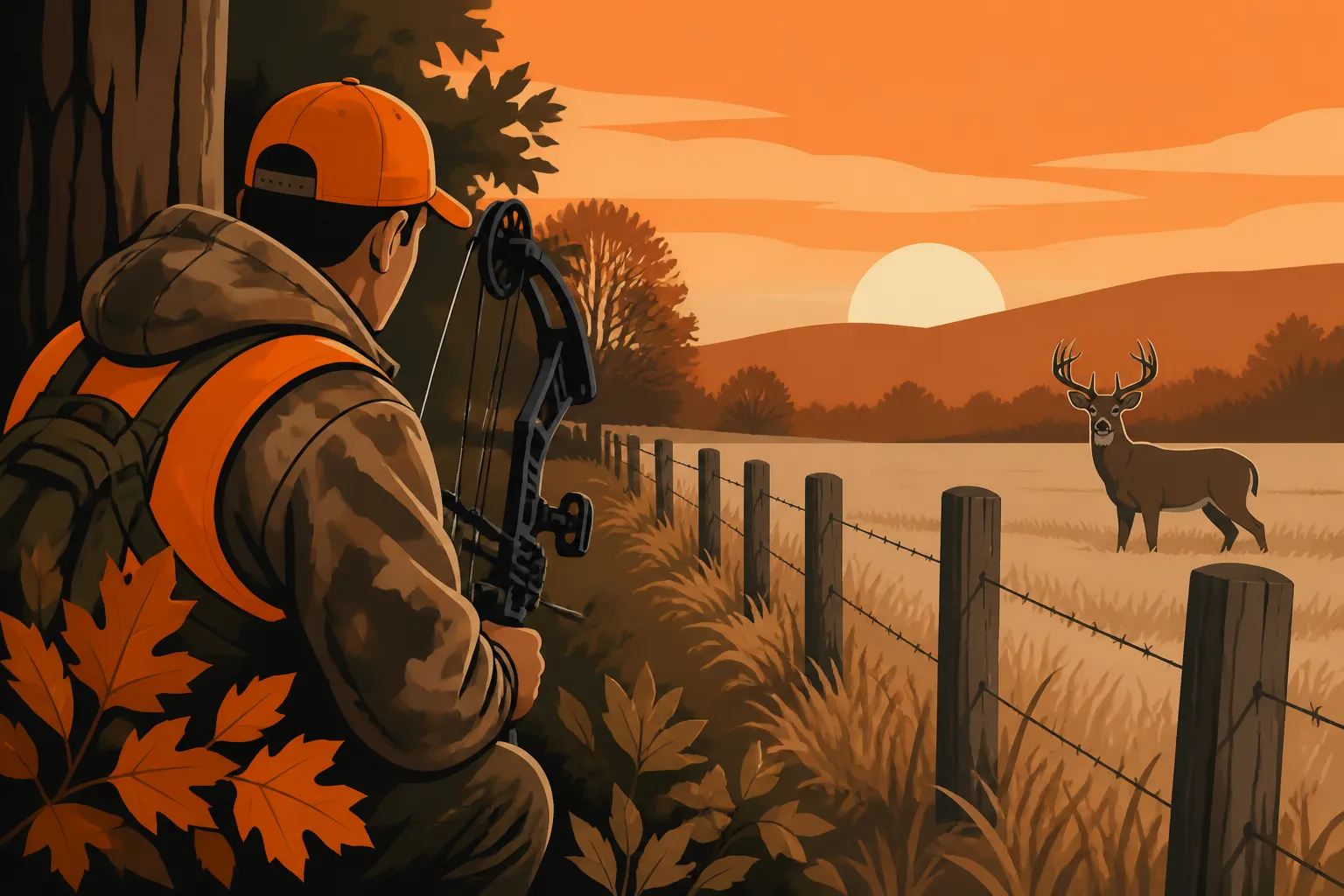
Working a Fencerow for Late-Season Deer
Hunting late-season deer in Tennessee can feel like an impossible challenge. After months of hunting pressure, declining food sources, and the chill of winter setting in, deer become incredibly wary, often turning nocturnal and sticking to the thickest cover they can find. If you've ever felt like the deer simply vanished after the rut, you're not alone. This comprehensive guide is dedicated to helping you unlock the secrets of working fencerows, transforming these often-overlooked linear features into your late-season deer hunting hot spots.
Why Fencerows Are Late-Season Deer Magnets in Tennessee
When the leaves are off the trees and the first hard freezes have hit, the landscape changes dramatically. Big timber stands that offered plenty of cover earlier in the season now feel open and exposed. Fields, once lush with crops, are either harvested or trampled. This is when fencerows, those seemingly insignificant lines of brush, weeds, and small trees dividing properties or fields, truly shine as vital deer habitat. They offer a unique combination of cover, food, and travel advantages that appeal to pressured, cold, and hungry deer.
Thermal Cover and Escape Routes
In the biting cold of a Tennessee late season, thermal cover becomes paramount for deer. They're looking for places where they can bed down out of the wind, conserving energy and staying warm. A dense fencerow, often a jumble of tangled briars, honeysuckle, cedars, and other thick growth, provides exactly this kind of protection. It might not look like much from a distance, but inside, it can be a miniature jungle, blocking the wind and holding pockets of warmer air. Deer will often bed directly within these thickets, or just on the leeward side, soaking up any available sunlight while remaining hidden. These thick corridors also serve as critical escape routes. If pressured in an open field or woodlot, a deer can quickly melt into the linear cover of a fencerow, using it to move unseen from one block of woods to another, or to reach a larger bedding area safely. They know these routes by heart and will instinctively gravitate towards them when spooked.
Residual Food Sources and Browsing
While vast crop fields might seem more appealing, by late season, many are picked over or completely harvested. What remains, however, can often be found along the edges of fencerows. Think about those overlooked patches of standing beans, lingering kernels of corn, or strips of weeds that never got mowed. Deer are expert foragers, and they will diligently browse these forgotten morsels. Beyond cultivated crops, fencerows often contain native browse that becomes more appealing as other food sources disappear. Young saplings, briar shoots, honeysuckle, and even certain types of persistent weeds can offer critical sustenance. I’ve often seen deer picking through dried goldenrod and ragweed for seeds, or nipping at the last green honeysuckle leaves hanging on in a protected ditch along a fencerow. These small, scattered food sources, combined with dense cover, make fencerows an irresistible combination for a late-season deer trying to survive. Consider how these areas offer excellent Late-Season Food Sources for Tennessee Whitetails when everything else has been consumed.
Travel Corridors and Edge Habitat
Fencerows, by their very nature, create natural travel corridors. They connect different habitat types—woodlots to fields, pastures to heavy timber, or even small patches of woods that are otherwise isolated. Deer, being creatures of habit, love to use these linear features as highways to move between bedding areas, feeding grounds, and water. A buck traveling from his bedding area in a remote cedar thicket to a cut cornfield at dusk isn't going to cross a wide-open space if he can help it. He'll hug the fencerow, using its cover to remain invisible. This "edge habitat" where two different habitat types meet is inherently productive, offering the best of both worlds. The deer can feed on the field side and instantly duck into the cover of the fencerow. Observing these travel patterns is key to Hunting the Late-Season January Lull, where deer movements are often subtle and predictable. These edges are also where you'll find scrape lines along a logging road or rubs from a buck cruising for does, even if the primary rut is long over. Bucks will still check these travel routes.
Scouting Fencerows for Prime Late-Season Activity
You can't just pick any old fencerow and expect success. Effective late-season hunting in fencerows demands meticulous scouting, understanding how deer use these linear features, and leveraging tools to gain an advantage. Remember, deer are pressured and smart by this time of year, so your scouting needs to be even smarter.
Reading the Sign: Rubs, Scrapes, and Trails
When you step into the woods in late season, the sign tells a story. Along fencerows, this story often unfolds in a clear, linear fashion. Look for well-worn trails running parallel to the fence line, especially where it bends or converges with another piece of cover. These are highways. Keep an eye out for rubs on small saplings within the fencerow or on trees just inside the adjacent woodlot. While fresh rubs from the rut might be scarce, you’ll often find older rubs that show repeated use of the area, indicating a buck's preferred travel route. Even a year-old rub can tell you a buck passed through that exact spot. Scrapes, too, while not as actively worked as in October, can still be found. Look for "community scrapes" — larger, more persistent scrapes that deer check throughout the year. The ground might be frozen, but pawed earth or an overhanging licking branch will still be evident. Pay particular attention to fresh droppings, indicating recent activity. If you find a mix of fresh deer droppings and tracks that look like they were made within the last 24-48 hours, you've found a hot spot.
Identifying Key Intersections and Funnels
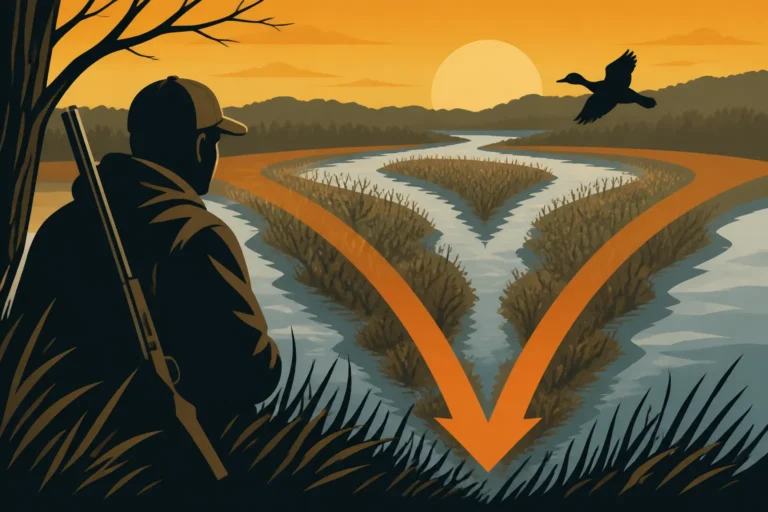
The magic of fencerows isn't just their length; it's where they intersect or create natural funnels. Imagine a fencerow that runs along the edge of a large crop field and then dead-ends into a dense woodlot. That intersection point is a critical funnel where deer must pass to transition from feeding to bedding. Another example might be two fencerows converging at an obtuse angle, forming a "V" shape, or where a fencerow crosses a small drainage or creek bottom. These are classic pinch points. These spots force deer movement into a more confined area, increasing your odds significantly. Use aerial maps to identify these structural advantages before you even set foot on the ground. A great tool for this is GoHunt, which allows you to overlay property lines, topo maps, and satellite imagery. You can use its features to pinpoint where two fencerows meet, where a fencerow crosses a creek, or where it funnels deer into a thicket. This virtual scouting is invaluable for Scouting Tennessee Public Land Before Season or even smaller private tracts.
Using Mapping Tools for Pre-Season Intel
Modern technology has revolutionized how we scout. Gone are the days of relying solely on paper maps and endless miles walked. With tools like GoHunt, you can spend hours analyzing your hunting area from the comfort of your home. Zoom in on satellite imagery to identify the densest parts of a fencerow, where it might provide the best cover. Look for slight elevation changes, even a small ditch or rise, that could offer an advantage for a bedded deer. Pay attention to how fencerows connect different parcels of woods, especially smaller, isolated ones. Often, a small woodlot near suburban Nashville might only be accessible to deer via an overgrown fencerow. With GoHunt, you can mark potential stand locations, entry and exit routes, and even wind directions for specific spots. This kind of detailed analysis saves you time and minimizes disturbance when you finally get boots on the ground. When you're trying to figure out Reading Aerial Photos for Cumberland Plateau Deer, apply the same principles to those linear features that might otherwise seem insignificant. Mark those critical intersections and potential bedding areas adjacent to the fencerow.
Strategic Setup and Hunting Tactics for Fencerows
Once you've scouted your fencerows and identified those high-traffic zones, the next step is planning your setup. Late-season deer are incredibly sensitive to pressure, scent, and sight. Your approach and stand placement are arguably more critical now than at any other time of the year.
Stand Placement for Wind and Approach
When setting up near a fencerow, the wind is your absolute master. Your scent trail will be carried downwind, and if it crosses the deer's travel path, your hunt is over before it begins. Always approach your stand with the wind in your face or quartering to you, ensuring your scent is blowing away from the anticipated deer travel. For fencerows, this often means setting up just inside the adjacent woodlot or field, slightly off the fencerow itself, so you're not directly in the path deer will be using. Positioning your stand 15-20 yards off the edge allows you to catch deer using the fencerow without being directly visible or giving off scent. Consider how your setup will allow you to slip in and out undetected. If you have to walk directly down a trail in the fencerow to get to your stand, it's a bad setup. Find an entry route that parallels the fencerow but keeps you hidden, perhaps using a ditch, a creek bottom, or another line of cover. Remember, deer will often Working a Creek Bottom for Late-Season Deer too, which can offer excellent parallel entry. When Hanging a Stand on a Cumberland Ridge that also has a fencerow, consider the thermals as well, as they often draw scent uphill in the morning and downhill in the evening.
Ground Blind Options and Concealment
For those extremely wary, late-season deer, a ground blind can be an excellent option, especially if you're hunting smaller, more open fencerows where a tree stand might stick out. The key to success with a ground blind is thorough brushing in. Don't just pop it up and hunt it; you need to integrate it into the existing cover. Cut branches, dead weeds, and other natural materials from the fencerow itself and pile them around your blind, breaking up its silhouette. Let it sit for a few days, or even a week, if possible, allowing the deer to get accustomed to its presence. A well-brushed-in blind becomes part of the landscape. Place the blind with the sun at your back, if possible, to keep your profile in shadow and prevent glare off your windows. This is particularly effective when you are Using a Ground Blind on Tennessee Public Land as they provide a mobile, adaptable setup. The linear nature of a fencerow means deer will typically pass by rather than circle you, so having good concealment on three sides is often sufficient. Brands like Ameristep and Barronett offer durable blinds that can hold up to the elements and be easily brushed in.
Still-Hunting the Fencerow Edges
While sitting in a stand or blind is often the preferred method, still-hunting a fencerow, particularly a long, winding one, can be incredibly productive for Still-Hunting Cumberland Plateau Ridges and similar linear cover types. This is a slow, methodical process, taking one or two steps, then pausing to glass and observe for several minutes. Move into the wind, or with a quartering wind, always staying aware of where your scent is going. Utilize the cover of the fencerow itself, walking just inside it or along its edge, using the brush to break up your silhouette. Look for subtle movements, a flick of an ear, a patch of brown hide, or the white of a deer's belly. Because fencerows often connect different pockets of cover, you're essentially walking through a series of mini-funnels. This tactic is especially effective mid-day when deer are often bedded down, taking advantage of the thermal cover. If you encounter a dense patch of briars or cedars, pause, listen, and slowly scan before moving on. Deer will often bed tight in such areas, hoping you'll walk past. This tactic can also be very effective for Hunting a Funnel Between Two Bottoms when they are connected by similar linear cover.
Overcoming Common Challenges and Maximizing Success
Hunting late-season deer in fencerows, while effective, isn't without its challenges. Dealing with pressured deer, brutal cold, and the inevitable recovery of an animal in tangled cover requires preparation and a good strategy.
Dealing with Hunting Pressure and Nocturnal Movement
By late season, deer have been educated by months of hunting pressure. They often move primarily at dawn and dusk, or even completely at night. This means your best bet is to be in your stand before legal shooting light and stay until after legal shooting light, catching those first and last movements. On public land, where pressure is often intense, focus on fencerows that are harder to access, perhaps requiring a longer walk or traversing a tricky drainage. Deer will seek out these sanctuaries. A good example is a fencerow that provides an Entry Routes Through Standing Beans or a Hunting a Standing Cornfield in Farm Country, offering a sense of security even when bordering agricultural land. Consider hunting mid-day on cold, clear days, as deer may be more apt to move to bask in the sun or grab a quick bite. If you know a deer is mostly nocturnal, focus your efforts on the very first hour of daylight and the last hour before dark, those precious moments when they might still be on their feet.
Cold Weather and Gear Considerations
Tennessee winters, while not as brutal as up north, can still bring freezing temperatures, especially when combined with wind. Staying warm is paramount for an all-day sit. Layering is key: start with a good base layer of merino wool or synthetics, add a mid-layer for insulation, and finish with a windproof, waterproof outer shell. Don't forget insulated boots, thick wool socks, hand warmers, and a good insulated hat. Cold hands and feet will end a hunt quickly. For sitting, a quality insulated seat pad is a game-changer. Consider bringing a thermos of hot coffee, tea, or soup to help keep your core temperature up. When hunting a fencerow, you might be exposed to more wind than in a deep timber stand, so extra layers are often necessary. Investing in quality gear from brands like Sitka or First Lite can make a huge difference in your comfort and ability to stay on stand for longer periods, increasing your chances of success.
| Fencerow Type | Best Features for Deer | Scouting Focus | Ideal Hunting Method |
|---|---|---|---|
| Overgrown Brush Line | Dense thermal cover, hidden travel | Thickest patches, intersections, fresh bedding sign | Ground Blind / Still-Hunt |
| Tree Line (Mature Trees) | Canopy cover, some wind block, food (mast/browse) | Worn trails, old rubs, potential scrapes | Treestand / Still-Hunt |
| Ditch/Creek Bed Fencerow | Natural funnel, water access, concealed travel | Crossing points, fresh tracks, confluence with other cover | Treestand / Ground Blind |
| Fence Line with Crops | Edge browsing, quick escape to cover, predictable | Crop remnants, fresh droppings on edge, entry/exit points | Treestand / Ground Blind |
| Suburban Hedgerow | High security, minimal pressure, unique travel | Bottlenecks, small patches of untouched browse, pinch points | Ground Blind / Stealthy Sit |
Post-Shot Recovery in Tangled Fencerow Cover
If you're fortunate enough to make a good shot on a deer using a fencerow, the recovery can be challenging due to the dense, tangled nature of the habitat. Always give the deer ample time, especially if it's a gut shot or marginal hit, as they often don't run far into thick cover but may lie down quickly. Mark your shot location precisely and the last place you saw the deer. When tracking, move slowly and deliberately, looking for blood, broken branches, or disturbed leaves. The thick cover can make blood trailing difficult, so bring a good headlamp, even if it's daylight, for getting under tangled branches. A good quality blood trailing light can also be immensely helpful. If you lose the trail, back out and come back with friends to grid-search the area. Never push a marginally hit deer too quickly into dense cover. This is where patience is your greatest virtue, and giving the deer time to expire can make all the difference in a successful recovery.
Disclaimer
Hunting is an inherently dangerous activity. Always prioritize safety, understand and follow all Tennessee Wildlife Resources Agency (TWRA) regulations, and obtain proper licenses and permits. The information provided here is for educational and entertainment purposes only and should not replace professional guidance or legal consultation. Ensure you have landowner permission before hunting on private land.