Setting Decoys on a Farm Pond
Trying to figure out the best way to set up decoys on a small farm pond can be incredibly frustrating. It's not like hunting the big water of Reelfoot Lake where you might throw out hundreds of blocks. On these smaller, often shallower bodies of water, duck behavior is different, and what works on vast marshes just might spook birds on a quiet Tennessee pond. This guide will walk you through everything you need to know to effectively decoy ducks and geese on farm ponds, from understanding their habits to setting the perfect spread.
Understanding Waterfowl Behavior on Farm Ponds
Farm ponds, sloughs, and small impoundments are incredibly common throughout Tennessee, offering unique opportunities for waterfowl hunters. But to effectively hunt them, you first have to understand why ducks and geese use them and how that behavior differs from larger water bodies. These smaller waters often serve as secluded resting spots, feeding areas, or even safe havens during harsh weather. The key is to think like a duck – or goose!
Why Ducks and Geese Frequent Small Ponds
Ducks and geese are opportunistic, and farm ponds offer a lot of what they're looking for, especially during migration or when pressure is high on larger water. These spots provide fresh water for drinking and bathing, often abundant natural food sources like invertebrates, seeds, and aquatic vegetation, and critically, a sense of security. Unlike wide-open lakes or rivers, a small pond surrounded by timber or overgrown banks can feel safer from overhead predators like hawks and eagles, and from human disturbance. You'll often find birds loafing and preening here, conserving energy before moving on to larger feeding areas or their next leg of migration.
Consider a typical fall morning in Middle Tennessee. Ducks might leave a large refuge or river system at first light to feed in flooded timber or harvested cornfields, then seek out a quiet farm pond mid-morning to digest and rest. Later, they'll head back to major water to roost overnight. Recognizing this daily pattern, often referred to as "staging" or "loafing," is crucial. If you're on a pond early, you might catch the tail end of feeding birds or the beginning of those looking to rest. Later in the morning is often prime time for loafing birds. If you're looking for more general information, check out our guide on Waterfowl Hunting Reelfoot Lake and Beyond.
Key Differences from Large Water Hunting
Hunting small ponds presents a vastly different scenario than traditional big water duck hunting. For starters, the birds are often much more wary. They're more exposed and more sensitive to movement and unnatural sights. On a large lake, ducks might not notice a slightly off-kilter blind 200 yards away, but on a 2-acre pond, every detail counts. Sound also travels differently – a loud call or a splash of waders can carry across the entire pond, instantly flaring incoming birds.
Furthermore, the scale of your decoy spread needs to be adjusted. You don't need dozens of decoys; in fact, too many can look unnatural and crowded on a small pond, making it seem less inviting. The water depth can also be a factor, often shallower and more prone to freezing than larger bodies, which influences where birds can land and feed. Access is typically easier, but so is the potential to over-pressure a small pond, quickly turning it into a "no-go" zone for wary waterfowl. Understanding these nuances is the first step toward consistent success.
Choosing the Right Decoy Spread and Placement
Once you understand the basics of pond dynamics, it's time to talk about the blocks themselves. Decoy selection and placement are paramount on small waters, where every detail can make or break your hunt. You're trying to create an illusion of safety and contentment that will convince wary birds to drop their guard and commit to your landing zone.
Selecting the Right Decoy Species and Numbers
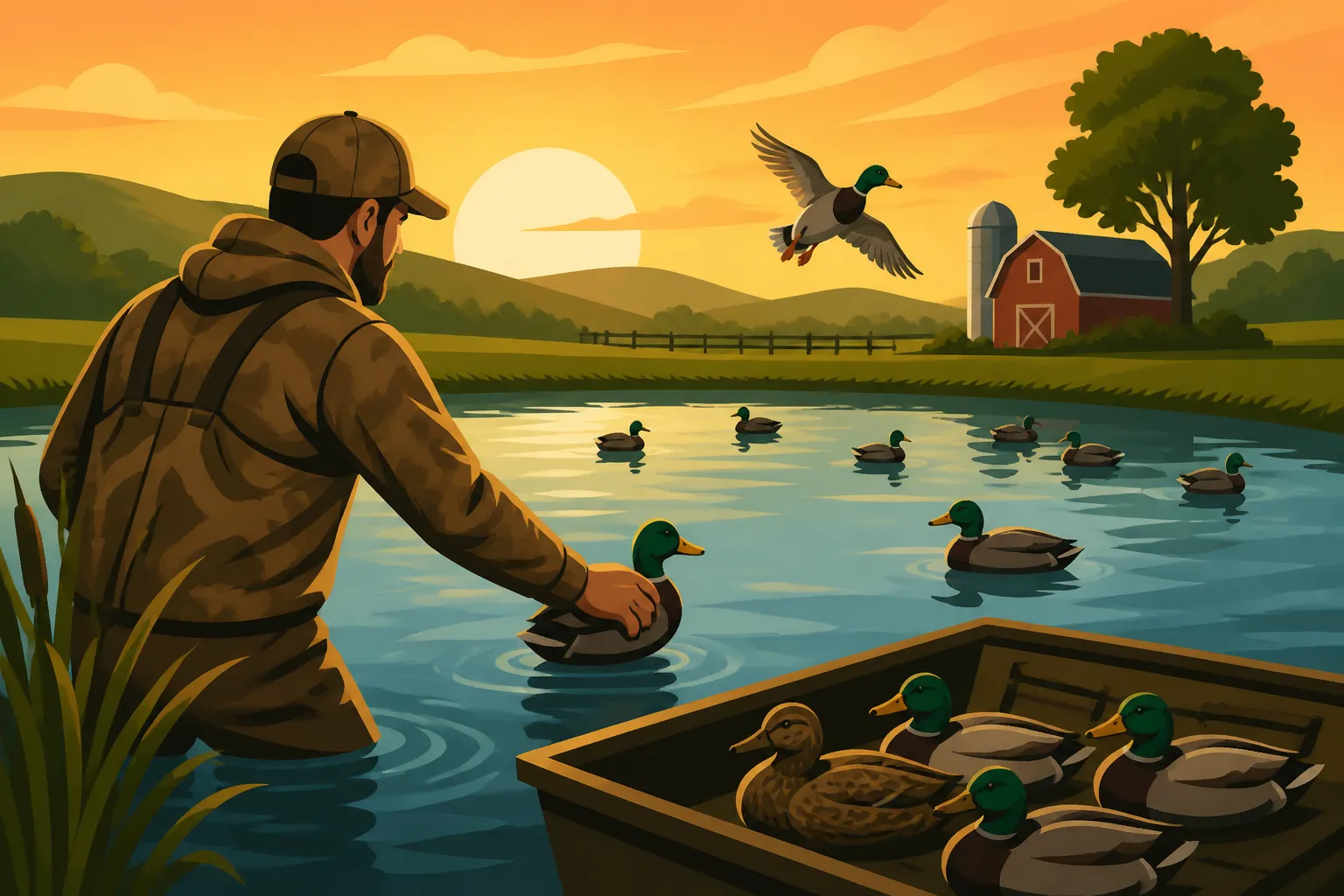
For farm ponds, realism and moderation are your best friends. You don't need a massive spread of 50 decoys. In fact, a small, well-placed spread of 6-12 decoys is often more effective. What species should you use?
- Mallards: These are your bread and butter. Greenheads and hens are ubiquitous, and every duck hunter needs a solid contingent of mallard decoys.
- Wood Ducks: These vibrant birds absolutely love small, timbered ponds and sloughs in Tennessee. Including a few wood duck decoys, especially if your pond has good tree cover, can be a game-changer.
- Teal: Blue-winged and green-winged teal are common early season visitors. A handful of teal decoys can add variety and realism, suggesting a diverse and healthy habitat.
- Geese: Don't forget about Canada geese, especially if the pond is near fields they frequent. Even a pair of goose decoys off to one side can add another layer of attraction and a sense of "all clear" for incoming ducks.
It's about making your spread look natural for the environment. You wouldn't put out a dozen redhead decoys on a tiny mud puddle surrounded by cornfields. Match your decoys to the birds you expect to see and the habitat you're hunting. For more on specific species, our guide on Mallards at Reelfoot Lake offers insights into these popular ducks, even though farm ponds are a different setting.
Strategic Placement for Incoming Birds
This is where the art comes in. Your goal is to create a safe, inviting landing zone within easy shooting range. Wind direction is your number one consideration, as ducks almost always land into the wind. Your decoys should be set up so that the open "landing zone" is directly in front of your blind, with ducks approaching from into the wind.
Here are a few common, effective spreads for farm ponds:
| Decoy Spread Type | Description | Ideal Use Case |
|---|---|---|
| J-Hook / U-Shape | Decoys form a J or U, with the open end facing into the wind, towards the blind. | Classic, effective for creating a clear landing zone. Ducks approach from the open end, funneling them right in. |
| Loose Flock | Decoys are scattered naturally in small groups of 2-3, mimicking feeding. | Great for wary birds or when trying to replicate a very natural, unpressured look. Requires less calling. |
| Buddy System | Pairs of decoys (drake and hen) placed together, slightly spread out. | Simple, effective on very small ponds or when birds are skittish. Suggests pairs feeding contentedly. |
| Edge Loafers | A few decoys placed on the bank or very shallow edge of the water. | Adds realism, especially for geese or ducks that might be preening on the shore. |
Think about the sun's position too; you generally want the sun at your back, silhouetting the birds as they approach. Avoid placing decoys too close to the blind, as incoming birds will want to land in front of the spread, not on top of it. Give them space. Use longer lines on your decoys if the water is deeper than expected, ensuring they float naturally and don't look like they're anchored awkwardly.
Adding Motion and Realism
Motion is a powerful attractant, especially on calm days. A simple jerk string is highly effective and adds a lot of realism without being over the top. A subtle ripple or head movement can catch a duck's eye from a distance. Just a few well-timed tugs can make your spread come alive. If you are debating a Crossbow Versus Vertical Bow in Tennessee you might find that less gear is better for a quick setup.
Spinner wing decoys, like Mojo decoys, can be incredibly effective, but they can also flare birds on heavily pressured small waters if overused. Sometimes less is more. On a small, quiet pond, a single spinner might be perfect, while on another, it might be a complete turn-off. Experiment to see what the birds on your specific pond respond to. Realism also comes from having a few "sleeper" decoys that look like they're resting or preening. These add to the illusion of contentment and safety.
Tactics for Success Beyond Decoys
While decoys are crucial, they're only one piece of the puzzle. What you do with your blind, your calls, and your overall hunting strategy will often determine your success rate on Tennessee farm ponds.
Mastering Concealment and the Approach
On a small pond, you are exposed. Period. Ducks approaching will be looking for any sign of danger, and any silhouette or movement will send them packing. Excellent concealment is non-negotiable.
- Natural Blinds: Use the natural surroundings whenever possible. A brush pile, an old fence line grown over with briars, or even a standing tree with low-hanging branches can provide excellent cover. Take the time to enhance it with local vegetation – cattails, brush, deadfall.
- Portable Blinds: If natural cover is scarce, a well-brushed-in pop-up blind or even a simple layout blind is essential. Brands like Avery or Final Approach offer great options. When using a layout blind, make sure it's blended into the existing cover. If you hunt fields often, you might already be proficient in Layout Blind Hunting West Tennessee Fields.
- Approach: Think about your approach to the pond. Don't walk directly to your blind across an open field. Use ditches, tree lines, or any topographical features to stay out of sight until you're in position. Avoid silhouetting yourself against the skyline, especially at dawn. If you're setting up a blind the day before, take extra care to make it look natural and allow birds to get used to its presence.
Effective Calling Strategies for Small Waters
Calling on a farm pond is generally much more subdued than on large open water. You're not trying to pull birds from miles away; you're trying to reassure birds already interested in your spread.
- Soft and Subtle: Think contented clucks, soft quacks, and feeding chuckles. These are sounds of happy, safe ducks. A loud, aggressive hail call might work once or twice, but often spooks birds that are already wary.
- Responsive Calling: Call just enough to get their attention, then let the decoys do the work. If they're cupped and coming, shut up! Only call again if they start to veer off or look unsure.
- Mouth Calls vs. Whistles: A good mallard call is a must, but don't overlook a whistle call for pintails or widgeon if those birds are in the area. Often, a few soft peeps on a whistle can bring in high-flying ducks that are hesitant to respond to a mallard call.
Practicing your calls beforehand is essential. The goal is to sound like the ducks already on the pond, not an excited human with a duck call.
The Critical Role of Scouting and Adaptability
Scouting is absolutely non-negotiable for consistent success on farm ponds. You can have the best decoys and call, but if the birds aren't using that particular pond, you're just sitting there.
- Observe Flight Paths: Watch where ducks are flying. Are they using certain corridors? Where do they enter and exit the pond area?
- Look for Sign: Check for droppings on banks, feathers on the water, or disturbed mud near the edges. These are all signs of recent activity.
- Talk to Landowners: If it's private land, engage with the landowner. They often know when and where ducks are using their ponds.
- Use Mapping Tools: Modern tools like GoHunt are incredible for scouting from afar. You can identify potential ponds, analyze surrounding cover, and even check property boundaries before you ever set foot on the ground. This helps you avoid wasting time on ponds that don't hold birds and discover hidden gems. When Scouting Tennessee Public Land Before Season, these apps are even more useful.
- Adaptability: Don't be afraid to change your setup mid-hunt if birds aren't responding. Move decoys, adjust your blind, or even try moving to a different spot on the pond. Waterfowl hunting is often about trial and error.
Essential Gear and Considerations
Having the right gear makes a huge difference in your comfort, safety, and overall success when hunting farm ponds. It's not just about the gun and ammo; it's about being prepared for the environment.
Waders, Boots, and Appropriate Clothing
Waterfowl hunting in Tennessee, especially on farm ponds, often means getting wet and muddy.
- Waders: Chest waders are almost always a good idea. They allow you to easily set and retrieve decoys, push through marshy edges, and stay dry even in moderately deep water. Choose neoprene for cold weather and breathable for early season. Brands like Banded or LaCrosse are popular among waterfowl hunters for their durability.
- Boots: If you're not wearing waders, waterproof, insulated boots are a must. You'll likely be walking through damp fields or shallow water to get to your spot. Look for good ankle support, especially if the terrain is uneven.
- Layered Clothing: Tennessee weather can be notoriously unpredictable. Dress in layers to adapt to changing temperatures throughout the morning. Start with a moisture-wicking base layer, add insulating layers (fleece or down), and finish with a waterproof/windproof outer shell in a camouflage pattern that blends with the pond's surroundings. Think about browns, tans, and dull greens for late fall/winter. Our guide on Layering for a Tennessee Deer Stand offers great tips on cold-weather dressing that apply to waterfowl as well.
- Gloves and Hat: Don't forget insulated, waterproof gloves and a warm hat. You lose a lot of heat through your head, and cold hands make manipulating decoys and shooting difficult.
Shotguns, Ammunition, and Safety
Your firearm and ammunition choices are critical for ethical and effective waterfowl hunting.
- Shotgun: A 12-gauge shotgun is the standard, though a 20-gauge can be effective at closer ranges. Semi-automatics or pump actions are preferred for quick follow-up shots. Make sure your shotgun is cleaned and functioning properly before the season.
- Ammunition: In Tennessee, as with all waterfowl hunting across the US, you are required to use non-toxic shot. Steel shot is the most common and affordable, but bismuth and tungsten-matrix alternatives offer better performance at longer ranges, albeit at a higher cost. For mallards and wood ducks over a pond, #2 or #4 steel shot is generally effective. For geese, you might step up to BB or BBB steel. Pattern your shotgun with your chosen loads before the season to understand its effective range. Remember, Where Nontoxic Shot Is Required in Tennessee is a federal mandate for waterfowl.
- Safety: Always follow the four primary rules of firearm safety. Be absolutely sure of your target and what is beyond it, especially with decoys in the water. Never swing your gun across another hunter. Wear eye and ear protection. A good, sturdy gun case for transport is also a must.
Carrying Your Gear Efficiently
Farm pond hunting usually doesn't involve long treks, but you still need to carry your gear comfortably and quietly.
- Blind Bag: A waterproof blind bag is essential for carrying calls, extra shells, snacks, water, and any small personal items. Look for one with external pockets for easy access to frequently used items.
- Decoy Bag/Sack: A large mesh decoy bag makes carrying your blocks to and from the pond much easier and allows them to dry out.
- Packs: If you're walking a considerable distance to a secluded pond, a good backpack can help distribute the weight of your shotgun, shells, and blind bag, making the hike more manageable. Before heading out, always double-check your Tennessee Waterfowl Zones and Seasons to ensure you're compliant.
With the right setup, smart tactics, and an understanding of waterfowl behavior, farm ponds can offer some of the most exciting and rewarding duck and goose hunting opportunities in Tennessee. Don't underestimate these small waters; they hold big potential!
Disclaimer
Please remember that hunting regulations, seasons, and licensing requirements can change. Always consult the most current Tennessee Wildlife Resources Agency (TWRA) regulations before heading afield. Safety should always be your top priority when hunting.