Posting a Drive Around a River Bottom
When you're trying to move deer in Tennessee's sprawling river bottoms, it often feels like you're playing a frustrating game of hide-and-seek. The dense cover, winding sloughs, and unpredictable terrain can make traditional deer drives incredibly difficult, leaving your standers scratching their heads and your drivers worn out. This guide is all about mastering the art of posting hunters strategically around a river bottom drive, ensuring everyone knows their role, stays safe, and maximizes the chances of intercepting those elusive whitetails.
Understanding the River Bottom Environment
River bottoms, whether along the Mississippi, Tennessee, or smaller tributaries, are true sanctuaries for deer. They offer everything a whitetail could want: abundant food sources, consistent water, and, perhaps most importantly, incredibly thick cover that makes them feel secure. But these same attributes make them a nightmare for hunters trying to conduct a successful drive.
Topography and Cover Challenges
Imagine walking through a Tennessee river bottom. You're not just dealing with flat ground; you’re navigating sloughs filled with standing water, muddy banks, and often a labyrinth of downed timber from past floods. The vegetation is usually incredibly dense: think towering cane thickets, impenetrable briar patches, honeysuckle tangles, and dense stands of young hardwoods. This isn't your typical open hardwood forest or pine plantation.
This varied and often chaotic topography means deer have countless places to hide and an incredible advantage in evading hunters. They can slip through cover almost silently, using small depressions, old logging trails, or even dry creek beds to vanish. For drivers, it’s physically exhausting and visibility is often measured in feet, not yards. For standers, it means deer can appear and disappear like ghosts, making quick, decisive shots paramount. Understanding these physical barriers and how deer use them is the first step in successful river bottom deer drives.
Deer Behavior in River Bottoms
Deer don't just live in river bottoms; they thrive there. These areas are magnets for whitetails, offering consistent browse, water, and shelter from both predators and human pressure. During hunting season, especially once the leaves drop and other areas get hunted hard, deer will gravitate even more heavily to these security blankets.
When pressure is applied, deer in river bottoms are less likely to bolt out into open fields. Instead, their first instinct is often to circle back, belly crawl through the thickest stuff, or sneak out along the very edges of the cover. They know these areas intimately and will use every ditch, log, and thicket to their advantage. They might even lay down in heavy cover, letting drivers walk right past them, only to slip out the back once the noise has moved on. Successful drives rely on anticipating this evasive behavior, especially knowing when to expect a deer to use a natural funnel between two bottoms. The key is to think like a deer, predicting their most likely escape routes before they even feel the pressure.
Strategic Post Placement for River Bottom Drives
Okay, so we know river bottoms are tough, and deer are masters of evasion. This brings us to the crux of the matter: how do we effectively post hunters to intercept these wily whitetails? It’s all about meticulous scouting and understanding how deer move under pressure.
Identifying Key Escape Routes
Before you even think about putting drivers in the woods, the most critical step is to identify where deer are most likely to leave the thick cover of the river bottom. This takes pre-season scouting, but also real-time observation. Look for these natural pinch points and escape routes:
- Funnels: These are narrow strips of cover that connect two larger blocks of woods, or a thicket to a field edge. Deer use them constantly, and they become prime escape routes when pushed. Think about the terrain: a small ridge that runs down into the bottom, or a narrow strip of timber paralleling a creek. These are perfect spots for a stander. Hunters should read the terrain for areas like a funnel between two bottoms or where a creek bottom for late-season deer offers a secluded travel corridor.
- Field Edges: While deer often try to avoid wide-open spaces, they will use the very edge of a field if it offers immediate cover on the other side. A fenceline, a brushy ditch, or a hedgerow can be a lifeline. A posted hunter needs to be able to see enough of this edge to get a shot without being too exposed. For standers posted on these edges, consider Setting Up on a West Tennessee Field Edge.
- Logging Roads and Trails: Even old, overgrown logging roads can act as escape corridors, especially if they offer slightly easier walking than the surrounding briars. Deer will often cross these quickly or parallel them for a short distance.
- Changes in Elevation: Even a subtle rise in elevation within the bottom can become a preferred travel route, offering deer a slight advantage in visibility or drier ground.
- Water Crossings: If there's a creek or slough that deer regularly cross, especially if there's a narrower, shallower point, that's a perfect spot to position a stander. They'll often pop out of cover to cross, presenting a brief shot opportunity.
When you're scouting, use tools like GoHunt or other mapping apps to identify these features from an aerial perspective. Then, get boots on the ground to confirm. Look for tracks, trails, and fresh droppings to verify these are indeed active travel corridors. The more confident you are in your escape routes, the more effective your posts will be.
Positioning Standers for Success
Once you've identified the key escape routes, it's time to position your standers. This isn't a "throw them anywhere" situation; precision is key.
- Visibility vs. Concealment: Standers need enough visibility to get a shot, but they must also remain concealed. Often, this means being tucked into the edge of the cover, or behind a large tree or brush pile. You want to see the deer before it sees you. Consider using a ground blind on Tennessee public land if the cover allows for good concealment and shooting lanes.
- Safe Backdrops and Shot Angles: Safety is paramount. Every stander must have a safe backdrop for their shots. In dense river bottoms, this can be challenging. Ensure that a shot at a deer won't endanger other hunters, roads, or private property beyond. Discuss expected shot angles – will deer be quartering away, broadside, or quartering to? Practice these scenarios mentally.
- Spacing and Overlap: Standers should be spaced far enough apart to cover the escape route effectively, but close enough that they're not leaving huge gaps. There should be a slight overlap in their effective shooting zones to prevent deer from slipping through unannounced. Generally, 75-150 yards between standers is a good starting point, depending on the visibility.
- Elevated Positions: If possible, consider putting standers in treestands. This gives them a better vantage point over the dense cover and often a safer shooting angle. However, not all river bottom trees are suitable, and treestand setup takes time and quiet. If you're on unfamiliar ground or pressed for time, a well-placed ground position might be better.
- Wind Direction: Always, always, always consider the wind. Position standers so the wind is blowing from the likely approach of the deer towards the stander, or across their face. A deer catching a stander's scent will often turn back into the drive or choose a different escape route.
- Designated Sides: For safety and clarity, assign each stander a "kill zone" or "arc of fire" and emphasize that they should only shoot deer traveling within that designated area. This prevents hunters from swinging on deer that are already in another hunter's zone.
A well-posted drive requires standers who are patient, observant, and know their exact role. They're not there to move around or make noise; they're the silent sentinels waiting for the deer the drivers will push their way. For a more general understanding of how these larger groups operate, check out Deer Drives With Three or Four Hunters.
Coordinating the Drive and Maximizing Hunter Safety
A successful river bottom drive isn't just about good scouting and positioning; it’s about flawless execution and, above all, safety. Communication is your best friend when you’re pushing deer through gnarly terrain.
Communication and Planning
Before anyone steps into the woods, gather your entire hunting party for a detailed briefing. This isn't just a friendly chat; it's a critical safety and strategy session.
- Pre-Drive Briefing: This is non-negotiable. Go over a map (a physical map is great, but a digital one like GoHunt on a smartphone is invaluable) of the area you’ll be driving. Clearly mark the start and end points of the drive, the specific path the drivers will take, and the exact locations of each posted hunter. Identify any potential hazards – deep sloughs, steep banks, property lines.
- Designated Roles: Assign specific roles: a designated "drive captain" who orchestrates the movement, individual drivers, and specific standers. Everyone needs to know their job. Drivers should understand their speed, spacing, and how much noise they should make. Standers need to know where deer are expected to come from and their safe shooting lanes.
- Communication Methods: Modern hunting often involves two-way radios, which are fantastic for real-time communication. However, ensure everyone understands basic hand signals or voice calls if radios aren't available or fail. Agree on clear, concise communication, for example, "Deer moving right to left at the oak tree," rather than vague shouts. Always confirm that all standers are in place before the drive begins.
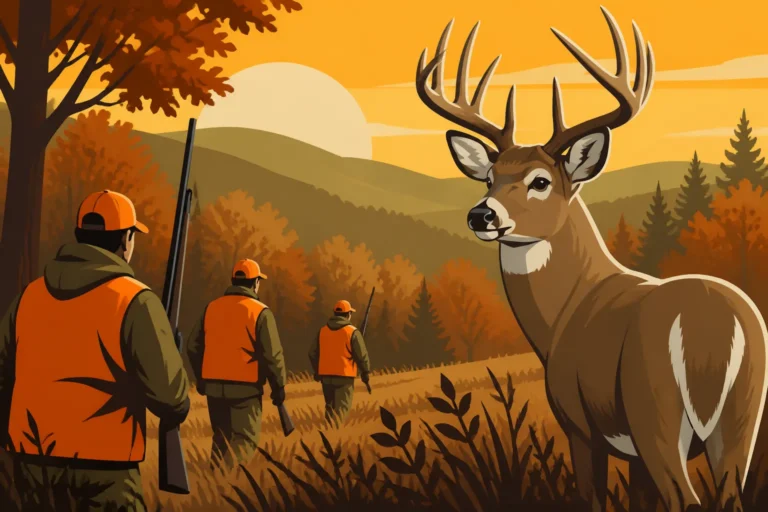
- Identifying Hunters: Emphasize wearing highly visible blaze orange or blaze pink clothing, especially for drivers who are moving through thick cover. Even standers should have ample visible orange, as it's required in Tennessee when hunting during gun seasons or youth hunts.
- Trial Runs (Mental): Walk through the drive mentally as a group. "Okay, Bill, you'll be at the old cypress tree on the bend. Mary, you'll be about 100 yards down the slough at the logjam. Drivers, you'll start at the bridge and push towards them." Visualize the deer movement and anticipate challenges. This helps everyone stay on the same page.
Ethical Shooting and Recovery
In the thick, challenging environment of a river bottom, ethical shot placement and meticulous recovery are even more crucial.
- Shot Angles and Backdrops: With deer often busting out of dense cover, shot opportunities can be fleeting and at unusual angles. Emphasize taking only ethical, high-percentage shots at a deer that is clearly visible, with a safe backdrop. Never shoot at sound or movement in thick cover without positive identification. This means understanding your target and beyond, a rule that becomes even more critical when pushing deer.
- Shot Placement: In thick cover, a deer that is marginally hit can be incredibly difficult to recover. Encourage standers to aim for vital areas, and if in doubt, pass on the shot. A clean miss is always better than a wounded animal that can't be found.
- Tracking and Recovery Plan: Before the drive starts, have a clear plan for tracking. Designate one or two experienced trackers. If a deer is hit, mark the last known location, collect any blood, hair, or bone fragments, and wait a reasonable amount of time (at least 30 minutes for a gut shot, longer for a leg shot). In a river bottom, a deer can travel surprisingly far, even when mortally wounded. For insights into post-shot actions, see Tracking a Deer Through Tennessee Leaf Litter and prepare for the eventuality of Blood Trailing After Dark in Tennessee.
- Using Dogs (Where Legal): In Tennessee, leashed tracking dogs can be used to recover wounded deer. If someone in your party has a trained dog, or if you know of a local tracker with a dog, incorporate this into your recovery plan, especially for river bottom areas where dense cover can make human tracking nearly impossible.
- Respect for the Game: The goal is a quick, humane harvest. If you have to call off a drive early to track a wounded deer, do it. Respect for the animal always comes first.
Overcoming Common River Bottom Drive Obstacles
River bottoms are dynamic environments, and a successful drive often means adapting to what Mother Nature throws your way. You'll encounter mud, water, and changing conditions, but with a bit of foresight, you can turn these obstacles into opportunities.
Dealing with Water and Mud
It wouldn't be a river bottom without water and mud, right? These can be major impediments, but they're also factors that can be leveraged if you understand them.
- Footwear and Gear: This seems obvious, but it's often overlooked until someone's boots are sucked off in a mudhole. Everyone involved, especially drivers, needs quality waterproof boots, preferably knee-high rubber boots, to navigate the sloughs and muddy banks. Waders might even be necessary in some areas. Bring extra socks, too!
- Navigating Sloughs and Creeks: Before the drive, identify the safest and easiest crossing points for both drivers and standers. Some sloughs might require a wider sweep or even bypassing if they're too deep or dangerous. Deer, however, will often use these sloughs as a primary escape route, swimming across if necessary. This makes the opposite bank a prime location for a posted hunter. Understanding how to read features like a Reading a Bottomland Slough for a Morning Flight for waterfowl can also inform how deer might use it.
- Maneuvering in Mud: Mud can be exhausting and noisy. Drivers should try to pick routes along higher ground or drier edges when possible. If deep mud is unavoidable, move slowly and deliberately. This noise might even help push deer, but it’s taxing on the drivers.
- Utilizing Water as a Funnel: Deer generally prefer not to swim long distances unless absolutely necessary. A wide, deep slough or creek can act as a natural boundary, funneling deer towards narrower crossing points or the ends of the water feature. Posting hunters at these pinch points can be incredibly effective.
Adapting to Changing Conditions
River bottoms are constantly in flux. Floods, droughts, and changes in vegetation can all impact deer movement and your drive strategy.
- Recent Floods: A recent flood can completely alter the landscape. It might push deer to higher ground within the bottom, or even out of the bottom entirely. It can also create new barriers (downed trees) or new, easier travel routes as water recedes. Scout the area again if there’s been significant flooding. Deer might be concentrated on islands of dry ground.
- Drought Conditions: During a severe drought, sloughs and smaller creeks might dry up, removing natural barriers and opening up new travel corridors for deer. This could make it harder to predict their movement, as they have more options.
- Leaf Drop: Early season drives, when leaves are still on the trees, present different visibility challenges than late-season drives after leaf drop. Adjust your stander spacing and driver noise levels accordingly. More leaves mean less visibility, requiring closer spacing and potentially louder drivers.
- Pressure from Other Hunters: If an adjacent area has been heavily hunted, deer might be pushed into the river bottom for security. This could mean a higher concentration of deer, but also warier animals. Conversely, if your river bottom has seen a lot of pressure, deer might temporarily move out to quieter areas. Always try to "find ground others walk past" to locate undisturbed deer.
- Weather Changes: Cold fronts, rain, or even snow can impact how deer move. Deer might move more actively before a front, and then hunker down during severe weather. Tailor your drive intensity and duration to the conditions. For instance, deer might stick to the thickest cover during a cold rain.
By staying flexible and observant, and by using all the information at your disposal, you can adapt your river bottom drive strategy to match the conditions, increasing your chances of success. It's a challenging but highly rewarding method of hunting in Tennessee.
Disclaimer
Hunting is an inherently dangerous activity. Always prioritize safety, understand and follow all Tennessee Wildlife Resources Agency (TWRA) regulations, and obtain appropriate licenses and permits. This guide provides general information and should not replace professional safety instruction or local regulations. Be aware of your surroundings, respect private property, and practice ethical hunting techniques.