Setting Up on a West Tennessee Field Edge
Hunting the expansive, often flat agricultural landscapes of West Tennessee can be a real head-scratcher. You've got big fields, scattered woodlots, and deer that seem to vanish into thin air, making it incredibly frustrating to figure out the best place to set up your stand or blind. This guide is all about dissecting the unique challenges and unlocking the secrets to effectively hunting deer along those productive field edges in West Tennessee, helping you decipher deer movement patterns and position yourself for success.
Understanding the West Tennessee Landscape and Deer Movement
West Tennessee's terrain is a stark contrast to the rolling hills and mountains of the state's eastern and middle regions. Here, you'll find vast stretches of farmland interspersed with drainages, creek bottoms, and smaller, often isolated woodlots. This creates a distinct set of challenges and opportunities when it comes to patterning deer and choosing your setup. The deer here are masters of using subtle cover and agricultural features to their advantage, making a precise setup paramount.
The Allure and Challenge of Field Edges
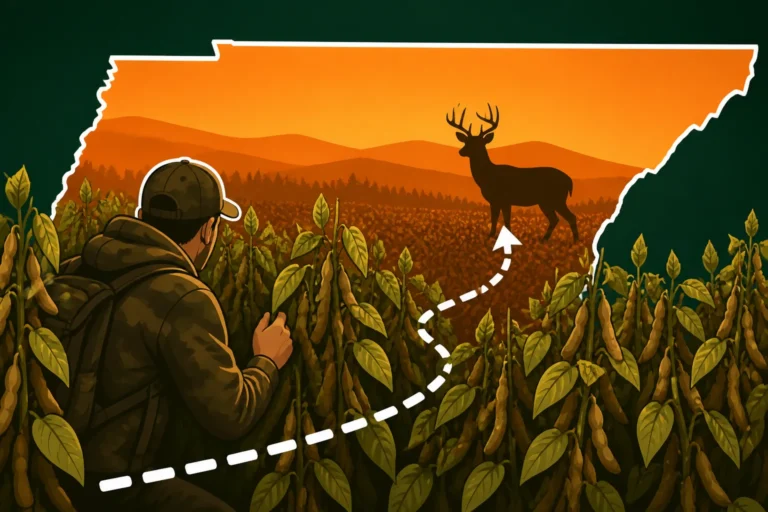
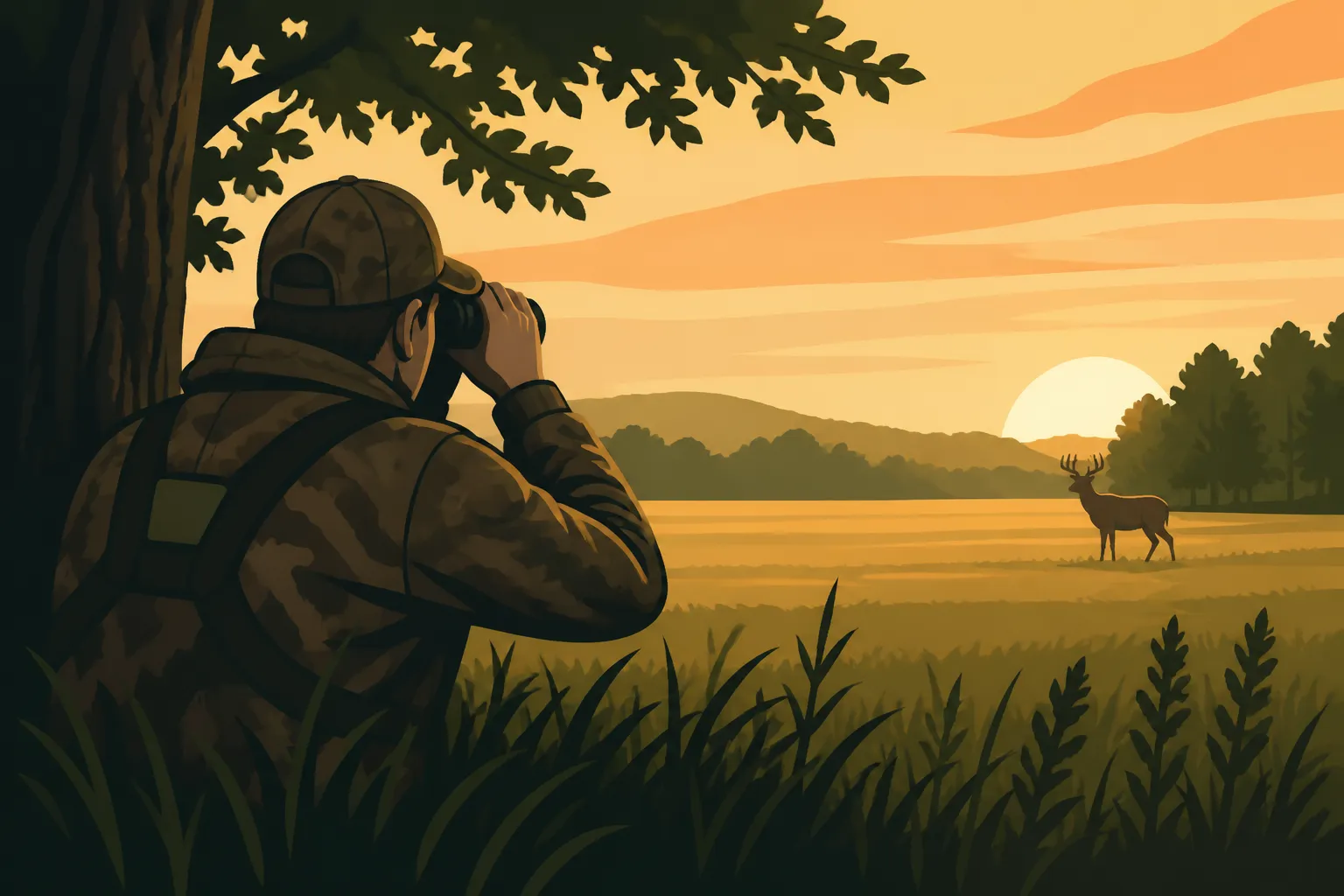
Field edges are inherently attractive to deer. They represent a crucial transition zone between feeding areas and bedding cover, providing security cover along travel routes while offering immediate access to abundant food sources. In West Tennessee, these food sources typically include soybeans, corn, winter wheat, and various types of hay or alfalfa. Deer will often stage in thicker cover near the edge, waiting for low light to pour into the fields to feed, making these transition lines prime ambush spots.
However, hunting these edges also presents unique challenges. The flat topography offers less elevation for diverse treestand placements, meaning your silhouette and scent cone can be more exposed. Wind swirls, though less dramatic than in hilly country, can still be unpredictable along irregular edges or near timber stand breaks. Plus, with agriculture dominating, there can be significant human activity, from farming equipment to other hunters, making deer incredibly wary. The trick is to identify those subtle nuances that make one field edge productive while another is barren.
Reading Deer Sign Along the Edge
Successfully hunting field edges starts with meticulous sign reading. You're not just looking for a single track; you're piecing together a story of deer movement. Fresh tracks entering and exiting the field are your first clue, indicating current use. Pay close attention to where these tracks funnel into distinct trails. Are they using a ditch line for concealment? Are they skirting a specific thicket? These subtle travel lanes become your focus.
Next, look for scrapes and rubs. Scrapes are areas where bucks clear the ground, urinate, and sometimes leave scent from their forehead glands on an overhead branch (a "licking branch"). These are communication hubs, especially during the rut. Rubs, where bucks strip bark from trees, indicate testosterone-fueled activity and often mark a buck's travel route or a core area. A line of rubs leading from a woodlot to a field edge is a clear indicator of a buck's preferred entry or exit. Also, don't overlook droppings; fresh piles tell you deer are currently in the area and often hint at their diet. Observing these patterns over time, perhaps with the aid of trail cameras, will reveal valuable insights into whether deer are feeding primarily at night or during legal hunting hours.
The Impact of Wind and Thermals in Flat Country
While mountains have dramatic thermal currents that rise in the morning and fall in the evening, flat agricultural areas still have their own version, albeit less pronounced. In West Tennessee, the primary driver for scent dispersal is often the prevailing wind, which can be surprisingly fickle around certain field edges, especially where timber lines are irregular or there are small, sheltered pockets. Your scent will travel horizontally for long distances, making wind direction the single most critical factor in your setup.
Even in flat terrain, subtle thermals can occur. Early mornings, as the sun begins to warm the ground, you might experience a slight rise in air currents, carrying your scent upward. Conversely, in the evenings, as the ground cools, air might settle and carry scent downward or pool in low spots like ditches or creek beds. Always position yourself downwind of where you expect deer to approach or cross. If the wind is swirling or unpredictable, it’s often better to stay home or find a spot with a more consistent breeze. Many experienced hunters use products like Wind Checker from Dead Down Wind to constantly monitor the wind, understanding that even a slight shift can compromise a setup. Mastering Wind and Thermals on a Ridge System is a useful skill, but applying those principles to flat land takes unique observation.
Strategic Scouting and Stand Placement
Effective hunting in West Tennessee's field edges is less about luck and more about methodical scouting and strategic placement. You need to become a detective, piecing together clues from maps and on-the-ground observations to predict deer movement. This process starts long before the season opener and continues throughout your hunting efforts.
Pre-Season Aerial Reconnaissance
Before you even step foot in the woods, your scouting should begin with aerial maps. Tools like GoHunt (and similar apps like onX Hunt or HuntStand) are invaluable for this. Look for key features that influence deer movement:
- Bedding Cover: Identify thickets, grown-up CRP fields, small patches of dense timber, or creek bottoms with heavy cover. These are where deer will spend most of their daylight hours.
- Funnels and Pinch Points: Look for natural bottlenecks where deer movement is concentrated. This could be a narrow strip of timber between two large fields, a fence gap, a ditch that provides cover for crossing an open area, or a small island of trees within a field.
- Water Sources: Even in agricultural areas, deer need water. Ponds, creeks, or even drainage ditches can be important focal points, especially during warmer parts of the season.
- Field Type and Rotation: Try to understand the crop rotation in the area. A field of standing corn provides both food and cover, while a freshly cut soybean field is an open buffet. Knowing the farmer's planting schedule can give you a significant advantage. Reading Aerial Photos for Cumberland Plateau Deer offers some transferable skills, but you'll adapt them to the flatter landscape.
Mark these potential areas on your map. Your goal is to find the intersection points where deer transition from bedding to feeding, often using the edges as their primary travel routes.
On-the-Ground Scouting Without Pressure
Once you've done your digital homework, it's time to hit the ground, but do so carefully to avoid pressuring deer. The best time for this is typically in the off-season or during midday when deer are bedded down. Your mission is to confirm what you saw on the map and find fresh, real-time sign.
Walk the field edges, but stay just inside the timber line or along fencerows to minimize your disturbance. Look for well-worn trails leading from thick cover directly into the field. Are there particular spots along the edge where deer consistently enter or exit? Often, a subtle change in topography, like a slight dip in the field, a small knoll, or even a single larger tree offering shade, can be a preferred entry point. Look for active scrapes and rubs, noting their freshness. Are they being worked frequently?
Pay special attention to any ditches, creek banks, or old fence lines that run perpendicular to the field edge. These seemingly insignificant features often serve as highways for deer, providing just enough cover for them to feel secure moving during daylight. The goal is to find those hidden travel corridors that aren't immediately obvious from a distance. For some great tips on getting started, check out Scouting Tennessee Public Land Before Season, many of those principles apply directly to private ground as well.
Choosing the Right Setup: Treestands vs. Ground Blinds
The choice between a treestand and a ground blind largely depends on the specific field edge you're hunting, the available cover, and your personal hunting style. Both have their merits and drawbacks in West Tennessee.
Treestands:
- Pros: Elevated vantage point helps with scent dispersal (though not foolproof in flat country), offers a wider view of the field and surrounding timber, and can often allow you to see over low brush or crops. A treestand provides a crucial advantage in spotting deer before they spot you.
- Cons: Limited by the availability of suitable trees (straight, healthy, and offering good concealment). Setting up can be noisy and time-consuming, and moving a stand frequently can be a hassle. Your entry and exit routes become even more critical to avoid silhouetting yourself.
- Types: Hang-on stands offer versatility but require climbing sticks. Climbing stands are fast and mobile if you have the right trees. Tripod stands can be excellent for open field edges where suitable trees are scarce, but they are very conspicuous and need to be set well in advance. Consider options like a Millenium M100 or a Lone Wolf custom gear stand for comfort and stability if you plan to sit for extended periods. For tips on other hunting methods that use elevated positions, check out Treestand Setups in Cherokee National Forest.
Ground Blinds:
- Pros: Excellent concealment (when properly brushed in), great for cold or wet weather, can be set up quickly and moved relatively easily, and are ideal for hunting with youth or those with mobility issues. A good ground blind lets you move around more without being detected by deer.
- Cons: Limited visibility, especially if crops are high or there's thick brush. Your scent can pool at ground level, making wind direction even more critical. Deer are often more wary of new objects on the ground.
- Setup: If using a pop-up blind, set it up several weeks before you plan to hunt to allow deer to get used to its presence. Always brush it in heavily with natural vegetation from the area. This isn't just about breaking up its outline; it's about making it look like a natural part of the environment.
- Considerations: Look for a ground blind that is tall enough to allow you to shoot comfortably, whether with a bow or crossbow, without exposing yourself. Brands like Primos and Barronett offer good options. For more specific advice, see Using a Ground Blind on Tennessee Public Land.
Ultimately, the best setup is the one that allows you to remain undetected, provides a clear shot opportunity, and minimizes your disturbance to the area. Sometimes, a subtle ditch or a fencerow with natural screening cover is all you need for a successful ground ambush.
| Feature | Treestand | Ground Blind |
|---|---|---|
| Visibility | High, wide view over fields and low cover | Lower, limited view, especially in tall crops |
| Scent Dispersal | Generally better, scent dissipates higher | Can pool at ground level, wind critical |
| Concealment | Depends on tree choice, often needs natural cover | Excellent when brushed in, can be moved |
| Mobility | Moderate to high (climbers/saddles), low (hang-ons) | High (pop-ups), lower (permanent structures) |
| Comfort | Varies by stand, can be cold/exposed | Good protection from elements, more room to move |
| Setup Time | Can be quick (climber) or involved (hang-on) | Quick (pop-up), but needs pre-season brushing |
| Deer Reaction | Less likely to notice overhead movement | Wary of new objects, needs time to acclimate |
| Typical Use | Ambush travel routes, overlooks feeding areas | Edge cover, pinch points, dense thickets |
Executing the Hunt: Tactics for Success
Once you’ve done your scouting and selected your setup, the real work begins. Hunting a West Tennessee field edge requires discipline, patience, and adaptability. The way you approach your stand, how you interact with the environment, and your understanding of deer behavior in agricultural settings will dictate your success.
Entry and Exit Routes
This is perhaps the most overlooked, yet most critical, aspect of hunting any area, but especially open field edges. A perfect stand placement is useless if you spook every deer in the county getting to or from it. Your entry and exit plan must be meticulously thought out.
- Use available cover: Ditch lines, deep fencerows, standing strips of timber, or even tall, unharvested crops (if legal and you have permission) can provide crucial cover. The goal is to remain out of sight and as quiet as possible until you're safely in your stand.
- Play the wind: Always approach your stand with the wind in your favor, meaning it’s blowing your scent away from where you expect deer to be. This might mean taking a longer, roundabout route, but it’s worth the extra effort.
- Timing: Arrive well before daylight and leave well after dark. Deer are often actively feeding or moving at these times. If you bump deer on your way in or out, you’ve essentially ruined that sit, and potentially future sits in that spot. Consider using a dim headlamp with a red or green light setting to preserve your night vision and minimize disturbance.
Think of it like a game of chess; you're planning several moves ahead, anticipating how the deer will react to your presence (or lack thereof).
Decoy Strategies and Calling
Decoys and calls can be incredibly effective tools on West Tennessee field edges, particularly during the rut. The open nature of these areas allows deer to see decoys from a distance, drawing them in for a closer look.
- Deer Decoys: A single doe decoy can be effective in early archery season or during the pre-rut to attract curious bucks. As the rut heats up, a buck decoy can challenge dominant bucks or entice a more cautious one to investigate. Place your decoy so that an approaching deer offers a quartering-away shot. Always consider the wind direction when placing a decoy; you want the approaching deer to come into your scent cone only after it's in range. Brands like Dave Smith Decoys or Montana Decoy offer realistic and portable options.
- Calling: Grunt calls are excellent for mimicking a buck's communication and can entice a deer to come closer or reveal itself. Doe bleats can pique the curiosity of both bucks and does. Rattling antlers can simulate a fight between two bucks, often bringing in a dominant buck looking for a confrontation or a smaller buck hoping to sneak in.
- Timing is key: Use aggressive calling during the peak of the rut, especially in Hunting the Tennessee Rut in Early November. During the early or late season, more subtle calls might be more effective.
- Location: In open field edges, sound travels far. Be mindful of your volume. Sometimes a soft series of grunts is all it takes.
- Response: Pay attention to how deer react. If they come in, be ready. If they bolt, it might be time to back off on the calling.
Dealing with Hunting Pressure
West Tennessee, with its mix of private farms and public lands like Hatchie National Wildlife Refuge or various WMAs along river bottoms, can experience significant hunting pressure. Deer quickly learn to avoid areas with high human activity, especially during daylight hours.
- Find the overlooked spots: Often, the best hunting on pressured land is found in small, seemingly insignificant woodlots that other hunters walk past, deep creek bottoms that are difficult to access, or areas that require a longer walk from the road. Deer will gravitate to these sanctuaries.
- Hunt during the week: If your schedule allows, hunting on weekdays can drastically reduce pressure compared to opening weekend or Saturdays.
- Hunt the fringes: Instead of setting up right on the most obvious field edge, try setting up 50-100 yards back into the timber, along a subtle trail leading to the field. This can catch deer that are staging or skirting the field before committing to entering the open.
- Public vs. Private: If you're on public land, always be aware of other hunters. If you have private land access, cherish it and implement strategies that minimize pressure. Check out Hunting Pressure on Tennessee Public Land for more insights on dealing with crowds.
- Late Season: As the season progresses and pressure mounts, deer become even more nocturnal. Focus on secure bedding areas and late-season food sources like winter wheat or standing beans. For more on this, consider Hunting the Late-Season January Lull or Late-Season Food Sources for Tennessee Whitetails.
Advanced Field Edge Considerations
To truly master field edge hunting in West Tennessee, you've got to think beyond the basics. Deer behavior is constantly influenced by environmental factors, agricultural practices, and seasonal changes. Adapting your strategy to these nuances can make a significant difference in your success.
Hunting Various Crop Cycles
The type of crop in the field and its stage of growth dramatically impacts how deer use the surrounding edges.
- Soybeans: In the early season, when soybeans are green and lush, they provide excellent browse. Deer will often enter fields to nibble on the leaves. As soybeans mature and turn brown, they become a high-energy food source. After harvest, deer will scour the fields for dropped beans, making the edges hotspots.
- Corn: Standing corn is a double-edged sword. It's an incredible food source and provides dense cover. Deer will often bed directly in large cornfields, making them difficult to hunt. The edges become critical ambush points, especially if you can find a narrow strip of timber bordering a cornfield. Once the corn is harvested, deer will focus on gleaning leftover kernels, much like with soybeans.
- Winter Wheat/Clover: These plots are magnets for deer in the late season, after many other food sources have diminished. A green strip of winter wheat along a timber edge can draw deer out during daylight, even in bitter cold.
- Rotational Farming: Farmers often rotate crops year to year. What was a soybean field last year might be corn this year, completely altering deer patterns. Staying updated on local farming practices, if possible, can give you a significant advantage. This information can often be gathered by simply observing fields or talking to landowners in the spring.
The Impact of Weather Changes
Weather isn't just about comfort; it's a huge driver of deer activity.
- Cold Fronts: A sudden drop in temperature, especially after a warm spell, almost invariably kicks deer activity into high gear. They need to feed to maintain energy and prepare for colder conditions. These are prime times to be in your stand or blind. For specific strategies during these periods, check out Hunting Deer After a January Cold Front.
- Rain: Light rain can actually be your friend. It dampens sounds, allowing you to move more quietly, and can get deer on their feet. Heavy, driving rain, however, usually sends deer to thick cover. Hunting immediately after a heavy rain stops can be very productive.
- High Winds: Very windy days can make deer nervous and often reduces their movement in open areas. They might stick to sheltered timber or thickets. If you must hunt in high wind, focus on areas with natural windbreaks or deep cover. The swirling winds can also make scent control even more challenging.
- Barometric Pressure: While often debated, many hunters observe increased deer movement during periods of rising or stable barometric pressure, particularly after a drop. Keep an eye on the forecast, and plan your hunts around these favorable conditions.
Long-Term Habitat Improvement
For those with access to private land, thinking about long-term habitat improvement can dramatically enhance your field edge hunting success.
- Small Food Plots: Planting small, strategic food plots (e.g., clover, winter wheat, brassicas) directly on the edges of existing timber or in overlooked corners can create powerful deer magnets. This provides a consistent food source and can influence deer to enter fields during daylight hours.
- Thickening Fencerows/Edge Cover: Instead of perfectly manicured field edges, consider letting fencerows or strips of timber grow thicker. This creates more security cover, encouraging deer to use these areas as travel corridors and staging grounds. Selective hinge-cutting of trees can achieve this quickly.
- Screening Cover: Planting evergreens or fast-growing shrubs to create visual barriers between bedding areas and your entry routes can be incredibly effective. This allows deer to feel more secure and gives you a better chance of slipping into your stand undetected. Consider native species that are well-adapted to the West Tennessee climate and soil.
By understanding and reacting to these advanced considerations, you're not just hunting a field edge; you're hunting an ecosystem, adapting to its rhythms and maximizing your chances of success.
Disclaimer
Hunting is an inherently dangerous activity. Always prioritize safety, follow all local and state regulations, and obtain proper licensing. The information provided here is for educational and entertainment purposes only and should not replace professional guidance or personal judgment. Be aware of your surroundings, understand your equipment, and hunt responsibly.