Reading a Ridge for East Tennessee Deer
Hunting deer in the rugged, unforgiving ridge country of East Tennessee can feel like trying to find a needle in a haystack. The vastness of the mountains, the dense timber, and the steep topography can leave even experienced hunters feeling lost and frustrated, wondering where the deer could possibly be hiding. This guide is here to demystify those formidable ridges, breaking down how to read the landscape, pinpoint deer activity, and develop effective strategies to put venison in your freezer.
Understanding the East Tennessee Ridge System
East Tennessee’s topography, dominated by the Appalachian Mountains, is a world away from the flat farmlands of West Tennessee or the rolling hills of the Highland Rim. These aren't just hills; they are complex systems of steep slopes, deep hollows, benches, saddles, and drainages that funnel deer movement in predictable ways, if you know what to look for. The challenge isn't just finding a deer, but understanding how they use these unique features for feeding, bedding, and escaping pressure.
Topography and Deer Movement
Deer in East Tennessee ridges are masters of efficiency. They conserve energy by following the path of least resistance, which means they'll use saddles (low spots in a ridge), benches (flat shelves on a steep slope), and the bottoms of drainages for travel. These aren't random trails; they're superhighways for deer moving between bedding areas on sunny south-facing slopes and feeding areas in creek bottoms or oak flats. Think of a saddle as a natural bridge between two mountain peaks; deer will almost always cross there. A bench, on the other hand, provides a flat, secure travel corridor along a steep hillside, often obscured from view, offering safety. Understanding these natural movement corridors is your first step to unlocking success in this terrain.
Thermals play an enormous role in these mountains, constantly changing throughout the day. In the morning, cold air sinks into the hollows, pulling scent down with it. As the sun rises, the air warms and begins to climb, carrying scent upwards. This means if you're hunting a ridge line in the morning, your scent might be blowing down into the hollow, but by midday, it could be rising up the opposing slope. Misjudging these air currents is a surefire way to spook deer. Being able to anticipate these shifts, especially on variable terrain, is crucial for stand placement and knowing when to move or sit tight. For a deeper dive, check out our article on Wind and Thermals on a Ridge System.
Water sources are another critical, often overlooked, element in ridge country. While Tennessee is generally wet, specific springs, seeps, or reliable creek stretches can concentrate deer, especially during dry spells. These micro-habitats offer not just hydration but often lush forage that stays green longer or sprouts earlier than other areas. Identifying these subtle water sources on a map or during scouting can reveal hidden pockets of deer activity that other hunters might miss. Deer aren't going to climb an extra thousand feet just to get a drink unless absolutely necessary, so finding water closer to their bedding and feeding areas is key.
Key Features of a Productive Ridge
When you're staring at a topo map or hiking through the woods, certain features should immediately jump out at you as high-potential spots. These aren't just random bumps in the land; they are the strategic intersections and safe havens deer rely on. Learning to recognize them is like learning to read a secret language that deer speak. Without this understanding, you're essentially walking blind.
Fingers and points, which are smaller ridges extending off a main ridge, are fantastic travel corridors and often have benches. Deer will often travel along the sides of these fingers, using the cover to stay hidden, or cross over them to get from one drainage to another. These points are also great spots for bedding, especially if they offer good thermal cover or thick evergreens. Knowing where these fingers connect to the main ridge or drop into a hollow can help you anticipate where deer will merge onto the larger travel routes or diverge to bedding.
Funnels, which are natural constrictions in the landscape, are perhaps the most reliable places to intercept deer. These could be narrow saddles between two peaks, a tight pinch point where a bench narrows dramatically, or even a section where thick cover forces deer into a specific travel lane. The steeper and thicker the terrain, the more pronounced these funnels become. Identifying these natural choke points, where deer are forced to move through a smaller area, should be a top priority during your scouting. This allows you to set up in a place where deer have to pass, rather than simply might pass.
Oak flats are another critical feature, especially during mast years. While you might think of flats as being in bottoms, many productive oak flats are found on gentle slopes or the tops of broader ridges in East Tennessee. When the acorns drop, these areas become prime feeding grounds. The specific type of oak matters too; white oaks drop their acorns first and are highly palatable, followed by red oaks. Knowing which oaks are producing in a given year, and focusing on those areas, can make a huge difference. You'll often find concentrated deer sign, like fresh droppings and disturbed leaves, in these areas when the acorns are falling.
Scouting Tactics for Ridge Deer
Scouting is where the real work of hunting East Tennessee ridges begins. It's not just about walking around in the woods; it's about systematically dissecting the landscape, looking for clues, and piecing together the puzzle of deer movement. Without thorough, strategic scouting, you're just gambling on luck. This is especially true on public land where deer are often pressured and highly sensitive to human intrusion.
Interpreting Deer Sign
When you're out there pounding the miles, you're looking for stories the deer have left behind. Rubs and scrapes are perhaps the most exciting sign, as they indicate not just deer presence, but often the presence of mature bucks during the pre-rut and rut. Rubs, where a buck has polished his antlers on a sapling, typically indicate travel routes or staging areas. Larger rubs on bigger trees usually mean a more mature buck is in the area. Scrapes, patches of disturbed ground where bucks urinate and leave glandular scent, are communication hubs. Look for "community scrapes" where multiple deer, including does, will visit. These are gold mines for stand placement.
Tracks and trails tell you where deer are going. On steep, rocky terrain, clear tracks can be hard to find, but well-worn trails, especially those that navigate difficult sections of a slope, are invaluable. Look for trails that lead from potential bedding areas (often on thick, south-facing slopes) to feeding areas (oak flats, creek bottoms, or clear-cuts). Don't just follow the obvious trails; look for subtle game trails that skirt the edges of thickets or use cover strategically. Sometimes the faintest trail is the most used by a wary older deer.
Droppings and browsing indicate feeding areas and general deer activity. Fresh droppings in an oak flat tell you deer are currently feeding there. Browsing, where deer have nipped off the ends of twigs or leaves, shows what they're eating and how heavily they're using an area. Pay attention to the type of vegetation being browsed; certain plants are preferred deer forage and can clue you into high-quality food sources. The more recent and abundant the sign, the better the spot. For more general advice, consider our article on Finding Sign in Big Cherokee Forest Timber.
Using Technology for Pre-Season Planning
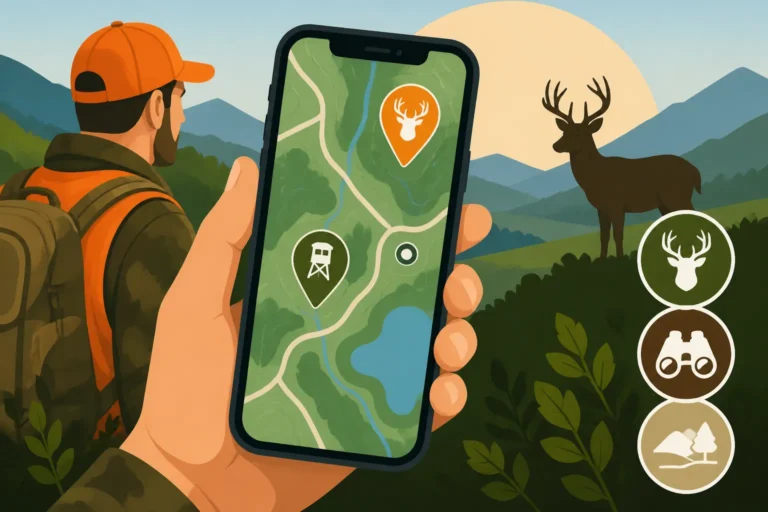
In today's hunting world, technology is your best friend, especially when dealing with the vastness of East Tennessee's public lands. Tools like the GoHunt app are invaluable for breaking down these complex landscapes long before your boots hit the ground. Before you even leave the house, you can be making highly educated guesses about where to focus your scouting efforts, saving you countless hours of aimless wandering.
Satellite imagery and topographical maps are the foundation of digital scouting. GoHunt allows you to overlay topo lines on satellite imagery, revealing subtle benches, saddles, and drainages that are nearly invisible from ground level. You can identify potential bedding areas on steep, thick slopes, pinpoint funnels between ridges, and mark down promising oak flats or creek bottom food sources. This initial "e-scouting" phase is crucial for narrowing down vast tracts of land into manageable zones of interest. You can also use it to identify access points and plan your routes in and out, considering prevailing winds and thermals.
GPS mapping features allow you to mark waypoints for deer sign, stand locations, and trails. As you scout, you can drop pins for every rub, scrape, track, and bedding area you find. Over time, this builds a comprehensive map of deer activity, revealing patterns and hot spots. You can then use these patterns to determine the best stand locations or still-hunting routes. The ability to track your movements and know your exact location, especially on sprawling public land like parts of the Cherokee National Forest or North Cumberland Wildlife Management Area, is critical for safety and efficiency. This type of detailed mapping takes the guesswork out of hunting unfamiliar territory.
Considering the sheer scale of the landscape, public land is a big part of hunting in East Tennessee. For additional resources, our article on Scouting Tennessee Public Land Before Season offers broader tips, but the specifics of ridge country require a focused technological approach to truly shine. Many serious hunters now rely heavily on apps like GoHunt to analyze terrain features, understand land ownership, and even predict deer movement based on historical data.
Hunting Strategies on Ridge Systems
Once you've done your homework and identified promising areas, it's time to put boots on the ground with a solid hunting plan. Hunting East Tennessee ridges isn't a "one size fits all" endeavor; it requires adaptability and a deep understanding of how deer react to pressure, scent, and movement within their environment. Your strategy needs to be as dynamic as the landscape itself.
Stand Placement and Wind Considerations
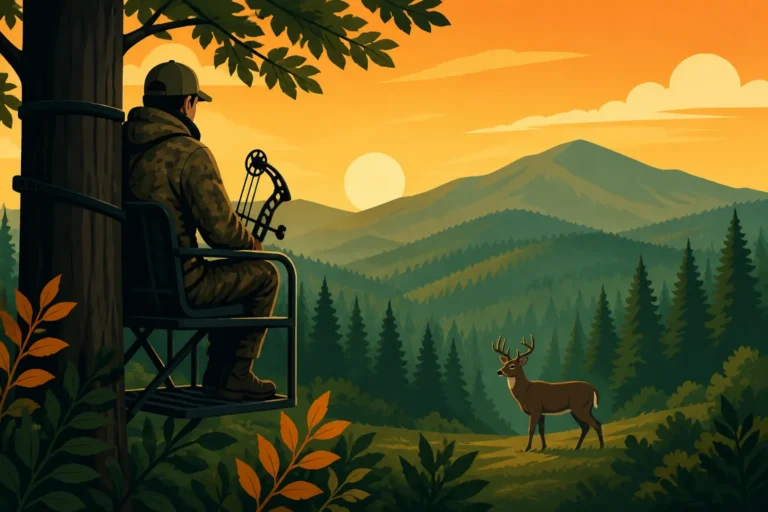
Picking the right tree for your stand is only part of the equation; understanding why that tree is in the right place, considering all the environmental factors, is paramount. Deer in these mountains are extremely wary, and even a slight error in judgment can send them silently slipping away. For those interested in advanced setups, our guide to Treestand Setups in Cherokee National Forest offers valuable insights applicable here.
Access routes are often overlooked but are absolutely vital. How you get to and from your stand without spooking deer is just as important as the stand itself. You want to choose routes that keep you out of primary deer travel corridors, often using low-lying areas, creek beds, or the backside of ridges. Consider the wind and thermals on your approach; ideally, you should be moving with a favorable wind that carries your scent away from where you expect deer to be. A silent, stealthy approach in the predawn darkness is crucial.
Wind and thermals, as mentioned earlier, are your constant companions and biggest challenges in ridge hunting. On a ridge, the wind can swirl unpredictably, and thermals rise and fall throughout the day. Your stand placement needs to account for these shifts. Often, a stand placed just off a ridge on the downwind side of a saddle or bench will be effective, as deer often travel with the wind in their face, using their nose to detect danger ahead. However, as the day progresses, rising thermals can carry your scent up the hill. This often means you need different stand setups for morning and evening hunts, or be prepared to adjust your strategy mid-day. For more on this complex topic, revisit our Wind and Thermals on a Ridge System guide.
Shooting lanes and cover are also crucial. You need clear shooting lanes to your anticipated deer travel routes, but you also need enough cover to break up your silhouette. Often, this means selecting a tree at the edge of a thicket or on a finger point where you have clear views into a saddle or bench, but the deer don't have a clear view of you. In these situations, using a tree that offers natural breaks or installing trimming carefully can make all the difference. Remember, the deer are using that cover for a reason – don't give away your position by being silhouetted against an open sky.
| Ridge Feature | How Deer Use It | Optimal Stand Placement | Challenges |
|---|---|---|---|
| Saddles | Primary travel between ridges, often bedding/feeding transition | Downwind of saddle, overlooking trails, 20-30 yards off main trail | Swirling winds, high hunter pressure, limited cover |
| Benches | Covert travel along steep slopes, sometimes bedding | On the bench, where it narrows or meets a funnel, inside edge of cover | Difficult access, thick cover for shooting lanes, wind often unpredictable |
| Fingers/Points | Travel corridors, secondary bedding areas, vantage points | Overlooking where finger meets main ridge or drops into hollow | Steep access, thermals rising/falling along finger |
| Oak Flats | Primary feeding areas during mast drop | Downwind of feeding area, overlooking trails entering/exiting | Finding active mast, deer moving constantly, scent control critical |
| Drainages/Hollows | Travel, water access, sometimes bedding (thickest areas) | Where game trails cross, near water sources or funnels | Cold air sinks (scent down), difficult dragging a deer out |
Still-Hunting and Driving Ridges
While stand hunting is effective, the dynamic nature of East Tennessee ridges often lends itself perfectly to still-hunting or, on some public lands, organized deer drives. These methods allow you to actively pursue deer in terrain where they often seek refuge. Still-hunting, in particular, requires a completely different mindset and skill set than static stand hunting. If you're looking for more insight on still-hunting tactics, our article on Still-Hunting Cumberland Plateau Ridges is a great resource.
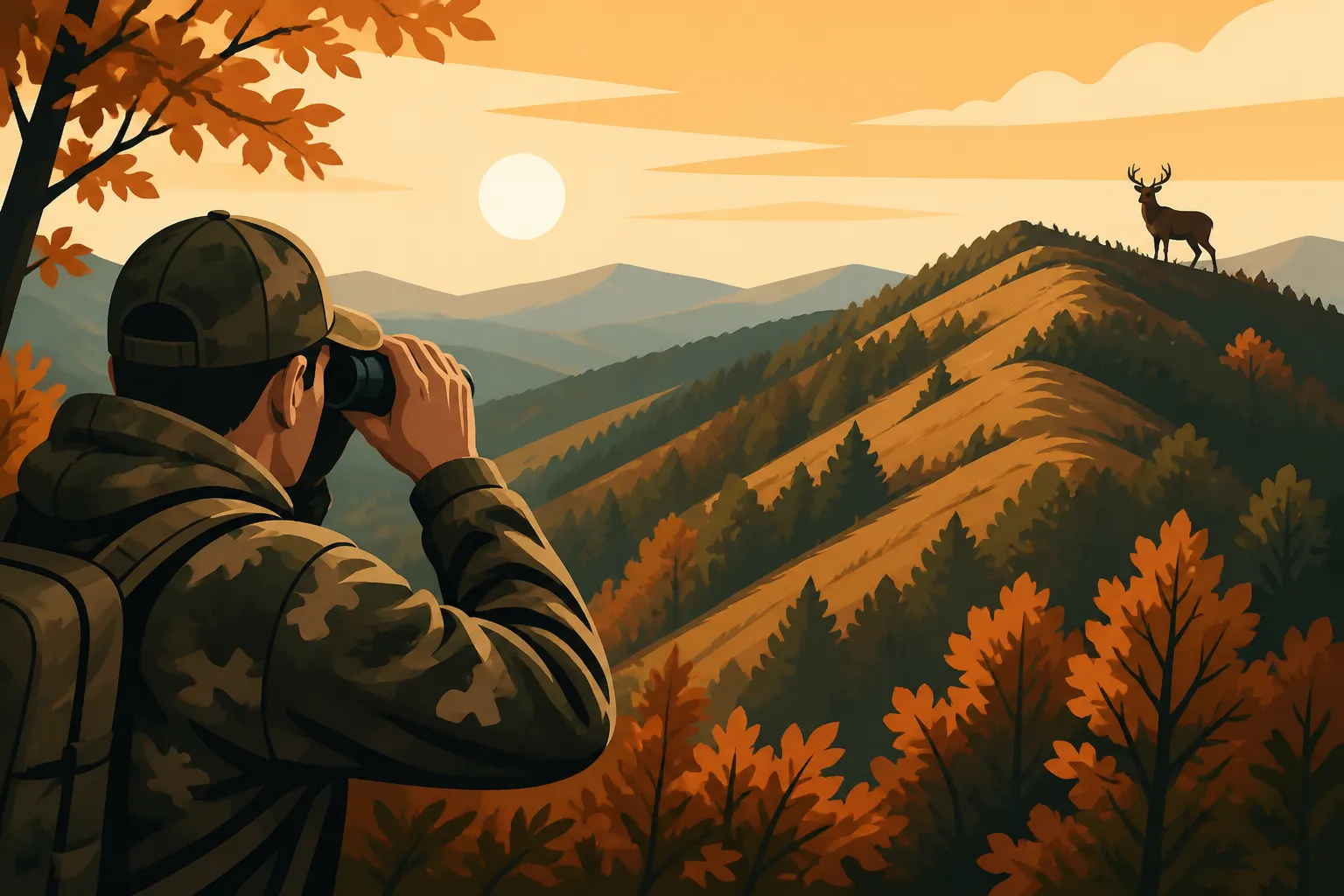
Still-hunting involves moving slowly and deliberately through the woods, stopping frequently to scan, listen, and glass. On a ridge, this means slowly working your way along a bench, contouring a finger, or even creeping up a drainage. Your pace should be painstakingly slow, sometimes taking an hour to cover only a few hundred yards. You’re not just looking for deer; you're looking for movement, an ear twitch, a horizontal line in a vertical world, or the flick of a tail. Use your optics constantly. A good pair of binoculars, like those mentioned in our guide to Optics for Cumberland Plateau Ridges, is indispensable for picking apart thick cover. Move with the wind in your face or on a crosswind, always paying attention to changing thermals. You're hunting with your eyes and ears as much as your weapon.
Deer drives, especially on larger tracts of public land, can be incredibly effective, but they require planning and coordination. This involves a group of hunters (drivers) pushing deer towards another group of hunters (posters) strategically positioned on escape routes. On ridges, this often means drivers pushing from a lower bench or hollow up towards a main ridge saddle or a narrow point where posters are waiting. Communication is key, as is understanding the terrain and how deer will react. You need to know where the deer are likely to try and slip out, and position your posters accordingly. Safety is paramount, and everyone needs to be aware of where other hunters are at all times. Our article on Deer Drives With Three or Four Hunters provides a good starting point for understanding how to organize these.
Regardless of your method, being prepared for the retrieve is essential. Dragging a deer out of a steep East Tennessee hollow can be one of the most physically demanding parts of the hunt. Having a good pack, like those discussed in Packs for a Cherokee Forest Day Hunt, and knowing your extraction route are crucial. Sometimes, the gutless method and packing out portions of the deer might be your best option, particularly if you're deep in a steep ravine. Even if you've done everything right and punched your tag, the real work might just be beginning. For guidance on handling those tricky retrieves, read our article on Recovering a Deer From a Steep Hollow.
Disclaimer
Hunting is an inherently dangerous activity. Always prioritize safety, understand and adhere to all Tennessee Wildlife Resources Agency (TWRA) regulations, and obtain appropriate licenses and permits. This guide is for informational purposes only and does not replace professional instruction or local regulations. Ensure you have landowner permission if hunting private land. Be aware of your surroundings and any potential hazards.