Spot-and-Stalk Tactics for Cherokee Forest Bears
Hunting black bears in the vast, rugged expanses of the Cherokee National Forest is an entirely different beast than chasing whitetails on a manicured food plot. It demands a level of physical endurance, mental fortitude, and a mastery of woodsmanship that few other pursuits can match. If you've ever felt overwhelmed by the sheer scale of the mountains or frustrated by the elusive nature of these incredible animals, you're not alone. This comprehensive guide will peel back the layers of spot-and-stalk tactics, offering practical, actionable advice to help you navigate the challenge and ultimately find success in the Tennessee mountains.
Decoding Bear Habitat in Cherokee National Forest
The Cherokee National Forest isn't just big; it's a wild, unforgiving tapestry of towering peaks, plunging hollows, and dense undergrowth. Understanding how bears utilize this complex environment is the absolute first step toward even thinking about a spot-and-stalk hunt.
Understanding the Mountainous Terrain
Picture this: you're standing on a ridge line, looking out over miles of unbroken timber, wondering where to even begin. The Cherokee National Forest, stretching along Tennessee's eastern border, is characterized by its steep, broken terrain. You've got elevations that can change by thousands of feet in a single mile, creating a maze of ridges, saddles, and creek bottoms. Bears, much like experienced mountain deer, are masters of efficiency. They'll use these features to their advantage.
They often travel along benches and old logging roads that contour the mountainsides, providing easier navigation than battling straight up or down. Dense rhododendron and laurel slicks aren't just frustrating for hunters; they're prime security cover for bears. They'll bed down in these thickets, especially on north-facing slopes where it stays cooler, or in deep hollows that offer seclusion. When you're glassing, don't just look for open areas; learn to see into the shadows and the edges of these impenetrable spots. Understanding the nuances of Hunting Bear Zone Three on South Cherokee or other specific zones can further refine your focus, as different areas might have slightly different characteristics and bear densities.
The Seasonal Feast: Mast and Forage
If you want to find a bear, you absolutely have to find its food. This is the cornerstone of any successful spot-and-stalk strategy in the mountains. Bears are opportunistic omnivores, and their movements are dictated almost entirely by what's available to eat.
- Spring Green-up: As winter loosens its grip, bears emerge from their dens seeking the first tender greens. You'll find them hitting lower elevations, south-facing slopes, and open areas where things green up earliest. Look for them feeding on forbs, roots, and tender shoots that provide essential nutrients after their long sleep.
- Summer Berries: As summer progresses, berries become a primary food source. Blackberries, blueberries, and huckleberries are absolute magnets for bears. They’ll often frequent clear-cuts, old logging decks, and natural openings in the forest where these plants thrive. This is a tough time for spot-and-stalk due to dense foliage, but knowing where they're feeding can inform your scouting for fall.
- Fall Mast: This is the golden ticket for bear hunting in the Cherokee. Acorns, hickory nuts, and beechnuts are calorie-rich and bears will gorge on them to build up fat reserves for winter. Hardwood ridges, especially those with mature oak stands, become major feeding zones. A good mast crop year can spread bears out, while a poor one can concentrate them, making scouting for specific groves even more critical. Keep an eye on Hunting Bears Over Natural Mast in the Mountains as this directly influences where you'll find them. This is where pre-season scouting with a tool like GoHunt's mapping features can really shine, allowing you to identify potential mast-producing areas and access routes before you even step foot in the woods.
Bear Behavior and Sign Reading
Bears are incredibly intelligent and elusive creatures. They aren't going to sit around waiting for you to find them. Spot-and-stalk requires a keen eye for subtle clues and an understanding of their daily routines.
You'll generally find bears most active during the early morning and late evening hours, much like deer. However, during the fall mast season, they might feed throughout the day, especially if a good acorn crop means they don't have to travel far. Look for obvious signs:
- Scat: Fresh bear scat is a definitive indicator that a bear is in the area. The contents will tell you what they're eating – berries, nuts, or even insect parts.
- Tracks: While often obscured by leaf litter, fresh tracks, especially around mud puddles or soft ground near water sources, confirm recent presence.
- Claw Marks on Trees: Bears love to climb, especially smaller trees, to get at nuts or berries. Look for distinct claw marks on the bark.
- Torn Logs and Rocks: Bears will rip apart old logs and flip over rocks in search of grubs and insects, leaving obvious signs of their foraging.
- Rubbed Saplings: During the breeding season, males will often rub trees to leave their scent, and even outside of that, bears will rub on trees.
By meticulously piecing together these clues, you can start to form a picture of where bears are moving, feeding, and bedding, giving you an edge in this challenging landscape.
Equipping for the Spot-and-Stalk Challenge
Success in the Cherokee National Forest isn't just about knowing bears; it's about being prepared for the environment. The right gear won't just make you more comfortable; it will directly impact your effectiveness and safety.
Precision Optics for Distant Discovery
In big country like the Cherokee, your eyes are your most valuable asset, and quality optics extend their reach exponentially. You simply cannot spot-and-stalk effectively without them.
- Binoculars: A good pair of 10x or 12x binoculars are non-negotiable. They allow you to pick apart distant slopes, identify subtle movements, and confirm if that dark blob is a stump or a sleeping bear. Invest in the best you can afford, as clarity and low-light performance are critical.
- Spotting Scope: For truly immense canyons or slopes miles away, a lightweight spotting scope can be a game-changer. It allows for detailed examination of specific areas once your binoculars have identified something of interest.
- Rangefinder: A reliable rangefinder is absolutely essential. In mountainous terrain, distances are incredibly deceptive. What looks like 200 yards can easily be 350. Knowing the exact distance to your target and to landmarks during your stalk is crucial for an ethical shot.
- GoHunt Mapping: Before you even leave home, use an app like GoHunt to analyze topo maps and satellite imagery. Identify potential vantage points for glassing, likely bear travel corridors along benches, and escape routes. This pre-scouting will save you countless miles of walking aimlessly.
Reliable Firearms and Ammunition
When you finally get that shot opportunity on a bear, you want to be confident that your firearm and ammunition are up to the task. Bears are tough, well-muscled animals, and an ethical kill is paramount.
- Rifle Caliber: While many deer cartridges can take a bear, choosing a caliber known for its knockdown power and ability to deliver heavy, controlled-expansion bullets is wise. Common choices include .30-06 Springfield, .308 Winchester, .270 Winchester, or even something larger like a .300 Win Mag if you're comfortable with it. The key isn't necessarily speed, but bullet weight and construction for deep penetration.
- Ammunition: Select premium, bonded, or monolithic bullets designed for large game. Examples include Nosler AccuBond, Barnes TTSX, or Federal Terminal Ascent. These bullets retain their weight and penetrate deeply, increasing your chances of reaching vital organs even through heavy bone.
- Shot Placement: Familiarize yourself intimately with bear anatomy. A bear's vitals are positioned differently than a deer's. Aim for the crease behind the shoulder, slightly lower than you might for a deer, to target the heart and lungs. Practice shooting from various field positions, as you likely won't have a bench rest when that opportunity arises. For more in-depth knowledge, look into Shot Placement on a Tennessee Black Bear.
- Backup Sidearm: While not always necessary, a powerful handgun (e.g., .44 Magnum, 10mm) can provide peace of mind as a last resort in dense cover or during a tracking job. Always ensure you are proficient and comfortable with it.
Essential Mountain Hunting Gear
Beyond your weapon and optics, a few other pieces of gear will make your Cherokee National Forest bear hunt safer and more effective.
- Layered Clothing: Mountain weather is notoriously unpredictable. One minute it's warm and sunny, the next a cold rain or fog rolls in. Dress in layers that you can easily add or shed. Avoid cotton, opting for moisture-wicking synthetics or wool. Remember Tennessee's Blaze Orange Requirements – ensure you have enough visibility if hunting during firearm seasons or on certain WMAs.
- Durable Hiking Boots: Your feet are your engine. Invest in high-quality, waterproof hiking boots with good ankle support. You'll be covering miles of steep, uneven, and often wet terrain.
- Navigation: A reliable GPS unit or a smartphone with a robust mapping app (like GoHunt) and downloaded offline maps is essential. Cell service is spotty at best in many parts of the Cherokee. Know how to use your chosen device.
- First-Aid Kit: Carry a comprehensive first-aid kit. Sprains, cuts, and scrapes are common in rugged terrain.
- Bear Spray: While you're hunting bears, a can of bear spray on your hip is a wise precaution for unexpected, close-range encounters with non-target bears or sows with cubs. It's a deterrent, not a weapon for your quarry.
- Sturdy Pack: A good hunting pack, ideally 30-50 liters, is crucial for carrying all your gear, extra layers, food, water, and, hopefully, meat on the way out. For more details, consider Packs for a Cherokee Forest Day Hunt.
- Headlamp: Even if you plan to be out before dark, things can go wrong. A powerful headlamp with extra batteries is a lifesaver for navigating challenging terrain in low light.
Mastering the Spot-and-Stalk Technique
This is where the rubber meets the road. Spot-and-stalk isn't just walking until you see something; it's a deliberate, calculated dance with the wilderness.
Strategic Glassing: The Patience Game
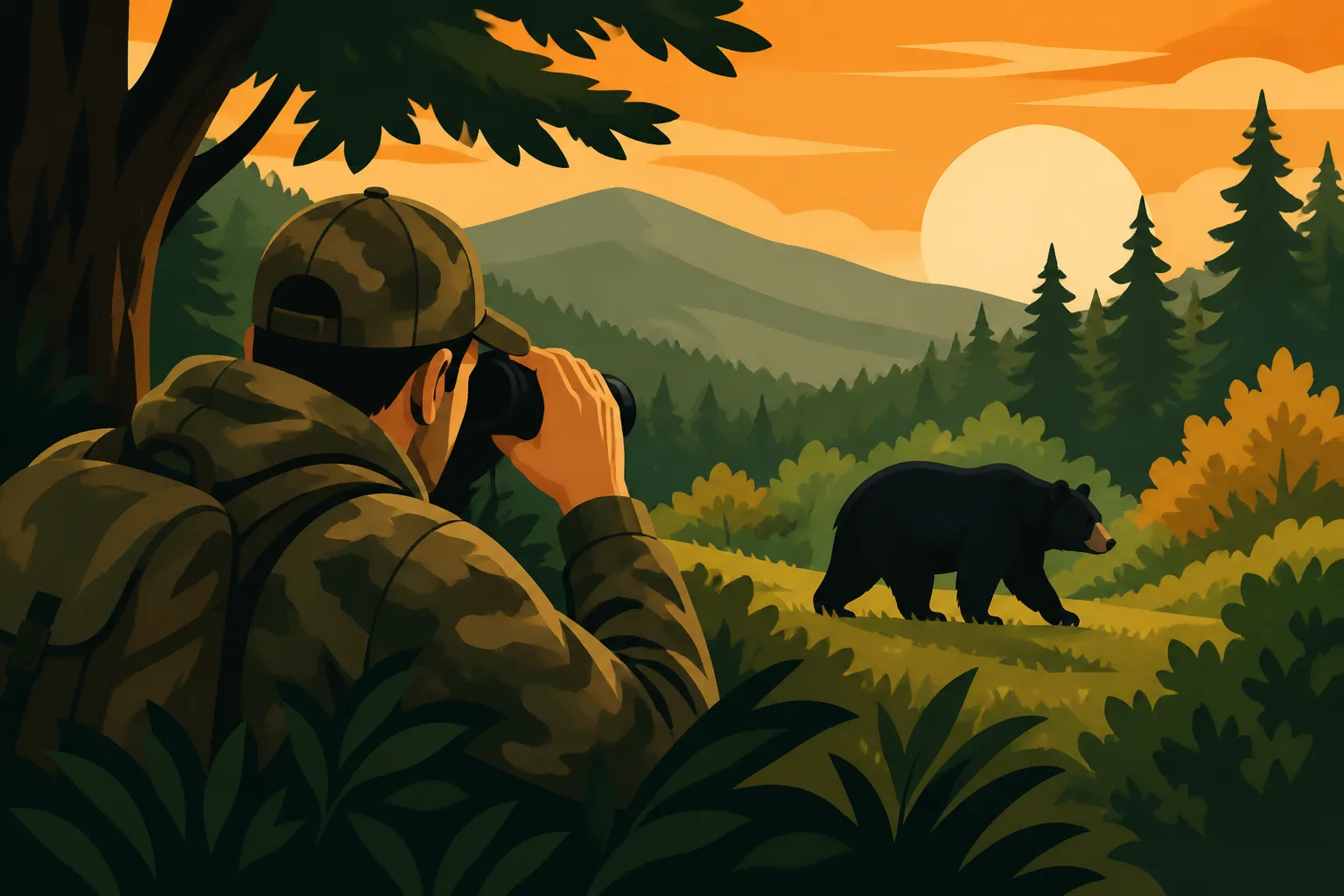
Many hunters walk too much and glass too little. In vast landscapes like the Cherokee, your binoculars are your primary scouting tool.
- Find Your Vantage Point: Identify high points, overlooks, or open areas that give you expansive views of likely bear habitat – mast ridges, clear-cut edges, secluded hollows, or creek drainages. Use your GoHunt app to find these spots on a topo map.
- Systematic Scanning: Don't just glance. Start at one end of a visible area and systematically grid-search it, slowly moving your binoculars up, down, and across. Pay special attention to shaded areas, the edges of thickets, and any anomalies in the landscape. What looks like a rock can often turn into a bear.
- Timely Observation: Early morning (first light) and late evening (last light) are prime glassing times. Bears are often moving or feeding, and the low-angle light can create shadows that reveal their presence. Be prepared to sit and glass for extended periods – hours, not minutes. Sometimes, a bear will appear from nowhere after a long sit.
The Art of Silent Approach
Once you've spotted a bear, the real work begins. This is the stalk, and it demands extreme caution, patience, and adaptability.
- Wind is King: This cannot be stressed enough. Bears have an incredible sense of smell. Always approach with the wind in your favor, ideally a crosswind that carries your scent away from the bear's likely escape routes. If the wind isn't right, you either wait for it to change or abandon the stalk.
- Utilize Terrain for Concealment: Use every dip, rise, tree, and thicket to your advantage. Stay low, move slowly, and avoid skylining yourself on ridges. Planning your route carefully from your glassing point is essential.
- Slow and Deliberate Movement: This isn't a race. Take one step at a time, checking the ground for crunching leaves or snapping twigs. Lift your feet, don't drag them. Pause frequently to re-evaluate the bear's position and look for other hazards. You'll be covering ground where you've likely done Finding Sign in Big Cherokee Forest Timber beforehand, so you should have a feel for the terrain.
- Avoid Other Game: Alerting a deer or squirrel can easily blow your stalk on a bear. Move like you're stalking the deer itself.
Ethical Shot Placement and Decision Making
Getting close enough for an ethical shot is the culmination of your efforts. Don't let excitement compromise your judgment.
- Wait for the Perfect Shot: A broadside or slightly quartering-away shot is ideal. Aim for the heart-lung area. Never take a shot at a running bear or one facing directly at you, unless it's a critical self-defense situation.
- Know Your Limits: Understand your effective shooting range and stick to it. If the distance is too great, or the cover too thick, pass on the shot. A wounded bear in the Cherokee National Forest is a very dangerous situation.
- Reacting to Detection: If the bear detects you, freeze. Sometimes, they'll simply look and go back to feeding. If it stands up, gives a warning, or starts to move away, assess the situation. You might get a quick shot as it turns, or you might need to let it go.
Post-Harvest: Recovery and Safety in Rugged Terrain
Congratulations! You've successfully executed a spot-and-stalk hunt and taken a bear. But the hunt isn't over. Recovering and processing a bear in the Cherokee National Forest presents its own unique set of challenges.
Tracking and Recovery in Thick Cover
This is often the hardest part of bear hunting in the mountains. Bears are incredibly tough, and even a well-placed shot might not drop them instantly.
- Post-Shot Protocol: Take a moment to compose yourself. Mark the spot where the bear was standing and the direction it fled. Listen intently for any sounds of it crashing or thrashing.
- Waiting Period: Resist the urge to immediately pursue a wounded bear, especially if it ran into thick cover. Give it at least 30-60 minutes, or even longer (2-3 hours for a gut shot), to lie down and stiffen up. Pushing a wounded bear can make tracking nearly impossible and is dangerous.
- Systematic Tracking: Follow the blood trail slowly and meticulously. Look for broken branches, overturned leaves, and hair. If the trail runs out, grid-search the area in the direction of travel. Have a partner to help you if possible. Be acutely aware of your surroundings; a wounded bear can be unpredictable. For detailed steps, refer to Handling a Bear After the Shot.
Field Dressing and Meat Care Deep in the Woods
A bear is a large, heavy animal, and field dressing it on a steep mountain slope is a workout. Proper meat care is crucial, especially during warmer early seasons.
- The Gutless Method: This technique is a lifesaver in the backcountry. Instead of gutting the animal, you skin and debone it in place, taking out quarters, backstraps, and other prime cuts. This significantly reduces weight and mess, allowing you to pack out the meat in manageable sections.
- Cooling the Meat: Bear meat can spoil quickly in warm weather. Get the hide off as soon as possible to allow the meat to cool. If temperatures are high, consider hanging the meat in game bags in a shady, breezy spot before making a second trip for another load.
- Packing Out: This is where that sturdy pack comes into play. You might need to make multiple trips, especially if you're deep in the forest. Having a hunting partner is a huge advantage for this stage. Don't forget that Tennessee Bear Checking Requirements mandate reporting your harvest.
Mitigating Risks and Unexpected Encounters
Beyond the inherent dangers of hunting, the Cherokee National Forest presents general backcountry risks that you must be prepared for.
- Weather Changes: Be ready for sudden shifts in weather, from sunny skies to torrential downpours or even unexpected snow, especially in higher elevations. Carry rain gear and extra layers.
- Navigational Errors: Even with a GPS, it's possible to get disoriented in dense cover or fog. Always have a compass and map as a backup, and know how to use them. Share your hunt plan with someone responsible.
- Other Wildlife: Be aware of venomous snakes like timber rattlesnakes, which are common in parts of the Cherokee. Watch your step.
- Bear Encounters: While hunting, you might encounter non-target bears. Always give them space. If a bear acts aggressively or appears to be habituated to humans, make noise, make yourself look large, and be prepared to use bear spray if necessary. Always remember, the forest is their home.
The challenges of spot-and-stalk bear hunting in the Cherokee National Forest are immense, but the rewards are equally profound. It's a journey that tests your skills, patience, and connection to the wild. By understanding the bear's world, equipping yourself properly, and executing your strategy with precision and ethics, you'll be well on your way to earning one of the most fulfilling hunting experiences Tennessee has to offer.
Disclaimer
Always check the current Tennessee Wildlife Resources Agency (TWRA) regulations before heading into the field, as seasons, zones, and rules can change annually. Safety should always be your top priority when hunting in the backcountry.