Shot Placement on a Tennessee Black Bear
Taking on a black bear in Tennessee is an incredible experience, a true test of patience, skill, and ethical hunting principles. But let's be honest, putting a bear down cleanly can be far more challenging than a deer, due to their thick hide, dense bone structure, and often-misunderstood anatomy. This guide will walk you through the critical aspects of shot placement to ensure a swift, humane harvest on your next Tennessee black bear hunt.
Understanding Black Bear Anatomy and Vital Zones
Before you even raise your rifle or draw your bow, you need to understand what you’re aiming at. A black bear’s vitals—their heart and lungs—are positioned differently and often appear more forward in their body cavity than many hunters expect, especially when they're used to deer anatomy. Their heavy shoulder bones and layers of fat and muscle also require serious penetration.
Locating the Heart and Lungs
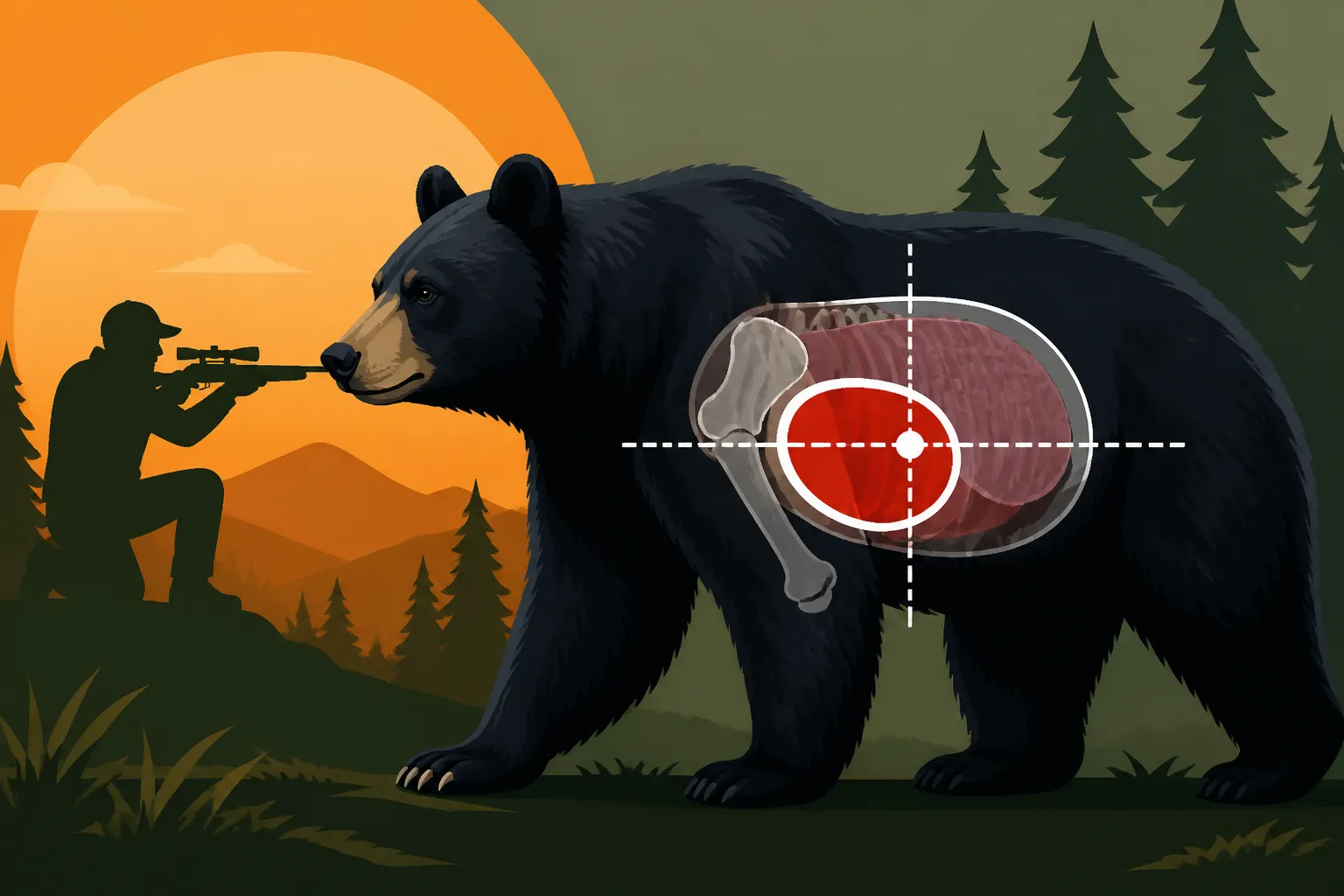
The primary target zone for a clean kill on a black bear is the heart-lung area. This zone is tucked low and forward, behind the shoulder blade. Imagine a vertical line running up from the bear's front leg. The vital area is mostly within the first third of the bear's body, just behind that line. If you aim too far back, like you might on a deer, you risk hitting the paunch or liver, leading to a long, difficult, and potentially unsuccessful recovery.
The lungs are quite large, extending well above and behind the heart, offering a decent-sized target if you aim correctly. The heart is smaller, located even lower in the chest cavity, almost directly above the elbow. For archery, the aim is to get both lungs, while with a rifle, hitting either the heart or both lungs will typically result in a quick dispatch. It's often recommended to aim for the lower third of the bear's body, right behind the front leg, to maximize your chances of hitting the heart or the bottom of the lungs and ensuring a good exit wound for a blood trail.
Why Brain and Spinal Shots Are Rarely Advised
While a brain shot or a shot to the spine would certainly drop a bear instantly, these are incredibly small, difficult targets, especially on a moving animal. Attempting these shots significantly increases the risk of merely wounding the animal, leading to immense suffering and a lost bear. For instance, a shot just off the spine might paralyze a bear temporarily, leaving it alive and dangerous. A brain shot needs to be placed within a few inches of the ear canal to be effective.
Given the typical hunting scenarios, which often involve varying distances, cover, and a limited window of opportunity, sticking to the larger and more forgiving heart-lung vital zone is the most ethical and responsible approach for most hunters. Focus on mastering the broadside and quartering-away shots to this region, rather than attempting high-risk, low-percentage shots.
Shot Angles and Ethical Aim Points
The angle at which a bear presents itself to you is paramount for proper shot placement. Unlike deer, where a wider range of angles might still allow for a lethal shot, a bear's denser bone structure and protective fat layers make precise angling even more critical. Prioritizing broadside and quartering-away shots ensures maximum penetration through the vital organs.
Broadside and Quartering-Away Shots
These are by far the most preferred and ethical shot angles for black bears.
-
Broadside Shot: When a bear is standing perfectly perpendicular to you, offering its side. For a broadside bear, aim just behind the crease of the shoulder, about one-third of the way up from the chest. Visualize a line extending from the bear's opposite elbow. Your projectile should ideally pass through both lungs, or through the heart and one lung, for a quick kill. The goal is to aim for a double-lung pass-through, which provides a better blood trail and quicker incapacitation. Think about the exit hole – you want that arrow or bullet to pass completely through, creating two holes for blood to escape. Using scouting tools like GoHunt can sometimes help you anticipate common bear travel routes, potentially allowing you to set up for these ideal angles.
-
Quartering-Away Shot: This is another excellent angle, where the bear is angled away from you, exposing more of its opposite side. For a quartering-away bear, aim to enter behind the near shoulder and angle your shot towards the opposite shoulder. This trajectory ensures your projectile passes through the vitals before exiting. The further the bear is quartering away, the more you’ll need to aim slightly further back on the near side to reach the vitals on the opposite side. For example, if the bear is quartering heavily away, you might aim closer to the rib cage on the near side to exit through the chest cavity on the far side. This angle is particularly effective for maximizing internal damage to the heart and lungs and is often considered a prime opportunity for archers due to increased penetration potential on the vitals.
Avoiding Risky Quartering-To and Frontal Shots
While tempting, quartering-to and frontal shots are generally highly discouraged for black bears due to the high risk of non-lethal wounding.
-
Quartering-To Shot: When a bear is angled towards you, presenting its chest. This shot presents a significant challenge because the heavy bone structure of the shoulder and sternum can easily deflect a projectile, especially an arrow. Even a rifle bullet can be stopped or diverted by the shoulder blade, leading to a superficial wound. The vitals are largely shielded from this angle, and penetrating deep enough to reach the heart or lungs often requires navigating a maze of bone and muscle. Unless you have an absolutely perfect, close-range opportunity with a high-powered rifle and premium bullet, it’s best to wait for a better angle.
-
Frontal Shot: When the bear is facing directly towards you. This is arguably the riskiest shot. While the vitals are technically accessible, the target area is incredibly small. A frontal shot requires the projectile to pass directly through the sternum and breastplate, potentially shattering bone before entering the heart-lung cavity. Furthermore, the likelihood of hitting the esophagus, trachea, or even a non-vital stomach shot is very high. With the bear's head up, the brain is also a very small, moving target. Ethical hunters universally advise against frontal shots on bears due to the high probability of wounding and the slim chance of a clean kill. It's always better to remain patient and wait for the bear to turn, offering a broadside or quartering-away opportunity.
Firearm and Archery Considerations for Bear Hunting
The equipment you use plays a massive role in ensuring proper shot placement results in a clean kill on a black bear. Their robust build demands more from your gear than many deer species. You need sufficient kinetic energy, bullet construction that holds together, and broadheads designed for deep penetration. Understanding Rifle Calibers for Tennessee Bear can be key to success.
Rifle Caliber and Bullet Selection
For rifle hunters pursuing black bears in Tennessee, the adage "use enough gun" certainly applies. While a well-placed shot with a smaller caliber can kill a bear, you want to stack the odds in your favor against their dense musculature and bone structure.
- Minimum Calibers: While smaller calibers like the .243 Winchester might be legal, they are generally considered marginal for black bears. Most experienced bear hunters recommend a minimum of .270 Winchester or .30-06 Springfield. Calibers like the .308 Winchester, .30-06, and .300 Winchester Magnum are excellent choices, offering a good balance of power, trajectory, and recoil. For those seeking maximum stopping power, especially in dense cover or where larger bears might be encountered, .338 Winchester Magnum or even 9.3×62 Mauser are formidable options.
- Bullet Construction: This is perhaps even more important than caliber. Bears have thick hide, heavy muscle, and dense bone. You need a bullet that will retain its weight, penetrate deeply, and expand reliably without fragmenting prematurely. Premium bullets like Barnes TSX or TTSX (all-copper, solid construction), Nosler Partition (partitioned core for controlled expansion and weight retention), Swift A-Frame, or Hornady InterBond are highly recommended. Avoid light, frangible varmint bullets, which are designed for rapid energy dump on smaller animals and will likely fail to reach the vitals of a bear.
Bow and Broadhead Choices for Deep Penetration
Archery hunting for black bears adds another layer of challenge. Your setup must be capable of generating enough kinetic energy and momentum to achieve a pass-through shot, which is crucial for a robust blood trail and a quick recovery.
- Bow Setup: The Tennessee Wildlife Resources Agency (TWRA) sets minimum draw weights for archery hunting, which are typically 30 pounds for longbows/recurve bows and 40 pounds for compound bows. However, for black bears, most seasoned archers would recommend significantly exceeding these minimums. A compound bow set at 60-70 pounds draw weight, paired with heavy arrows (450-550 grains total weight), will provide the necessary kinetic energy and momentum for deep penetration. Crossbows are also legal in Tennessee and offer excellent energy transfer; ensure you're using a setup that delivers similar penetration capabilities.
- Broadhead Selection: For black bears, fixed-blade broadheads or robust mechanical broadheads designed for large game are generally preferred.
- Fixed Blades: These are known for their reliability and penetration, as they don't have moving parts that can fail or impede penetration. Quality fixed-blade broadheads with sturdy ferrules and sharp, durable blades are excellent choices. Look for designs that prioritize strength and cutting surface.
- Mechanical Broadheads: If you choose mechanicals, select those with a strong reputation for durability and large game performance. Avoid those with flimsy blades or complex deployment mechanisms, as they may not stand up to the tough hide and bone of a bear. Some popular choices include Rage Hypodermic, G5 Deadmeat, or Grim Reaper. Always ensure your broadhead is razor-sharp before the hunt. A dull broadhead, regardless of type, will hinder penetration.
Tracking and Recovery After the Shot
Even with a perfectly placed shot, recovering a black bear can be a test of grit and patience. Bears often react differently than deer, and their thick hide and fat can sometimes "plug" entry and exit wounds, leading to a less-than-obvious blood trail. Knowing Handling a Bear After the Shot is critical for success.
Immediate Post-Shot Behavior
When you take a shot at a bear, pay close attention to its immediate reaction and the sounds it makes.
- Reaction to the Hit: Bears might react to a solid hit by hunching up, running in a tight circle, or making a "death moan" – a distinct, guttural bawl. This sound is a strong indicator of a lethal hit. Not all bears will make this sound, but if you hear it, it's a good sign.
- Direction of Travel: Note the exact direction the bear runs after the shot. Pick out a specific tree, rock, or other landmark where you last saw it. Bears, especially when hit, often seek the thickest cover available. Using a tool like GoHunt's mapping features can help you mark the last seen point and plan your grid search effectively.
- Waiting Period: Just like with deer, patience is key. For a seemingly well-placed shot with a rifle, wait at least 30-60 minutes before beginning to track. For an archery shot, or if you have any doubt about the shot placement, waiting 2-4 hours is a safer bet. If the bear was wounded in a non-lethal area, a longer wait (6-8 hours, or even overnight if conditions allow) might give the animal time to bed down and expire, making recovery much easier and safer.
The Art of Blood Trailing a Bear
Blood trailing a bear can be notoriously difficult due to the factors mentioned earlier. Every little bit of sign is crucial.
- Searching the Shot Site: After your waiting period, slowly approach the shot site. Look for blood, hair, bone fragments, or anything else that indicates where the bear was standing when hit.
- Blood Color and Consistency: Bright red, frothy blood often indicates a lung hit. Darker red blood with specks of fat can suggest a muscle hit or liver. Greenish or brown matter mixed with blood points to a gut shot.
- Hair Color: Note the color and length of any hair. This can give you clues about where on the body the bear was hit.
- Following the Trail: Move slowly and deliberately. If the blood trail is sparse, expand your search in widening circles from the last confirmed sign. Bears tend to run downhill, or seek thickets, water, or dense cover. Look for disturbed leaves, broken twigs, or scuff marks on the ground. Mark your trail with flagging tape or a GPS waypoint every time you find blood, so you don't get disoriented. When in doubt, circle ahead and try to pick up the trail. If you hit a complete dead end, consider calling in a tracking dog if available and legal in your Bear Hunting Cherokee National Forest area. For extremely difficult trails, referring to a guide on Tracking a Deer Through Tennessee Leaf Litter can offer helpful strategies applicable to bears. Once recovered, remember to complete Tennessee Bear Checking Requirements.
| Shot Angle | Aim Point | Preferred Weapon | Notes |
|---|---|---|---|
| Broadside | Low and forward, behind the shoulder crease | Rifle/Bow | Excellent for double-lung or heart shots. Aims for maximum vital damage and a clear exit. |
| Quartering-Away | Behind the near shoulder, angling towards the opposite shoulder | Rifle/Bow | Ideal for hitting both lungs/heart. Provides a good blood trail due to angled exit wound. |
| Quartering-To | Base of the neck/chest, angling back (HIGH RISK) | Rifle (High Caliber) | Extremely risky due to heavy bone. Only attempt with extreme caution and high-power rifle at close range. |
| Frontal | Center of the chest, aiming low (DO NOT RECOMMEND) | N/A | Extremely low percentage shot. High risk of superficial wound or deflection. Avoid at all costs. |
Black bear hunting is a truly rewarding endeavor in Tennessee's wild landscapes. By taking the time to understand their anatomy, practicing your shot placement, and preparing for the recovery, you'll increase your chances of a successful and ethical hunt. Remember, every shot you take is a commitment to the animal, so make it count.
Disclaimer
Hunting is an inherently dangerous activity. The information provided in this guide is for informational purposes only and should not be taken as professional instruction. Always prioritize safety, adhere to all local, state, and federal hunting regulations, and be aware of your surroundings. It is crucial to practice with your equipment regularly and understand your personal limitations. Seek professional guidance and hands-on training for firearms and archery safety and proficiency. The author and publisher are not responsible for any accidents, injuries, or legal issues that may arise from the use of this information.