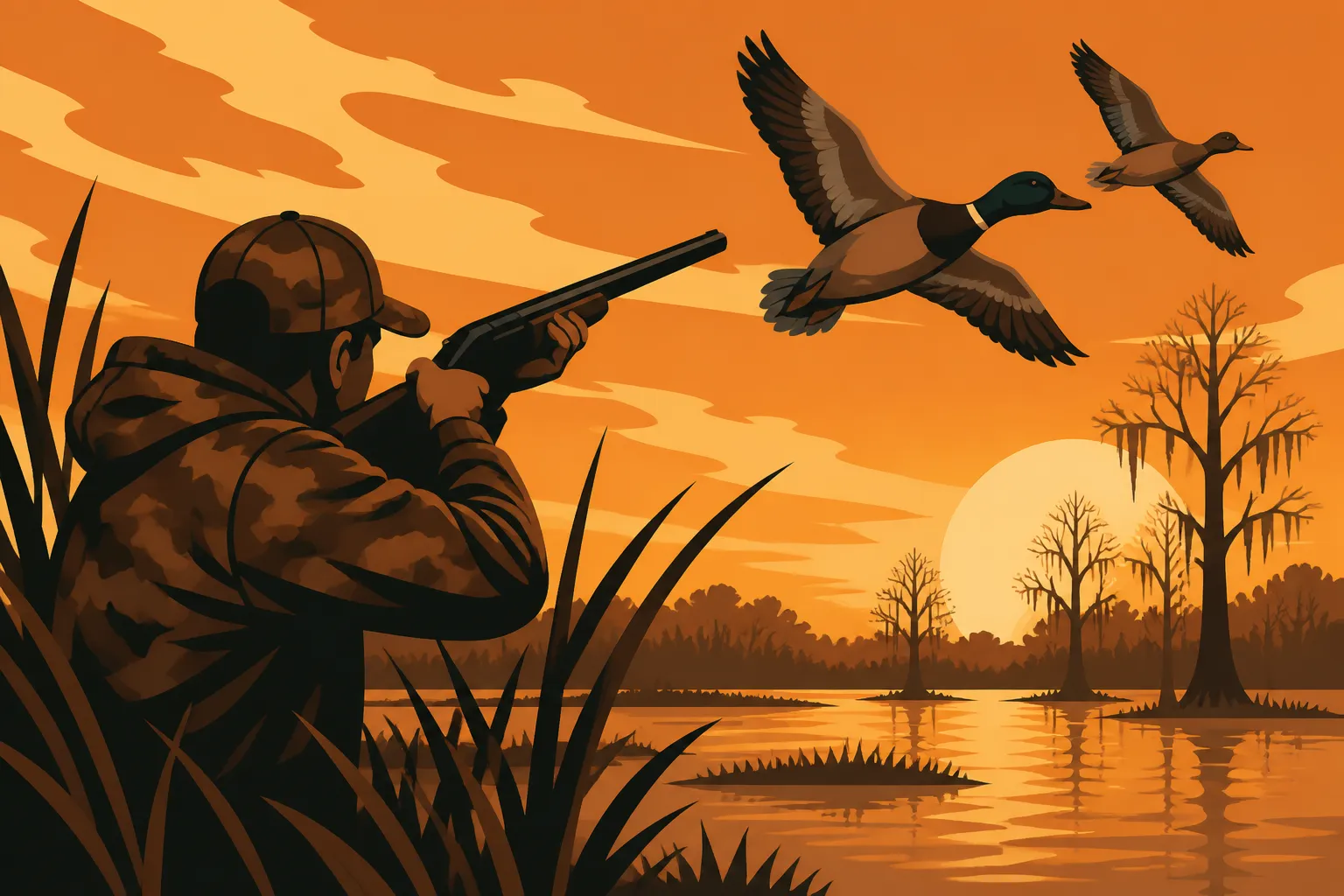
Hunting West Tennessee River Bottoms
Hunting the expansive, often unpredictable river bottoms of West Tennessee can be an exercise in both immense frustration and incredible reward. These low-lying areas, shaped by the mighty Mississippi and its tributaries, offer some of the state's most challenging yet fruitful hunting experiences, often leaving hunters scratching their heads about how to consistently find and harvest game. This guide dives deep into understanding these unique ecosystems and developing effective strategies for success, whether you're chasing a mature buck, setting up for ducks, or looking for small game.
Navigating the Unique Challenges of West Tennessee River Bottoms
The river bottoms of West Tennessee are a world unto themselves, vastly different from the rolling hills of Middle Tennessee or the rugged mountains of East Tennessee. Understanding these differences and how they impact wildlife is the first step toward becoming a successful hunter in these areas.
Understanding the Landscape and Seasonal Changes
West Tennessee river bottoms, like those along the Mississippi River, Hatchie River, Forked Deer River, and Obion River, are characterized by their relatively flat topography, rich alluvial soils, and dense stands of hardwoods like cypress, tupelo, oaks, and hackberries. These areas are prone to seasonal flooding, which dramatically alters the landscape, creates new travel corridors for animals, and changes access for hunters. During the late fall and winter, these bottoms can transform from dry forest floors into vast, shallow lakes or a maze of sloughs and backwater channels. This dynamic environment means that what you scout in September might look entirely different by November or January. Deer, turkeys, and other game animals are incredibly adept at adapting to these changes, and successful hunters must learn to do the same.
The annual flood cycle, driven by rainfall upstream and local precipitation, dictates where animals will feed, bed, and travel. When water levels rise, deer are pushed to higher ground within the bottomlands, often to slightly elevated ridges or islands of drier timber. They'll concentrate in these areas, making them prime spots if you can access them. Conversely, when water recedes, new food sources emerge, and animals disperse. Understanding these patterns requires diligent scouting and, frankly, a lot of time in the woods observing the water. Using mapping tools like GoHunt that offer topographical and historical water level data can provide critical insights into these fluctuating environments, helping you anticipate where game might be pushed during high water. You can also use these tools to identify those subtle rises in elevation that become crucial refuge points for deer.
Dealing with Water, Mud, and Mosquitoes
It's no secret that river bottoms mean water, and water often means mud and mosquitoes. These are not minor inconveniences; they are fundamental challenges that impact everything from your choice of footwear to your overall comfort and ability to focus. The mud can be relentless, especially after a heavy rain or as floodwaters recede, making walking arduous and noisy. It sucks at your boots, pulls at your muscles, and leaves you exhausted before you even get to your stand. Then there are the mosquitoes, which, even in late season, can be a nuisance, especially in stagnant backwater areas. While they might thin out in the coldest months, a mild spell can bring them back with a vengeance.
Beyond personal discomfort, these elements impact your hunt. Noisy movements through mud can alert game, and constant swatting can break your concentration. To combat this, specialized gear is non-negotiable. High-quality, knee-high rubber boots are essential for keeping your feet dry and providing traction in slick conditions. Look for models designed for hunting that offer good insulation for colder weather and a comfortable fit for long treks. Insect repellent, even in late fall, should always be in your pack. Thermacell units can also be a lifesaver in a ground blind or stationary treestand. Remember, these bottoms are also home to venomous snakes, particularly cottonmouths and rattlesnakes, so paying attention to where you step is critical, especially when wading through standing water or dense vegetation.
Access and Property Line Considerations
Gaining access to prime river bottom hunting land can be one of the biggest hurdles. Much of West Tennessee's most desirable bottomland is privately owned, often by large agricultural operations or timber companies. Public land exists, but it often receives heavy hunting pressure. Understanding local regulations and securing permission is paramount. When it comes to Tennessee's Chronic Wasting Disease Management Zone, specific rules might apply to carcass transport, so always check the latest TWRA guidelines for the counties you plan to hunt.
Even with permission or on public land, access can be a nightmare. Roads can become impassable with rain, and deep sloughs or creeks can block your path entirely. This means you might be facing long walks, sometimes several miles, often through thick brush or standing water, just to reach your hunting area. Using mapping apps with satellite imagery and landowner information can be invaluable for identifying potential access points and understanding property lines. Services like GoHunt can help you visualize land ownership and topography, allowing you to scout smarter from home before you ever set foot in the woods. Always be respectful when trying to Knocking on Doors in West Tennessee Farm Country to gain permission. If you're on public land, be prepared to Finding Ground Others Walk Past by going deeper or accessing areas that are difficult for others to reach. This often means embracing the mud and the grind.
Key Strategies for Deer Hunting in West Tennessee River Bottoms
Deer in West Tennessee river bottoms behave differently than their counterparts in more upland, agricultural settings. Their movements are highly influenced by water levels, available food, and the dense, often featureless, cover.
Identifying Key Deer Funnels and Travel Corridors
In river bottoms, traditional funnels might not be as obvious as a saddle on a ridge, but they are just as crucial. Deer are creatures of efficiency, and they will use the paths of least resistance, especially when water levels change. These funnels can be subtle high spots that remain dry during minor floods, narrow strips of timber between two sloughs, or the edges of dense, impenetrable cover. Look for slight changes in elevation that create natural travel routes, often indicated by old logging roads, raised levees, or even ancient Indian mounds.
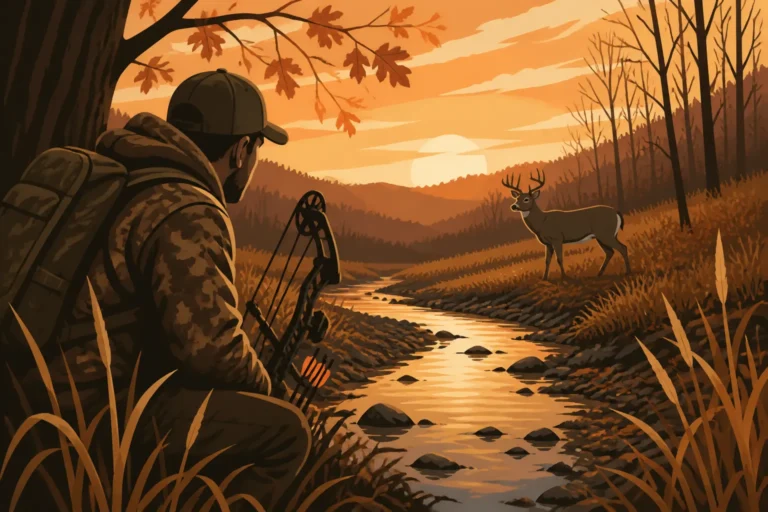
The edges where dense cover meets more open timber or agricultural fields are also critical travel corridors. Deer will often skirt these edges, using the security of the thick stuff while heading to a food source. In flooded timber, the "dry line" – the receding edge of the water – becomes a superhighway for deer. They'll often walk right along it, feeding on newly exposed vegetation. Identifying these areas requires diligent scouting, looking for tracks, droppings, and rub lines. Understanding Hunting Tennessee River Bottom Funnels can significantly increase your chances of intercepting a traveling buck. Pay close attention to these subtle changes in terrain on your topo maps, or better yet, scout them in person during both wet and dry conditions.
Stand Placement Near Food and Bedding Areas
Food and bedding locations in river bottoms are dynamic. Food sources can be hard mast like acorns from various oak species, soft mast like persimmons, or browse. In the fall and winter, agricultural fields bordering the bottoms, such as corn or soybean fields, become massive food magnets. However, deer also utilize native vegetation. When waters are low, exposed mud flats can sprout tender shoots, providing a fresh food source. When waters rise, deer are forced to higher, drier pockets of land where browse may be limited, but they'll make do with what's available.
Bedding areas are typically in the thickest, nastiest cover you can find – often dense, thorny briar patches, cane thickets, or areas of downed timber. These provide thermal cover, security, and a vantage point from which deer can monitor their surroundings. When placing a stand, think about the wind direction in relation to both bedding and food. Given the flat terrain, thermals might not be as pronounced as in hill country, but they still exist, especially around water sources. Consider prevailing winds and how your scent might drift. Access to your stand is equally important; you want to get in and out undetected. Sometimes, using a small canoe or kayak to access flooded timber can be a silent and effective approach. For those serious about understanding deer movement, resources like Hunting West Tennessee Bottomland Deer can offer invaluable local insights.
Adapting to Fluctuating Water Levels and Their Impact on Deer
The most challenging, and often most rewarding, aspect of hunting West Tennessee river bottoms is adapting to the unpredictable water levels. A heavy rainstorm 200 miles north can cause rivers to swell days later, completely changing the hunting landscape. What was a productive funnel yesterday could be under five feet of water today. Deer react immediately to these changes. As water rises, they'll move to the highest available ground. This often concentrates them, but it also means their patterns are disrupted.
Your strategy must be flexible. Have multiple stand locations scouted for different water levels. A permanent treestand might be great when dry, but useless when flooded. Mobile setups, like hang-on stands with climbing sticks or saddle hunting gear, allow you to be more adaptable. Sometimes, when the water is up, the only accessible "dry" land might be a levee, an old road bed, or a timber island. These become hot spots. Conversely, as water recedes, new food sources appear, drawing deer back into areas previously inaccessible. This might mean adjusting your approach daily, or even hourly. Checking river gauges and local flood forecasts is a crucial part of your pre-hunt routine. A good mapping app can help you visualize these shifts and plan routes through the ever-changing terrain.
Beyond Deer: Waterfowl and Small Game Opportunities in the Bottoms
While deer often steal the spotlight, West Tennessee river bottoms are incredibly diverse ecosystems offering fantastic opportunities for other game species, particularly waterfowl and small game.
Waterfowl Hunting Tactics in Flooded Timber and Sloughs
West Tennessee is part of the famed Mississippi Flyway, making its river bottoms a critical stopover and wintering ground for countless ducks and geese. The flooded timber and numerous sloughs, oxbows, and backwater lakes create ideal habitat for ducks, especially mallards, wood ducks, and gadwalls. Waterfowl hunting in these areas is a deeply ingrained tradition. Success hinges on scouting the birds, understanding their feeding and resting patterns, and setting up in areas where they want to be.
Calling is crucial, but so is concealment. Waders for Flooded Cypress Hunting are indispensable, allowing you to set decoys and hide in the timber. Layout blinds are less common in flooded timber but can be used in open fields adjacent to the bottoms. Decoy spreads should mimic natural feeding and resting patterns, often with a mix of species. Early season might see more wood ducks, while late season brings in the mallards and other puddle ducks. Knowing Tennessee Waterfowl Zones and Seasons is critical, as regulations can vary by specific management area or zone, such as the Reelfoot Zone. Hunters often use small jon boats or canoes to navigate the flooded timber quietly and efficiently. When the water gets really high, these bottoms can become vast playgrounds for ducks, offering some incredible hunting experiences.
Squirrel and Rabbit Hunting in Bottomland Hardwoods
Don't overlook the abundance of small game in West Tennessee's river bottoms. Squirrels and rabbits thrive in these areas, offering an exciting, fast-paced hunt, especially during the deer season lull or after deer season closes. The dense hardwood forests, rich in acorns, pecans, and other nuts, provide an ideal environment for squirrels. Fox squirrels and gray squirrels are both common. For squirrel hunting, focus on mature timber stands, particularly oak and hickory ridges within the bottomland. Watching for Reading Cuttings Under an Oak can tell you if squirrels are actively feeding in an area.
Rabbit hunting often involves navigating thick briar patches, cane thickets, and brush piles along field edges or within the bottoms. A good beagle can be invaluable for pushing rabbits out of these dense areas, but still-hunting or carefully flushing cover can also be effective. Shotguns with small shot sizes are standard for both. These hunts are a great way to introduce new hunters to the sport or to simply enjoy a day afield with less pressure. The rich food sources mean plump, healthy game, perfect for the dinner table. Be sure to check the specific Squirrel Hunting Tennessee Bottomland Hardwoods and Rabbit Hunting Tennessee Fencerows guidelines.
Predator Management in River Bottom Environments
The lush environment of the river bottoms also supports a healthy population of predators, including coyotes, bobcats, and even feral hogs. While often seen as a nuisance by deer hunters, these animals can provide additional hunting opportunities. Coyotes are prevalent and can be called in year-round. They respond well to distress calls and can offer a challenging hunt. Many hunters use night hunting with thermal optics for coyotes, which is legal in Tennessee with certain restrictions.
Feral hogs are another species that thrives in these bottoms. They can cause significant damage to agricultural lands and native habitat, and Tennessee encourages hunters to harvest them whenever possible. They are often found rooting in wetland areas and along riverbanks. Wild hogs can be hunted during any open big game season with the appropriate license, and often without a bag limit, depending on the zone. Spot-and-stalk or still-hunting through thick cover can be effective, but their keen sense of smell makes them challenging. Keep an eye out for Hunting Wild Hogs Alongside Deer Season as they can provide an exciting bonus while deer hunting.
Essential Gear and Safety for River Bottom Hunting
Hunting West Tennessee river bottoms requires specific gear and a heightened awareness of safety due to the unique environment. Being properly equipped can mean the difference between a successful, comfortable hunt and a miserable, potentially dangerous one.
Footwear and Clothing for Wet Conditions
Your choice of footwear is paramount when hunting river bottoms. Forget breathable hiking boots; you need serious waterproof protection. High-quality rubber boots, at least knee-high, are the standard. Brands like LaCrosse, Muck, and Dryshod are popular for their comfort, insulation, and durability in wet, muddy conditions. Look for models with aggressive tread patterns for traction on slick mud and submerged logs. Rubber Boots for Bottomland Walking should be a top priority. For waterfowl hunting or deeper water, chest waders are essential.
Layering is also critical for clothing. The weather in West Tennessee can change dramatically, especially in fall and winter. You might start a morning hunt in freezing temperatures, only for it to warm up considerably by midday, only to be hit with a cold rain. A moisture-wicking base layer, insulating mid-layers (fleece or wool), and a waterproof/windproof outer shell are non-negotiable. Wool is an excellent choice for insulation as it retains warmth even when wet. Remember, Clothing for a Tennessee Late Season should prioritize warmth, dryness, and silent movement. Blaze orange or pink is required during gun seasons, so incorporate that into your outer layers for safety, especially on public land where Why Tennessee's Gun Opener Draws the Biggest Crowds.
| Gear Type | Specific Item | Why It's Essential for River Bottoms |
|---|---|---|
| Footwear | Knee-High Rubber Boots | Waterproof, mud-proof, good traction on slick surfaces. |
| Chest Waders | Essential for flooded timber waterfowl hunting or crossing deep sloughs. | |
| Outerwear | Waterproof Rain Gear | Unpredictable weather, frequent rain, protection from dew/wet vegetation. |
| Insulated Shell | Warmth in cold, damp conditions, often windproof. | |
| Navigation | GPS Device / Phone App | Easy to get disoriented in dense, flat, uniform timber. |
| Safety | First-Aid Kit | Cuts, scrapes, snake bites, general emergencies. |
| Headlamp / Flashlight | Essential for pre-dawn entry and post-dusk exit in dense woods. | |
| Waterproof Matches/Lighter | For emergency warmth or signaling. | |
| Comfort | Insect Repellent | Mosquitoes and other biting insects can be year-round in wet areas. |
| Game Cart/Sled (optional) | Can assist in moving game over moderately flat, muddy terrain. |
Navigation and Communication Tools
The flat, dense, often uniform nature of river bottom timber can be incredibly disorienting. It's easy to get turned around, especially when focused on tracking game or during pre-dawn entries and post-dusk exits. A reliable GPS device or a robust mapping app on your phone (like GoHunt) is absolutely essential. Don't rely solely on cell service, as it can be spotty or nonexistent in remote bottomland areas. Download offline maps for your hunting area. Marking your vehicle, stand locations, and any significant landmarks can be a lifesaver. Using Go Outdoors TN Without Cell Service is a skill every West Tennessee hunter should master.
Beyond navigation, reliable communication is vital, especially if you're hunting with a partner or in a remote area. Two-way radios can be useful for small groups, as they don't rely on cell service. Always let someone know where you're going and when you expect to return. Consider carrying a personal locator beacon (PLB) or satellite messenger for true emergencies, particularly if you're venturing deep into the vast public lands or private tracts that are difficult to access.
Being Prepared for Emergencies
Hunting in remote river bottoms inherently carries risks. Beyond the usual hunting accidents, you face the added dangers of swift currents, falling into deep water, hypothermia from wet clothes, and encounters with venomous snakes. Always carry a well-stocked first-aid kit that includes items for snake bites, cuts, blisters, and allergic reactions. A dry bag with extra layers of clothing, a fire starter, and some emergency food can be invaluable if you get wet or stranded.
Be mindful of changing weather conditions. A sunny morning can quickly turn into a torrential downpour, or a sudden cold front can drop temperatures drastically, especially if you're wet. Wind and Thermals on a Ridge System might be a concern elsewhere, but in the bottoms, it's about staying dry and warm. Understand the signs of hypothermia and how to prevent it. Never hunt alone if you're unfamiliar with an area or if conditions are particularly challenging. Always assume the worst-case scenario and prepare accordingly. The best way to enjoy the incredible hunting opportunities in West Tennessee river bottoms is to return home safely and successfully.
Disclaimer
Hunting is an inherently dangerous activity. Always prioritize safety, adhere to all local, state, and federal hunting regulations, and obtain proper licenses and permits. The information provided in this guide is for informational purposes only and should not replace professional guidance or personal judgment. Be aware of your surroundings, understand the capabilities of your equipment, and always practice ethical hunting.