Hunting Wild Hogs Alongside Deer Season
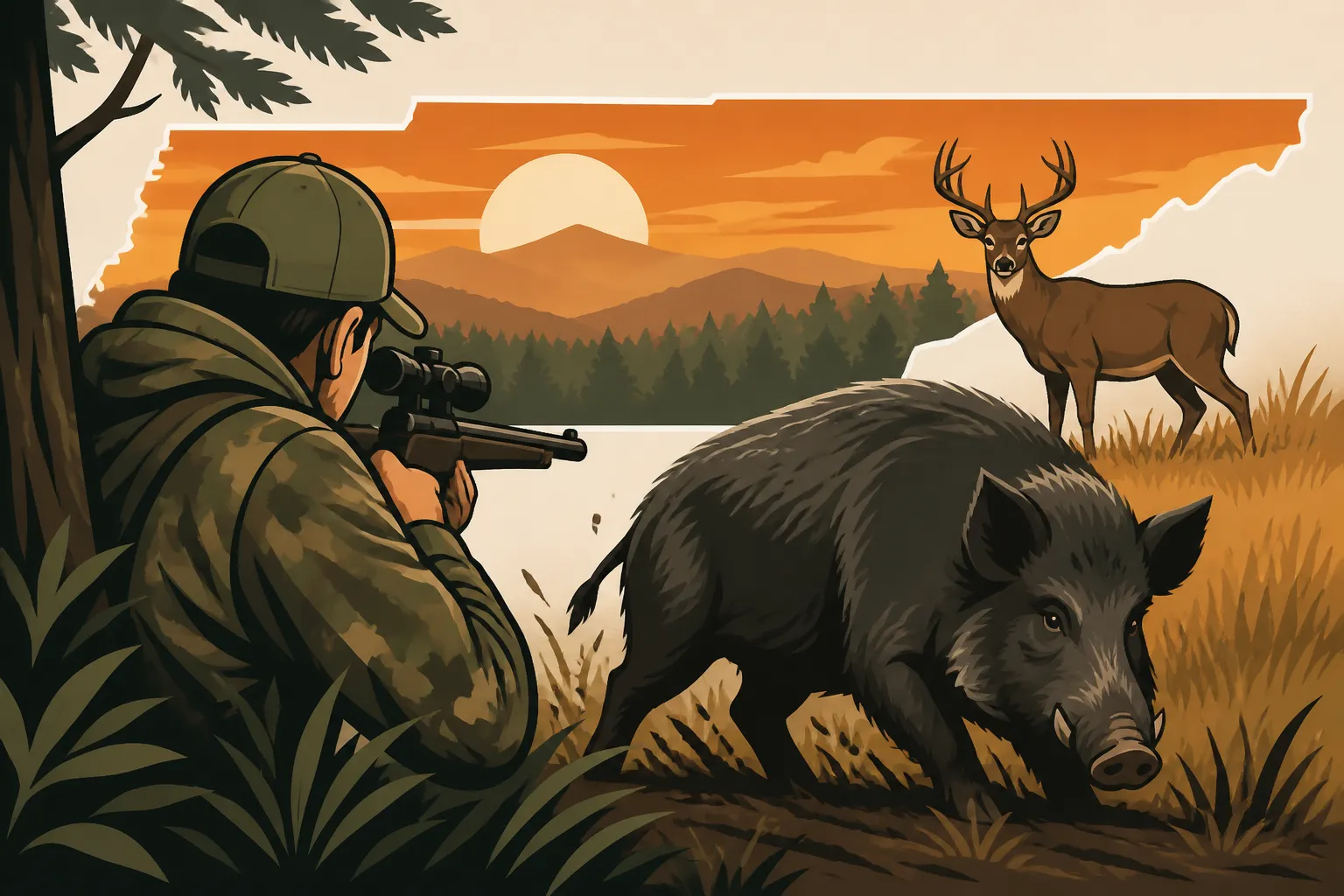
It’s a frustration many Tennessee deer hunters know all too well: you’re meticulously scouting, hanging stands, and doing everything right for whitetails, only to have your efforts complicated by the destructive presence of wild hogs. These invasive animals aren't just a nuisance; they compete directly with deer for food, destroy valuable habitat, and can completely disrupt deer patterns. This guide will walk you through how to effectively integrate wild hog hunting into your regular Tennessee deer season, turning a challenge into an opportunity.
Understanding Tennessee's Wild Hog Challenge
Wild hogs, also known as feral swine or wild pigs, are a significant problem across much of Tennessee, impacting agriculture, native wildlife, and the delicate ecosystems we cherish. They are an exotic, invasive species, and unlike deer or turkey, they are not regulated as game animals by the Tennessee Wildlife Resources Agency (TWRA). This distinction is crucial because it means there are generally no closed seasons or bag limits for wild hogs on private land. On public lands, however, specific rules apply, which we’ll dive into.
Why Wild Hogs Are Such a Problem
The negative impact of wild hogs is widespread and severe. Biologically, they are prolific breeders, with sows capable of having multiple litters per year, each with several piglets. This rapid reproduction rate makes population control incredibly challenging. Environmentally, their constant rooting and wallowing destroy agricultural crops, pastures, and natural habitats. They tear up forest floors, contaminate water sources, and can spread diseases to livestock and even humans. For deer hunters, this means destroyed food plots, dug-up acorn flats, and disturbed bedding areas, all of which stress the deer herd and make patterning whitetails even harder. Their omnivorous diet means they compete directly with deer for mast crops, agricultural grains, and other forage.
Where They Are Most Prevalent in Tennessee
While wild hogs can be found in many parts of the state, they are particularly prevalent in regions with expansive forested areas, river bottoms, and agricultural lands that provide both cover and food. West Tennessee's rich bottomlands and farm country, as well as portions of the Cumberland Plateau and parts of East Tennessee near the Cherokee National Forest, often experience significant hog activity. Counties like those along the Mississippi River or the Tennessee River can be hotspots, as the dense cover and abundant food sources provide ideal conditions for their populations to thrive. It's not uncommon to find evidence of hogs in areas where you might also be focused on Hunting West Tennessee River Bottoms or Hunting Cumberland Plateau Ridges.
Their Impact on Deer Behavior and Food Sources
The presence of wild hogs can drastically alter deer behavior. Deer are naturally wary animals, and the constant rooting, grunting, and overall disturbance from a sounder of hogs can push them out of prime feeding or bedding areas. Hogs are voracious eaters, often consuming vast quantities of acorns, pecans, and agricultural crops, leaving little for deer. Imagine a perfect oak flat you've been watching, only to find it completely tilled up by hogs, with every last acorn devoured. This competition forces deer to expend more energy finding alternative food sources, potentially impacting their health and antler development. Hunters often report that once hogs move into an area, deer activity decreases, making successful deer hunting more challenging.
Legalities and Logistics of Hunting Hogs During Deer Season
Before you head out with your deer rifle hoping to drop a hog, it's absolutely essential to understand the specific regulations surrounding wild hog hunting in Tennessee, especially when trying to do it concurrently with deer season. The TWRA has distinct rules for private versus public land, which can make all the difference.
TWRA Regulations for Wild Hogs
On private land, wild hogs are generally not classified as game animals. This means that landowners and those with landowner permission can hunt hogs year-round, day or night, with almost any legal hunting weapon. There are no bag limits, and no specific hog permit is typically required beyond a valid Tennessee hunting license. This flexibility is largely due to their invasive status and the TWRA's goal to facilitate their eradication. However, you must always have permission from the landowner to hunt on private property.
The rules change significantly on public land. Wild hogs are considered game animals on most TWRA Wildlife Management Areas (WMAs) and federal lands like the Cherokee National Forest or Land Between the Lakes. On these lands, you can only hunt hogs during open big game seasons (like deer or bear season) with the weapon legal for that specific season, or during designated small game seasons with the appropriate weapon. This means you generally cannot target hogs outside of established hunting seasons or with unauthorized weapons on public ground. Always check the specific WMA regulations or federal land rules before hunting, as these can vary. For instance, the rules for hunting public land in Tennessee often have stricter weapon and season requirements for hogs.
Public Land Restrictions Versus Private Land Opportunities
The disparity between public and private land rules means your approach to hog hunting during deer season will depend heavily on where you're hunting.
- Private Land: This is where you have the most freedom. If you're fortunate enough to have access to private land with a hog problem, you can carry your deer rifle and take a hog if the opportunity arises, even if it's not deer season (provided you have your hunting license). Many farmers welcome hunters to help control hog populations, as the damage can be economically devastating. This is where tools like GoHunt can be invaluable for pinpointing areas of high hog activity, especially when trying to understand property lines and potential access points.
- Public Land: On WMAs or national forest lands, you must adhere strictly to the rules of the open deer season. If you're hunting during Tennessee's gun deer season, you can use your legal deer firearm to take a hog. If it's archery season, you'd be limited to archery equipment. Night hunting for hogs, which is common on private land, is generally not permitted on public land due to the risk of mistaken identity or disturbance to other hunters. Always consult the TWRA hunting guide for the most current and specific regulations for the public land area you intend to hunt. Understanding Tennessee Hunting Licenses and What They Cost is also key here, as you'll need the proper license for whatever big game season is open.
Permitted Weapons During Deer Season That Can Also Be Used for Hogs
During Tennessee deer seasons, you're permitted to use specific weapons depending on the season (archery, muzzleloader, or gun). The good news is that if you encounter a hog while legally hunting deer, you can typically use your deer weapon to harvest the hog.
- Archery Season: If you're out during Bowhunting Tennessee's Long Archery Season or the August Antlerless-Only Archery Hunt, you can take a hog with your bow or crossbow, provided it meets the minimum requirements for deer hunting. Broadhead choice becomes important here; while deer broadheads will work, a robust, fixed-blade broadhead can be particularly effective on the thick hide and bone structure of a wild hog.
- Muzzleloader Season: During Muzzleloader Deer Hunting in Tennessee, your muzzleloader is a perfectly acceptable weapon for hogs. The large projectiles fired by muzzleloaders can be very effective.
- Gun Season: When Tennessee's Gun Deer Season Into January is open, your deer rifle, shotgun, or handgun (meeting legal calibers for deer) can be used for hogs. Many hunters prefer a larger caliber for hogs due to their tough hide and dense bone structure, but any legal deer caliber will generally be sufficient with good shot placement. Knowing your Rifle Setups for Tennessee Deer Hunting means you're already equipped for hog opportunities.
Strategies for Integrating Hog Hunting into Your Deer Hunt
Successfully hunting hogs alongside deer requires a bit of a mental shift and some adapted tactics. You want to remain focused on your primary deer objective, but be ready to capitalize on hog encounters without blowing your deer hunt entirely. It's a delicate balance, but with the right approach, you can fill your freezer and help manage an invasive species.
Scouting for Hog Sign Alongside Deer Sign
When you're out scouting for deer, expand your focus to include hog sign. Look for:
- Rooting: Distinctive disturbed soil where hogs have dug for roots, tubers, and invertebrates. This looks like a rototiller has gone through the woods.
- Wallows: Muddy depressions where hogs have rolled to cool off and remove parasites. These are often near water sources.
- Rubs: Hogs will rub against trees, fence posts, and rocks, often leaving mud and hair behind. Look for slick, worn spots low to the ground.
- Tracks: Hog tracks are similar to deer, but rounder and often wider, with splayed toes. The dewclaws are usually more prominent.
- Scat: Their droppings vary greatly depending on their diet but can range from segmented pellets to larger, softer piles.
- Trails: Hogs create distinct trails, often "hog highways" through thick brush, leading to food or water.
Using mapping tools like GoHunt, you can mark these hog sign locations. If you find significant hog activity in an area you were planning to hunt for deer, it's a red flag. You might consider moving your primary deer stand to an adjacent area, or setting up a secondary spot specifically for hogs if the deer seem to have moved out. Reading Aerial Photos for Cumberland Plateau Deer can also help you identify areas with dense cover and water sources that appeal to both species.
Best Times of Day for Hogs Versus Deer
Deer are typically crepuscular, meaning they are most active at dawn and dusk. While hogs can be active at any time, they often become more nocturnal in areas with heavy hunting pressure or during hot weather. However, in cooler months or low-pressure zones, they can be very active during daylight hours.
- Early Morning/Late Evening: These prime deer hunting times might also yield hog encounters. If a sounder of hogs comes in, you’ll have to make a quick decision: harvest a hog and potentially spook deer, or let them pass.
- Midday: This can be a great time to target hogs, especially if deer activity has lulled. Hogs might be moving between bedding and feeding areas, or simply rooting around more leisurely. If you hear them in thick cover while Still-Hunting Cumberland Plateau Ridges, a midday stalk might be your best bet.
Hunting Pressure Considerations
Hogs, while tough, are not dumb. They learn quickly to avoid pressure. If you're heavily hunting an area for hogs, it will absolutely impact deer movement.
- Impact on Deer: A loud shot at a hog during prime deer time can clear out an area of deer for hours, if not days. Consider the trade-off. Is one hog worth potentially blowing your deer opportunity? Sometimes, yes, especially if the hog problem is severe.
- Hog Reactions: Hogs will often bolt at the first sign of danger, but they can also be aggressive if cornered, especially a sow with piglets. They have an excellent sense of smell and hearing, but relatively poor eyesight.
- Finding Ground Others Walk Past: This applies to both deer and hogs. By pushing into less accessible areas, you might find pockets where both species feel more secure, offering better chances for encounters without immediate pressure.
Targeting Food Sources Common to Both
This is where the overlap truly happens. Both deer and hogs are drawn to:
- Acorn Flats: Especially white oak acorns, which are less bitter. Hogs can decimate these areas quickly.
- Agricultural Fields: Corn, soybeans, peanuts, and wheat fields are magnets. Hogs will root up newly planted crops or gorge on mature ones. Hunting a Standing Cornfield in Farm Country or Entry Routes Through Standing Beans can be productive for both.
- Mast Crops: Persimmons, wild grapes, and other soft mast are relished by both.
- Green Fields: Winter wheat, clover, and oats planted for deer will also attract hogs, particularly in the late season. Sitting a Field Edge in Late Season can yield opportunities for either.
When scouting these areas, look for fresh sign from both species. If you find an active hog area that also shows signs of deer, you'll need to decide whether to focus solely on deer from a distance, or be prepared for a dual-species encounter.
Gear and Tactics for a Dual-Species Approach
Having the right gear and a flexible mindset will greatly enhance your success when attempting to hunt hogs and deer concurrently. While your deer setup will largely suffice, a few considerations can optimize your chances for both.
Ammunition Considerations for Hogs
While most deer-legal calibers are perfectly capable of dispatching a hog, their thick hide, heavy bone structure, and often aggressive nature mean you want effective ammunition. For rifles, choose bullets with good penetration and controlled expansion.
- Rifles: A .30-06, .308, 6.5 Creedmoor, or even a .270 loaded with a heavier, bonded bullet is an excellent choice. Even a .243 can be effective with careful shot placement, but a larger caliber offers more margin for error. If you're in an area that restricts to straight-wall cartridges, a .45-70 or .350 Legend offers plenty of knockdown power.
- Shotguns: If using a shotgun, slugs are the way to go for hogs, not buckshot, which often lacks the penetration needed.
- Archery: As mentioned, fixed-blade broadheads generally provide better penetration on a hog's tough hide and gristle plate (the "shield" on large boars) than mechanical broadheads.
Optics for Varied Light Conditions
Hogs are often most active during low light or under the cover of darkness (though legal hunting hours for deer apply). While your deer optics are designed for dawn and dusk, consider their low-light performance.
- Binoculars: Quality 8×42 or 10×42 binoculars with good light-gathering capabilities are essential. They'll help you spot subtle hog movement in dim light.
- Rifle Scopes: A scope with an illuminated reticle can be a huge advantage for precise shot placement in early morning or late evening. Ensure your scope has good low-light transmission. Rifle Scopes for Low-Light Hollows can make a big difference.
Scent Control and Quiet Movement
Scent control remains paramount if deer are your priority. Hogs have an incredible sense of smell, arguably better than deer. So, anything you do for deer will benefit you for hogs too.
- Scent Control Regimen: Use scent-eliminating sprays, wash hunting clothes in scent-free detergent, and store them properly. Play the wind constantly.
- Quiet Movement: Hogs have excellent hearing. Moving quietly through the woods is vital for both species. Avoid crunching leaves or snapping twigs. This is especially true when Hunting the Tennessee Rut in Early November when you don't want to alert a cruising buck.
Handling Your Harvest
Hogs can be quite large, and if you take one, you'll need a plan for getting it out and caring for the meat. This is particularly important during early archery season when temperatures might still be warm.
- Field Dressing: Know how to quickly and efficiently field dress a hog.
- Extraction: Consider how you'll get the animal out of the woods. A deer cart, game sled, or strong partner might be necessary. Some hunters bone out larger animals in the field, which reduces weight.
- Meat Care: Hogs, especially large boars, can have strong-tasting meat. Proper cooling and processing are key. Have a plan for ice and coolers, particularly during warmer parts of the season. Refer to guides on Meat Care Gear for Tennessee Hunters to ensure you're prepared.
By understanding the habits of wild hogs, respecting regulations, and adapting your deer hunting strategies, you can turn a potential problem into a rewarding hunting experience, helping to manage an invasive species while still pursuing Tennessee whitetails.
| Feature | Deer Hunting Considerations | Wild Hog Hunting Considerations (Concurrent) |
|---|---|---|
| Legal Status | Game animal, strict seasons/bag limits. | Invasive species; often year-round/no limit on private land, restricted on public. |
| Primary Goal | Harvest deer. | Eradication/harvest where possible, secondary to deer on public land. |
| Scent Sensitivity | Extremely high. | High. |
| Hearing Sensitivity | High. | High. |
| Eyesight | Good, especially for movement. | Poor. |
| Typical Behavior | Wary, patterned movement, often crepuscular. | Opportunistic, destructive, can be nocturnal or diurnal, travels in sounders. |
| Weapon Choice | Dependent on season (archery, muzzleloader, firearm). | Same as deer season weapon on public land; flexible on private. |
| Ammunition | Good expansion, adequate energy for deer. | Good penetration, controlled expansion for tough hide/bone. |
| Sound Impact | Shot will typically spook deer from the immediate area. | Shot will typically spook other hogs; less impact on deer if they weren't present. |
| Meat Care | Field dress, cool quickly. | Field dress immediately, cool quickly, consider strong flavor of boars. |
Disclaimer
Please note: Hunting regulations can change. Always consult the most current Tennessee Wildlife Resources Agency (TWRA) hunting guide and local ordinances before engaging in any hunting activity. This information is for general guidance only and does not supersede official state regulations. Hunter safety should always be your top priority.