Rifle Scopes for Low-Light Hollows
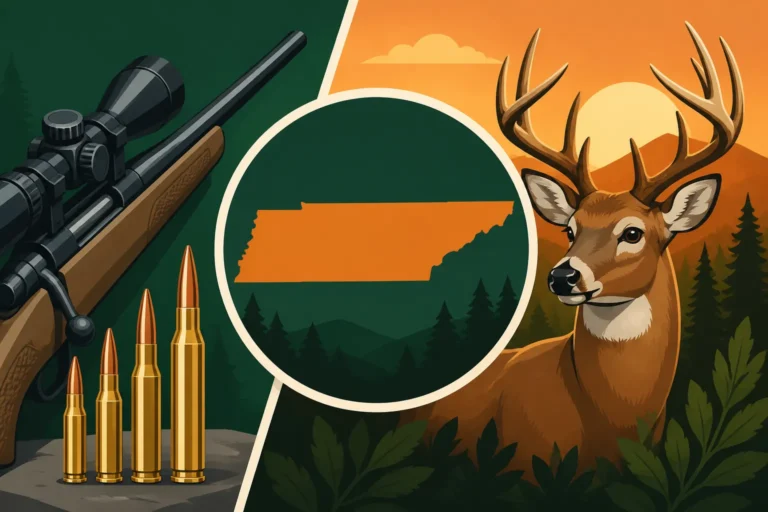
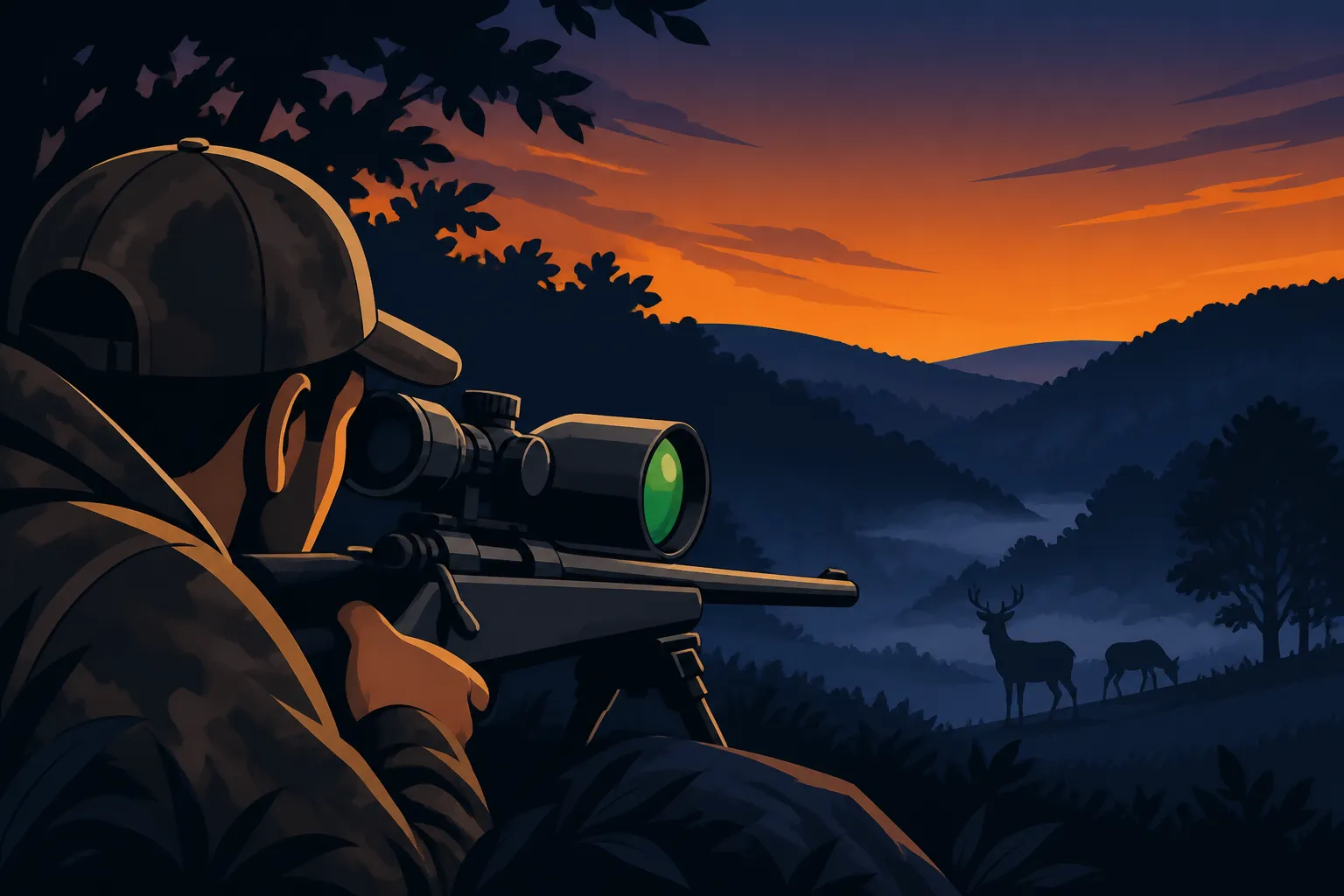
It's a familiar scenario for any hunter in Tennessee: you've hiked into a promising hollow before first light, the air is cold, and the woods are still cloaked in deep shadow. That mature buck you've been chasing often makes his move just as the sun barely cracks the horizon, or as it dips below the ridges in the fading minutes of legal shooting light. Seeing him clearly enough for an ethical shot in those fleeting, dim conditions is a struggle many of us face, and it's precisely why choosing the right rifle scope for low-light hollows can make all the difference between a successful harvest and a missed opportunity. This guide will walk you through the crucial features and considerations to ensure your optics are up to the task.
The Unique Low-Light Challenges of Tennessee Hunting
Tennessee's diverse landscape, from the steep, rugged slopes of the Cumberland Plateau to the dense river bottoms of West Tennessee, presents unique challenges when it comes to hunting in low light. It's not just about a cloudy day; it's about thick canopy, deep ravines, and the way light just seems to get sucked out of the timber.
Navigating Dark Timber and Steep Hollows
Imagine standing in a deep hollow in the Cherokee National Forest, the towering hardwoods forming a canopy so dense that even at midday, the forest floor feels like perpetual twilight. Now, picture that same spot thirty minutes before sunrise or thirty minutes after sunset. The ambient light is minimal, and shadows play tricks on your eyes. Deer often use these secluded, dark hollows as travel corridors or bedding areas, making them prime spots to hunt. However, without a scope designed to gather and transmit every available photon, that deer can easily remain a blurry silhouette, or worse, completely disappear into the gloom.
The challenge isn't just seeing the deer, but discerning an ethical shot placement. You need to identify whether it's a buck or a doe (if that matters for your tag), judge its age, and clearly see the vitals. A cheap scope might look bright enough in broad daylight, but when the shadows lengthen and you're peering into a thicket down a dark hollow, it quickly becomes an opaque tunnel, leaving you frustrated and uncertain. This specific environment demands optics that truly excel at light transmission. Practical Range in Cherokee Forest Timber can be notoriously short, making clear target identification even more critical.
Maximizing Those Critical Dawn and Dusk Windows
Deer, being crepuscular creatures, are most active during dawn and dusk. These are the golden hours for hunters, when bucks are often on their feet, moving between bedding and feeding areas. In Tennessee, where legal shooting hours often extend from half an hour before sunrise to half an hour after sunset, these periods are absolutely vital. However, these are also the times when natural light is at its weakest.
If your scope performs poorly in low light, you effectively shorten your hunting day, missing out on the very best opportunities. You might be able to pick up a deer with your naked eye, but if your crosshairs disappear into its shadowy hide or you can't clearly distinguish a branch from its shoulder, you're out of luck. The ability of your scope to extend your effective hunting time by just a few crucial minutes in these low-light conditions can be the difference between filling your tag and walking out empty-handed. It's about capitalizing on every legal moment the woods offer.
Understanding the Science Behind Low-Light Scope Performance
Choosing a scope for low-light situations isn't about guesswork; it's about understanding the optical principles that govern how a scope performs when light is scarce. Don't let technical terms intimidate you; breaking them down makes the decision much clearer.
The Critical Role of Objective Lens Size and Coatings
The objective lens is the big lens at the front of your scope, the one closest to the target. Its primary job is to gather light. Generally, the larger the objective lens diameter, the more light it can collect. This is why scopes with 40mm, 44mm, or even 50mm objective lenses are popular among deer hunters. A bigger "light bucket" means more photons reaching your eye, resulting in a brighter image. However, it's not the only factor. A massive objective lens can make a rifle feel top-heavy, require higher scope rings, and potentially make your rifle less comfortable to carry through thick timber. It's a balance.
Beyond size, lens coatings are absolutely paramount. These are microscopically thin layers applied to the glass surfaces to reduce light reflection and increase light transmission. Think of it this way: every time light hits an uncoated glass surface, a small percentage of it bounces off instead of passing through. Over multiple lenses inside a scope, these losses add up significantly. Good coatings, often described as "fully multi-coated," drastically minimize this reflection, allowing more light to pass through the scope and reach your eye. Without these high-quality coatings, even a large objective lens won't deliver a truly bright, clear image in low light. It's truly a make-or-break feature for Low-Light Performance in a Scope.
Decoding Exit Pupil and Twilight Factor
These two terms sound complex, but they're surprisingly intuitive and directly relate to how well you can see in dim light. The exit pupil is the diameter of the beam of light that leaves the eyepiece of your scope and enters your eye. You can actually see it by holding the scope at arm's length and looking at the bright circle in the eyepiece. Your pupil also dilates (gets bigger) in low light to let in more light. A young adult's pupil can dilate up to about 7mm in complete darkness, while an older hunter's might only reach 4-5mm. For optimal low-light viewing, you want the scope's exit pupil to be at least as large as your own dilated pupil. If your scope has a 3-9x40mm magnification, at 3x, the exit pupil is 40mm/3 = 13.3mm, which is great. At 9x, it's 40mm/9 = 4.4mm. So, a lower magnification often gives you a larger exit pupil and a brighter image in dim light.
The twilight factor is a calculated value (square root of objective lens diameter multiplied by magnification) that attempts to quantify a scope's ability to resolve detail in low light. While it's a useful comparison tool, it's not the be-all and end-all. A scope with a high twilight factor might resolve finer details in dim conditions, but it doesn't account for glass quality or lens coatings, which, as we discussed, are hugely important. Think of it as a starting point for comparison, but always prioritize scopes with excellent glass and superior lens coatings over one that just boasts a high twilight factor number.
| Scope Spec | Objective Lens (mm) | Magnification | Exit Pupil (mm) (at max mag) | Approximate Twilight Factor (at max mag) | Low-Light Performance Implication |
|---|---|---|---|---|---|
| A | 32 | 9x | 3.5 | 17 | Decent, but limits detail in very deep shadows. |
| B | 40 | 9x | 4.4 | 19 | Good for most twilight situations, common choice. |
| C | 44 | 12x | 3.7 | 23 | Higher magnification helps detail, but smaller exit pupil at max. |
| D | 50 | 10x | 5.0 | 22 | Excellent light gathering, very bright image even at higher power. |
| E | 56 | 10x | 5.6 | 24 | Maximum light, often specialized for extreme low light. |
Note: This table is a simplified comparison. Actual low-light performance is heavily influenced by glass quality, lens coatings, and the user's eye.
Choosing the Right Reticle for Dim Environments
The reticle—the crosshairs or aiming point inside your scope—is what you actually use to place your shot. In low light, a poorly chosen reticle can become your worst enemy, making it impossible to see your aiming point against a dark background, regardless of how bright the image is.
Standard Reticles vs. Illuminated Options
Traditional reticles, like the classic Duplex or various BDC (Bullet Drop Compensator) designs, rely on contrast to be visible. In good light, they work perfectly fine. However, when you're looking into a dark hollow at a deer standing against a backdrop of shadowed timber, a thin black reticle can easily get lost. It simply blends in, leaving you with no clear aiming point. This is a common frustration for hunters trying to make an ethical shot in the last minutes of legal light.
This is where illuminated reticles become a game-changer. These reticles have a small, battery-powered light source that illuminates the center portion of the reticle (or the entire thing, depending on the design). Usually, the illumination is red or green, and the brightness is adjustable. With an illuminated reticle, even if the background is pitch black, you'll still have a bright, crisp aiming point that stands out. This provides an enormous confidence boost and allows for quicker, more precise shot placement when every second counts. For many Tennessee hunters, especially those who prioritize those critical low-light minutes, an illuminated reticle is no longer a luxury but a vital tool.
Subtensions, Clarity, and Target Acquisition
Beyond just being visible, the design and clarity of your reticle, known as its subtensions, are also important. A reticle that is too thick can obscure fine details of your target, especially at longer ranges or in thick brush. Conversely, a reticle that is too fine might disappear in low light if it's not illuminated. The goal is a reticle that is easy to see, provides precise aiming, and doesn't clutter your field of view.
When you bring the rifle to your shoulder, you want that reticle to snap into focus instantly, allowing for rapid target acquisition. If you're fumbling to find your crosshairs or struggling to distinguish them from the deer's body, you're losing valuable time. Some scopes offer reticles with varying thicknesses, where the outer posts are thicker to draw your eye to the center, and the inner crosshairs are finer for precise aiming. This can be a great compromise. When considering Illuminated Reticles for Dark Timber, look for designs that offer multiple brightness settings so you can fine-tune it to match the ambient light perfectly, preventing it from being too bright and washing out the target, or too dim to be effective.
Finding the Ideal Magnification for Tennessee's Varied Terrain
Magnification, often the first number hunters look at, plays a significant role in low-light performance and overall usability, especially when you're moving between different types of terrain in Tennessee.
The Trade-offs of High vs. Low Power
It might seem intuitive that more magnification is always better, but that's simply not true, especially in the thick woods and rolling hills of Tennessee. Higher magnification means a narrower field of view. Imagine trying to find a deer moving quickly through dense saplings at 15x power – it's like looking through a soda straw. Lower magnification, on the other hand, gives you a much wider field of view, making it easier to quickly locate a target, track movement, and identify shooting lanes. This is critical when deer pop out unexpectedly or are on the move.
Furthermore, as discussed with exit pupil, higher magnification generally results in a dimmer image because it spreads the available light over a larger apparent area. In those deep, dark hollows, you often need the maximum amount of light, which lower power settings provide. While a high-power scope might be excellent for long-range shots across a wide-open field (which Tennessee has in some areas), it can be a real hindrance when Hunting West Tennessee Bottomland Deer or tracking a buck through tight timber on the Cumberland Plateau.
Variable Power Versatility for Diverse Situations
This is why variable power scopes are so popular and practical for Tennessee hunters. A 3-9x40mm or 4-12x44mm scope offers an excellent balance. You can dial down to 3x or 4x for a wide field of view and maximum brightness when still-hunting through thick cover or when a deer appears suddenly at close range in deep shadow. This lower power also generally provides a larger exit pupil, which is crucial for light transmission to your eye in dim conditions.
When you spot a deer across a clearing, or you need to make a more precise shot at a greater distance, you can dial up the magnification to 7x, 9x, or even 12x to help resolve finer details and ensure precise bullet placement. This versatility means you have one scope that can adapt to many different hunting scenarios you might encounter in Tennessee, from a short-range shot in a dark creek bottom to a slightly longer shot across a small food plot. It means you're not over-scoped for the majority of your hunting, but you still have the capability for those situations where more power is genuinely beneficial. For general Rifle Setups for Tennessee Deer Hunting, a variable power scope is often the most sensible choice.
Mounting and Ergonomics: Making Your Low-Light Setup Work
Even the best low-light scope in the world is useless if it's not properly mounted or if your rifle feels awkward to shoulder and shoot. Good ergonomics are paramount for quick, ethical shots, especially in the demanding conditions of low light.
Achieving Perfect Eye Relief and Sight Picture
Eye relief is the distance your eye needs to be from the scope's eyepiece to see a full, clear image without any black crescents (known as "scope shadow"). Proper eye relief is critical for two main reasons: first, it prevents the scope from smacking you in the eyebrow under recoil (often called "scope bite"), which is painful and can make you flinch on subsequent shots. Second, and equally important in low light, it allows for fast target acquisition. You shouldn't have to crane your neck or adjust your head position significantly to get a full sight picture.
When mounting your scope, get behind the rifle in your natural shooting position, both standing and sitting. Adjust the scope forward or backward in the rings until you can consistently get a clear, full field of view with minimal head movement. The scope's height is also important. If it's too high, you'll be lifting your head off the stock, making a consistent cheek weld (the repeatable contact point between your face and the rifle stock) impossible. This compromises accuracy and speed. Investing in quality rings and bases, and taking the time to properly mount your scope, ensures that when that big buck steps out in the twilight, you can quickly and naturally get on target.
Balancing Rifle and Scope for Comfort and Speed
A rifle is an extension of the hunter, and its balance profoundly impacts how it handles in the field. Adding a large, heavy scope – especially one with a big objective lens designed for low light – can significantly shift the rifle's balance point. A rifle that feels front-heavy might be cumbersome to carry through miles of uneven terrain or to quickly swing onto a moving target.
Consider the overall weight and balance of your complete rifle system. Some hunters might opt for a lighter rifle if they anticipate a larger, heavier scope. Others might choose a scope that, while excellent in low light, doesn't add excessive bulk. The goal is a setup that feels natural and comfortable when you bring it to your shoulder. You want to be able to hold it steady, acquire your target quickly, and make a smooth shot without struggling with the rifle's weight distribution. After a long hike into a Hunting the Cumberland Plateau Ridgelines spot, the last thing you want is a rifle that feels unwieldy when the moment of truth arrives. Practice shouldering your rifle with the scope mounted, paying attention to how it feels and how quickly you can achieve a stable sight picture.
Investing Wisely in Low-Light Optics for Tennessee Success
Scopes range wildly in price, and it's easy to get overwhelmed. But when it comes to low-light performance, there are certain areas where skimping on quality will absolutely cost you opportunities in the field.
Quality Glass and Construction: A Non-Negotiable
This is perhaps the most important point. You can have the largest objective lens and an illuminated reticle, but if the glass itself is poor quality, or the internal construction is shoddy, your low-light performance will suffer. High-quality glass, often referred to as "ED" (extra-low dispersion) or "HD" (high definition), does a much better job of transmitting light and rendering true colors, with minimal chromatic aberration (color fringing). This translates to a brighter, sharper image with better contrast, which is absolutely vital when discerning details in dim conditions.
Beyond the glass, the overall construction of the scope matters for durability and repeatability. Will it hold zero after a bump or a hard day's hunt? Will the turrets track accurately if you need to make an adjustment? Will it fog up internally in humid Tennessee weather? Reputable manufacturers use robust materials, precision machining, and rigorous testing to ensure their scopes can withstand the rigors of hunting. This investment means you have an optic you can trust, season after season, rather than one that might fail you when you need it most. This quality becomes especially apparent when you are Hunting the Late-Season January Lull and facing cold, damp conditions.
Considering Value and Features
While top-tier scopes can be very expensive, there's excellent value to be found in the mid-range market that will still provide superb low-light performance. It's about finding the sweet spot between your budget and your needs. Don't fall for marketing gimmicks; instead, focus on objective lens quality, lens coatings (ensure they are fully multi-coated), and the presence of an illuminated reticle if low-light hunting is a priority.
When researching scopes, consider looking at resources that offer detailed reviews and comparisons, such as GoHunt. Platforms like GoHunt often provide specifications and user feedback that can help you make an informed decision without breaking the bank. Think about the features you genuinely need for Tennessee's hunting environment. Do you need extreme long-range capabilities, or are you primarily focused on clear, bright images at common hunting distances? Prioritize clarity, light transmission, and reliability. Sometimes, a slightly smaller objective lens with exceptional glass and coatings will outperform a larger objective lens with inferior components. It’s not just about the numbers on the box; it's about real-world performance when you're peering into those dark hollows just before sunrise.
Maintenance and Care for Optimal Performance
Even the best low-light scope can fail to perform if it's not properly maintained. Tennessee's weather—from humid fall mornings to wet winter days—can be tough on optics.
Protecting Your Lenses from the Elements
Your scope's lenses are its most critical components for low-light performance. Scratches, smudges, and dirt on the objective or ocular lens will degrade image quality and light transmission, effectively negating all the money you spent on good glass and coatings. Always use lens caps when not actively hunting or observing. Flip-up caps are incredibly convenient for quick deployment.
When cleaning your lenses, never use your shirt, a paper towel, or anything abrasive. Always start by gently blowing off any loose dust or debris (a small blower brush can be very useful), then use a soft lens brush. Follow up with a high-quality lens cleaning solution and a micro-fiber lens cloth specifically designed for optics. Wipe gently in a circular motion from the center outwards. Proper cleaning ensures maximum light transmission, which is crucial when hunting in challenging conditions.
Checking and Maintaining Your Mounts and Zero
A scope's performance in low light is only as good as its mounting system and its zero. Before each season, and especially after any significant bumps or drops, check your scope mounts. Ensure all screws are tight (but don't overtighten, as this can damage the scope or rings). Loose rings or bases can lead to inconsistent accuracy, or worse, your scope shifting position entirely.
Regularly confirm your rifle's zero at the range. While you might zero at 100 yards, understanding bullet drop for Zeroing at 100 Yards for Ridge Hunting is essential. A precise zero ensures that when you do get a clear sight picture in low light, your bullet will go exactly where you aim. Don't wait until opening morning to discover your scope is off. A well-maintained scope, securely mounted and properly zeroed, gives you the confidence to make those critical shots in any light condition Tennessee can throw at you.
Conclusion
Navigating Tennessee's dark timber and deep hollows in those precious minutes of dawn and dusk is a hallmark of deer hunting in our beautiful state. It's a challenging environment where the right rifle scope isn't just an accessory, but a vital tool that can significantly impact your success. By understanding the importance of a large, high-quality objective lens, superior lens coatings, a functional exit pupil, and especially an illuminated reticle, you can equip yourself to truly extend your effective hunting time. Invest wisely in quality glass, ensure proper mounting, and maintain your optics meticulously. When that ghost of a buck finally steps out of the shadows, your well-chosen scope will empower you to see him clearly and make a confident, ethical shot, turning a dim outline into a memory that lasts a lifetime.
Disclaimer
This article is for general informational purposes only and does not constitute professional advice. Laws, prices and regulations vary by location and change over time. Consult a qualified professional for guidance on your specific situation.