Hunting Cumberland Plateau Ridgelines
Hunting the Cumberland Plateau can feel like a labyrinth, with endless timber and steep terrain that often leaves you wondering where deer even exist, let alone how to intercept them. That vastness, while beautiful, is also incredibly intimidating. This guide is here to cut through that confusion, giving you a detailed roadmap for effectively hunting the challenging, yet rewarding, ridgelines of the Tennessee Cumberland Plateau.
Understanding the Cumberland Plateau Ridgelines and Deer Movement
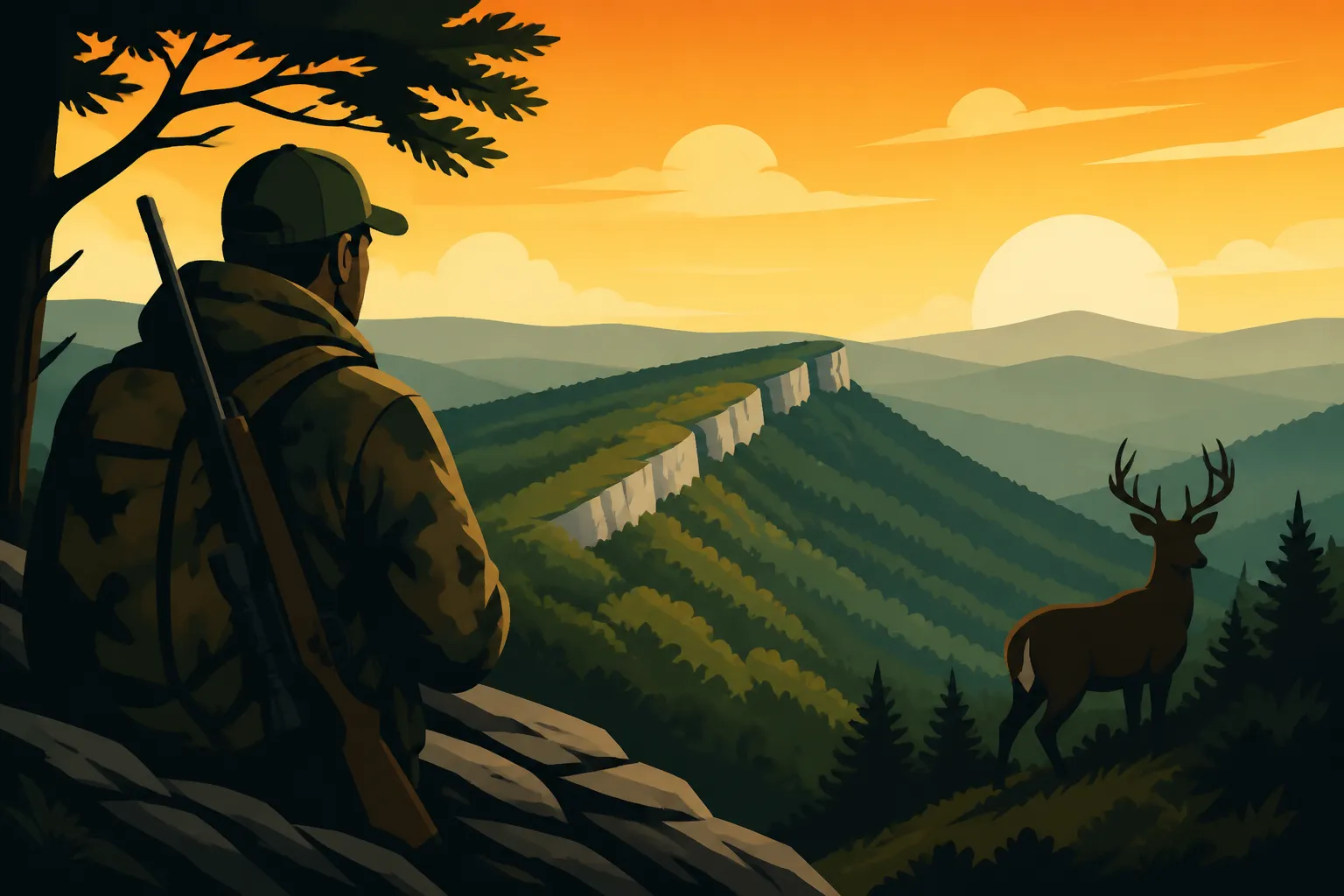
The Cumberland Plateau isn't just one big, flat tableland; it's a dynamic landscape of rolling hills, deep hollows, and a complex network of ridges and fingers that dramatically influence how deer live and move. If you've spent any time out there, you know how quickly the elevation can change, taking you from a gentle slope to a sheer bluff in a matter of yards. This unique topography dictates everything from bedding locations to travel corridors, and truly understanding it is your first step toward consistent success.
Topography and its Influence on Deer Travel
Imagine standing on a broad ridgetop – it feels endless, right? But those broad areas often funnel down into narrower saddles or points that connect one ridge system to another, or even drop into an adjacent hollow. These pinch points, often subtle, are goldmines for deer hunters. Deer, being creatures of efficiency, will naturally use the path of least resistance. That means they'll hug the contour lines, utilizing benches that cut across steep slopes, and they'll always try to travel on the downwind side of a ridge when possible to catch any scent coming from above or below.
What might look like an arbitrary line on a topo map becomes a critical travel corridor when you're actually walking it. Look for areas where two fingers off a main ridge come together, forming a "V" shape. This creates a natural funnel, pushing deer traffic into a smaller area. Similarly, look for shelves or benches that run along the side of a steep hill. Deer often use these as travel routes, especially when moving between different elevation levels without expending too much energy. These subtle terrain features are where you'll often find concentrated sign, from fresh tracks to rub lines, indicating consistent deer movement.
The Critical Role of Wind and Thermals
If you hunt the Cumberland Plateau without a deep understanding of wind and thermals, you're essentially hunting blind. The wind in this mountainous terrain is rarely what you predict it will be on a weather app. It swirls, it eddies, and it’s constantly affected by the changing temperatures throughout the day. In the mornings, as the sun begins to warm the earth, thermals will typically rise, carrying your scent uphill. In the evenings, as the air cools, thermals reverse, pulling your scent downhill into the hollows.
This thermal dance is absolutely critical. A buck bedding on a ridgetop during the day will often do so with the wind at his back, watching his backtrail, and relying on his nose to detect anything coming up from below via the rising morning thermals. As evening approaches and thermals start to drop, he'll feel secure with his scent drifting into the hollow, confident that anything approaching from above will be seen or heard. It's a complex, but predictable, pattern. Trying to still-hunt or sit a stand without accounting for this daily thermal shift is a recipe for getting busted, time and time again. This is where understanding Wind and Thermals on a Ridge System truly comes into play. You can also dive deeper into Hunting the Cumberland Plateau itself to understand the broader context.
Identifying Key Funnels and Crossings
Beyond the broad movements, deer on the Cumberland Plateau utilize specific funnels and crossings for daily routines, especially when moving from bedding to feeding or vice versa. These aren't always obvious. A "saddle" – a low spot on a ridge connecting two higher points – is a classic example. Deer prefer to cross these saddles rather than climbing over the higher peaks. But sometimes, a series of rocky outcroppings or a sudden change in timber type can create a more subtle funnel.
Consider how deer might cross a powerline right-of-way or a logging road that traverses a ridge. They'll often cross at the narrowest point, or where the most cover is available. Another critical type of funnel is a natural "bottleneck" where two deep hollows on either side of a ridge force deer onto a narrow strip of high ground. Identifying these areas is about putting yourself in a deer's shoes and thinking about the easiest, safest way to get from point A to point B. Sometimes it’s a faint deer trail, worn smooth over years, that you can only spot if you're really paying attention. Learning to read these subtle signs is paramount.
Strategic Scouting for Ridge Hunters
You can have the best gear and the most stealthy approach, but if you're not in the right spot, it's all for naught. Scouting the Cumberland Plateau's ridgelines is a year-round commitment, not just a pre-season walk-through. This rugged terrain demands diligent effort, and thankfully, modern technology can give you a massive leg up. But nothing, absolutely nothing, replaces boots on the ground.
Reading the Landscape with Maps and Boots on the Ground
Before you even step foot in the woods, spend significant time with digital mapping tools like GoHunt or ONX. These platforms allow you to dissect the terrain from the comfort of your home. Look for those aforementioned saddles, benches, and distinct fingers of timber extending from main ridges. Pay close attention to subtle elevation changes that might indicate a natural travel corridor. Mark potential bedding areas on high points or dense thickets. Identify possible escape routes and feeding areas.
Once you have a few promising spots identified on your map, it's time to hit the woods. This "ground truthing" is non-negotiable. What looks like a gentle slope on a map might be a sheer cliff, and what appears to be dense cover might be easily walkable. Walk the ridgelines, traverse the benches, and explore the hollows. Look for deer sign: tracks, droppings, rubs, and scrapes. If you find a well-used trail that conforms to a specific topographical feature you identified on the map, you're on the right track. This combination of digital mapping and physical exploration is key to truly understanding Reading a Ridge for East Tennessee Deer.
Locating Bedding and Feeding Areas
Deer on the Cumberland Plateau have distinct preferences for where they bed and where they feed. Knowing these patterns will dramatically improve your chances. Bedding areas are often on the downwind side of a ridge point, or tucked into thick cover like cedar thickets or areas with dense sapling growth. They want security and the ability to detect predators, so elevation combined with cover is ideal. Look for small, flattened areas, often with droppings nearby, indicating a consistent bedding spot. You might be surprised to find how close these beds can be to what you perceive as heavily trafficked areas, but deer often bed just off the main travel routes, using topography to their advantage. For a deeper dive, check out Where Cumberland Plateau Bucks Bed.
Feeding areas, particularly during the early and mid-season, are often concentrated around mast crops like acorns – white oak ridges are particularly attractive. As the season progresses and acorns become scarce, deer will shift to other browse, honeysuckle patches, or even private land food plots if they are nearby. In agricultural areas bordering the plateau, cut cornfields or soybean fields become major draws. The challenge is often that these feeding areas can be a significant distance from bedding areas, making the journey between them a prime hunting opportunity. During the late season, deer will seek out Late-Season Food Sources for Tennessee Whitetails like green briar and lingering acorns in protected hollows.
Leveraging Trail Cameras and Sign
Trail cameras are invaluable tools for ridge hunting on the Cumberland Plateau. Once you've identified potential travel corridors or pinch points, set up cameras to monitor activity. Don't just place them on obvious trails; try placing them overlooking natural funnels, scrapes, or rub lines you've found. A good strategy is to place cameras on benches running along the side of a ridge, especially near a natural break in the terrain or where a small drainage intersects the bench. This allows you to confirm deer presence, identify specific deer, and, most importantly, understand their travel patterns and the times they are moving.
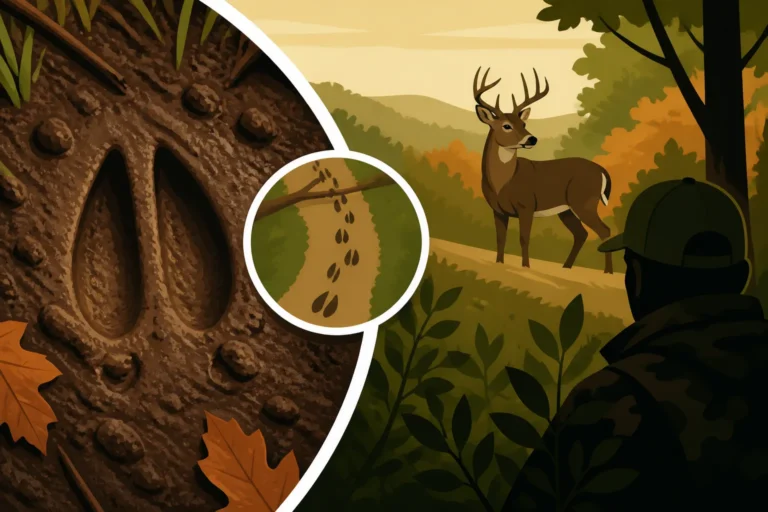
Interpreting the sign you find is also crucial. Fresh tracks are obvious, but the direction of travel, the depth of the track (indicating weight), and the spacing can all tell a story. Rub lines on trees often indicate a buck's travel route, particularly during the rut. Scrapes, especially large community scrapes, are communication hubs for deer. Pay attention to how fresh these signs are. A line of old rubs might indicate where a buck was last year, but fresh ones mean he's active there now. This diligent scouting, combined with tools from GoHunt to map out your camera locations, can drastically improve your odds, particularly if you do your Scouting Tennessee Public Land Before Season.
Effective Hunting Tactics on the Ridges
Once you've done your homework and identified promising areas, it's time to think about how you'll actually hunt them. The Cumberland Plateau requires adaptability and a willingness to try different approaches. Whether you prefer to move silently through the woods or sit patiently in a stand, understanding the nuances of each tactic will be key.
Still-Hunting the Cumberland Plateau Ridges
Still-hunting is perhaps the most challenging, yet rewarding, way to hunt these ridgelines. It demands patience, keen observation, and an intimate understanding of deer behavior. Instead of waiting for the deer to come to you, you're actively moving, slowly, deliberately, trying to spot deer before they spot you. The key is to move at a snail's pace, often taking only a few steps every minute, then pausing for several minutes to scan thoroughly. Use binoculars constantly to pick apart cover, looking for horizontal lines in a vertical world – the back of a deer, an antler tines, or the flick of an ear.
When still-hunting a ridge, try to walk just below the crest on the leeward side (the side protected from the wind). This keeps your scent from blowing directly over the top of the ridge and gives you a slightly elevated vantage point into the hollow below. Move into the wind or with a quartering wind, always thinking about how your scent is dispersing. Target mornings when thermals are rising to carry your scent up and away. Be prepared to stop and sit for an extended period if you find fresh sign or a promising area. This method is explored in detail in Still-Hunting Cumberland Plateau Ridges.
Strategic Stand Placement for Ambush
For those who prefer to hunt from a stationary position, stand placement on the Cumberland Plateau ridgelines is an art form. You can't just throw up a stand anywhere; it needs to be strategically located based on deer movement, wind direction, and thermals. Saddles are prime locations, as are points where multiple benches or trails converge. Look for older, larger trees that offer good concealment and a clear shooting lane.
A popular tactic is to set up on a ridge point overlooking a steep drop-off, allowing you to see deer approaching from below and providing a good vantage point for crossing deer on the ridge itself. Consider setting up on the downwind side of a known bedding area, allowing you to catch deer as they leave to feed in the evenings. Always have an entry and exit strategy that minimizes your disturbance and keeps your scent out of the primary deer movement zones. This is crucial whether you're using a ladder stand, a hang-on, or a climbing stand. Always remember to prioritize safety when hanging a stand, and know the rules for Hanging a Stand on a Cumberland Ridge if you're on public land.
| Stand Type | Pros | Cons | Ideal Scenario |
|---|---|---|---|
| Climbing Stand | Highly portable, versatile, adaptable | Requires straight, limbless trees; noisy to set up | Scouting quickly, chasing patterns on varied terrain |
| Hang-On Stand | Very stable, good for specific trees, quiet | Requires climbing sticks/steps; more permanent setup | Known pinch points, established travel corridors |
| Saddle Hunting | Extremely mobile, lightweight, 360-degree | Steeper learning curve, less comfortable for long sits | Run-and-gun tactics, highly pressured public land |
| Ground Blind | Great concealment, weather protection | Limited visibility, requires brushing in, less mobile | Field edges, thick cover, high-traffic funnels |
Dealing with Hunting Pressure on Public Land
Let's be realistic: if you're hunting public land on the Cumberland Plateau, you're going to encounter hunting pressure. It's an unfortunate truth of some of the more accessible areas. But that doesn't mean you can't be successful. Deer on pressured land become incredibly wary and will often adjust their patterns to avoid human activity. They'll become more nocturnal, utilize thicker cover, and gravitate towards areas that most hunters are unwilling to reach.
Your strategy here is to hike farther, hunt thicker, and look for overlooked pockets of habitat. Most hunters stick to main trails and easy-access areas. Go beyond that. Look for nasty, briar-choked hollows, steep benches that are a pain to climb, or obscure saddles deep in the backcountry. Deer know these spots are sanctuaries. Another tactic is to hunt during the week, or after the initial opening weekend rush. The Cumberland Plateau offers vast areas like the Cherokee National Forest; sometimes, it just means you need to get deeper than the average hunter. Being able to adapt to these conditions is essential for Hunting Pressure on Tennessee Public Land.
Seasonal Considerations for Ridge Hunting
The Cumberland Plateau offers incredible hunting opportunities throughout the season, but deer behavior on the ridgelines shifts dramatically with the calendar. Understanding these seasonal nuances is vital to being in the right place at the right time.
Early Season and Food Sources
When Tennessee's archery season opens in late September, the focus on the Cumberland Plateau is almost entirely on food. Acorns are king. White oak ridges, in particular, will be magnets for deer. This is a great time to find a productive white oak ridge, identify the freshest droppings and cuttings, and set up an ambush. Deer will often move off their beds on the higher points of the ridges and descend into these feeding areas in the mornings and evenings.
The key to early season success is scouting for these hot food sources. If the acorns aren't dropping or aren't abundant, deer will be scattered, browsing on honeysuckle, greenbriar, or any available succulent forage. Watch for early season cold fronts; these can really get deer on their feet and moving, particularly mature bucks that might otherwise be more nocturnal. Remember to dress in layers as temperatures can fluctuate wildly between a crisp morning and a warm afternoon. Also, consider the specific nuances of When Tennessee's Archery Season Opens for exact dates and regulations.
The Rut and Cruising Bucks
Ah, the rut! Typically peaking in early to mid-November on the Cumberland Plateau, this is when bucks throw caution to the wind in search of does. During this chaotic period, traditional bedding-to-feeding patterns become less predictable, and bucks are often caught cruising ridgelines, checking doe groups, and scent-checking scrapes. This makes saddles, ridge points, and benches that connect doe bedding and feeding areas absolute hotspots. A buck might travel miles in a single day, and ridgelines provide efficient, albeit exposed, travel corridors.
During the rut, consider aggressive tactics like rattling and grunting, especially if you're still-hunting or sitting in a blind. Bucks are more likely to respond to calls, thinking another buck is challenging their territory or a doe is receptive. Look for fresh rub lines that extend for hundreds of yards along a ridge; these are indicators of a buck actively patrolling. Don't be afraid to sit all day during the peak of the rut, especially if you know there are does in the area. This is the time when that phantom buck you've been after might just appear. Focus on Hunting the Rut in Early November for peak activity.
Late Season and Cold-Weather Patterns
As December rolls into January, the Cumberland Plateau transforms into a much colder, often starker, landscape. Food sources dwindle, and deer shift their focus entirely to survival and remaining warm. Remaining hard mast like red oak acorns or beechnuts in sheltered hollows become vital. Greenbriar, privet, and honeysuckle in sunny, south-facing slopes are also key, as they hold their leaves longer and offer valuable browse.
Deer will often bed on those sunny, south-facing slopes, catching any available warmth from the sun. Travel corridors will become tighter and more predictable as deer seek out the most energy-efficient routes between scarce food and secure bedding. This is a time when hunting pinch points and knowing the exact location of crucial Late-Season Food Sources for Tennessee Whitetails is paramount. Dress warmly, layering up to stay comfortable during long sits in freezing temperatures. Consider using a ground blind for added warmth and concealment, especially if you're hunting an area with limited tall timber for a treestand. It’s a challenging but rewarding time to be in the woods, especially if you're prepared for Hunting the Late-Season January Lull.
Ultimately, hunting the Cumberland Plateau's ridgelines is a journey of continuous learning and adaptation. Each hunt is a chance to deepen your understanding of this incredible landscape and the deer that call it home.
Disclaimer
Hunting is an inherently dangerous activity. Always prioritize safety, understand and adhere to all Tennessee Wildlife Resources Agency (TWRA) regulations, and obtain proper licenses and permits. The information provided in this guide is for informational purposes only and does not substitute for personal research, professional guidance, or adherence to official hunting regulations.