Reading Tennessee Mud for Fresh Deer Movement
There's nothing quite as frustrating as feeling like deer have vanished from your hunting spot, especially when you know they should be there. You spend hours scouting, glassing, and sitting in the stand, only to see nothing but squirrels and songbirds. But often, the deer have left a clear message right under your nose – if you know how to read it. This guide is all about deciphering the subtle language of Tennessee mud, helping you pinpoint fresh deer movement and dramatically increase your chances of connecting with your target buck or doe.
The Ground Truth: Understanding Deer Tracks in Tennessee Soil
Tennessee's diverse landscape, from the rich bottomlands of West Tennessee to the rugged ridges of the Cumberland Plateau, offers a variety of soils that can tell a hunter a rich story. Learning to interpret deer tracks isn't just about identifying a hoof print; it's about understanding the subtle nuances of size, depth, and gait that paint a picture of the animal and its recent activity. Forget about just looking for "a deer track" – we're diving deep into the detective work.
Size and Shape: Identifying the Animal
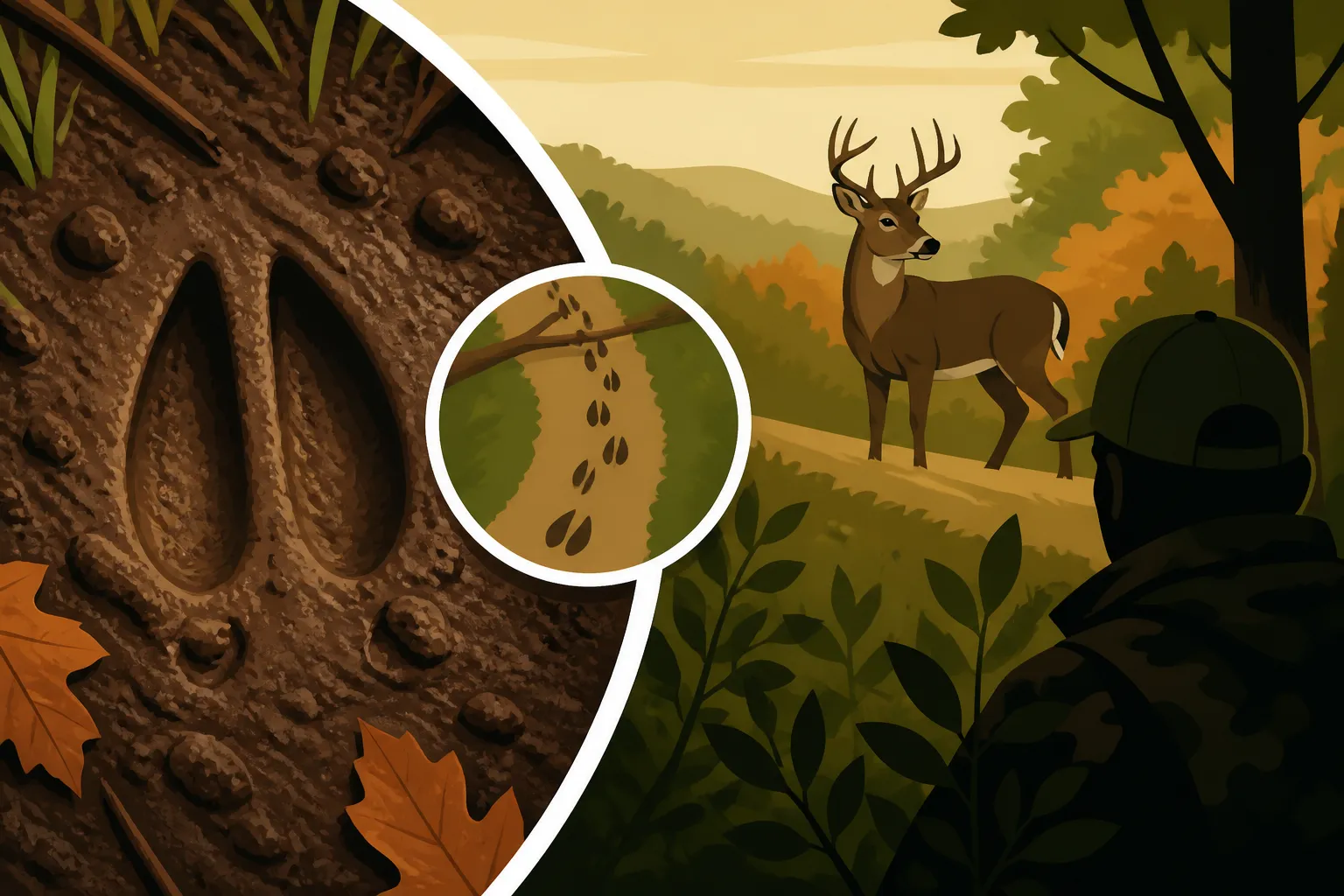
The most basic element of mud tracking is determining the size and shape of the hoof print. A fawn's print will be small and narrow, easily distinguishable from the broader, blunter tracks of an mature buck. Does typically leave daintier, more pointed prints than bucks, even those of similar body size. However, the mud itself plays a huge role. In very wet, soupy mud, even a small deer's hooves can splay out, making the print appear larger and wider than it actually is. This is why looking at multiple tracks, if available, can give you a more accurate assessment.
You'll often see the dewclaws (the small, rudimentary toes behind the main hooves) in deeper mud, especially from heavier deer or those moving quickly. If you consistently see dewclaw impressions, it's a good indicator of a heavier animal, likely a buck, or a deer that was moving with purpose through soft ground. Pay attention to the angle of the dewclaws too; sometimes they splay out more prominently on a buck.
Comparing these sizes and shapes to known deer in your area, perhaps from trail camera photos, can help you develop an eye for what a mature Tennessee buck's print looks like versus a substantial doe. Don't be fooled by an exceptionally wide doe track in deep mud; always look for other corroborating evidence.
Hoof Depth and Weight Distribution
Beyond just size, the depth of the track in the mud is a crucial clue. A deep impression indicates a heavier animal or one moving with greater force. A buck, with its heavier body and often thicker neck, will sink deeper into the mud than a doe of similar size. If the track is unusually deep, it could suggest a trotting or bounding deer, where more weight is concentrated on individual hooves for a brief moment.
Look for consistency in depth. If you see a series of tracks, and one or two prints are significantly deeper than the others in similar mud, it might indicate a slight stumble or a change in gait. A deer walking casually will leave a more even, consistent depth across all its prints. On the flip side, very shallow, indistinct prints might mean the ground was harder, or it was a very light animal.
When deer are running, their hooves tend to dig in more forcefully, often splaying out slightly, and the dewclaws will almost always be visible. This contrasts sharply with a deer that is merely meandering through a creek bottom in search of Late-Season Food Sources for Tennessee Whitetails. By observing these subtle differences, you can start to infer not just what deer was there, but what it was doing.
Gait and Stride: Reading the Deer's Movement
The pattern of tracks, or the gait, can reveal a lot about a deer's behavior. A walking deer will leave a fairly consistent stride length, with the hind foot often landing slightly ahead of or on top of the front foot's print. This "overstepping" is common for walking deer. A longer stride, with hind prints clearly ahead of the front, might suggest a faster walk or a slight trot.
When a deer is running or bounding, the tracks will be widely spaced, and the pattern will be less organized, often showing all four hooves in a scattered fashion. This is particularly noticeable if you're tracking a deer that has been spooked. Understanding these gaits is essential, especially when you're trying to determine the direction of travel or if a deer was simply passing through versus actively feeding or seeking cover.
In thick cover or along a Hunting a Funnel Between Two Bottoms, deer often stick to well-worn paths, and the gait might appear more constrained. However, in open timber, you can get a clearer picture of their natural stride. The placement of the dewclaws can also indicate gait; splayed dewclaws on multiple prints suggest a faster pace or soft ground, whereas dewclaws barely showing (or not at all) indicate a slower, more deliberate walk.
Deciphering Freshness: Is That Buck Still Around?
Finding a deer track is one thing; knowing if it was made five minutes ago or five days ago is entirely another. This is where real skill comes into play. The frustrations of hunters who find what they think are great sign, only to sit in a stand over old tracks, are real. Learning to differentiate fresh from old tracks is paramount to effective scouting and hunting.
Edges and Clarity: The Crispness Test
The most immediate indicator of a fresh track is the crispness of its edges. A track made within the last few hours, especially in damp mud, will have sharp, well-defined edges. You'll see the exact outline of the hoof, almost as if it was pressed into clay moments before. As time passes, especially with exposure to wind, rain, or even just drying air, these edges begin to round off, crumble, or blur. Rain will wash them out, wind will dry and crack the mud around them, and even dew can soften the edges over time.
Think of it like drawing in wet sand. The line is sharp at first, but then the tide (or weather) comes in, or the sun dries it out. When scouting, get down low and look at the track at an angle. The shadow cast by a crisp edge will be much more pronounced than that of a rounded, older edge. This visual detail is often the first thing that tells you whether you're on to something truly fresh.
Water, Moisture, and Debris: Nature's Timestamp
Another critical factor is the presence of water or moisture within and around the track. If the mud inside the track still looks wet, shiny, or undisturbed, especially if the surrounding mud is starting to dry or crust over, that track is fresh. If there's standing water in the track, but the water looks dirty or has debris settled at the bottom, it's likely older, perhaps from a rain shower that has since passed. Conversely, a track made after a rain shower, with clear, fresh water pooling in it, tells you it's new.
Look for debris. Leaves, twigs, or small pebbles that have fallen into the track and settled there indicate an older print. If the debris has been pushed aside by the hoof, or if there's no debris in the track at all while the surrounding area is littered, that's a sign of recent activity. Sometimes, in very soft, sticky mud, you'll see small bits of mud still clinging to the edges of the print, almost like it just peeled away from the hoof – that's a dead giveaway of a very fresh track.
Overlapping Sign: The Sequence of Events
When in doubt, look for other sign that has overlapped the deer track. This is where patience and attention to detail truly pay off. Have smaller animals like squirrels, raccoons, or birds walked over the deer track? If so, the deer track is older than the smaller animal's prints. If a fresh deer track cuts over the prints of other animals, it's the newest sign. This also applies to falling leaves, twigs, or pine needles. If they're lying on top of the deer track, it's older. If the deer track is impressed on top of freshly fallen leaves, you're in business.
Furthermore, consider the weather. If it rained heavily last night, and you find deer tracks with crisp edges and fresh mud this morning, you know those deer were moving during or immediately after the rain. Combining this with a weather app can help you timestamp tracks more accurately. This detective work is part of the joy of Scouting Tennessee Public Land Before Season.
| Track Element | Old Track (Likely >12-24 hours) | Fresh Track (Likely <12 hours) |
|---|---|---|
| Edges | Rounded, crumbling, blurred, dry, or sun-baked | Sharp, crisp, well-defined, distinct hoof outline |
| Depth | Less distinct impression, partially filled by debris | Clear, deep impression relative to mud consistency |
| Mud Condition | Dry, cracked, crusted, or soaked with settled water | Still wet, shiny, supple, or recently dewy/moist |
| Water in Track | Standing, cloudy, with settled debris | Clear, recently pooled, or still actively seeping in |
| Debris | Leaves/twigs settled into the track | Leaves/twigs pushed aside by the hoof; track clear |
| Overlapping Sign | Covered by later rain/wind, other animal tracks over top | Often the freshest sign on top, undisturbed by other animals |
| Smell | Earthy, mud smell | Faint, distinct musky deer scent (in rare, very fresh cases) |
Connecting the Mud Dots to Deer Movement Patterns
Finding fresh tracks is fantastic, but it's only truly valuable if you can connect those tracks to a larger pattern of deer movement. Deer don't just wander aimlessly; they move with purpose between bedding areas, feeding zones, and water sources. Understanding these patterns, especially in specific Tennessee terrains, is key to setting up your hunt.
Funnels and Crossings: Predictable Pathways
Deer, like all animals, are creatures of efficiency. They will take the path of least resistance or the most secure route between two points. This makes natural funnels and creek crossings absolute goldmines for finding fresh mud sign. A narrow saddle on a Hunting a Ridge-Top Saddle for Rutting Bucks in the Cumberland Plateau, a low spot in a fence line, a narrow strip of timber connecting two larger woodlots, or a shallow creek crossing are all prime locations where deer traffic is naturally concentrated.
In West Tennessee's river bottoms, where water is plentiful, deer will often cross small sloughs or drainage ditches, leaving perfect mud trails. Pay particular attention to the edges of agricultural fields, especially after a rain, as deer will often travel these edges, leaving clear tracks in the softer ground. These predictable pathways are where you should focus your initial mud-reading efforts. A fresh track in a funnel suggests consistent, current use of that travel corridor.
Combining Tracks with Other Sign: Building the Narrative
Mud tracks are powerful, but they are just one piece of the puzzle. The real magic happens when you combine fresh tracks with other deer sign. Imagine finding a set of fresh, large buck tracks leading directly to a newly scraped-out patch of ground under a licking branch, or a fresh rub on a sapling with sticky sap still oozing. That's not just a track; that's a confirmed, recent buck activity zone. This combination of signs tells you a comprehensive story of what the deer are doing, where they're going, and when they're doing it.
Look for droppings, especially those that appear moist and dark, indicating recent passage. Bedding areas, often found on sun-drenched slopes in winter or shady spots in summer, might have tracks leading in and out. If you find fresh tracks leading away from a known bedding area towards a feeding area, you've just mapped out a potential kill zone. The more corroborating evidence you can find – fresh tracks, rubs, scrapes, droppings, and even fresh browse – the higher your confidence should be in the current deer activity in that area.
Leveraging Technology with Traditional Scouting
While reading mud is a traditional skill, modern tools can greatly enhance your ability to interpret and act on what you find. Mapping apps, like GoHunt, allow you to mark specific locations where you find fresh tracks, rubs, or scrapes. You can then visualize these points in relation to terrain features, property lines, and potential bedding or feeding areas. This helps you connect isolated pieces of sign into a coherent travel pattern.
For instance, if you find fresh tracks at a creek crossing, use GoHunt to see if that crossing connects two distinct blocks of cover, or if it's part of a longer travel corridor along a ridge. You might discover that the freshest tracks are consistently found in a specific low gap that Wind and Thermals on a Ridge System make a safe travel route. GoHunt's satellite imagery can help you identify these subtle terrain features that might concentrate deer movement.
When you're out Hunting West Tennessee Bottomland Deer, you can use your GoHunt app to pinpoint the precise location of fresh tracks, saving them as waypoints. Later, you can analyze these points to identify trends in deer movement, such as where they're entering fields, which creek crossings they prefer, or how they're navigating thickets. This blend of boots-on-the-ground scouting and digital analysis creates a powerful strategy for understanding and predicting deer movement, making sure your time in the woods is spent in the right place.
Reading Mud in Specific Tennessee Regions
Tennessee's diverse geography means that "mud" isn't a monolithic entity. The rich, dark loam of West Tennessee's farmlands behaves differently than the rocky, clay-heavy soils of the Cumberland Plateau or the sandy loam found near the Tennessee River. Understanding these regional differences can refine your mud-reading skills.
West Tennessee Bottomlands and Farm Country
In the fertile bottomlands of West Tennessee, particularly around areas like Reelfoot Lake or the Mississippi River floodplain, the mud is often deep, silty, and holds moisture for extended periods. This means tracks tend to be very well-defined and can retain their freshness longer if protected from direct sun and wind. However, heavy rains can quickly turn these areas into a soupy mess, washing out older tracks and making it challenging to differentiate new from recent.
Look for tracks along the edges of agricultural fields, especially those planted with corn or beans. Deer frequently skirt these edges before entering cover. Creek bottoms and drainage ditches are also primary travel routes and excellent places to find sign. The softer, darker mud here means even light pressure from a deer hoof will leave a distinct impression. When scouting these areas, pay close attention to where deer enter and exit fields; these pinch points are often riddled with fresh tracks and droppings.
Cumberland Plateau and East Tennessee Ridges
As you move east towards the Cumberland Plateau and into the rugged Appalachian foothills, the soil becomes rockier, thinner, and often clay-based. Here, finding clear, consistent mud tracks can be more challenging. Mud might be present in low-lying depressions, along creek beds, in moist saddles, or in natural springs. When you do find mud, it's often a rich, red clay that can hold incredibly crisp prints, but it might dry out faster than the silty mud of West Tennessee.
On these Reading a Ridge for East Tennessee Deer, deer often travel along bench cuts, old logging roads, and ridge lines. Muddy patches, even small ones, in these areas are highly valuable. A fresh track in a muddy sag on a ridgetop can confirm a buck's travel route between two drainages. In the mountainous terrain, pay attention to how tracks ascend and descend slopes. A deer moving slowly uphill might dig its front hooves in deeply, while one descending quickly might slide, leaving a scraped impression. Look for these small, muddy pockets, as they can be concentrated points of information in an otherwise hard-packed environment.
Disclaimer
Always consult the latest Tennessee Wildlife Resources Agency (TWRA) regulations before hunting. This guide is for informational purposes only and does not supersede official hunting laws or safety guidelines.