Late-Season Food Sources for Tennessee Whitetails
As the crisp air of late fall turns into the biting chill of winter, many Tennessee whitetail hunters find themselves scratching their heads. The deer that were so visible around acorn flats in October seem to have vanished, leaving behind empty woods and frustrated hunters. This guide is here to help you unravel the mystery of finding deer in the toughest stretch of the season by focusing on the most critical element: food.
The Late Season Reality Check: Why Food Becomes King
When the leaves have fallen and the temperatures plummet, deer behavior shifts dramatically. What worked in early archery season often won't cut it once January rolls around. Understanding this fundamental change in their priorities is key to adapting your strategy.
The Scarcity of Natural Forage: What's Gone and What Remains
Think back to early fall. The woods were probably littered with acorns, wild grapes, persimmons, and a smorgasbord of soft mast. Deer were gorging themselves, building up fat reserves. But by late season, especially after a hard freeze or heavy rains, most of that high-energy food is long gone. The easy pickings are simply exhausted.
What does remain, however, becomes incredibly important. Sometimes, you'll find isolated pockets of less popular or later-dropping acorns, particularly from certain red oak varieties like pin oaks or willow oaks that hold onto their mast longer. But these are usually sparse and require diligent scouting. The general abundance is gone, forcing deer to become much more deliberate and concentrated in their feeding efforts. This scarcity means that any remaining food source, no matter how small, will act like a magnet for hungry whitetails trying to make it through the leanest part of the year.
Understanding Deer Metabolism and Winter Needs
Deer are incredibly resilient animals, but winter is tough. Their metabolic rate slows, and they prioritize calorie intake to maintain body temperature and energy. They're trying to conserve as much energy as possible. This means they're looking for the most nutrient-dense, easily digestible food they can find. They're not just browsing on whatever is handy; they're actively seeking out the best fuel for survival.
This quest for high-energy food directly impacts their movement patterns. Instead of wandering widely, deer movements become more precise, often forming defined travel corridors between bedding areas and reliable food sources. This behavior is crucial for hunters to understand because it simplifies the "where to find them" equation significantly. You'll often find that deer will tolerate slightly more pressure if it means accessing a vital food source. This knowledge informs your strategy for Hunting the Late-Season January Lull.
Prime Late-Season Natural Food Sources
While much of the natural buffet is gone, there are specific spots where a diligent hunter can still find whitetails hitting natural forage. It takes a keen eye and a good understanding of the local ecosystem.
Remaining Hard Mast: Overlooked Oak Flats and Beech Nuts
Don't write off all hard mast just because it's late in the season. While white oak acorns are usually gone by early winter, some red oak species hold onto their acorns longer, or they drop later. Look for less-pressured pockets of red oaks, especially those on north-facing slopes or in dense thickets where acorns might have been covered by leaves or snow and thus overlooked by other critters. A late-season find of a good red oak flat can be a goldmine, particularly in areas like the Cumberland Plateau.
Another often-forgotten gem is the beech nut. Beech trees don't always produce a heavy crop, but when they do, those small, triangular nuts are incredibly nutritious and can persist well into winter. Beech trees are easily identifiable by their smooth, gray bark. If you find a stand of mature beeches, especially along creek bottoms or sheltered benches, it's worth taking the time to scout for fresh droppings or chewed nut casings. These areas might be attracting deer for a reason that most hunters miss.
Persistent Green Browse: Honeysuckle, Greenbrier, and Winter Wheat
Even in the dead of winter, some plants manage to hold their green, providing critical browse. Japanese honeysuckle is a common culprit on many Tennessee properties, and deer absolutely love it. It's an invasive species, yes, but for late-season deer, it's a lifeline. Look for thick patches, especially in areas with good sunlight or along field edges. Deer will hit it hard, creating obvious browse lines.
Greenbrier is another resilient plant. While it's thorny and a pain for hunters to walk through, deer don't seem to mind. The new shoots and persistent leaves offer decent forage. Clear-cuts and regenerating timber stands are often hotspots for greenbrier. Additionally, if there are any fields that were planted late with a cover crop like winter wheat or clover, deer will gravitate to them. These green shoots provide crucial vitamins and minerals that are otherwise scarce.
Browse in Hardwood Stands and Regenerating Timber
When all else fails, deer will turn to woody browse. In mature hardwood stands, deer will nibble on the dormant buds and twigs of certain species. While not as nutritious as acorns or green forage, it's better than nothing and helps fill their stomachs. Look for signs of browsing on maples, dogwoods, and sassafras.
Regenerating timber stands or recent clear-cuts are browse havens. The young trees and shrubs that sprout up after logging provide a dense buffet of woody forage. Not only do these areas offer abundant food, but the thick cover also provides excellent thermal protection and bedding. Deer will often bed right in the middle of these thickets, moving out to feed only short distances. When Scouting Tennessee Public Land Before Season, marking potential clear-cuts can pay off handsomely in the late season. A tool like GoHunt's mapping system can be invaluable for identifying these cuts and planning your approach.
Agricultural and Supplemental Food Sources
In agricultural regions, especially across West Tennessee and parts of the Highland Rim, farmed fields become the undisputed kings of late-season food. Deer will alter their entire patterns to access these calorie-rich havens.
Standing Row Crops: The Late-Season Magnet
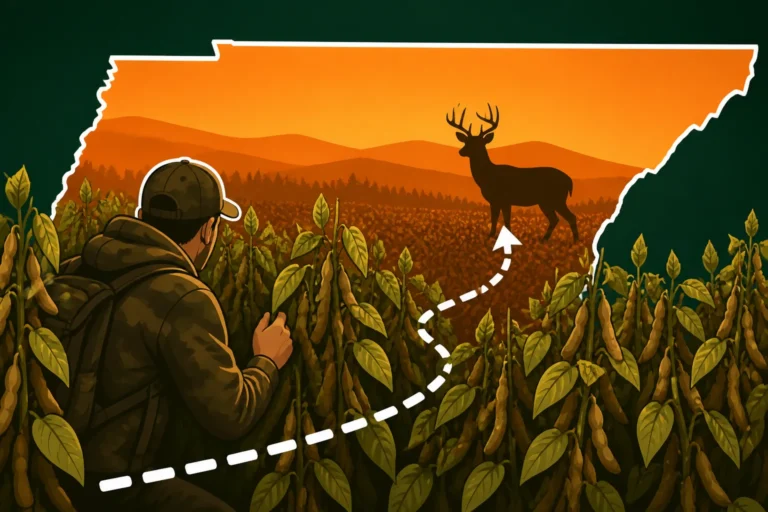
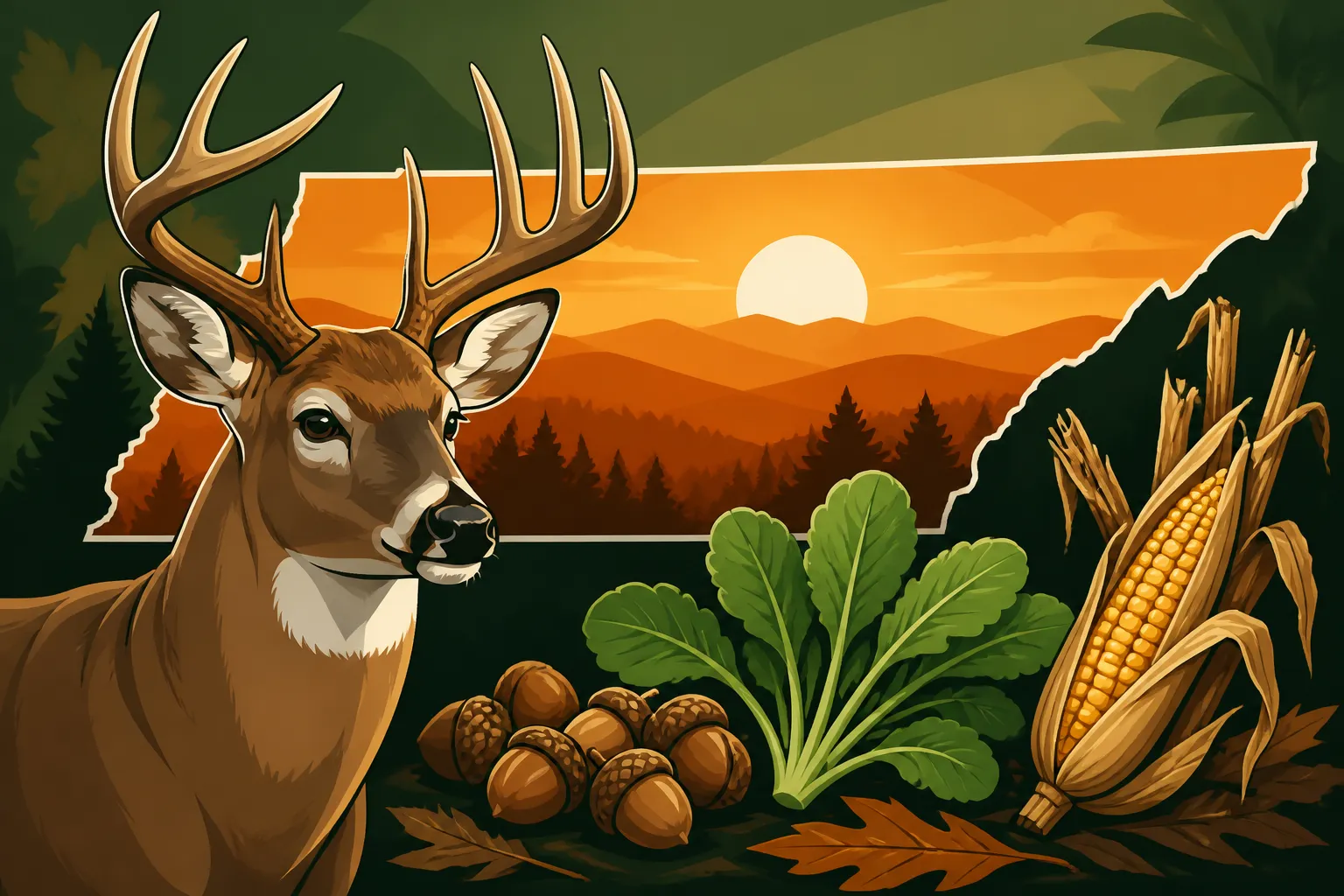
If you're hunting near agricultural land, standing row crops like corn and soybeans are hands down the most important late-season food source. A field of standing corn, especially if it's been left unharvested, is a five-star restaurant and a hotel all in one for deer. They'll eat the kernels and bed down right within the rows, making them incredibly difficult to hunt. You can read more about Hunting a Standing Cornfield in Farm Country for specific tactics.
Soybean fields, even after harvest, can offer significant food. Deer will meticulously pick through the stubble, finding any dropped beans. The nutritional punch of a soybean is immense, and deer will work a field for hours, especially under the cover of darkness. Identifying these fields and understanding deer entry and exit routes becomes paramount. Often, they'll use creek bottoms or fencerows to access these prime feeding locations.
Winter Food Plots: Brassicas, Clover, and Cereal Grains
Many landowners and hunting clubs plant food plots specifically for the late season, and these can be incredibly effective. Brassicas, like turnips, radishes, and rape, are fantastic late-season choices. After a few hard freezes, the sugars in these plants convert, making them incredibly palatable and attractive to deer. You'll often see deer digging in frozen ground to get to turnip bulbs.
Cereal grains like winter wheat, oats, and rye are also excellent. They stay green and continue to grow, providing consistent forage. Clover, particularly varieties like Durana or Ladino, can remain palatable well into winter, especially in more sheltered locations. These planted food plots concentrate deer activity, making them excellent spots for a cold-weather sit. When you're dealing with animals trying to put on or maintain weight, these concentrated nutrient sources are exactly what they're looking for.
Hay Fields and Pastures: A Subtle but Important Resource
While not as glamorous as a standing cornfield or a lush food plot, hay fields and pastures can still draw deer, especially in areas with limited other options. Deer will graze on the persistent grasses and clover in these fields, particularly if they're well-maintained or have seen recent rainfall. It's often a subtle sign, but if you notice fresh tracks and droppings in a pasture, it's worth investigating.
Cattle fields, surprisingly, can also hold deer. Deer might pick through the remaining hay or even graze on the same grass as the livestock. While it might not be their primary target, don't overlook these areas as secondary feeding spots, especially during the harshest periods when every calorie counts. These are often easier to gain access to than prime agricultural ground if you're trying to Get Private Land Permission in Tennessee.
Table: Common Late-Season Tennessee Deer Food Sources
| Food Source Type | Examples | Nutritional Value | Persistence | Scouting/Hunting Tip |
|---|---|---|---|---|
| Hard Mast | Red Oak Acorns, Beech Nuts | High Fat, Carbs | Moderate (localized) | Look for fresh cuttings, droppings under specific trees. |
| Green Browse | Honeysuckle, Greenbrier, Winter Wheat | Vitamins, Minerals, some Carbs | Good (especially in thickets) | Find dense patches, clear-cuts, or field edges with cover. |
| Woody Browse | Maple, Sassafras Twigs | Low to Moderate (Maintenance) | High (always available) | Identify browse lines on young growth in regenerating timber. |
| Row Crops | Standing Corn, Dropped Soybeans | Very High Carbs, Protein | Excellent (until consumed) | Pinpoint unharvested fields, look for heavy trails along edges. |
| Food Plots | Brassicas, Winter Grains, Clover | High Carbs, Protein, Vitamins | Excellent (designed for winter) | Identify specific plots; hunt edges, especially on cold days. |
| Pastures/Hay | Grasses, Clover | Moderate (Maintenance) | Good (consistent) | Look for subtle grazing sign, especially near cover. |
Scouting and Hunting Late-Season Food
Finding late-season deer isn't just about identifying food sources; it's about understanding how deer use them and how you can capitalize on their predictable movements.
Reading the Landscape for Remaining Food
Successful late-season hunting starts long before you ever step foot in the woods. Modern mapping tools, like those available through GoHunt, are indispensable. You can virtually scout for unharvested fields, identify clear-cuts, and even locate potential stands of mast trees from your couch. Combine this with traditional boots-on-the-ground scouting. Walk creek bottoms, scour ridge lines, and examine field edges for tracks, droppings, and browse evidence.
Pay close attention to subtle clues. Is there a patch of honeysuckle on a south-facing slope that's getting more sun exposure, keeping it greener? Did a specific red oak drop its acorns later than others? Are deer digging vigorously in a particular spot in a food plot? These details tell a story. While you might be tempted to focus on Reading a Ridge for East Tennessee Deer, don't forget that late-season bucks often drop into sheltered hollows or thickets where food and cover are more readily available. The goal is to identify the most preferred and most accessible food sources, as these are where deer will concentrate.
Timing Your Hunts to Deer Feeding Patterns
In the late season, deer become even more crepuscular, meaning they're most active at dawn and dusk. However, extreme cold can trigger daytime feeding binges. On bitter cold days, deer need to eat more frequently to maintain their body temperature. This is when you can catch them moving to food mid-day. Be prepared for Cold-Weather Sitting Strategy in Tennessee that can last all day, as that's when you might catch them off guard.
When Hunting Deer After a January Cold Front, anticipate increased movement. The deer know the cold is coming, and they'll feed heavily before it hits, and then often again as it breaks. Position yourself to intercept them between their bedding cover and the food source. Look for pinch points, funnels, or thickets that lead directly into a prime feeding area. Remember, they're looking for efficiency in their movements, minimizing energy expenditure.
Low-Impact Access and Exit Strategies
With deer concentrated around limited food sources, they become incredibly sensitive to pressure. Your access and exit routes are critical. You need to get into your stand or blind without alerting deer that are already feeding or moving towards the food. Use terrain features, ditches, or dense cover to conceal your approach. Consider using a ground blind that's well-brushed in and set up far in advance if hunting a field edge.
Similarly, exiting your stand needs to be handled with care. If deer are still feeding at last light, you might need to sit tight until they've dispersed naturally, or plan an exit route that takes you away from their most likely travel paths. The goal is to leave the area undisturbed so you can hunt it again tomorrow. Every disturbance, every blown deer, teaches them to avoid that spot, and in the late season, with fewer food options, a spooked deer might simply move to a different, harder-to-hunt area. Sometimes, this means you need to Find Ground Others Walk Past by being willing to go a little further or hunt a little smarter.
Disclaimer
Hunting is an inherently dangerous activity. Always prioritize safety, understand and follow all Tennessee Wildlife Resources Agency (TWRA) regulations, and obtain appropriate licenses and permits. Be aware of your surroundings and any potential hazards. The information provided here is for educational purposes and general guidance only. Conditions in the field can vary greatly, and individual judgment is always required.