Entry Routes Through Standing Beans
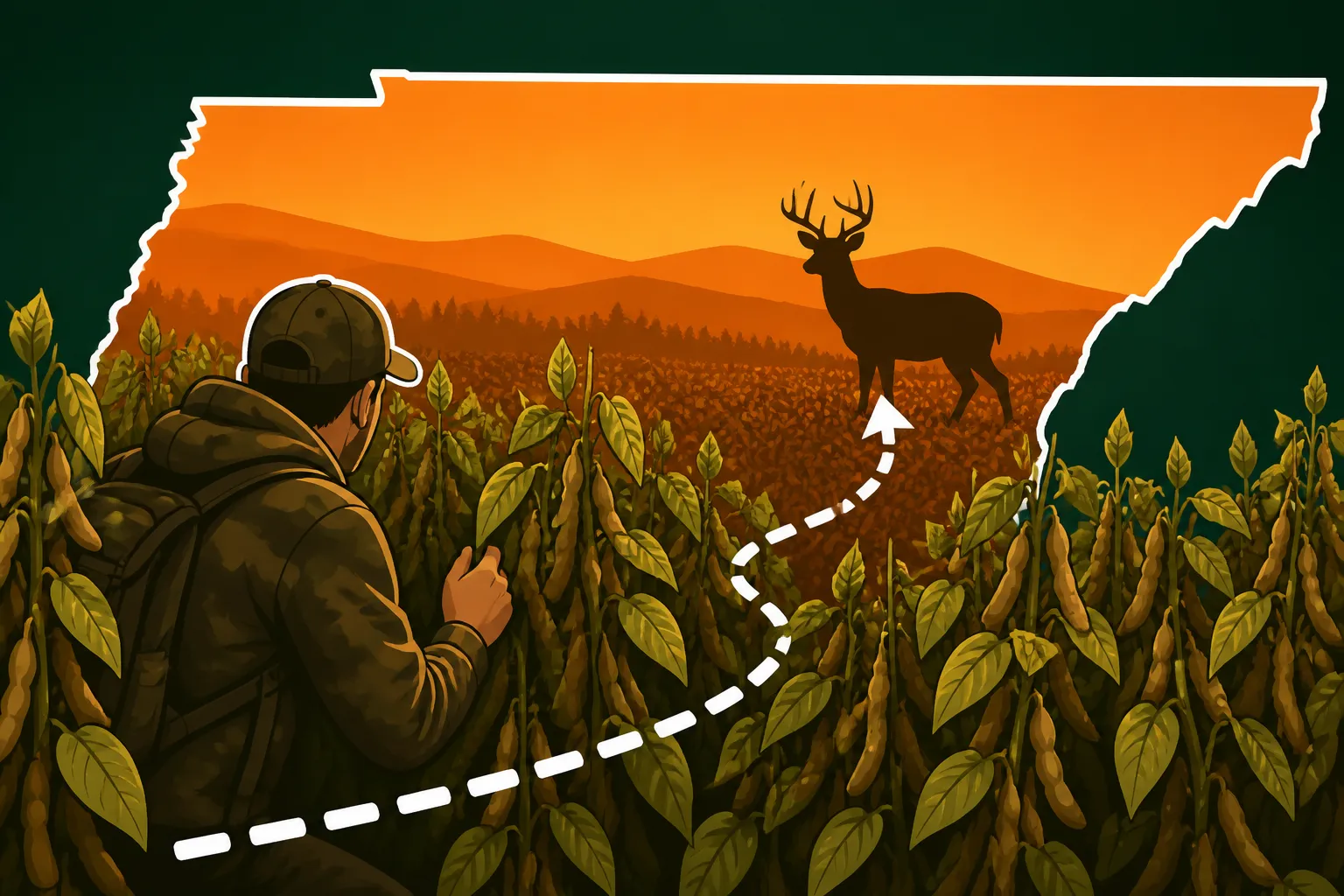
There's nothing quite as frustrating as seeing a mature buck feeding right on the edge of a standing beanfield in West Tennessee, knowing he's just begging to be hunted, but having absolutely no idea how to get to your stand without blowing every deer out of the county. Standing beanfields are an undeniable magnet for whitetails, offering a rich, high-protein food source that deer just can't resist, especially from late summer through the early archery and muzzleloader seasons. But the sheer lack of cover around these agricultural giants makes entry and exit a hunter's worst nightmare. This guide is dedicated to dissecting those challenges and arming you with the practical, real-world strategies you need to slip into your stand unnoticed and capitalize on those beanfield opportunities.
Understanding the Dynamics of Standing Beanfields
Standing beanfields, whether soybeans or other legumes, represent a feast for Tennessee's deer herd, drawing them in from surrounding timber and thickets. The challenge for us as hunters isn't just knowing they're there; it's understanding how deer use them and, more critically, how we can navigate that usage without alerting them to our presence.
Why Standing Beans Are a Deer Magnet
Imagine you're a deer. After a long, hot summer, the beans in those vast fields are turning yellow, and the pods are plump and full of delicious, nutritious protein. It’s an irresistible draw. Deer will spend hours, especially in the late afternoon and evening, leisurely feeding their way through these fields. They often enter the fields well before dark, sometimes even mid-afternoon if pressure is low, and they'll feed until well after dark, bedding nearby in thick cover during the day. This consistent, predictable feeding pattern is exactly what makes these areas so attractive to hunters.
However, it’s a double-edged sword. That same predictable usage means deer are exceptionally tuned into any disturbance. A crunch of leaves at the wrong moment, a silhouette against the skyline, or a whiff of human scent can send them scattering, making them nocturnal or pushing them off the field entirely. The sheer volume of deer often present—does, fawns, and bucks—means there are many eyes and ears on constant alert. Over time, deer in heavily hunted areas become incredibly wary of any movement or sound near these vital food sources. They’ll often stage just inside the timber edge, waiting for that golden hour to pour into the field, or they’ll work parallel to the edge, nibbling as they go, before committing to the open. This staging behavior is a critical detail we need to exploit.
The Challenge of Accessing Beanfields Unnoticed
The biggest headache with beanfields is usually the wide-open spaces surrounding them. Unlike hunting deep timber where you might have gradual terrain changes, thick undergrowth, or mature oaks to break up your profile, beanfields often sit in relatively flat, open farm country. This creates expansive sightlines, sometimes for hundreds of yards, making stealthy movement nearly impossible in broad daylight.
Compounding this is the noise factor. A lot of agricultural land, especially in West Tennessee, might feature dry, crunchy leaf litter in the adjacent woods, or even gravel roads. Every step can sound like a drum solo to a deer feeding fifty yards away. The wind is another massive obstacle. With open fields, swirling winds can be unpredictable, carrying your scent far and wide. Imagine you've got a perfect crosswind for your stand, only for a subtle thermal shift or a slight change in topography to send your scent directly into the field. It’s enough to make even the most seasoned hunter want to throw in the towel. The frustration is real, and it’s why so many hunters pass up these seemingly prime locations.
Stealthy Entry Strategies for Beanfield Hunts
Overcoming the challenges of beanfield access requires a meticulous approach, blending careful planning, smart use of terrain, and unwavering attention to timing. It’s about becoming a ghost in an environment that tries its best to expose you.
Using Natural Cover and Terrain Features
The key to successful beanfield entry lies in identifying and exploiting every shred of natural cover available. Don't just look at the field; study the perimeter with a critical eye, both on a map and on the ground.
- Ditches and Creeks: These are often absolute goldmines for entry. Many farm fields have drainage ditches or small creeks running along their edges or even cutting through them. These depressions provide incredible visual breaks, allowing you to walk in a crouched position, below the deer's line of sight. They also tend to hold more moisture, meaning less noisy leaf litter. Always prioritize these features, even if it adds a bit more distance to your walk. They can act as natural highways right to your stand location.
- Fencerows and Hedgerows: An old fencerow, overgrown with multiflora rose, honeysuckle, or small trees, can provide a fantastic screen. These linear strips of cover can offer a low-profile approach, allowing you to stay hidden as you parallel the field edge. Just be mindful of how thick they are – you don't want to get snagged or make excessive noise trying to push through dense brush. Sometimes, walking just inside the woods parallel to the fencerow is better than trying to walk within it. If you're Hunting Small Private Tracts in Tennessee, these features become even more critical, as small parcels often have more defined borders with varying cover.
- Timber Edges and Undulating Terrain: Even in generally flat farm country, subtle dips, rolls, or strips of timber can be your friend. Instead of walking directly towards your stand, use the back side of a small knoll, or stay just inside the timberline, taking advantage of whatever hardwoods or pines are present. Think like a deer—they naturally follow paths of least resistance that offer concealment. We should do the same. If the timber edge runs to your stand, try to stay 10-20 yards in, using the tree trunks and branches to break up your outline. For areas with more varied topography, like those near the Cumberland Plateau Ridgelines, understanding how subtle elevation changes create blind spots is paramount.
- Standing Corn or Tall Grass: If there are adjacent fields of standing corn or tall switchgrass, these can provide excellent temporary concealment. Obviously, corn won't be standing all season, but in early archery, it's a huge advantage. You can often walk right through a cornfield to get to your beanfield stand, staying completely hidden. However, always be aware of the noise you make rustling through the stalks. Use this cover wisely and only when it genuinely offers an advantage over open exposure.
Timing Your Approach Perfectly
Your entry time is almost as important as your chosen route. Blowing deer out of a beanfield during your walk-in can ruin an entire hunt before it even begins.
- Pre-Dawn for Morning Hunts: For a morning hunt over a beanfield, you absolutely must be in your stand at least an hour before first light. That means walking in under the cover of darkness. Deer will often still be in the field feeding at first light, or just beginning to filter back into their bedding areas. If you walk in too late, you'll inevitably bump them. Using a good red-light headlamp can help you navigate without spooking deer as much as a white light, but still be extremely cautious. For detailed information, check out Cold-Weather Sitting Strategy in Tennessee, as early morning cold often dictates deer movement.
- Mid-Day Entry for Evening Hunts: This is often the most effective, albeit inconvenient, strategy for evening beanfield hunts. If you can get into your stand mid-day, say between 10 AM and 2 PM, you're entering when deer are typically bedded down and least active. This dramatically reduces your chances of bumping them from the field or their staging areas. Yes, it means a longer sit, but it’s a much higher probability of success. Bring snacks, water, and something to occupy your time quietly.
- The "Golden Hour" Dilemma: Many hunters try to slip in just before prime time in the evening, thinking they’ll beat the deer. This is often a huge mistake. Deer are often already on the move, staging, or even beginning to enter the field. Even if you don't see them, they often see or smell you. It's incredibly difficult to be stealthy enough during this critical window. Unless you have absolutely perfect, impenetrable cover for your approach, avoid the last hour before sunset for entry. Consider using tools like the GoHunt app to analyze historical wind data and map out potential entry and exit routes that align with typical deer movement patterns around these key feeding areas. This kind of advanced scouting is paramount.
| Entry Strategy | Best Time to Use | Advantages | Disadvantages |
|---|---|---|---|
| Ditch/Creek Bed | Any time (best for mid-day) | Excellent visual concealment, quieter footing, often direct route. | Limited availability, can be muddy/wet, may not go exactly where you need. |
| Fencerow/Hedgerow | Early morning or mid-day | Good visual screen, often available on field edges. | Can be noisy if brush is thick, scent can swirl, limited to linear paths. |
| Timber Edge Walk | Early morning or mid-day | Uses existing woods, good for blending in if done carefully. | Requires constant awareness of deer in timber, easy to be silhouetted. |
| Standing Corn/Tall Grass | Early archery season | Nearly 100% visual concealment, allows direct approach. | Very noisy, seasonal availability, deer can bed in the corn. |
| Backside of Knolls/Rolls | Mid-day | Leverages subtle topography for visual breaks, less obvious than linear cover. | Requires detailed terrain knowledge, less common in flat farm country. |
Advanced Tactics for Difficult Beanfields
Sometimes, even with the best intentions and basic strategies, a beanfield just seems impossible to hunt. This is when you need to dig deeper, applying more sophisticated knowledge of deer behavior and environmental factors.
Wind, Thermals, and Scent Control
Scent is the deer's primary defense mechanism, and in open country like beanfields, it becomes even more critical. You cannot underestimate how far and how quickly your scent can travel.
- Understanding Prevailing Winds: Before you even think about an entry route, you need to know the prevailing wind direction for your hunt. This is non-negotiable. You want the wind blowing away from where you expect deer to approach the field and away from the field itself. A perfect crosswind that blows your scent into a safe zone is ideal. Always err on the side of caution; if the wind isn't right for your chosen stand location, don't hunt it. Period. You'll do more harm than good by pushing deer off. Reliable weather apps and dedicated hunting apps like GoHunt often provide hyper-local wind forecasts that include hourly changes, which can be invaluable when planning your approach to a specific field.
- Thermals in Flat and Rolling Terrain: While thermals are often discussed in the context of mountain hunting—like how Wind and Thermals on a Ridge System affect deer movement—they play a subtle but significant role in flatter terrain too. In the mornings, as the ground warms, air rises, creating an updraft. This means your scent will generally rise. In the evenings, as the ground cools, air falls, creating a downdraft, which will carry your scent downwards. Near a beanfield, especially one bordered by a creek or a slight depression, these micro-thermals can cause unpredictable swirling. Always be aware of low-lying areas where scent can pool or travel. An entry route through a ditch might offer visual cover, but if it's a calm evening and you're walking into a thermal drop, your scent could get sucked right into the field.
- Aggressive Scent Control: This goes beyond just showering with scent-free soap. It means storing your hunting clothes in airtight containers with natural scent neutralizers like pine needles or dirt from your hunting area. It means dressing in the field, not at home. It means using ozone generators (if you believe in them) for your gear. And it means being mindful of everything you touch on your way in. Avoid brushing against low-hanging branches, walking through dense brush that will wipe your scent off your pants, or touching anything unnecessary. If you’re truly serious about Tennessee Deer Camp Traditions, part of that tradition should be impeccable scent control.
Scouting for Hidden Entry Points and Patterns
This is where the real work comes in, and it often happens long before opening day. You can't just show up and expect to find a magical entry route.
- Aerial Photos and Topo Maps: Before ever stepping foot on the property, dive into aerial photography on apps like GoHunt or other mapping software. Look for those subtle terrain features: ditches, drainage lines, fencerows, thin strips of timber, or even slight rises that might offer a visual barrier. Identify potential stand locations based on prevailing winds and proximity to known bedding areas. This is your blueprint. For example, if you're Reading Aerial Photos for Cumberland Plateau Deer, you're looking for similar hidden pathways.
- Boots-on-the-Ground Reconnaissance: Nothing beats walking the perimeter, preferably during the off-season or a non-hunting day, to confirm what you see on the map. Find where deer are entering and exiting the fields. Look for well-worn trails coming from bedding areas into the beans. Are there specific corners they prefer? Do they tend to follow a particular fencerow? Pay attention to pinch points or funnels that might make an entry route easier. You might discover a small, unnoticed cut or a low spot in a fence line that provides the perfect stealthy approach. This pre-season scouting is crucial for Scouting Tennessee Public Land Before Season as well, even on private ground.
- Trail Camera Intelligence: Trail cameras strategically placed on the edges of beanfields or on known deer trails leading into them can give you invaluable insight. They'll show you exactly when deer are using the field, from what direction they're coming, and how much light they need before committing. This data can help refine your timing. For instance, if cameras show a mature buck entering the field consistently at 6:30 PM, you know you need to be in your stand much earlier, perhaps by 4 PM, to avoid detection. Just be mindful of local regulations on trail camera usage, especially on public lands.
- Post-Harvest Scouting: Once the beans are harvested, the fields are wide open, and it's a perfect time to identify those faint deer trails that were hidden by the crops. These trails will give you a clear picture of how deer utilized the field and where their primary entry and exit points were. Even if you're hunting standing beans this year, knowing these post-harvest routes can inform your next season's strategy.
Gear Considerations for Beanfield Hunts
Having the right gear won't guarantee success, but it will certainly make your beanfield hunting experience more comfortable, efficient, and increase your chances of being undetected.
Footwear and Clothing Choices
When you're trying to be a ghost, every detail matters, right down to what's on your feet and back.
- Quiet Footwear: Forget those heavy, clunky hiking boots that sound like an elephant stomping through dry leaves. For beanfield entries, especially in early season, you want quiet, flexible footwear. Rubber boots are often a fantastic choice because they shed scent well, are waterproof if you're using a ditch or creek entry, and generally make less noise than a stiff leather boot on dry ground. Muck Boots or Lacrosse Alpha series are popular choices for their comfort and stealth. Make sure they fit well to avoid rubbing and unnecessary noise. When considering Rubber Boots for Bottomland Walking, the same principles apply to beanfield edges.
- Layered, Quiet Clothing: Your clothing needs to be quiet, breathable, and able to adapt to changing temperatures. Avoid anything with a "crinkly" or "swishy" sound. Fleece, wool, or soft-shell materials are ideal. Dress in layers so you can shed them during your walk-in to avoid sweating. Sweat carries a lot of scent, and even if you're scent-free, that human odor can be a huge red flag. For Late-Season Food Sources for Tennessee Whitetails, you might need more insulation, but the core principle of quiet layering remains.
- Blaze Orange (Where Required): Remember, Tennessee has specific Tennessee Blaze Orange Requirements during firearm seasons. Even if you're bowhunting during a muzzleloader or gun season overlap, check the regulations. While deer don't see orange like we do, it's about safety. Make sure your orange vest or hat is also quiet and doesn't hinder your stealthy approach.
Optics for Scouting and Spotting
Good optics are your eyes and ears when you're trying to spot deer far out in a field or confirm an entry point from a distance.
- High-Quality Binoculars: Don't skimp here. A good pair of 10×42 binoculars is indispensable for glassing a beanfield before dawn or at dusk. You need to be able to pick out deer, often partially obscured by the beans themselves, from a long distance. Look for clear glass, good low-light performance, and comfortable ergonomics for long periods of glassing. Brands like Vortex, Leupold, or Maven offer excellent options without completely breaking the bank. For tips on Binocular Power for Ridge Hunting, many of the same principles apply to wide-open fields.
- Spotting Scope (Optional but Recommended): For truly expansive beanfields, a spotting scope can be a game-changer. Set up from a distant vantage point before your hunt, you can meticulously pick apart the field and its edges, identifying exactly where deer are entering, what kind of deer they are, and if any mature bucks are present. This allows you to confirm your entry strategy without risking immediate detection by getting too close.
- Rangefinder: While a rangefinder might seem less critical for stationary beanfield hunting, it's incredibly useful for confirming distances to potential shot opportunities or even landmarks in the field. Knowing exactly how far that prominent tree or fencerow corner is can help you make a more accurate shot when the time comes.
Ultimately, mastering entry routes through standing beanfields in Tennessee is about patience, preparation, and a willingness to adapt. It's tough, but the reward of a hard-earned buck from one of these agricultural havens makes all the effort worthwhile.
Disclaimer
Hunting is an inherently dangerous activity. Always prioritize safety, understand and obey all local, state, and federal hunting regulations, and ensure you have the proper licenses and permits before heading into the field. This guide is for informational purposes only and does not substitute for professional training or direct instruction. Be aware of your surroundings, know your target and what is beyond it, and never hunt alone without informing someone of your plans.