Binocular Power for Ridge Hunting
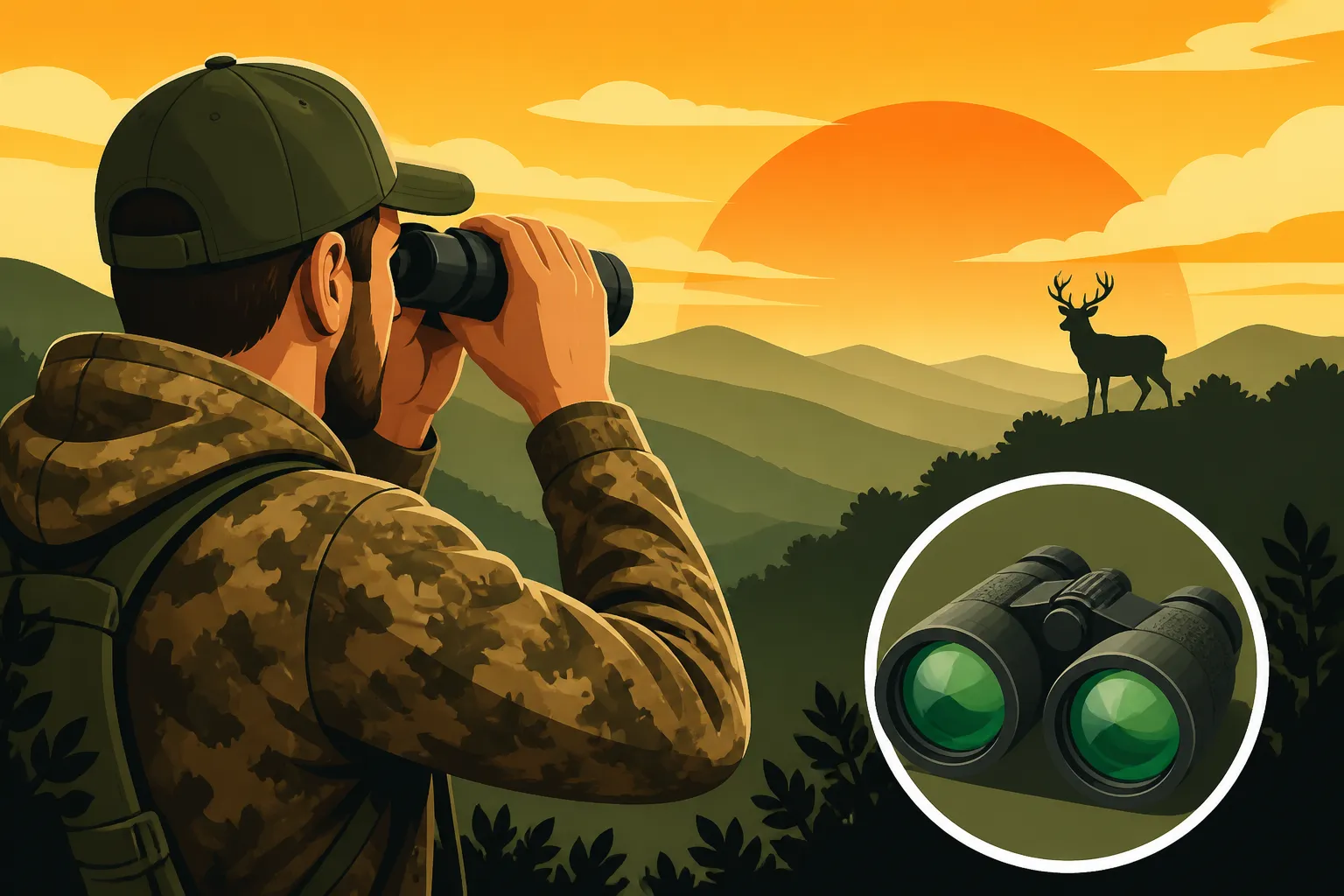
One of the biggest headaches we face as hunters in Tennessee, especially when chasing deer or even elk on those sprawling mountain ridges and deep hollows, is trying to pick apart distant details. You know the feeling: you spot something way across a drainage, or a faint movement in the thick timber a quarter-mile away, and your eyes just aren't cutting it. Choosing the right binocular power can literally make or break a hunt, helping you identify that flicker of an ear or the tine of an antler that your naked eye would miss. This guide is all about helping you understand binocular power and how to pick the perfect glass for your ridge hunting adventures across our great state.
Understanding Binocular Basics for Ridge Hunting
Before we dive into specific powers, let's nail down what those numbers on your binoculars actually mean. It's not rocket science, but knowing the fundamentals will empower you to make an informed choice for the unique challenges of Tennessee's varied landscapes.
Magnification (The First Number): What It Means on a Ridge
When you see "8×42" or "10×50" on a pair of binoculars, the first number (8x, 10x) tells you the magnification. This essentially means that an object viewed through the binoculars will appear 8 or 10 times closer than it would to your naked eye. On a sprawling Cumberland Plateau ridge, where you might be trying to scan a distant bench or a far-off logging road, more magnification sounds like a no-brainer, right?
Well, it's a bit more nuanced than that. While higher magnification certainly brings objects "closer," it also amplifies every tiny shake of your hand. If you're breathing hard after a climb up a steep slope in the Cherokee National Forest, a 12x binocular might give you a jumpy, unusable image. It's like trying to thread a needle while riding a rollercoaster. You also get a narrower field of view with higher magnification, meaning you see less of the overall landscape, which can make it harder to find what you're looking for in the first place. For many of us, the sweet spot lies in balancing how much closer we want to bring something with how steady we can hold the image.
Objective Lens Size (The Second Number): Gathering Light in Tennessee Timber
The second number in those binocular specs (e.g., 8x42, 10x50) refers to the diameter of the objective lenses in millimeters. These are the big lenses at the front of your binoculars, the ones facing your target. Their primary job is to gather light. The bigger the objective lens, the more light it can collect, and the brighter and clearer your image will be, especially in low-light conditions.
Think about hunting deep in a shadowy hollow in the Cherokee National Forest at dawn, or trying to pick out a deer moving through dense timber right before legal shooting light ends. This is where a larger objective lens truly shines. A 42mm lens is generally considered a great all-around size for hunting, offering a good balance of light-gathering capability and manageable weight. Moving up to a 50mm or even 56mm lens will bring in even more light, but remember, more glass means more weight and bulk. Hauling heavier binoculars up and down steep ridges can wear you out quickly. For those grueling climbs and long hikes, balancing optical performance with packability is key. Many hunters, especially those focused on Optics for Cumberland Plateau Ridges, find that 42mm is a very practical choice.
Popular Magnifications and Their Real-World Application in Tennessee
Let's break down the most common binocular magnifications and discuss how they actually perform when you're out there tackling Tennessee's diverse hunting grounds. Each power has its strengths and weaknesses, and understanding them will help you align your gear with your specific hunting style and the terrain you frequent.
8×42: The Versatile Workhorse for Most Tennessee Hunters
The 8×42 binocular is often considered the gold standard for many whitetail hunters, especially those who spend a lot of time in mixed hardwood forests and moderate open areas across Tennessee. The "8x" magnification offers a generous field of view, making it easier to scan large areas quickly without feeling like you're looking through a straw. This is incredibly useful when you're Still-Hunting Cumberland Plateau Ridges or trying to locate a deer that's only partially visible through a screen of trees.
The 42mm objective lens gathers ample light, giving you a bright image from dawn's first light until dusk. What really sets the 8x apart is its stability. Because the magnification isn't extremely high, the natural shake of your hands is less pronounced, making it far easier to hold steady for extended periods. This means less eye strain and more effective glassing. For hunters who do a lot of walking and stop-and-go glassing in moderate timber or clear-cuts, the 8×42 is lightweight enough not to be a burden, yet powerful enough to reveal crucial details. Before you even head out, consider using a tool like GoHunt to mark potential glassing points from aerial views, which can help guide your real-world observations with your 8x binoculars.
10×42: Reaching Further on Open Ridges and Field Edges
Stepping up to a 10×42 binocular provides that extra bit of "reach" that many hunters crave, particularly when they're consistently glassing longer distances. If your hunting involves regularly scanning across wide hollows, observing distant field edges in West Tennessee bottomlands, or trying to pick apart brushy faces of East Tennessee ridges, the 10x magnification can make a real difference. You'll definitely notice that objects appear closer and details are more distinct than with an 8x. This is a fantastic option when you're Reading a Ridge for East Tennessee Deer from a vantage point across a valley.
However, the increased magnification comes with a trade-off. The field of view becomes slightly narrower, meaning you'll see a smaller slice of the landscape at any given moment. More importantly, the 10x power significantly amplifies handshake. What might be a minor wobble with an 8x can become a shaky, hard-to-focus mess with a 10x, especially after a tough hike. To get the most out of a 10x binocular, a steady rest—like bracing against a tree, using shooting sticks, or even a lightweight monopod—becomes much more critical. If you're primarily hunting smaller, thicker woodlots, the 10x might actually be overkill, making it harder to find targets quickly. But for those longer-range observations, it's a powerful tool.
12x and Beyond: Specialized Tools for Extreme Distances
When we talk about 12x magnification and higher (like 15x or even spotting scopes), we're moving into specialized territory. These binoculars are designed to bring extreme distances into clear view. If you're a Western hunter glassing vast, open plains or a dedicated elk hunter in the expansive reaches of the North Cumberland, then a 12x or 15x binocular might be on your radar. They excel at picking apart distant landscapes, distinguishing between a rock and an animal, or counting points on a buck that's a mile away.
However, for the typical whitetail hunting scenarios in Tennessee, especially in our often-timbered terrain, these higher powers are generally not practical for handheld use. The handshake is so amplified that they become virtually unusable without a sturdy tripod. This adds significant weight and bulk to your pack, which is a major consideration when you're tackling steep terrain or covering miles on foot. The field of view is also incredibly narrow, making it like looking through a keyhole and almost impossible to locate game quickly. While a 12x might be useful for Glassing a Powerline Cut at Last Light from a stationary position, for the dynamic nature of most Tennessee deer hunting, they tend to be more of a hindrance than a help. For understanding the terrain and marking those far-off features, digital tools like GoHunt can complement your high-power glassing by providing an initial overview of the area. Remember that even with a powerful binocular, Rangefinders in Thick Cumberland Cover are still essential for precise shot placement once you identify your target.
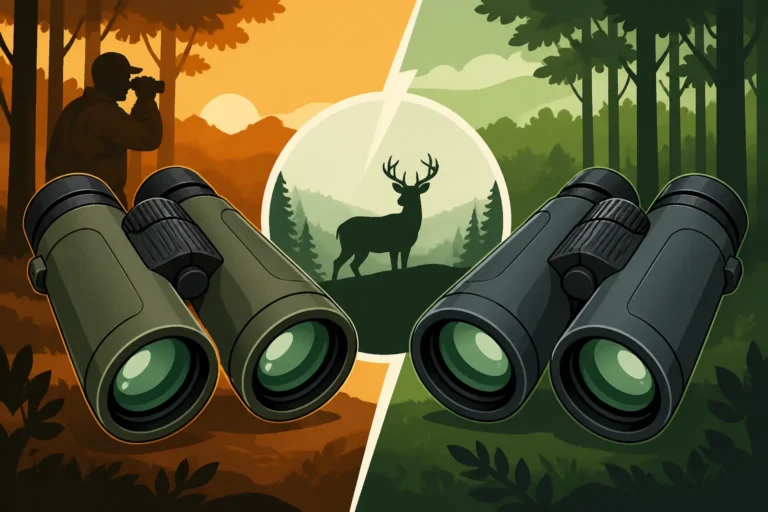
Here’s a quick comparison of common binocular powers for ridge hunting:
| Magnification | Objective Lens | Best Use Case for Tennessee Ridge Hunting | Pros | Cons |
|---|---|---|---|---|
| 8x | 42mm | General purpose, still-hunting, timber | Wide field of view, stable handheld | Less "reach" for extreme distances |
| 10x | 42mm | Open ridges, long-range glassing | Good detail at distance | Narrower field of view, handshake amplified |
| 12x | 50mm+ | Specialized extreme distance, stationary | Maximum reach, superb detail with rest | Heavy, tripod-dependent, very narrow field |
Factors Beyond Magnification: Making the Right Choice
While magnification and objective lens size are crucial, they aren't the only pieces of the puzzle when choosing binoculars for hunting our Tennessee ridges. Several other factors play a significant role in how effective and comfortable your optics will be in the field.
Field of View and Eye Relief: Scanning and Comfort
Field of view (FOV) is often overlooked, but it's incredibly important, especially when you're trying to locate a moving deer in thick cover or quickly scan a large area. It refers to the width of the area you can see through your binoculars at a specific distance (usually 1,000 yards). A wider FOV, typically found in lower magnification binoculars (like an 8x), makes it much easier to acquire targets and follow them if they're moving. Imagine trying to find a deer that just blew out of a thicket—a wide FOV helps you pick up movement quicker.
Eye relief is the distance your eye needs to be from the eyepiece to see the full, clear image. This is a huge deal for hunters who wear eyeglasses. If the eye relief is too short, you won't be able to see the entire picture without taking off your glasses, which is a pain and can cost you precious seconds. Most quality hunting binoculars will offer sufficient eye relief, usually around 15-20mm, allowing eyeglass wearers to comfortably use them without constantly adjusting. Test this out before buying if you wear glasses – it makes a world of difference in the woods.
Weight, Size, and Durability: Hiking Tennessee's Terrain
Let's be real: hunting Tennessee's ridges and hollows, particularly in places like the Cherokee National Forest or the steeper parts of the Cumberland Plateau, involves a lot of hiking. Every ounce in your pack feels like a pound by the end of the day. A bulky, heavy pair of binoculars might offer incredible optical performance, but if they're left in the truck because they're too much to carry, they're useless. Modern 8×42 or 10×42 binoculars strike an excellent balance between performance and portability.
Durability is another non-negotiable. Your binoculars are going to get knocked around, fall in the mud, and get rained on. Look for models that are fully waterproof (usually nitrogen or argon purged to prevent internal fogging) and have a rugged, armored exterior. A good pair of binoculars is an investment, and you want them to withstand the abuse of multiple seasons in the field. When you're considering Packs for a Day on Public Land, think about how your binoculars will integrate into your carrying system—a good harness can keep them secure and readily accessible without bouncing around.
Tripod Adaptability: Maximizing High-Power Stability
For those who do opt for higher magnification binoculars (12x or greater), or even for 10x users who want to maximize stability for extended glassing sessions, tripod adaptability is a feature you won't want to skip. Most quality binoculars designed for hunting will have a threaded port, usually at the front hinge, that allows you to attach a tripod adapter.
Mounting your binoculars on a lightweight tripod, or even a monopod, completely eliminates handshake and allows you to truly appreciate the optical clarity and detail that higher magnifications offer. This is invaluable when you're spending hours Scouting Tennessee Public Land Before Season from a stationary vantage point, trying to discern antler points or pinpoint exactly where a deer is bedding. While it adds another piece of gear to carry, the stability gained is unparalleled, turning an otherwise shaky view into a rock-solid picture. For those serious about long-range glassing, this combination is a game-changer. Using a mapping platform like GoHunt to identify specific terrain features that might require detailed, stable glassing can make your time on the tripod even more efficient.
Making Your Decision and Field Testing Your Binoculars
Ultimately, the "best" binocular power isn't a one-size-fits-all answer. It's about finding the right tool for your specific hunting style, the terrain you navigate, and your personal preferences. Don't be afraid to put them to the test!
Matching Optics to Your Hunting Style and Terrain
Consider how you primarily hunt here in Tennessee. Are you a meticulous still-hunter, slowly picking your way through thick timber, where quick target acquisition and a wide field of view are paramount? An 8×42 might be your best friend. Perhaps you spend most of your time posted up on a ridge, glassing across expansive hollows or watching a distant food plot in West Tennessee's river bottoms. In that case, the extra reach of a 10×42 might serve you better, especially if you have a shooting stick or bipod to brace against.
Don't forget the specific characteristics of your chosen hunting grounds. Hunting a Ridge-Top Saddle for Rutting Bucks might involve more up-close, quick scanning, while picking apart a distant clear-cut benefits from higher magnification. What works for Hunting West Tennessee River Bottoms with their wide-open field edges might be very different from the dense, steep slopes of the Cherokee National Forest. Think about the distances you typically observe game, the density of the cover, and how much light you're usually dealing with.
Caring for Your Glass in the Tennessee Outdoors
Once you've made your investment, taking care of your binoculars is paramount. They're precision instruments, and keeping them clean and protected will ensure they perform optimally for years to come. Always use the provided lens caps when not actively glassing to prevent dust, dirt, and scratches. Invest in a quality binocular harness system. This not only keeps your binoculars secure against your chest, preventing them from swinging and getting damaged, but it also keeps them instantly accessible for those fleeting moments when a deer might pop out.
When cleaning the lenses, always start by gently blowing off any loose debris or using a soft brush. Then, use a microfiber cloth specifically designed for optics, along with a specialized lens cleaning solution. Never use your shirt, paper towels, or harsh chemicals, as these can scratch or damage the delicate lens coatings. In wet weather, a quick wipe with a clean, dry cloth can prevent water spots from obscuring your view. A little TLC goes a long way in ensuring your glass is clear and ready when that trophy buck steps out.
Disclaimer
This article is for general informational purposes only and does not constitute professional advice. Laws, prices and regulations vary by location and change over time. Consult a qualified professional for guidance on your specific situation.