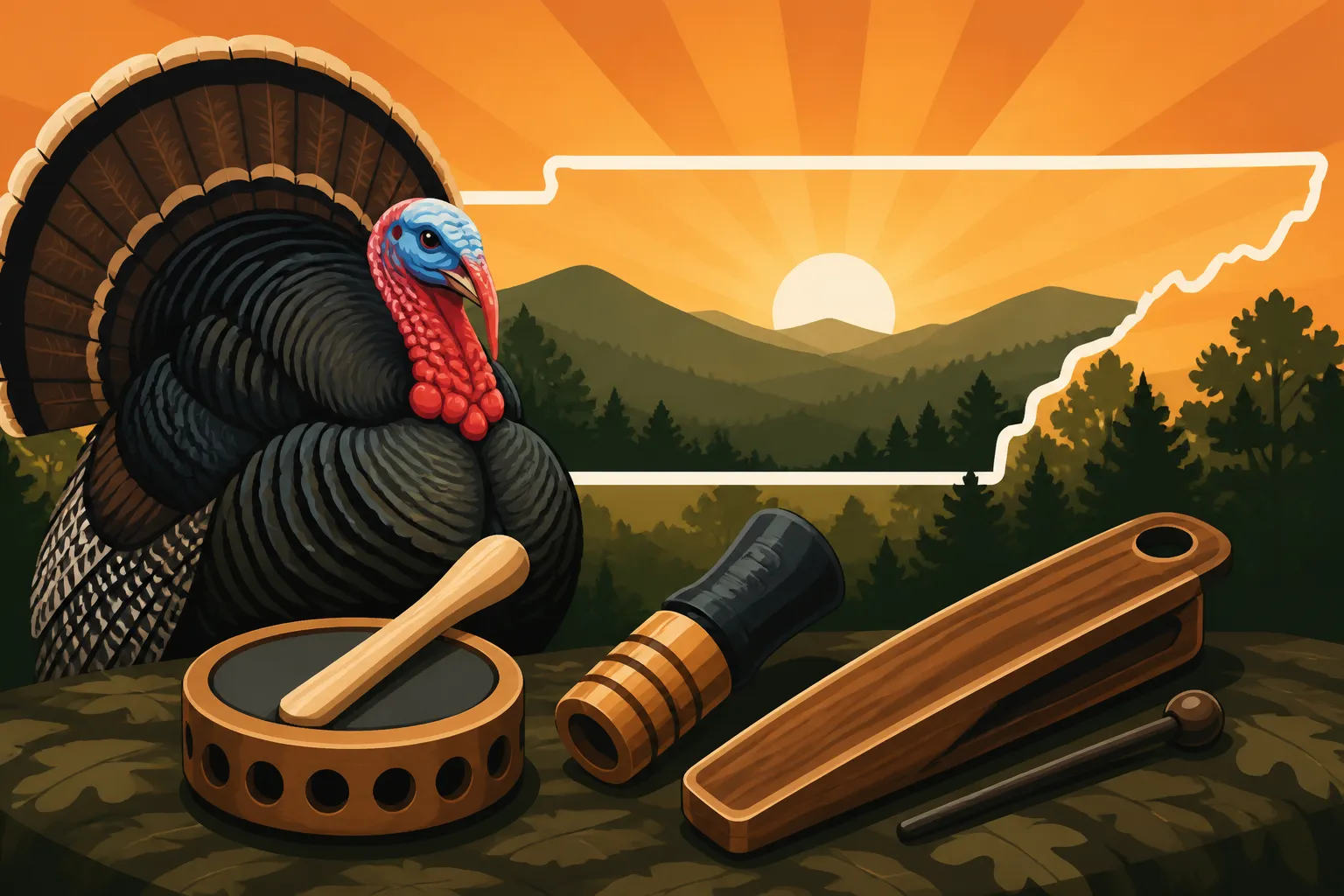
Turkey Calls Worth Carrying in Tennessee
That feeling when a gobbler cuts you off, or the silence stretches too long after a perfect series of yelps – it’s enough to make any Tennessee turkey hunter question their calls. From the steep ridges of the Cherokee National Forest to the river bottoms of West Tennessee, our wild turkeys are diverse, challenging, and often heavily pressured. Choosing the right calls and knowing when and how to use them can be the difference between tagging out and just enjoying a beautiful spring morning. This guide will walk you through the essential turkey calls every Tennessee hunter should consider, offering insights into their best uses, techniques, and how to keep them performing season after season.
The Core Four: Essential Turkey Calls for Tennessee Gobblers
Every seasoned turkey hunter knows that while there's a dazzling array of calls out there, a few foundational types are absolutely indispensable. These are the workhorses, the calls you'll reach for again and again, whether you're trying to locate a bird on the roost or coax a wary longbeard into shotgun range. Mastering these core four will give you a solid foundation for hunting turkeys anywhere in Tennessee.
Diaphragm Calls: The Versatile Workhorse
Diaphragm calls, often called mouth calls, are arguably the most versatile and important tool in a turkey hunter's arsenal. The biggest advantage? They are completely hands-free. This means you can keep your shotgun mounted, your bow at the ready, or your hands free to adjust a decoy or clear brush, all while making incredibly realistic turkey sounds. This capability is absolutely crucial when a gobbler is closing the distance, his eyes burning through the timber, searching for the hen he hears. Being able to call without moving a muscle can be the difference between a shot opportunity and a spooked bird.
These calls consist of a latex reed or multiple reeds stretched across a frame, which you hold in the roof of your mouth. By forcing air across the reeds with your tongue and varying the pressure, you can mimic a wide range of turkey vocalizations. From soft clucks and purrs to aggressive cutting and excited yelps, a skilled caller can do it all with a diaphragm. The learning curve can be steep for some, requiring practice to develop the muscle memory and air control, but the payoff is immense. Don't get discouraged if you sound more like a dying duck at first; everyone starts somewhere, and consistent practice will get you there.
There are many different cuts of diaphragms – ghost cuts, batwing cuts, V-cuts, combo cuts, and more. Each cut is designed to produce a slightly different tone and pitch. For instance, a ghost cut often produces a higher, clearer note, while a batwing might offer a raspier, deeper sound. Experimenting with a few different styles will help you find what feels most comfortable and produces the sounds you prefer. Many hunters carry several diaphragm calls with different cuts and reed tensions to adapt to varying situations or to mimic multiple hens. Having a variety on hand allows you to change up your calling sequence instantly, keeping a gobbler interested if he seems to hang up.
Slate Calls: The Smooth Talker
Ah, the slate call. There's something inherently traditional and incredibly effective about a good slate. These friction calls consist of a soundboard (the "pot" or "base") made of slate, sometimes glass, aluminum, or ceramic, and a "striker" that you rub across the surface. The beauty of a slate call lies in its ability to produce incredibly realistic, clear, and seductive turkey sounds. When you want to sound like a lonesome hen, gently yelping and purring, a slate call is often your best bet. It excels at soft, subtle calls, making it perfect for those moments when a gobbler is close and you need to sweet-talk him the rest of the way.
Different strikers, made from various woods like hickory, cedar, carbon, or even a combination, will change the sound dramatically. A heavier, denser wood striker on a slate surface might produce a deeper, raspier yelp, while a lighter, softer wood could create a higher, more delicate sound. Carbon strikers, on the other hand, often produce a sharper, crisper note, cutting through the timber. Carrying a couple of different strikers with your favorite pot call can give you a surprising range of sounds. Slate and Glass Calls in Wet Weather can be tricky, so be sure to protect your pot call surfaces from moisture; a damp surface will ruin your sound.
The tactile feedback of a slate call makes it relatively easy for beginners to pick up, offering more consistent results than a diaphragm call early on. However, its main drawback is that it requires two hands, forcing movement that could spook a close bird. For this reason, many hunters use a slate call to draw a bird in from a distance, then switch to a hands-free diaphragm call when the gobbler gets within visual range. The smooth, consistent rhythm you can achieve with a slate often sounds incredibly natural, which is a major confidence booster when you're trying to convince a skeptical tom.
Box Calls: The Loud Locator
When you need to reach out and touch a gobbler from a long distance, especially across open fields or deep hollows, a box call is your trusty companion. These calls are known for their volume and ease of use, making them excellent locator calls or for getting a reaction out of a bird that might be several ridges away. A box call consists of a resonating box and a paddle that pivots over the lip of the box. By dragging the paddle across the lip, you create friction that mimics turkey sounds. The simple mechanics make them very forgiving for new callers, allowing them to produce loud, realistic yelps and cuts with minimal practice.
The type of wood used in the box and paddle greatly influences the tone and resonance of the call. Cedar, mahogany, and even exotics are common, each imparting a unique character to the sound. Some box calls are designed for a higher pitch, mimicking a younger hen, while others have a deeper, raspier tone for an older, more dominant hen. Many hunters prefer a two-sided box call, with different lid tensions or lip treatments on each side to offer two distinct hen voices. This can be particularly effective when you're trying to make it sound like multiple hens are calling, creating more intrigue for a lonesome gobbler.
While box calls are excellent for loud, long-range calling, their bulkiness and the movement required to operate them make them less ideal for close-range work. You wouldn't want to be aggressively working a box call when a gobbler is at 50 yards and closing. However, for initially locating birds on the roost or striking a bird mid-morning that's shut up after fly-down, a box call is invaluable. When I’m heading out to Roost Hunting Tennessee Gobblers in the pre-dawn darkness, a box call is often the first thing I’ll reach for to get a sense of where birds are located before the sun even thinks about peaking over the horizon. Box Calls Versus Mouth Calls each have their place, and often, it's a combination of both that proves most successful.
Situational Calls: Adding Versatility to Your Vest
While the core calls are essential, sometimes a specific situation calls for something a little different. Having a few specialized calls in your vest can give you an edge, whether it's dealing with inclement weather, pinpointing a bird's exact location, or offering a more subtle option for wary Toms. These situational calls round out your turkey hunting repertoire, ensuring you're prepared for whatever Tennessee's wild turkeys throw at you.
Pot Calls with Different Surfaces: Beyond Slate
We've already touched on slate pot calls, but the world of friction calls extends far beyond just slate. Pot calls come with a variety of surfaces, each producing a unique sound that can be just what a particular gobbler wants to hear. Glass, aluminum, copper, and even titanium are common surface materials, and each has its own distinct voice. Glass calls often produce a higher-pitched, crystal-clear sound that can really carry across open country. Aluminum calls tend to be sharper and more piercing, great for cutting through wind or aggressive calling. Copper calls offer a rich, raspy tone that many old gobblers seem to respond to.
The beauty of these different surfaces lies in their ability to provide diverse vocalizations. A gobbler that might be "call shy" to a slate might react favorably to the different tone of a glass or aluminum call. Having a couple of pot calls with varying surfaces and different strikers allows you to experiment until you hit on the sound that sparks a response. For example, if it's a damp morning and your slate is struggling, a glass call will often perform much better, as moisture has less impact on its sound production. The key is to match your striker to the surface and keep both clean and conditioned for optimal performance. Regularly roughing up the surface of your pot call with a conditioning pad or fine sandpaper is crucial to maintain friction and produce clear, consistent notes.
When it comes to versatility, a pot call with interchangeable surfaces (though less common, some exist) or simply carrying a few different pots offers a huge advantage. Imagine you're Calling a Tennessee Gobbler Off the Roost and he's responding but not moving. Switching from a high-pitched glass yelp to a softer, raspier copper purr might just be the subtle change he needs to commit. The range of tones you can achieve with various pot calls means you can truly adapt your calling to sound like different individual hens, adding authenticity to your setup.
Locator Calls: Getting a Read on Roosted Birds
Locator calls aren't designed to sound like turkeys, but rather to provoke a shock gobble from a tom. The idea is to make a loud, distinct sound that startles the gobbler into sounding off, revealing his position without him associating the sound directly with a hen. This is particularly useful in the pre-dawn hours when birds are still on the roost, or mid-day when they've gone silent, and you're trying to locate a new bird. The most common locator calls mimic owls, crows, and even hawks or coyotes.
Owl calls, especially barred owl hoots, are incredibly effective in the early morning or late evening. Turkeys often associate owl hoots with the start and end of their day, and a well-executed series of hoots can often elicit a thunderous shock gobble right from the roost tree. Crow calls are another favorite, particularly during mid-day. A loud, aggressive series of caws can cut through the timber and often get a gobbler to announce his presence. The trick with locator calls is to use them sparingly and strategically. You don't want to overdo it and potentially alert a bird to your presence in a negative way.
While less common, some hunters even use a gobble call as a locator. This can be a risky move, as it signals a challenging male to an already wary gobbler, but sometimes it's just what's needed to get a response from a dominant tom. When using any locator call, remember your objective: simply to get a reaction. Once you've located the bird, switch to your hen calls and begin your setup. Knowing where a bird is before you start setting up your Treestand Setups in Cherokee National Forest or Setting Up Against a Big Oak is invaluable. The GoHunt app, for example, often has features that help you mark locations once you've pinpointed a gobbler, making it easier to plan your approach.
Push-Button Calls: The Beginner's Secret Weapon
For hunters new to turkey calling, or those who simply want a consistently reliable, easy-to-use option for close-range work, the push-button call is a fantastic choice. These calls are incredibly simple: you hold the call in one hand and push a button or plunger with your thumb, which operates a small striker against a soundboard inside. The result is a remarkably consistent and realistic series of yelps, clucks, and purrs, often with minimal practice.
The push-button call's primary advantage is its consistency and ease of operation. It virtually eliminates the bad notes and squeaks that can plague beginners using diaphragm or friction calls. This makes it a great confidence booster and a reliable backup. For close-range scenarios, especially when a gobbler is within 50 yards and hanging up, a soft series of purrs and clucks from a push-button call can be incredibly effective at drawing him those last few crucial steps. Because it's a one-handed operation, you can often keep your gun shouldered or bow drawn while making soft, enticing sounds.
However, the push-button call does have its limitations. While consistent, it typically doesn't offer the same range of vocalizations or nuances that a skilled hunter can achieve with a diaphragm or pot call. Its volume is also generally lower, making it less effective for locating distant birds or calling in windy conditions. Think of it as a specialized tool for specific, close-quarters engagements, rather than a do-it-all call. It's a great choice for youth hunters or anyone just starting out, building their confidence before diving into the more complex calls.
Mastering the Art: Techniques and Strategies for Tennessee Turkeys
Having a great set of calls is only half the battle; knowing how and when to use them is where the true art of turkey hunting lies. Tennessee turkeys, especially on public land, can be incredibly wary and have heard every calling trick in the book. Adapting your techniques to the specific bird and situation is paramount to success.
Soft Calls vs. Loud Calls: Reading the Room
One of the biggest mistakes novice turkey hunters make is calling too loudly or too frequently, regardless of the situation. Knowing when to whisper and when to shout is a critical skill. When you're trying to locate a bird on the roost in the pre-dawn, a loud box call or aggressive series of yelps with a diaphragm is perfectly appropriate. You want to reach out and get a reaction from a potentially distant bird. Similarly, if you've struck a gobbler across a large field or deep hollow, you might need to call loudly and consistently to keep his attention as you work to close the distance.
However, as that gobbler gets closer – say, within 100 yards – it's time to drastically reduce your volume and frequency. Turkeys have incredible hearing, and an overly loud call from a hen that sounds like she's right on top of him will often put him on high alert. This is where soft clucks, purrs, and subtle tree yelps from a diaphragm or soft slate become your best friends. Imagine you're deep in the timber, and a tom has just sounded off at 75 yards. You don't want to blast him with a loud series of cuts. Instead, a few soft, contented purrs and clucks might be just the invitation he needs to come investigate without feeling pressured. Many times, the less you call at a close bird, the better. Just enough to let him know where you are and keep him interested is often the winning strategy. This nuanced approach is vital when dealing with Tennessee's often-pressured birds, especially on public land where they've likely heard it all.
Mimicking Different Hen Vocalizations
Turkeys have a surprisingly complex vocabulary, and while a basic yelp might get a gobbler's attention, knowing how to mimic different vocalizations can make your calling much more convincing. The main calls you'll want to master include:
- Yelp: The most common call, signaling a hen's presence. There are excited yelps, contented yelps, and lost yelps, each with a different cadence and meaning.
- Cluck: A short, sharp note, often indicating contentment or an inquiry. A series of clucks can sound like a hen simply meandering.
- Purr: A soft, rolling sound, indicating extreme contentment. This is a crucial call for those last few yards when a gobbler is in sight.
- Cutt: A series of sharp, quick, often aggressive clucks, indicating excitement or agitation. Great for getting a reaction from a silent gobbler.
- Fly-down cackle: A loud, excited series of yelps and cutts that hens make as they fly down from the roost.
Learning the cadence and rhythm of these calls is just as important as the sounds themselves. Listen to real turkeys (you can find countless recordings online or even through apps like GoHunt), and try to replicate their natural flow. A perfect sounding yelp with an unnatural cadence might still sound "off" to a keen gobbler. Practice combining calls, such as a yelp followed by a few soft clucks and purrs, to create a realistic conversation. Remember, you're trying to sound like a real turkey, not just making turkey noises. This subtle art is what often turns a curious gobbler into a committed one. When birds are acting shy on Turkey Tactics for Farmland Field Edges, varying your calls to sound like multiple hens can often seal the deal.
Decoys and Calls: A Powerful Combination
While calling alone can bring a gobbler in, pairing your calls with realistic decoys creates a visual and auditory combination that is incredibly difficult for a tom to resist. Turkeys are highly visual creatures, and seeing a hen (or multiple hens) exactly where they hear the calling coming from adds a layer of authenticity that can make even the most wary gobbler commit. When a gobbler sees what he thinks is a hen, his instincts often kick in, overriding any caution he might have.
The strategic placement of decoys is key. Generally, you want to set them up slightly out of your shooting lane, so a gobbler focuses on the decoy rather than you. Consider the terrain and the likely approach path of the gobbler. If you expect him to come from a ridge, place the decoys where they'll be visible to him as he crests. For Decoy Placement for Pressured Tennessee Birds, realism and subtlety are often more effective than aggressive setups. A single hen decoy, or a hen and jake combination, can be very convincing. Ensure your decoys are visible and facing the direction you expect the gobbler to approach, as this presents the most natural posture.
When using decoys, your calling strategy should complement the visual. Start with more assertive calls to get the gobbler's attention, then transition to softer, contented calls as he approaches and spots the decoy. The visual confirmation often allows you to call less and let the decoy do the work. However, always be mindful of safety. When hunting on public land, especially during peak season, always set your decoys where they are clearly visible and consider using blaze orange when moving to and from your setup to alert other hunters to your presence.
Call Care and Maintenance: Ensuring Your Calls Perform
Your turkey calls are precision instruments, and like any tool, they perform best when properly cared for. Neglecting your calls can lead to inconsistent sounds, damage, and ultimately, missed opportunities in the field. A little maintenance goes a long way in ensuring your calls are always ready for action, whether it's the Tennessee Spring Turkey Opening Day or a late-season hunt when birds are getting tougher to fool.
Keeping Diaphragm Calls Clean and Ready
Diaphragm calls, being in your mouth, are particularly susceptible to issues if not maintained properly. After each use, it's a good habit to rinse your diaphragm call with clean water and allow it to air dry completely. This helps remove saliva and prevent bacterial buildup, which can degrade the latex reeds over time. Many hunters also recommend soaking their calls in an antiseptic mouthwash solution periodically to sanitize them and prolong their life. Always store them in a cool, dry place, ideally in a call case designed to protect the reeds from getting bent or crushed.
Bent or creased reeds are the death of a diaphragm call, leading to squawky, unnatural sounds. Avoid tossing your calls loosely into a vest pocket or letting them get compressed. A good, rigid call case with individual slots for each call is an excellent investment. It also helps to have backups. Latex can sometimes fail unexpectedly, especially if it's old or has been exposed to extreme temperatures. Carrying two or three well-maintained diaphragm calls ensures that even if one gives up the ghost mid-hunt, you're not left without your most versatile tool. Imagine being on a hot bird in a remote part of the North Cumberland Wildlife Management Area and your only diaphragm call blows a reed – a spare is worth its weight in gold.
Maintaining Pot and Box Calls
Pot calls and box calls require different but equally important maintenance. For pot calls, the key is keeping the surface conditioned. Over time, oils from your hands, dust, and even the friction itself can glaze the surface, making it difficult to produce clean, consistent sounds. Always carry a small piece of fine-grit sandpaper or a conditioning pad (many call manufacturers provide these) in your vest. Periodically rough up the playing surface in a single direction to restore its texture. Different surfaces may require different conditioning tools; for example, glass calls might use a finer abrasive than slate.
Box calls primarily need protection from moisture and proper care of the paddle. Keep your box call dry; moisture can swell the wood, change the tone, or even warp the paddle. Many hunters keep their box calls in a protective pouch or a zippered bag to shield them from rain and humidity. Over time, the contact points where the paddle rubs the box can also glaze or wear. Lightly sanding these areas can restore the friction and sound. Some box calls have screws that allow you to adjust the tension of the paddle, which can fine-tune the sound – experiment with these adjustments at home, not when a gobbler is hammering at 100 yards! A well-maintained box call should provide crisp, clear yelps and clucks year after year.
Organizing Your Call Vest
A well-organized call vest is crucial for efficiency in the field. When a gobbler sounds off unexpectedly, you don't want to be fumbling around, digging through pockets for the right call. Each type of call should have its designated spot, easily accessible even in the dark or when wearing gloves. Many turkey vests come with specialized pockets and pouches for diaphragm calls, pot calls, strikers, and box calls. Make use of these.
Consider how you hunt and what calls you'll use most frequently. Your primary diaphragm call should be in an easy-to-reach pocket. Pot calls and strikers can be kept in separate pouches to prevent damage and to ensure you can quickly grab the right combination. Box calls often have their own, larger pocket. Think about noise too; make sure calls aren't clanking together as you walk. Rubber bands or small straps can secure box call paddles to prevent accidental sounds. A good vest, like those designed for serious turkey hunters, will minimize noise and maximize accessibility. Keeping your gear tidy, much like using a planning tool such as GoHunt to map out your hunting area, ensures you're prepared for any scenario. Having a Turkey Vests With a Kickstand Seat can also provide a comfortable setup for long waits, allowing you to easily access your calls without shifting too much.
Regional Considerations for Tennessee Turkey Calling
Tennessee is a geographically diverse state, and what works beautifully in the steep mountains of East Tennessee might not be the most effective strategy in the flat river bottoms of West Tennessee. Understanding these regional nuances and adapting your calling style can significantly improve your odds of success against Tennessee's varied turkey populations, which often exhibit different behaviors and pressures. Tennessee Turkey Population Trends can show where the birds are, but local habits dictate how to hunt them.
Calling in East Tennessee's Mountains
The mountains of East Tennessee, particularly within the vast expanses of the Cherokee National Forest, present unique challenges and opportunities for turkey hunters. The rugged terrain, steep hollows, and dense timber mean sound travels differently, and gobblers often respond to calls from afar. Here, volume can be your friend, at least initially. Loud box calls, aggressive cutting on a diaphragm, or piercing yelps from a glass pot call are excellent for reaching out across vast distances and getting a shock gobble from a bird on a distant ridge. The sound will often carry up and down hollows, bouncing off hillsides, and allowing you to pinpoint a bird's general location.
However, the steep terrain also means gobblers might hang up more frequently, refusing to cross a deep ravine or climb a sharp incline. It's crucial to use the terrain to your advantage. If a gobbler is on an opposite ridge, position yourself where he can approach on a relatively flat bench or a gentle slope. Using locator calls, like loud owl hoots in the early morning, can be very effective here to locate birds still on the roost. Once you've got a bird talking, remember that sound can play tricks in the mountains. A gobbler sounding off on a facing slope might be closer or further than he sounds. This is where Run-and-Gun Turkey Tactics on Public Land can be highly effective, moving quickly and strategically to close the distance once a bird is located, then settling into a patient, subtle calling sequence as he gets closer.
Calling in Middle Tennessee's Rolling Hills and Farm Country
Middle Tennessee's landscape of rolling hills, mixed hardwoods, and expansive agricultural fields presents a different set of challenges. Turkeys here are often highly pressured, living in fragmented woodlots interspersed with farmland. These birds tend to be warier, less responsive to aggressive calling, and quick to spot anything out of place. Here, subtlety and realism are often the keys to success. Loud, frantic calling can often scare these birds away before they even commit.
Instead, focus on soft, contented calling. Gentle clucks, purrs, and soft yelps from a slate or a single-reed diaphragm call can be incredibly effective. Mimic a quiet, contented hen simply going about her day. These birds have heard every trick in the book, so sounding natural and unpressured is paramount. Decoys can be very effective in this terrain, especially in open fields, providing that crucial visual confirmation. When hunting near fields, set up on the edge of the timber, allowing the gobbler to come into the field to investigate. You might find that When Tennessee Gobblers Go Quiet in May, these tactics of less aggressive, more subtle calling are even more important, as the birds have been hunted for weeks. Using aerial maps from services like GoHunt to scout smaller, less obvious woodlots or creek bottoms can also help find unpressured birds.
Calling in West Tennessee's River Bottoms and Swamps
West Tennessee's river bottoms, swamps, and dense timber, particularly around the Mississippi River and its tributaries, offer yet another distinct turkey hunting environment. The thick cover and often wet conditions can make calling challenging, but also offer excellent concealment. Here, the dense foliage can absorb sound, so you might need to call with a bit more volume and aggression to penetrate the cover. Raspy yelps from a multi-reed diaphragm or a copper pot call can cut through the dense woods more effectively.
Gobblers in these areas can be tricky to pinpoint due to the thick cover. Using locator calls like a loud crow or an aggressive cutt with a box call can help you get a bead on their location. Once you've located a bird, be prepared for him to approach through incredibly dense cover. Patience is key. You might hear him drumming and gobbling close by for a long time before you ever see him. Focus on making soft, enticing calls to guide him through the thick stuff. Often, these birds are very vocal, but might only come into view at very close ranges. Setting up near natural openings, old logging roads, or creek bends can create those crucial shooting windows. Understanding the specific challenges of dense cover and Hunting Tennessee River Bottom Funnels is vital, as birds will naturally travel these paths.
| Call Type | Pros | Cons | Best Uses |
|---|---|---|---|
| Diaphragm Call | Hands-free, versatile, wide range of sounds, portable | Steep learning curve, latex degradation | Close-range, subtle calling, aggressive cutting, all-purpose |
| Slate Call | Realistic, clear, natural sounds, easy to learn | Two-handed operation, sensitive to moisture, less volume | Soft calling, purrs, clucks, seductive yelps, lonesome hens |
| Box Call | High volume, easy to use, great locator, simple | Bulky, two-handed operation, can be noisy (clanking) | Long-range locating, windy conditions, loud yelps, aggressive calling |
| Pot Call (Glass/Aluminum) | Varying tones/pitches, clear sound, weather-resistant | Two-handed operation, requires conditioning | Cutting through wind, different hen voices, rainy conditions |
| Locator Call | Provokes shock gobble, helps pinpoint birds | Not a "turkey sound" call, can spook if overused | Pre-dawn roost locating, mid-day "cold calling" |
| Push-Button Call | Easy to use, consistent sounds, good for beginners | Limited versatility, lower volume | Close-range purrs/clucks, beginner-friendly |
Disclaimer
This article is for general informational purposes only and does not constitute professional advice. Laws, prices and regulations vary by location and change over time. Consult a qualified professional for guidance on your specific situation.