Shooting Sticks From a Cumberland Overlook
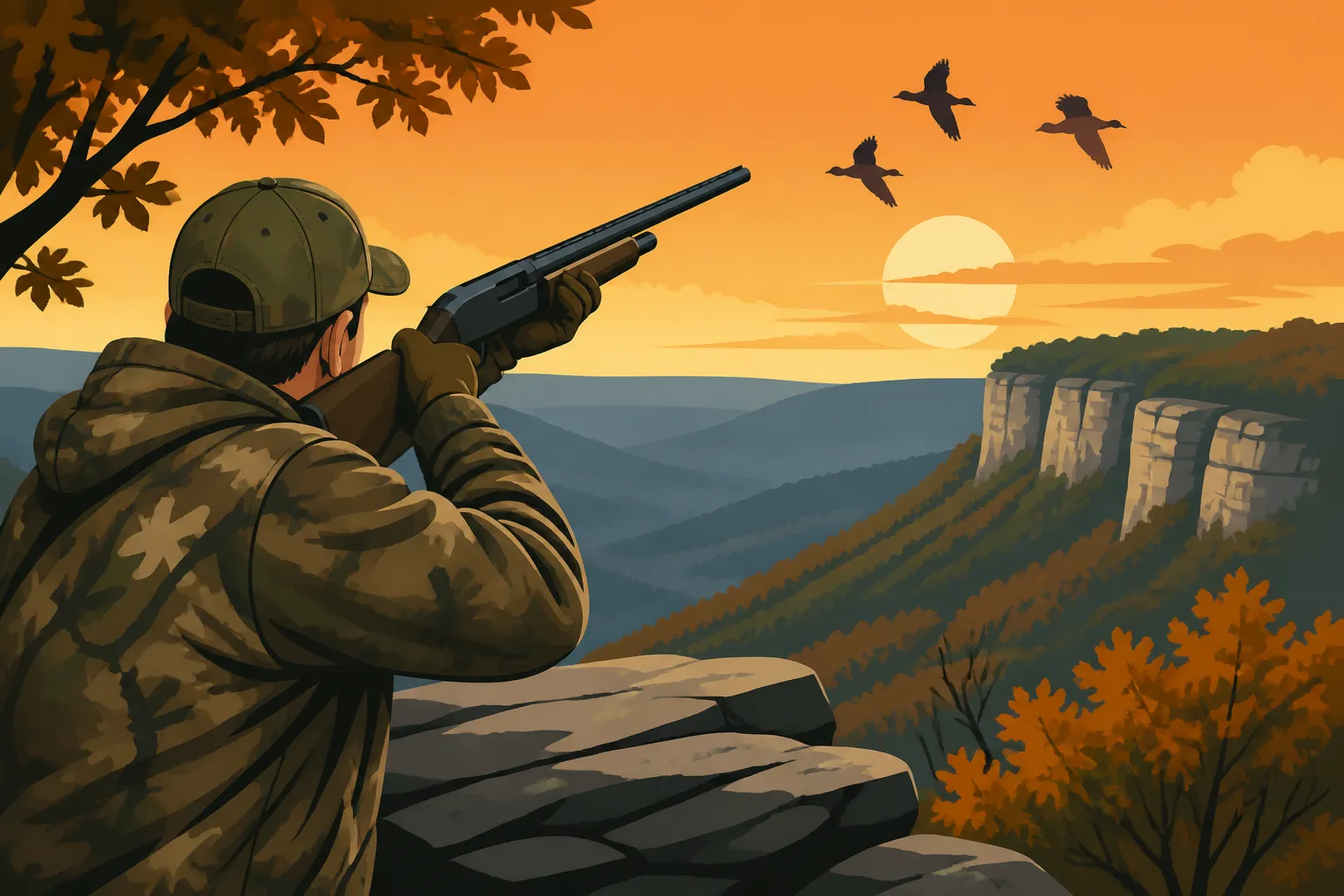
There's a unique frustration that comes with hunting from an elevated position, like a sweeping Cumberland Plateau overlook. You've hiked in, glassed the distant ridge, and finally spotted that elusive buck feeding in a clear-cut a few hundred yards away. Your heart's pounding, the moment is here, but then you realize your trusty pack isn't quite the right height, or that tree branch isn't perfectly steady, leaving you with a shaky shot. This guide is all about tackling that exact problem, showing you how shooting sticks can be your best friend for making those critical, stable shots from an overlook, turning what could be a missed opportunity into a successful harvest.
The Unique Challenge of the Cumberland Overlook: Why Stability Matters
Tennessee's Cumberland Plateau is a beautiful, rugged place, offering some truly breathtaking views and equally challenging hunting scenarios. When you find yourself perched on an overlook, peering down into a hollow or across a vast expanse, the distance often stretches out, and the angles can be steep and unforgiving. This isn't your typical flatland field edge hunt where a tree trunk or a fence post offers a ready rest. These unique conditions demand a specialized approach to achieve the rock-solid stability needed for an ethical shot.
Understanding Variable Distances and Angles
One minute you might be looking at a deer at 80 yards in the thick brush below, the next you're tracking one at 350 yards along a distant logging road. The sheer variability in shot distance from a Cumberland overlook is incredible. This means you need a rest system that can quickly adapt. Trying to stack rocks or hold your rifle freehand for a shot that might span hundreds of yards, often at a downward angle, is a recipe for inaccuracy. A solid rest minimizes human error, allowing you to focus on breath control and trigger squeeze, not just wrestling with your rifle. It's about taking the guesswork out of stability so you can concentrate on putting that reticle exactly where it needs to be. Rifle Setups for Tennessee Deer Hunting often highlight precision, and that precision starts with a stable platform.
Battling Wind and Fatigue
Imagine sitting for hours, glassing, your eyes straining, your muscles tense from the hike in. When that moment finally arrives, fatigue can set in, making even a short shot wobbly. Add a swirling wind, common on exposed overlooks, and your aiming point can drift significantly. Shooting sticks act as an extension of your body, creating a much larger and more stable base than your arms alone ever could. They absorb some of that muscle tremor and give you a solid anchor against the elements. This becomes even more crucial when you consider the nuances of Wind and Thermals on a Ridge System, which can play havoc with your shot placement, especially over longer distances.
The Problem with Improvised Rests
We've all been there: kneeling, trying to balance our rifle on a backpack, or leaning against a flimsy sapling. These improvised rests are often compromises at best. Your backpack might be too soft, causing the rifle to sink or shift. A tree branch might have a wobble you don't notice until the crosshairs are dancing. And trying to shoot prone from an overlook is often impossible due to the steep downward angle or obstructing vegetation. Shooting sticks eliminate these compromises. They're designed specifically for stability, offering adjustable height and a firm cradle for your rifle, ensuring that when the moment counts, your focus is on the target, not on jury-rigging a shaky rest.
Deciphering Your Options: Types of Shooting Sticks for Tennessee
Walking into any sporting goods store or browsing online for shooting sticks can be overwhelming. There's a myriad of options, each with its own advantages and disadvantages. For the specific demands of hunting from a Cumberland overlook, where adaptability, quiet deployment, and reliable stability are paramount, understanding these differences is key. You'll want something that complements your hunting style and the terrain. Optics for Cumberland Plateau Ridges often pairs well with shooting stick considerations, as both aim to improve your accuracy from elevated positions.
Monopod, Bipod, or Tripod: Which is Right for You?
Choosing between a monopod, bipod, or tripod largely depends on the level of stability you need and your willingness to carry extra weight and deal with setup time.
| Type of Stick | Stability Level | Deployment Speed | Weight (General) | Best Use Case |
|---|---|---|---|---|
| Monopod | Good | Fastest | Lightest | Quick standing shots, light support, hiking through thick cover. |
| Bipod | Very Good | Fast | Moderate | Kneeling/sitting shots, good stability for most shots, versatile. |
| Tripod | Excellent | Moderate-Slow | Heaviest | Long-range precision, extreme angles, sitting for extended periods, glassing platform. |
- Monopod: A single leg. It offers quick, light support and is excellent for those moments when you need to stabilize a standing shot quickly, especially if you're Still-Hunting Cumberland Plateau Ridges. It's better than nothing, significantly reducing vertical movement, but still requires you to manage horizontal sway yourself. For a quick poke at a deer that pops up unexpectedly, it's great, but for truly precise long-range shots from an overlook, it might not be enough.
- Bipod: Two legs. This is arguably the most popular and versatile option for many Tennessee hunters. Bipods offer excellent stability for kneeling or sitting shots and can be used for standing shots with practice. They strike a good balance between stability, weight, and quick deployment. Many attach directly to your rifle's sling swivel stud or Picatinny rail, making them always ready. The ability to pivot the rifle side-to-side without lifting the legs is a huge advantage when tracking a moving animal from an overlook.
- Tripod: Three legs. When maximum stability and precision are your absolute priorities, especially for those really long shots or when using high-magnification optics for extended glassing, a tripod is king. It offers unparalleled steadiness, making it ideal for shooting from fixed positions or for using as a stable platform for your Binocular Choice for Tennessee Whitetails. The trade-off is often increased weight and a slightly slower, more deliberate setup time, but for those patient sits on a prominent overlook, the confidence it provides is priceless. Some even feature removable rifle yokes, allowing them to double as sturdy spotting scope or camera tripods. You can find robust options from brands like BOG or Primos that handle the rugged terrain well. When you're using a mapping tool like GoHunt to pinpoint those distant clearings, a tripod can really shine.
Materials and Adjustments: What to Look For
The construction material and adjustment mechanisms are critical for durability, weight, and ease of use in the field.
- Materials: Most shooting sticks are made from aluminum, carbon fiber, or a combination. Carbon fiber is generally lighter and often quieter when bumped, but it tends to be more expensive. Aluminum is a more budget-friendly option, still very durable, but can be a bit heavier and colder to the touch in winter. For rugged Cumberland Plateau hunting, durable materials are a must, as your sticks will inevitably take a few bumps and scrapes.
- Height Adjustment: Look for sticks with quick and easy height adjustments. Lever locks or twist locks are common. Lever locks are often preferred in cold weather or with gloves, as they are simpler to operate. Telescoping legs are essential for adapting to varied terrain, from a flat spot on the overlook to an uneven slope. The ability to adjust each leg independently is a huge bonus for uneven ground, ensuring your rifle remains level. A good range of height, from prone to standing, makes them incredibly versatile.
- Quiet Operation: This is crucial for hunting. Clanking metal parts or loud snaps when extending or collapsing legs can spook game. Many modern sticks feature rubberized coatings or silent twist/lever mechanisms to mitigate noise. Before you commit to a pair, test them for quiet operation in a hunting store or at home. You don't want to blow a stalk because your gear sounds like a toolbox falling down a hill.
When you're comparing options, consider how quickly and quietly you can deploy them. Some options even allow you to clip your rifle into the rest for hands-free glassing, a feature that can be invaluable on long waits. Reviewing gear on platforms that offer user feedback, such as community forums found within a GoHunt membership, can help narrow down choices based on real-world experiences.
Mastering the Shot: Techniques for Using Sticks from an Elevation
Having the right shooting sticks is only half the battle; knowing how to use them effectively, especially from the challenging angles and positions an overlook presents, is where true mastery comes in. It’s not just about setting your rifle on top; it’s about integrating the sticks into your shooting form for maximum stability and accuracy. This becomes even more vital when trying to thread a shot through cover or make a difficult long-range connection.
Proper Setup and Body Position
From an overlook, you're rarely on perfectly flat ground. The first step is to extend the legs of your shooting sticks, adjusting each independently to ensure the rifle platform is level, even if you are on a slope. If shooting downhill, you might need to extend the leg closest to you less, and the leg farthest from you more, or vice versa, depending on the steepness.
- Standing Shot: For a standing shot, adjust the sticks so the rifle rest is just below your chest level. Bring the rifle to your shoulder, settle the forend onto the rest, and lean into the sticks slightly, creating forward pressure. This "loads" the sticks, pressing them into the ground and enhancing stability. Keep your elbows tucked in, supporting the rifle from behind. Your non-shooting hand can either hold the rifle's forend against the sticks or support the sticks themselves for added control.
- Sitting/Kneeling Shot: Often preferred from an overlook due to greater stability. Extend the sticks to match your sitting or kneeling height. Get comfortable in your position, ensuring your knees are braced or your sitting bones are firmly planted. Rest the rifle's forend on the sticks. Again, lean slightly forward, loading the sticks. This lower profile also helps you stay out of the wind and remain less visible, which is crucial when deer might be looking up at your position.
- Dealing with Downhill Angles: Shooting downhill drastically changes your point of impact compared to a flat shot. Your bullet will strike higher than it would at the same horizontal distance on flat ground. Most modern rangefinders, like those mentioned in Rangefinders in Thick Cumberland Cover, have a built-in angle compensation feature that gives you the "shoot-to" distance. Use this! When actually taking the shot, ensure your body is aligned with the angle of the shot, not just standing upright. This means leaning forward more or adjusting your sitting position to conform to the slope.
Practice Makes Perfect
Just like with any piece of gear, proficiency with shooting sticks comes from practice. Don't wait until opening morning to deploy them for the first time.
- Simulate Hunting Scenarios: Set up your sticks in your backyard or at a shooting range on uneven ground, simulating the varied terrain you'd find on the Cumberland Plateau. Practice quick deployment from a hiking position, transitioning from standing to kneeling, and adjusting for different shot distances and angles.
- Drill Quiet Deployment: Practice extending and retracting the legs silently. The less noise you make, the better your chances of not spooking game that might be closer than you think. This is particularly important for Hunting the Cumberland Plateau, where the woods can be surprisingly quiet.
- Combine with Your Rifle: Get used to the feel of your specific rifle on the sticks. Experiment with how much pressure to apply, where to place your hands, and how to track a moving target smoothly. The goal is for the sticks to feel like a natural extension of your shooting platform, not an awkward add-on.
Remember, the goal is not to eliminate all movement, but to minimize it to the point where your shot is consistently accurate and ethical.
Beyond the Stick: Integrating Your Gear for Overlook Success
Shooting sticks are a fantastic tool, but they truly shine when integrated seamlessly into your overall hunting system. From the optics you use to how you carry your gear, every element plays a role in making those overlook shots a reality. The Cumberland Plateau's wide-open vistas and distant game demand a thoughtful approach to all your equipment, ensuring you're prepared for whatever Tennessee throws at you.
Pairing with Precision Optics
From an overlook, you're relying heavily on your binoculars and rifle scope to locate and evaluate game at distance. Good optics are a must, and shooting sticks can enhance their performance.
- Binoculars and Spotting Scopes: A tripod can do double duty as a stable platform for your binoculars or a spotting scope. This allows for prolonged, steady glassing, reducing eye strain and helping you pick apart distant cover. Instead of holding your binoculars freehand and constantly battling the sway, you can mount them, scan patiently, and let the sticks do the work. This is especially useful when trying to identify subtle movements or confirm antler points on a distant buck that might be Reading a Ridge for East Tennessee Deer.
- Rifle Scopes: Your rifle scope needs to be clear, gather light well, and have a reliable reticle for ranging and holdovers. With the added stability of shooting sticks, you can confidently use higher magnification settings, which can be critical for precise shot placement at extended ranges. Ensure your scope is properly zeroed for your anticipated hunting distances, and consider a range-finding reticle or a turret system that allows for quick adjustments based on distance. Rifle Scopes for Low-Light Hollows are important, but steady aim is even more so.
Carrying Your Gear Thoughtfully
Hiking to a prime overlook, especially on rugged public land like parts of Cherokee National Forest Hunting, means every ounce of gear counts. You need your shooting sticks to be accessible, quiet, and not a hindrance.
- Packs and Pouches: Look for shooting sticks that can collapse compactly and attach securely to your hunting pack. Many packs, similar to what you might consider for a Packs for a Cherokee Forest Day Hunt, have external compression straps or dedicated pockets that work perfectly for carrying sticks. The key is to ensure they don't clank against other gear or snag on brush as you move through the woods. Some hunters prefer to carry them in hand, ready for instant deployment, especially if they anticipate a quick shot opportunity.
- Quiet Deployment: This bears repeating. The best sticks in the world are useless if they scare off game with a clatter. Practice drawing them from your pack or carrying position silently. Consider adding a bit of athletic tape or camouflage wrap to any parts that might rattle. Your hunting success often hinges on these small, often overlooked details.
- GPS and Mapping Tools: Before you even leave the truck, use a reliable mapping application. Tools like GoHunt allow you to study contour lines, identify potential overlooks, and pinpoint areas where deer might be feeding or traveling. Understanding the terrain beforehand helps you anticipate shot angles and distances, making your shooting stick setup even more effective once you're on site. This proactive scouting can be a true game-changer for Scouting Tennessee Public Land Before Season.
By thoughtfully integrating your shooting sticks with quality optics and a well-planned carrying strategy, you transform a potentially challenging overlook shot into a confident, controlled opportunity. It's about being prepared, precise, and respectful of the animal you pursue, ensuring you make the most of those incredible Tennessee hunting moments.
Disclaimer
This article is for general informational purposes only and does not constitute professional advice. Laws, prices and regulations vary by location and change over time. Consult a qualified professional for guidance on your specific situation.