.308 Versus .270 for Whitetails
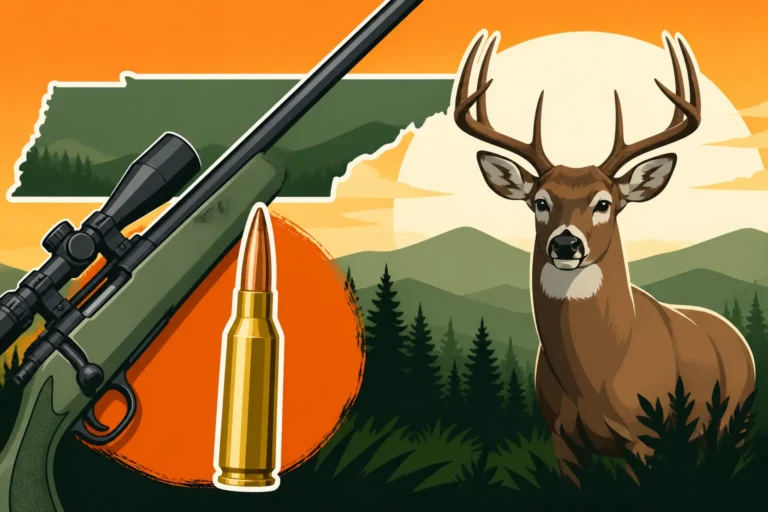
Oh, the age-old debate! If you've spent any time at a deer camp in Tennessee, you've probably heard more than one passionate discussion about the "best" caliber for whitetails. It's easy to get bogged down in all the numbers and opinions, especially when you're just trying to figure out if the tried-and-true .308 Winchester or the lightning-fast .270 Winchester is the right fit for your hunting style in our beautiful state. This guide is here to cut through the noise, offering a realistic look at how these two legendary calibers perform when you're chasing deer across Tennessee's diverse terrain, from the thickets of West Tennessee to the steep ridges of the Cumberland Plateau.
Understanding the .308 Winchester for Tennessee Deer
The .308 Winchester is a cartridge that has earned its stripes in both military service and hunting fields around the globe. When it comes to chasing whitetails in Tennessee, it's a solid, dependable choice that many hunters swear by, and for good reason. Its balanced performance often makes it a favorite.
The .308's Reputation and Ballistics
Originating from military applications, the .308 Winchester quickly found its way into the hands of hunters due to its excellent accuracy and manageable recoil in a relatively short-action rifle. For deer hunting in Tennessee, this translates to a cartridge that delivers ample power without being overly punishing on the shooter. With typical bullet weights ranging from 150 to 180 grains, the .308 offers a good balance of velocity and knockdown power.
When you're still-hunting through thick timber on public land or navigating the rolling hills of the Highland Rim, a shot often presents itself within 150 yards, sometimes even closer. In these scenarios, the .308 truly shines. Its moderate velocity and solid bullet construction ensure deep penetration and effective energy transfer, making it a very capable deer stopper. You won't find yourself wanting for power at these distances.
Advantages of the .308 in Tennessee Terrain
One of the biggest advantages of the .308 is its versatility and the rifles chambered for it. Because it's a short-action cartridge, rifles can be built more compactly, often resulting in lighter, handier firearms. This is a huge plus when you're Packs for a Cherokee Forest Day Hunt or just trying to navigate dense cedar thickets on a cold December morning. A shorter, lighter rifle is simply easier to carry and quicker to shoulder if a deer jumps up close.
Furthermore, the .308's recoil is generally milder than many other big-game cartridges, which allows for faster follow-up shots if needed and helps prevent flinching. This can significantly improve accuracy, especially for newer hunters or those who are recoil-sensitive. When you're spending hours on a stand in the Cherokee National Forest, the last thing you want is a rifle that makes you anticipate the shot with dread. The mild-mannered nature of the .308 allows you to focus on shot placement, which is always the most critical factor.
The sheer availability of ammunition for the .308 is another practical benefit. You can find a wide array of bullet types and weights for different hunting situations, from soft points to bonded bullets, across almost every brand. This widespread availability means you're rarely scrambling to find the right ammo, and it often comes at a more accessible price point compared to some niche calibers.
Potential Drawbacks of the .308
While the .308 is incredibly capable, it's fair to acknowledge its nuances. Compared to some of the faster, flatter-shooting cartridges, the .308 does have a more arcing trajectory at extended ranges. While this is less of a concern for typical Tennessee whitetail hunting—where most shots occur under 200 yards—if you anticipate frequent longer shots, say across a wide-open powerline cut or sprawling agricultural fields, you'll need to be more mindful of bullet drop.
For example, if you're trying to reach out across a large bean field in West Tennessee, a 250 or 300-yard shot with a .308 requires precise holdover or turret adjustments. This isn't a deal-breaker, but it does mean that knowing your rifle's ballistics intimately is paramount. Similarly, while it has plenty of punch for whitetails, if you ever dream of chasing larger game out west, some might argue for a cartridge with more kinetic energy at extreme distances. However, for 99% of Tennessee deer hunters, the .308 offers more than enough horsepower.
Exploring the .270 Winchester for Tennessee Whitetails
The .270 Winchester holds a special place in American hunting folklore, often lauded for its flat trajectory and impressive velocity. It's a caliber that inspires confidence, particularly when the conditions might call for a longer shot.
The .270's Legacy and Flat Trajectory
Introduced back in the 1920s, the .270 Winchester quickly gained a reputation as a superb long-range deer and elk cartridge. Its defining characteristic is its ability to launch lighter, aerodynamic bullets (typically 130-150 grains) at very high velocities. This results in a remarkably flat trajectory, meaning less bullet drop over distance compared to many other calibers.
Imagine you're Setting Up on a West Tennessee Field Edge overlooking a winter wheat field. A mature buck steps out at 200 yards, maybe even a little further. With a .270, the margin for error in estimating range and holdover is significantly reduced due to that flat bullet path. Many hunters feel more confident taking those longer, open-country shots with a .270 precisely because of this ballistic advantage. It makes aiming simpler, especially if you're under pressure.
Benefits of the .270 in Tennessee Landscapes
The primary benefit of the .270 in Tennessee is undoubtedly the confidence it instills for those moments when a deer hangs up just a bit further than you'd prefer. While much of our state is timbered, opportunities for longer shots do arise, whether on a sprawling farm field, a cutover, or a vast powerline right-of-way. The .270 excels in these scenarios, delivering enough energy to ensure a clean, ethical kill even at distances where other cartridges might begin to struggle with significant drop.
The high velocity of the .270's projectiles also contributes to excellent terminal performance on whitetails. The speed at which the bullet hits often creates a hydrostatic shock effect, leading to quick and humane kills. This is a crucial factor for any ethical hunter. You want a caliber that, when paired with proper shot placement, puts the animal down efficiently, reducing tracking jobs and ensuring a swift end.
Rifle manufacturers offer a vast selection of firearms chambered in .270 Winchester, from lightweight mountain rifles to heavier, more stable platforms. This means you can find a rifle that perfectly suits your preference for balance, weight, and fit. This widespread availability of firearms and ammunition ensures that the .270 remains a practical and accessible choice for many Tennessee hunters.
Considerations When Choosing the .270
No cartridge is without its trade-offs, and the .270 is no exception. While its recoil is by no means excessive, it is generally perceived as being a bit sharper than that of a .308, especially in lighter rifles. For some shooters, this might lead to anticipating the shot, which can negatively impact accuracy. If you're sensitive to recoil, it's definitely something to consider, and perhaps investing in a rifle with a good recoil pad or a slightly heavier barrel could mitigate this.
Another minor point to consider is barrel length. To achieve its impressive velocities, the .270 often benefits from a slightly longer barrel (typically 22-24 inches) compared to many .308 rifles (which can perform very well with 20-inch barrels). While a couple of inches might not seem like much, in dense cover or a tight treestand, a longer rifle can feel a bit more cumbersome to maneuver. If you find yourself in the thick stuff more often than not, this could be a minor frustration. However, for most open-country or moderately timbered hunts, it's rarely an issue.
Side-by-Side Comparison: .308 vs. .270 for Tennessee
Alright, let's put these two titans head-to-head specifically for the kind of hunting we do here in Tennessee. It's not just about raw numbers; it's about practical application in the field.
Ballistics and Effective Range in Practice
In the real world of Tennessee deer hunting, where most shots are taken at ranges under 200 yards, the ballistic differences between the .308 and the .270 are often less pronounced than internet debates might suggest. Both calibers deliver excellent accuracy and energy at these distances. A 150-grain .308 bullet and a 130-grain .270 bullet will both anchor a whitetail effectively with good shot placement.
Where the .270 really shows its advantage is at the longer end of typical hunting ranges, say beyond 250 yards. Its flatter trajectory means less bullet drop, making precise range estimation slightly less critical. If you hunt areas like the big agricultural expanses of West Tennessee or powerline cuts, that flatter trajectory can give you a mental edge. However, for most timbered terrain, where shots are frequently under 100-150 yards, the difference is negligible. As a seasoned hunter, you know that knowing your rifle and its zero at various ranges is far more important than a few inches of bullet drop at 200 yards. When comparing specific loads, a tool like the ballistic calculator you might find on a hunting resource site like GoHunt can really help visualize these differences with your chosen ammunition.
Here's a simplified look at how they stack up for Tennessee deer:
| Feature | .308 Winchester | .270 Winchester |
|---|---|---|
| Typical Bullet Weight | 150-180 grains | 130-150 grains |
| Velocity (FPS) | Moderate to high (2600-2800) | High (2900-3100) |
| Trajectory | Good, slight arch at longer ranges | Very flat, minimal drop |
| Recoil | Mild to moderate | Moderate, can be sharper in light rifles |
| Rifle Action | Short-action (often more compact rifles) | Long-action |
| Energy on Deer | Excellent for whitetails at all common ranges | Excellent for whitetails at all common ranges |
| Barrel Length | Performs well in shorter barrels (20-22") | Often benefits from longer barrels (22-24") |
| Ammo Availability | Extremely common, wide variety | Extremely common, wide variety |
Recoil, Rifle Weight, and Portability
Felt recoil is subjective, but generally, the .308 is considered to have less recoil than the .270. This can be a significant factor for some hunters. Less recoil often translates to more comfortable practice sessions at the range, which means more confidence in the field. When you're out there, shivering in a treestand during Hunting the Late-Season January Lull, and a buck finally steps out, you want every advantage to make a clean shot. A rifle that you shoot comfortably and confidently is always the best choice.
Because the .308 fits into a shorter action, rifles chambered for it tend to be slightly more compact and, in many cases, lighter. This can make a noticeable difference when you're Slings for a Long Cherokee Forest Walk through mountainous terrain or navigating dense bottomland hardwoods. Every ounce matters when you're covering miles on foot, and a nimble rifle can be a joy to carry. The .270, requiring a long action, might result in a slightly longer or heavier rifle, though modern manufacturing allows for surprisingly lightweight .270s as well. It truly comes down to the specific rifle you pick up and how it feels in your hands.
Ammunition Availability and Cost
Both the .308 Winchester and the .270 Winchester are incredibly popular hunting cartridges, which is fantastic news for Tennessee hunters. This popularity means that ammunition is almost universally available at sporting goods stores, local gun shops, and online retailers. You're unlikely to ever struggle to find hunting loads for either caliber, which is a big relief, especially as hunting season approaches.
While specific prices fluctuate, generally speaking, both calibers tend to be in a similar, accessible price range compared to more specialized or exotic cartridges. You can find everything from economical soft-point loads for practice and general hunting to premium, bonded bullets designed for maximum performance. This means you can choose ammunition that fits your budget and your specific hunting needs without too much hassle. You might even find comprehensive reviews and comparisons of different ammunition types on platforms like GoHunt, helping you narrow down the best option for your chosen caliber.
Making Your Choice: What Fits Your Tennessee Hunt?
Ultimately, the "better" caliber isn't about which one has slightly better numbers on paper; it's about which one empowers you to be a more effective, confident, and ethical hunter in Tennessee's unique environments.
Matching Caliber to Terrain and Hunting Style
The type of terrain you primarily hunt in Tennessee should heavily influence your decision. If your deer season generally involves Hunting Cumberland Plateau Ridgelines, navigating steep hollows, and taking shots in dense timber where distances rarely exceed 150 yards, the .308 Winchester is an outstanding choice. Its compact rifle options and ample power for close-to-moderate ranges make it perfectly suited for these environments. The ability to carry a lighter, handier rifle when you're climbing up and down those hills can truly make a difference at the end of a long day.
Conversely, if your hunting primarily takes place in the more open landscapes of West Tennessee, where large fields, long food plots, or clear-cuts present opportunities for shots out to 250 or even 300 yards, the flatter trajectory of the .270 Winchester might give you an edge and more peace of mind. While Tennessee isn't known for vast, open plains like some western states, these longer shot opportunities do exist, and the .270 shines when stretching the distance. Think about your most common shot presentation, and let that guide you.
Shooter Comfort and Confidence
This is, without a doubt, the most critical factor. A rifle you shoot accurately and confidently is always more effective than one that's ballistically superior but you flinch with or struggle to handle. If the sharper recoil of the .270 makes you anticipate the shot, you'll be less accurate. If the thought of carrying a slightly longer, heavier .270 rifle through thick brush makes you hesitate, it might not be the best fit for your hunting style.
Spend time at the shooting range with both calibers if possible. See how they feel, how you manage the recoil, and how accurately you can shoot them from various positions (prone, kneeling, off-hand). A .308 that you shoot consistently well is far more lethal than a .270 that you only shoot occasionally or with discomfort. Your confidence in your rifle and your ability to place a shot precisely are paramount, especially when adrenaline is pumping. Don't compromise on comfort or accuracy.
Beyond the Caliber: It's About the Hunter
Ultimately, the choice between a .308 and a .270 for Tennessee whitetails boils down to personal preference, the specific rifle you choose, and most importantly, your skill as a hunter. Both cartridges are more than capable of cleanly harvesting deer within typical hunting ranges found across our state. There isn't a magical bullet, and neither of these calibers will make up for poor shot placement or a lack of practice.
Focus on becoming proficient with whatever rifle and caliber you choose. Practice regularly, understand your rifle's capabilities, and know your personal limitations. Learn to read the woods, understand deer behavior, and master crucial skills like Scouting Tennessee Public Land Before Season and understanding wind direction. These elements will contribute far more to your success and ethical hunting than a marginal ballistic difference between two excellent cartridges. Whether you opt for the punchy .308 or the flat-shooting .270, you'll be well-equipped for a rewarding season chasing Tennessee whitetails.
Disclaimer
This article is for general informational purposes only and does not constitute professional advice. Laws, prices and regulations vary by location and change over time. Consult a qualified professional for guidance on your specific situation.