.30-30 in Thick Bottomland Cover
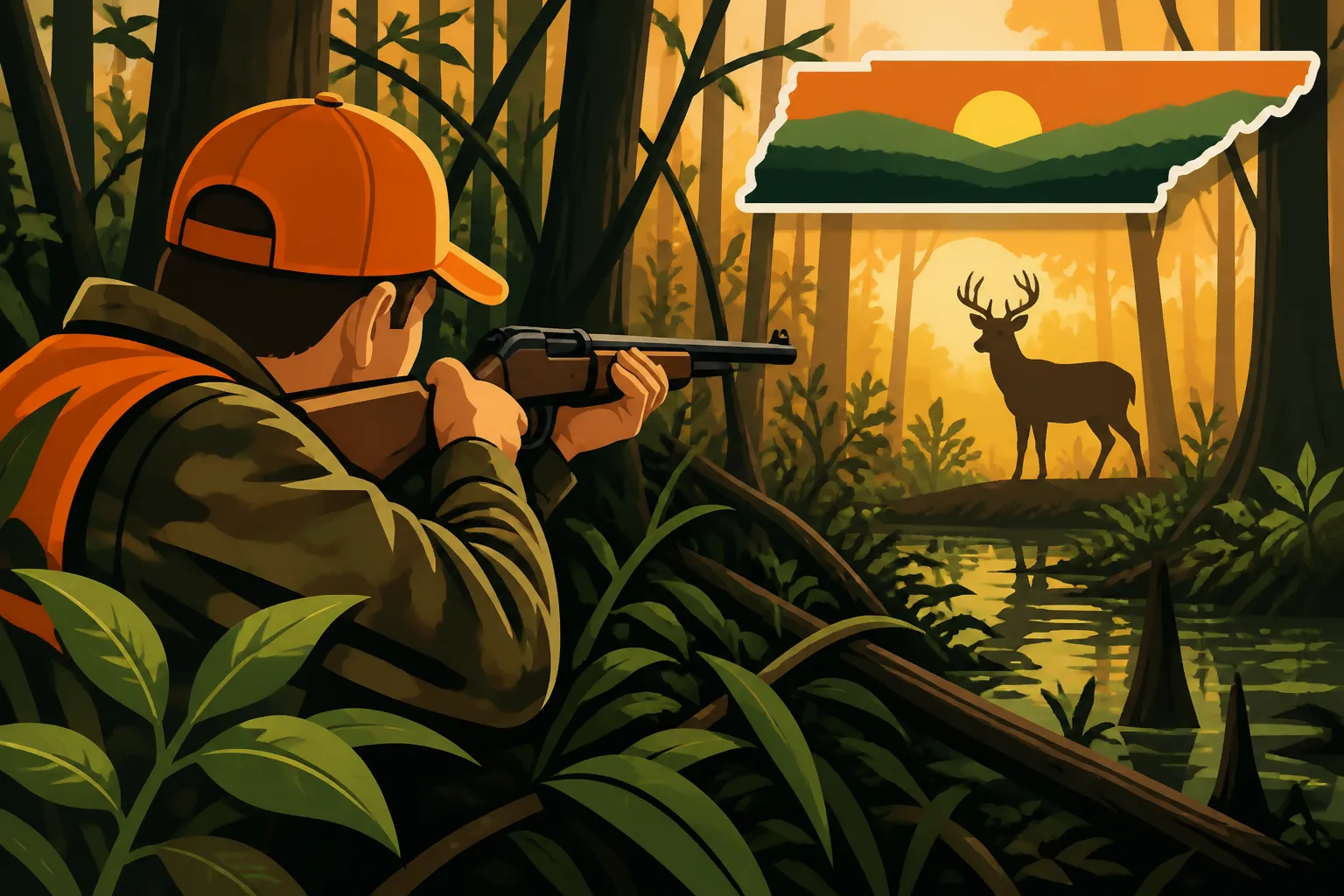
For many hunters in Tennessee, the thought of pursuing deer in the state's sprawling, often unforgiving bottomland cover can be daunting. The thick cane, tangled briars, and low visibility demand a different approach, one where long-range precision often takes a backseat to quick handling and reliable stopping power at close quarters. This guide is all about embracing those challenges with a classic workhorse: the .30-30 rifle. We're going to dive deep into why this caliber, often considered old-fashioned, is still a fantastic choice for navigating those dense West Tennessee river bottoms and similar thickets, ensuring you're well-equipped to make the most of every close encounter.
Why the .30-30 Lever Action Still Shines in Tennessee's Thick Stuff
You might hear whispers that the .30-30 is a relic, a deer rifle from grandpa's day that can't hang with today's high-tech magnum cartridges and long-range optics. And sure, if you're hunting open fields or vast clear-cuts from a hundred yards out, there are certainly other calibers that excel. But when you step into the real world of Tennessee's bottomland, with its impenetrable briar patches, tight river bottoms, and dense thickets, the .30-30 lever action makes a lot of sense. It’s a rifle that was practically born for these conditions, offering a blend of power, maneuverability, and speed that many modern rifles just can't match in close quarters.
The beauty of the .30-30 in this environment lies in its design. The lever action allows for rapid follow-up shots without having to break your cheek weld or entirely lose sight of a fleeing deer, which is crucial when that buck busts out of a thicket at ten yards. Its overall shorter length and lighter weight compared to many bolt-action magnum rifles make it incredibly nimble, allowing you to move silently through dense cover without snagging on every vine or branch. When you're trying to sneak through a choked-up creek bottom, every inch of barrel length you can shed is a blessing.
The Power of the Round Nose and Flat Point
One of the unsung heroes of the .30-30 cartridge, especially for thick cover, is the design of its traditional bullet offerings. We're talking about those classic round nose and flat point projectiles that have been putting deer down for generations. These aren't your sleek, ballistic-coefficient-chasing, boat-tail bullets designed for long-range wind bucking. No, these are blunt, heavy-for-caliber bullets designed for maximum energy transfer at moderate velocities and, critically, for their ability to push through light brush without significant deflection.
While no bullet is truly "brush-proof," the traditional .30-30 loads, like the 150-grain or 170-grain flat points, tend to deflect less than lighter, spitzer-style bullets when they encounter a small twig or leaf stem on their way to the target. This isn't to say you should deliberately shoot through heavy cover, but in those split-second moments when a deer bursts out and there's a small piece of vegetation between you and a clean shot, the .30-30's bullet profile gives you a slight edge in maintaining trajectory. Plus, that heavy lead smacks a deer hard, dumping all its energy into the animal, often resulting in quick, clean kills even without high velocity.
Quick Handling and Durability
There’s something inherently satisfying about the way a lever action .30-30 handles in your hands. The balance is often impeccable, and the short throw of the lever becomes second nature with a little practice. You can swing it quickly, get on target, and if that first shot doesn't do the trick, another round is chambered almost instinctively. This quick-handling characteristic is a huge advantage when a deer is running through heavy cover, offering you those fleeting opportunities to get a shot off.
Beyond handling, these rifles are often built like tanks. Many older models have seen decades of hard hunting, dragged through mud, bumped against trees, and still perform flawlessly. Modern iterations, from brands that honor the classic designs, continue this tradition of robustness. You're not going to baby a .30-30 in the bottomland; it's a tool meant to be used, and it stands up to the abuse. It’s the kind of rifle you can trust to function when you’re elbow-deep in a cane thicket, far from the truck, and that’s a peace of mind that means a lot to hunters who venture into truly wild places. For those wanting to delve deeper into various hunting tactics for this type of terrain, check out Hunting West Tennessee Bottomland Deer.
Navigating Tennessee's Dense Bottomland Terrain
Tennessee's bottomlands are a beast of their own, vastly different from the open hardwoods of the Cumberland Plateau or the pine ridges of the Cherokee National Forest. These are areas defined by their proximity to rivers, creeks, and low-lying drainages, prone to flooding, and consequently, bursting with incredibly dense vegetation. We're talking about almost impenetrable thickets of cane, blackberry briars, greenbrier, and dense stands of young hardwoods that grew up after a timber cut. Getting around in these places is a challenge, let alone hunting.
Imagine trying to navigate a maze of tangles, where visibility might be limited to 10 or 20 yards, and the ground underfoot is often soft, muddy, or choked with leaf litter. Deer love these areas precisely because of the cover they offer. They feel safe and unpressured, and they can move silently, often appearing out of nowhere and vanishing just as quickly. This environment demands specific gear choices and tactics, and it’s where the attributes of the .30-30 really begin to shine. You need to be able to shoulder your rifle quickly, get on target without fumbling with excessive magnification, and deliver a reliable hit on a moving target at close range.
Close-Range Engagements and Fast-Moving Targets
The reality of hunting in thick bottomland cover is that your shot opportunities are going to be close, and often, they're going to be on a deer that's moving. A deer might burst from a bedding area 15 yards away, offering a fleeting glimpse as it weaves through the cover. In these situations, a long, heavy rifle with a high-magnification scope can be a hindrance, making it difficult to find the target quickly and get a stable shot.
The .30-30, with its compact nature and often paired with lower power optics or iron sights, excels here. You can acquire your target in a fraction of a second, swing with the animal, and take a shot. The recoil is manageable, allowing for quick reacquisition of the target if a second shot is necessary. This isn't about pinpoint accuracy at 300 yards; it's about reliable, decisive hits on a fast-moving target at 20-50 yards. It’s a different kind of precision, one focused on speed and efficiency rather than extreme distance.
The Role of Topographical Scouting
Before you even step foot into that bottomland, good scouting is paramount. And by scouting, I don't just mean walking around aimlessly. Utilizing modern mapping tools, like those offered by GoHunt, can be a game-changer. You can pore over satellite imagery, identifying creek beds, old logging roads, and subtle changes in elevation that might create travel corridors or pinch points for deer. Look for thicker sections of cover that might serve as bedding areas, and adjacent food sources like acorn flats or agricultural fields.
Understanding the lay of the land, even if it's flat bottomland, helps you predict deer movement. You can mark potential stand locations, map out your entry and exit routes, and anticipate where deer might cross open lanes or push through slightly thinner cover. This kind of detailed reconnaissance, combined with boots-on-the-ground confirmation, is what helps turn a daunting block of thick cover into a huntable piece of ground. You can learn more about how to plan your hunts by exploring Scouting Tennessee Public Land Before Season.
Setting Up Your .30-30 for Maximum Effectiveness
While the .30-30 comes ready to hunt right out of the box, a few thoughtful choices in optics and ammunition can significantly enhance its performance in Tennessee's thick bottomlands. This isn't about turning it into something it's not, but rather optimizing its strengths for the close, fast-paced encounters typical of dense cover.
Sights: Iron Sights vs. Low-Power Scopes
For many traditionalists, a .30-30 and iron sights go hand-in-hand, and for good reason. Iron sights offer the fastest target acquisition at very close ranges, are incredibly durable, and are immune to fogging or battery issues. If your shots are consistently under 50 yards, and you've practiced extensively, iron sights are a formidable choice. They excel in tight quarters where a scope might limit your field of view or become cumbersome.
However, a low-power variable scope can offer a significant advantage, especially in challenging light conditions like early morning or late evening in thick timber. A 1-4x20mm or 2-7x33mm scope is ideal. You can set it on the lowest magnification (1x or 2x) for maximum field of view and quick target acquisition, almost like a red dot, and then crank it up to 4x or 7x if you need a little more precision for a slightly longer shot or to pick apart a deer in heavy shadows. The larger light-gathering ability of a scope also makes it easier to see your target in dim light that iron sights might struggle with. The key is to avoid scopes with high minimum magnification, as they can make it hard to find a deer that jumps out at spitting distance.
| Sight Type | Advantages in Thick Cover | Disadvantages in Thick Cover | Ideal Use Case |
|---|---|---|---|
| Iron Sights | Fastest target acquisition at shortest ranges, durable, no batteries, wide field of view. | Can be harder to see in low light, less precise at longer close-ranges. | Shots consistently under 50 yards, dense vegetation. |
| Low-Power Scope | Better visibility in low light, more precise at slightly longer ranges (up to 100 yds), can be set to low mag for quick target acquisition. | Can be slower than irons at very close ranges, possibility of fogging/damage, requires battery for illuminated reticle. | Mixed cover, low light, shots out to 100 yards possible. |
Ammunition Selection for Penetration and Knockdown
When it comes to ammunition for your .30-30 in thick cover, prioritize penetration and energy transfer over flat trajectory. As mentioned, traditional flat-point or round-nose soft points are excellent choices. Look for bullet weights in the 150-grain to 170-grain range. These heavier bullets tend to retain more energy and penetrate deeply, even if they encounter some light brush on the way. They’re designed to expand reliably at the moderate velocities of the .30-30, creating a significant wound channel.
Some manufacturers also offer specific "brush-busting" or "heavy cover" loads for the .30-30 that feature slightly different bullet designs aimed at minimizing deflection. While no bullet can guarantee a straight path through dense brush, these specialized loads, or even just high-quality standard soft points, will give you the best chance. Forget about hollow points or ballistic tips for this application; you want a bullet that punches through, expands, and puts the deer down decisively.
Hunting Tactics for the .30-30 in Bottomland
The rifle is only as good as the hunter wielding it, and in thick bottomland, your tactics are just as important as your gear. A .30-30 can be an incredible tool, but it's crucial to understand how to leverage its strengths in challenging environments.
Still Hunting and Sneaking Through Cover
This is where the .30-30 truly excels. Still hunting – moving slowly and deliberately, taking a few steps then stopping to scan and listen – is a fantastic way to hunt bottomland. The compact nature of the lever action allows you to weave through thickets with minimal noise and snagging. Take advantage of natural openings, creek beds, or deer trails to move as quietly as possible.
Focus on reading the terrain and looking for subtle signs of deer movement. Fresh tracks, rubs, and scrapes can tell you where deer are active. Remember, your visibility is limited, so slow down even further. Many bottomland deer are killed at extremely close ranges because a hunter moved quietly enough to surprise a deer in its bedding cover. Keep your rifle ready; the shot can come at any moment. This patient, methodical approach is often the most productive strategy in dense, low-visibility areas. For more details on this, see Still-Hunting Cumberland Plateau Ridges, though the terrain differs, the principle of slow, deliberate movement is key.
Stand Placement for Close Shots
Whether you're using a climbing stand, a hang-on, or a ground blind, proper placement is critical when hunting with a .30-30 in thick cover. Since your effective range is shorter, you need to set up where you can intercept deer at 50 yards or less. Look for natural funnels, pinch points, or crossings where deer are forced into tighter travel lanes. A small break in a cane thicket, a narrow strip of timber between two flooded areas, or a creek crossing can be absolute gold.
Elevated stands can help you see over some of the underbrush, giving you a better view into the thickets. However, if the canopy is too dense, a well-placed ground blind brushed into the natural cover can be incredibly effective, offering concealment and a stable shooting rest for those quick, close shots. Ensure your shooting lanes are clear within your effective range; a few minutes spent trimming small branches can make all the difference when a buck steps out. You can also gain insight from Setting Up on a West Tennessee Field Edge for ideas on stand placement, even if the specific cover type is different.
Tracking a Deer in Dense Cover
Even with a well-placed shot from a .30-30, tracking a deer in thick bottomland can be a real challenge. The dense vegetation and often damp ground can make blood trails sparse and difficult to follow. This is where patience and meticulous attention to detail become paramount. After taking the shot, mark your location and the exact spot where the deer was standing, and where you last saw it. Wait at least 30-60 minutes for a gut shot, or 15-30 minutes for a good lung/heart shot, before you begin tracking.
When you do start tracking, move slowly, looking for any sign: specks of blood, disturbed leaves, broken twigs, or even the sound of the deer crashing ahead. If the blood trail peters out, grid search the area in expanding circles. In extremely difficult conditions, consider returning at first light the next morning if temperatures allow, as it's easier to find a subtle trail in daylight. The deep penetration and reliable expansion of a .30-30 bullet generally mean a good blood trail, but the environment can quickly obscure it. Having a bright headlamp is crucial, especially if you're forced to track after dark, which can be extra challenging in such thick cover.
Disclaimer
This article is for general informational purposes only and does not constitute professional advice. Laws, prices and regulations vary by location and change over time. Consult a qualified professional for guidance on your specific situation.