Fogged Optics in Tennessee Cold
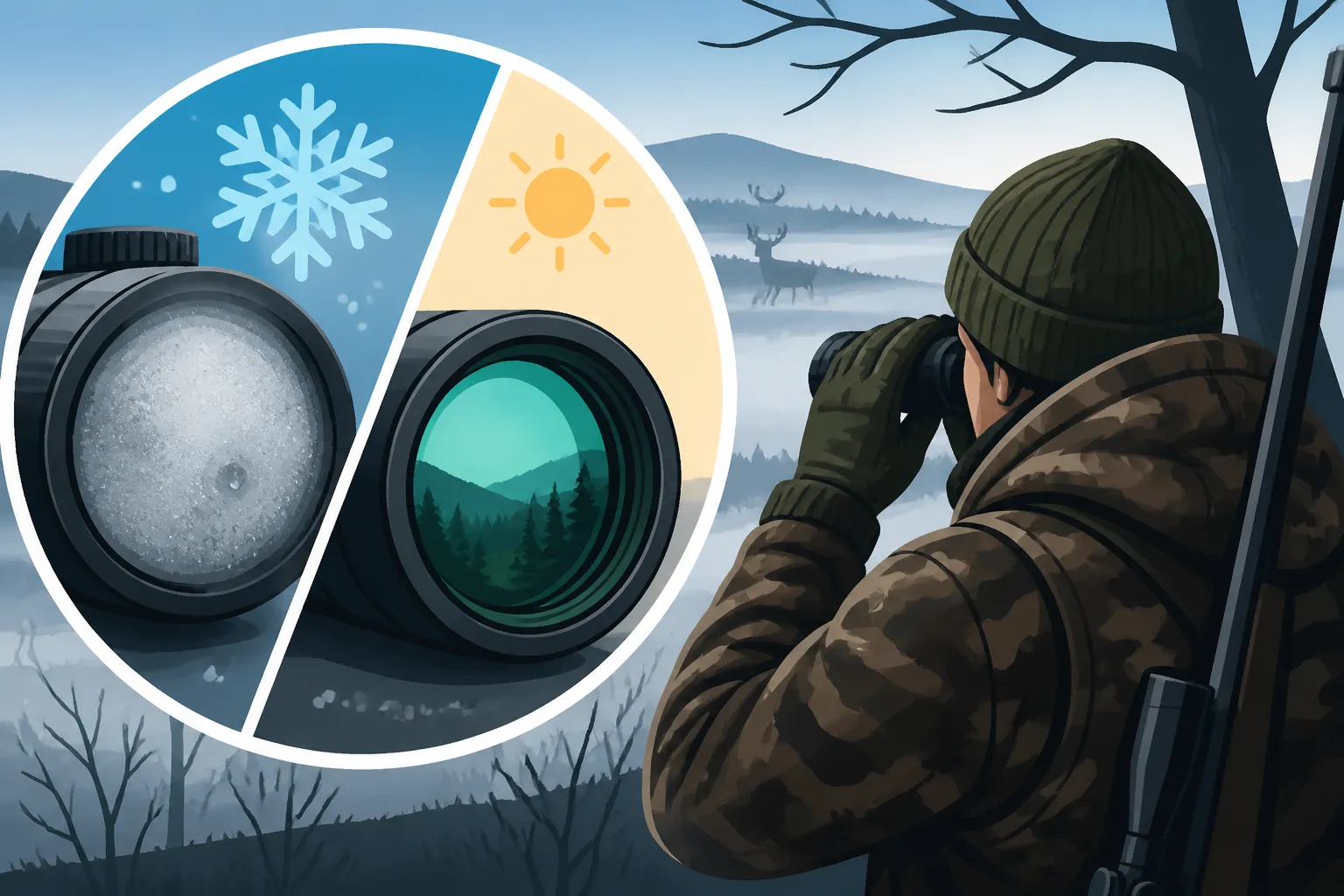
There's nothing quite as frustrating as climbing into your stand on a crisp Tennessee morning, spotting that buck you've been after, raising your binoculars or rifle scope, and boom – a wall of opaque white blurs your vision. Fogged optics in the Tennessee cold aren't just an inconvenience; they can completely derail a hunt and lead to missed opportunities. This guide will dive deep into why your optics betray you when the temperatures drop and, more importantly, equip you with practical strategies to prevent and mitigate fogging, ensuring your view stays crystal clear when it matters most.
Why Optics Fog Up in Tennessee: Causes and Challenges
Tennessee's diverse landscape, from the high ridges of the Cumberland Plateau to the humid river bottoms of West Tennessee, presents unique challenges for hunters trying to keep their glass clear. Understanding why your optics fog up is the first step toward preventing it. It's more than just "cold air meets warm air"; there's a science to it, and our local climate often makes it worse.
The Science Behind Condensation
At its heart, optics fogging is simply condensation. Think about a cold glass of sweet tea on a hot summer day – that moisture on the outside isn't leaking; it's water vapor in the humid air condensing when it hits the cold surface of the glass. The same principle applies to your binoculars or rifle scope. Every parcel of air holds a certain amount of water vapor. The dew point is the temperature at which that air, when cooled, becomes saturated and the water vapor condenses into liquid water.
When you take your optics from a warm environment, like your truck cabin or your heated deer blind, and expose them to the significantly colder Tennessee air, their surfaces rapidly cool below the dew point of the ambient air. This sudden temperature difference causes the moisture in the air around the lenses to condense, forming those tiny water droplets that scatter light and create the frustrating "fog." It’s a battle between temperature, humidity, and surface area, and in Tennessee, we often have all the ingredients for a losing fight.
Your own breath is a massive contributor to external fogging. When you're glassing intently, perhaps after a long hike up a ridge or when Hunting a Ridge-Top Saddle for Rutting Bucks, your warm, moist breath can envelop your optics. The instant that vapor hits the cold lens surfaces, it condenses, sometimes so rapidly and thickly that you're left blind at the critical moment. This isn't just an issue with inexpensive glass; even high-end optics can fall victim to rapid temperature changes and a hunter's eager breath.
Tennessee's Unique Climatic Challenges
Our beautiful state, with its rolling hills, deep hollows, and extensive waterways, unfortunately, creates prime conditions for optics fogging. Unlike drier climates where cold might be a consistent, biting dry cold, Tennessee often experiences high humidity levels, even in the dead of winter. Picture a late November morning in a river bottom, the air thick with dampness, or a foggy December dawn on the Cumberland Plateau – these are scenarios where condensation is almost guaranteed if you're not prepared.
The variability of our weather doesn't help. One day it might be a mild 50 degrees, and the next, a cold front rolls through, dropping temperatures into the teens overnight. Moving from a relatively warm home or vehicle into this sudden cold creates a significant thermal shock for your optics. Additionally, many of our prime hunting spots, particularly in areas like West Tennessee bottomlands or along creek beds in the eastern counties, are natural humidity traps. These areas can remain shrouded in mist or have air saturated with moisture long after the sun comes up, increasing the likelihood of fogging.
Consider those early mornings when you’re out for Hunting the Late-Season January Lull. The sun hasn't quite crested the ridge, and the air is still, heavy, and damp. You get set up, your body slowly acclimating, but your optics, having just come from a warmer environment, are still chilling. The moment you bring them up to your eyes, the surrounding moist air rushes to condense on those cold surfaces. It's a frustrating but predictable phenomenon that every Tennessee hunter has likely experienced.
Internal vs. External Fogging
It’s important to distinguish between two types of fogging: external and internal. External fogging, as we've mostly discussed, happens on the outer surfaces of your lenses or the housing of your optics. This is typically caused by humidity, rain, snow, or your breath. While annoying, external fogging is usually manageable with proper care and technique.
Internal fogging, however, is a far more serious and disheartening issue. This occurs when moisture somehow gets inside the optical system – between the lens elements or prisms. This type of fogging is usually a sign of a compromised seal in your optic. Most modern, quality optics are "nitrogen-purged" or "argon-purged" and O-ring sealed. This means that all the air and moisture inside the optic is replaced with an inert gas, creating a dry, stable internal environment that won't fog. If your optics are internally fogging, it means that seal has failed, allowing moist air to seep in.
Internal fogging is particularly problematic because it's nearly impossible to fix in the field. Unlike external fogging, which can often be wiped away or allowed to dissipate with gentle warming, internal fog usually requires professional repair or replacement. It’s a stark reminder of why investing in quality, well-sealed optics is crucial, especially when you're relying on them in unpredictable Tennessee weather. A cheap pair of binoculars might seem like a bargain until you're staring into an internal cloud on a critical hunt.
Immediate Fixes and Field Strategies for Fog
When fog inevitably strikes, you need quick, reliable solutions that don't compromise your hunt. While prevention is key, sometimes Mother Nature throws us a curveball, and having a few tricks up your sleeve can save the day.
Quick Solutions When Fog Hits
The most common and often quickest solution for external fogging is a gentle wipe with a clean, soft microfiber cloth. Emphasize clean and soft here. Many hunters, myself included, have a habit of wiping lenses with a shirt sleeve or a bandanna, but this can scratch delicate coatings or leave behind lint and oils, making the problem worse. A dedicated lens cloth stored in a clean pouch is invaluable. Gently breathe on the lens first, then wipe in a circular motion from the center outwards.
Another effective, albeit slower, method is to use your body heat. If your binoculars or scope are thoroughly fogged from sitting in the cold, tuck them inside your jacket or even against your skin for a few minutes. The gentle warmth will slowly raise the temperature of the optic, bringing it above the dew point and allowing the moisture to evaporate. The key here is gentle warming; don't try to rapidly heat them with a hand warmer or by a fire, as extreme temperature changes can cause other issues, including stress on internal components. Just let your body do the work naturally. This strategy is part of a good Cold-Weather Sitting Strategy in Tennessee.
Remember to also be mindful of your breath. When you bring your optics up to your eyes, try to hold your breath or exhale away from the lenses. It sounds simple, but in the heat of the moment, it's easy to forget. If you find yourself in a situation where you're glassing for extended periods, even slight exhalations can build up moisture. Sometimes, just stepping back slightly from the eyepiece can create enough distance to prevent your breath from causing an issue, allowing you to focus on Reading a Ridge for East Tennessee Deer.
Adapting Your Hunting Style
Sometimes, the best solution to fog is to adapt how you hunt. If you know you're going to be in a notoriously damp or foggy area, like a deep hollow or a creek bottom, try to give your optics more time to acclimate before you need them. Set them out on your stand a good 15-20 minutes before first light, allowing them to slowly equalize with the ambient temperature. This gradual transition can significantly reduce the severity of fogging.
Think about your stand placement, too. While a creek bottom might be a great travel corridor, the persistent humidity and lower temperatures can be a nightmare for optics. If possible, consider stands that get direct sunlight earlier in the morning or are on slightly higher, drier ground. Using a tool like GoHunt's mapping features can help you identify these microclimates when scouting, allowing you to choose spots that might naturally mitigate fogging. Planning your entry and exit routes to minimize sudden temperature shifts for your gear can also make a difference.
If you're hunting in particularly thick cover or during a misty rain, relying solely on your optics might be a losing battle. Sometimes, it's about shifting your senses. Instead of constantly glassing, focus on listening for crunching leaves or the tell-tale snap of a twig. In dense Tennessee timber, even a perfectly clear scope might not give you much more than 50 yards of vision, so trusting your ears and maintaining slow, deliberate movements can be just as, if not more, effective. This is especially true when applying tactics like Rattling Volume in Thick Cover, where sound is paramount.
Emergency Cleaning and Drying
While a quick wipe often does the trick for light external fog, sometimes you get splashed with mud, caught in a heavy downpour, or find your lenses covered in dew that just won't evaporate. In these "emergency" situations, you'll need a more thorough approach. Always carry a small bottle of lens cleaning solution and a couple of clean microfiber cloths in your pack. The solution is specifically designed to cut through oils, dirt, and water spots without leaving streaks or residue.
When cleaning, first gently brush off any loose dirt or debris with a soft lens brush (often found on the end of lens pens) or blow it off with a can of compressed air if you have one. Then, apply a small amount of lens cleaner to the cloth, not directly to the lens, and gently wipe the surface. For severe moisture, like after a drenching rain, you might need to use a dry, absorbent corner of your cloth to blot the majority of the water before wiping.
After cleaning, avoid using forced heat to dry your optics. Don't blast them with a hairdryer or set them next to a roaring campfire. Rapid heating can cause internal air expansion, stressing seals and potentially leading to internal fogging later. Instead, allow them to air dry naturally, perhaps inside your jacket or in a sheltered, dry spot. When you're done hunting for the day, make sure your optics are completely dry before putting them away. Storing them wet can promote mildew or corrosion. Just like you'd meticulously care for your firearm after a hunt to prevent rust by Cleaning a Rifle After a Wet Sit, your optics deserve the same attention to maintain their clarity and longevity.
Long-Term Prevention: Preparing Your Optics
While field fixes are great for immediate problems, true mastery over fogging comes from long-term prevention and preparation. It’s about setting yourself and your gear up for success long before you ever step foot in the woods.
Anti-Fog Treatments and Coatings
Many aftermarket anti-fog treatments are available, ranging from liquid sprays to wipes, designed to create a thin, transparent layer on your lens surface that reduces surface tension. This causes condensation to form as a continuous, invisible film rather than tiny, light-scattering droplets. They can be quite effective for external fogging, particularly on eyepieces or binocular lenses that are frequently exposed to your breath.
The application usually involves cleaning the lens thoroughly, applying the treatment, and then letting it dry or gently buffing it according according to the product's instructions. Keep in mind that these treatments are temporary. They will wear off with use, cleaning, and exposure to the elements, so reapplication before each hunt or every few days of hunting is often necessary. Some hunters swear by them, especially for older optics that lack modern factory coatings. However, always test a new product on a small, inconspicuous area first, if possible, to ensure it doesn't react negatively with your existing lens coatings.
Many premium optics now come with advanced factory coatings that are not only multi-layered for superior light transmission and glare reduction but also feature hydrophobic (water-repelling) and oleophobic (oil-repelling) properties. These coatings make water bead up and roll off the lens, similar to how water rolls off a freshly waxed car. This significantly reduces the chances of water spots and also helps prevent fog from forming a solid film. When you're researching new gear, especially if you use resources like GoHunt to compare models, look for these specific coating descriptions. They can make a huge difference in adverse Tennessee weather conditions.
Acclimatization Techniques
This is one of the most effective, yet often overlooked, preventative measures against fogging. Acclimatization simply means allowing your optics to gradually adjust to the ambient temperature before you need to use them. The larger the temperature difference between your optics and the surrounding air, the higher the risk of fogging.
If you typically store your binoculars or scope in a warm house or truck, consider moving them to a cooler, but still dry, environment a few hours or even the night before your hunt. Your unheated garage, a screened-in porch, or even the bed of your truck (covered and protected from moisture) can work wonders. This allows the temperature of the optics to slowly drop without a sudden shock, minimizing the temperature differential when you finally take them into the true cold of the woods.
When you arrive at your hunting spot, don't keep your optics bundled in your pack until the last minute. Get them out and hang them on your stand hook, or place them gently on a dry surface, with lens caps off if possible, as soon as you settle in. This gives them even more time to equalize with the cold air around you. The goal is to avoid that sudden transition from warm to cold. This thoughtful approach extends beyond optics; it's a general principle for any sensitive gear you rely on in the field to minimize the impact of Wind and Thermals on a Ridge System or sudden cold snaps.
Proper Storage and Care
Beyond pre-hunt preparation, how you store and care for your optics year-round plays a huge role in their long-term performance and resistance to fogging. First and foremost, always store your optics in a dry, temperate environment. Avoid leaving them in direct sunlight or in places prone to extreme temperature fluctuations, like an attic in summer or a car trunk in winter. These conditions can degrade seals and coatings over time, making them more susceptible to both internal and external fogging.
Always keep your lens caps or covers on when your optics aren't in use. This protects the delicate lens coatings from dust, dirt, and accidental scratches, all of which can compromise their effectiveness and make them harder to clean when fog does occur. For rifle scopes, ensure the objective and ocular covers are in good condition and sealing properly. For binoculars, a good harness that keeps them snug against your chest while protecting the lenses can also provide some insulation and reduce rapid cooling. GoHunt often features reviews of durable lens covers and harnesses that can stand up to the rigors of Tennessee hunting.
Regular, gentle cleaning is also crucial. Dust, fingerprints, and smudges can act as nucleation sites, encouraging moisture to condense and cling to the lens surface. Using a soft lens brush to remove loose debris, followed by a gentle wipe with a clean microfiber cloth, can keep your lenses pristine. Remember, a clean lens is a clear lens. Over time, proper care prevents the accumulation of grime that makes battling fog even harder, ensuring that when you need to use your Rifle Scopes for Low-Light Hollows or any other optic, it's ready.
Choosing Optics Designed for Tennessee's Climate
When investing in new glass, especially if you're a serious Tennessee hunter, understanding key features designed to combat fogging can save you a lot of heartache in the woods. It's not just about magnification or objective size; it's about how the optic is built to handle our specific environmental challenges.
Understanding Nitrogen-Purged Optics
As mentioned earlier, nitrogen or argon purging is your best friend when it comes to preventing internal fogging. Manufacturers fill the sealed optical housing with an inert gas, which contains almost no moisture. This process effectively eliminates any water vapor inside the optic, preventing condensation from forming on the internal lens elements, regardless of external temperature fluctuations.
When you're shopping for new binoculars or a rifle scope, always look for explicit mentions of "nitrogen purged," "argon purged," "fogproof," or "waterproof" (though "waterproof" alone doesn't always guarantee fogproof if not purged). This feature is non-negotiable for serious hunters in a humid state like Tennessee. Without it, you're essentially playing Russian roulette with internal condensation, especially during those unpredictable cold, damp days. This is a primary differentiator between entry-level and mid-to-high-tier optics, and it’s worth paying for the peace of mind. Using a resource like GoHunt can help you quickly filter for these essential features when comparing different brands and models.
Think of it this way: your optics are an investment. You wouldn't buy a hunting rifle that rusts after one wet outing, so why settle for optics that fog internally when you need them most? This internal protection ensures that whether you're climbing a frosty ridge in the Cherokee National Forest or enduring a damp morning in a duck blind on Reelfoot Lake, your sight picture remains consistently clear.
Evaluating Lens Coatings
Beyond anti-fog treatments, the quality and type of lens coatings applied at the factory significantly impact an optic's performance in challenging conditions. Most reputable optics today feature multiple layers of anti-reflective coatings on all air-to-glass surfaces (fully multi-coated) to maximize light transmission and enhance image brightness, which is crucial for Low-Light Performance in a Scope during dawn and dusk.
However, some coatings go further. Many premium optics now include specialized exterior coatings that are hydrophobic or "water-shedding." These coatings create an ultra-smooth surface that causes water droplets to bead up and roll off quickly, rather than smearing or clinging. This not only helps with rain and external fogging but also makes the lenses easier to clean. When you're doing your research, perhaps on GoHunt, look for proprietary names for these coatings, such as "RainGuard HD," "LotuTec," or "AquaDura," as they indicate an optic designed to perform in wet, humid environments like ours.
The durability of these coatings is also important. Cheaper coatings can wear off over time, reducing their effectiveness. Investing in optics with robust, abrasion-resistant coatings means they'll continue to perform for years, even with regular use in the harsh conditions Tennessee hunting can dish out. These specialized coatings are a key factor in how much of a difference an optic will make when you're trying to spot a deer through a misty hollow.
Durability and Sealing
The overall construction and sealing of an optic are paramount for its longevity and fog-proof performance. An optic can be nitrogen-purged, but if its housing isn't robust or its O-ring seals aren't properly installed and maintained, that purging won't last. High-quality optics feature rugged, often armored, housings made from materials like magnesium alloy or aircraft-grade aluminum, designed to withstand bumps, drops, and the general abuse of the hunting woods.
Beyond just "waterproof," look for specific IPX ratings (e.g., IPX7, IPX8), which indicate how well an optic is sealed against dust and water ingress. An IPX7 rating, for instance, typically means the optic can be submerged in up to 1 meter of water for 30 minutes without ingress – a strong indicator of reliable sealing against moisture. Strong seals are what prevent external moisture from ever reaching the inside of the optic, protecting the inert gas.
Even the most durable optics can be compromised by severe impact. A hard fall could potentially shift internal elements or crack a seal, leading to internal fogging. This is why always using a quality binocular harness or carrying your scope in a padded case when not actively hunting is a smart move. It’s about protecting your investment so that your Binocular Power for Ridge Hunting isn't wasted by a compromised seal. If you’re ever wondering, "Are Cheap Binoculars Good Enough?" for our varied Tennessee conditions, remember that durability and sealing are often where less expensive optics cut corners, potentially leaving you in a fog.
| Type of Fogging | Cause | Immediate Field Solution | Long-Term Prevention |
|---|---|---|---|
| External | Breath, humidity, rain, dew on outer lens | Gentle wipe, body warmth, anti-fog spray | Acclimatization, hydrophobic coatings, lens caps |
| Internal | Moisture trapped inside optic, seal failure | None (often permanent), try slow warming | Nitrogen/argon purging, quality seals, proper storage |
Disclaimer
This article is for general informational purposes only and does not constitute professional advice. Laws, prices and regulations vary by location and change over time. Consult a qualified professional for guidance on your specific situation.