Cow Calls for Tennessee Elk Season
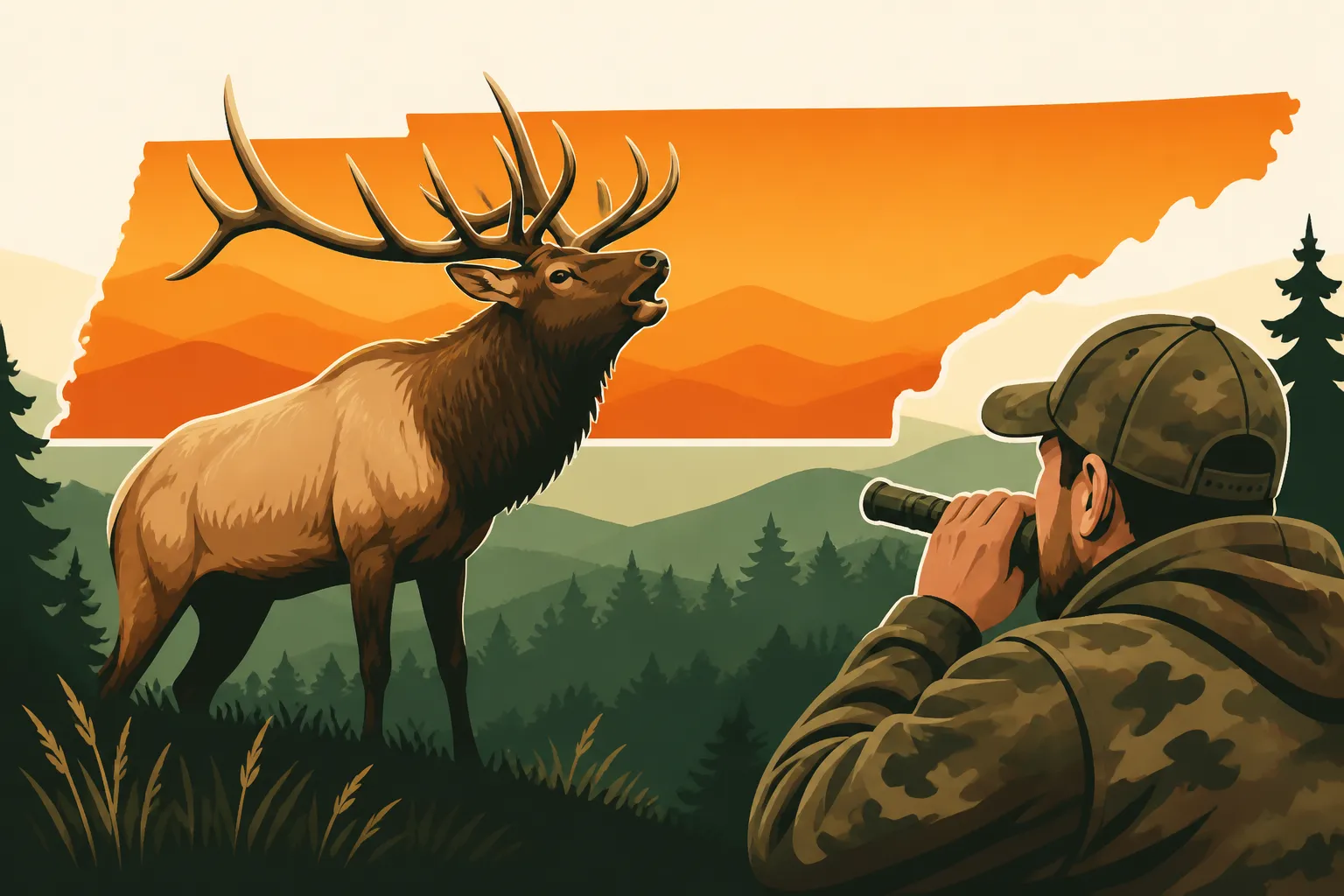
Hunting Tennessee's majestic elk herd can be an incredibly rewarding experience, but it also comes with its unique set of challenges, especially when it comes to calling. Many hunters naturally lean into aggressive bugling, hoping to challenge a bull into range, but often find themselves frustrated when those big bulls hang up just out of sight, or simply fade away into the deep cover of the North Cumberland. This guide is all about demystifying the power of the cow call, showing you how these subtle yet highly effective vocalizations can be the key to bringing wary Tennessee bulls into bow or gun range, and how to integrate them seamlessly into your elk hunting strategy.
Why Cow Calls Are Crucial in Tennessee Elk Hunting
When you're chasing elk in the rugged mountains and dense timber of Tennessee, you're not dealing with the vast, open country herds of the West. Our restored elk herd, while thriving, occupies a more confined and often pressured environment. This distinction is critical when it comes to calling. A bull that's heard countless challenges and seen pressure throughout the early season might respond better to the soft, inviting sounds of a cow than an aggressive bugle.
Understanding Tennessee's Elk Herd Dynamics
Tennessee's elk herd, primarily found within the North Cumberland Wildlife Management Area, is a special success story. However, with limited hunting permits and a growing number of eager hunters, these elk can become quite savvy. They learn quickly, and a bull that's been bugled at repeatedly, or perhaps even bumped by a hunter, will become extremely cautious. This is where the cow call shines. It’s a less confrontational, more natural sound that speaks to a bull's desire to find a mate, rather than challenging his dominance.
Think of it this way: a loud, booming bugle might tell a bull, "There's another bull in my territory!" This can either draw him in for a fight (if he's feeling dominant) or send him the other way (if he's a satellite bull or has been pressured). A soft, plaintive cow mew, however, tells him, "Hey, there's a lonely cow over here." This taps into a fundamental instinct that can be far more powerful than a challenge, especially when other hunters are bugling aggressively. Understanding these dynamics is key to success, as explored further in Tennessee's Restored Elk Herd.
The Role of Cow Calls in Different Seasons
The effectiveness of cow calls can also shift depending on when you're hunting during the Tennessee elk season. During the peak of the rut, say in the Tennessee Archery-Only Elk Season Dates, a bull might be eager to find any cow he can. Soft mews and chirps can entice him to come looking, especially if he already has a harem and doesn't want to leave them to go bugle with a rival. You're not trying to steal his cows; you're simply presenting yourself as another potential breeding opportunity.
As the season progresses into the Tennessee General Firearms Elk Season Dates, bulls might become more call-shy. The intensity of the rut often diminishes, and herd bulls are more focused on keeping their cows rounded up or recovering from the rigors of breeding. During these times, an aggressive bugle can be detrimental. A subtle cow call, perhaps an estrous chirp or a series of soft mews, can be just the ticket to pique a bull's interest without raising his suspicions. It's about blending in and sounding like part of the natural elk world, rather than standing out as a hunter trying to draw him in.
Types of Cow Calls and How to Use Them
Just like deer calls, there’s a variety of cow calls out there, each with its own advantages and learning curve. Understanding the different types and how to master their sounds will give you a significant edge in the field. It’s not just about making a sound; it’s about making the right sound at the right time.
Diaphragm Calls for Natural Sounds
Diaphragm calls are the gold standard for many experienced elk hunters because they offer incredible realism and allow for hands-free operation. These are the same types of calls turkey hunters use, placed in the roof of your mouth. They require some practice to master, but once you do, you can produce a wide range of incredibly lifelike cow mews, chirps, and even estrous sounds. The ability to keep your hands free means you can operate your bow or rifle, use binoculars, or simply stay still without any movement betraying your position.
To use a diaphragm call, you'll place it with the reed side facing out, against the roof of your mouth. Then, you'll force air over the reed with your tongue, creating vibrations. Different tongue pressures and airflows produce different sounds. A soft, short puff of air with light tongue pressure creates a subtle mew. A series of these, perhaps increasing in volume slightly, can mimic a cow searching for the herd. Practice in your car or at home until the sounds are consistent and natural. Remember, realism is key; a bad diaphragm call can sound like a dying duck if not executed correctly.
Open Reed Calls for Versatility
Open reed calls are often a favorite for beginners and seasoned hunters alike due to their relative ease of use and versatility. They typically consist of a mouthpiece and an open reed, which you blow across to create sound. With an open reed call, you can often achieve a good range of mews, chirps, and even more excited estrous sounds by varying your breath pressure and how you manipulate the reed with your lips and hands.
The main advantage of open reed calls is how quickly you can pick them up and produce convincing sounds. They don't require the same oral dexterity as a diaphragm, making them a great option for hunters who want reliable cow sounds without extensive practice. However, they do require you to use your hands, which can be a minor drawback if an elk suddenly appears, but many hunters mitigate this by having the call on a lanyard for quick access. They’re excellent for getting a quick response, and with a little finesse, you can make them sound incredibly natural and inviting.
Mouth Piece/External Reed Calls for Ease of Use
Similar to open reed calls but often simpler in design, external reed or "mouthpiece" calls are another excellent option, particularly for hunters who want consistent, realistic cow sounds with minimal effort. These calls usually involve a plastic or rubber housing with a reed inside, and you simply blow into them, often covering holes or pressing buttons to vary the pitch and tone. Some models, often called "squeeze me" calls, are even simpler, relying on squeezing a bulb to push air over a reed.
These calls are fantastic for producing very specific, consistent sounds, like a simple cow mew or a calf chirp. They are often less versatile in terms of the range of sounds you can produce compared to a diaphragm or open reed, but what they do, they do very well. They are ideal for subtle calling sequences, especially when you need to reassure a bull that's hanging up or just want to make soft, natural sounds to draw him closer. For more on the array of options available, check out Elk Calls and Cow Decoys.
Here's a quick comparison of these common cow call types:
| Call Type | Ease of Use | Sound Variety | Hands-Free | Best Scenario |
|---|---|---|---|---|
| Diaphragm Call | High Learning Curve | Excellent (Mews, Chirps, Estrous) | Yes | Subtle, close-range, hands-free operation critical |
| Open Reed Call | Moderate | Good (Mews, Chirps, Calf) | No | Versatile, responsive, good for beginners |
| Mouth Piece/External Reed Call | Easy | Limited (Specific Mews, Chirps) | No | Simple, consistent, quick, reassuring calls |
Reading Elk Responses and Adjusting Your Calling
Putting a call to your mouth and making a noise is only half the battle. The real art of elk calling lies in listening, interpreting, and reacting to what the elk are telling you. Every grunt, every snap of a branch, every moment of silence is a piece of the puzzle, especially when you're trying to coax a wary bull in Tennessee.
Interpreting Elk Vocalizations
Elk communicate through a rich vocabulary of sounds, and a successful hunter learns to speak and understand that language. A soft, distant chuckle or a quiet mew in response to your cow call is a positive sign – it means he's heard you and is likely curious, or perhaps even moving in your direction. It's often a tentative acknowledgment. A sharp, loud "bark" from an elk usually indicates alarm. If you hear this, you've likely been spotted or smelled, or the elk has encountered something else that spooked it. It's time to re-evaluate and often implies the jig is up for that particular encounter.
Silence, too, can be a form of communication. Sometimes, an elk will respond with silence because it's already on its way to investigate your call. In this scenario, continuing to call aggressively might cause him to pinpoint your exact location too easily, or worse, make him think you're moving away. Other times, silence means disinterest or that the elk has simply moved off. Experience, combined with excellent mapping tools like GoHunt, can dramatically improve your success rate in deciphering these subtle cues by helping you visualize the terrain an elk might be using to approach or escape. Learning to recognize the difference between a curious response, an alarm, or complete disinterest is a skill honed over many hours in the woods, but it's absolutely vital for effective calling.
Knowing When to Push and When to Back Off
This is arguably the trickiest part of elk calling. When you're making a cow call, and a bull responds, your next move is critical. If he's responding strongly with bugles and seems to be closing the distance, a few more soft, enticing cow mews might be enough to draw him all the way in. You're playing the role of an interested cow, inviting him closer without giving away your exact position too soon.
However, if a bull responds once and then goes silent, or seems to be hanging up just out of sight, it might be time to back off on the calling. Overcalling can be a fatal mistake. If he's already committed to coming in, he doesn't need constant reassurance. In fact, too much calling can make him suspicious. Sometimes, the best call is no call at all. Let him come looking. He thinks there's a cow there, and his curiosity will often do the rest. The key is to be patient and let the situation unfold naturally. A tool like GoHunt can help you understand the terrain, identifying potential ambush points or escape routes an elk might use.
Integrating Cow Calls with Other Elk Hunting Strategies
Cow calls are powerful on their own, but their effectiveness can be amplified when used in conjunction with other tried-and-true elk hunting strategies. Thinking about the hunt holistically, from scouting to shot placement, will give you the best chance for success in Tennessee's challenging elk country.
Combining Cow Calls with Bugling
While this article champions the cow call, it's important to remember that bugling definitely has its place, especially during the peak rut. The most effective strategy often involves a combination of both. Imagine you let out a challenging bugle, and a bull answers back. Instead of immediately bugling again, try following up with a series of soft, excited cow mews or chirps. This paints a vivid picture for the bull: a rival bull is in the area, but he's also got a cow (or cows) with him. This scenario can make him incredibly jealous and aggressive, driving him to come investigate. This nuanced approach is often detailed when discussing strategies like Calling a North Cumberland Bull Elk.
Another common tactic is to use cow calls as a finishing sound after an initial bugle. If a bull answers your bugle but then hangs up, a series of pleading cow mews can often be the final nudge he needs to come that last 50 or 100 yards into range. You're giving him what he wants – a hot cow – without making him feel directly challenged by another bull right in his face. It adds a layer of realism and urgency to your calling sequence that a solo bugle can't achieve.
Using Cow Calls with Decoys
Adding a visual element to your calling can be incredibly effective, and this is where cow decoys come into play. When a bull hears your cow calls, and then sees what appears to be a real cow, his inhibitions often drop dramatically. Positioning is key here: always set your decoy upwind or crosswind of your calling position, a safe distance away from you, so the bull's attention is drawn to the decoy rather than your hide.
A single cow decoy, combined with enticing cow mews and chirps, can make a bull commit, especially if he's circling downwind to get a scent. He sees the "cow," thinks he's got the wind on her, and often comes right in for a closer look. It's a fantastic way to draw his focus away from your actual position and give you time for a shot. For more ideas on how to use these tools effectively, you can look up Elk Calls and Cow Decoys. Remember, realism in both sight and sound is what convinces a wary elk.
Scouting for Calling Hotspots
No amount of perfect calling will work if you're not in an area where elk actually live and move. Effective calling starts with thorough scouting, both before the season and during. Look for fresh tracks, droppings, rubs, and wallows. These signs indicate current elk activity and can help you pinpoint areas where your cow calls will be most effective. Ridges, saddles, benches, and thick transition areas are often prime spots where bulls will travel and be receptive to calls.
Utilize topographic maps and satellite imagery, perhaps through platforms like GoHunt, to identify natural funnels and pinch points where elk are likely to move. These are ideal locations to set up and try your calling sequences. Also, pay attention to prevailing wind directions and thermals, particularly in the mountainous terrain of the North Cumberland Wildlife Management Area. A perfect calling setup can be ruined by a shifting wind carrying your scent to an approaching bull. Good scouting, as discussed in Scouting Tennessee Public Land Before Season and even Reading Aerial Photos for Cumberland Plateau Deer (the principles are transferrable!), will put you in the right place at the right time. Being proactive with your Preparing for a North Cumberland Elk Hunt will pay dividends. And don't forget to practice your calls and be ready when you're Glassing a North Cumberland Elk Meadow.
Disclaimer
This article is for general informational purposes only and does not constitute professional advice. Laws, prices and regulations vary by location and change over time. Consult a qualified professional for guidance on your specific situation.