Tennessee General Firearms Elk Season Dates
For many hunters, the very thought of chasing elk in Tennessee, especially with a firearm, feels like a monumental, once-in-a-lifetime endeavor. The excitement is palpable, but the highly competitive quota hunt system can make understanding the exact dates and navigating the process feel like an uphill battle before you even step foot in the woods. This guide is here to meticulously break down the Tennessee General Firearms Elk Season Dates, explain the application process, and provide crucial insights into preparing for this incredible hunting opportunity in the Volunteer State.
Understanding Tennessee's General Firearms Elk Season Dates
Let's cut right to the chase: Tennessee's elk hunt is not a general, open-season affair. It's a tightly controlled, highly coveted quota hunt designed to manage the state's growing but still relatively small elk herd. This means the general firearms elk season dates are incredibly specific, change slightly each year, and are only accessible to a handful of lucky hunters who draw a tag.
Typically, the Tennessee Wildlife Resources Agency (TWRA) schedules the general firearms elk season for a five-day period in mid-October. This timing is strategic, placing the hunt just after the peak of the elk rut in Tennessee, which usually occurs in late September and early October. While you might still encounter some residual bugling activity, the primary focus during the firearms season often shifts towards locating elk as they move into their post-rut patterns, often focused on feeding and recovering.
For example, looking back at recent seasons, the general firearms elk season has consistently fallen within the third or fourth week of October. While specific dates vary annually, successful applicants can expect a short, intense window of opportunity. It’s absolutely critical to confirm the exact dates each year through the official TWRA hunting guide, as these details are set well in advance of the application period. This isn't a hunt you can just decide to do last minute; it requires significant planning, even before you submit your application.
Here’s a look at the typical timeframe for the Tennessee General Firearms Elk Season (always verify with current TWRA regulations):
| Hunt Type | Typical Season Dates | Description |
|---|---|---|
| Archery-Only Elk Season | Late September/Early October | Typically a five-day hunt, preceding firearms season. |
| General Firearms Elk Season | Mid-October | The primary five-day hunt, most sought-after. |
| Youth Elk Season | Late September | Shorter season, sometimes overlaps with archery. |
It's important to remember that these are just the general firearms dates. Tennessee also offers a limited archery-only elk season, which usually takes place a bit earlier in late September or early October, giving bowhunters a crack at the herd during the height of the rut. There's also a youth elk season, further emphasizing the TWRA's commitment to both management and fostering the next generation of hunters. Each of these seasons has its own distinct dates and rules, so if you're fortunate enough to draw, make sure you know exactly which hunt you've been awarded. For a broader overview, you might want to check out the details on Hunting Tennessee's Restored Elk Herd.
Navigating the Tennessee Elk Quota Hunt Application Process
Alright, now that we've covered the dates, let's talk about the real hurdle: actually getting one of those coveted tags. The Tennessee elk hunt is strictly a quota hunt, meaning only a very limited number of permits are issued each year. The competition is fierce, and understanding the application process is paramount.
The application window for the Tennessee elk quota hunt typically opens in late spring or early summer, usually around June, and closes in mid-to-late August. You'll need to apply through the TWRA's official "Go Outdoors Tennessee" licensing system. This is a purely online process, and trust me, you don't want to miss the deadline. There are no late entries, no exceptions. You’ll need a valid Tennessee hunting license to apply, such as the Tennessee Sportsman License Bundle (Type 094) or a combination of a Tennessee Resident Hunting License Options (Type 001) and a Tennessee Big Game License Requirements (Type 005). Non-residents can also apply, but the odds are even longer, and the license costs are higher.
When you apply, you'll be able to select from the various elk hunt types: archery-only, general firearms, or youth. Most applicants will be vying for that general firearms tag due to its broader appeal. There's usually a non-refundable application fee as well, so make sure all your ducks (or in this case, elk) are in a row before you hit submit.
Tennessee utilizes a preference point system for its quota hunts, and the elk hunt is no exception. For every year you apply for an elk tag and are unsuccessful in the drawing, you gain a preference point. The more preference points you accumulate, the better your odds theoretically become in future drawings. This system is designed to reward persistent hunters, giving those who've put in their time a slightly better chance. However, with only a handful of tags issued annually (typically around 19 for all hunts combined), even with maximum preference points, drawing an elk tag remains a long shot. It truly is a lottery, but every point helps. Many dedicated hunters use tools, perhaps even third-party resources like the analysis features found on platforms like GoHunt, to track draw odds and understand how many preference points are typically needed to draw in other states, helping them to gauge the extreme difficulty of the Tennessee elk draw. While GoHunt might not specifically predict TN elk odds, their analytical approach can inform a hunter's broader quota hunt strategy. To dive deeper into the specifics, you can always refer to Applying for a North Cumberland Elk Permit.
Where Tennessee's Elk Roam: Understanding the Hunt Zones
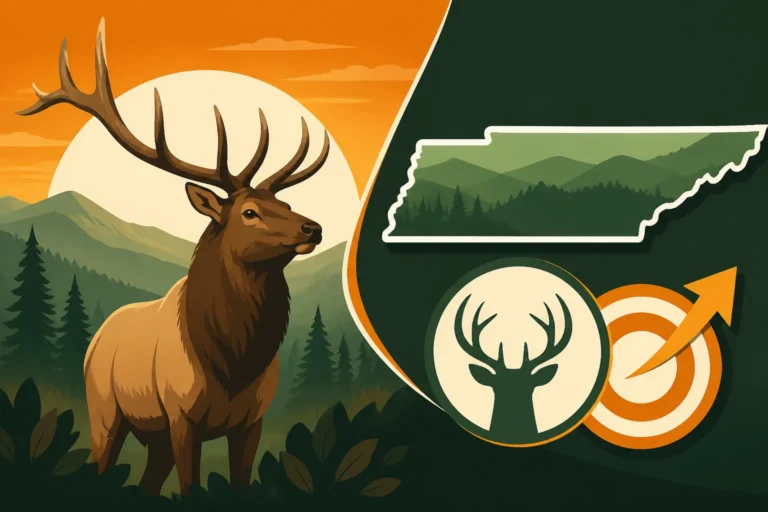
Tennessee's elk herd is a remarkable success story, a testament to dedicated conservation efforts. Reintroduced in the early 2000s, primarily from Canada, the herd now thrives in the remote, rugged landscape of the Cumberland Plateau in East Tennessee. When you're considering the Tennessee General Firearms Elk Season Dates, you're primarily looking at the North Cumberland Wildlife Management Area (WMA).
The North Cumberland WMA is a vast expanse of public land covering over 140,000 acres, primarily within five counties: Campbell, Claiborne, Scott, Morgan, and Anderson. This area comprises private land leased by the TWRA, as well as some portions of state and national forest lands. The elk restoration zone encompasses this region, and it's within these boundaries that the quota hunts take place. For a comprehensive overview, understanding Tennessee Elk Zone Boundaries Explained is key.
Hunting in the North Cumberland is physically demanding. We're talking steep ridges, deep hollows, thick timber, and sprawling clear-cuts. It's truly wild country, a stark contrast to the more rolling hills you might find in other parts of Tennessee. The elk, being the intelligent and wary animals they are, have learned to utilize this rugged terrain to their advantage, often seeking refuge in the densest cover or the most inaccessible hollows when pressured.
Within the North Cumberland WMA, the TWRA designates specific elk hunt zones. These zones might change slightly year to year, but the general principle remains: hunters who draw a tag are assigned a specific zone in which they can hunt. This helps distribute hunting pressure and manage the herd effectively across its range. It also means you need to be intimately familiar with your assigned zone's boundaries, terrain, and access points. Maps, GPS devices, and apps like onX Hunt (not GoHunt, but similar mapping functionality) become indispensable tools for scouting and navigating this expansive territory. Many hunters spend countless hours Scouting Tennessee Public Land Before Season in anticipation of this draw. Learning about Tennessee's Ten Elk Hunt Zones in detail will be incredibly beneficial if you're lucky enough to draw a tag.
Essential Gear and Preparations for the Elk Hunt
Drawing a Tennessee general firearms elk tag is just the first step; the real work begins in preparing for the hunt itself. This isn't your average deer hunt, and your gear and physical conditioning need to reflect the challenge.
Choosing the Right Rifle and Ammunition
When it comes to firearms for elk, you need something with sufficient power and kinetic energy to ethically take down such a large animal. While many deer calibers can technically kill an elk, the consensus among experienced elk hunters often leans towards cartridges with more punch. Common choices include the venerable .30-06 Springfield, .300 Winchester Magnum, .338 Winchester Magnum, or even larger magnums. The key is to use a bullet designed for large, tough game, ensuring deep penetration and reliable expansion.
Accuracy is paramount. You'll likely be taking shots in steep, varied terrain, often at distances you might not encounter on a typical deer hunt. Practice shooting from various positions – off-hand, kneeling, prone – and at different angles. Understand your rifle's capabilities out to at least 300-400 yards, even if you plan for closer shots. Reliable optics, such as a sturdy rifle scope with good low-light performance, are also critical for picking out an elk in the shadowy timber. For more on rifle choices, you can look at Rifle Setups for Tennessee Deer Hunting and consider stepping up the caliber for elk.
Optics for Spotting and Ranging
In the vastness of the North Cumberland WMA, quality optics are your best friends. A good pair of binoculars, at least 10×42, will be indispensable for picking apart distant ridges, scanning clear-cuts, and confirming if that dark patch is a shadow or a bull elk. A spotting scope can also be incredibly useful, especially if you plan to spend time Glassing a North Cumberland Elk Meadow from a distance.
Equally important is a reliable rangefinder. Judging distances in mountainous terrain can be deceiving, and an accurate range is crucial for making an ethical shot with your firearm. Many modern rangefinders also offer angle compensation, which is invaluable when shooting uphill or downhill. For insights into how these tools are used in similar landscapes, check out Optics for Cumberland Plateau Ridges.
Physical Conditioning and Game Retrieval
Seriously, don't underestimate the physical demands of an elk hunt in Tennessee. This isn't a sit-in-a-food-plot kind of hunt. You'll be hiking miles over steep, unforgiving terrain, often with significant elevation changes. Start a rigorous conditioning program months before the season. Focus on cardiovascular endurance, leg strength, and hiking with a weighted pack. There's a reason many articles on Preparing for a North Cumberland Elk Hunt emphasize physical fitness.
Once an elk is down, the real work begins. An adult bull elk can weigh upwards of 700-800 pounds. You will not be dragging that out whole. Plan for field dressing and quartering the animal on the spot. Bring a sharp, sturdy knife, a game saw or bone saw, and plenty of game bags. Consider a sturdy frame pack for hauling out meat, especially if you're hunting in a remote area. Think through your retrieval strategy long before you ever pull the trigger. Having a plan for this part of the hunt is as important as the shot itself.
Clothing and Navigation
Layering is key for hunting in mid-October in Tennessee. Mornings can be cold, especially at higher elevations, but afternoons can warm up considerably. Be prepared for rain, as mountain weather is notoriously unpredictable. Good waterproof boots are non-negotiable.
For navigation, don't rely solely on your phone. A handheld GPS unit is a smart backup, and knowing how to read a topographic map is an essential skill. Mark your vehicle, potential water sources, and any significant terrain features. Staying found in the vastness of the North Cumberland is critical for safety and success.
Disclaimer
Please remember that hunting regulations, season dates, and license requirements can change. Always consult the most current official Tennessee Wildlife Resources Agency (TWRA) hunting guide and regulations before planning any hunt. This guide is for informational purposes only and should not be considered a substitute for official TWRA resources.