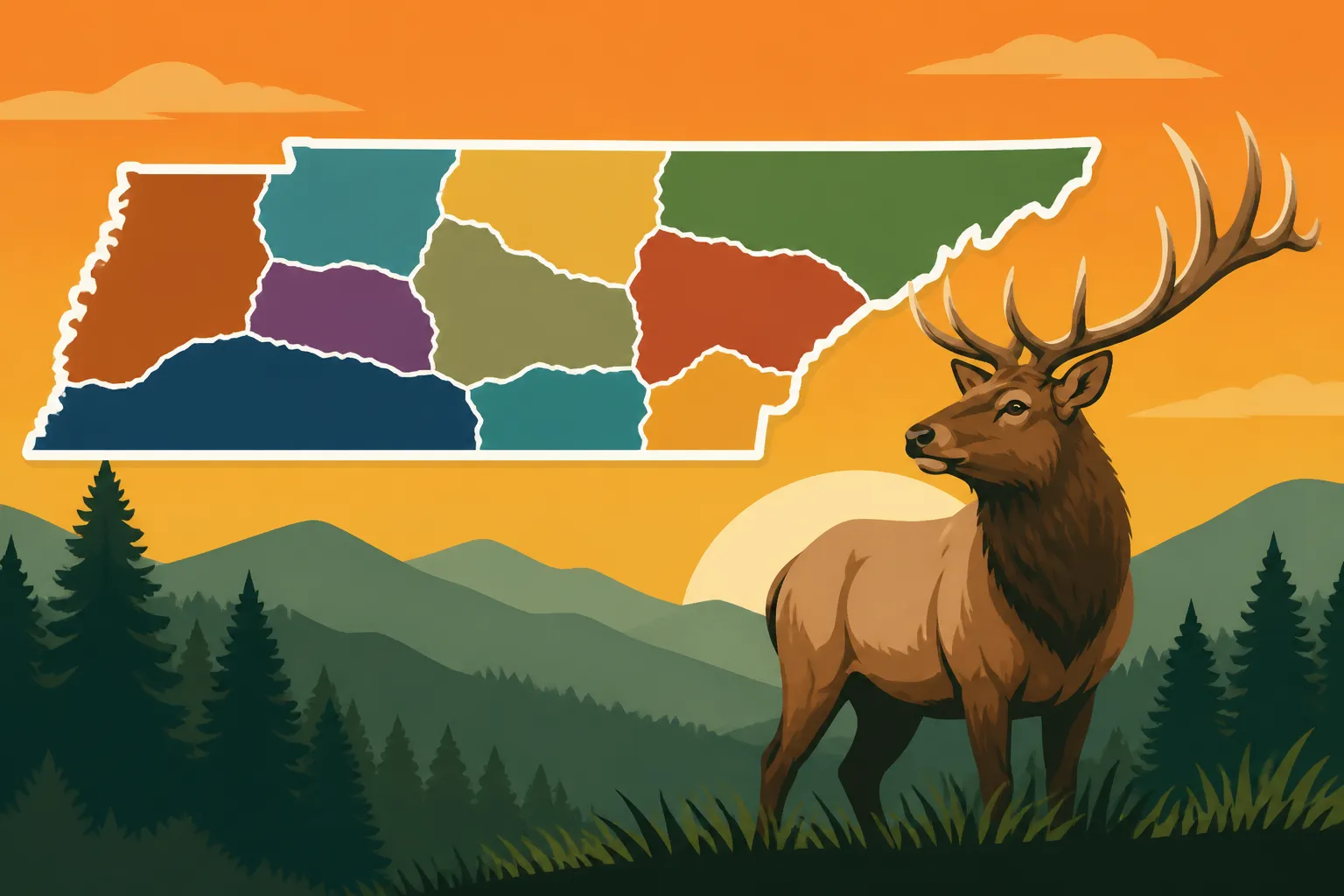
Tennessee’s Ten Elk Hunt Zones
For many hunters, the very thought of elk in Tennessee sounds like a dream, something reserved for the Rocky Mountains. But for those of us living in the Volunteer State, or for non-residents looking for a unique hunt, the North Cumberland region offers a truly special opportunity. However, understanding the intricate system of Tennessee's ten elk hunt zones can feel like trying to solve a puzzle with half the pieces missing, especially when permits are so rare. This guide is designed to cut through that confusion, meticulously breaking down each of Tennessee's elk hunt zones, explaining their unique characteristics, and providing the detailed information you need to navigate the application process and prepare for the hunt of a lifetime.
The Foundation of Tennessee's Elk Program
Before we dive into the specifics of each zone, it’s crucial to understand how and why elk came back to Tennessee, and why these zones were established in the first place. It’s a testament to incredible conservation efforts and a story of nature reclaiming its heritage.
A Brief History of Elk Restoration in Tennessee
Rewind a couple of centuries, and elk roamed freely across much of Tennessee. By the mid-19th century, however, unregulated hunting and habitat destruction had completely wiped them out. For well over 150 years, the iconic bugle of a bull elk was lost to these mountains.
The story of their return is a true conservation success. In 2000, the Tennessee Wildlife Resources Agency (TWRA) began an ambitious restoration project, reintroducing elk from Canada and Kentucky into the remote, rugged landscape of the North Cumberland Wildlife Management Area (NCWMA). This vast expanse of public and privately owned land, primarily in Campbell, Claiborne, Scott, Morgan, and Anderson counties, provided the perfect blend of dense forests, open reclaimed mine lands, and varied terrain to support a new herd. It was a slow, deliberate process, but the elk thrived. Today, the herd is estimated to be over 500 animals, a remarkable feat that allows for a limited, highly coveted hunting season. If you're interested in the journey, you can read more about How North Cumberland Elk Were Reintroduced.
Why Zones? Understanding Management Goals
So, with elk reestablished, why complicate things with ten different hunt zones? The answer lies in effective wildlife management. Dividing the North Cumberland elk range into distinct zones allows the TWRA to:
- Manage Population Dynamics: Each zone can have specific harvest quotas to maintain healthy age structures and buck-to-doe ratios, preventing over-harvest in certain areas while encouraging growth in others.
- Distribute Hunting Pressure: With only a handful of permits issued each year, the zones help spread out the limited number of hunters, minimizing impact on specific areas and enhancing the quality of the hunting experience. Imagine if all hunters were allowed to hunt the same small section – it would be chaotic and unsustainable.
- Account for Habitat Differences: The North Cumberland region is vast and diverse. Some areas are steep, dense timber, others are more open reclaimed mine lands with different forage. Zones allow for management strategies that consider these distinct habitat types.
- Integrate Public and Private Lands: The NCWMA is a mosaic of public and private ownership. Zones help delineate where public hunting is permitted and where private land concerns might influence elk movements and hunting opportunities.
These zones are essentially tools to ensure the long-term health and sustainability of Tennessee's elk herd, guaranteeing that future generations will also have the chance to experience the thrill of Preparing for a North Cumberland Elk Hunt.
Deciphering the North Cumberland Elk Hunt Zones (EHZ 1-9)
The vast majority of Tennessee's elk hunting opportunities are concentrated within the North Cumberland Wildlife Management Area, specifically within EHZ 1 through EHZ 9. These zones represent the core of the elk restoration area, each with its own characteristics that can influence hunting strategies and success.
The Core Zones: EHZ 1-3 & EHZ 5-7 (Controlled Access & Terrain)
These zones often represent the heart of the North Cumberland Wildlife Management Area (NCWMA) and other large tracts of public land. They typically feature the most rugged and remote terrain, dense timber, and substantial elevation changes. If you draw a tag in one of these zones, be prepared for a physically demanding hunt.
- EHZ 1 (Royal Blue Unit): Located within the Royal Blue Wildlife Management Area, this zone is legendary for its steep ridges, deep hollers, and extensive ATV trails. Elk here often stick to the dense timber, moving between food sources on reclaimed strip mine lands and the cover of mature forests. Hunters in EHZ 1 need to be in excellent physical condition, ready to navigate rough terrain. Access is often via gated roads that require a permit or by foot, making thorough scouting essential. You'll likely encounter old logging roads, thick clear-cuts from past timber operations, and remote, untouched pockets where elk seek refuge. These areas can be fantastic for hunters who enjoy Still-Hunting Cumberland Plateau Ridges.
- EHZ 2 (Sundquist Unit): Adjacent to Royal Blue, EHZ 2 covers similar challenging terrain, often encompassing the western edge of the NCWMA. It's known for its vast timberlands and less developed road systems in some sections, leading to a more wilderness-like experience. Elk may travel widely, using the cover to avoid pressure. Expect to put in serious boot leather. The strategy here often involves finding remote bedding areas and intercepting elk as they move to feeding grounds.
- EHZ 3 (New River Unit): This zone encompasses areas around the New River, offering a mix of river bottomlands and steep, broken ridges. Access can sometimes be influenced by river crossings or limited entry points. The habitat can be quite diverse, from riparian zones to high elevation plateaus. Elk may utilize the river valleys for water and travel corridors, retreating to the higher ground for security. This zone might require a different approach, potentially focusing on drainages and saddles.
- EHZ 5 (Catoosa Unit): While Catoosa Wildlife Management Area is known for its excellent deer and turkey hunting, EHZ 5 specifically focuses on the elk population that occasionally uses portions of it. This area features rolling hills, mature hardwood forests, and well-maintained roads. However, elk density can be variable. Hunters drawing EHZ 5 should carefully study elk movement patterns between Catoosa and adjacent NCWMA lands. The terrain here is generally less severe than Royal Blue, but still demands a good understanding of the landscape.
- EHZ 6 (Flat Hollow/Clear Fork Unit): This zone often falls within the central and eastern parts of the NCWMA, characterized by deep valleys, high ridges, and often active or reclaimed mining operations. The mix of open land and thickets can create prime elk habitat, but also makes them difficult to pin down. Elk often move between these habitat types, browsing in the open and bedding in the dense cover. Hunters need to be adaptable, ready to glass open areas at dawn and dusk, then shift to still-hunting through timber during the day.
- EHZ 7 (Hatfield Mountain Unit): Located in the northern reaches of the NCWMA, EHZ 7 is another zone defined by rugged, mountainous terrain. It's an area where elk can disappear into the vastness. Successful hunters here often focus on finding prime food sources – often clover or native grasses on reclaimed lands – and then meticulously scouting travel corridors and bedding areas in the surrounding timber. Understanding the wind and thermals in these deep valleys and high ridges is paramount for success, especially if you're attempting Calling a North Cumberland Bull Elk.
These zones, being deep within the core elk range, are where you'll find the highest probability of encountering significant elk activity. Access is generally managed by the TWRA, and hunters often rely on maps from tools like GoHunt to navigate the complex road networks and identify potential areas.
The Peripheral Zones: EHZ 4, EHZ 8, and EHZ 9 (Public Land Adjacent & Private Land Considerations)
These zones often lie on the fringes of the primary elk range, sometimes incorporating significant private land holdings adjacent to the WMA, or public lands that see less consistent elk presence. Hunting here can be trickier, requiring more extensive scouting and often necessitating private land access.
- EHZ 4 (Long Branch/Sequatchie Valley Unit): This zone is unique, as it stretches into the upper reaches of the Sequatchie Valley and surrounding areas, which is outside the main North Cumberland WMA. While elk sightings have increased in this area over the years due to herd expansion, the density is typically lower than in the core zones. Hunters drawing this tag would likely need to focus heavily on securing private land access or identifying isolated pockets of public land where elk might be present. This zone truly emphasizes the importance of understanding Tennessee Elk Zone Boundaries Explained. Success here often comes down to extensive pre-season scouting and building relationships with landowners.
- EHZ 8 (Pine Mountain Unit): EHZ 8 is a compelling zone because it often encompasses areas along Pine Mountain, straddling both public and private lands near the NCWMA. Elk here might be utilizing both for forage and security. While still within the general restoration footprint, hunters should anticipate a more mixed landscape. Gaining permission on private lands could significantly increase your chances, as elk might be pressured from public ground during the hunt and retreat to private property. This zone requires adaptable scouting, focusing on both WMA boundaries and potential private land hotspots.
- EHZ 9 (North Cumberland Buffer Unit): As the name suggests, EHZ 9 acts as a buffer zone, typically on the outer edges of the North Cumberland WMAs, potentially extending into adjacent counties like Anderson or Campbell. Like EHZ 4 and EHZ 8, this zone can have lower elk densities compared to the core areas (EHZ 1-3, 5-7). Elk movement patterns here might be more sporadic, influenced by seasonal food sources, hunting pressure, and herd expansion. Hunters must prioritize thorough e-scouting with tools like GoHunt and on-the-ground reconnaissance, looking for recent sign or potential travel corridors connecting the WMA to other suitable habitats. Success in EHZ 9 often rewards persistence and the ability to find and interpret subtle elk sign.
Hunting these peripheral zones demands a different kind of preparation. You might spend more time knocking on doors or searching for small, overlooked parcels of public land than hunters in the core zones. But the reward of finding a lone bull in these expanding territories can be incredibly satisfying.
| Elk Hunt Zone Type | Primary Location/Characteristics | Typical Terrain | Access Considerations | Hunter Effort |
|---|---|---|---|---|
| Core WMA Zones | EHZ 1-3, 5-7 (Royal Blue, Sundquist, New River, Catoosa, Flat Hollow, Hatfield Mountain) | Very rugged, steep ridges, dense timber, reclaimed mine lands | Primarily public WMA, some gated roads, requires physically demanding hiking | High |
| Peripheral Zones | EHZ 4, 8, 9 (Long Branch/Sequatchie, Pine Mountain, North Cumberland Buffer) | Mixed public/private, lower elk density, more varied habitat | Requires extensive scouting, potential private land permission crucial | Very High |
| Statewide Zone | EHZ 10 (All counties outside NCWMA) | Highly variable, private land focus | Incidental take only, private land permission essential, very rare opportunity | N/A (not a targeted hunt) |
The Unique Nature of EHZ 10 (Non-Quota Statewide Zone)
EHZ 10 stands apart from the other nine zones, representing a completely different kind of elk hunting opportunity – or, more accurately, a regulatory framework for incidental encounters. It's not a quota hunt in the traditional sense, and you won't apply for a tag specifically for EHZ 10 with the expectation of a planned elk hunt.
Understanding the Statewide Opportunity
EHZ 10 encompasses all counties in Tennessee that are outside the designated North Cumberland Elk Restoration Zone (which covers parts of Campbell, Claiborne, Scott, Morgan, and Anderson counties). While the main elk herd is concentrated in the North Cumberland region, elk are naturally expanding their range. It's not uncommon for solitary bulls or small groups to venture far from the core areas, occasionally showing up in places like Rhea County, Cumberland County, or even closer to Nashville.
The purpose of EHZ 10 is to provide a legal framework for hunters who encounter an elk outside the restoration zone, usually on private land, during an open deer or other big game season. It is not designed to create a targeted elk hunting season in these areas. Think of it as a safety net or an unexpected bonus for hunters already pursuing other game. The chances of encountering an elk and being in a position to legally harvest it under these rules are incredibly slim, making it one of the rarest hunting opportunities in the state. Hunters need to be intimately familiar with Tennessee's Chronic Wasting Disease Management Zone regulations, as these incidental elk could potentially fall within or outside CWD-affected areas, adding another layer of complexity to carcass transport and testing.
Regulations and Reporting for EHZ 10
The rules for hunting an elk in EHZ 10 are very specific and designed to manage these rare occurrences carefully:
- Private Land Only: Elk in EHZ 10 may only be harvested on private land. This means obtaining explicit permission from the landowner is absolutely non-negotiable before you even consider taking a shot. Trespassing laws in Tennessee are strict, and this rule ensures elk encounters are managed respectfully with private property rights.
- Open Season for Other Big Game: The elk must be encountered and harvested during an open deer or other big game season (e.g., bear or wild hog season) where the hunter is legally equipped with a valid license and permit for that season. You cannot specifically go "elk hunting" in EHZ 10.
- Weapon Restrictions: The weapon used must be legal for big game hunting in Tennessee during that specific season. For instance, if you're bowhunting for deer, you can only harvest an elk with your archery equipment. If it's gun season, a legal rifle would be acceptable.
- Immediate Reporting: This is perhaps the most critical rule. Any elk harvested in EHZ 10 must be reported to the TWRA within 24 hours of harvest. This is vital for biological monitoring, disease testing (especially relevant with Chronic Wasting Disease in Tennessee), and management purposes. The TWRA needs to know exactly where and when an elk was taken outside the primary restoration zone.
- No Bonus Tags: Unlike the quota hunts for EHZ 1-9, there is no specific elk tag issued for EHZ 10. The harvest is typically counted against a hunter's existing big game bag limit (e.g., a deer tag), or as an additional special harvest if the regulations allow. Always double-check the current year's hunting guide for the precise rules, as they can sometimes be updated.
Ultimately, EHZ 10 is a testament to the success of elk restoration, but it's an opportunity born of chance rather than design. While it’s certainly exciting to know an elk might pop up anywhere, hunters should view this as an extremely rare event and focus their primary elk hunting efforts on applying for the highly competitive quota hunts within the North Cumberland zones.
Applying for a Tennessee Elk Tag: Strategy by Zone
With only a limited number of elk tags issued each year, applying for a Tennessee elk permit is a serious endeavor. It’s not just about throwing your name in a hat; understanding the system and strategizing your application can make a difference, even if the odds remain incredibly low. You can find comprehensive details about Tennessee Elk Quota Hunt Rules in the TWRA regulations.
Preference Points and Application Windows
Tennessee uses a preference point system for its elk quota hunts. This means that for every year you apply for an elk permit but are unsuccessful in the draw, you earn one preference point. These points accumulate, and in subsequent years, they increase your mathematical odds of drawing a tag. It's not a guarantee, but it certainly helps over time, making it a marathon, not a sprint.
- How Preference Points Work: When the draw occurs, applicants with higher preference points are generally considered first. This system rewards loyalty and persistence, acknowledging those who have been trying for many years. It's why you often hear stories of hunters finally drawing a tag after a decade or more of applying.
- Application Period: The application window for Tennessee's elk hunts typically opens in the spring and closes in late May or early June. It's absolutely crucial to pay attention to these deadlines. Missing the application window means missing an entire year of potential preference point accumulation and, of course, a chance at a tag. The TWRA's Go Outdoors Tennessee platform is where all applications are processed, so be sure to set reminders and complete your application well in advance.
- Youth Opportunities: Don't forget about the Tennessee Youth Elk Season Rules. The TWRA often sets aside specific tags or hunt periods for youth hunters, which can sometimes have slightly different application dynamics or draw odds. It’s a fantastic way to introduce the next generation to big game hunting.
For many, the initial hurdle is simply understanding the application process. Utilizing resources like the official TWRA website or reputable hunting platforms like GoHunt can help clarify the deadlines and specific requirements each year.
Analyzing Zone Odds and Hunter Effort
Once you understand the preference point system, the next strategic step is analyzing which zone to apply for. This isn't just about picking the "best" zone; it's about understanding the draw odds, the type of hunting experience each zone offers, and matching it to your physical capabilities and preferences.
- Draw Odds Variation: While the overall odds are low (sometimes less than 1% for resident hunters, even lower for non-residents), certain zones might have slightly better or worse odds depending on their popularity, accessibility, and past success rates. Zones known for producing larger bulls or being slightly easier to access might see more applicants, thus driving down the draw odds. Conversely, more rugged, remote zones might have slightly fewer applicants, potentially nudging your odds up.
- Type of Hunt:
- Physically Demanding Zones (e.g., EHZ 1, 2, 7): These are the wilderness zones, demanding peak physical condition. If you draw one of these, you'll be navigating steep climbs, deep valleys, and potentially many miles on foot. The reward is a truly wild hunt, but it requires serious preparation. For these areas, researching specific terrain on mapping apps and understanding elevation changes is key to planning your Treestand Setups in Cherokee National Forest, even if you’re not hunting the Cherokee.
- Mixed Terrain Zones (e.g., EHZ 3, 5, 6): These zones might offer a more varied experience, with some challenging terrain interspersed with more accessible areas. You might find elk using a combination of thick timber and reclaimed mine lands. These require versatility in your hunting approach.
- Peripheral/Private Land Zones (e.g., EHZ 4, 8, 9): As discussed, these zones often have lower elk densities and may require extensive private land permission. If you're a skilled negotiator and have a network of contacts, these could be viable, but they demand more legwork before the hunt.
- Success Rates: While success rates can vary year to year, looking at historical data (often published by the TWRA) can give you an idea of which zones tend to yield more harvested elk. A zone with a high success rate might indicate higher elk densities or more accessible elk, but it could also mean more hunting pressure if it's a popular choice.
When applying, consider your personal hunting style, physical fitness, and willingness to put in the pre-season work. It’s better to draw a tag in a zone you’re prepared to hunt effectively than to draw a “prime” zone you can’t physically navigate. Using tools like GoHunt can help you research past draw odds and success rates to inform your application strategy, though even with all the data, a little luck is always involved when dealing with such limited permits.
Scouting and Tactics for Your Drawn Elk Zone
Drawing a Tennessee elk tag is just the beginning of the adventure. The real work begins with scouting and planning your hunt. With such a limited time frame (typically five days for the general firearms season), maximizing your chances requires diligent preparation.
Pre-Season Reconnaissance and E-Scouting
Scouting, both digitally and on the ground, is paramount for success in Tennessee's elk zones. These areas are vast, rugged, and elk can be incredibly elusive.
- Digital Deep Dive: Start with e-scouting months before the season. Utilize satellite imagery, topo maps, and land ownership overlays from mapping platforms like GoHunt, onX Hunt, or the Scouting With the Tennessee TWRA App. Look for:
- Topographical Features: Identify saddles, benches, ridge lines, and drainages. These are natural travel corridors for elk. Understanding Wind and Thermals on a Ridge System is critical, as elk rely heavily on them for security.
- Habitat Diversity: Pinpoint areas where dense cover meets open feeding grounds. Reclaimed mine lands often feature clover, fescue, and other grasses that elk love, while mature timber provides bedding and security.
- Water Sources: Elk need water daily. Locate springs, creeks, and ponds within your zone.
- Access Points and Roads: Identify legal access points, gated roads, and potential parking areas. Note areas that might be difficult to reach, as these often hold less pressured elk.
- Historical Data: If you can find past TWRA harvest data by zone, it can give you clues about where elk have been harvested historically.
- On-the-Ground Verification: Nothing beats boots on the ground. If possible, visit your drawn zone in the off-season. Look for:
- Elk Sign: Fresh tracks, droppings, rubs (especially during the rut, usually late September to early October When Tennessee Elk Bugle), and wallows are all indicators of elk presence. Pay attention to how recent the sign appears.
- Travel Corridors: Confirm your e-scouting findings. Are those saddles and benches actually being used? Are there well-worn game trails?
- Security Cover: Identify areas of thick, impenetrable cover where elk might bed down during the day.
- Calling Locations: Look for natural amphitheaters or clearings where you can effectively use elk calls.
- Potential Stand/Stalking Routes: Visualize how you would approach an area, considering wind direction and terrain.
Remember, elk are constantly moving. What was true in July might shift slightly by October, but a solid scouting foundation will give you a significant advantage. Don't be afraid to Glassing a North Cumberland Elk Meadow from a distance to pinpoint active areas without disturbing the animals.
Hunting Strategies Tailored to Tennessee Elk Zones
Tennessee elk hunting is not a one-size-fits-all affair. The rugged terrain and diverse habitats within each zone often dictate the most effective hunting strategies.
- Spot-and-Stalk: This is a highly effective method, especially in zones with more open areas like reclaimed mine lands or less dense timber. It involves finding elk from a distance (spotting), then meticulously planning an approach to get within shooting range (stalking). This requires excellent optics, patience, and a keen understanding of wind direction. Early mornings and late evenings are prime times for spotting elk as they move to and from feeding areas. In areas like EHZ 1 (Royal Blue) with its open clear-cuts, you might Spot-and-Stalk Tactics for Cherokee Forest Bears but apply the same patience for elk.
- Calling: During the elk rut (late September into early October), calling can be incredibly effective. Bugles, cow calls, and chuckles can draw in curious bulls or locate animals. However, outside the peak rut, calling can still be used to locate elk, especially soft cow calls to gauge their presence. Be mindful of hunting pressure; over-calling can educate elk quickly. Practice your calls extensively beforehand.
- Still-Hunting: This method involves moving slowly and deliberately through the woods, stopping frequently to scan, listen, and glass. It's particularly effective in dense timber zones (like EHZ 2 or the deeper sections of EHZ 7) where visibility is limited. Focus on moving into the wind or crosswind, paying close attention to every sound and movement. This strategy is also very effective when Still-Hunting Cumberland Plateau Ridges.
- Stand Hunting: While not as common for elk as it is for deer, setting up an ambush point near a known travel corridor, water source, or feeding area can be effective, especially during less active periods. This might involve a ground blind brushed into a field edge or a strategically placed treestand overlooking a pinch point. However, remember that elk cover a lot of ground, so stand placement needs to be exceptionally well-scouted and versatile.
- Weather Considerations: Tennessee weather can be unpredictable. Be prepared for anything from warm, sunny days to cold, rainy, or even snowy conditions, particularly later in the season. Your clothing system should be layered, quiet, and capable of handling moisture. Ensure your gear, especially optics and firearms, can withstand the elements.
No matter your chosen strategy, patience, persistence, and adaptability are your greatest assets. Elk hunting in Tennessee is a physically and mentally demanding pursuit, but the reward of harvesting one of these magnificent animals in your home state is an experience that very few hunters ever get to enjoy.
Disclaimer
Please remember that hunting regulations, season dates, and zone boundaries can change. Always consult the most current Tennessee Wildlife Resources Agency (TWRA) regulations guide before planning or engaging in any hunting activities. This guide is for informational purposes only and does not supersede official TWRA regulations. Ensure you understand and comply with all state and federal hunting laws.