Deer Sleds for Ridge Country
You’ve done it. You’ve put in the time, studied the land, and made a clean shot on a hard-earned Tennessee deer. The rush of success is exhilarating, but then the cold reality hits: you're likely miles from the truck, in some of the steepest, most unforgiving terrain the Cumberland Plateau or Cherokee National Forest can throw at you. Dragging that deer out of a deep hollow, up a rocky incline, and through thick briars isn't just physically demanding; it can be downright dangerous and can damage the meat. This comprehensive guide is all about making that arduous journey easier, safer, and more efficient by leveraging the power of deer sleds in Tennessee's challenging ridge country.
The Uphill Battle: Why Traditional Dragging Fails in Tennessee's Ridge Country
Let's be honest, we've all been there. You connect with a deer in a picturesque but punishing landscape, perhaps while Hunting Cumberland Plateau Ridgelines. You size up the downed animal, take a deep breath, and grab ahold of an antler or a leg, hoping sheer grit will get you back to the truck. While commendable, this traditional dragging method often falls short, especially when dealing with the unique challenges of Tennessee's ridge and hollow terrain.
The Sheer Physical Toll
Dragging a deer across uneven, rocky ground is an exhausting endeavor. Picture this: you're trying to pull a 150-pound deer up a 30-degree slope, with loose rocks underfoot and briars snagging at every turn. Your back muscles are screaming, your lungs are burning, and every few feet, you have to stop to adjust your grip or untangle the deer from a thicket. This isn't just about being out of shape; it's an inefficient use of energy that can leave you dangerously fatigued, especially if you're hunting solo. The risk of injury, from strains and sprains to twisted ankles, dramatically increases as exhaustion sets in. When you're trying to simply survive the drag, you're not paying attention to your footing or the nuances of the terrain, which could lead to a fall.
Protecting Your Hard-Earned Meat
Beyond the physical exertion, dragging a deer directly on the ground in ridge country can compromise the quality of your venison. The hide can get torn and dirty from rocks, sticks, and mud, introducing bacteria that can contaminate the meat. This is particularly concerning during warmer early season hunts or if you're in a situation where you can't get the deer field-dressed immediately. Even if you've done a pristine Field Dressing a Deer in Cold Weather, prolonged exposure to dirt and debris can impact the quality of the outer muscle groups, requiring more trimming back at camp. In a rough drag, the constant bumping and scraping can also cause bruising to the meat, further reducing its quality and yield.
Navigating Obstacles and Steep Terrain
Tennessee's ridge country is a labyrinth of natural obstacles. You might encounter steep ravines, jagged rock formations, dense laurel thickets, or fields of downed timber. A deer's carcass, with its irregular shape and stiff limbs, acts like an anchor, snagging on every branch and rock. It's not uncommon to spend more time lifting, untangling, and wrestling the deer over obstacles than actually making forward progress. This is where a simple drag rope feels utterly inadequate. Trying to haul a deer straight up an embankment or down a slippery slope without a way to distribute the weight or glide over obstructions can quickly turn a successful hunt into a miserable, hours-long ordeal. Hunters using tools like the GoHunt app for detailed topo maps often realize the sheer scale of the challenges presented by the local terrain.
The Game Changer: How Deer Sleds Revolutionize Ridge Country Recovery
The challenges of dragging a deer in Tennessee's rugged landscape are real, but thankfully, there's a solution that many veteran hunters swear by: the deer sled. This isn't some fancy gadget; it's a practical, often simple tool that dramatically changes the game for recovering game in tough spots.
Significantly Reduced Effort and Fatigue
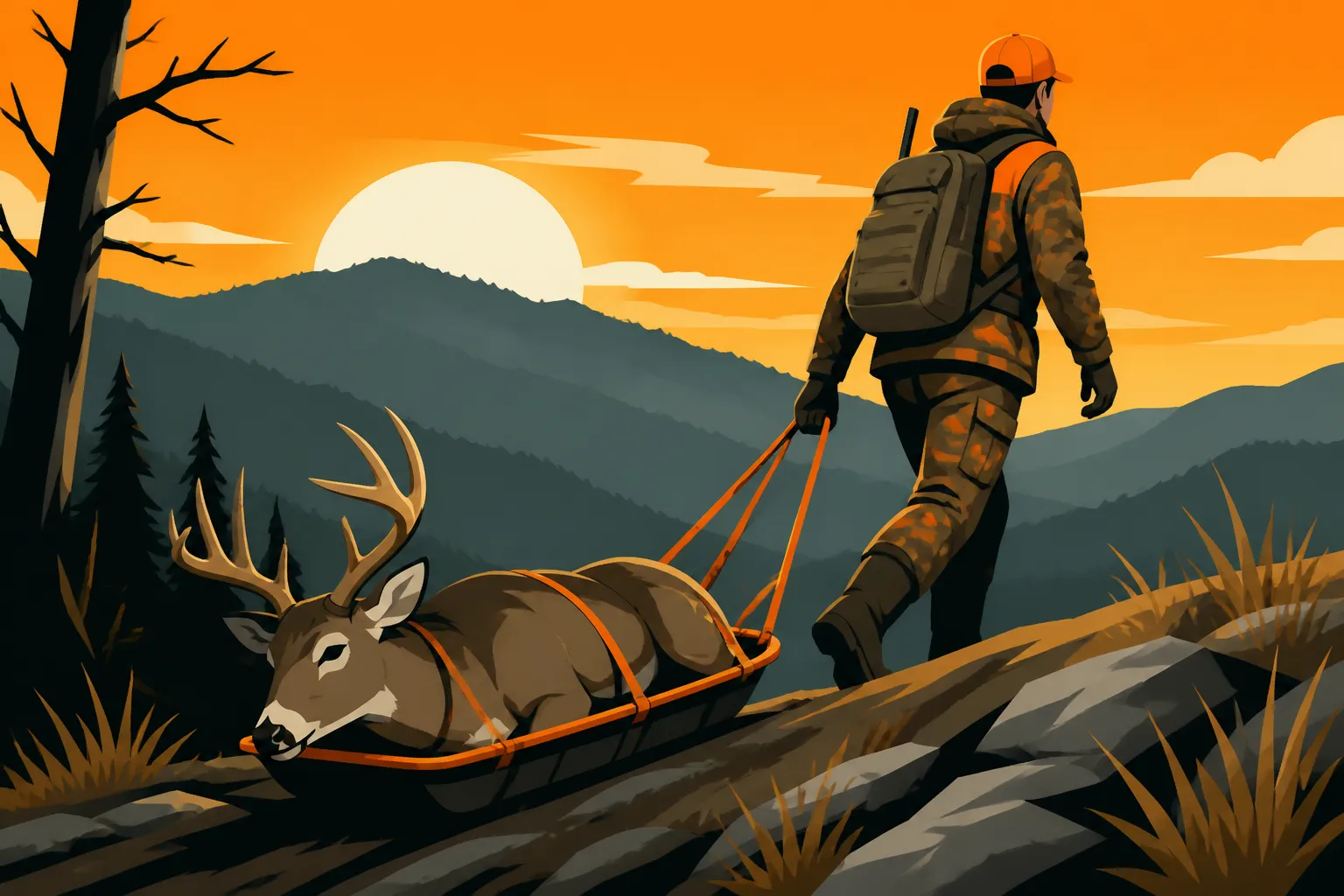
Imagine gliding your deer over logs, rocks, and uneven ground instead of hoisting it over every obstacle. That's the primary benefit of a deer sled. By creating a smooth, low-friction surface, a sled allows the deer to slide more easily, effectively reducing the amount of brute force required to move it. This means less strain on your back, shoulders, and legs. When you're trying to recover a deer solo or with limited help, this reduction in effort is a game-changer. You'll arrive back at the truck less exhausted, more energized, and ready for the next steps in processing your harvest. This can be crucial after a long day of Hunting the Cumberland Plateau where every ounce of energy is precious.
Superior Protection for Your Meat and Hide
One of the biggest advantages of using a deer sled is the protection it offers your trophy and your venison. The sled acts as a barrier between the deer's carcass and the harsh ground. It keeps dirt, leaves, mud, and debris from directly contacting the hide and any exposed meat. This is especially vital in areas with sharp rocks or thorny vegetation that can tear the hide. By keeping the animal cleaner and minimizing bruising, a sled helps ensure that your hard-earned venison remains in pristine condition, requiring less trimming and making for a better table fare. Think about it: a cleaner drag means less work and better meat quality back home.
Enhanced Solo Hunting Capability
For many of us, hunting is a solitary pursuit, and the thought of recovering a large deer alone in steep country can be daunting, sometimes even preventing us from venturing into those harder-to-reach areas where big bucks often live. A deer sled empowers the solo hunter. While it doesn't make a 200-pound deer feel weightless, it distributes the weight and reduces friction to a point where one person can manage the drag that would otherwise require two or three. This opens up more possibilities for where you can hunt and increases your confidence in retrieving your game, even if you're miles back in the timber, trying to reach a Where Cumberland Plateau Bucks Bed.
Choosing Your Workhorse: Types of Deer Sleds for Mountainous Terrain
Not all deer sleds are created equal, and what works wonders in flat agricultural fields might be a hindrance in the gnarly topography of Tennessee's ridges. Selecting the right type of sled depends on your specific hunting conditions, the size of game you anticipate, and your budget.
Basic Utility Sleds: The Workhorse for Most Hunters
These are typically made from durable, flexible plastic or polyethylene. They are often molded into a simple tub or scoop shape, designed to hold the deer and glide over obstacles. Many models come with reinforced edges and pre-drilled holes for attaching a drag rope.
- Pros: Generally very affordable, lightweight, easy to clean, and incredibly durable against punctures and abrasions. Their flexibility allows them to conform to uneven terrain and bend around tight corners without cracking. They are excellent for shedding snow, mud, and water, making them suitable for all-season use. Many hunters appreciate their simplicity; there are no moving parts to break. They can also double as a gear hauler for treestands or camp supplies on the way in.
- Cons: The open design means the deer can occasionally shift or fall out on very steep side-hills if not secured properly. They don't typically offer a lot of additional features like built-in harnesses or multiple attachment points unless you modify them yourself. Hauling uphill can still be challenging due to the lack of internal structure, relying heavily on the external rope.
Purpose-Built Deer Sleds: Specialized for Game Recovery
These sleds are designed specifically with game recovery in mind, often featuring more refined designs and materials. They might have a longer, narrower profile, sometimes with a slightly raised nose to prevent digging into the ground.
- Pros: Often made from high-density, impact-resistant plastic that offers superior rigidity and protection. Some models incorporate a built-in rope system or multiple cinch straps to secure the deer firmly in place, preventing movement during the drag. This is particularly useful when navigating switchbacks or steep descents where a loose animal could be a problem. The design often focuses on maximizing glide and minimizing friction. You might even find models with slightly textured bottoms to help with traction on slopes when going downhill, or slicker surfaces for maximum glide.
- Cons: Can be more expensive than basic utility sleds. Their more specialized shape might make them less versatile for other hauling tasks like firewood or equipment. Some designs can be a bit bulkier to store or carry into the woods, though many are still lightweight enough to be carried in a pack. For hunters who prioritize dedicated functionality, this is a minor trade-off.
Enhanced Sled Systems: Adding Comfort and Control
While still technically sleds, these systems incorporate additional features like reinforced harnesses, multiple handles, or even a semi-rigid frame to improve comfort for the hauler and control over the load. These are often used when the distance is extreme or the terrain is exceptionally challenging.
- Pros: Offer superior ergonomics, distributing the pulling weight more effectively across the hunter's body (e.g., using a shoulder harness or waist belt). This reduces stress on a single point of the body and allows for more powerful, sustained pulling. The enhanced control prevents the sled from veering off course or flipping. They are excellent for team hauling, with multiple attachment points for several hunters. Companies like GoHunt, while primarily a mapping and scouting tool, often discuss how such advanced recovery systems are integral to planning hunts in remote areas.
- Cons: These are generally the most expensive options. They tend to be heavier and bulkier to carry into the field compared to simple plastic sleds. The additional straps and buckles can be more complex to set up, especially in the dark or cold. This might be overkill for hunters who only go out once or twice a year, but for serious public land hunters who consistently pursue game in demanding environments, the investment can be worthwhile.
Here's a quick comparison of common deer sled types:
| Sled Type | Material | Primary Shape | Key Advantages | Ideal Terrain Use |
|---|---|---|---|---|
| Basic Utility Sled | Flexible Plastic | Scoop/Tub | Affordable, lightweight, very durable, flexible, easy to clean, multi-purpose | General rough terrain, rocky ground, snow, moderate slopes |
| Purpose-Built Sled | Rigid Plastic | Elongated/Scoop | Better game securing, optimized glide, often has reinforced edges | Steep slopes, dense brush, long hauls, areas where meat protection is paramount |
| Enhanced System | Hybrid (plastic/fabric) | Customizable/Adjustable | Superior ergonomics, distributed pulling weight, excellent control, team hauling | Extreme terrain, very long hauls, heavy game, situations requiring maximum comfort |
Mastering the Haul: Effective Techniques for Using a Sled in Steep Terrain
Having the right deer sled is only half the battle; knowing how to use it effectively in Tennessee's demanding ridge country is just as important. With a few smart techniques, you can make even the most challenging drags manageable.
Rigging Your Sled for Success
First things first: secure your deer. Simply tossing the deer into the sled and pulling might work on flat ground, but in steep, broken terrain, that deer will shift, slide, and potentially fall out.
- Strap it down: Use bungee cords, ratchet straps, or strong rope to secure the deer inside the sled. Cross the straps over the deer's body, making sure the legs are tucked in and won't snag. If your sled has built-in cinches, use them. The goal is to make the deer and the sled one cohesive unit.
- Utilize a good drag rope: Don't just grab any old rope. A strong, non-stretching rope with a comfortable handle or a loop for your hands is crucial. Some hunters prefer a harness that goes around their shoulders or waist, allowing them to use their legs and core strength, saving their arms and back. This is particularly useful when you're Dragging a Deer Out of a Steep Hollow. If you're pulling with a buddy, make sure you have two separate drag ropes or a yoke system that distributes the pull evenly.
- Head or feet first? Generally, pulling the deer head-first is easier as the head acts as a rudder and the antlers, if present, can help prevent the front of the sled from digging into soft ground. However, on very steep downhill sections, pulling feet-first can sometimes offer more control as the body acts as a natural brake. Experiment to see what works best for your specific situation.
Uphill Strategies: Slow and Steady Wins the Race
Tennessee's ridges mean you're going to encounter plenty of uphill climbs. These are often the most grueling parts of the drag.
- Zig-zag where possible: Instead of trying to haul straight up a steep incline, look for opportunities to zig-zag across the slope. This reduces the effective grade you're climbing and makes the pull much more manageable. Think like a switchback trail. While using your GoHunt topo map, identify potential game trails or less steep lines before you even make the shot.
- Short pulls, frequent rests: Don't try to pull the entire distance without stopping. Take short, powerful pulls, moving the sled 10-20 feet, then stop, rest, and catch your breath. This conserves energy and prevents overexertion.
- Leverage obstacles: Use fallen logs or large rocks as temporary anchors to rest the sled against, preventing it from sliding backward on a steep climb. Sometimes, a short section of heavy rope wrapped around a tree can be used as a makeshift pulley system with a partner.
Downhill Dynamics: Control is Key
Going downhill with a heavy deer sled can be surprisingly tricky. Gravity is your friend for momentum, but it can also lead to runaway sleds or loss of control.
- Maintain control: Never let the sled get ahead of you on a steep descent. Keep the drag rope taut and use your body weight to slow its progress. A controlled slide is what you're aiming for.
- Feet-first for braking: As mentioned, sometimes pulling the deer feet-first down a steep hill can provide more natural braking. The wider, flatter surface of the deer's hindquarters combined with the sled can create more friction.
- Guide, don't just pull: When descending, you're often more guiding the sled than pulling it. Steer it around obstacles, use trees to brace yourself, and take your time. A slip on a downhill can be dangerous for both you and the meat. This is especially relevant if you're navigating a Recovering a Deer From a Steep Hollow.
Overcoming Obstacles: Smart Navigation
Logs, rocks, and thick brush are inevitable in Tennessee's timber.
- Logs and blowdowns: Approach logs at as close to a 90-degree angle as possible. This minimizes the length of the sled that needs to be lifted over. Lift the front of the sled over the log, push it forward, then lift the back. For larger logs, you might need to briefly pull the deer out of the sled, move the sled over, then drag the deer over and put it back in.
- Rocks and boulders: The slick bottom of a good deer sled should allow it to slide over most smaller rocks. For larger boulders, similar to logs, try to go over them cleanly. If it's too jagged, you might need to briefly lift the deer out, clear the sled, then replace the deer.
- Dense brush/briars: This is where the sled really shines. Instead of the deer's body getting snagged on every thorn, the sled will glide over or push through the vegetation, saving immense frustration and protecting the hide. However, be mindful of branches that could potentially flip the sled if it gets caught just right.
Keeping Your Sled Ready: Care and Maintenance for Years of Service
A deer sled is a tool designed for tough work, but like any piece of hunting gear, it benefits from proper care and maintenance. A well-maintained sled will last for countless seasons, making those challenging recovery efforts much easier.
Cleaning After Every Use
This might seem obvious, but it's often overlooked in the post-hunt excitement and exhaustion. A deer carcass leaves behind blood, hair, and sometimes other biological material. If left to dry and bake on, this can become quite a chore to remove later, and it can attract pests during storage.
- Rinse thoroughly: As soon as you get home, take your sled to a wash-down area. A garden hose with a strong nozzle is usually sufficient. Spray down the entire sled, inside and out, making sure to get into any crevices or molded features.
- Scrub with mild soap: For stubborn bloodstains or dried mud, a stiff brush and some mild dish soap or a dedicated cleaning solution designed for hunting gear will work wonders. Scrub the affected areas vigorously, then rinse again until all soap residue is gone.
- Disinfect (optional but recommended): Especially if you're hunting in areas with CWD or other wildlife diseases, a light disinfection can be a good idea. A diluted bleach solution (1 part bleach to 10 parts water) or a commercial disinfectant spray can be used. Be sure to follow the manufacturer's instructions for any commercial products and rinse thoroughly after to prevent degradation of the plastic. This step is particularly important if you're moving between different Tennessee's Chronic Wasting Disease Management Zone counties.
Inspecting for Wear and Tear
Before and after each season, and certainly after a particularly rough drag, take a few minutes to inspect your sled for any damage.
- Check the plastic: Look for deep gouges, cracks, or areas where the plastic seems thin or stressed. Small scratches are normal and part of the sled's character, but deep damage could compromise its integrity. Pay close attention to the edges and corners, as these often take the most abuse.
- Examine drag ropes and handles: The drag rope is under immense stress. Check for fraying, cuts, or weak spots. Ensure that any attached handles are secure and not coming loose. If the rope shows significant wear, replace it. It's a small investment for safety and peace of mind. Some hunters even carry a spare rope in their Packs for a Cherokee Forest Day Hunt.
- Hardware and straps: If your sled has any buckles, D-rings, or other hardware, make sure they are intact and functioning correctly. Check any integrated straps for tears or frayed stitching.
Proper Storage
How you store your sled can impact its lifespan and readiness for the next hunt.
- Keep it clean and dry: Always store your sled clean and completely dry to prevent mold, mildew, and unpleasant odors.
- Out of direct sunlight: While durable, prolonged exposure to harsh UV rays can degrade plastic over time, making it brittle. Store your sled in a garage, shed, or under a tarp to protect it from the elements.
- Flat or hung: Store it in a way that prevents it from warping. Lying it flat is ideal, or if it's a lighter, more flexible model, hanging it vertically from a wall can save space without causing damage.
By taking these simple steps, your deer sled will remain a reliable partner in the woods, ready to help you recover your game from even the toughest Tennessee terrain for many seasons to come.
Disclaimer
This article is for general informational purposes only and does not constitute professional advice. Laws, prices and regulations vary by location and change over time. Consult a qualified professional for guidance on your specific situation.