Upland Vests With Water Capacity
There's nothing quite like the crunch of fallen leaves underfoot as you push through a thicket, hoping to flush a covey of quail or find a grouse bursting from cover. But let's be honest, those long walks over varied Tennessee terrain, often far from any water source, can take a toll on both you and your loyal hunting dog. Staying hydrated isn't just a comfort; it's a critical safety measure, and that's where a quality upland vest with ample water capacity becomes an absolute game-changer. This guide will help you navigate the options, ensuring you and your canine companion can stay refreshed and focused, no matter how rugged the hunt gets.
Why Water Capacity is Crucial for Tennessee Upland Hunters
Upland hunting in Tennessee is a deeply rewarding experience, but it's rarely a stroll in the park. From the steep, rocky slopes of the Cumberland Plateau to the dense river bottom thickets of West Tennessee, our hunting grounds demand physical exertion. And where there's exertion, there's a need for hydration – for both the hunter and their invaluable four-legged partner.
The Demands of Tennessee's Upland Terrain
Picture yourself trekking through a public land tract in the Cherokee National Forest Hunting, following your setter through miles of briars, honeysuckle, and knee-high broom sedge. Or perhaps you're working a fencerow for cottontails after a long hike up a gradual slope. These aren't flat, easy walks. You're constantly pushing, climbing, and navigating challenging cover. This physical activity, especially during warmer early seasons or even mild late-season days, means you're going to sweat. A lot.
Dehydration can creep up on you quickly, leading to fatigue, reduced concentration, and even more serious health risks. When your mind isn't sharp, you're not hunting effectively, and more importantly, you're not hunting safely. Relying on a single small water bottle often just doesn't cut it, leaving you rationing sips and wishing for more miles before you hit the truck. Having a consistent and easily accessible water supply integrated into your gear allows you to stay focused on the hunt, cover more ground, and enjoy the experience without constantly worrying about your thirst.
Keeping Your Hunting Dog Hydrated and Healthy
If staying hydrated is crucial for you, it's doubly so for your bird dog. These incredible athletes are often covering three to five times the ground you are, running, sniffing, and pushing through dense cover with boundless energy. Their body temperatures rise rapidly, and they can overheat much faster than a human. Watching your dog pant heavily, slow down, or even stumble is a heartbreaking sight for any hunter, and it's often a sign they're severely dehydrated.
The moment your dog starts working, they need access to water. This isn't just about their comfort; it's about preventing potentially life-threatening heatstroke. Carrying enough water for your dog – and a collapsible bowl – is non-negotiable. A vest with integrated water capacity ensures that water is always at hand, allowing you to offer frequent, small drinks to your dog, keeping them cool, energized, and ready to find the next covey. Imagine being miles deep into a preserve, your springer spaniel just made an incredible retrieve, but now its tongue is practically dragging. Being able to pull out a water bottle from your vest and offer it immediate relief is priceless.
Beyond Just a Water Bottle: Integrated Systems
While a traditional water bottle in a side pocket is better than nothing, it often falls short for serious upland hunting. Bottles can be cumbersome, they can fall out, and they rarely offer enough volume for a full day afield for both you and your dog. That's where integrated water systems shine.
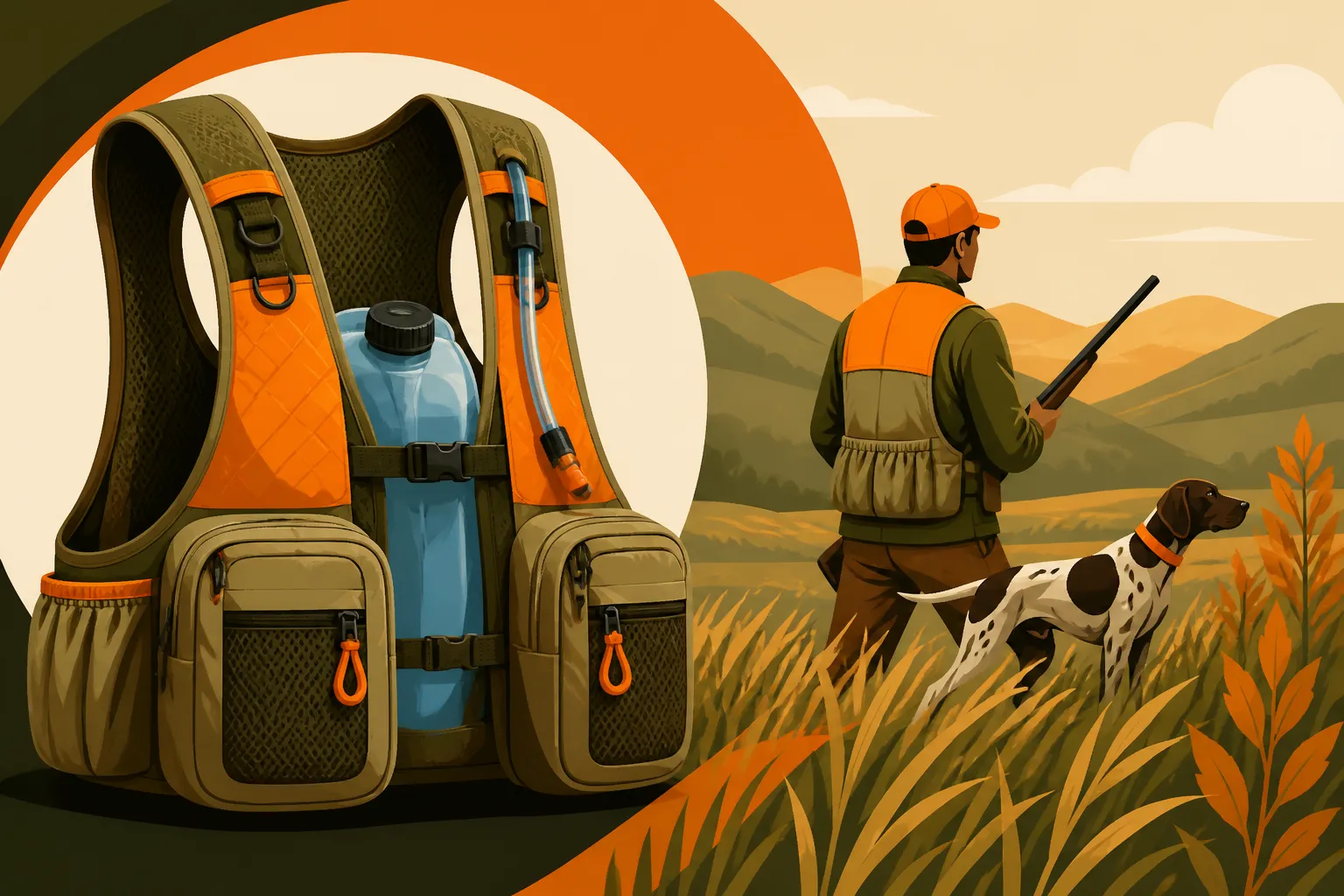
Many modern upland vests incorporate hydration bladders, similar to those found in backpacking packs. These bladders typically hold a substantial amount of water, often between 1.5 to 3 liters, distributing the weight evenly across your back. A drinking tube is routed conveniently over your shoulder, allowing for hands-free sips whenever you need them. This seamless access is incredibly efficient, meaning you're more likely to stay hydrated throughout the day without breaking your stride or putting down your shotgun. For your dog, having the bladder means you can refill their bowl multiple times, ensuring they get the continuous hydration they need. Think about it: no more fumbling for a bottle, unscrewing a cap, and then struggling to put it back while trying to keep an eye on your dog or the landscape.
Understanding Different Types of Upland Vests with Water Capacity
The market for upland vests has expanded considerably, moving far beyond the simple canvas and mesh designs of yesteryear. Today, you have a range of options, each with different approaches to carrying water and gear, tailored to various hunting styles and preferences.
Vest-Style Packs: The Traditional Choice
The classic vest-style pack remains a popular choice for many hunters due to its familiarity and straightforward design. These vests typically feature a large game bag on the back for birds, multiple pockets on the front for shells, calls, and other essentials, and often some sort of padded shoulder straps. When it comes to water capacity, older traditional vests might have external mesh pockets designed to hold standard plastic water bottles. Some newer iterations might include a dedicated pouch for a smaller hydration bladder, though it's often an afterthought rather than an integrated system.
The main advantage of these vests is their simplicity and often lighter weight. They're great for shorter hunts or areas where you know water sources are readily available. However, a common frustration is that the weight of full water bottles can pull on the shoulders unevenly, causing discomfort, especially if you're carrying a heavy load of game birds. Accessing bottles from external pockets can also be awkward, requiring you to contort or even take the vest off. If you're considering one of these, look for designs that offer robust, secure bottle pockets or at least the option to add a small hydration bladder internally.
Hybrid Vest/Pack Systems: Balancing Comfort and Capacity
This category represents a significant leap forward in upland gear, combining the best aspects of a traditional vest with the ergonomic load-carrying capabilities of a backpack. Hybrid vest/pack systems are designed with comfort and capacity as priorities, often featuring a dedicated compartment for a hydration bladder, typically ranging from 1.5 liters up to a full 3 liters. Brands like GoHunt have really pushed the envelope in this space, creating systems that distribute weight effectively across your shoulders and hips, reducing fatigue over long days afield.
These systems often boast a more robust internal frame or structured back panel, along with padded waist belts and adjustable chest straps, similar to a backpacking pack. The game bag is usually larger and often designed for easy cleaning, while front pockets are numerous, well-organized, and easily accessible. Beyond hydration, they offer ample storage for rain gear (crucial during an unexpected Tennessee shower), first-aid kits, extra layers, and dog essentials. The biggest pros are superior comfort, excellent weight distribution, and high water and gear capacity, making them ideal for all-day hunts over rugged terrain. The cons might include a slightly higher initial investment and a bulkier profile than a minimalist vest, but for many hunters tackling big country, the trade-off is well worth it. These systems are invaluable when you're Packs for a Day on Public Land and need to carry everything.
Minimalist Chest Rigs with Add-on Hydration
For those who prioritize absolute freedom of movement and minimal bulk, a minimalist chest rig paired with a separate hydration system can be a viable option. Chest rigs focus on keeping essential items – shells, dog remote, GPS, small snacks – readily accessible on your front, without the bulk of a full vest or game bag. They are particularly popular with hunters who may prefer to carry birds in a separate game strap or who are hunting smaller game that doesn't require a large game bag.
When it comes to water, these rigs don't typically have integrated bladders. Instead, hunters will often pair them with a small, lightweight backpack that holds a hydration bladder, or a robust belt system featuring multiple water bottle holsters. The advantage here is extreme modularity and lightweight mobility, which can be fantastic if you're Flushing Grouse Without a Dog in thick cover or just need to carry a few items. The downside is that it's a two-piece system, which can sometimes feel less integrated, and the game carrying capacity on the chest rig itself is virtually nonexistent. However, for a very specific type of hunter who values agility above all else, and who carefully plans their hydration strategy, this can be an effective setup.
Key Features to Look For When Choosing Your Upland Vest
Selecting the right upland vest with water capacity isn't just about picking the first one you see. It’s an investment in your comfort, safety, and overall hunting success. There are several critical features to scrutinize to ensure your gear truly supports your adventures in the Tennessee woods and fields.
Hydration System Design and Accessibility
The core of this discussion is water capacity, so examine the hydration system closely. If it's a bladder system, what is the capacity? 1.5 liters might be fine for a short morning hunt, but a 2-3 liter bladder is much better for all-day excursions, especially if you're sharing with a dog. Look for a bladder that's easy to fill, ideally with a wide mouth, and easy to clean to prevent mold and bacteria buildup. The hose routing should be intuitive and secure, preventing snagging on branches. A high-quality bite valve that doesn't leak and provides good flow is also paramount. You don't want to be fighting your water source when you're parched.
If the vest uses water bottle pockets, check their size, security, and accessibility. Can you reach them without dislocating your shoulder? Are they deep enough to prevent bottles from falling out when you bend over or push through brush? Some pockets even offer insulation, which can be a godsend for keeping water cool during early season Hunting the August Antlerless-Only Archery Hunt or warm during a frigid Cold-Weather Sitting Strategy in Tennessee.
Comfort, Fit, and Adjustability
A vest that's uncomfortable will quickly sour your hunting experience. Look for padded shoulder straps that are wide enough to distribute weight without digging in. A sturdy, well-padded waist belt is crucial, as it shifts much of the load from your shoulders to your hips, where your body is better equipped to carry it. This makes a monumental difference on long walks, especially when the game bag starts filling up. Many hybrid systems, including innovative designs you'd find from brands like GoHunt, incorporate load lifters and multiple adjustment points that allow you to customize the fit precisely to your body and your layering choices.
Consider how the vest will fit over different clothing layers. Will it still be comfortable and snug when you're wearing just a t-shirt in September, or a heavy jacket in December while Hunting the Late-Season January Lull? Adjustable chest straps help stabilize the load and prevent the shoulder straps from slipping. A well-fitting vest should move with you, not against you, allowing you to swing your shotgun freely and navigate obstacles without feeling restricted.
Storage, Durability, and Hunter-Specific Features
Beyond water, a good upland vest needs smart storage. A generous, easy-to-access game bag is essential. Look for materials that are blood-proof and easy to wipe clean after a successful hunt. Dedicated shell loops or pockets keep your ammunition organized and readily available. Think about other items you carry: a dog remote, GPS, compass, maps (perhaps for Scouting Tennessee Public Land Before Season), a small first-aid kit, snacks, and extra dog treats. Are there enough pockets, and are they logically placed and secure? Zippers should be robust and easy to operate, even with gloves on.
Durability is also key. Tennessee's woods are unforgiving. Briars, thorns, and rough branches will test your gear. Look for vests constructed from tough, abrasion-resistant materials like Cordura or heavy-duty nylon. Reinforced stitching at stress points is a sign of quality. Finally, don't forget safety: many upland vests integrate blaze orange or even blaze pink panels or straps to meet legal requirements, especially during deer firearm seasons when you might be Hunting Wild Hogs Alongside Deer Season. Having these integrated means one less item to remember.
Upland Vest Comparison
Here's a quick look at the main types of upland vests and their characteristics regarding water capacity:
| Vest Type | Water Capacity Approach | Pros | Cons | Ideal For |
|---|---|---|---|---|
| Traditional Vest | External bottle pockets (limited) | Lightweight, familiar, often more affordable | Poor weight distribution, limited capacity, bottles can fall out | Short hunts, easy terrain, supplementing with other gear |
| Hybrid Vest/Pack System | Integrated hydration bladder (1.5-3L) | Excellent weight distribution, high capacity, comfortable, organized | Can be bulkier, higher cost, may feel like a small backpack | All-day hunts, rugged terrain, carrying extra gear |
| Minimalist Chest Rig | External (paired with pack/belt) | Ultra-lightweight, maximum mobility, highly modular | No integrated water, no game bag, requires separate hydration system | Quick hunts, light loads, warm weather, very active hunters |
Choosing the right upland vest with sufficient water capacity will undoubtedly enhance your hunting experience in Tennessee. It’s about more than just carrying water; it's about comfort, safety, and ensuring you and your loyal hunting dog can perform at your best, deep in the field. From the dense cover where you might be Rabbit Hunting Thick Tennessee Brush to the sprawling oak ridges, having a reliable way to stay hydrated means more successful hunts and more cherished memories. Take the time to consider your hunting style, the terrain you frequent, and the needs of your canine partner, and you'll find a vest that serves you well for many seasons to come.
Disclaimer
This article is for general informational purposes only and does not constitute professional advice. Laws, prices and regulations vary by location and change over time. Consult a qualified professional for guidance on your specific situation.