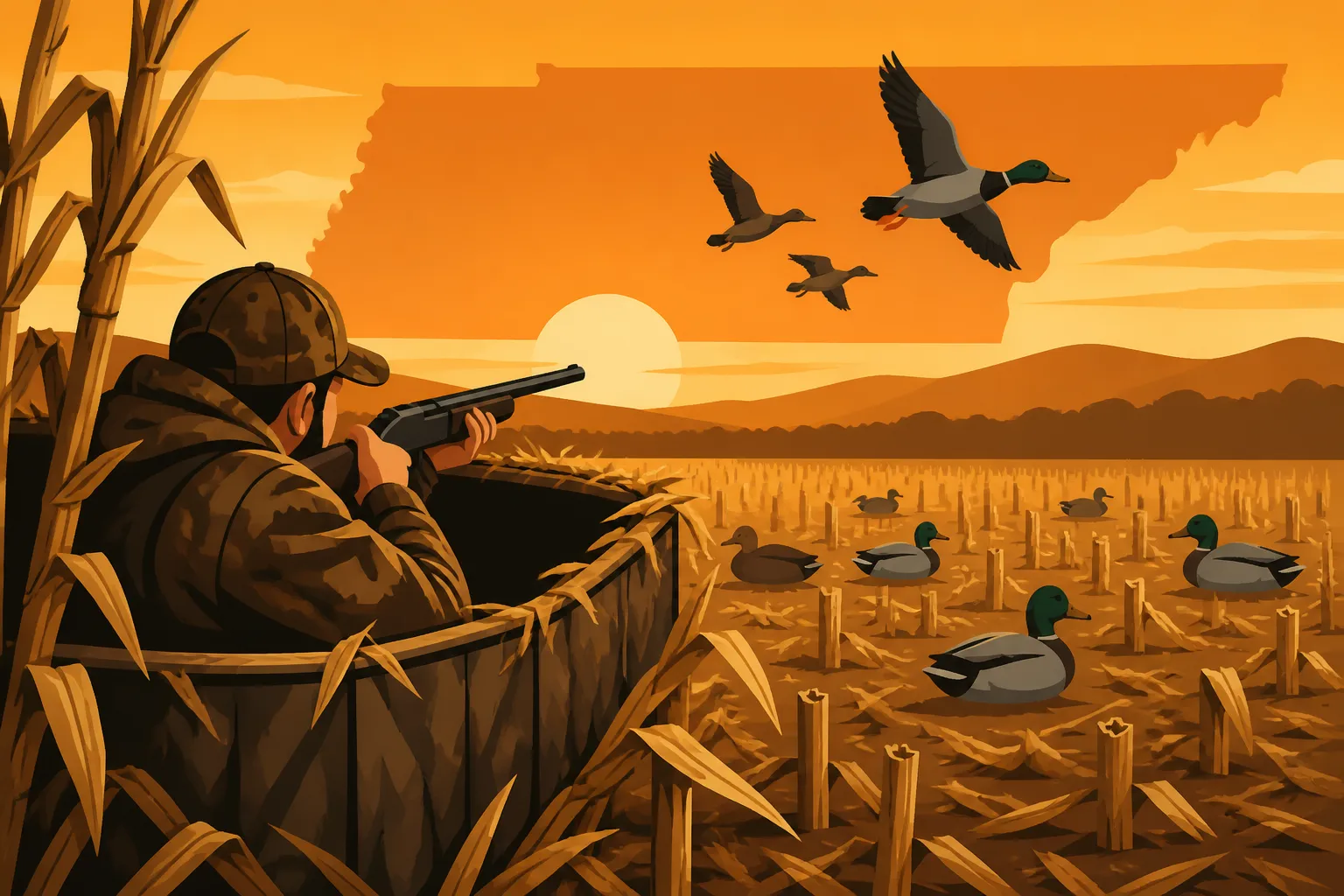
Layout Blinds for Tennessee Cut Corn
There's nothing quite like the sight of a flock of mallards committed to your spread, or a gang of honkers circling lower and lower, but trying to disappear into the wide-open expanse of a recently cut cornfield in Tennessee can feel like an impossible magic trick. Many a hunter has learned the hard way that a traditional pop-up blind or even just huddling behind a few cornstalks isn't enough to fool sharp-eyed waterfowl. This guide is all about taking the frustration out of field hunting by diving deep into the world of layout blinds and how they can be your ultimate secret weapon for successful waterfowl hunts in Tennessee's agricultural heartland.
The Challenge of Hunting Waterfowl in Tennessee's Cut Corn Fields
Tennessee might be famous for its deer and turkey hunting, but don't sleep on our incredible waterfowl opportunities, especially when the migration is on fire. However, chasing ducks and geese in agricultural fields presents a unique set of challenges that traditional water-based hunting often avoids. You're out in the open, often against a wide-open sky, and ducks and geese have an uncanny ability to spot anything out of place from hundreds of feet up.
Why Cut Cornfields are Prime Duck & Goose Real Estate
Those golden stubble fields, stretching for acres after the harvest, aren't just pretty scenery; they're an absolute buffet for migrating waterfowl. Ducks, especially mallards, and various species of geese, know that these fields offer readily available, high-energy food sources crucial for their long journeys south. The scattered corn kernels provide a feast that draws them in day after day, making these fields irresistible.
From the rich farmlands of West Tennessee, where the Hunting West Tennessee Bottomland Deer country meets prime waterfowl habitat, all the way into parts of Middle Tennessee, you'll find countless acres of cut corn. These areas often lie right along the Mississippi Flyway, a superhighway for migratory birds. After a long flight, finding a field full of food that feels relatively safe from predators is a top priority for ducks and geese, and a freshly cut cornfield fits that bill perfectly. Hunters who understand this natural draw can capitalize on it if they can only figure out how to hide effectively.
The Problem with Traditional Blinds in Open Fields
When you're dealing with vast, flat fields, the usual methods of concealment just don't cut it. Building a permanent pit blind might work for a landowner who hunts the same field year after year, but that's a huge investment in time, money, and machinery, and it's certainly not an option for most public land hunters or those seeking permission on new private tracts. Plus, a permanent pit commits you to one spot, which isn't ideal when birds change their patterns daily.
Then there are the standard pop-up ground blinds. While fantastic for turkey or deer hunting from a field edge, put one of those boxy structures out in the middle of a cut cornfield, and it will stick out like a sore thumb. Ducks and geese have incredible eyesight, and they've evolved to avoid anything that looks unnatural. They'll flare off at a thousand yards, leaving you scratching your head, wondering what went wrong. The frustration of watching birds work the edges of your spread but never commit, all because your blind gives you away, is a feeling every field hunter knows too well. You need something that lets you truly become part of the landscape.
Understanding Layout Blinds: Your Ticket to Disappearing
This is where the magic of the layout blind comes into play. It's a specialized piece of gear designed specifically for hunting waterfowl in open environments, allowing you to essentially vanish into the stubble and present an unthreatening picture to incoming birds.
What Exactly is a Layout Blind?
Imagine a low-profile cot with a hinged lid, draped in camouflage fabric, and designed to allow you to lie down flat on your back, completely concealed. That's essentially a layout blind. You climb in, pull the lid down over you, and you're hidden from the sky. Most models feature a spring-loaded door that you can pop open quickly when it's time to shoot, giving you a clear view and shooting lane. The design is brilliant in its simplicity: it keeps you low to the ground, mimicking the natural undulations or debris of a field, rather than presenting a vertical silhouette.
These blinds are typically lightweight and designed for portability. Many come with backpack straps, making it relatively easy to carry them across long distances from your vehicle to the perfect spot in the field. This portability is a huge advantage, as it allows you to be nimble and follow the birds wherever they decide to feed that day. You can set up in the exact flight path or feeding pocket, rather than being stuck in a static location.
Key Features to Look for in a Tennessee Layout Blind
Choosing the right layout blind can make a big difference in your comfort and success. Here are some critical features to consider, especially for hunting those Tennessee cut cornfields:
- Durability: Tennessee weather can be unforgiving. You want a blind with a robust frame, often made of aluminum or steel, that can withstand repeated setups, breakdowns, and the occasional rough handling. A high-quality, rip-stop fabric with a waterproof bottom is non-negotiable. You'll be sitting on damp earth, and nothing ruins a hunt faster than a wet backside.
- Comfort: You'll be lying still for hours, often in cold conditions. Look for ample padding in the headrest and backrest. Some blinds even have a slightly elevated backrest feature to reduce neck strain. Make sure there's enough interior room for you to comfortably wear your layers, store your shotgun, a small shell bag, calls, and perhaps a thermos of coffee. Brands that prioritize ergonomic design can make those long waits much more bearable.
- Concealment: This is arguably the most crucial feature. The blind needs to be fully covered in effective camouflage patterns that match the dried stubble and dirt tones of a Tennessee cornfield. Crucially, it must have plenty of stubble straps or pockets stitched into the fabric. These are essential for attaching natural vegetation from the field itself – cornstalks, dried grass, weeds – to truly break up the blind's outline.
- Portability: As mentioned, you'll be carrying this. Look for a design that folds down relatively flat and has comfortable backpack straps. While you might find heavier, more feature-rich blinds, a lighter model will be your best friend when you're trekking across a sprawling field to get to that hot spot you identified using a mapping tool like those found on GoHunt.
- Access: The ease of getting in and out, and more importantly, the speed and quietness of opening the lid for a shot, are vital. Test out the spring-loaded doors to ensure they operate smoothly without binding or making excessive noise. Some blinds also feature mesh face screens or flagging doors that allow you to observe and flag birds without fully exposing yourself.
Tactical Deployment: Setting Up Your Layout Blind in Tennessee Cut Corn
Having the right gear is only half the battle; knowing how to use it effectively is what separates a successful hunt from a frustrating one. Setting up a layout blind in a Tennessee cut cornfield requires precision and an understanding of waterfowl behavior.
Scouting is Non-Negotiable
You wouldn't just wander into the woods for deer without scouting, and the same goes, perhaps even more so, for waterfowl in fields. Pre-hunt scouting is absolutely paramount. You need to know where the birds are feeding, where they're landing, and their primary flight paths into and out of the field. This isn't a "show up and hope" scenario; it's a "know where they want to be" situation.
Dedicate time days, or even weeks, before your hunt to observe fields. Watch at dawn and dusk. Are the birds hitting the middle of the field, or favoring a particular edge? Is there a low spot where they seem to congregate? Use binoculars or a spotting scope from a distance to avoid spooking them. Tools like the GoHunt app can be incredibly helpful for marking specific locations, identifying property lines, and understanding terrain features. Combine that with physical reconnaissance, and you'll put yourself in a much better position. Remember, setting up where the birds want to be is far more effective than trying to pull them into a spot they're avoiding. This kind of diligent preparation is critical, much like Scouting Tennessee Public Land Before Season for deer.
Blending In: The Art of Brushing Your Blind
Once you've picked your spot, the real work of disappearing begins. Layout blinds come in camouflage patterns, but those patterns are just the foundation. You absolutely must brush your blind with natural materials from the immediate environment. This means taking the time to gather cornstalks, dried weeds, dirt clumps, and any other debris present in the field and weaving it into the stubble straps of your blind.
The goal is to break up the perfectly rectangular or coffin-like outline of the blind. Think like a bird looking down from above: you want the blind to blend seamlessly with the irregular textures and colors of the field. Don't be afraid to overdo it slightly; it's always better to be too concealed than not concealed enough. Pay close attention to the edges and any areas that might cast a distinct shadow. As the light changes throughout the morning, you might even need to adjust your brushing slightly to maintain optimal concealment. A well-brushed blind becomes an invisible extension of the field, and that's when birds will commit.
Decoy Placement Around Your Layout Spread
Your layout blind isn't meant to sit isolated in the field. It's an integral part of your decoy spread. The most effective setup involves placing your blinds within or on the immediate edge of your decoy spread. The idea is for the birds to commit to landing among what they perceive as other birds, and in doing so, fly right over or directly in front of your concealed position.
For ducks, common patterns like a J-hook, a U-shape, or an X-pattern with a clear landing zone in the middle, directly in front of your blinds, work wonderfully. For geese, a tighter cluster or a family group spread can be effective. Ensure your decoys look natural – facing into the wind, with some resting, some feeding. You want to create an illusion of safety and contentment. Think about the specific flight dynamics of ducks and geese as they approach, and aim to have them come directly into your kill hole. You can find more specific strategies for different species in guides like Decoy Spreads for Reelfoot Mallards or Early Goose Season Tactics in Tennessee. The relationship between your blinds and your decoys is symbiotic; one enhances the effectiveness of the other.
Overcoming Common Layout Blind Challenges in Tennessee
While layout blinds are a game-changer, hunting from one isn't without its quirks. Tennessee's varied conditions and hunter pressure mean you'll likely encounter a few common challenges that, with a little preparation, can be easily overcome.
Mud, Water, and Wet Conditions
Let's face it, Tennessee weather is fickle. One day it's dry and crisp, the next you're wading through ankle-deep mud after a torrential overnight rain. Cut cornfields, especially those in low-lying areas or river bottoms, can quickly turn into mucky messes. If your blind doesn't have a truly waterproof bottom, or if you're in standing water, you're going to get wet and cold fast.
This is where a good quality blind with a durable, waterproof base is essential. Some hunters even go a step further and place a heavy-duty tarp or ground cloth underneath their blind for an extra layer of protection against moisture. Make sure any internal pockets for your calls, shells, or snacks are also water-resistant, or use dry bags for sensitive items. Staying dry is paramount for comfort and safety during those long, cold mornings. Being unprepared for a wet field will make you wish you were back home in bed, much like navigating flooded timber requires specific gear like Waders for Flooded Cypress Hunting.
Field Selection and Hunter Pressure
In popular hunting areas, especially on public land or easily accessible private fields, waterfowl can become "educated" very quickly. If they see too many hunters, or if setups are too obvious, they'll start flaring high and wide, or simply avoid those fields altogether. Hunting Pressure on Tennessee Public Land is a real factor, and it applies to waterfowl just as much as deer.
To combat this, field selection is key. Look for fields that might be slightly harder to access, or that are off the beaten path. Sometimes, even a smaller, less obvious field can be a goldmine if it's receiving less pressure. Continuously scouting and being willing to move your setup based on bird behavior are vital. Don't be afraid to pull up stakes and move to a different part of the field or even a different field entirely if the birds aren't working. Tools like the ones available through GoHunt can help you identify less-pressured areas or private land access points, helping you Finding Ground Others Walk Past. Also, adapting your decoy spread to make it look even more natural and less "hunter-trap" can help.
Early Morning Comfort and Layering
Lying perfectly still on the ground before dawn, waiting for shooting light, can be brutally cold in Tennessee, especially as the season progresses into late fall and winter. You're not moving much, and the cold ground can quickly sap your body heat. It's easy to get miserable, which distracts from the hunt.
Proper layering is your best friend here. Start with good base layers made of wool or synthetics that wick moisture away from your body. Add insulating mid-layers like fleece or puffy jackets, and top it off with a waterproof and windproof outer shell. Don't forget an insulated hat, gloves, and quality, waterproof insulated boots. Consider bringing hand warmers and a small thermos with hot coffee, tea, or cocoa. While focused on deer, the principles discussed in Layering for a Tennessee Deer Stand and Cold-Weather Sitting Strategy in Tennessee are directly applicable to staying warm and comfortable in a layout blind. Your comfort level directly impacts your ability to stay focused and alert for those critical moments when the birds commit.
| Feature | Importance in Tennessee Cut Corn | Notes |
|---|---|---|
| Low Profile | High | Absolutely essential to disappear against the flat field; prevents birds from flaring. |
| Stubble Straps | High | Crucial for attaching cornstalks, weeds, and local vegetation for seamless concealment. |
| Waterproof Bottom | High | Protects against wet ground, morning dew, and standing water common in Tennessee fields. |
| Comfort/Padding | Medium-High | Long periods of lying still in cold demand good head and back support to reduce fatigue. |
| Portability | Medium | Backpack straps and lightweight design are beneficial for long walks to prime field locations. |
| Durability | High | Needs to withstand repeated rough handling, diverse weather, and field conditions over time. |
| Flagging Ports | Medium | Allows for discreet flagging of birds and observation without fully exposing yourself. |
| Ample Interior | Medium | Enough space for your shotgun, shell bag, calls, and essential layers without feeling cramped. |
When you combine a well-chosen layout blind, meticulous scouting, expert brushing, and smart decoy placement, you transform from an obvious intruder into an invisible part of the landscape. This approach helps to overcome the inherent difficulties of Hunting the Mississippi Flyway Backwaters from a field and makes those close-range, feet-down encounters with ducks and geese in Tennessee's cut cornfields a much more common and thrilling reality.
Disclaimer
This article is for general informational purposes only and does not constitute professional advice. Laws, prices and regulations vary by location and change over time. Consult a qualified professional for guidance on your specific situation.