Rifle Scope Magnification for Tennessee Deer
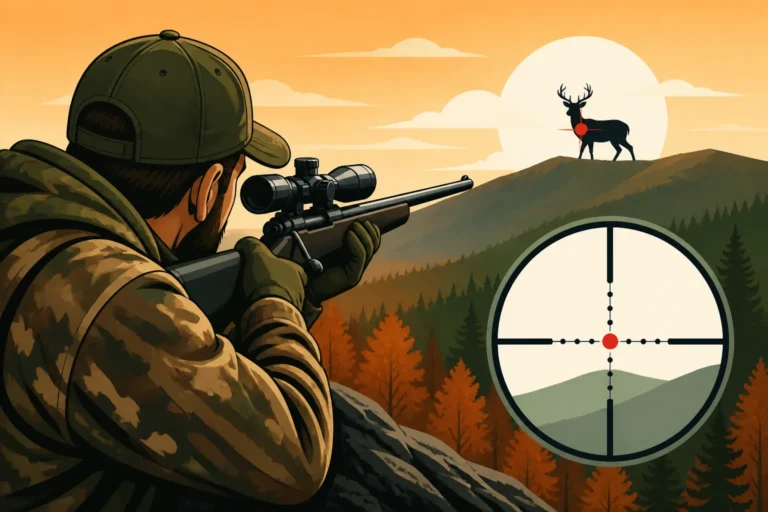
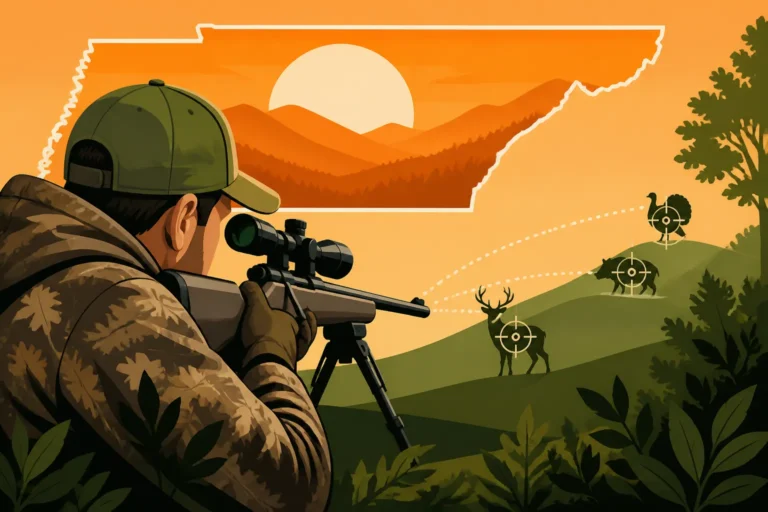
Hunters in Tennessee face a beautiful challenge: our landscapes are incredibly diverse, from the thick, rolling hills of the Cumberland Plateau to the expansive river bottoms of West Tennessee. This variety means that choosing the right rifle scope magnification for deer hunting isn't a one-size-fits-all decision, and making the wrong choice can lead to missed opportunities or, worse, an unethical shot. This guide will walk you through the nuances of rifle scope magnification, helping you select the perfect optic to confidently bring down your next Tennessee whitetail.
The Diverse Landscapes of Tennessee Deer Hunting and Their Optical Demands
When you think about hunting deer in Tennessee, what comes to mind? For some, it's the steep, rugged terrain of East Tennessee, perhaps in the vast expanse of the Cherokee National Forest. For others, it’s the flat, sprawling agricultural fields of the western part of the state, where shots can stretch out. And then there’s the central region, a mix of hardwoods, cedar thickets, and smaller farm parcels. Each of these environments places different demands on your rifle scope, particularly when it comes to magnification.
Dense Cover and Timber Shots
Picture yourself still-hunting a creek bottom in West Tennessee, where the hardwoods are thick, and visibility often doesn't extend beyond 75 yards. Or maybe you're navigating a dense cedar glade on the Highland Rim, hoping to jump a bedded buck. In these scenarios, a deer could appear out of nowhere, offering only a fleeting shot at close range. What you need here isn't extreme magnification; it's a wide field of view and rapid target acquisition. A high-power scope would only show you a blurry patch of leaves, making it impossible to find your target quickly.
For these situations, having a scope that can dial down to a true 1x or 2x is incredibly beneficial. It feels almost like shooting with open sights or a red dot, allowing you to quickly shoulder your rifle and get on target. The ability to see more of your surroundings through the scope, rather than just a zoomed-in tunnel, is paramount. Many seasoned hunters operating in these tight conditions actually prefer to keep their variable power scope set on its lowest magnification, only bumping it up if a deer presents itself at a longer, clearer distance. It’s all about being ready for that sudden, close encounter that so often defines hunting in thick Tennessee cover.
Open Fields and Ridge Systems
Now, shift your focus to a different scene: glassing a food plot planted on the edge of the Cumberland Plateau, or watching a powerline cut stretch across a large piece of property. Here, deer might be feeding at 200, 300, or even 400 yards away. On these vast, more open landscapes, the challenge isn't necessarily seeing the deer, but precisely placing your shot. You need to be able to identify antlers, distinguish between bucks and does, and pick out a precise aiming point on the animal's vitals.
This is where higher magnification truly shines. A scope capable of 9x, 12x, or even 18x can turn a distant deer into a much clearer target, allowing for more confident shot placement. It helps immensely in confirming that a deer is legal, or in avoiding obstacles like small branches or tall grass that might not even be visible at lower magnifications. While most shots in Tennessee don't typically exceed 200-250 yards for the average hunter, having that extra capability to zoom in on a deer feeding far off a logging road can be a game-changer for those who find themselves in these more open settings. When you're Hunting a Green Field Planted for Deer, that extra clarity can make all the difference between a successful hunt and a frustrating miss.
Understanding Magnification Ranges for Whitetails
When you're sifting through all the rifle scopes on the market, the numbers on the side – like "3-9×40" or "4-16×50" – can seem a bit like alphabet soup at first. But once you understand what these numbers mean for your hunt, it all starts to click. The first set of numbers (e.g., 3-9x) refers to the variable magnification range, and understanding these ranges is key to matching a scope to your typical Tennessee hunting scenarios.
Low Magnification (1-4x, 2-7x, 3-9x)
Scopes in this range are the workhorses for many Tennessee deer hunters, especially those who spend most of their time in the woods. They typically offer a wide field of view, meaning you see more of your surroundings through the scope at its lowest power setting. This is fantastic for scanning for movement and quickly acquiring a target that might suddenly step out from behind a tree at 50 yards. Imagine Hunting West Tennessee Bottomland Deer where thick cover is the norm, and quick, close shots are common. A 2-7x or 3-9x scope is a superb choice here. You can keep it on the lowest setting for general woods cruising and only crank it up if a deer stops at a longer distance in a small clearing.
The 3-9×40 is often considered the quintessential deer hunting scope for good reason – it’s a versatile all-rounder. At 3x, it offers a broad enough view for most woods hunting, and 9x is plenty of magnification to make an ethical shot out to 250-300 yards, which covers the vast majority of deer hunting situations in our state. Plus, these scopes tend to be lighter and more compact than their higher-powered counterparts, which is a real bonus when you're humping gear through the hills.
Mid-Range Magnification (3-12x, 4-16x)
Stepping up a bit, scopes like a 3-12x or 4-16x offer a fantastic balance of close-quarters capability and extended reach. If you find yourself hunting a mix of dense timber and more open areas – perhaps a big lease that spans both deep woods and a couple of agricultural fields – a mid-range scope might be your sweet spot. The lower end (3x or 4x) still provides a respectable field of view for denser cover or quick shots, while the higher end (12x or 16x) gives you a lot more detail and precision for those longer shots.
Consider a scenario where you're Still-Hunting Cumberland Plateau Ridges. You might jump a deer in a thicket at 60 yards one minute, and the next, you're looking across a clear-cut to a deer at 250 yards. A 3-12x or 4-16x scope handles both situations admirably. The increased magnification at the top end is particularly useful for scrutinizing distant targets, helping you confirm if that's a legal buck or just a big doe, or if there's a small twig you need to shoot over. This versatility means you're well-equipped for most of what Tennessee's diverse terrain can throw at you, without having to carry an overly heavy or specialized optic.
High Magnification (4.5-18x, 6-24x and up)
For specialized hunting situations in Tennessee where long-range precision is the absolute priority, high-magnification scopes come into their own. If your hunting involves regularly taking shots beyond 300 yards, or if you primarily hunt vast open expanses like those found in parts of West Tennessee or large agricultural operations, then a scope with an upper limit of 18x, 20x, or even 24x might be what you're looking for. This allows for incredibly fine aiming points and clear target identification at extreme distances.
However, there's a trade-off. These scopes tend to be heavier and bulkier, which can be a drag if you’re doing a lot of walking or Hunting the Cherokee National Forest. Their field of view at lower power settings is also typically narrower compared to a 3-9x, which can make acquiring a fast, close-range target more challenging. Imagine a deer bursting from cover at 40 yards; a 6-24x scope on its lowest setting might still feel too "zoomed in" to quickly get on target. So, while powerful, these scopes are best reserved for hunters who truly need that extended reach and are willing to accept the compromises in other areas of performance. For most everyday Tennessee deer hunting, particularly on public land or smaller private tracts, they often represent overkill.
| Magnification Range | Best Use Case in Tennessee | Pros | Cons |
|---|---|---|---|
| Low (1-4x, 2-7x) | Dense cover, thick timber, fast close shots | Wide field of view, fast target acquisition, lightweight | Limited precision at long range |
| Standard (3-9x) | General purpose, mixed terrain (woods, small fields), most shots up to 250-300 yards | Excellent versatility, good balance of features, common | May lack detail for extreme long range |
| Mid-Range (3-12x, 4-16x) | Varied terrain, longer shots in open fields, combined with some timber | Good versatility with extended reach, more detail at distance | Can be heavier, slightly narrower field of view than low-power |
| High (4.5-18x, 6-24x) | Very long range hunting (300+ yards), vast open fields, target identification | High precision, excellent detail at extreme range | Heavy, narrow field of view, challenging for close shots |
Key Factors When Choosing Your Scope's Magnification
Beyond just the numbers, several other critical elements should weigh into your decision when picking a rifle scope for Tennessee whitetails. These factors can drastically change what "ideal" magnification looks like for your specific hunting style and the places you frequent.
Hunting Terrain and Shot Distance
This is arguably the most crucial factor. As we discussed, Tennessee's geography is a patchwork of different environments. If you primarily hunt the deep woods of the Cumberland Plateau, where shots rarely exceed 100 yards through the timber, a 2-7x or 3-9x scope is more than sufficient. Trying to use a 4-16x or 6-24x in such dense cover would be like trying to read a book through a keyhole – you'd struggle to find your target quickly, let alone track it. Many hunters in thick areas even find themselves just using 3x or 4x for the vast majority of their shots.
Conversely, if your deer season typically involves sitting over large agricultural fields in West Tennessee, or watching clear-cuts that offer 300-yard sightlines, then that higher magnification becomes incredibly useful. You'll appreciate the ability to clearly see your target and aim precisely at extended distances. Think about mapping out your hunting areas with a tool like GoHunt; you can quickly identify the ratio of dense cover to open ground, which will give you a clear picture of what magnification range makes the most sense for your specific spots. Knowing the typical shot distance you'll encounter on your public or private land, like when Hunting a Standing Cornfield in Farm Country, is paramount.
Low-Light Performance and Exit Pupil
Deer are most active during dawn and dusk, those magical periods of low light when big bucks often make their move. This is where your scope's ability to gather light becomes critical. While objective lens size (the second number in 3-9x40) plays a major role, magnification also impacts how much light reaches your eye. The "exit pupil" of a scope (objective lens size divided by magnification) indicates the size of the light beam leaving the eyepiece. A larger exit pupil is better in low light, as it delivers more light to your eye.
For example, a 3-9×40 scope at 3x has an exit pupil of about 13.3mm (40/3). At 9x, it drops to 4.4mm (40/9). Now compare that to a 4-16×50 scope. At 4x, it has a 12.5mm exit pupil (50/4), but at 16x, it's only 3.1mm (50/16). As you can see, cranking up the magnification reduces the exit pupil, making the image appear dimmer, especially in fading light. For Low-Light Performance in a Scope, a wider exit pupil is generally preferred. This is why many hunters will dial their variable power scopes down to their lowest setting in the dim hours of morning and evening, maximizing light transmission and their ability to see the deer.
Weight and Bulk Considerations
Let's be real: hunting often involves walking, sometimes a lot of walking. If you’re regularly packing into public land in the Cherokee National Forest or navigating the steep draws of the Cumberland Plateau, every ounce counts. Higher magnification scopes, especially those with larger objective lenses, tend to be heavier and bulkier. This might not seem like a big deal on paper, but after a few miles of climbing hills with your rifle slung over your shoulder, that extra pound or two can start to feel like a brick.
For hunters who prioritize mobility and agility, a lighter, more streamlined scope in the 2-7x or 3-9x range is often a better choice. It keeps your overall rifle setup balanced and easy to handle, which can be critical for quick shots or extended treks. If you're Dragging a Deer Out of a Steep Hollow, you'll appreciate a lighter rifle. Consider your physical conditioning and how far you typically walk on a hunt. If you're mainly hunting from a stationary blind or stand with minimal walking, then weight is less of a concern, but for those who cover ground, it's a significant factor.
Your Personal Shooting Style and Vision
Finally, don't overlook your own preferences and physical capabilities. Some hunters, regardless of the terrain, simply prefer to shoot at lower magnifications, finding it easier to keep both eyes open or to acquire a target faster. Others might have aging eyes or find that they can group their shots tighter with a bit more magnification, even at moderate distances. There's no right or wrong answer here; it's about what makes you a confident and accurate shooter.
If you typically take your shots quickly, often in situations where a deer is moving, a lower magnification might suit your style better. If you prefer to settle in, take your time, and make a precise shot on a stationary deer, you might gravitate towards more power. Spend some time at the shooting range, experimenting with different magnification levels on your scope, and see what feels most natural and effective for you. Confidence in your equipment is just as important as the equipment itself.
Optimizing Your Setup for Tennessee Whitetails
Ultimately, selecting the right rifle scope magnification for Tennessee deer hunting comes down to a blend of understanding the landscape, knowing your capabilities, and choosing gear that offers the flexibility you need. Our state's varied habitats demand a thoughtful approach, and there are definite ways to optimize your setup.
Variable Power Scopes for Versatility
For the vast majority of Tennessee deer hunters, a variable power scope is the undisputed champion. A fixed power scope (e.g., a 4x or 6x scope) might have its place in highly specialized situations, but it lacks the adaptability required for the diverse range of scenarios we face. Imagine starting your day still-hunting a thick creek bottom, then moving to a stand overlooking a powerline cut in the afternoon. A fixed 4x might be great in the timber, but it will leave you wishing for more reach when that buck steps out at 250 yards. A fixed 10x, on the other hand, would be nearly useless in the close-quarters timber.
This is precisely why scopes with a magnification range like 2-7x, 3-9x, or even 3-12x are so popular. They offer the best of both worlds. You can dial down to the lowest setting for a broad field of view and quick target acquisition in dense cover or at first light, and then crank it up for precise shot placement if a deer presents itself at a longer distance. This adaptability is invaluable, especially when Scouting Tennessee Public Land Before Season reveals a mix of habitat types in your hunting area. Companies like GoHunt often integrate mapping layers that help visualize these diverse habitats, reinforcing the need for versatile optics.
Practicing with Your Chosen Magnification
Having the "right" scope is only half the battle; knowing how to use it effectively is the other. It’s absolutely crucial to spend time at the shooting range, not just zeroing your rifle, but practicing with your scope at various magnification settings and distances. Don't just shoot at 100 yards at 9x and call it good.
- Practice at lowest power: Set your scope to its lowest magnification (e.g., 3x) and practice quick target acquisition at 25, 50, and 75 yards. Try bringing the rifle to your shoulder quickly and getting on target. This simulates a deer bursting from cover.
- Practice at highest power: At longer distances like 100, 200, and 300 yards, practice with your scope at its highest magnification. Focus on precise aiming and breath control. This builds confidence for those open-field shots. If you typically hunt Hunting a Ridge-Top Saddle for Rutting Bucks where shots might be 150-200 yards, mastering your highest power at those distances is key.
- Practice dialing: Get comfortable with adjusting your magnification in the field. Sometimes, a deer will appear far off, and you'll need to quickly zoom in for a better look before taking the shot. Other times, you'll need to dial down if a deer surprises you close. Smoothly operating your scope's power ring under pressure comes only with practice.
Remember, a scope is an aid to your shooting, not a substitute for it. The best scope in the world won't make you a better shooter if you haven't put in the range time. Understand your rifle, understand your scope, and understand the capabilities of both in the varied environments that define Tennessee's Deer Season Structure Explained.
Disclaimer
This article is for general informational purposes only and does not constitute professional advice. Laws, prices and regulations vary by location and change over time. Consult a qualified professional for guidance on your specific situation.