Hunting a Ridge-Top Saddle for Rutting Bucks
It's incredibly frustrating when you're out there during the rut, seeing all the signs of deer movement, but those mature bucks just seem to vanish into thin air. You know they're around, cruising for does, but pinning down their exact travel routes can feel impossible. This guide is dedicated to unraveling one of the most consistently productive spots for connecting with rutting bucks in Tennessee: the often-overlooked ridge-top saddle.
The Undeniable Appeal of Ridge-Top Saddles for Rutting Bucks
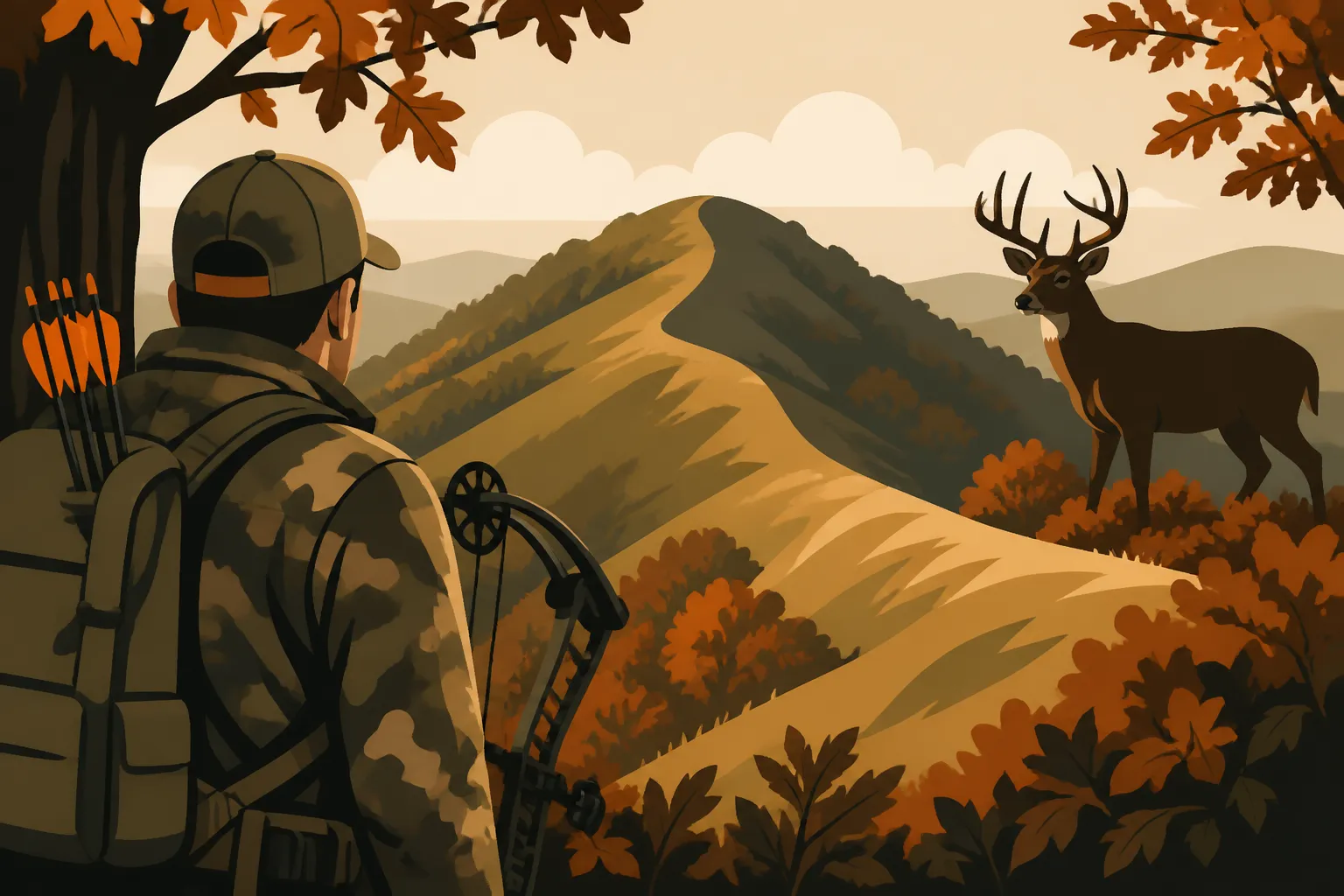
Ridge-top saddles, for those not entirely familiar, are essentially low points or dips in a ridge line. Think of it like a pass or a low spot between two higher peaks on a ridge. They might not look like much on a map, but to a deer, especially a rutting buck, they represent a high-value piece of real estate. These natural funnels are absolute magnets for movement, offering advantages that a wise old buck just can't resist.
Natural Funnels and Travel Corridors
Imagine a busy interstate highway for deer, but instead of asphalt, it's dirt and leaves. That's often what a ridge-top saddle becomes during the rut. Deer, being creatures of efficiency, will almost always take the path of least resistance when traveling. If they need to get from one side of a large valley or drainage to another, or even just move along a ridge, dropping down into a deep hollow and then climbing back up takes a lot more energy than simply crossing a low, relatively flat saddle. This makes these spots prime travel corridors.
During the rut, bucks are constantly on the move, scent-checking for receptive does. They're not just staying in their bedding areas; they're covering ground, and they'll naturally gravitate towards routes that allow them to do so with minimal effort while maximizing their chances of encountering a doe. A saddle provides that perfect blend of easy travel and strategic positioning. Does also use these saddles, which means bucks know exactly where to cruise to intercept them. You'll often find a tangle of deer trails converging right in these low spots, like spokes on a wheel, all leading to and from the saddle. When you're Hunting the Tennessee Rut in Early November, these funnels become even more critical, channeling deer movement predictably.
Strategic Vantage Points and Scent Checking
Beyond just easy travel, ridge-top saddles offer bucks a significant tactical advantage. From a saddle, a buck can often survey the terrain below on both sides of the ridge, albeit briefly. More importantly, these low spots in the topography can create swirling air currents and thermals, especially during daylight hours. A buck cruising a saddle can often catch the scent of deer (or hunters) moving on either side of the ridge, or even a good distance away up or down the ridge line. This ability to "scent-check" a wider area without exposing themselves on a higher ridge crest is invaluable for a mature animal trying to stay safe while still covering ground.
Picture a mature buck moving cautiously. He gets to a saddle, pauses, lifts his nose, and samples the air. He's gathering information – is there a doe just over the rise? Is there a competing buck nearby? Is danger lurking? This brief pause often happens right in your shooting lane if you've set up correctly. The swirling air currents, particularly at daybreak and dusk when thermals are transitioning, can concentrate scent and draw deer through. Understanding Wind and Thermals on a Ridge System is paramount here, as even a subtle breeze can carry critical information to a deer, and sometimes, those swirly conditions in a saddle can be your friend, making a buck extra cautious and slowing him down.
Mastering the Art of Scouting for Tennessee Saddles
You can't just stumble upon these golden opportunities; effective saddle hunting starts long before the season with meticulous scouting. It's about combining technology with boots on the ground to truly understand the lay of the land and how deer are using it.
Topographic Map and Aerial Imagery Analysis
Before you even step foot in the woods, the best place to start looking for ridge-top saddles is from the comfort of your home, using topographic maps and aerial imagery. Digital mapping applications, like GoHunt, are incredibly powerful tools for this. Look for contour lines that dip significantly in a ridge line, indicating a low point. Pay attention to how steep the terrain is on either side of the saddle, and if there are any benches or secondary points nearby that could also funnel deer.
Good aerial photos will reveal connecting features, like old logging roads that pass through a saddle, or subtle changes in timber type. Often, saddles connect different types of terrain – perhaps a thick bedding area on one side of a ridge to a feeding area on the other. Trace these potential travel routes. Identify the major ridge systems in your hunting area, whether you're in the rolling hills of Middle Tennessee or the steeper slopes of the Cherokee National Forest. Mark promising saddles on your map. This initial phase of scouting is crucial for eliminating unproductive ground and focusing your efforts on high-potential areas. It's a key part of any comprehensive Scouting Tennessee Public Land Before Season strategy.
Boots-on-the-Ground Reconnaissance
Once you've identified potential saddles on your map, it's time to hit the woods. This is where you confirm your theories and find the real details that maps can't show. Walk these saddles, paying close attention to fresh deer sign. Look for:
- Established Trails: Are there well-worn deer trails running through the saddle? Do they converge from multiple directions? This is a huge indicator.
- Scrapes and Rubs: Active scrapes and rub lines in or around a saddle are undeniable proof that bucks are using this area. These can be particularly hot during the pre-rut and early rut phases.
- Bedding Areas: Can you identify potential bedding areas on the slopes above or below the saddle? Bucks often bed high, watching their backtrail, and then use saddles to move. Understanding Where Cumberland Plateau Bucks Bed can help you pinpoint these spots relative to saddles.
- Food Sources: Are there acorn trees, persimmons, or other mast crops nearby? While bucks are cruising for does, they'll also hit easy food sources along their travel routes.
When you're walking, think like a deer. Where would you feel safest crossing? Where would you stop to check your surroundings? This ground-level intelligence will allow you to pinpoint the exact locations for your stand or blind. Also, consider access. Can you get into this saddle undetected before daylight, and can you get out after dark without spooking deer? These logistical details are just as important as finding the saddle itself.
Here's a quick reference for what to look for when scouting saddles:
| Scouting Indicator | What it Tells You | Ideal Rut Phase |
|---|---|---|
| Well-Worn Trails | High traffic, consistent deer movement | Pre-rut, Peak Rut, Post-rut |
| Fresh Rubs | Bucks marking territory, often in travel corridors | Pre-rut, Early Rut |
| Active Scrapes | Bucks checking for does, communication hub | Pre-rut, Peak Rut |
| Connecting Bed/Feed | Saddle links crucial resources for deer | All phases, but critical during cruising |
| Scattered Droppings | General deer presence, feeding, or passing through | All phases |
| Hair on Barbed Wire | Evidence of crossing, specific travel route | Any, but confirms active use |
Executing Your Hunt: Tactics for Productive Saddle Stands
Finding a great saddle is only half the battle. The other half is knowing how to hunt it effectively, taking into account deer behavior, wind, and the right setup.
Optimal Stand Placement and Wind Considerations
Your stand placement in a ridge-top saddle is critical. The goal is to intercept deer as they move through, ideally offering you a shot before they detect you. Here are a few key considerations:
- Play the Wind: This cannot be stressed enough. Never hunt a saddle if your wind is blowing into the most likely approach route for a buck. Because saddles create swirling thermals, especially at dawn and dusk, you need to be extra cautious. Consider setting up slightly off the main trail, perhaps 20-30 yards downwind, to catch deer that might be using the saddle but quartering into the wind as they travel. Using a reliable app with real-time wind data, perhaps integrated with your GoHunt mapping data, can give you that edge.
- Visibility and Cover: You want to be concealed but have clear shooting lanes. Look for trees that offer good backdrop and broken cover. Often, a tree just a little ways down the ridge from the deepest part of the saddle, but still overlooking it, can be ideal. This allows you to watch the saddle while also potentially seeing deer approach from either side of the ridge.
- Entry and Exit Routes: This is often overlooked but paramount. Your approach to and from your stand needs to be as quiet and scent-free as possible. Use topographical features to mask your movement, like walking along the bottom of a steep hollow or a creek bed, or timing your entry with low light so you're less likely to be seen. You should be able to get in and out without spooking deer in or near the saddle. Many hunters like to use Treestand Setups in Cherokee National Forest that allow for stealthy access and exit.
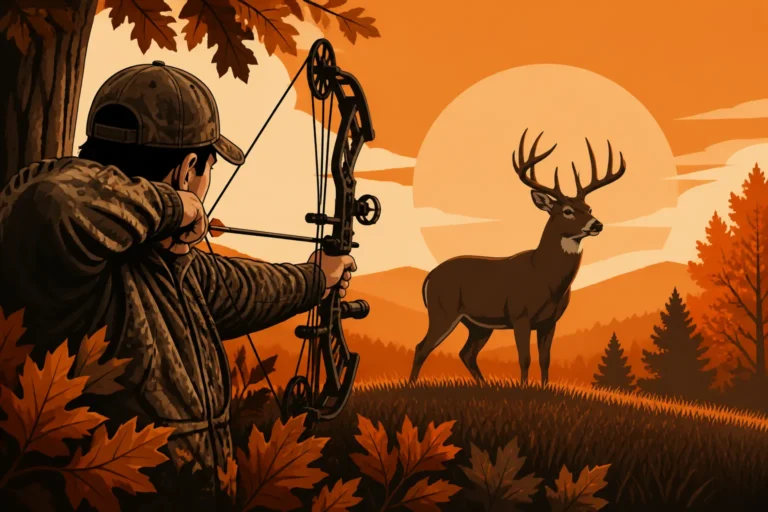
- Tree Selection: For vertical bow hunters, consider shooting lanes carefully. For rifle hunters, ensure you have a clear view of the saddle itself and any key trails leading into it. Don't be afraid to clear a few small branches before the season if you need to, but always minimize disturbance.
Calling and Decoy Strategies in Saddle Country
During the rut, bucks are looking for does, and they're often willing to investigate sounds or sights that might lead them to one. This makes calling and even using a decoy potentially effective in a saddle setup.
- Grunt Calls: A well-timed grunt can stop a cruising buck dead in his tracks or draw one in closer. If you see a buck moving through the saddle, a single, soft grunt can often make him pause, offering a shot. If he's out of range, try a series of grunts, mimicking a buck trailing a doe. Be realistic with your calls; don't overdo it. Learn more about Rattling and Grunting in Tennessee for specific rut-phase techniques.
- Doe Bleats: While less aggressive, a doe bleat can sometimes pique a buck's interest, making him think a lonely doe is nearby. This works particularly well during the early and peak rut when bucks are actively seeking.
- Rattling: If you believe a buck is nearby, but you're not seeing him, a short, aggressive rattling sequence can sometimes bring him storming into the saddle, thinking another buck is challenging his dominance or fighting over a doe. Be ready, as they often come in fast and looking for a fight. This tactic is especially potent during the pre-rut and early stages of the peak rut.
- Decoys: A single doe decoy placed within shooting range, positioned as if she's feeding or waiting, can be a deadly tactic, especially if paired with subtle doe bleats. A buck will often approach a decoy cautiously, giving you time to prepare for a shot. However, consider the wind carefully, as a buck will often circle downwind to scent-check the "doe," potentially exposing you. Sometimes, a simple silhouette or a quartering-away buck decoy can also trigger a response.
Avoiding Common Pitfalls: Maximizing Your Saddle Hunting Success
Even the best spots can be ruined by common mistakes. Being mindful of these pitfalls will significantly increase your odds of success.
Over-Hunting and Minimizing Pressure
The biggest mistake hunters make with hot spots like saddles is over-hunting them. These areas are magnets for deer precisely because they feel safe and efficient. If you hunt a saddle too frequently, or if your entry and exit routes are sloppy, you'll quickly educate the deer, especially mature bucks. They'll either start moving through at night, or they'll avoid the saddle altogether.
- Rotate Stands: If you have multiple productive saddles, rotate your hunting efforts between them. Don't hunt the same saddle more than once or twice a week, even less if you're targeting a particularly wary buck.
- Strategic Hunting Times: Focus on times when deer movement is naturally higher, like early mornings and late evenings during the peak rut, or when weather fronts push deer. Cold fronts often trigger increased movement.
- Low-Impact Scouting: When scouting in-season, be mindful of your scent and noise. Just like setting up for a hunt, minimize your impact. You might even find it effective to use tools like GoHunt to scout and mark potential stand locations from afar, saving your boots-on-the-ground reconnaissance for after the season or when you're ready to hang a stand. Always remember that Hunting Pressure on Tennessee Public Land can quickly make even the best spots go cold.
Adapting to Changing Conditions and Deer Behavior
The rut isn't a static event; it changes throughout the season, and so does deer behavior. What works in the early pre-rut might not work during the lockdown phase.
- Early Rut (Chasing Phase): Bucks are actively cruising, looking for the first does coming into estrus. Saddles are fantastic during this phase because bucks are covering a lot of ground. Calling can be very effective.
- Peak Rut (Lockdown Phase): When does are in peak estrus, bucks will often "lock down" with a single doe for 24-48 hours. Movement in saddles might decrease during the daytime as bucks are less apt to be cruising widely. However, does will still use saddles, and bucks will follow them. If you see does moving through, a buck is likely nearby. This is a time to be patient.
- Late Rut (Second Wind): After the main breeding, some does will cycle back into estrus, and younger does will have their first estrus. Bucks that didn't breed earlier will get a "second wind" of activity, often covering ground again. Saddles can heat back up during this period.
Always be ready to adjust your tactics. If you're seeing lots of fresh sign but no deer during legal shooting hours, perhaps try a different saddle, or move your stand to adapt to subtle changes in wind or deer travel patterns. Sometimes, Using a Ground Blind on Tennessee Public Land in a saddle can offer more flexibility for changing winds compared to a fixed treestand, allowing you to quickly reorient your setup. The key is to pay attention to what the deer are telling you and be willing to change your approach.
Disclaimer
Hunting is an inherently dangerous activity. Always prioritize safety, understand and follow all Tennessee Wildlife Resources Agency (TWRA) regulations, and obtain proper licenses and permits before heading afield. The information provided here is for educational purposes only and should not replace professional guidance or personal judgment.