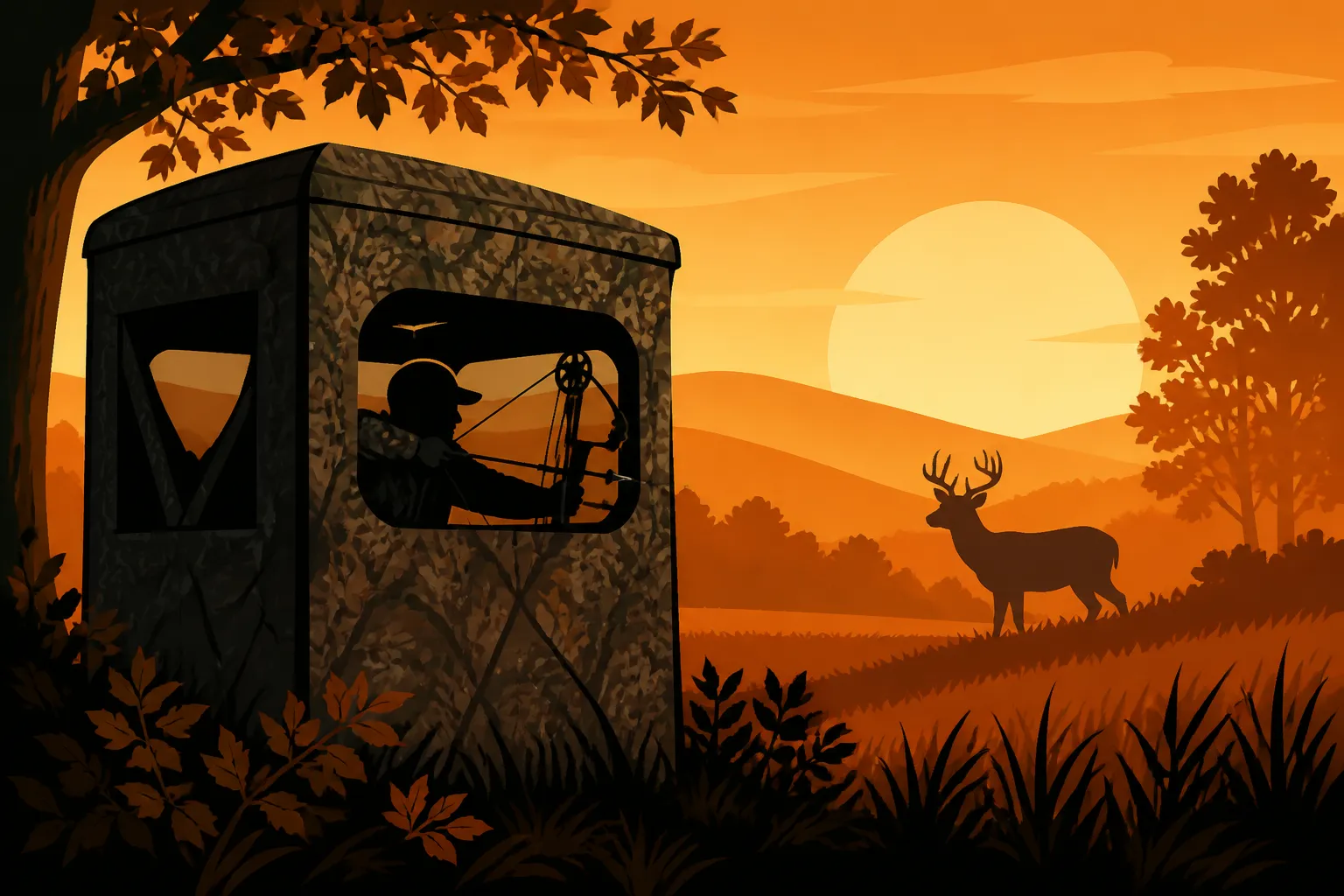
Using a Ground Blind on Tennessee Public Land
Hunting public land in Tennessee can often feel like a puzzle, especially when you’re trying to navigate crowded areas, adapt to varied terrain, and stay concealed from sharp-eyed whitetails. While treestands are a go-to for many, there are countless scenarios where a ground blind can be your secret weapon, offering unmatched flexibility and concealment. This guide is all about mastering the art of using a ground blind effectively on Tennessee’s diverse public hunting lands.
Why Ground Blinds Make Sense on Tennessee Public Land
Let's be honest, finding the "perfect" treestand tree on public land can sometimes feel like searching for a needle in a haystack. You've got to consider tree size, species, limb structure, and, of course, the ever-present hunting pressure. This is precisely where the versatility of a ground blind shines, offering a solution when elevation simply isn't an option or isn't the best option.
Adapting to Diverse Public Land Terrain
Tennessee's public hunting lands are incredibly diverse, from the steep, rocky slopes of the Cherokee National Forest to the flat, flooded timber of the Mississippi River bottoms. Each presents its own challenges for traditional treestand setups. Imagine trying to find a straight, limb-free tree for a climber in a dense thicket on the Cumberland Plateau, or a suitable setup in a newly cut-over area where the trees are too small or sparse.
In these situations, a ground blind offers unparalleled adaptability. You can tuck it into dense cover, set it along a field edge where suitable trees are scarce, or even position it in an open area with strategic brushing. This means you’re not limited by the existing timber, opening up a whole new world of potential hunting spots that other hunters might overlook precisely because they're fixated on treestands. Being able to set up almost anywhere truly expands your hunting opportunities.
Consider the sprawling bottomland areas of West Tennessee. Here, finding mature, healthy trees that can support a stand and provide good sight lines can be a real struggle, especially in the areas often targeted by Hunting West Tennessee Bottomland Deer. A ground blind allows you to sit directly in those travel corridors or feeding areas, utilizing the existing low-lying brush or natural terrain features for concealment. You're no longer dependent on a single tree, but rather the overall landscape, making your setup much more dynamic.
Minimizing Your Footprint and Scent
On heavily pressured public land, every little advantage counts, and minimizing your presence is paramount. A ground blind excels at this, acting like a mobile hide that drastically reduces both your visible profile and, to a certain extent, your scent footprint. While no blind is 100% scent-proof, the enclosed nature helps contain and dissipate human odor much more effectively than an open treestand, particularly when combined with proper wind awareness and scent control efforts.
Think about the sheer number of hunters who might traverse popular public access points. Deer on these lands are incredibly wary, attuned to any unusual shapes or smells. Being fully enclosed within a blind means your movements—even slight ones like scratching an itch or checking your phone—are hidden. This is a massive advantage when an animal is slowly working its way towards you, giving you the luxury of subtle adjustments without being busted.
Moreover, the enclosed space helps manage thermals and air currents, especially in areas with tricky topography. While a treestand tries to get you above a deer's nose, a ground blind focuses on containing and directing scent. This containment is particularly beneficial during archery season when shot opportunities often come at closer ranges. The less a deer knows you're there, the higher your chances, especially when dealing with the kind of wary game found due to Hunting Pressure on Tennessee Public Land.
Comfort and Concealment in Challenging Weather
We all know Tennessee weather can be… unpredictable. A beautiful, crisp autumn morning can quickly turn into a cold, driving rain or even a late-season snow flurry. While a little discomfort is part of hunting, prolonged exposure can lead to prematurely ending a hunt, or worse, making you so miserable that your focus wanes. This is where a ground blind truly becomes a game-changer for extending your time in the field.
Picture yourself sitting in a treestand during a sudden downpour. You're soaked, shivering, and probably eyeing your watch. Now imagine the same scenario in a cozy ground blind. You're sheltered from the wind and rain, allowing you to stay warm, dry, and focused on the hunt. This comfort isn't just about personal preference; it directly impacts your effectiveness. A comfortable hunter is a patient hunter, and patience often leads to success.
Beyond just bad weather, ground blinds offer incredible concealment for hunters who need to move more. New hunters, young hunters, or even seasoned veterans who might struggle with prolonged stillness due to physical limitations can benefit immensely. You can subtly shift positions, stretch, or even have a quiet snack without fear of spooking game. This ability to remain comfortable and mobile for longer periods is especially valuable during the colder days of Hunting the Late-Season January Lull.
Strategic Placement and Setup of Your Blind
Putting a ground blind out isn't just about finding any spot; it's about finding the right spot and then making it disappear into the landscape. This strategic approach starts long before opening day and involves careful consideration of the terrain, game movement, and the ultimate goal of blending in seamlessly.
Scouting Key Locations on Public Land
Successful ground blind hunting hinges on thorough scouting. Before you even think about setting up, you need to know where the deer are moving, feeding, and bedding. Don't just show up and plop your blind down. Utilize mapping tools like the GoHunt app or satellite imagery to identify potential pinch points, funnels, and natural travel corridors. Look for areas where different habitat types meet, such as the edge of a timber stand bordering a clear-cut or an old logging road.
When you're boots on the ground, look for fresh sign: tracks, droppings, rubs, and active scrape lines. Pay close attention to terrain features like creek bottoms, saddles between ridges, or points jutting into open areas. These are natural funnels that deer often use. Consider how deer will approach these areas and how you can intercept them. Being able to visualize these patterns is critical for effective placement, much like the detailed analysis you might do when Reading Aerial Photos for Cumberland Plateau Deer.
Pre-season scouting also allows you to observe deer patterns without disturbing them. You might notice a consistent bedding area that leads to a specific feeding spot, creating a perfect opportunity for a blind. Remember, you want to place your blind where deer are naturally moving, not try to force them into an unnatural path. This kind of diligent observation, as covered in topics like Scouting Tennessee Public Land Before Season, is the foundation of a successful ground blind setup.
Blending In: Natural Camouflage and Brushing It In
Once you’ve identified a prime location, the next critical step is making your blind vanish. A ground blind, even one with a great camo pattern, will stick out like a sore thumb if it’s just popped up in the middle of nowhere. The key is to brush it in using natural vegetation from the surrounding environment. This means cutting branches, leaves, grasses, and even small saplings (where permitted on public land) to break up the hard lines and silhouette of the blind.
Start by placing the blind tightly against existing cover – a thick cedar bush, a downed tree, or a cluster of saplings. Then, begin adding natural materials to the exterior, especially around the base and corners. Think like an artist, blending colors and textures. The goal isn't just to cover the blind, but to make it look like a natural part of the landscape. This effort pays huge dividends, especially when targeting mature, wary deer who are experts at detecting anything out of place.
Table: Ground Blind vs. Treestand on Tennessee Public Land
| Feature | Ground Blind Advantages | Treestand Advantages |
|---|---|---|
| Concealment | Full enclosure for movement/scent; easy to brush in | Elevated above line of sight; scent dissipates better |
| Comfort | Shelter from elements; ability to move; more gear | Less claustrophobic; wider field of view |
| Portability | Can be bulky; quick setup (pop-up) | Lightweight options; quick setup (climber/hang-on) |
| Placement | Highly flexible; suitable for diverse terrain, small trees | Dependent on suitable trees; limited by tree availability |
| Shooting Angles | Eye-level shots; limited view of terrain | Elevated view; wider range of shot angles |
| Scent Control | Contains scent; requires careful wind play | Carries scent away more effectively when high |
If you're hunting an open field edge, for instance, gather corn stalks, tall weeds, or small branches to replicate the natural vegetation. For wooded areas, use cedar boughs, oak leaves, and deadfall. The more effort you put into making your blind disappear, the less likely you are to be detected. This technique is similar to Brushing In a Blind on a Field Edge, but applied to a wide range of public land environments. It requires patience, but it's well worth the time.
Optimizing Shooting Lanes and Wind Direction
Once your blind is brushed in, the next crucial step is ensuring you have clear shooting lanes and that your setup accounts for prevailing wind directions. You might have found the perfect spot for concealment, but if you can’t get a clean shot, it’s all for naught. Before the season, if allowed, trim any small branches or tall weeds that might obstruct your view or deflect an arrow or bullet. Make sure you have clear lanes to any anticipated travel routes or feeding spots.
Consider your primary wind direction for the area you're hunting. Ideally, you want the wind blowing from the deer towards your blind. This is a fundamental principle of deer hunting, but it's even more critical when you're at ground level. Understanding Wind and Thermals on a Ridge System can be particularly important if you're hunting in hilly or mountainous public land, as thermals can shift dramatically throughout the day. Set up so that your scent is carried away from where you expect deer to approach.
Don't just clear one shooting lane. Think about multiple angles of approach. Deer rarely follow a perfectly predictable path, so having several shooting windows gives you flexibility. If you're bowhunting, practice shooting from a seated position out of the blind's windows to understand your limitations. By optimizing both your shooting lanes and wind consideration, you're not just hidden; you're hidden with a purpose, ready for the shot when it presents itself.
Hunting Effectively from a Ground Blind
Being inside a ground blind offers immense advantages, but it's not a magical invisibility cloak. To truly maximize its potential, you need to understand how to manage your presence, use calls and decoys wisely, and, critically, adhere to all public land regulations.
Managing Movement and Noise Inside the Blind
Even though you’re enclosed, excessive movement and noise can still betray your presence. Deer have excellent hearing, and sudden sounds or flashes of movement through a mesh window can be enough to spook them. The first rule is to make a quiet entry and exit. Plan your approach and departure routes to avoid busting deer in or around your hunting area.
Once inside, treat the blind as if you were in a treestand: minimize unnecessary movement. Wear quiet clothing layers, such as wool or fleece, to prevent rustling. If you need to shift, do so slowly and deliberately. Have all your gear organized and within easy reach before legal light. This includes your bow or gun, calls, rangefinder, and anything else you might need. The fewer times you have to dig through your pack, the better.
Consider padding your seat or floor if your blind doesn't have a quiet base. Little sounds like dropping a grunt call or a water bottle can carry further than you think in the quiet woods. This disciplined approach to stealth, including techniques like learning Rattling Volume in Thick Cover and using Grunt Calls in Mature Tennessee Timber judiciously, will significantly increase your success rate from a ground blind.
Decoy and Call Placement Around Your Blind
Ground blinds pair exceptionally well with deer decoys, offering a powerful one-two punch for drawing in curious or aggressive bucks. When using a decoy, place it approximately 20-30 yards from your blind, ideally downwind or crosswind, but also within your cleared shooting lanes. A classic setup is to place a buck decoy facing away from your blind, as this presents a non-threatening posture to an approaching deer, often drawing them in to confront the "intruder" head-on, giving you a perfect quartering-away shot opportunity.
The type of decoy matters. A single doe decoy can work well during early season or late season to attract a buck looking for a late-breeding opportunity. During the peak of the rut, a buck decoy, perhaps accompanied by a doe, can provoke an aggressive response. Remember, the goal of the decoy is to pull the deer's attention away from your blind and towards the decoy itself. This can be especially effective during prime times like Hunting the Tennessee Rut in Early November.
Calls can be used in conjunction with your decoy. A soft doe bleat or a few grunts can get a deer's attention, and then they spot the decoy, sealing the deal. Always consider the wind when placing calls and decoys. If the wind shifts, a deer approaching the decoy might scent you, so having scent-killing wafers or sprays deployed around your blind, and playing the wind, are still critical. A good strategy is to place calls just far enough away to pull deer in but not so close that they pinpoint your exact location immediately.
Understanding Public Land Regulations for Blinds
Perhaps the most crucial aspect of using ground blinds on Tennessee public land is knowing and strictly adhering to the Tennessee Wildlife Resources Agency (TWRA) regulations. Rules vary depending on whether you're hunting on a Wildlife Management Area (WMA), National Forest land, or other public tracts. Always consult the current Tennessee Hunting & Trapping Guide and specific WMA regulations before setting up.
Key regulations often include requirements for marking your blind with your TWRA ID number and removing it by a certain date after the season closes. On some WMAs, blinds may only be allowed for a limited duration or during specific seasons. For instance, some areas may have rules similar to those governing Treestand Rules on Tennessee Public Land, dictating how long a blind can remain in place or what materials can be used for brushing it in.
Failure to follow these rules can result in fines, loss of hunting privileges, or worse, abandonment of your blind, which contributes to public land litter. It's also important to be aware of any "no hunting" zones, safety buffer areas, or other restrictions. Before you head out, do your homework on the specific area you plan to hunt. Responsible hunting means respecting the land, the wildlife, and the regulations that ensure hunting opportunities for everyone. Let's keep our public lands pristine and accessible for generations to come by being good stewards.
Disclaimer
Please remember that hunting regulations, seasons, and licensing requirements can change. Always consult the latest Tennessee Wildlife Resources Agency (TWRA) regulations before heading into the field. This guide is for informational purposes only and should not replace official TWRA documentation.