Treestand Rules on Tennessee Public Land
Trying to figure out where you can legally hang your treestand on Tennessee's vast public lands can feel like navigating a dense thicket without a compass. It's not always as straightforward as just finding a good tree. You're constantly weighing the desire for that perfect ambush spot against the fear of breaking an unspoken rule, or worse, running afoul of the law. This guide is here to clear up the confusion and help you understand the essential rules for using treestands on Tennessee's public hunting grounds, ensuring your hunts are both successful and legal.
General Principles of Public Land Treestand Use in Tennessee
When you head out to chase whitetails or turkeys on Tennessee’s public lands, remember that these shared spaces come with shared responsibilities. One of the most common points of confusion revolves around treestands. The general philosophy across most of the state's public hunting areas is to allow temporary access while protecting the natural resources, particularly the trees themselves. This means that while you can certainly hunt from an elevated position, there are very specific limits to what kind of stand you can use and how long it can stay.
The core idea is to ensure that future generations of hunters and wildlife alike can enjoy the same healthy forests we do today. This principle underpins most of the rules, even if they sometimes feel like a hassle when you're just trying to find a good spot. Understanding this foundational concept will make the specific regulations much easier to remember and adhere to, keeping you on the right side of the law and fostering good stewardship.
The "No Permanent Stands" Rule
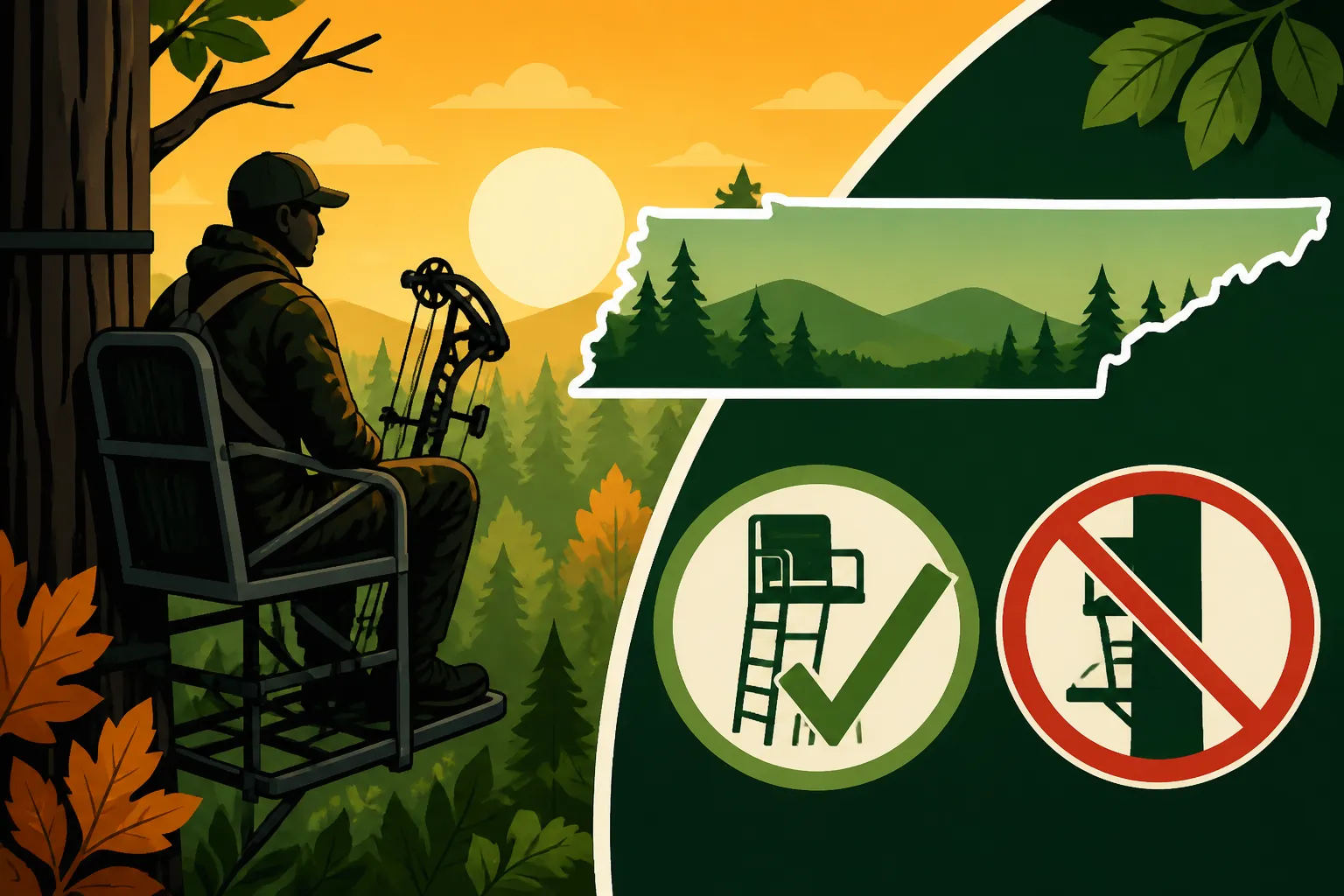
This is probably the most crucial rule to engrave into your hunting brain when it comes to public land. In Tennessee, on most public lands managed by the Tennessee Wildlife Resources Agency (TWRA) or federal entities, you absolutely cannot erect or leave a "permanent" treestand. But what exactly constitutes "permanent" in the eyes of the law? Generally, it means any stand that causes damage to the tree it’s attached to, or one that is intended to stay in place indefinitely.
Think about it from the tree's perspective. Nailing boards into a tree, using screw-in steps that pierce the bark deeply, or even bolting a stand directly to the trunk can create wounds that expose the tree to disease, pests, and structural weakness. These types of methods are explicitly prohibited. The goal is to minimize human impact on the forest, so if your chosen method leaves a lasting mark or harms the tree, it’s likely considered permanent and illegal.
The rationale behind this isn't just about aesthetics; it's about ecosystem health and fairness. Imagine if every hunter built their own "permanent" stand. The forests would be littered with old, rotting structures, and countless trees would be damaged or killed. It also ensures that public land remains public – no one hunter gets to claim a spot year after year by leaving a stand indefinitely. This rule promotes equal access and conserves the natural integrity of the forest for everyone.
Temporary Stands and Removal Requirements
So, if permanent stands are out, what's in? The answer is temporary stands, which include most modern, portable options like hang-on stands, climbing stands, and saddle hunting setups. These are perfectly fine, provided they are attached in a way that doesn't damage the tree, typically using straps or chains that wrap around the trunk without penetrating the bark. Make sure any climbing sticks or ladder sections you use also adhere to this non-damaging principle. Screw-in steps, for example, are a big no-no on public land in Tennessee, even if they're part of a temporary setup.
The "temporary" aspect extends to how long they can remain on the property. Most public lands in Tennessee require that portable treestands be removed at the end of the hunting season, or by a specific date, often shortly after the season closes. This means you can't just leave your stand out all year long, hoping to come back to it next fall. You'll need to haul it in and out, or at least take it down and store it off-site once the season is over. This also applies to any associated climbing aids, like strap-on steps or sections of a ladder stand.
Failing to remove your stand by the specified deadline can lead to some serious consequences. At best, you might find your stand has been removed by wildlife officers, possibly confiscated. At worst, you could face fines or other penalties. It's your responsibility to know the exact dates for stand removal for the specific WMA or public land tract you're hunting. Always err on the side of caution and plan to take your stand down promptly. It's a small inconvenience for the privilege of hunting these fantastic public resources.
Specific Rules by Public Land Type
While the general "no permanent stands" rule applies broadly across Tennessee, the specifics can vary depending on who manages the land. What's perfectly acceptable on a vast national forest might be strictly prohibited on a smaller, intensively managed Wildlife Management Area. This is where understanding the nuances of different public land types becomes incredibly important for any hunter. Always check the regulations specific to the area you plan to hunt – don't assume statewide rules cover everything.
These variations exist because different land managers have different objectives and face different pressures. A WMA might have more restrictive rules to manage higher hunter density or protect sensitive habitats, while a national forest might offer a bit more leeway given its sheer size and different management priorities. Knowing the entity responsible for the land you're on is the first step to finding the correct treestand rules. Tools like onX Hunt can be incredibly helpful for identifying land ownership and boundaries, making it easier to research the specific regulations for that area.
Wildlife Management Areas (WMAs)
Tennessee's Wildlife Management Areas are incredibly popular hunting destinations, and as such, they often have some of the most detailed and sometimes strictest rules regarding treestands. Many WMAs allow only portable treestands that do not damage trees and must be removed by the end of the hunting season, or by specific dates that sometimes vary by WMA. You might also find rules about tagging your stand with your name and TWRA ID number, which helps officers identify ownership and ensure compliance. This is especially true on WMAs where hunter density is higher, and accountability is paramount.
For example, on some WMAs, screw-in steps are absolutely forbidden. Instead, you'll need to use strap-on steps or climbing sticks that don't penetrate the tree bark. The logic here is simple: these areas see a lot of use, and repeated damage from screw-in steps could quickly compromise the health of mature trees. Before you even head out, spend some time on the TWRA website or consult the current hunting guide for the specific WMA you intend to visit. What's allowed on Catoosa WMA might be slightly different from what's permitted on Chuck Swan WMA. Additionally, remember that most WMAs require a Tennessee WMA Permit Requirement in addition to your general hunting license, and that permit also binds you to their specific rules.
Ignoring WMA-specific rules can lead to your stand being confiscated and potentially a citation. These rules are in place to protect the resource and ensure fair use for all. It's not uncommon for TWRA officers to patrol WMAs and check stands for compliance, especially during peak seasons. So, if you're planning to hunt a WMA, consider it mandatory to read up on their individual guidelines before you ever hang a stand.
Cherokee National Forest and Other National Forests
Hunting in the vast expanse of the Cherokee National Forest offers a different experience, and with it, some slightly different rules compared to WMAs. Generally, the "no permanent stands" rule still applies, meaning no nails, screws, or anything that pierces the tree. Portable stands are allowed, and like WMAs, they usually need to be removed at the end of the hunting season. However, you might find that the specific language around "damage" or "alteration" can be a bit more general than on WMAs.
For example, while screw-in steps are broadly discouraged and often prohibited due to their damaging nature, the emphasis on national forests is often on leaving no trace. This means anything you bring in, including your stand and climbing aids, must be removed. Treestand setups in Cherokee National Forest often involve a lot more walking into remote areas, so a lightweight, easy-to-deploy system like a climbing stand or a saddle hunting setup with strap-on sticks is often favored. The sheer scale of national forests means that active enforcement on every single stand might be less frequent than on a small WMA, but the rules are still in place and can be enforced.
Keep in mind that while you might find more flexibility in some aspects on federal lands, there can also be other regulations to be aware of. For instance, specific wilderness areas within the national forest might have even stricter rules, or you might need to consider Camping Rules on Cherokee National Forest Land if your stand is deep in the backcountry and you plan to stay overnight. Always check the U.S. Forest Service regulations for the specific district you'll be hunting in, as federal regulations can have their own nuances separate from state laws.
Land Between the Lakes (LBL)
Land Between the Lakes National Recreation Area, a unique parcel of federal land managed by the U.S. Forest Service but with its own distinct hunting regulations, deserves a special mention. LBL straddles the Tennessee-Kentucky border and has a highly structured hunting program, often involving quota hunts and specific permits. Because of this, their treestand rules can be more detailed and sometimes more restrictive than other public lands.
In LBL, portable treestands are typically allowed, but they must be completely self-contained and not inflict any damage on trees. This means no screw-in steps, no cutting of branches for shooting lanes, and absolutely no permanent alterations to the environment. Critically, LBL often requires hunters to tag their stands with their LBL hunt permit number, and the stands must be removed by specific dates, often immediately following the close of the deer season. Failure to tag or remove a stand can result in confiscation and other penalties.
If you're planning an LBL hunt, Getting a Land Between the Lakes Hunt Permit is just the first step. You'll need to thoroughly review their annual hunting guide, which provides extensive details on all rules, including those for treestands. These rules are rigorously enforced by LBL law enforcement and are designed to manage the hunting pressure and preserve the unique ecosystem of this popular recreation area. Don't go into LBL assuming it's like any other national forest; their regulations are often a world unto themselves.
Practical Considerations and Best Practices
Beyond the legalities, there are plenty of practical considerations and best practices that can make your treestand hunting experience on Tennessee public land safer, more ethical, and ultimately more enjoyable. Adhering to these principles not only keeps you out of trouble but also ensures you're being a responsible hunter and steward of the land. It’s all about preparation, respect, and minimizing your impact.
When you're out there, especially on public land, you're representing all hunters. Every decision you make, from how you hang your stand to how you manage your waste, reflects on the entire hunting community. By adopting best practices, you contribute to a positive public image and help ensure continued access to these precious resources. Think about leaving the woods better than you found them, and your hunting experiences will feel that much more rewarding.
Safety First: Harnesses and Lifelines
Regardless of where you hunt or what type of stand you use, safety should always be your absolute top priority. This is especially true when using a treestand, which inherently involves working at heights. Falls from treestands are one of the leading causes of serious injury and death in hunting. The most critical piece of equipment you own, after your weapon, is your full-body safety harness. Wear it, and use it correctly, every single time you leave the ground.
Beyond just wearing the harness, you need a lifeline or safety rope system that keeps you connected to the tree from the moment your feet leave the ground until they touch back down. This prevents falls during the crucial ascent and descent phases, which is when most accidents happen. Don't cut corners on safety gear; invest in a high-quality harness and lifeline. Practice using them at ground level until it becomes second nature. Remember, Treestand Safety Gear for Steep Ground is particularly vital in Tennessee's rugged terrain, where a fall could mean a long, difficult recovery in a remote location. A good safety regimen might feel cumbersome at first, but it could literally save your life.
Minimizing Impact and Ethical Hunting
Hunting on public land is a privilege, not a right, and part of maintaining that privilege is minimizing your impact on the environment and practicing ethical hunting. When hanging a treestand, this means using methods that leave no lasting trace. Opt for straps over chains or cables, and definitely avoid anything that involves drilling or screwing into the tree. Your goal should be that when you remove your stand, you can barely tell it was ever there. This leaves the natural environment undisturbed for other hunters, hikers, and wildlife.
Also, consider the location of your stand carefully. While it's tempting to cut a few small branches for a clearer shooting lane, doing so on public land is generally prohibited and considered damaging to the tree. Instead, focus on finding natural openings or choosing a stand placement that already offers clear shooting lanes. Using mapping apps like onX Hunt or GoHunt to scout Scouting Tennessee Public Land Before Season from afar and identify potential stand locations can significantly reduce your physical impact and ensure you stay within public land boundaries, avoiding accidental trespass onto private land. These apps allow you to virtually "walk" the terrain, identifying pinch points, saddles, and potential bedding areas without leaving a trace on the ground.
When your season is done, make sure to remove your stand and all associated gear. Don't leave trash, old flagging tape, or any other signs of your presence. A truly ethical hunter leaves nothing but footprints – and maybe a few scattered spent casings, which you should also make an effort to pick up! This respect for the land and for other users is fundamental to the long-term health of our public hunting opportunities.
Securing Your Stand on Public Land
One unfortunate reality of hunting on public land is the risk of theft. While most hunters are honest and respectful, leaving a stand unattended, even temporarily, can sometimes lead to it disappearing. There are steps you can take to mitigate this risk, though nothing is 100% foolproof. Many hunters use a cable lock or chain to secure their stand to the tree, often threading it through the stand's frame and around the trunk. While a determined thief could cut through these, it at least serves as a deterrent and makes it harder for casual theft.
Another tactic, especially if you're concerned about leaving a valuable stand, is to remove your climbing sticks or ladder sections after each hunt. This makes it much more difficult for someone to access and steal your stand, even if they can't remove the stand itself. Some hunters also choose to remove the stand entirely between hunts, especially if they're hunting a less productive spot or are away for an extended period. While this adds extra work, it's the surest way to prevent theft.
Check the specific regulations for the WMA or national forest you're hunting, as some may have rules about tagging your stand with your name and contact information. This can sometimes deter theft, as it's clear the stand is actively in use and belongs to someone. More importantly, it helps wildlife officers if they need to contact you regarding your stand. While you can't completely eliminate the risk, a little effort in securing your stand can go a long way in protecting your investment and preventing frustration.
| Stand Type | Common Usage on TN Public Land | Damage to Tree | Removal Requirement (Typical) | Notes |
|---|---|---|---|---|
| Hang-On Stand | Very Common | No (straps) | End of season | Must use non-damaging attachment (straps, no screws). |
| Climbing Stand | Very Common | No | End of season | Portable, self-contained. |
| Saddle Hunting | Growing Popularity | No | End of season | Minimal impact, lightweight. |
| Ladder Stand | Less Common, some WMAs | No | End of season | Can be bulky, but uses non-damaging attachment. |
| Ground Blind | Common alternative | No | End of season (sometimes shorter) | Excellent alternative, see Using a Ground Blind on Tennessee Public Land. |
| Screw-in Steps | NOT ALLOWED | Yes | N/A | Causes tree damage, strictly prohibited. |
| Permanent Stands | NOT ALLOWED | Yes | N/A | Nailing, bolting, or leaving indefinitely; prohibited. |
What Happens if You Break the Rules?
It's tempting to think that "nobody will know" if you leave your stand out a bit longer or use a forbidden screw-in step in a remote area. However, that line of thinking can lead to serious headaches for you and negative consequences for the entire hunting community. Wildlife enforcement officers are out there, and they are trained to spot violations, even in the deepest woods. The rules are in place for valid reasons, and breaking them can have tangible repercussions.
Beyond the legal penalties, there's a broader impact. Every time a hunter disregards regulations, it erodes public trust and gives ammunition to those who oppose hunting. It can lead to stricter rules for everyone, or even worse, loss of access to public lands. Being a responsible hunter means respecting the rules, even when you think no one is watching.
Penalties and Enforcement
If you're caught violating treestand rules on Tennessee public land, you could face a range of penalties. These can include significant fines, confiscation of your hunting equipment (including the stand itself), and even the loss of your hunting privileges for a period. Wildlife officers have the authority to issue citations on the spot, and these offenses often carry the same weight as other hunting violations. It's not just a slap on the wrist; these can be costly and inconvenient.
For example, leaving a stand past the removal deadline might result in the TWRA confiscating the stand, and you'd have to go through a process, likely paying a fine, to potentially get it back – if it hasn't been disposed of. Using screw-in steps, which cause tree damage, could be seen as an act of vandalism or property damage on public land, leading to more severe fines and potential legal action. Enforcement agents regularly patrol popular hunting areas, especially WMAs and other high-pressure spots, and are well aware of common violations. They are also adept at finding stands that are hidden or appear to be permanent.
It's far better to err on the side of caution. If you're unsure about a rule, contact the TWRA or the managing agency for the specific land you plan to hunt. A quick phone call or email can save you a lot of grief and money compared to dealing with a violation. Remember, ignorance of the law is generally not a valid defense.
Public Perception and Shared Resources
Every hunter has a role to play in shaping public perception of hunting. When a non-hunter or even another hunter discovers a permanent stand riddled with screws and nails, or a dilapidated stand left out year-round, it creates a negative impression. It looks like disrespect for the land, a lack of ethics, and can fuel the narrative that hunters are irresponsible. This kind of behavior can undermine efforts to preserve hunting traditions and access to public lands.
Public land is a shared resource, belonging to all citizens, not just hunters. When rules are disregarded, it impacts everyone. A damaged tree affects the ecosystem and potentially creates a hazard for other users. Trash left behind detracts from the beauty and enjoyment of the outdoors for hikers, birdwatchers, and other recreational users. This can lead to public outcry, increased pressure on land managers, and potentially, more restrictive rules or even closures for hunters.
By diligently following treestand rules, picking up all your trash, and leaving no trace of your hunt, you're not just avoiding a ticket; you're actively contributing to the positive image of hunting. You're showing respect for the land, the wildlife, and your fellow citizens. This collective responsibility ensures that future generations can continue to enjoy the incredible hunting opportunities that Tennessee's public lands offer. Let's all do our part to be good stewards and ensure these resources remain vibrant and accessible for years to come.
Disclaimer
This article is for general informational purposes only and does not constitute professional advice. Laws, prices and regulations vary by location and change over time. Consult a qualified professional for guidance on your specific situation.