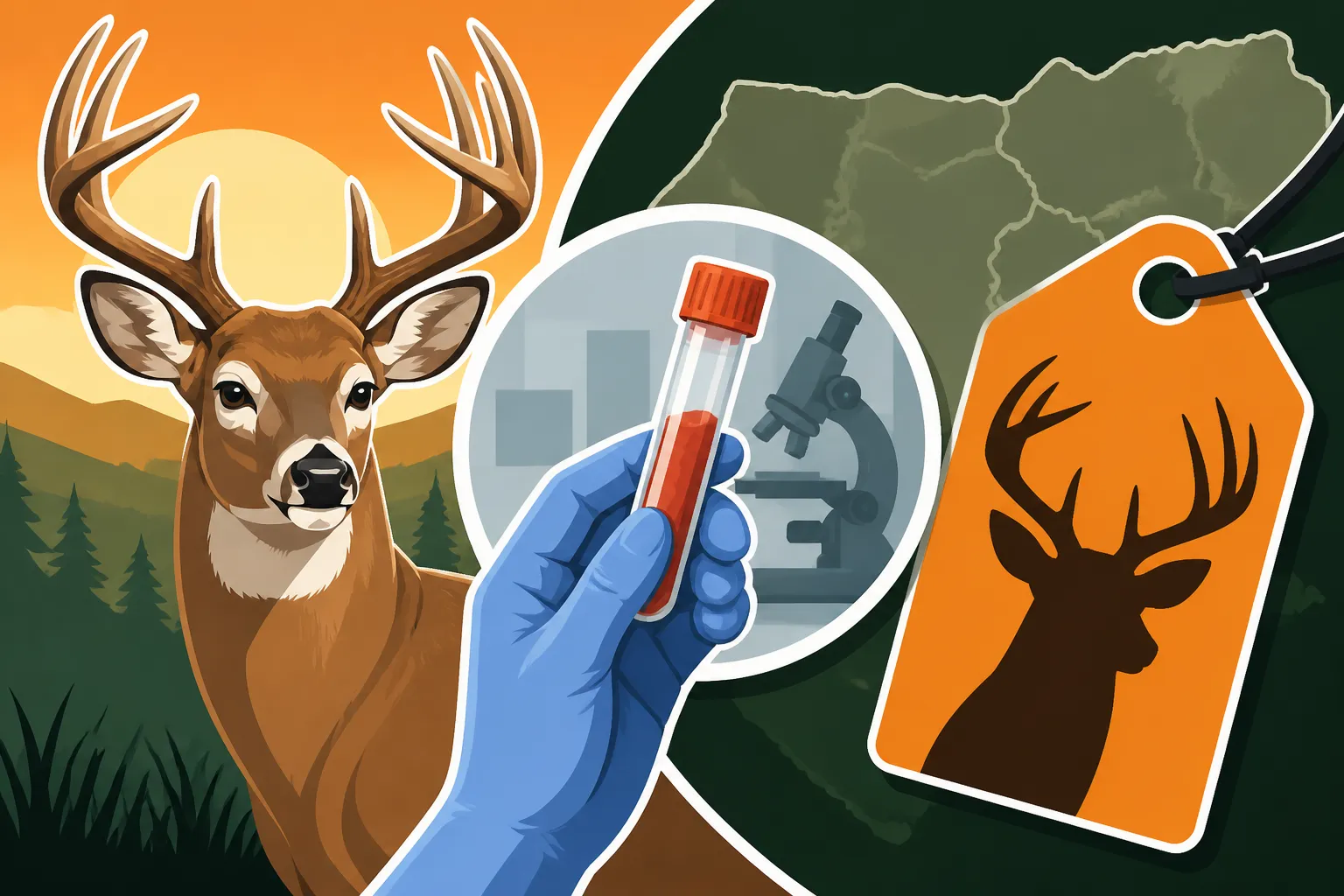
Earning a Buck Tag Through CWD Testing
Hunting in Tennessee's Chronic Wasting Disease (CWD) zones can feel like navigating a maze of new regulations and restrictions, especially when it comes to antlered deer. Many hunters feel the frustration of knowing there are great bucks in an area, but standard bag limits can quickly put an end to their season. Thankfully, the Tennessee Wildlife Resources Agency (TWRA) offers an innovative solution: the "Earn-a-Buck" program, which allows dedicated hunters to secure an additional buck tag through diligent CWD testing. This guide will unravel the complexities of this program, empowering you to extend your hunting opportunities while contributing to vital wildlife management efforts.
Understanding Tennessee's CWD Management Zones
Chronic Wasting Disease is a serious, fatal neurological disease affecting deer, elk, and moose. Its presence in Tennessee has brought about significant changes in hunting regulations, particularly concerning harvest limits and carcass transport. Understanding these zones and the rationale behind the rules is the first step toward successful hunting within them.
The Spread and Impact of CWD
Tennessee first detected CWD in 2018 in Fayette County, a sobering discovery that immediately prompted the TWRA to implement rigorous management strategies. Since then, the disease has unfortunately spread, primarily across West Tennessee, and more recently, concerns have grown as cases have appeared in Middle Tennessee counties like Dickson and Williamson. This slow, relentless spread creates understandable anxiety among hunters who cherish the state's deer herd. CWD has long-term implications for herd health and deer populations, making proactive management crucial. The restrictions aren't just an inconvenience; they are a necessary measure to monitor and hopefully contain the disease.
Navigating Antlered Deer Restrictions in CWD Zones
In areas designated as CWD Management Zones, the standard antlered deer bag limits are often more restrictive than in CWD-free counties. For instance, many CWD Unit (CWDU) counties might limit hunters to one or two antlered deer per season, irrespective of the statewide bag limit. This can be a real bummer when you've put in the scouting time, hung your stand, and finally get an opportunity at a mature buck, only to realize you've already met your antlered deer quota. These restrictions, while tough to swallow, are critical for managing deer density, which helps slow the potential spread of CWD by reducing deer-to-deer contact and allows the TWRA to gather more samples from harvested animals to track the disease. It means every deer you encounter, especially does, takes on added significance.
The "Earn-a-Buck" Program: Your Opportunity for Extra Tags
The TWRA's "Earn-a-Buck" program is a direct response to both the challenges of CWD and the desire of hunters to have more opportunities. It's a win-win, allowing hunters to extend their season while providing invaluable data to wildlife biologists.
How the Earn-a-Buck Program Works
At its core, the Earn-a-Buck program is an incentive-based initiative. Here's the deal: if you are hunting in a CWD-positive county within a designated CWD Management Zone, and you harvest an antlerless deer (a doe or a buck with antlers less than 3 inches in length), you can submit its head for CWD testing. Should that deer test negative for CWD, the TWRA will reward you with an additional antlered deer tag for use in that same CWD-positive county.
This program serves a dual purpose. Firstly, it encourages the harvest of antlerless deer, which is a key strategy for managing herd populations and densities in CWD zones. Fewer deer can mean less potential for disease transmission. Secondly, it drastically increases the number of CWD samples collected each season, giving wildlife biologists a much clearer picture of the disease's prevalence and spread. For the hunter, it means that instead of your season ending after one or two bucks, you have a direct path to securing another opportunity, allowing you to stay in the woods longer and continue participating in Tennessee's Gun Deer Season Into January or your preferred method.
Eligibility and Program Requirements
Participating in the Earn-a-Buck program is fairly straightforward, but it does come with specific requirements you need to understand:
- Valid Licenses: You must possess all necessary Tennessee hunting licenses and big game permits for the current season.
- CWD-Positive County: The antlerless deer must be harvested in a county designated as CWD-positive. Always double-check the current Which Counties Sit Inside Tennessee's CWD Zone map before you head out.
- Antlerless Deer Definition: For the purpose of this program, an antlerless deer is defined as any deer without antlers, or a buck with antlers less than 3 inches in length. This is crucial for correctly identifying your harvest for submission.
- Submission Requirements: You must properly report your antlerless deer harvest through the Go Outdoors Tennessee system, obtaining a confirmation number. Then, you must present the head of the harvested antlerless deer at an official TWRA CWD sampling station.
- Negative Test Result: The "earn" part only comes into play if the submitted deer tests negative for CWD. If positive, you will not receive an additional buck tag.
- Tag Use: The earned buck tag is typically valid only for the remainder of the current deer season and can only be used in the same CWD-positive county where the antlerless deer was harvested and submitted. It cannot be transferred to another hunter or another county.
It’s important to remember that these rules are in place to ensure the integrity of the CWD monitoring program. Youth hunters participating in Tennessee Youth Deer Hunt Rules can also contribute and earn a buck tag, making it a great family activity that combines hunting with conservation.
The CWD Testing Process for Hunters
Navigating the CWD testing process is key to successfully earning your additional buck tag. It might seem daunting at first, but with a clear understanding of the steps and resources available, it's quite manageable.
Step-by-Step Submission at TWRA Sampling Stations
Once you've successfully harvested an antlerless deer in a CWD-positive county, here’s how you get it submitted for testing:
- Field Dressing and Head Preparation: After a successful harvest, field dress your deer as you normally would. For CWD testing, you only need to keep the head. Make sure to keep it reasonably clean. Avoid cutting into the brain or spinal cord area if possible, though TWRA staff are adept at handling various conditions.
- Report Your Harvest: Before heading to a sampling station, you must report your antlerless deer harvest through the Go Outdoors Tennessee app or website. This step generates a unique harvest confirmation number that you'll need for the CWD submission. This is part of the broader Tennessee Deer Harvest Reporting Rules and is non-negotiable.
- Locate a Sampling Station: The TWRA operates numerous CWD sampling stations across the state, especially within and near CWD-positive counties. These can range from staffed stations during peak hunting hours to convenient 24/7 self-serve kiosks. You can find an up-to-date list and map on the TWRA website or through popular hunting apps. Many hunters use apps like GoHunt to quickly locate the nearest Finding a Tennessee CWD Sampling Station in real-time, which is incredibly helpful when you're in the field.
- Submit the Head:
- Staffed Station: Present your deer's head and your harvest confirmation number to the TWRA representative. They will take a tissue sample (usually from the lymph nodes near the throat) and provide you with a receipt confirming your submission.
- Self-Serve Kiosk: These kiosks usually have clear instructions. You'll typically need to input your license number and harvest confirmation number, then follow prompts to place the deer's head in a designated collection bin. The kiosk will print a receipt for you. Always ensure the head is clearly tagged with your information.
- Carcass Disposal: After submitting the head, responsibly dispose of the remaining carcass. In CWD zones, special carcass disposal rules often apply. Make sure you understand and follow Deboning Venison Before Leaving the CWD Zone and local regulations. You might need to use designated dumpsters or bury the remains deeply on your property if allowed.
This systematic approach ensures that every sample is properly collected and linked to the correct hunter, streamlining the process of Tennessee CWD Testing for Hunters.
Receiving and Utilizing Your Earned Buck Tag
The waiting game begins after you've submitted your sample. It's a bit like waiting for Christmas morning, but with a buck tag on the line!
- Results Timeline: CWD test results typically take anywhere from 2 to 4 weeks, but this can vary depending on the volume of samples and lab capacity. Patience is key.
- Notification: The TWRA will notify you of your test results. This usually happens via email, and the results will also be accessible through your personal account on the Go Outdoors Tennessee platform. You won't receive a phone call, so keep an eye on your inbox and your online portal.
- Claiming Your Tag: If your antlerless deer tests negative for CWD, congratulations! Your additional antlered deer tag will automatically be added to your Go Outdoors Tennessee account. You won't receive a physical tag in the mail; it's a digital authorization linked to your hunting license.
- Using Your Earned Tag: With this new tag, you can now legally harvest another antlered deer in the same CWD-positive county during the remainder of the current season. Remember the rules: the buck must have antlers at least 3 inches long. This means you can keep hunting and potentially fill your freezer with more venison. For example, if you earned a tag for Dickson County, you must use it in Dickson County. Make sure you understand how to properly Report a Tennessee Deer Harvest Online when you use this bonus tag.
It's a huge relief to earn that extra tag, and it gives you a fantastic reason to get back out into the woods, perhaps using strategies like Hunting the Tennessee Rut in Early November if the timing is right, or simply continuing your pursuit through the late season.
| Step | Action | Key Detail | What You Get/Need |
|---|---|---|---|
| 1. Harvest Antlerless Deer | Successfully take an antlerless deer. | Must be in a CWD-positive county. Antlers < 3 inches. | Valid license, antlerless deer. |
| 2. Report Harvest Online | Immediately report via Go Outdoors TN app/website. | Crucial for obtaining a harvest confirmation number. | Harvest Confirmation Number. |
| 3. Prepare Deer Head | Field dress; retain head for submission. | Keep head reasonably clean; avoid brain/spinal damage. | Deer head. |
| 4. Locate & Visit Station | Find nearest TWRA CWD sampling station. | Use TWRA website or hunting apps (e.g., GoHunt). | Directions, station hours. |
| 5. Submit Sample | Present head & confirmation number at station. | Staffed: TWRA takes sample. Kiosk: Follow instructions. | Receipt of Submission. |
| 6. Await Results | Patiently wait for CWD test results. | Typically 2-4 weeks via email & Go Outdoors TN portal. | Notification of result. |
| 7. Claim Earned Tag | If negative, additional buck tag auto-added to account. | Digital tag, valid for current season in same county. | Additional Antlered Deer Tag (digital). |
Strategies for Maximizing Your Opportunities in CWD Zones
The Earn-a-Buck program is a powerful tool, but like any hunting strategy, it requires thoughtful planning and execution. Maximizing your success means thinking beyond just the shot.
Focusing on Antlerless Harvest in Early Season
One of the smartest moves you can make is to prioritize harvesting an antlerless deer early in the season, particularly if you're hunting in a CWD zone. The earlier you submit your sample, the sooner you'll get your results back, giving you more time to utilize that potential earned buck tag. Imagine taking a doe during the opening days of Bowhunting Tennessee's Long Archery Season in late September. By the time late October or early November rolls around, you could have your extra tag in hand just as the deer activity picks up for the rut.
This strategy allows you to:
- Extend Your Season: More time with a buck tag means more opportunities to scout, sit, and potentially harvest.
- Contribute to Management: Early antlerless harvest is a key component of managing deer populations, which is especially vital in CWD zones. You're helping reduce local herd density, which can slow the spread of the disease.
- Reduce Pressure: If you're hunting public land, taking a doe early frees you up to focus purely on buck strategies later, without the pressure of needing to save a buck tag.
Consider targeting areas where does are common, such as agricultural field edges, younger clear-cuts, or well-used food plot locations. Setting up for a doe early can also serve as a great scouting mission for potential buck movement.
Planning Your Hunts Around CWD Zones
Understanding the boundaries of CWD zones is non-negotiable. The TWRA regularly updates the map of CWD-positive and CWD-buffer counties. Before each season, take the time to review the current Tennessee's Chronic Wasting Disease Management Zone map to know exactly where you stand. If you plan to hunt across different counties, you need to be aware of the specific regulations for each, as they can vary wildly even within adjacent areas.
Hunting apps like GoHunt offer invaluable mapping layers that show property boundaries, public land access, and often CWD zone designations. Utilizing these tools allows you to plan your routes, identify potential areas for antlerless harvest, and locate official CWD sampling stations beforehand. For instance, if you're eyeing a productive ridge system for Still-Hunting Cumberland Plateau Ridges, knowing if that ridge falls within a CWD zone can significantly alter your harvest strategy. You might decide to focus on filling your antlerless quota there first.
Ethical Considerations and Contribution to Wildlife Management
While an extra buck tag is a fantastic personal incentive, it's crucial to remember the larger picture: you are playing an active, ethical role in wildlife conservation. The Earn-a-Buck program isn't just about bending the rules; it's a partnership between hunters and the TWRA to mitigate a serious threat to Tennessee's deer herd.
By participating, you are:
- Providing Crucial Data: Every sample submitted adds to the TWRA's understanding of CWD prevalence and distribution, guiding future management decisions.
- Helping Control Disease Spread: Reducing deer density through antlerless harvest can lessen the opportunities for CWD to spread from deer to deer.
- Practicing Responsible Hunting: You're demonstrating a commitment to the health of the resource, ensuring that future generations can enjoy the rich hunting traditions of Tennessee.
Beyond the Earn-a-Buck program, always adhere to all CWD regulations, especially regarding carcass transport and disposal. If you plan to leave a CWD-positive county, make sure your venison is properly deboned. This collective effort is what protects our cherished wildlife.
Disclaimer
Please be aware that hunting regulations, season dates, and CWD zone boundaries are subject to change. Always consult the most current Tennessee Wildlife Resources Agency (TWRA) hunting guide and website before planning any hunting trip or making any purchasing decisions. This content is for informational purposes only and does not constitute legal or official advice.