Bowfishing Tennessee Rivers in the Off-Season
After the thrill of deer season fades and the last gobbler is hopefully tagged, many of us feel that familiar ache for an adrenaline fix, a way to stay connected to the outdoor world and keep our hunting skills sharp. Those long stretches between popular hunting seasons can feel endless, leaving you itching for a challenge. This guide dives deep into bowfishing Tennessee's abundant rivers and lakes, offering a fantastic, action-packed pursuit that fills that off-season void and puts some delicious table fare in your freezer.
Understanding Bowfishing's Appeal in Tennessee's Off-Season
There's a unique emptiness that settles in the woods once the whitetail rut is over and the final days of Tennessee's Gun Deer Season Into January have passed. For many hunters, the transition from deer season to spring turkey hunting can feel like an eternity, punctuated by maybe some predator calling or small game pursuits. This is precisely where bowfishing steps in, offering a dynamic and engaging way to stay active, hone your shooting skills, and enjoy Tennessee's incredible waterways during times when other hunting opportunities are scarce.
Beating the Post-Deer Season Blues
That post-season slump is real, isn't it? One minute you're analyzing trail camera photos and perfecting your Treestand Setups in Cherokee National Forest, the next you're staring at an empty calendar. Bowfishing provides an immediate and invigorating antidote. It’s not just about catching fish; it’s about hunting. You're actively spotting, stalking, and taking aim at your target, which resonates deeply with the instincts of any seasoned hunter. The beauty of bowfishing is its accessibility for much of the year, particularly as warmer weather drives fish into shallower, more visible waters. It keeps your archery muscles limber and your eye sharp, ensuring you’re ready for the next deer or turkey season. Plus, there's a primal satisfaction in harvesting your own food with a bow, a direct connection to the land and water that many of us crave. It’s a chance to explore new stretches of river and lake, often at night, under the glow of powerful lights, transforming familiar landscapes into exciting new hunting grounds.
Target Species and Their Habits
In Tennessee, the primary targets for bowfishing are generally considered "rough fish" or invasive species, which is fantastic because it means there are often no bag limits, and you're actively helping to manage populations that can negatively impact native ecosystems.
The most common species you'll encounter include:
- Common Carp: These large, powerful fish are ubiquitous in most Tennessee waters. They love shallow, muddy flats, weed beds, and backwater areas, especially during their spring and early summer spawning periods. They can be found cruising just under the surface, making them excellent targets.
- Grass Carp: Often found in areas with heavy aquatic vegetation, these fish are voracious eaters of plants. They can grow quite large and offer a significant challenge. Spotting them amidst thick cover requires a keen eye and patience.
- Silver Carp and Bighead Carp (Asian Carp): These highly invasive species are a major concern in Tennessee's western rivers, particularly the Mississippi River and its tributaries. They often feed by filtering plankton in open water, but silver carp are famous (or infamous) for leaping high out of the water when disturbed by boat motors, creating a unique and sometimes chaotic bowfishing experience. Targeting these helps reduce their detrimental impact on native species.
- Buffalo (Bigmouth, Smallmouth, Black): These large, deep-bodied fish are bottom feeders related to carp. They often move into shallower areas to feed or spawn in the spring, making them vulnerable to bowfishing. They offer a tremendous fight.
- Gar (Longnose, Spotted, Shortnose): With their distinctive long snouts and armored bodies, gar are ancient predators. They prefer slow-moving rivers, backwaters, and often lie motionless just below the surface, especially in warmer months. Their tough scales can make penetration tricky, but they are a truly unique bowfishing target and, surprisingly, quite good to eat when prepared correctly.
Knowing the habits of these species is crucial. Warmer water generally pushes them into shallower areas where they are more visible. Spawning periods, typically in spring and early summer, are prime times as fish congregate in accessible flats and backwaters. Observing the water for subtle movements, wakes, or even dorsal fins breaking the surface, especially near thick cover or weed lines, will significantly increase your success.
Essential Gear for Successful Tennessee Bowfishing
Just like any specialized hunting method, bowfishing requires a specific set of tools to be effective and enjoyable. While you can certainly adapt some existing archery gear for a casual outing, having dedicated bowfishing equipment will make a world of difference, especially if you plan on making it a regular off-season pursuit.
Bows, Reels, and Arrows: Your Primary Tools
At the heart of any bowfishing setup is, of course, the bow. While many archers initially try converting a deer hunting bow, dedicated bowfishing bows or older, less-used compounds are often preferred. The key is durability and a lighter draw weight that can be held for extended periods, as you might be snap-shooting quickly. Recurve bows are also excellent choices for their simplicity and quick-shooting nature. Brands like Bowtech and PSE offer dedicated bowfishing models designed for the rigors of the water.
Next, you'll need a specialized reel system. There are two main types:
- Retriever Reels: These are essentially a bottle or canister attached to your bow, holding spooled line. After the shot, you simply pull the line back in by hand. They are simple, robust, and less prone to tangles, making them very popular.
- Spincast Reels: Mounted to a specialized bracket on your bow, these are modified fishing reels designed for bowfishing line. You press a button, shoot, and then reel the line back in. They offer faster retrieval but can sometimes be more prone to tangles if not managed carefully.
Regardless of the reel type, your line is critical. Heavy-duty braided lines, often 200-300 lb test, are necessary to withstand the abuse of pulling fish out of thick cover.
Bowfishing arrows are distinctly different from deer hunting arrows. They are typically solid fiberglass, heavier, and lack fletching, as accuracy isn't measured in tight groups at 30 yards, but rather in hitting a moving target at close range. The arrow tips are barbed, designed to penetrate and hold the fish without passing entirely through. Popular tips include the Muzzy Trocar and Cajun Archery points, which have retractable barbs for easy fish removal. Ensuring your arrow is properly connected to your line and that the line is clear of your bow and arrow during the shot is paramount for safety. Using a mapping app like the one offered by GoHunt can even help you scout potential shooting lanes in shallow water before you even launch your boat.
Lighting and Boat Setup for Night Bowfishing
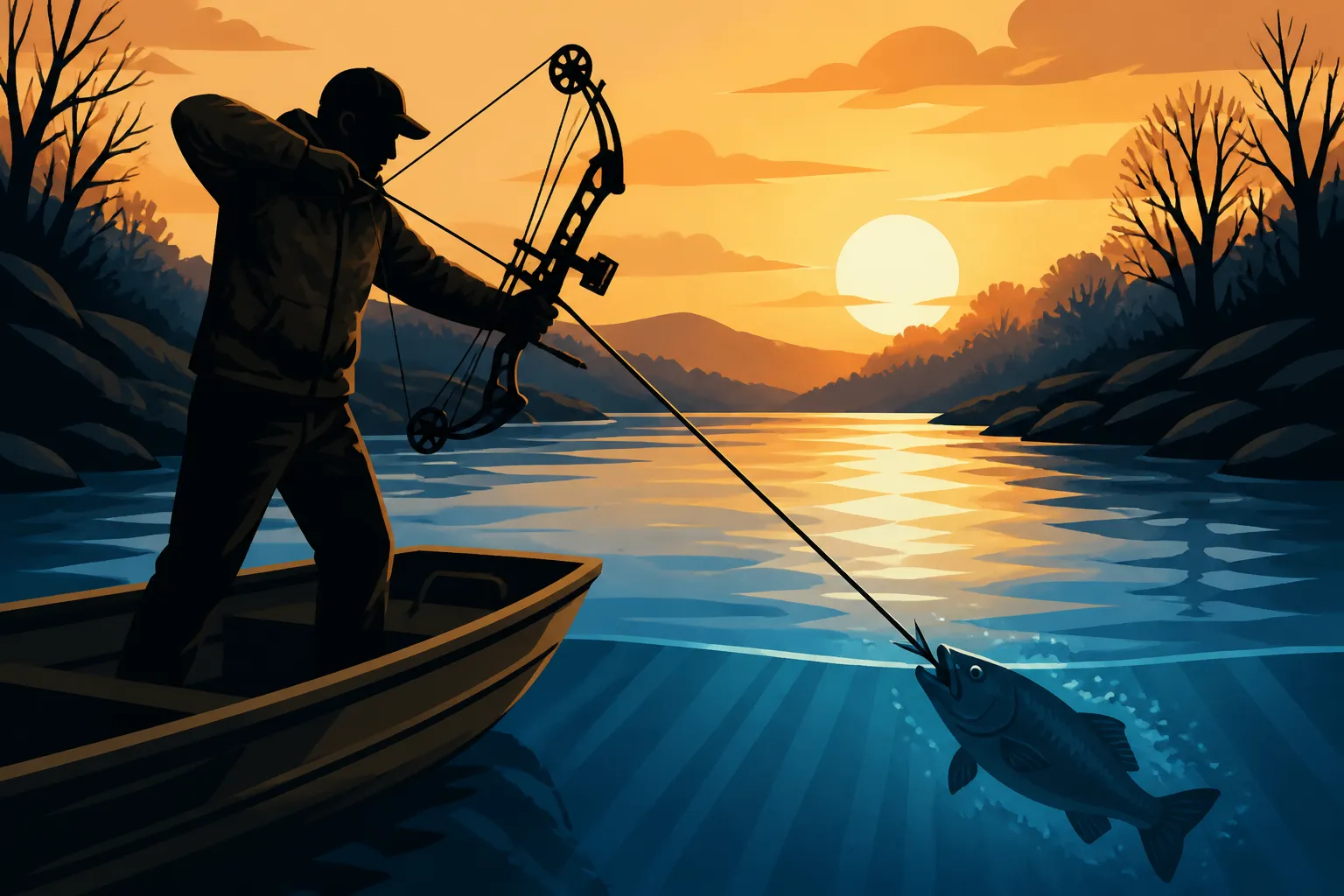
While you can certainly bowfish during the day, many of the most successful and exciting trips happen under the cover of darkness. This requires a dedicated lighting and boat setup. The principle is simple: powerful lights illuminate the shallow water, making fish visible as they cruise or feed.
For lighting, most serious bowfishermen rely on a generator to power an array of halogen or LED lights. These lights are typically mounted around the front of a flat-bottom jon boat, facing outwards and downwards to penetrate the water. LED lights have become increasingly popular due to their efficiency and brighter output. The goal is to create a bright, wide cone of light that allows you to see several feet into the water, even in murky conditions. The setup might look like something you’d find when Waterfowl Hunting Reelfoot Lake and Beyond from a specialized blind, but here, the focus is purely on illuminating the water column.
The boat itself is a crucial piece of gear. A flat-bottom jon boat, usually 16-20 feet long, is ideal for navigating the shallow backwaters and flats where fish congregate. Some dedicated bowfishing boats feature elevated shooting platforms on the bow, giving shooters a better vantage point to see into the water and account for refraction. An airboat is the ultimate bowfishing machine, allowing access to extremely shallow or vegetated areas, but they come with a significant price tag. For quieter maneuvering and precise positioning, a powerful trolling motor (often 24V or 36V) is indispensable, allowing you to silently stalk fish without spooking them. Having enough battery life for a full night of trolling is critical. When you're planning your trip, consider checking the GoHunt app for river access points and potential launch sites that are suitable for your boat setup.
Prime Tennessee Rivers and Tactical Approaches
Tennessee is blessed with an incredible network of rivers, lakes, and reservoirs, many of which offer fantastic bowfishing opportunities. Knowing where to go and how to approach the fish once you're there will significantly impact your success.
Navigating Tennessee's Prime Bowfishing Waters
When it comes to prime bowfishing locations, the western and central parts of Tennessee truly shine. The vast expanses of the Tennessee River and its numerous reservoirs, such as Kentucky Lake, Lake Barkley, Pickwick Lake, and Chickamauga Lake, are hotspots. These waters feature extensive shallow flats, backwater coves, and areas where creeks feed into the main river, creating ideal habitats for carp and buffalo. The Cumberland River Corridor Public Access also offers excellent opportunities, particularly in its slower-moving sections and oxbows.
Further west, the Mississippi River and its intricate system of backwaters, bayous, and flooded timber are legendary for bowfishing, especially for Asian carp. The sheer volume of fish in these areas can be astounding. While specific regulations might apply, the areas around Reelfoot Lake Waterfowl Access can also be incredibly productive, though it's vital to be intimately familiar with the unique rules and boundaries of that ecosystem before you launch.
When scouting for locations, look for several key features:
- Shallow Flats: Areas less than 5 feet deep, especially those with muddy or sandy bottoms. These warm up quickly and attract fish for feeding and spawning.
- Backwaters and Oxbows: Isolated or slow-moving channels off the main river provide calmer, often shallower water where fish feel safe.
- Aquatic Vegetation: Submerged or emergent weeds provide cover and food sources, drawing in species like grass carp.
- Creek Mouths and Inflows: Flowing water can concentrate baitfish and nutrients, attracting larger rough fish.
- Flooded Timber: When water levels are up, flooded trees offer excellent cover. This can be fantastic for stalking, but also challenging for arrow retrieval.
Using tools like the GoHunt mapping system or the TWRA app's satellite imagery can help you identify these features from home, allowing you to plan your attack before you ever put the boat in the water. Remember that water levels fluctuate dramatically in many Tennessee rivers and reservoirs, so always check current conditions.
Stalking and Shooting Techniques
Bowfishing is a game of patience, stealth, and quick reflexes. Once you're on the water and your lights are illuminating the depths, the hunt begins. The most crucial concept to master is understanding light refraction. Because of how light bends as it passes from air to water, a fish will always appear shallower and closer to you than it actually is. If you aim directly at the fish, you'll likely shoot over its back.
The golden rule of bowfishing is: "Aim low." How low depends on the depth of the fish and your angle. For every foot of depth, you might need to aim several inches below where you perceive the fish to be. Practice is key here, and you'll quickly develop an instinct for it. Start by aiming for the bottom of the fish's belly, and adjust from there.
Tactical Approaches:
- Slow and Steady: Whether you're using a trolling motor or pushing off with a pole, move slowly and deliberately. Jerky movements or loud noises will spook fish.
- Scan Systematically: Sweep your lights slowly across the water, looking for any signs of fish – a dark shadow, a glint of scales, a subtle wake, or even a tail fin breaking the surface.
- Snap Shooting: Often, you'll only have a brief window to get a shot off. Practice quickly drawing, aiming low, and releasing. Don't overthink it.
- Group Shots: Carp and buffalo often travel in schools or congregate during spawning. If you see multiple fish, pick one and aim carefully. Sometimes, a shot into a tightly packed school can result in multiple hits.
- Arrow Retrieval: Not every shot will be a hit, and sometimes you'll miss and stick your arrow in the bottom. Keep a retrieval stick or a long gaff handy. Your heavy line and barbed points are designed to hold fish, but also to withstand getting stuck in mud or timber.
- The Thrill of the Jump: When targeting Silver Carp, be prepared for them to leap out of the water! This can be exciting but also dangerous. Always wear eye protection and be aware of your surroundings.
Bowfishing truly embodies the spirit of hunting, requiring observation, precision, and the ability to adapt. It’s a dynamic and exciting way to fill those empty spots on your calendar and enjoy Tennessee’s natural bounty.
Regulations, Safety, and Ethical Considerations
While bowfishing offers a fantastic off-season pursuit, it’s not a free-for-all. As with any outdoor activity in Tennessee, there are important regulations to follow, safety protocols to observe, and ethical considerations that every responsible sportsman should uphold. Ignoring these can lead to fines, dangerous situations, and a tarnished reputation for the sport.
TWRA Regulations You Need to Know
The Tennessee Wildlife Resources Agency (TWRA) oversees all hunting and fishing activities in the state, and bowfishing falls squarely under their purview. Before you even think about hitting the water, you need to ensure you're compliant.
First and foremost, you will need a valid Tennessee fishing license. While you're using a bow, the activity is classified as a method of fishing. You can easily purchase these online through the TWRA website or via their mobile app, or from numerous licensed vendors across the state. It’s always a good idea to check the current TWRA Fishing Guide, which is updated annually, for any specific bowfishing regulations that might apply. For more details on purchasing, you can refer to our guide on Tennessee Hunting Licenses and What They Cost.
Here are some general points to remember regarding TWRA regulations for bowfishing:
- Legal Species: In Tennessee, most rough fish, including various species of carp (common, grass, silver, bighead), buffalo, gar, drum, and suckers, are legal to take by bowfishing. Game fish (bass, crappie, catfish, trout, etc.) are NOT legal to harvest by bowfishing. Always confirm the species you're targeting are legal.
- Bag Limits: For most rough fish species, there are no statewide bag limits when taken by bowfishing. However, always double-check the latest regulations, as specific water bodies or WMAs might have unique rules.
- Culling: The practice of culling (releasing smaller fish to keep larger ones) is generally discouraged in bowfishing. Once a fish is shot, its chances of survival are significantly reduced. Ethical practice dictates you should only shoot what you intend to harvest and keep.
- Disposal: Responsible disposal of harvested fish is paramount. If you don't intend to eat them (many rough fish are quite delicious when prepared correctly!), you must dispose of them properly. This means not leaving them on the bank to rot, which attracts scavengers and creates unsanitary conditions. Many communities have composting facilities or you can use them as fertilizer. Never dump them back into the water where they might float up later. This is particularly important with invasive species like Asian carp, where improper disposal can actually spread them or their diseases.
Staying Safe and Ethical on the Water
Safety should always be your top priority when bowfishing, especially if you're out at night with powerful lights and sharp arrows.
- Boating Safety: This cannot be stressed enough. Ensure your boat is in good working order, with all required safety equipment on board (life jackets/PFDs for everyone, fire extinguisher, sounding device, navigation lights if operating after dark). Never overload your boat, and be aware of weather conditions. Knowing the waters you're on, including submerged hazards, is critical. Even on familiar rivers, conditions can change, as outlined in guides like Jump-Shooting a Tennessee River.
- Arrow Safety: Treat bowfishing arrows with the same respect you would a broadhead-tipped hunting arrow. They are extremely sharp. Always ensure your line is clear of your bow and shooting hand before releasing an arrow. Never point your bow and arrow at another person. Be mindful of your surroundings and what lies beyond your target – always have a clear backdrop.
- Eye Protection: When bowfishing for Asian carp, especially silver carp, eye protection is non-negotiable. These fish are known to leap out of the water at high speeds, and a direct hit from a jumping fish can cause serious injury. Safety glasses or even a face shield are highly recommended.
- Ethical Considerations:
- Respect Other Water Users: You'll share the rivers and lakes with pleasure boaters, anglers, and kayakers. Be courteous, don't shine your bright lights directly into their boats, and maintain a respectful distance.
- Responsible Harvest: Only shoot what you intend to harvest and utilize. While many rough fish have no bag limits, wasteful killing is never acceptable.
- Environmental Stewardship: Beyond proper fish disposal, practice leave-no-trace principles. Pack out all your trash, and be mindful of your impact on sensitive aquatic habitats.
Bowfishing is a fantastic way to enjoy the great outdoors and practice your archery skills when other seasons are closed. By understanding the regulations, prioritizing safety, and always acting ethically, you can ensure a rewarding and responsible experience on Tennessee’s beautiful waterways.
Disclaimer
Please note that hunting and fishing regulations can change frequently. Always consult the latest official Tennessee Wildlife Resources Agency (TWRA) hunting and fishing guide and local regulations before planning any trip. This content is for informational purposes only and does not constitute legal advice or an exhaustive list of all regulations.