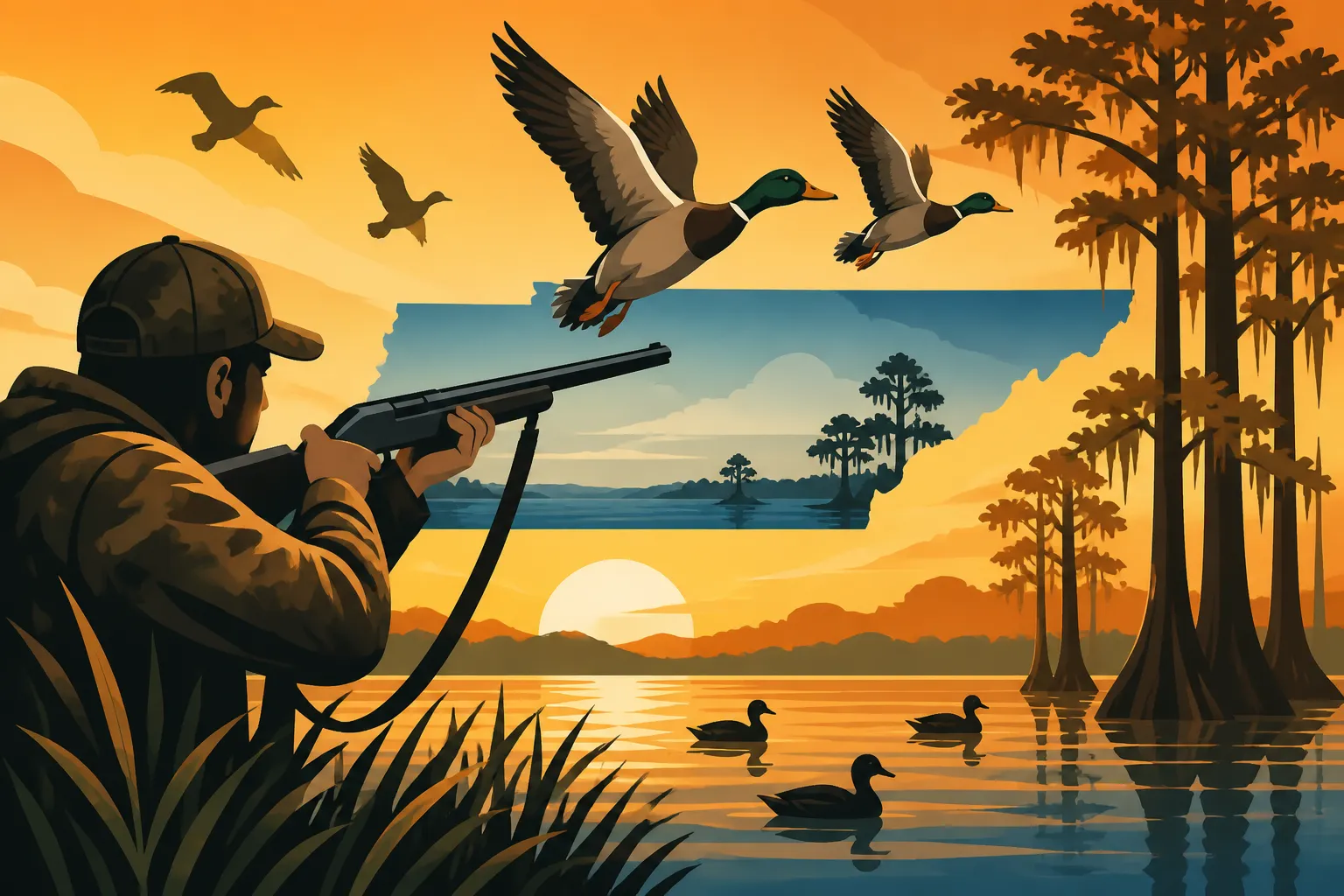
Waterfowl Hunting Reelfoot Lake and Beyond
There's nothing quite like the rush of a flock of mallards cupping their wings, dropping through the flooded timber, or the sound of geese honking overhead on a frosty Tennessee morning. For many of us, the dream of waterfowl hunting in Tennessee can feel a bit daunting, with questions about where to go beyond the legendary Reelfoot Lake, how to navigate the complex regulations, and what gear truly makes a difference. This comprehensive guide is here to demystify the process, offering practical advice and insider tips to help you experience the incredible diversity of Tennessee's waterfowl hunting opportunities, whether you're a seasoned veteran or just starting your journey.
The Magic of Tennessee Waterfowling: More Than Just Reelfoot
Tennessee might be famous for its deer and turkey hunting, but ask any dedicated waterfowler, and they'll tell you we're sitting on a goldmine. Our state lies directly within the Mississippi Flyway, a superhighway for migratory birds, and that means incredible opportunities from west to east. It's not just about what you harvest, though that's certainly part of the appeal, but the whole experience: the crisp morning air, the camaraderie in the blind, the sound of wings beating overhead, and the absolute beauty of watching ducks and geese work.
Why Tennessee is a Waterfowler's Paradise
Tennessee's unique geography makes it a prime destination for waterfowl. We have massive river systems like the Mississippi and the Tennessee, extensive floodplains, countless agricultural fields, and a network of public lands and Wildlife Management Areas (WMAs) specifically managed for ducks and geese. When those north winds start blowing and winter sets in, millions of ducks and geese push south, finding critical resting and feeding grounds right here in our state. It's a truly dynamic situation, with bird numbers fluctuating based on weather patterns up north and local water conditions. The sheer variety of species you can encounter, from mallards, pintails, and gadwall to various teal, divers, and several species of geese, makes every hunt a unique adventure. The challenge and reward of figuring out where the birds want to be on any given day, and then setting up to lure them in, is what keeps us coming back season after season.
Beyond the Legends: Diverse Opportunities Across the State
While Reelfoot Lake rightly holds its place in waterfowling lore, Tennessee offers so much more. You might be picturing crowded blinds on a famous lake, but the reality is there are fantastic opportunities for every type of waterfowler, from those who prefer the social aspect of a blind hunt to those who love the solitude of jump-shooting small creeks. West Tennessee, with its vast agricultural landscapes and river bottoms, is a major draw, but don't discount the flooded timber along the Tennessee River or the smaller reservoirs and farm ponds throughout Middle and East Tennessee. Each region presents its own set of challenges and rewards, requiring different tactics and a good understanding of local bird behavior. The key is to expand your horizons beyond the most obvious spots and explore what the state truly has to offer. Just remember that finding these spots often involves a lot of scouting and sometimes even knocking on doors to gain private land access, but the rewards can be immense.
Understanding Tennessee's Waterfowl Zones and Seasons
Navigating the regulations for waterfowl can feel like trying to untangle a particularly stubborn decoy line. Tennessee doesn't have a single, statewide season for everything; instead, it's broken down into specific zones and segments to better manage migratory bird populations and hunter pressure. Missing these details can quickly turn a great hunt into a legal headache, so it's absolutely crucial to understand the rules before you even think about setting out your first decoy.
Key Zones: Reelfoot, Plateau, and Statewide
Tennessee's waterfowl regulations divide the state into three primary zones, each with its own set of season dates. The Reelfoot Zone covers the legendary lake and a specific area around it, known for its unique management due to the lake's ecological significance and heavy hunting pressure. Then there's the Cotenant Zone, also known as the Plateau Zone, which encompasses much of the eastern half of the state, roughly east of I-65. Finally, the Statewide Zone covers the remainder of West and Middle Tennessee, west of the Cotenant Zone and outside of the Reelfoot Zone. These distinctions are critical because a duck season that's open in the Statewide Zone might be closed in Reelfoot, or vice-versa. Always check the current Tennessee Wildlife Resources Agency (TWRA) waterfowl guide, or use resources like the Go Outdoors Tennessee app, to pinpoint exactly which zone you're in and what the specific dates are for that area. Understanding these zones is the very first step in planning any successful waterfowl hunt. You can find more specific information on these regions in guides like Tennessee Waterfowl Zones and Seasons.
Navigating Season Dates and Bag Limits
Once you've identified your zone, the next hurdle is understanding the specific season dates and bag limits. Duck seasons are typically split into two or three phases, often with a break in between, designed to coincide with different migration pushes. For instance, the first phase might target early migrants like teal and wood ducks, while later phases focus on mallards and other later-arriving species. Geese also have their own segmented seasons, which can sometimes overlap with duck seasons, but often have different start and end dates. Bag limits vary not only by species but also by gender for certain ducks, like mallards (a common example being a limit of six ducks, but only two may be hens). There are also possession limits, which dictate the maximum number of birds you can have in your possession after multiple days of hunting. It's not enough to just know the overall duck limit; you need to know the species-specific limits and, critically, how many of those can be hen mallards, black ducks, or pintails. This level of detail is paramount to hunting legally and ethically.
Essential Licenses and Stamps
Before you even load a shell, you'll need to make sure your paperwork is in order. It's a common oversight, and one that can lead to fines and confiscated gear. To hunt waterfowl in Tennessee, you'll need:
- A valid Tennessee hunting license: This is your base license, and options vary for residents and non-residents.
- Tennessee Migratory Bird Permit: This state-specific permit is required for hunting all migratory birds, including ducks and geese.
- Federal Duck Stamp: This isn't just a stamp; it's a vital piece of conservation. 98 cents of every dollar from the sale of Federal Duck Stamps goes directly to conserve wetland habitats. You must physically sign this stamp across the face.
- Harvest Information Program (HIP) Certification: This is a simple registration that helps the U.S. Fish and Wildlife Service gather data on migratory bird harvest. It's usually a quick process when you buy your license online or at an authorized retailer.
- Reelfoot Preservation Permit: If you plan to hunt within the Reelfoot Preservation Zone, you'll need this additional permit. This helps manage the unique hunting pressure and habitat needs of that legendary area.
Here's a quick overview of common license requirements:
| Requirement | Description |
|---|---|
| TN Hunting License | Base license required for all hunting activities. Varies for residents/non-residents. |
| TN Migratory Bird Permit | State-specific permit for hunting migratory game birds. |
| Federal Duck Stamp | Required for anyone 16 years or older to hunt waterfowl. Sign it! Funds go to wetland conservation. |
| HIP Certification | Free registration that helps track migratory bird harvest data. |
| Reelfoot Pres. Permit | Additional permit required for hunting in the Reelfoot Lake Preservation Zone. |
Make sure all your licenses and stamps are current and properly signed. Using a tool like GoHunt or checking the TWRA website (or their app) makes it easy to confirm you're compliant. Don't let a simple oversight spoil your hunt; keep digital or physical copies readily accessible. Detailed information on costs can be found in Tennessee Hunting Licenses and What They Cost.
Reelfoot Lake: A Legendary Waterfowling Destination
Reelfoot Lake isn't just another body of water; it's a living legend in the world of waterfowl hunting. Formed by a series of earthquakes in the early 19th century, this shallow, cypress-filled lake in northwest Tennessee offers a truly unique and often unforgettable hunting experience. Its reputation is well-earned, attracting ducks and hunters from across the continent.
The Unique Ecosystem and Its Draw
What makes Reelfoot Lake so special? It's a massive, shallow, flooded forest of cypress and tupelo trees, interspersed with open water "lakes" and "ditches." This creates an incredibly rich and diverse ecosystem that's absolutely teeming with food and cover for migrating waterfowl. The water is often stained, making ducks feel secure, and the vast expanses of timber provide shelter from wind and predators. When the major cold fronts push ducks down the Mississippi Flyway, Reelfoot becomes a crucial staging and wintering ground. The sheer number of birds that can congregate here—mallards, gadwall, wigeon, divers, and more—is astounding. This natural funnel effect, combined with abundant food sources like submerged vegetation and seeds, makes it a magnet for waterfowl. This unique habitat is why millions of ducks winter at Reelfoot Lake, making it a critical hub for the entire flyway.
Accessing Reelfoot: Permits, Blinds, and Guides
Hunting Reelfoot comes with its own set of traditions and regulations, which can be a bit different from other WMAs. The lake is managed to ensure sustainable hunting pressure and preserve its unique character.
- The Reelfoot Preservation Permit: As mentioned earlier, this permit is required for all hunters using the Reelfoot Preservation Zone. It's a small investment that contributes to the ongoing management of this incredible resource. Understanding The Reelfoot Preservation Permit is key to legal access.
- Blinds: Most hunting on Reelfoot is done from fixed blinds. Many of these are privately owned or operated by commercial guides, but there are also public blinds available through a drawing system managed by the TWRA. Getting a spot in a public blind requires applying well in advance, and competition can be stiff. It’s worth checking the regulations each year for application deadlines and procedures. Hunting the Reelfoot Lake Duck Blinds is a quintessential Tennessee experience.
- Guides: For many, the easiest way to experience Reelfoot is through a licensed guide service. Reelfoot has a strong tradition of experienced guides who know the lake's ever-changing channels, productive spots, and how to call in the wary birds. They provide the boat, the blind, the decoys, and the expertise, which can be invaluable, especially for first-timers. Services like Final Flight Outfitters or Blue Bank Resort are well-known in the area for their experienced guide offerings. It can be an investment, but it often guarantees a memorable and productive hunt without the logistical headaches.
Tactics for Reelfoot's Flooded Cypress and Open Water
Hunting Reelfoot requires a blend of traditional knowledge and adaptability. The environment itself dictates many of the tactics.
- Flooded Cypress Timber: In the thick cypress, calling is paramount. Ducks often filter through the trees, circling silently before committing. Soft, persuasive calls are usually more effective than aggressive hailing. Decoys are often set tightly around the blind, mimicking a flock resting in cover. Wood ducks are especially fond of the timber, and you might also see mallards, gadwall, and other puddle ducks. The challenge here is visibility and quick shooting as birds appear and disappear through the trees. Waders for Flooded Cypress Hunting are a must-have.
- Open Water (Reelfoot "Lakes"): In the more open areas, larger decoy spreads are common, designed to draw attention from a distance. Spreads might include multiple species, with a focus on mallards and divers like ringnecks or scaup. Motion decoys, like spinning-wing models, can be very effective in these more open settings. Calling can be louder and more aggressive to grab attention across wider expanses of water. Understanding the wind and sunlight is crucial for decoy placement and ensuring birds decoy into your preferred shooting lane.
- Decoy Spreads: Whether in timber or open water, paying attention to your decoy spread is vital. A general rule is to create a landing zone right in front of your blind, with your decoys looking natural and inviting. On Reelfoot, many hunters use a mix of mallard and pintail decoys, often adding some gadwall or teal to create a diverse, realistic-looking flock. For more specific advice on setting up, check out resources on Decoy Spreads for Reelfoot Mallards.
- Calling: From soft greetings to aggressive comeback calls, mastering a variety of duck and goose calls is essential. Listening to the birds and responding in kind is often more effective than just blasting away. A good quality call, combined with practice, will significantly improve your success rate.
Mississippi Flyway Gold: West Tennessee Bottomlands
Beyond Reelfoot Lake, the vast bottomlands and agricultural fields of West Tennessee represent another crown jewel for waterfowl hunting, acting as a crucial stopover and wintering area along the Mississippi Flyway. This region is a major draw for hunters seeking diverse opportunities, from sprawling WMAs to private land arrangements.
Flooded Timber and Agricultural Fields
West Tennessee's landscape is a mosaic of rich agricultural land, primarily corn, soybeans, and rice, intersected by major river systems like the Mississippi, Obion, and Forked Deer. This combination creates ideal habitat: extensive food sources in harvested fields and crucial roosting/resting areas in adjacent flooded timber.
- Flooded Timber: When the rivers swell or rainfall is plentiful, vast tracts of hardwood timber become submerged, creating classic "green tree reservoir" hunting opportunities. Ducks, especially mallards and wood ducks, absolutely flock to these areas for food (acorns!) and shelter. These hunts are immersive, often requiring waders, push poles, and quiet approaches. Setting up deep within the timber, using the trees for concealment, and calling birds through the canopy is an exhilarating experience. Learning how to read a bottomland slough for a morning flight can drastically improve success.
- Agricultural Fields: Harvested corn and soybean fields, particularly those with standing water, are prime feeding grounds for both ducks and geese. Layout blinds are incredibly popular for hunting these fields, allowing hunters to remain concealed while birds commit to large decoy spreads. The sheer volume of geese that can stage in these fields during the late season, especially Canada geese, offers fantastic hunting. Understanding Layout Blind Hunting West Tennessee Fields can be a game-changer for field hunters.
Decoy Spreads and Calling Strategies
The varied terrain of West Tennessee demands adaptable decoy and calling tactics. What works in flooded timber might not be effective in a wide-open cornfield.
- Timber Spreads: In flooded timber, less is often more. A dozen or two mallard decoys, often paired with a few wood duck decoys, set in a natural-looking cluster with a clear landing hole, is usually sufficient. Focus on subtle motion and realistic postures. Calling should be soft, inviting, and persistent, mimicking contented feeding birds. Don't be afraid to use a "hail call" if you see birds high up, but transition quickly to softer quacks and feed chuckles as they get closer.
- Field Spreads: Hunting fields for geese often requires much larger spreads. Hundreds of full-body goose decoys, sometimes mixed with shell decoys, can be deployed to create the illusion of a massive feeding flock. Flagging (waving a goose flag) is an essential tool to grab distant birds' attention. For ducks in fields, spreads might range from a few dozen mallards to a mix of species, again often with spinning-wing decoys to add motion. Aggressive calling can be effective in fields, especially for geese, but always be ready to soften it up as birds commit. Utilizing a scouting platform like GoHunt can help identify specific fields where birds are feeding heavily, informing your spread choices.
- Calling for Geese: Unlike ducks, geese often respond to louder, more varied calls, including honks, clucks, and moans. Learning to mimic the excited chatter of a feeding flock can be incredibly effective. Consider using both short-reed and flute-style calls to achieve different sounds. The key, as with ducks, is to listen to the birds and respond to their vocalizations.
Public Access and WMA Opportunities
For those without private land access, West Tennessee offers excellent public hunting opportunities, primarily through its extensive network of Wildlife Management Areas.
- TWRA WMAs: Areas like Gooch Unit A & B, Tigrett WMA, Meeman-Shelby Forest State Park (with specific regulations), and Camden WMA are renowned for their waterfowl hunting. Many of these WMAs feature green tree reservoirs, moist soil units, and agricultural fields managed specifically for ducks and geese. Access often requires special permits or participation in quota hunts, which can be competitive. It's crucial to consult the TWRA regulations for each specific WMA, as rules regarding hunt dates, shooting hours, boat restrictions, and scouting access can vary wildly.
- National Wildlife Refuges: Federal lands like Hatchie National Wildlife Refuge also offer managed waterfowl hunts. These refuges often provide critical sanctuary areas for birds, which can then spill over into adjacent public or private hunting areas. Again, specific regulations apply, so always do your homework well in advance.
- River Access: The major rivers themselves, with their associated sloughs and backwaters, provide jump-shooting opportunities and places to set small spreads, especially if you have a reliable boat. Exploring these areas can lead to some truly wild hunts away from the crowds. This is a great way to experience Hunting the Mississippi Flyway Backwaters.
Eastern and Middle Tennessee: Hidden Gems for Duck and Goose Hunters
While West Tennessee often steals the waterfowl spotlight, don't overlook the surprisingly robust hunting opportunities in the eastern and central parts of the state. These regions, characterized by rolling hills, river systems, and numerous smaller impoundments, offer a different, but equally rewarding, waterfowl experience.
River Systems and Smaller Impoundments
Middle and Eastern Tennessee might not have the sprawling flooded timber of the Mississippi Delta, but they boast a wealth of smaller, yet highly productive, waterways.
- Tennessee and Cumberland River Systems: These mighty rivers, and their numerous tributaries, act as natural highways for migrating waterfowl. Ducks and geese will often utilize these larger bodies of water for loafing and roosting, moving into smaller creeks, backwaters, and adjacent fields to feed. Scouting these rivers for congregations of birds, particularly in areas with limited boat traffic, can reveal prime jump-shooting or small-spread opportunities. Identifying sloughs or shallow backwater areas where ducks might be feeding on aquatic vegetation is key.
- Reservoirs and Farm Ponds: The many TVA reservoirs (like Kentucky Lake, Watts Bar, Chickamauga, and Cherokee) and numerous private farm ponds attract a significant number of ducks and geese. While vast, these reservoirs have pockets of excellent habitat, especially in shallow embayments and creek arms. Farm ponds, particularly those with good cover and adjacent food sources, can be absolute magnets for wood ducks, mallards, and resident Canada geese. Gaining permission to hunt these private ponds can be a golden ticket, often resulting in unpressured birds.
- WMA Opportunities: Several WMAs in Middle and East Tennessee, such as Old Hickory WMA or AEDC WMA, also offer dedicated waterfowl management units, featuring moist soil impoundments and planted crops designed to hold birds. These typically require special permits or draw hunts, but they provide managed access to good hunting grounds.
Jump-Shooting and Layout Blind Opportunities
The nature of the landscape in these regions often lends itself to different hunting styles than the large blind operations of West Tennessee.
- Jump-Shooting: This highly active and exciting method is perfectly suited for the smaller creeks, rivers, and secluded ponds found in Middle and East Tennessee. It involves stealthily approaching bends in a creek or stalking along riverbanks, flushing birds at close range. It's physically demanding but incredibly rewarding, and you might encounter anything from mallards and wood ducks to green-winged teal. For those who enjoy a more solitary, athletic hunt, Jump-Shooting a Tennessee River can be an absolute blast.
- Layout Blind Hunting: While often associated with large fields, layout blinds can also be effective in smaller cut grain fields or even grassy river edges in these regions, especially for geese. Identifying feeding patterns and gaining landowner permission are crucial. Setting a few full-body Canada goose decoys with a layout blind tucked into stubble can provide excellent results, particularly during the early goose season. Early Goose Season Tactics in Tennessee are highly applicable here.
- Portable Blinds and Decoy Spreads: Many hunters in these areas rely on portable ground blinds or simply natural cover, along with smaller, more adaptable decoy spreads. A dozen mallards and a few wood ducks are often sufficient for river edges or farm ponds. The key is to be mobile and willing to move if the birds aren't cooperating.
Resident Goose Challenges and Opportunities
Resident Canada geese are a significant population across all of Tennessee, but particularly so in Middle and Eastern parts of the state where urban and suburban areas provide abundant food and safe roosting sites.
- Challenges: These birds can be incredibly wary, especially around populated areas. They often feed in golf courses, parks, and agricultural fields close to homes, making hunting access difficult due to safety zones and local ordinances. Their predictability can also make them challenging; they often stick to very specific flight paths and feeding locations.
- Opportunities: The good news is that resident geese often have earlier and more liberal seasons than migratory geese, offering fantastic hunting opportunities before the main migratory birds arrive. These early seasons are specifically designed to help manage burgeoning resident populations. With careful scouting and permission, targeting these birds in agricultural fields or on private ponds can lead to fast-paced action. It requires a good understanding of their daily routines, flight paths, and excellent concealment. Services like GoHunt can help identify potential public and private land opportunities where resident geese are abundant, making your scouting efforts more efficient.
Essential Gear and Tactics for Tennessee Waterfowlers
Success in waterfowl hunting isn't just about finding birds; it's also about being properly equipped and understanding how to use your gear effectively. From your shotgun to your waders, every piece plays a role in comfort, safety, and ultimately, your harvest.
Shotguns, Ammunition, and Nontoxic Shot Rules
Your choice of firearm and ammunition is critical for effective and ethical waterfowl hunting.
- Shotguns: Most waterfowl hunters opt for a 12-gauge shotgun, as it offers the best balance of power, pattern density, and ammunition availability. Both semi-automatics and pump-action shotguns are popular. Semi-autos offer faster follow-up shots, which can be advantageous when multiple birds decoy, while pumps are renowned for their reliability. The most common barrel lengths are 26 or 28 inches, providing a good swing for moving targets. Consider a gun that can withstand harsh, wet conditions.
- Chokes: Modified or Improved Cylinder chokes are popular choices for decoying birds at closer ranges, providing a wider pattern. For longer shots on high-flying geese or late-season ducks that aren't committing, a Full or even Extra Full choke might be preferred. Having interchangeable choke tubes allows you to adapt to different hunting situations.
- Ammunition and Nontoxic Shot: This is non-negotiable: nontoxic shot is legally required for all waterfowl hunting in Tennessee and across the U.S. Lead shot is strictly prohibited to protect birds from lead poisoning. Steel shot is the most common and affordable nontoxic option, but newer alternatives like Bismuth, Tungsten-Matrix, and HEVI-Shot offer superior performance (denser patterns, more energy) at a higher cost. These premium loads can be particularly advantageous for longer shots or when hunting large, tough birds like geese. Always match your shot size to the target species and expected range. For instance, #2 or #4 steel is good for ducks, while BB or BBB steel is often preferred for geese. Knowing Where Nontoxic Shot Is Required in Tennessee is fundamental.
Waders, Boats, and Cold Weather Gear
Waterfowl hunting often means being cold and wet, so proper gear isn't a luxury; it's a necessity for safety and comfort.
- Waders: Breathable chest waders are essential for hunting flooded timber, setting decoys, and retrieving birds. Neoprene waders offer more insulation for colder weather, but can be bulky. Look for durable construction, comfortable suspenders, and integrated boots with good traction for muddy bottoms. Ensure they fit well, allowing for layering underneath without being too restrictive. For hunting in cypress bottoms, Waders for Flooded Cypress Hunting are an absolute must-have.
- Boats: Depending on where you hunt, a boat is often critical. Jon boats, duck boats, or even canoes/kayaks for smaller waters are common. They're used for transporting gear, setting spreads, retrieving birds, and sometimes even hunting from. Ensure your boat is stable, well-maintained, and equipped with all necessary safety gear (life jackets, lights, paddles). For dedicated waterfowlers, a mud motor or surface drive can be invaluable for navigating shallow, vegetation-choked waters. When hunting open fields, especially for geese, a layout blind paired with a good truck for transport is often sufficient. Consider specialized Marsh Boats and Push Poles for navigating shallow, vegetated areas.
- Cold Weather Gear: Layering is key. Start with a moisture-wicking base layer, add insulating layers (fleece, down, wool), and finish with a waterproof and windproof outer shell in a camouflage pattern. Don't forget insulated, waterproof gloves, a warm hat that covers your ears, and thick socks. Chemical hand warmers and foot warmers can be a lifesaver on bitter cold mornings. A quality blind bag for keeping essentials dry and organized is also highly recommended, as are Blind Bags and Cold-Weather Gear.
- Dog Gear: If you hunt with a retriever, consider a protective dog vest, especially for cold water retrieves. This provides buoyancy and insulation, helping your canine companion stay safe and perform its job effectively. Check out options for Dog Vests for Cold Water Retrieves.
Mastering Decoy Placement and Calling
Beyond gear, strategy is what brings birds within range. Decoy placement and calling are art forms that take years to master.
- Decoy Placement: The goal is to create a realistic-looking spread that draws birds in and provides a clear landing zone within shooting range. Common spreads include the "J-hook" or "U-shape" with the opening towards the incoming birds and the blind at the top of the hook. Consider wind direction (ducks land into the wind), sunlight (to avoid glare on decoys), and natural flight paths. Adding movement, through spinning-wing decoys (e.g., Mojo Decoys), jerk strings, or a simple "water thruster" on a decoy, can make a huge difference, especially on calm days. For specific spread ideas, refer to Decoy Spreads for Reelfoot Mallards.
- Calling: It's not about how loud you can blow a call, but how effectively you can communicate with ducks and geese.
- Ducks: Start with soft greeting calls or comeback calls for distant birds. As they get closer, switch to quacks, feed calls, and contented chatter. Learn to read the birds' reactions; if they're flaring, your calling might be too aggressive or unnatural.
- Geese: Goose calling often involves more aggressive hailing calls, clucks, and moans. Learning to mimic a family group's excited chatter can be highly effective.
- Less is More: Often, the best call is no call at all once birds are committed and working your spread. Let your decoys do the work. Practice regularly, and listen to real birds to refine your technique.
Conservation and Responsible Hunting Practices
Waterfowl hunting is more than just a pursuit; it's a deep connection to nature and a commitment to conservation. As hunters, we are stewards of the resource, and our actions directly impact the future of these magnificent birds and the places they call home.
Supporting Habitat and Sustainable Populations
The abundance of waterfowl we enjoy today is a direct result of decades of dedicated conservation efforts, largely funded by hunters.
- Federal Duck Stamp: Every hunter aged 16 and older is required to purchase a Federal Duck Stamp, and the vast majority of those funds go directly to acquire and restore critical wetland habitat. This program has conserved millions of acres across the country, benefiting not only ducks and geese but countless other wildlife species. It's truly one of the most successful conservation programs in history, and it's powered by hunters.
- State Conservation Efforts: The TWRA, through the sale of hunting licenses and specific waterfowl permits, also manages and enhances habitat on state WMAs and other public lands. These efforts include planting waterfowl food plots, maintaining moist soil units, and creating resting areas. Understanding the importance of Tennessee Waterfowl on the Mississippi Flyway highlights the need for continued habitat work.
- Hunter Participation: Beyond financial contributions, active participation in organizations like Ducks Unlimited, Delta Waterfowl, and local conservation groups is vital. These organizations advocate for wetlands policy, conduct research, and implement on-the-ground habitat projects. As hunters, we have a responsibility to support these efforts to ensure healthy waterfowl populations for generations to come.
Safety First: Waterfowl Hunting Precautions
Waterfowl hunting often takes place in challenging environments—cold water, slippery mud, and low light conditions—making safety paramount.
- Boating Safety: If hunting from a boat or using one for transport, always wear a U.S. Coast Guard-approved life jacket. Ensure your boat is properly maintained, has all required safety equipment (lights, fire extinguisher, horn, paddles), and never overload it. Be aware of changing weather conditions and water levels, especially on large rivers or lakes.
- Hypothermia: Exposure to cold water and air can quickly lead to hypothermia. Always dress in layers, ensure your waders are free of leaks, and carry extra dry clothing in a waterproof bag. If you or a hunting partner starts shivering uncontrollably or showing other signs of hypothermia, get them warm and dry immediately, and seek medical attention if severe.
- Firearm Safety: Always treat every firearm as if it's loaded. Keep the muzzle pointed in a safe direction, keep your finger off the trigger until ready to shoot, and be absolutely certain of your target and what is beyond it. When hunting from a blind, establish clear zones of fire to prevent accidental discharge towards partners.
- Communication: When hunting with a group, communicate clearly about movements, target identification, and shot opportunities. If hunting alone, inform someone of your plans, including your location and expected return time. Carry a fully charged cell phone or satellite communication device, especially in remote areas.
- Alcohol/Drugs: Never consume alcohol or drugs before or during a hunt. Impaired judgment has no place in the field.
Respecting the Resource and Other Hunters
Ethical conduct and respect for both the game and fellow hunters are cornerstones of the waterfowling tradition.
- Ethical Shooting: Only take shots that are within your effective range, ensuring a clean, humane kill. Wounded birds that fly off are a tragic waste of the resource. If you knock a bird down, make every effort to retrieve it. This means being proficient with your chosen shotgun and ammunition.
- Harvest Reporting: Adhere to all harvest reporting requirements. This data is critical for wildlife managers to set future season dates and bag limits, ensuring sustainable populations. Check the TWRA regulations for specific reporting procedures.
- Sharing the Resource: Public hunting lands can be crowded, especially during peak migration. Be courteous to other hunters, avoid setting up too close to another party, and respect boundaries. If someone was there first, move on. A positive attitude and a willingness to share the resource contribute to a better experience for everyone.
- Leave No Trace: Pack out everything you pack in, including empty shells, spent calls, and any trash. Leave the hunting grounds cleaner than you found them. This ensures continued access and preserves the beauty of the outdoors for all.
- The Greater Picture: Remember that every hunt is a privilege, not a right. Your participation contributes to a legacy of conservation that extends far beyond your own experience. Take pride in that responsibility.
Disclaimer
Please remember that hunting regulations can change. Always consult the most current Tennessee Wildlife Resources Agency (TWRA) regulations guide before engaging in any hunting activities. This article is for informational purposes only and does not supersede state or federal hunting laws.