Tennessee Waterfowl Zones and Seasons
Navigating the ever-changing landscape of waterfowl hunting regulations can feel like trying to hit a fast-flying teal with a slingshot—frustrating and often confusing. Hunters often grapple with understanding specific zone boundaries, deciphering season dates that split and overlap, and keeping track of bag limits that vary by species and even location. This guide is here to untangle the complexities of Tennessee's waterfowl zones and seasons, providing clarity and practical insights for a more enjoyable and successful hunt.
Understanding Tennessee's Waterfowl Zones
Tennessee, strategically located within the vast Mississippi Flyway, is a magnet for migratory waterfowl. However, the state doesn't treat all its waterfowling grounds the same way. To effectively manage bird populations and offer diverse hunting opportunities, the Tennessee Wildlife Resources Agency (TWRA) divides the state into distinct zones, each with its own set of rules and season dates. Understanding these zones is the first step to planning a successful hunt, ensuring you're in the right place at the right time.
The Mississippi Flyway's Influence
Tennessee's position in the heart of the Mississippi Flyway is arguably the most significant factor shaping its waterfowl seasons and zones. This massive aerial highway funnels millions of ducks and geese from their northern breeding grounds down to warmer wintering areas, with Tennessee serving as a critical stopover and wintering habitat for a huge portion of these birds. The sheer volume and diversity of waterfowl passing through or wintering in the state, particularly in West Tennessee's rich agricultural fields and expansive river bottoms, necessitate careful management.
Think about the journey a mallard takes from Manitoba or a Canada goose from Ontario. Their internal clocks and instincts guide them south, often following major river systems like the Mississippi and Tennessee Rivers. This natural phenomenon means that hunting pressure, bird behavior, and conservation needs vary dramatically from one end of the state to the other. For instance, the Mississippi River bottoms are often the first to see significant migrations and hold large numbers of birds through late winter, influencing how seasons are structured to capitalize on or protect these populations. This migratory pathway dictates everything from bag limits to how long specific seasons run, ensuring that Tennessee remains a prime destination for waterfowl year after year.
Key Zones and Their Boundaries
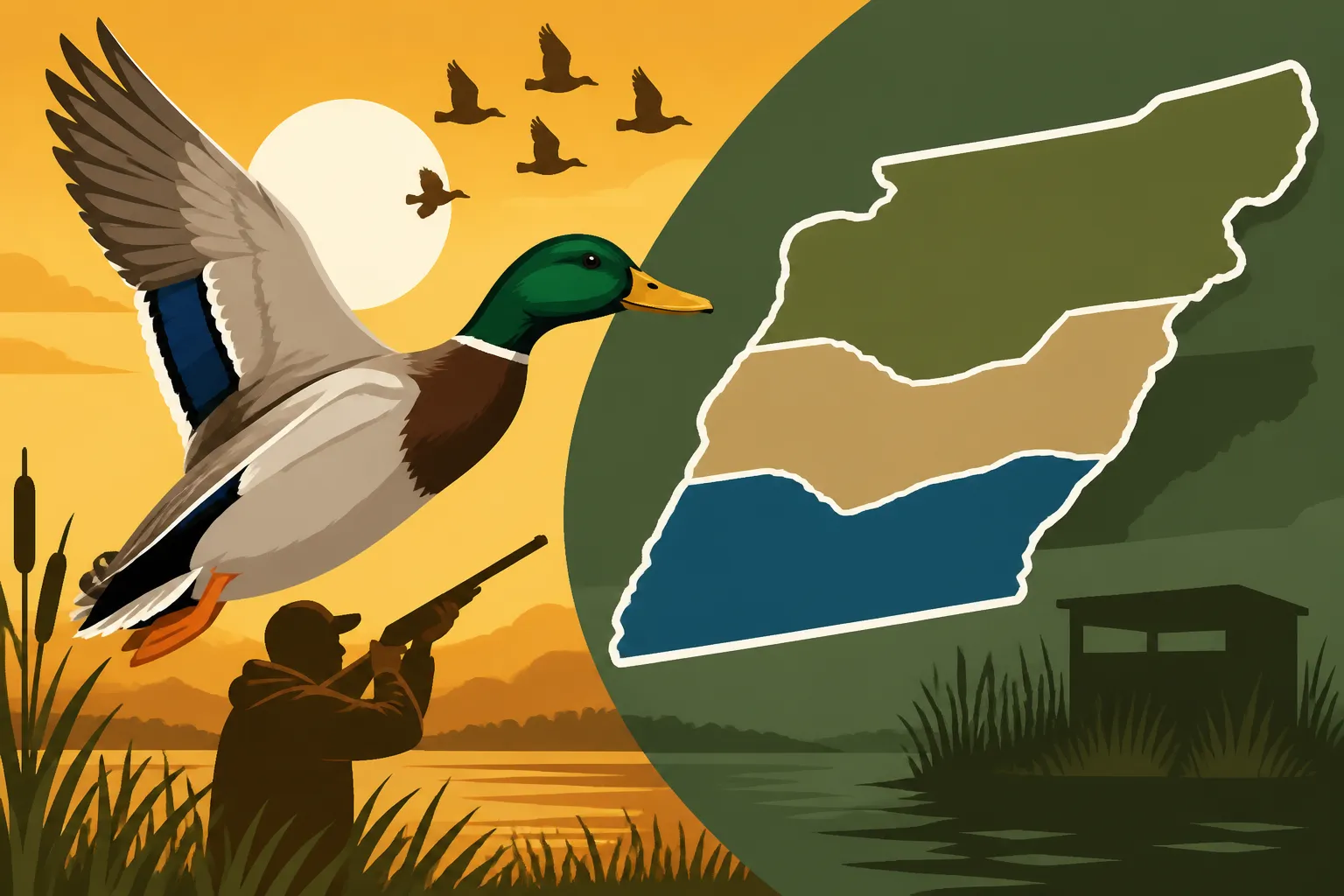
Tennessee primarily operates under two distinct waterfowl zones: the Reelfoot Zone and the Statewide Zone. These zones are established to address the unique ecological and migratory patterns of waterfowl across the state. The Reelfoot Zone, named after the iconic natural lake in Northwest Tennessee, encompasses Lake, Obion, and Weakley counties, extending into a portion of the Mississippi River. This area is historically known for its incredible waterfowl concentrations, largely due to the vast floodplains, agricultural fields, and the unique cypress swamps of Reelfoot Lake.
The rest of the state falls under the Statewide Zone, a broad area covering Middle and East Tennessee, as well as the remaining parts of West Tennessee outside the Reelfoot Zone. Within these primary zones, hunters might also encounter specific Wildlife Management Areas (WMAs) or federal refuges, such as the Land Between the Lakes (LBL) or Hatchie National Wildlife Refuge, which can have their own unique regulations, season splits, or quota hunts, often requiring special permits. It's crucial for hunters to pinpoint not just their county, but the exact WMA or public land they intend to hunt to confirm they are abiding by the correct, often hyper-local, rules. These smaller, localized regulations are typically designed to manage hunting pressure and provide sanctuary for birds in specific areas while offering opportunities elsewhere.
Why Zones Matter for Hunters
The existence of distinct waterfowl zones isn't just bureaucratic; it has tangible impacts on every hunter's strategy and success. Primarily, zones dictate season dates and lengths. The Reelfoot Zone, for example, often has different duck season opening and closing dates, and sometimes even different phase splits, compared to the Statewide Zone. This allows the TWRA to tailor hunting pressure to the unique migratory timing and population dynamics of birds concentrated in the Mississippi River floodplains and Reelfoot Lake, which often experience earlier and heavier influxes of migrating waterfowl.
For hunters, this means you can't just assume a "statewide" season applies everywhere. If you live in Memphis and plan to hunt a local river bottom, you're in the Statewide Zone. But if you decide to take a trip north to the legendary Reelfoot Lake, you must abide by the specific Reelfoot Zone dates. Failing to understand these boundaries can lead to illegal hunting, fines, and potentially losing your hunting privileges. Moreover, understanding the zones can help you plan multiple hunting trips in different parts of the state, potentially extending your season by leveraging varied opening and closing dates. It’s all about maximizing your time afield responsibly, and a clear grasp of the zones is fundamental to that goal.
Navigating Duck Seasons in Tennessee
Duck hunting in Tennessee is a time-honored tradition, but the season structure can sometimes feel like a moving target. Unlike some other game, duck seasons are often broken into multiple "splits" or phases. These splits are carefully designed by the TWRA, in coordination with federal guidelines, to align with typical migration patterns, provide diverse hunting opportunities, and manage overall harvest numbers. From early teal seasons to the deep winter mallard hunts, each phase offers unique challenges and rewards.
Early Duck Season Splits
Tennessee often kicks off its duck hunting opportunities with special early season splits, most notably for teal. These seasons, typically held in September, are incredibly popular with hunters eager to dust off their shotguns and get into the blind before the full migratory push. The early teal season targets blue-winged teal primarily, which migrate earlier than most other duck species. This season provides a fantastic opportunity to hunt fast-flying birds in often warm, pleasant weather conditions.
However, hunting during these early splits requires strict adherence to species identification. Shooting a non-teal species during the early teal season is a serious violation. Hunters must be diligent in identifying their targets before taking a shot, which can be challenging when birds are coming in fast at dawn. The success of an early teal season often depends heavily on local conditions and whether migrating flocks have decided to stop over in Tennessee's waters. It’s a sprint, not a marathon, and hunters often find themselves focusing on smaller water bodies, flooded timber, or agricultural fields that draw these early migrants. For those interested in Hunting the August Antlerless-Only Archery Hunt, similar early-season considerations apply to deer hunters needing to identify legal animals.
The Main Duck Season Phases
After the early season excitement, Tennessee's main duck season typically features two distinct phases. These phases, often separated by a short closure, are strategically planned to coincide with the arrival and presence of the bulk of migratory ducks, primarily mallards, gadwalls, wigeon, and divers. The first phase usually opens in late November or early December, catching the initial wave of ducks moving south. This period can offer excellent hunting, especially if colder weather has begun to push birds out of the northern states. Hunters might encounter a mix of resident birds and fresh migrants, often spread out across various habitats.
Following a short break, the second, longer phase of duck season usually opens in mid-December and runs into late January. This is often considered the prime time for duck hunting in Tennessee, particularly in the famed Mississippi River flyway regions. During this phase, large numbers of ducks have settled into their wintering grounds, congregating on major rivers, reservoirs, and agricultural lands. The colder temperatures and consistent bird patterns can lead to some truly memorable hunts, but also increased hunting pressure. Understanding these distinct phases is critical for planning your trips, knowing when to expect peak migration, and preparing for specific weather conditions that might influence bird movement.
Specific Bag Limits and Species Regulations
One of the most critical aspects of duck hunting in Tennessee is adhering to the specific bag limits and species regulations. These limits are not uniform across all duck species and can even change year to year based on population surveys and federal frameworks. For instance, while the general duck bag limit might be six ducks per day, there are often sub-limits for certain species. You might only be allowed two mallards (with specific drake/hen restrictions), one pintail, one black duck, or one canvasback within that overall six-bird limit. Additionally, some species, like mottled ducks or harlequin ducks, might be entirely closed to harvest.
The table below illustrates common duck species and their typical daily bag limits in Tennessee. It's vital to remember that these are subject to annual changes, so always check the latest TWRA regulations before heading afield. Misidentification and shooting over the limit for a particular species are common mistakes that can lead to severe penalties. Resources like the annual TWRA hunting guide or the GoHunt app are invaluable for staying current. This constant need for identification accuracy and adherence to specific limits adds another layer of challenge and responsibility to duck hunting, ensuring sustainable harvest practices for future generations.
| Species Category | Typical Daily Bag Limit (often within a 6-duck total) | Notes |
|---|---|---|
| Mallards | 2 (often only 1 hen allowed) | Most popular duck species; careful hen identification is crucial. |
| Wood Ducks | 3 | Common in flooded timber and bottomland, often a favorite. |
| Black Ducks | 1 | Strict limit due to declining populations. |
| Pintails | 1 | Highly prized, fast-flying duck. |
| Canvasbacks | 1 | Large diving duck; strict limit due to population management. |
| Redheads | 2 | Diving duck. |
| Scaup (Bluebills) | 2-3 (can vary by season phase) | Diving duck, often found on larger bodies of water. |
| Green-winged Teal | 6 | Small, fast-flying ducks, often found in large groups. |
| Blue-winged Teal | 6 (early season) / Varies (main season) | Primarily targeted during early teal season; less common in late season. |
| Gadwall, Wigeon, Shoveler | 6 (species often grouped with abundant populations) | Common dabblers, good table fare. |
| Mergansers | 5 (often 2 hooded mergansers) | Fish-eating ducks; separate limit. |
| Coots | 15 | Often seen with ducks; separate limit. |
Note: This table provides typical examples. Always consult the current TWRA Waterfowl Guide for official, up-to-date regulations.
Goose Hunting Opportunities Across Tennessee
While ducks often steal the spotlight, Tennessee offers fantastic goose hunting opportunities as well, primarily for Canada geese and light geese (snow, blue, and Ross's geese). Just like ducks, geese have their own migratory patterns and preferences, leading to specific season structures designed to maximize harvest while managing local and migratory populations. Hunters interested in Early Goose Season Tactics in Tennessee will find that scouting is paramount.
Resident Canada Goose Seasons
Resident Canada geese are those birds that have forsaken the long migratory journeys north and south, opting instead to breed and live year-round in Tennessee. These birds have adapted remarkably well to agricultural landscapes, suburban ponds, and reservoirs, often becoming quite numerous. To manage these burgeoning populations, Tennessee typically offers an early resident Canada goose season, often starting in early September. This early season targets these local birds before the main migratory flocks arrive, helping to reduce crop depredation and nuisance issues they can cause in urban and agricultural areas.
Hunting resident geese often involves different tactics than hunting their migratory cousins. They are typically less wary and more patterned, frequently feeding in cut agricultural fields or loafing on open water. Field hunting with large decoy spreads, often using full-body decoys or silhouettes, is a popular and effective method. This early season provides a great way to get into the field before deer season kicks into high gear and offers a chance to hone your calling and decoy placement skills. Knowing the specific regulations for Tennessee Goose Season Rules is crucial, as they differ from migratory birds.
Migratory Goose Seasons and Species
Beyond the resident birds, Tennessee also experiences significant migrations of Canada geese and light geese. The main migratory Canada goose season typically runs concurrently with portions of the duck season, usually from late November through January. These migratory birds, often larger and more wary than their resident counterparts, offer a different kind of challenge. They've been hunted across multiple states, making them much more sensitive to pressure, calling, and decoy spreads.
Light geese, which include snow, blue, and Ross's geese, are another major migratory draw. These birds typically pass through Tennessee in incredible numbers during late winter and early spring, often in massive flocks that can number in the thousands. Their season often extends beyond the main duck and Canada goose seasons, particularly during the Light Goose Conservation Order, which we'll discuss next. Hunting migratory geese often requires extensive scouting, larger decoy spreads (sometimes hundreds of decoys), and more aggressive calling to pull them in. Locations like Reelfoot Lake and the Mississippi River bottoms are prime spots for catching these migrations.
Light Goose Conservation Order
The Light Goose Conservation Order (LGCO) is a special hunting opportunity implemented in response to overpopulation issues with snow, blue, and Ross's geese. These species have seen such a dramatic increase in numbers that they are severely damaging their Arctic breeding grounds, threatening the entire ecosystem, including other waterfowl species. To help mitigate this ecological crisis, federal regulations allow states in the flyways to implement special conservation seasons with relaxed rules.
In Tennessee, the LGCO typically extends beyond the regular waterfowl seasons, often running from early February through March. During this period, hunters are usually allowed to use unplugged shotguns (meaning they can hold more than three shells), electronic calls, and there are often no daily bag or possession limits. This allows hunters to target these abundant birds more effectively, contributing to conservation efforts. While the season is designed to reduce populations, it also offers a unique and exciting hunting experience, often involving massive decoy spreads (sometimes thousands of socks or full-body decoys) and intense calling to draw in wary flocks. It's a challenging but rewarding hunt that serves an important ecological purpose.
Important Waterfowl Hunting Regulations and Requirements
Beyond understanding zones and seasons, there's a whole raft of regulations and requirements every Tennessee waterfowler must know and follow. These aren't just arbitrary rules; they are carefully crafted by the TWRA and federal agencies to ensure hunter safety, manage wildlife populations sustainably, and comply with international migratory bird treaties. Ignoring them can lead to severe penalties, loss of hunting privileges, and even federal charges.
Licensing, Permits, and Stamps
Before you even think about setting foot in a duck blind or goose pit, you need to ensure all your paperwork is in order. In Tennessee, a valid state hunting license is the baseline requirement. For waterfowl, this typically means a Tennessee Resident Hunting License Cost or a nonresident equivalent. But that's just the start. Every migratory bird hunter aged 16 or older is required to purchase a federal Migratory Bird Hunting and Conservation Stamp, commonly known as a Federal Duck Stamp. This stamp is not only a legal requirement but also a vital source of funding, with 98% of the proceeds going directly to conservation efforts, acquiring and protecting wetlands and waterfowl habitat.
Additionally, Tennessee itself requires a state Migratory Bird Permit (often called a Tennessee Migratory Bird Certification or HIP certification). This permit collects crucial data on hunter effort and harvest, which informs future season setting. For those hunting specific WMAs or federal refuges, additional permits might be necessary, such as the Reelfoot Preservation Permit for hunting on parts of Reelfoot Lake. Some WMAs might require a specific WMA permit or have quota hunts that require advance application. The best way to keep track of all these is to visit the TWRA website or use a digital hunting license system like the one offered by Go Outdoors Tennessee. Make sure your Tennessee Migratory Bird Stamp Cost is factored into your hunting budget.
Ammunition and Equipment Rules
Waterfowl hunting comes with its own specific rules regarding ammunition and equipment, primarily centered around the use of non-toxic shot. For decades, lead shot was the standard, but its toxic effects on waterfowl and other wildlife led to a federal ban on lead shot for all migratory bird hunting. Today, hunters must use non-toxic shot, such as steel, bismuth, tungsten-iron, or other approved alternatives, when hunting ducks, geese, coots, and other migratory game birds anywhere in the United States. This applies not just to federal lands, but all public and private lands.
Beyond ammunition, there are rules governing shotgun capacity. Federal regulations stipulate that shotguns used for migratory bird hunting must be plugged so they are incapable of holding more than three shells (one in the chamber, two in the magazine). This rule is in place to prevent excessive harvest. There are exceptions, notably during the Light Goose Conservation Order, where unplugged shotguns are often permitted. Other equipment rules might apply to decoys (e.g., prohibition on live decoys), motor sizes on specific lakes, or restrictions on electronic calls (except during LGCO). Always check the latest regulations to ensure your gear complies.
Blind and Decoy Restrictions
Tennessee has specific regulations governing blinds and decoys, especially on public lands and WMAs, designed to ensure fair chase and manage resources. On many public areas, particularly those with high hunting pressure, there are often rules about how blinds can be constructed or if permanent blinds are allowed at all. Some WMAs may only allow temporary blinds that must be removed at the end of each day's hunt, while others might have designated blind sites that are drawn by permit or awarded on a first-come, first-served basis. For example, Hunting the Reelfoot Lake Duck Blinds comes with its own set of unique rules regarding blind use and access.
Decoy restrictions can also vary. While using plastic or foam decoys is standard, live decoys (live birds used to attract wild ones) are strictly prohibited nationwide. There may also be rules about the number of decoys allowed on certain public lands or during specific hunts. On private land, these regulations are often less stringent, but hunters still need to adhere to federal and state guidelines regarding non-toxic shot and shotgun capacity. When hunting Layout Blind Hunting West Tennessee Fields, ensuring your blind is adequately concealed and meets any local regulations is important for both success and compliance. It's always best to consult the WMA-specific regulations if you plan to hunt public ground.
Waterfowl Hotspots and Public Access in Tennessee
Tennessee boasts an incredible array of public lands and waterways that offer fantastic waterfowl hunting opportunities. From world-renowned lakes to vast river systems and dedicated Wildlife Management Areas, the state provides diverse habitats for ducks and geese. While private land hunting is also popular, understanding where public access exists and what makes these areas special is key for many hunters, especially those without extensive private land connections.
Reelfoot Lake: A Waterfowler's Paradise
Reelfoot Lake, located in the northwest corner of Tennessee, is nothing short of legendary in the waterfowl world. Formed by a series of powerful earthquakes in the early 19th century, this shallow, cypress-filled lake is a unique ecosystem that serves as a critical wintering ground for millions of migratory birds along the Mississippi Flyway. Its shallow depths, vast areas of flooded timber, and surrounding agricultural fields create an irresistible draw for ducks and geese, particularly mallards, gadwalls, and various diving ducks.
Hunting on Reelfoot is an experience unlike any other. The landscape of drowned cypress trees draped in Spanish moss, combined with the sounds of thousands of ducks, transports you to another era. Accessing the lake often involves specialized boats, and many hunters utilize permanent or semi-permanent blinds scattered throughout the lake. However, navigating the lake and its complex regulations requires specific knowledge. The Reelfoot Lake Waterfowl Access can be tricky, and securing a blind or knowing where to set up can be a challenge for newcomers. Despite the effort, the potential for incredible shoots, surrounded by natural beauty, makes Reelfoot a true waterfowler's paradise.
Tennessee River and Cumberland River Bottoms
Beyond Reelfoot Lake, the expansive river systems of Tennessee offer some of the state's most underrated and productive waterfowl hunting. The Tennessee River and its associated reservoirs, along with the Cumberland River, create vast stretches of shallow backwaters, oxbow lakes, and flooded timber that serve as prime feeding and resting areas for migrating ducks and geese. These river bottoms, particularly in West and Middle Tennessee, are critical stopovers for birds escaping colder northern climates.
Hunting these river systems often involves scouting for specific sloughs, flooded agricultural fields adjacent to the river, or dense stands of flooded hardwoods. Mallards and wood ducks are particularly prevalent in these habitats, relishing the acorns and submerged vegetation. Access can be obtained via public boat ramps, offering opportunities for jump-shooting, setting up portable blinds along the banks, or hunting from layout boats. Many of these areas are less pressured than the more famous spots, offering a more solitary hunting experience. Understanding Hunting West Tennessee Bottomland Deer might even help you identify potential waterfowl hotspots in those same low-lying areas.
Wildlife Management Areas for Waterfowl
Tennessee is home to numerous Wildlife Management Areas (WMAs) specifically managed for waterfowl. These areas, strategically located along major migratory corridors, provide crucial habitat, food sources, and regulated hunting opportunities. WMAs like Gooch Unit, Big Sandy, Camden Bottoms, and Cheatham Lake are just a few examples that draw significant numbers of ducks and geese throughout the season. These WMAs often feature extensive impoundments, moist soil units, and agricultural fields planted with waterfowl-attracting crops like corn and millet.
Hunting on WMAs can range from open public access areas to specific quota hunts or blind draws, which require advance application. Regulations on WMAs are often more stringent than on private land, with specific shooting hours, blind construction rules, and sometimes even restrictions on access methods (e.g., no ATVs). However, the benefit is guaranteed public access to prime waterfowl habitat that is actively managed for the birds. Utilizing resources like the TWRA WMA maps and platforms like GoHunt can help hunters locate these areas, understand their specific rules, and scout potential spots. Many hunters find Scouting Tennessee Public Land Before Season to be an absolute game-changer for WMA success.
Strategies for a Successful Tennessee Waterfowl Season
A successful waterfowl season in Tennessee isn't just about showing up with a shotgun; it's a blend of preparation, persistence, and adaptability. The most consistently successful hunters are those who treat it like a chess match, constantly strategizing against ever-changing bird patterns, weather conditions, and hunting pressure. Getting ducks and geese to commit to your spread requires more than just good luck; it demands a deep understanding of bird behavior and a mastery of various techniques.
Scouting and Patterning Birds
Effective scouting is the bedrock of any successful waterfowl hunt, especially in Tennessee where birds are constantly on the move. You can't just pick a spot and expect birds to be there day after day, particularly with the migratory nature of ducks and geese. Scouting involves actively looking for birds, identifying their preferred feeding and loafing areas, and understanding their flight paths. This might mean driving backroads around agricultural fields at dawn and dusk, looking for concentrations of geese, or glassing reservoirs from a distance to pinpoint rafted ducks. Using mapping tools, such as those provided by GoHunt, can be incredibly helpful for identifying potential wetlands, drainages, and private land boundaries that might hold birds.
Once you locate birds, the next step is patterning them. Are they feeding in a cut cornfield in the morning and loafing on a nearby lake during the day? Do they prefer specific sloughs in flooded timber? What are their entry and exit routes? Paying attention to wind direction, time of day, and how birds react to changing weather patterns will provide invaluable clues. This information allows you to set up your blind and decoys in the most advantageous position, directly in their flight path or in a spot where they naturally want to be. Remember, the goal is to be where the birds want to be, not necessarily where you want to be.
Decoy Spreads and Calling Techniques
The art of decoy placement and calling is what truly separates a good waterfowl hunter from a great one. Your decoy spread should aim to mimic a natural flock of birds, appearing safe and inviting. For ducks, a natural-looking spread might include a mix of dabblers (mallards, pintails) and a few divers, with a clear landing zone upwind of your blind. Motion decoys, like spinning-wing or jerk-string decoys, can add lifelike movement and significantly increase visibility, especially on calm days. For geese, particularly in fields, larger spreads of full-body or silhouette decoys are often more effective, creating the illusion of a large, contented flock.
Calling is another critical component, but less is often more. The goal is to sound like a contented flock of birds, not to blast every call you own at maximum volume. For ducks, a soft greeting call, a contented chuckle, or a persistent "come back" call can be highly effective. For geese, a series of honks and clucks can draw attention. It's crucial to read the birds: if they're locked up and coming, put the call down. If they're hesitant or flying by, subtle calls might entice them. Practice makes perfect, and listening to live birds is the best teacher. Understanding Rattling Volume in Thick Cover for deer hunting also applies, as less is more with waterfowl calling when birds are close.
Adapting to Weather and Pressure
Tennessee's weather can be notoriously fickle, and successful waterfowl hunters learn to adapt. A strong cold front pushing south can bring in waves of new birds, while warm, sunny days might make birds more spread out and reluctant to fly. Heavy winds often encourage birds to fly lower and closer, making them easier to decoy, while calm days might require more motion in your spread. Similarly, bright, sunny days can make birds more wary of shiny surfaces or unnatural movements in your blind.
Hunting pressure is another major factor. As the season progresses, birds become warier, having encountered countless decoy spreads and calls. On heavily hunted public lands, you might need to find less-pressured areas, set up further off the main flight paths, or use smaller, more natural decoy spreads. Sometimes, simply waiting until mid-day when other hunters have packed up can yield results. Hunters should also consider diversifying their hunting locations; perhaps focusing on Hunting Tennessee River Bottom Funnels during the week when pressure is lower, and then tackling a WMA on a less popular day. The ability to observe, react, and change your strategy based on conditions and pressure is a hallmark of an experienced Tennessee waterfowler.
Conservation Efforts and the Future of Tennessee Waterfowl
Waterfowl hunting in Tennessee is deeply intertwined with conservation. Hunters have historically been, and continue to be, the primary drivers and funders of waterfowl habitat preservation and restoration. Without robust conservation efforts, the vibrant seasons and diverse populations we enjoy today would simply not exist. Understanding these efforts and contributing to them is an essential part of being a responsible Tennessee waterfowler.
TWRA's Role in Habitat Management
The Tennessee Wildlife Resources Agency (TWRA) plays a monumental role in ensuring the health and abundance of waterfowl populations across the state. Through strategic land acquisition, habitat restoration projects, and careful management of Wildlife Management Areas (WMAs), the TWRA provides critical feeding, resting, and breeding grounds. On WMAs like Reelfoot, Gooch, and Big Sandy, the agency actively manages water levels in impoundments, plants migratory bird-friendly crops like corn, millet, and buckwheat, and maintains moist soil units that mimic natural wetland conditions.
These efforts aren't just about providing places for birds to land; they're about creating a robust ecosystem that supports the entire life cycle of waterfowl. From controlling invasive species to conducting prescribed burns that revitalize native vegetation, the TWRA's work is year-round and science-driven. They also conduct aerial surveys to monitor bird populations, band birds to track migration patterns, and collaborate with other state and federal agencies to implement flyway-wide management strategies. This intricate dance of management is crucial for sustaining the populations that delight both hunters and wildlife enthusiasts.
Hunter Contributions to Conservation
It's impossible to talk about waterfowl conservation without highlighting the indispensable role of hunters. Every time a hunter purchases a Tennessee Federal Duck Stamp Requirement or a state Migratory Bird Permit, a significant portion of those funds goes directly to habitat acquisition and restoration. Since its inception in 1934, the Federal Duck Stamp program alone has conserved over 6 million acres of wetlands across the country. These wetlands not only benefit ducks and geese but also provide vital habitat for countless other wildlife species, filter water, and help prevent flooding.
Beyond financial contributions, hunters are often on the front lines of conservation efforts, volunteering their time for habitat projects, advocating for sound wildlife management policies, and adhering to strict regulations designed to ensure sustainable harvests. They are the "eyes and ears" in the field, often the first to notice changes in bird populations or habitat conditions. This strong tradition of hunter-led conservation is a testament to the deep connection waterfowlers have to the resource and their unwavering commitment to ensuring that future generations can experience the thrill of a Tennessee duck or goose hunt.
Addressing Challenges and Ensuring Sustainability
Despite robust conservation efforts, the future of waterfowl in Tennessee faces ongoing challenges. Habitat loss due to urban development and agricultural conversion remains a constant threat, reducing critical wetlands and wintering grounds. Climate change introduces unpredictable weather patterns, impacting migration timing, food availability, and breeding success. Additionally, the spread of diseases, while generally managed, is always a concern in concentrated bird populations.
To ensure the sustainability of Tennessee's waterfowl populations, continuous adaptation and collaboration are essential. The TWRA, alongside federal partners and organizations like Ducks Unlimited and Delta Waterfowl, continually researches, monitors, and adjusts management strategies. This includes advocating for landowner incentives for habitat creation, investing in wetland restoration projects, and educating the public about the importance of these ecosystems. As hunters, our role remains crucial: staying informed, supporting conservation organizations, adhering to regulations, and practicing ethical hunting methods are all vital steps in safeguarding the future of Tennessee's waterfowl heritage for generations to come.
Disclaimer
Please remember that hunting regulations, season dates, and bag limits are subject to change. Always consult the most current official Tennessee Wildlife Resources Agency (TWRA) regulations guide before engaging in any hunting activities. This content is for informational purposes only and should not be considered legal advice.