Layout Blind Hunting West Tennessee Fields
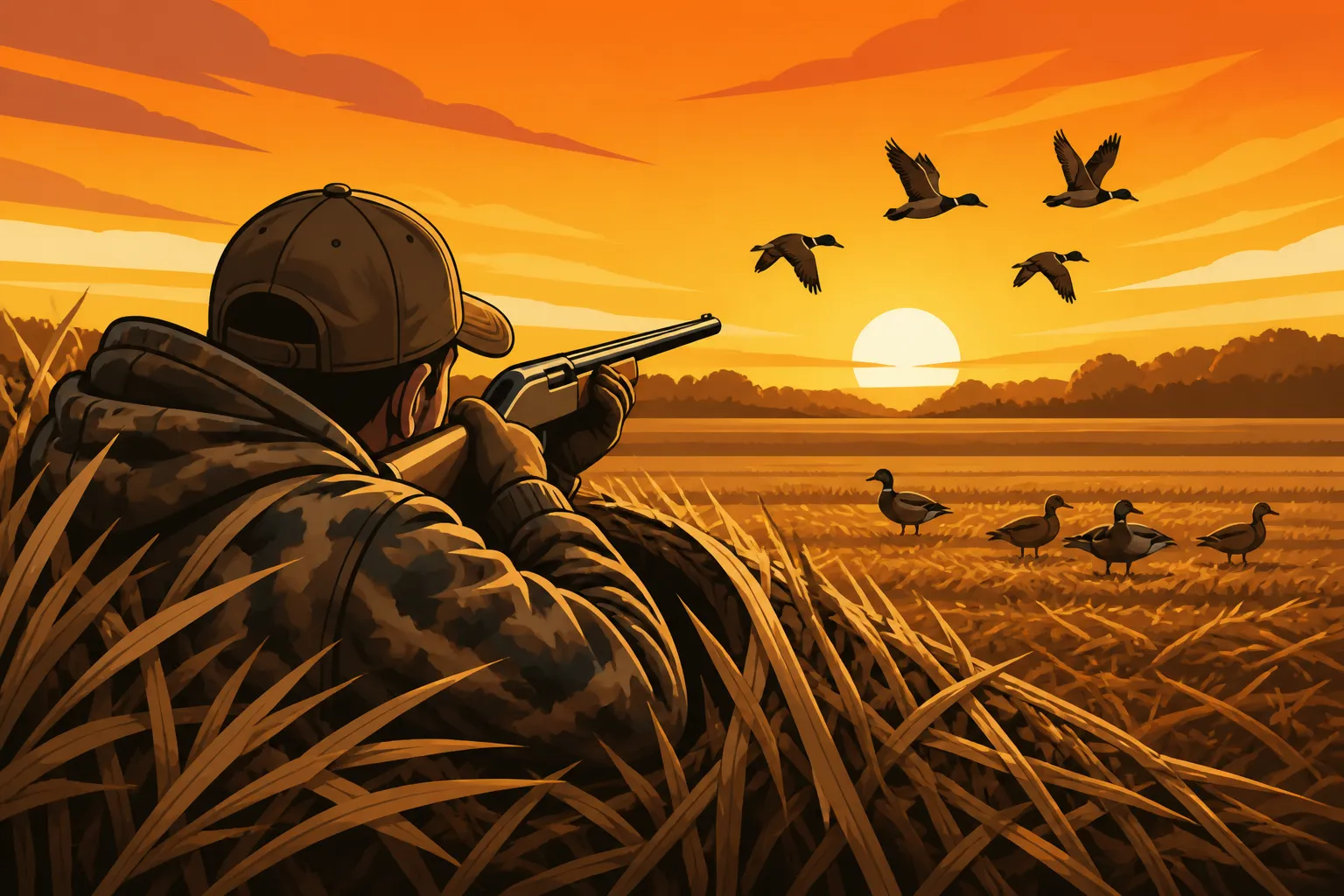
Hunting waterfowl in West Tennessee's expansive agricultural fields can be an incredibly rewarding experience, but it also presents unique challenges compared to hunting flooded timber or open water. Many hunters struggle with consistent success because they underestimate the intelligence of field-feeding ducks and geese, or they simply haven't mastered the art of concealment in wide-open spaces. This guide aims to pull back the curtain on effective layout blind hunting tactics in West Tennessee, helping you understand waterfowl behavior, choose the right gear, set up strategic spreads, and call birds into range for a memorable hunt.
Understanding West Tennessee Fields and Waterfowl Behavior
West Tennessee is a waterfowl magnet, largely due to its position within the Mississippi Flyway and its abundance of prime agricultural land. However, successfully hunting these fields requires a deep understanding of the landscape, the types of crops, and how weather influences bird movement.
Identifying Key Field Types
Not all fields are created equal when it comes to attracting waterfowl. In West Tennessee, you'll primarily be looking at a few key crop types that offer irresistible dining opportunities for ducks and geese. Cut cornfields are often considered the holy grail; after harvest, spilled grain provides an easily accessible, high-energy food source that birds can't resist, especially as temperatures drop. You'll often see geese, particularly Canada geese, and ducks like mallards and pintails absolutely piling into these fields.
Soybean fields, especially those that have been harvested, also hold significant appeal. While less energy-dense than corn, residual beans can be a consistent food source, particularly for ducks. Don't overlook winter wheat or ryegrass fields either, especially for geese that prefer to graze. These green fields offer nutritious forage, and you'll find them holding birds during various parts of the season. Identifying the primary food source in a given area is crucial, and it often changes as the season progresses and crops are harvested. Scouting these fields diligently, even with tools like a GoHunt mapping system to identify crop types and land ownership, is paramount to finding where the birds want to be.
Reading Waterfowl Patterns and Flight Lines
Waterfowl, particularly geese, are creatures of habit. They'll often use the same flight lines day after day, moving between roosting areas, feeding grounds, and loafing spots. Your job as a field hunter is to intercept these patterns. This means extensive scouting – not just driving by, but setting up well before dawn or staying until after dusk to observe exactly where birds are coming from and where they're going. Look for "X" marks the spot – areas where birds are actively feeding, leaving behind droppings, feathers, and disturbed soil.
Pay close attention to how they enter and exit a field. Do they prefer a certain corner? Are they hugging a tree line or a ditch? These observations will dictate your blind placement and decoy spread. Geese, especially, often circle a field multiple times, looking for any sign of danger before committing. Understanding this wary behavior means setting up well in advance, remaining absolutely still, and having flawless concealment. Ducks, while often less cautious than geese in fields, still prefer predictable approaches and will shy away from anything unnatural. The success of your hunt hinges on your ability to interpret these subtle cues and adapt your strategy. Observing Tennessee Waterfowl Migration Timing can give you an edge in understanding when different species are likely to be present in higher numbers.
Weather's Impact on Field Hunting
Weather plays an enormous role in field hunting success. Calm, sunny days can make birds incredibly wary, as they have excellent visibility and are less inclined to move. Conversely, foul weather – think strong winds, rain, or snow – can be your best friend. Strong winds force birds to fly lower and often make them less cautious as they battle the elements. A brisk northwest wind pushing cold air through the Mississippi Flyway can bring in fresh waves of birds, making them more aggressive about finding food. This is often the time when you'll find Mallards at Reelfoot Lake making their way to nearby fields.
Overcast conditions reduce visibility, making your blinds and decoys appear more natural. Snow cover can concentrate birds in exposed fields where food is easier to access, and fresh snow can sometimes even make birds "stupid" for a short period. Always check the forecast and adjust your plans accordingly. If a major cold front is pushing through, those field birds that have been roosting on open water might be more inclined to feed heavily in your picked corn. Hunters who monitor weather patterns and understand their impact on bird behavior are consistently more successful.
Choosing the Right Layout Blind for West Tennessee
Your layout blind is your most critical piece of equipment for field hunting. It's your mobile hide, and its effectiveness directly impacts your success. Selecting the right one for the varied agricultural landscapes of West Tennessee is key.
Types of Layout Blinds and Their Features
Layout blinds come in various designs, each with pros and cons. The most common are low-profile, coffin-style blinds that keep you completely hidden and flat on the ground. Brands like Avery, Final Approach, and Rogers Sporting Goods offer excellent models. Look for blinds with a durable frame, comfortable padded seat, and plenty of stubble straps for brushing in. Some blinds feature a "back-rest" design that offers more ergonomic comfort for long sits, while others prioritize extremely low profiles for the wary birds of West Tennessee.
Another option, though less common for strict field hunting but sometimes useful near ditches or fencerows, are panel blinds or A-frame blinds. These offer more upright concealment but are harder to brush in seamlessly in the middle of a wide-open field. For most West Tennessee field scenarios, a traditional, low-profile layout blind is going to be your go-to. Consider the specific conditions you hunt most often. If you're often in very muddy fields, a blind with a solid bottom or a removable liner might be beneficial for easier cleaning. If you hunt in colder weather, ensure the blind offers good insulation from the frozen ground.
Camouflage Patterns for Agricultural Fields
The right camouflage pattern is non-negotiable. While traditional timber camo works well in woods, it sticks out like a sore thumb in a harvested cornfield. For West Tennessee's agricultural settings, you'll want patterns specifically designed for fields. These often incorporate shades of tan, brown, straw, and sometimes greens to mimic dried vegetation. Patterns like Mossy Oak Shadow Grass Blades, Realtree Max-5, or Sitka Waterfowl Timber (for its mix of browns/tans) are excellent choices. Many blinds also come in specific "cornfield" or "stubble" patterns.
However, even the best camo pattern is only a starting point. The real magic happens when you brush in your blind, a topic we'll cover in more detail. The camo helps break up your outline, but it's the natural vegetation that truly makes you disappear. When hunting a specific field, try to match the general color and texture of the dominant stubble or crop residue. If you're hunting a wheat stubble field, a very brown pattern will blend better than a green one. If you're hunting a recently cut soybean field, something with more muted browns and grays might be ideal.
Comfort and Portability Considerations
You could be lying in that blind for hours, potentially in cold, wet, or windy conditions. Comfort is not a luxury; it's a necessity that impacts your ability to stay still and focused. Look for blinds with ample padding, particularly under your back and head. A comfortable headrest can make a huge difference, allowing you to scan the skies without constantly craning your neck. The ability to quickly sit up or get out of the blind without fumbling is also important for safe and effective shooting.
Portability is another factor, especially if you're scouting multiple fields or hunting public land where you might have to walk a fair distance. Some blinds are lighter and fold down more compactly than others. Consider if you'll be hauling it in a truck bed, on an ATV, or strapped to your back. Many modern blinds are designed with backpack straps or handles for easier transport. If you're using a Layout Blind Hunting a Cut Cornfield, you'll appreciate a lighter, easier-to-move model when repositioning for shifting winds or bird patterns.
| Blind Type | Key Features | Pros | Cons | Ideal for West TN Fields |
|---|---|---|---|---|
| Low-Profile Coffin | Padded back/head, stubble straps, durable frame | Excellent concealment, comfortable for long sits | Can be heavy/bulky, takes time to brush in | Primary choice for all field types |
| Compact/Folding | Lighter, folds smaller, less padding | Highly portable, quick setup | Less comfortable, may sacrifice concealment height | Mobile hunters, quick setups |
| Back-Rest Style | Ergonomic recline, often larger | Superior comfort, good for scanning | Higher profile, heavier, harder to fully conceal | Wary birds, long waits, comfortable |
| Panel/A-Frame | Upright concealment, multiple panels | Good for edges, fencerows, taller vegetation | Very hard to conceal in open fields, less portable | Limited use, near cover only |
Strategic Blind Placement and Decoy Spreads
Once you have your fields scouted and your blinds ready, the next step is strategic placement and effective decoy spreads. This is where most hunters either hit a home run or strike out.
Optimal Blind Positioning Within the Field
Your blind placement is arguably the most critical decision you'll make. It must offer maximum concealment while putting you in the best position to intercept birds. Always position your blinds so that birds will approach into the wind. Waterfowl, especially ducks and geese, almost always land and take off facing into the wind. This means if the wind is from the north, your blinds should face north, allowing the birds to commit and cup their wings right over your spread before landing directly in front of you.
Look for natural dips, subtle rises, or changes in vegetation within the field that can offer a slight advantage in concealment. The edge of a drainage ditch, a subtle swale, or even a tractor rut can make a big difference in breaking up your outline. Avoid setting up on the absolute highest point of a field unless absolutely necessary, as this makes you silhouetted against the sky. Scout to find the "X" where birds have been feeding, then position your blinds slightly downwind from that spot, allowing birds to finish their approach directly into your face. Don't be afraid to move your blinds if the wind shifts or if birds are consistently landing just out of range. You can use tools like GoHunt to visualize terrain contours, helping you find those subtle depressions that offer a natural advantage.
Decoy Spreads for Ducks in Fields
Field-feeding ducks, primarily mallards and pintails, require a different approach than their marsh-dwelling cousins. You're trying to mimic a natural feeding scenario. A typical spread for ducks in a field will consist of a loose "U" or "J" shape, with the open end facing into the wind, towards your blinds. The idea is to create a landing zone right in the sweet spot. Place decoys in family groups of 3-5, rather than uniform lines, to appear more natural. Mix in some feeding postures, contented preeners, and a few upright sentry decoys.
For mallards, you'll want mostly mallard decoys, but adding a few pintails can be effective, as they often feed together in fields. Don't go overboard with numbers; sometimes a smaller, well-placed spread looks more inviting than a massive, unnatural one. A dozen to two dozen duck field decoys can be plenty. Consider adding a spinning wing decoy like a Mojo outdoors decoy if legal and appropriate for the day's conditions, as the motion can be a powerful attractant, especially for ducks. Remember, the goal is realism and creating an illusion of safety and abundant food. For more specific duck strategies, consider how you might adapt tactics from Decoy Spreads for Reelfoot Mallards to a field setting.
Decoy Spreads for Geese in Fields
Geese, especially Canada geese, are wary birds, and their field spreads need to reflect their cautious nature. You'll generally need more decoys for geese than for ducks. A good starting point is two to three dozen, but many successful hunters use 50-100 or more. Similar to ducks, set up a "U" or "J" shape with the open end into the wind, allowing for a landing zone in front of your blinds. Place decoys in family groups and use a mix of feeding, resting, and sentry postures. The more natural variety, the better.
For Canada Geese on Tennessee Farmland, adding oversized or super-magnum decoys can increase visibility from a distance. Full-body decoys are highly recommended as they look incredibly realistic. Shells or silhouettes can supplement the full-bodies to create the illusion of a much larger flock. Ensure you have plenty of feeders and sleepers, as these convey a sense of safety and contentment. Some hunters will place a few "outlier" decoys further from the main spread to suggest a large flock is just beginning to arrive or spread out. Keep your decoys clean and free of unnatural shine, as geese have exceptional eyesight.
Adding Motion and Realism
Still decoys are good, but motion and realism are what truly seal the deal, especially for educated West Tennessee waterfowl. Motion decoys, like spinning wing ducks or fluttering flags (for geese), can be incredibly effective at catching a bird's eye from a distance. Always check local regulations on electronic decoys, as rules can vary. For geese, flags can be particularly useful when birds are working high or seem hesitant. A subtle flag waved at the right moment can draw their attention and make them commit.
Beyond mechanical motion, creating realism with your decoy setup is paramount. Pay attention to the spacing – don't jam decoys too close together. Ensure they're facing different directions, as a real flock wouldn't all be aligned perfectly. Use a mix of active feeding heads, alert sentry heads, and resting heads. When setting up, think about how real birds would interact. If you can, add a few goose or duck "butt" decoys to simulate birds with their heads down feeding. The more believable your spread, the more confident the birds will be in committing.
Calling and Concealment Tactics
Even with the best blinds and decoys, your success in West Tennessee fields hinges on your calling ability and your absolute mastery of concealment. Birds here are educated, and any misstep will send them flying.
Effective Calling for Field-Hunting Ducks and Geese
Calling in field-feeding waterfowl is an art form. For ducks, especially mallards, your calling should mimic a relaxed, contented flock. Focus on greeting calls to grab their attention, then transition to quieter, reassuring chatter, feed calls, and subtle clucks as they approach. Overcalling or making aggressive calls when birds are close can spook them. The goal is to sound like an inviting party, not a distress signal. Practice different call sequences and adjust based on how the birds respond. Sometimes less is more, especially with wary flocks.
For geese, calling is often more about rhythm and volume. Use deep, resonant honks and clucks to get their attention from afar, then soften your calls to murmurs and low clucks as they work closer. Canada geese often communicate with a complex series of honks and moans; try to mimic this. A good goose call can be a game-changer, but knowing when to call, and more importantly, when to stop, is crucial. If birds are locked up and coming, put the call down and remain motionless. Remember, you're trying to convince them your spread is real and safe. For early season birds, a little extra noise might work, but as the season progresses, subtlety becomes paramount. Studying Early Goose Season Tactics in Tennessee might offer insights into adapting calling for those initial wary flocks.
Brushing In Your Blind Effectively
This cannot be stressed enough: your blinds must disappear into the field. This means taking the time to "brush in" your layout blind with natural vegetation from the surrounding environment. Collect corn stalks, soybean stubble, wheat straw, or whatever is prevalent in your specific field. Push this material into the stubble straps and lay it over your blind, breaking up its hard edges and making it blend seamlessly with the ground. Think about the texture and color, and try to match it perfectly.
Don't just lay a few pieces of stubble on top; layer it generously. The goal is to make your blind look like another pile of field debris. Pay extra attention to the head and foot ends, as these are often the most noticeable. Also, cover any shiny parts of your blind or equipment. If you can still see the blind's fabric or frame from a distance, so can the birds. Take a few steps back after brushing in and view your setup from different angles. Even better, have a hunting partner check your concealment. A poorly brushed-in blind is a giant red flag for approaching waterfowl.
Minimizing Movement and Noise
Waterfowl have incredible eyesight, and even the slightest movement can send them packing. Once you're in your layout blind, you must commit to remaining absolutely still. This means no fidgeting, no checking your phone, and certainly no peeking over the top of your blind. Your head should only rise when it's time to shoot. If you need to observe birds, use the peek-hole or mesh face screen on your blind. Your gun should be ready, but not waving around.
Noise is just as critical. Keep quiet conversations to a minimum, and definitely no yelling. The sounds of doors slamming, calls being fumbled, or gear clanking can carry a long way in open fields. Your dog, if you bring one, must also be trained to remain still and quiet in its blind or designated area. Any unnatural sound or movement will be amplified in the quiet, open fields of West Tennessee, turning an incoming flock into distant specks on the horizon. Practice patience and discipline, and your efforts will be rewarded.
Safety and Ethical Considerations
While the thrill of field hunting is undeniable, it's paramount to prioritize safety and ethical practices. Respect for the land, the wildlife, and your fellow hunters ensures a positive experience for everyone.
Hunting in Groups and Shot Selection
Field hunting often involves multiple hunters in layout blinds, which makes communication and shot selection vital for safety. Before the hunt, establish clear zones of fire and identify who will call the shot. Typically, the person with the best view of the incoming birds or the most experienced caller will make the call. When birds commit and are in range, yell "Take 'em!" or a similar clear command. Everyone should rise and shoot together. This ensures a concentrated volley, reducing cripples and minimizing the risk of someone shooting out of their safe zone.
Never shoot at birds that are too high or out of range. Sky-busting only educates the birds, makes them warier for future hunts, and increases the likelihood of crippling a bird that you can't recover. Identify individual birds to shoot, rather than just blasting into a flock. If you're hunting with a dog, ensure it's safely tucked away in its blind and under control before shooting. Always practice safe gun handling, keeping the muzzle pointed in a safe direction and your finger off the trigger until you're ready to shoot. Reviewing Tennessee Hunter Education Requirements is always a good idea, even for seasoned hunters, to refresh safety protocols.
Respecting Private Land and Landowner Relations
The vast majority of prime field hunting in West Tennessee is on private land. Gaining access is a privilege, not a right, and maintaining a good relationship with landowners is essential for future hunting opportunities. Always ask permission well in advance, and make sure you understand any specific rules or restrictions the landowner might have. Leave gates as you found them, don't drive on wet fields (unless specifically permitted), and pack out all your trash, including spent shell casings. A good practice is to offer the landowner some of your harvested game as a token of appreciation.
Never trespass. If you don't have explicit permission, stay off. Tennessee Posted Land Rules are clear, and violating them can lead to fines, loss of hunting privileges, and damage to the reputation of all hunters. Remember that you are an ambassador for the hunting community. A positive interaction with one hunter can open doors for others; a negative one can close them for good. Using mapping apps like GoHunt can help you identify property boundaries and determine land ownership, aiding in seeking proper permission.
Retrieving Cripples and Ethical Practices
Ethical hunting dictates that you make every reasonable effort to recover any bird you shoot. Waterfowl, especially ducks, can be incredibly tough, and a seemingly good shot can still result in a crippled bird. This is where a well-trained retriever truly shines. If you don't hunt with a dog, be prepared to get out of your blind immediately after the shot and pursue any crippled birds. Mark where the bird went down, and if necessary, quickly dispatch it to prevent suffering.
Even if you have to track a bird into thick cover or across a ditch, do your best to retrieve it. Leaving a crippled bird unrecovered is unethical and wasteful. Consider carrying a spare shell or two specifically for dispatching crippled birds at close range. The goal is to make clean kills and ensure all harvested game is brought to hand. This commitment to ethical hunting ensures that the resource is respected and that future generations can continue to enjoy the sport. Don't forget your Tennessee Migratory Bird Certification and federal duck stamp, as these contribute directly to waterfowl conservation efforts.
Disclaimer
All information provided in this guide is for educational purposes only. Hunting regulations and seasons are subject to change. Always consult the most current Tennessee Wildlife Resources Agency (TWRA) regulations before engaging in any hunting activities. It is your responsibility to know and follow all applicable laws.