Flushing Grouse Without a Dog
For many hunters, the thought of chasing ruffed grouse immediately brings to mind a well-trained bird dog. It's a classic image: the setter on point, the explosive flush, the quick shot. But what if you don't have a dog, or access to one? The frustration can be real, making you feel like grouse hunting is out of reach. Don't you worry, because you absolutely can still put grouse in the vest in Tennessee, even if you’re doing it entirely on foot. This guide is all about how to find, flush, and harvest these elusive forest rockets without canine assistance.
Understanding Ruffed Grouse Behavior Without a Dog
Before you can effectively hunt grouse without a dog, you need to deeply understand how these birds behave and why a dog is traditionally so effective. A dog's primary advantage is its incredible sense of smell, which allows it to locate birds that are holding tight, often long before a human hunter would ever see them. Without that nose, you need to become a student of grouse habitat and tendencies, learning to "read" the cover and anticipate where a bird might be hunkered down.
Why Grouse Hold Tight
Ruffed grouse are masters of camouflage and stillness. Their mottled brown, black, and white plumage blends seamlessly into the forest floor, especially amongst fallen leaves, shadows, and brush. When they sense danger, their first instinct isn't always to fly; it's often to freeze. They'll press themselves flat against the ground, relying on their camouflage to remain undetected. A dog's nose can cut through this defensive strategy, pinpointing the bird's exact location, forcing the flush. Without a dog, your job is to create enough disturbance, noise, and movement in the right places to break that hold and make the bird fly. This often means walking much slower and more deliberately than you might for other small game.
Daily Routines and Preferred Cover
Grouse have pretty predictable routines, much like any other game animal, and understanding these can guide your dog-less hunting efforts. They spend their days foraging for food and seeking refuge from predators and weather. In Tennessee, their diet changes with the seasons but often includes buds, catkins, tender greens, ferns, and various berries. During the fall and winter, you might find them feeding on wild grape, greenbrier berries, or the remnants of acorns and beechnuts. Knowing what they're likely to be eating will help you focus your efforts on areas where those food sources are abundant.
As for cover, grouse absolutely love dense, regenerating forests, often found in recent clear-cuts, old logging operations, or areas recovering from wildfires or timber thinning. These areas provide the overhead cover they need from avian predators like hawks and owls, as well as dense understory to hide from ground predators. Ideal cover isn't just thick; it also has a strong vertical component. Think of areas choked with young hardwoods, briar patches, honeysuckle, and downed timber. These tangled havens provide both food and safety, making them prime spots for a grouse to spend its day. Look for areas with a mix of these elements, especially where thickets meet more open mature timber, offering both security and escape routes.
Scouting and Identifying Prime Grouse Cover
Without a dog's nose to guide you, your eyes and your map become your best friends. Scouting before the season, or even the day before a hunt, is absolutely critical. You're looking for the kind of habitat grouse love, specifically where they'll be feeding and hiding.
Reading the Landscape for Grouse Habitat
Tennessee's ruffed grouse populations are primarily found in the mountainous eastern regions, especially within the Cherokee National Forest and on the Cumberland Plateau. These areas offer the rugged, diverse timber stands that grouse require. When you're looking at a topographical map or an aerial photo, you're trying to identify transitional areas. Grouse often prefer the edges of different habitat types, such as where a thick clear-cut meets a more mature stand of timber, or where a ridge drops off into a dense creek bottom.
Look for areas marked as "young growth" or "regenerating forest." These are often indicated by a different color on aerial maps, showing denser, shorter canopy. Old logging roads, even if overgrown, can be excellent travel corridors for you and sometimes for grouse too, but the real action is usually off the beaten path. Pay close attention to water sources as well. While grouse don't typically spend a lot of time at water, dense cover near a small creek or spring can be particularly attractive, especially in drier periods. When you are looking for these spots, mapping tools like those offered by GoHunt can be incredibly useful for pinpointing specific timber cuts, elevation changes, and dense pockets of cover. This helps you plan your approach and identify potential holding areas long before you ever set foot in the woods. Learning How Old a Cut Should Be for Grouse can also give you a significant advantage in pinpointing the most productive areas.
Ground-Truthing and Sign-Reading
Once you've identified promising areas on a map, the next step is to put boots on the ground. This "ground-truthing" is where you confirm your suspicions and look for actual signs of grouse presence. It might feel like you're scouting for deer, but you're just adjusting your focus.
Key signs to look for include:
- Droppings: Grouse droppings are distinct, resembling small, dark pellets, often found in concentrated areas where birds have roosted or fed. Look for them on logs, rocks, or under dense evergreens.
- Feathers: Finding grouse feathers is a sure sign birds are in the area. Often these are flight feathers from an escape, or body feathers where a bird has preened.
- Dusting Areas: Like many birds, grouse take dust baths. Look for shallow depressions in dry, sandy soil, often at the base of trees or under dense cover, where they've ruffled their feathers.
- Buds and Catkins: During fall and winter, grouse feed heavily on tree buds and catkins from species like aspen, birch, and hazel. Look for evidence of browsing on low branches.
- Natural Food Sources: Actively search for wild berries, greenbrier, and other known grouse food sources. If you find an abundance of these, the grouse might not be far.
Remember, without a dog, you're looking for areas so dense and unappealing to humans that grouse feel safe there. The thicker, thornier, and more difficult to walk through, the more likely it is to hold a bird.
Effective Flushing Techniques and Strategies
Now for the meat of it: how do you actually make these birds fly when you don't have a dog? It comes down to methodical movement, understanding the cover, and knowing when to pause and when to push.
The "Human Dog" Approach
Think of yourself as a slow, deliberate, and intelligent flushing machine. You need to cover ground thoroughly, but not so fast that you're past a flushing bird before you can react.
Here’s a basic approach:
- Grid or Zig-Zag: Instead of walking in a straight line, which allows birds to slip out the sides, walk in a zig-zag or grid pattern through dense cover. This maximizes your coverage of potential holding spots. Imagine a dog quartering back and forth; you're doing the same, just with less ground speed and more reliance on visual cues.
- Vary Your Pace: Grouse can become accustomed to steady noise. Try walking for a bit, then pausing for 5-10 seconds, then moving again. These sudden stops and starts can unnerve a hiding bird and cause it to flush. Many times, a bird will hold until you've passed, then flush behind you. The pause gives them a moment to think they're safe, then your next movement spooks them.
- Kick and Prod: Use your boots to kick brush piles, thump logs, and generally make a ruckus in dense spots. A long walking stick can also be invaluable for poking into thickets that you can't easily reach with your feet. These actions simulate a dog rooting around and increase the likelihood of a flush.
- Work the Edges: Grouse often hold tight just inside the thickest cover. Work the edges where dense thickets meet more open timber, or where a clear-cut abuts a mature forest. These transition zones offer both security and escape routes.
- Utilize Terrain: Use natural features to your advantage. Walk along contour lines, pushing birds ahead of you into tighter cover, or try to push them towards a slight opening where you might get a clearer shot. When hunting Grouse Hunting the Cumberland Plateau, this means using those natural benches and draws.
Remember, you're trying to create enough perceived danger to overcome the grouse's natural inclination to hold tight. Persistence is key.
Positioning and Shot Opportunity
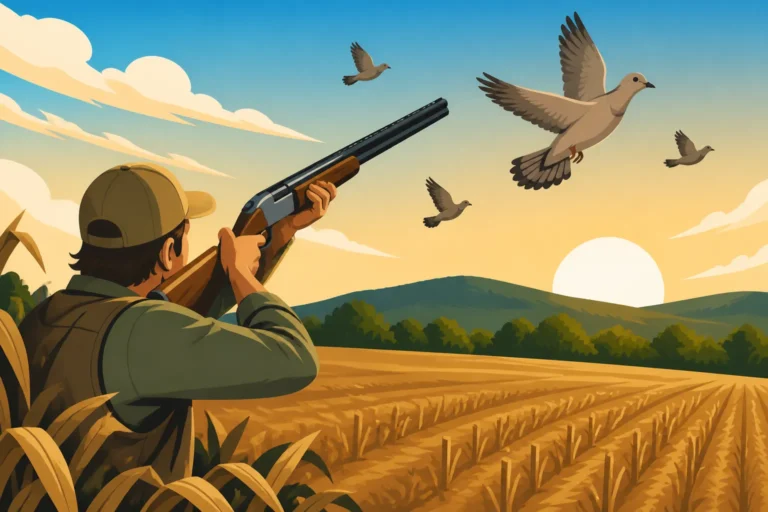
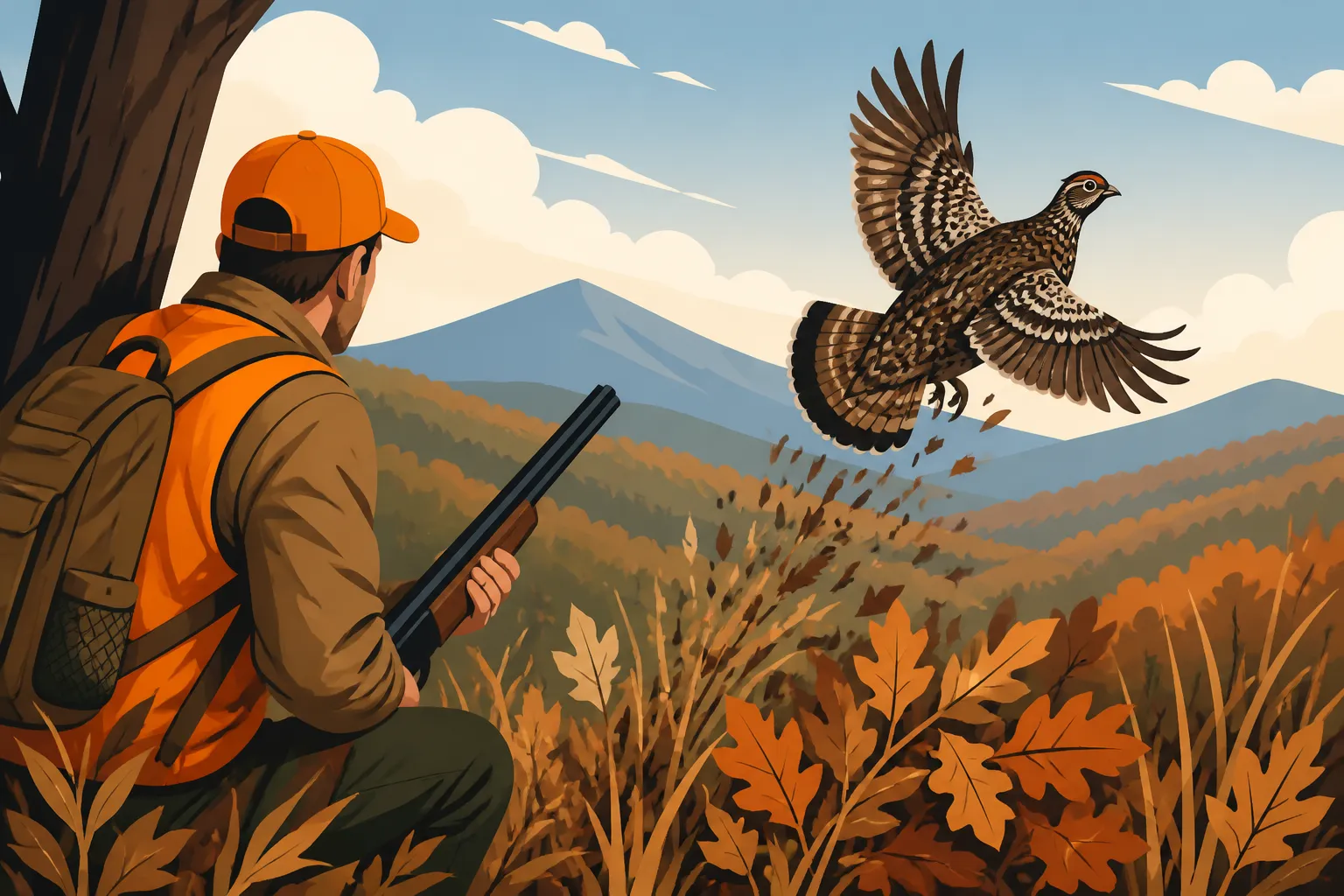
When a grouse flushes, it's often explosive and fast, sometimes literally taking off at your feet. They usually fly through the thickest cover, making for challenging wing shooting.
To maximize your chances:
- Stay Ready: Always have your shotgun shouldered or at least held in a ready position, especially in prime cover. Don't be walking with it slung over your shoulder.
- Scan Ahead: While you're concentrating on flushing, try to visually scan 10-20 yards ahead for any open lanes of flight. If you can anticipate where a bird might fly, you'll be better prepared.
- Be Patient (for the shot): It sounds counterintuitive with such a fast flush, but often the best shot opportunity comes after the initial explosion, when the bird levels out slightly. Don't rush a shot into a thicket of trees. Let it clear the immediate brush, then quickly mount and shoot. Most grouse shots are close range, so a more open choke like Improved Cylinder or Skeet can be effective.
- Quick Follow-Up: Grouse are tough birds. If you connect but it's not a clean kill, they can glide a surprising distance before crashing. Mark the spot carefully and quickly follow up. If you're hunting with a partner, coordinate your movements so one person is "flushing" while the other is ready for the shot.
| Flushing Technique | Dog-Assisted | Dog-Less (Human Dog) |
|---|---|---|
| Location Method | Scent | Visuals, Habitat Knowledge, Maps |
| Speed of Cover Search | Fast | Slow, Deliberate |
| Flushing Trigger | Dog's presence/point | Hunter's noise, movement, prodding |
| Coverage Pattern | Quartering | Zig-zag, Grid, Edges |
| Disturbance Level | Consistent | Varied pace, kicking, thumping |
| Shot Opportunity | Often a "pause" on point, then flush | Explosive, close-range, reactionary |
| Recovery of Bird | Dog retrieves | Careful marking, visual tracking |
Gear and Safety Considerations for Dog-Less Grouse Hunting
Hunting grouse without a dog is physically demanding. You'll be busting through dense cover, navigating uneven terrain, and likely putting in a lot of miles. Proper gear and a strong focus on safety are non-negotiable.
Essential Gear for the Hunter
Your gear needs to be durable, comfortable, and functional for this type of demanding hunt.
- Shotgun and Ammunition: A fast-swinging shotgun, typically a 12 or 20 gauge, is ideal. As mentioned, an open choke (like Improved Cylinder or Skeet) is often preferred for the close, fast shots. For ammunition, 7 ½ or 6 shot loads are common choices for grouse. Given the rugged terrain and potential for long walks, a lightweight gun can save you a lot of fatigue over the course of the day.
- Protective Clothing: This is where you don't skimp. Briar pants or chaps are essential to protect your legs from thorns and sharp branches. A durable hunting jacket or vest will also protect your upper body. Remember Tennessee's blaze orange requirements for small game if hunting during deer season. For more detailed information on appropriate attire, consider reading about Clothing for a Tennessee Late Season.
- Sturdy Boots: You'll be traversing steep, often slippery, and brush-filled terrain. Waterproof, ankle-supporting boots with good traction are a must. Look for styles designed for upland hunting or aggressive hiking. Think about Boots for Walking Tennessee Ridges for inspiration.
- Upland Vest/Game Bag: A good upland vest with large game bags is invaluable. It allows you to carry water, snacks, extra shells, and of course, your birds. Many vests also have built-in hydration pockets, which are critical. A specialized vest, like those covered in Upland Vests With Water Capacity, will make your hunt much more comfortable.
- Navigation Tools: A GPS unit or a reliable mapping app on your phone (like the GoHunt app) is critical. You'll be venturing into thick, often disorienting cover. Knowing your location and how to get back to your vehicle is paramount. Download offline maps since cell service can be spotty in remote areas of the Cherokee National Forest or Cumberland Plateau. Reading Scouting With the Tennessee TWRA App or Reading Aerial Photos for Cumberland Plateau Deer can help you prepare with mapping tools.
- Whistle: A simple whistle can be a lifesaver if you're hunting with a partner and get separated, or if you need to signal for help.
Safety First in Remote Cover
Hunting grouse in remote areas, especially without the companionship of a dog, requires an extra layer of safety planning.
- Tell Someone Your Plans: Always inform a reliable person of your exact hunting location, your intended route, and your expected return time. This is non-negotiable.
- First Aid Kit: Carry a small, well-stocked first aid kit. Minor cuts and scrapes are common when pushing through brush, and a more serious injury could be dangerous in a remote area. Look for kits designed for hiking or backpacking, like those discussed in First Aid Kits for Remote Cherokee Forest Ground.
- Water and Snacks: Staying hydrated and fueled is crucial for endurance. Carry more water than you think you'll need, especially on warmer early season days.
- Knife/Multi-tool: Useful for field dressing birds, cutting through small obstacles, or emergency repairs.
- Headlamp: Even if you plan to be out before dark, a headlamp is a critical piece of emergency gear. Getting disoriented in thick cover as dusk falls can turn a fun hunt into a dangerous situation quickly.
- Be Aware of Other Hunters: While grouse hunting usually takes you to less-traveled areas, especially on public land, always be mindful of other hunters. Wear your blaze orange.
- Leave No Trace: Pack out everything you pack in. Dispose of any game waste ethically.
Hunting ruffed grouse without a dog is a challenging but immensely rewarding endeavor. It forces you to hone your woodsmanship, become a keen observer of habitat, and develop a deep understanding of the bird itself. It might mean fewer birds in the bag initially, but the satisfaction of finding and flushing a wild Tennessee grouse through your own effort is truly special. Embrace the challenge, enjoy the wild places, and stay safe out there. Don't forget to check the Tennessee Small Game Season Rules and Tennessee Grouse Season Status before you head out.
Disclaimer
Please remember that hunting regulations, seasons, and licensing requirements can change. Always consult the official Tennessee Wildlife Resources Agency (TWRA) regulations before heading afield to ensure you are in compliance with all current laws. The information provided here is for general guidance and educational purposes only.