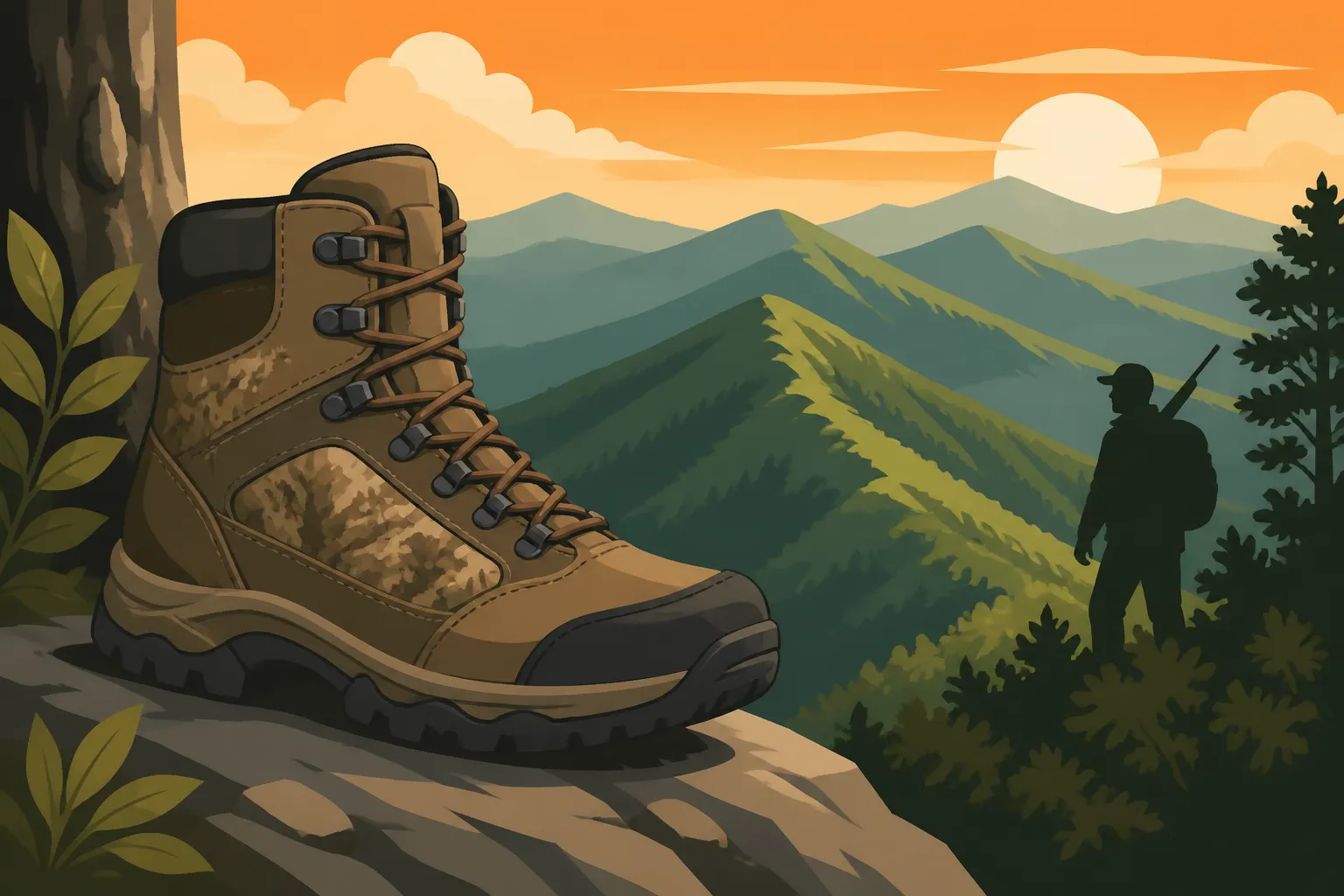
Boots for Walking Tennessee Ridges
Oh, the sheer agony of a poorly chosen pair of boots when you're miles deep into the steep, unforgiving terrain of a Tennessee ridge! We've all been there, haven't we? That burning sensation from a blister, the constant fear of rolling an ankle on a hidden rock, or the dread of cold, wet feet seeping into your soul after an unexpected creek crossing. Walking Tennessee ridges demands a lot from your footwear, and this guide is here to walk you through exactly what to look for, so your feet can carry you comfortably and safely through every uphill climb and downhill descent, keeping you focused on the hunt, not your aching soles.
Understanding the Unique Challenges of Tennessee Ridges
Tennessee isn't all gentle rolling hills. Our state boasts some seriously rugged and diverse terrain, particularly when you venture into the Cumberland Plateau or the foothills of the Great Smoky Mountains. These areas present specific challenges that demand specialized footwear, far beyond what you might need for a stroll through a flat farm field. Ignoring these challenges can lead to anything from nagging discomfort to a hunt-ending injury.
The Terrain: Rocks, Roots, and Steep Inclines
Picture this: you're Still-Hunting Cumberland Plateau Ridges, slowly navigating through mature hardwoods, your eyes scanning for movement. What's underfoot? More often than not, it's a constantly changing mix of loose rocks, tangled roots, and uneven earth. One moment you're on a relatively flat bench, the next you're scrambling up a 45-degree slope or carefully picking your way down a crumbling bluff line. This constant undulation and variability is a killer on unsupported ankles and soft-soled boots. The need for rigid sole support to prevent stones from bruising your feet, combined with an aggressive lug pattern to bite into slippery leaf litter and loose soil, becomes immediately apparent. Without a robust boot designed to handle this kind of abuse, every step becomes a gamble against a twisted ankle or a painful rock bruise, completely pulling you out of the moment and away from your hunting objective.
Weather Variability and Moisture Management
If you've spent any time hunting in Tennessee, you know our weather is about as predictable as a wild turkey's strut. A crisp, dry morning can quickly turn into a torrential downpour by afternoon. Early archery season often means dew-soaked undergrowth, while late gun season can bring unexpected snow and icy patches. Creek crossings are a common occurrence in our hollows and draws. All of this points to one critical boot feature: waterproofing. But it's not just about keeping external water out; it's also about managing the internal moisture from your hardworking feet. Sweat, if trapped, can lead to macerated skin, which is a prime recipe for blisters – and there's nothing that derails a hunt faster than debilitating foot pain. Finding that delicate balance where your boots are both impenetrable to external water yet breathable enough to let sweat vapor escape is paramount for maintaining comfortable, healthy feet through long days in the field.
Carrying Weight and All-Day Comfort
Imagine you've just put down a nice buck deep in a hollow after Hunting the Rut in Early November. Now comes the real work: quartering it out and beginning the long, arduous pack-out back to the truck. Even if you're not packing out game, a full day pack with essentials, water, and maybe a treestand, adds significant load. This extra weight, especially on uneven terrain, magnifies any pre-existing discomfort or poor boot fit. A boot that feels okay for a couple of hours can become an instrument of torture after ten miles with 50 pounds on your back. The cumulative effect of long days on your feet, often covering many miles over difficult ground, also stresses the importance of genuine all-day comfort. Your feet are your foundation in the field, and if they're screaming, your concentration, stamina, and ultimately your hunting success will suffer dramatically. Investing in boots that provide exceptional comfort from dawn till dusk, even under load, is investing in a more enjoyable and effective hunt.
Key Features to Look For in Ridge Hunting Boots
When you're sifting through the seemingly endless options of hunting boots, it's easy to get overwhelmed. But for Tennessee's ridge country, there are a few non-negotiable features that should guide your decision-making. Focusing on these core elements will help you narrow down the choices and find a boot that truly supports your pursuit.
Ankle Support and Stability
This is perhaps the most crucial factor for anyone venturing onto Tennessee's rocky, root-strewn ridges. The constant threat of a rolled or sprained ankle is real, and it's an injury that can end your hunt, your season, or even require significant recovery time. Look for boots with a high-top design, typically 8 to 10 inches, that effectively brace your ankle. This height provides the necessary support to keep your ankle from twisting on uneven ground. Beyond just height, pay attention to the construction of the ankle collar and the stiffness of the boot's side panels. A quality lacing system that allows you to cinch down the boot snugly around your ankle without creating pressure points is also vital. Some boots feature robust internal shanks or external stiffeners that add to this lateral stability, ensuring your foot remains firmly planted and supported even when you misstep on a loose stone or pivot quickly.
Traction and Sole Design
The sole of your boot is your direct connection to the ground, and on Tennessee ridges, that ground can be slick, loose, and treacherous. You need a sole with an aggressive lug pattern – deep, multi-directional treads that can bite into soft soil, mud, and grip onto wet rocks and roots. Think about the pattern: wide, self-cleaning lugs are excellent for shedding mud and debris, maintaining consistent traction. The compound of the rubber also matters. Some manufacturers use softer rubber for enhanced grip, which might wear faster, while harder compounds offer durability but slightly less stickiness. A well-defined heel is also essential, particularly for descending steep slopes. This heel acts like a brake, digging into the earth to prevent you from sliding uncontrollably downhill. When researching boot options, checking reviews on sites like GoHunt can often give you insights into how specific sole designs perform in real-world, varied terrain conditions, helping you determine if a particular boot's outsole is up to the task of our demanding ridges.
Waterproofing and Breathability
As we discussed, Tennessee weather can change on a dime, making reliable waterproofing non-negotiable. Most quality hunting boots for our region will feature a waterproof membrane, with Gore-Tex being the most common and widely trusted. These membranes are designed with microscopic pores that are too small for water molecules to pass through from the outside, but large enough to allow water vapor (sweat) to escape from the inside. This "breathability" is just as important as waterproofing. Without it, your feet will inevitably sweat, and that trapped moisture will lead to damp socks, cold feet, and eventually, painful blisters. Some boots also incorporate a durable water repellent (DWR) coating on the outer material, which causes water to bead up and roll off, further enhancing the boot's ability to shed moisture. Remember that even the best waterproof membranes can be compromised if the outer material becomes saturated, so a good DWR treatment combined with a quality membrane is the ideal combination for keeping your feet dry in our often-wet hunting environment.
Insulation and Temperature Regulation
The insulation level in your boots will largely depend on when and how you plan to hunt the Tennessee ridges. Early archery season in September can be quite warm, so minimal or no insulation (perhaps 200 grams or less) would be ideal to prevent overheating and excessive sweating. However, if you're out there during Hunting the Late-Season January Lull or pursuing game in colder late November and December conditions, you'll want more insulation, perhaps 400 to 800 grams. Synthetic insulations like Thinsulate are popular for their warmth-to-weight ratio and ability to retain insulating properties even when damp. Consider your activity level, too. If you're primarily still-hunting or sitting in a stand, you'll need more insulation than if you're constantly on the move, covering ground. A common mistake is to over-insulate, causing your feet to sweat profusely, which can actually make them colder in the long run. Matching your boot's insulation to the anticipated conditions and your typical hunting style is key to comfortable temperature regulation.
Fit, Break-In, and Maintenance for Longevity
Even the most expensive, feature-rich hunting boot is worthless if it doesn't fit properly, isn't broken in, or isn't cared for. These often-overlooked aspects are just as crucial as the technical specifications of the boot itself. Take the time and effort here, and your feet will thank you for seasons to come.
The Critical Importance of Proper Fit
I cannot stress this enough: proper fit is king. A boot that is too tight will cause painful pressure points, restrict circulation, and lead to cold feet and blisters. One that is too loose will allow your foot to slide, causing friction (hello, blisters!), and compromising ankle support. When trying on boots, always wear the type of socks you intend to hunt in – usually a good quality wool or synthetic blend that wicks moisture. Try them on in the afternoon or evening, as your feet naturally swell throughout the day. You should have enough room to wiggle your toes, but your heel should feel securely "locked" in place with minimal slippage as you walk. Pay close attention to any pressure points or rubbing spots. Walk around the store, find a ramp if possible, and try walking uphill and downhill. Don't be swayed by a price tag; if the fit isn't perfect, it's not the right boot for you. Consider checking out brands known for multiple width options or different "lasts" (the foot-shaped form around which the boot is built), as these can drastically impact how a boot feels on your unique foot shape. Sites like GoHunt often provide detailed sizing guides and customer feedback on fit, which can be invaluable when ordering online, though trying them on in person is always the best option.
The Break-In Period: Don't Skip It!
Taking a brand-new pair of boots straight from the box to a multi-day hunt on a Tennessee ridge is a recipe for disaster. New boots, especially those with stiffer leather or more robust construction, need time to conform to your feet. This "break-in" period allows the materials to soften, the sole to become more flexible, and any internal padding to mold to your foot's unique contours. Start by wearing your new boots around the house for a few hours at a time. Then, transition to short walks around the neighborhood, gradually increasing the distance and difficulty, perhaps adding a weighted pack. This slow, deliberate process helps identify any hot spots before they become debilitating blisters. During this time, carry blister prevention items like moleskin or athletic tape, and address any rubbing immediately. It's much better to deal with a minor rub during a casual walk than to be hobbling out of the woods on opening day. Different boots have different break-in times; some might feel great in a day, while others could take weeks of regular wear. Be patient, and don't rush this crucial step.
Essential Boot Care for Tennessee Conditions
Your hunting boots are an investment, and proper care will significantly extend their lifespan and ensure they continue to perform season after season. After each hunt, especially after wet or muddy conditions, take the time to clean your boots. Remove any mud, dirt, or debris with a brush and water. Pay special attention to the lacing system and around the sole, where grit can hide and cause wear. Once clean, allow them to air dry naturally at room temperature, away from direct heat sources like campfires or heaters. Excessive heat can damage leather, adhesives, and waterproof membranes, causing them to crack or delaminate. For leather boots, periodically apply a leather conditioner or waterproofing treatment to keep the material supple and prevent drying or cracking. If your boots have a DWR coating, reapply it as needed, following the manufacturer's instructions. Regularly checking your laces for fraying and replacing them when necessary also prevents issues in the field. A little attention after each hunt goes a long way in ensuring your boots are ready and reliable for your next trek up a steep Tennessee ridge.
Choosing the Right Boot for Your Tennessee Ridge Hunt
The "best" boot is highly subjective and depends largely on the specific conditions you'll face and your personal hunting style. Tennessee's hunting seasons span a wide range of temperatures and terrain conditions, meaning one pair of boots rarely covers every scenario perfectly. Let's break down some common types and when they shine.
Lightweight Hiking-Style Boots for Early Season
When Tennessee's Archery Season Opens in late September, the weather can still be quite warm, and the focus is often on stealth and agility. For these conditions, many hunters opt for a more lightweight, hiking-style boot. These boots prioritize breathability and flexibility, often featuring minimal or no insulation (under 200 grams). They are designed for covering ground efficiently without the added weight and bulk of heavy-duty winter boots. While they offer less rigid support than a full mountain boot, a good hiking-style hunting boot will still provide adequate ankle support (usually a mid-to-high cut) and a capable, aggressive outsole for navigating rocky trails and leaf-covered slopes. They're excellent for run-and-gun tactics or extended scouting trips where comfort in mild weather is paramount. Just be mindful of their limitations in truly severe weather or when carrying very heavy loads, as their lighter construction might not offer the same level of protection or support.
Mid-Weight All-Around Boots for General Deer Season
For the vast majority of Tennessee deer hunting, especially through October, November, and early December, a mid-weight, all-around hunting boot is the workhorse. These boots strike a crucial balance between support, insulation, waterproofing, and comfort. They typically feature 400-600 grams of insulation, making them suitable for cooler fall temperatures without being overly hot during strenuous climbs. With a robust waterproof membrane and a durable leather or synthetic upper, they can handle sudden rain, morning dew, and even light snow. The ankle support is substantial, usually a high-cut design with a stiff shank, providing confidence on uneven ground. The outsole will be aggressive, designed for general-purpose traction across various terrains. This category is where most hunters find their go-to boots, capable of handling everything from Hunting the Tennessee Rut in Early November to Muzzleloader Deer Hunting in Tennessee. Brands like Kenetrek or Schnee's often come to mind for their reputation in this category, offering a blend of performance and durability that stands up to the demands of our diverse landscapes. You might also check out what fellow hunters on GoHunt forums are recommending for all-around Tennessee conditions.
Heavy-Duty Mountain Boots for Late Season and Deep Backcountry
When the temperatures really drop, the snow flies, or you're planning a multi-day backcountry excursion, a heavy-duty mountain hunting boot becomes indispensable. These boots are built like tanks, offering maximum ankle support, a rigid sole (sometimes even compatible with crampons, though less common for typical Tennessee deer hunting), and often 800 grams or more of insulation. They are designed for extreme conditions, heavy loads, and prolonged exposure to cold and wet environments. If you're tackling something like a late-season bear hunt in the Bear Hunting Cherokee National Forest or a potential Hunting Tennessee's Restored Elk Herd hunt where deep snow and bitter cold are real possibilities, these are the boots that will keep your feet warm, dry, and protected. The trade-off is often increased weight and reduced flexibility compared to lighter options, but for scenarios demanding absolute reliability and protection, they are unmatched. These boots are an investment, but one that pays dividends in comfort and safety when conditions turn truly nasty.
Here's a quick comparison of common boot types for Tennessee ridge hunting:
| Feature/Boot Type | Lightweight Hiking-Style | Mid-Weight All-Around | Heavy-Duty Mountain |
|---|---|---|---|
| Ideal Season | Early Archery (Warm) | Mid-Fall to Early Winter | Late Season (Cold), Backcountry |
| Insulation (grams) | 0 – 200 | 400 – 600 | 800+ |
| Ankle Support | Good (Mid-High Cut) | Excellent (High Cut, Stiff) | Superior (Very High, Rigid) |
| Sole Flexibility | High | Medium | Low (Stiff) |
| Traction | Aggressive | Very Aggressive | Very Aggressive |
| Weight (per boot) | Lighter | Moderate | Heavier |
| Best For | Scouting, still-hunting, mild weather | General deer hunting, varied conditions | Extreme cold, heavy packing, snow |
Ultimately, choosing the right boots for walking Tennessee ridges comes down to a careful assessment of your needs. Don't underestimate the physical demands our terrain places on your feet and ankles. Invest in quality, ensure a proper fit, and take care of your footwear, and you'll be able to focus on the thrill of the hunt, not the agony in your feet.
Disclaimer
This article is for general informational purposes only and does not constitute professional advice. Laws, prices and regulations vary by location and change over time. Consult a qualified professional for guidance on your specific situation.