Bird Dog Boots and Cut Pads
Anyone who's spent a season hunting birds or running dogs in Tennessee knows the heartbreak of a limping partner at the end of a long day. Our canine companions give their all in the field, tearing through briar patches, scrambling over rocks, and pushing through thick timber, often with little regard for their own paws. This guide is all about giving those working paws the protection they deserve, helping you understand why bird dog boots and cut pads are more than just an accessory—they're an essential piece of gear for keeping your best hunting buddy healthy and effective.
The Harsh Realities of Tennessee Terrain on Your Dog's Paws
Tennessee offers an incredible diversity of hunting landscapes, from the rugged mountains of the east to the dense river bottoms of the west. While beautiful, this varied terrain is also incredibly tough on a dog's paws. Hunters often overlook just how many unseen hazards lie waiting to cause an injury, turning a promising hunt into a rush to the vet.
Briars, Thorns, and Underbrush in the South
If you've ever pushed through a Tennessee briar thicket while Grouse Hunting the Cumberland Plateau or flushing rabbits, you know how vicious the vegetation can be. Our state is practically defined by dense, thorny underbrush that can slice and puncture unprotected paw pads and lower legs in a heartbeat. Think about those aggressive stands of multiflora rose, the thorny grasp of greenbrier vines, and the impenetrable walls of blackberry bushes that seem to grow everywhere. These aren't just annoying; they are a gauntlet of tiny daggers for your dog's sensitive pads. Even less aggressive cover like honeysuckle or dense kudzu can hide sharp sticks and stumps, acting like sandpaper on tender skin. A dog running at full speed through this stuff without protection is practically asking for a trip to the emergency clinic.
It's not just the direct punctures that cause problems. Constant abrasion from coarse vegetation can wear down paw pads over time, leading to cracking, tenderness, and increased susceptibility to infection. Imagine running miles through a cactus patch barefoot; that's essentially what we ask our dogs to do without adequate paw protection. And it's not just the paws themselves—many of these briars and thorns are at the perfect height to snag and tear at the delicate skin between the pads and higher up on the legs, leading to deep, slow-healing wounds that can sideline a dog for weeks, even months.
Rocks, Stumps, and Hidden Hazards on the Ground
Beyond the thorny menace, Tennessee's ground itself poses significant threats. The rocky, unforgiving terrain of the Cumberland Plateau is notorious for sharp stones and broken shale. One wrong step at speed can lead to a severe cut or even a torn pad. When you're Squirrel Hunting Tennessee Bottomland Hardwoods, those old river bottoms might look soft, but they're often littered with submerged roots, broken limbs, and even old, forgotten pieces of metal or glass from past human activity. You might be focused on the sound of the squirrel, but your dog is navigating a minefield of potential injuries with every stride.
Consider the aftermath of logging operations, common on public lands. Newly cut stumps, sharp wood chips, and unseen debris are left behind, creating a treacherous obstacle course. Old farm country, particularly when you're Rabbit Hunting Tennessee Fencerows, can hide broken ceramics, rusty wire, and other discarded items from decades past. These hidden hazards are especially dangerous because they're often obscured by leaf litter, grass, or water, making it impossible for you or even your sharp-eyed dog to anticipate them. A dog's natural instinct is to push forward, regardless of what's underfoot, which means it's up to us to provide that crucial layer of defense.
Extreme Temperatures and Their Impact
It's not always about sharp objects. Temperature extremes, both hot and cold, can severely damage a dog's paws. Tennessee summers can be brutally hot, with asphalt, gravel roads, and even exposed dirt fields reaching scorching temperatures that can literally burn paw pads. Trying to get a dog conditioned for the fall season means training in these conditions, and without protection, their paws can blister, crack, and become incredibly sensitive. This kind of injury isn't just painful; it can lead to infections and extended recovery times, putting a serious dent in your hunting season.
Conversely, Tennessee winters, while often mild, can still deliver freezing temperatures, ice, and even snow, especially in the higher elevations. Frozen ground can become as hard and abrasive as concrete, causing micro-abrasions and cracks. Ice buildup between paw pads, slush, and even road salt can irritate and damage delicate skin. When you're out Hunting the Late-Season January Lull, your dog might be less enthusiastic or even reluctant to hunt if their paws are constantly cold, chapped, or stinging. Protecting against these temperature extremes, much like choosing the right Cold-Weather Sitting Strategy in Tennessee for yourself, is vital for your dog's comfort and willingness to perform.
Why Bird Dog Boots and Cut Pads Aren't Just for Show
For many years, some hunters viewed paw protection as an unnecessary luxury or even a sign of a "soft" dog. But that couldn't be further from the truth. In today's hunting world, where we value our dogs as true partners and invest so much in their training and health, paw protection is simply smart animal husbandry. It's about proactive care, preventing suffering, and ensuring your dog can perform at its peak for years to come.
Preventing Costly and Painful Injuries
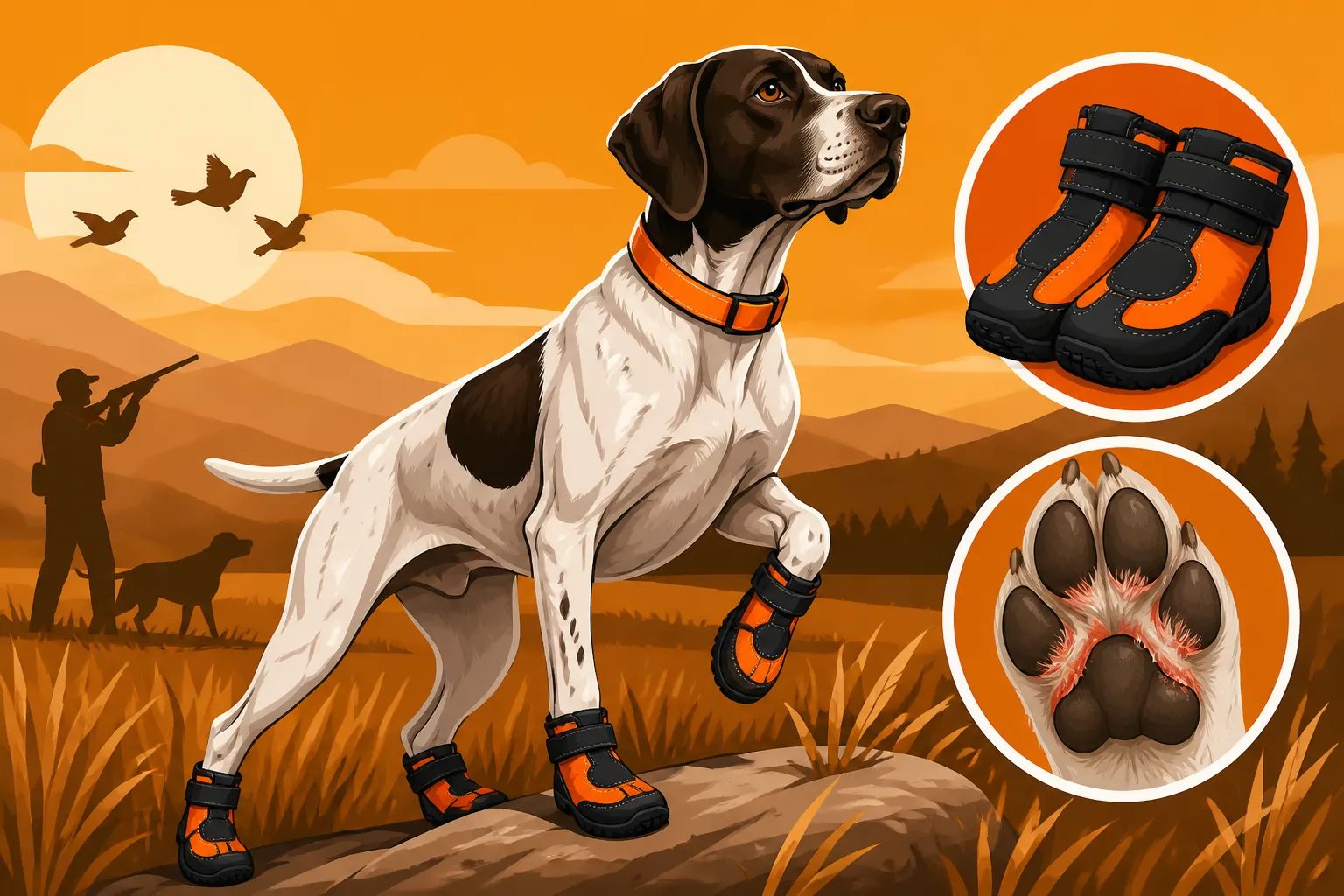
The most obvious, and perhaps most critical, benefit of bird dog boots and cut pads is injury prevention. These protective coverings create a physical barrier between your dog's sensitive paw pads and the brutal terrain. Imagine a thick layer of rubber or durable fabric shielding against those biting briars, jagged rocks, and sharp remnants of old fence wire. A simple boot can turn a potential trip to the emergency vet into a non-event.
Consider the common scenarios: a deep cut requiring stitches, a puncture wound leading to infection, or severe abrasions that make walking excruciating. These aren't just minor inconveniences. They are incredibly painful for your dog, often necessitate expensive veterinary care, including antibiotics, pain medication, and follow-up visits, and can sideline your dog for weeks or even months. Losing your hunting partner mid-season, especially after all the time spent getting them ready for Tennessee Deer Camp Traditions or a spring turkey hunt, is frustrating and disheartening. By investing in quality paw protection, you're not just buying a piece of gear; you're buying peace of mind, saving money on potential vet bills, and most importantly, preventing your dog from experiencing unnecessary pain.
Extending Your Dog's Hunting Career and Comfort
Just like an athlete needs proper footwear to protect their feet and extend their career, a bird dog benefits immensely from paw protection. Consistent exposure to rough terrain, briars, and temperature extremes causes cumulative wear and tear on a dog's paws. Over time, this can lead to chronically tender pads, arthritis in the paw joints, and a general reluctance to hunt as enthusiastically.
By using boots or cut pads, you are actively reducing the daily abuse those paws endure. This means less cracking, less callousing, and fewer repetitive stress injuries. A dog whose paws feel good is a dog that's eager to hit the field, cover more ground, and maintain that drive for many more seasons. Think about a veteran retriever at Reelfoot Lake Waterfowl Access or a seasoned pointer working hard on a dove field; their longevity in the field is often directly tied to how well their paws have been cared for over the years. Paw protection contributes to their overall well-being, keeping them comfortable and allowing them to enjoy what they love for a much longer time.
Enhancing Performance and Focus in the Field
A dog that's distracted by pain or discomfort is not a dog performing at its best. Imagine trying to concentrate on the hunt when every step sends a jolt of pain through your foot. That's what an unprotected dog might experience after an hour or two in tough cover. A dog with sore paws will inevitably slow down, become hesitant, or start exhibiting abnormal gait. This isn't just a comfort issue; it directly impacts their ability to find game, hold points, or retrieve effectively.
When your dog's paws are protected and comfortable, their focus can remain entirely on the task at hand. They can run harder, range farther, and maintain their stamina throughout the day. This enhanced comfort translates into better performance, more successful hunts, and a more enjoyable experience for both of you. For instance, when you're trying to work a bird in heavy cover, you need your dog to be completely tuned in, not constantly stopping to lick a tender paw. Good paw protection lets them put all their energy into the hunt, making them a more reliable and effective partner.
Choosing the Right Protection for Your Canine Companion
Navigating the world of bird dog boots and cut pads can feel a bit overwhelming, with so many options available. However, understanding the different types, materials, and the critical importance of a proper fit will guide you to the best choice for your dog and your hunting style.
Understanding Different Types of Boots and Materials
Bird dog boots come in a wide array of designs and materials, each suited for different conditions and levels of protection. For general use in moderate terrain, you might find boots made of durable Cordura fabric or heavy-duty canvas, often with a rubberized or synthetic leather sole. These are typically lightweight and offer good flexibility, making them a popular choice for all-around upland hunting or training where briars are present but extreme rocky conditions are less common.
For more aggressive terrain, such as the sharp rocks and thick thorns you might encounter when Hunting Bear Zone One in Northeast Tennessee with hounds, you'll want something much more robust. Look for boots with heavy-duty rubber soles, similar to what you'd find on hiking boots, and uppers made from tough materials like ballistic nylon or even genuine leather. Some advanced boots even feature specialized coatings or layers for added puncture resistance. Remember that while a thicker sole provides more protection, it can also reduce some of your dog's ground feel, so it's a balance.
Many hunters swear by brands that specialize in outdoor dog gear, like GoHunt (though specific product details vary, so always check their current offerings). They, and others, often provide a range from lightweight, breathable options for warmer weather to more insulated, waterproof designs for colder, wetter conditions. Always consider the primary type of terrain you hunt most often and the kind of protection your dog will need to thrive there.
The Importance of Proper Sizing and Fit
This cannot be stressed enough: a boot is only as good as its fit. An ill-fitting boot is worse than no boot at all, as it can cause rubbing, chafing, blisters, and even lead to your dog losing a boot in critical moments. Just like you wouldn't hike in boots that are too big or too small, your dog needs boots that are snug but not tight, providing protection without restricting natural movement.
To get the right size, you'll need to measure your dog's paw. Typically, this involves placing their paw on a piece of paper, having them put weight on it (to splay the paw naturally), and then tracing the outline. Measure the widest part of the paw. Most boot manufacturers provide detailed sizing charts based on width, and sometimes length. When trying them on, ensure there's enough room for the paw to spread when weight is applied, but not so much that the boot twists or slides around. Look for secure fastening systems—velcro straps, buckles, or a combination—that hold the boot firmly in place without cutting off circulation. It's often helpful to try different brands as sizing can vary, and what fits one dog perfectly might not fit another, even if their paw measurements are similar.
Cut Pads: An Alternative or Supplement to Boots
While boots offer comprehensive protection, they aren't always the right choice for every dog or every hunting scenario. This is where cut pads, also known as paw wraps or "vet wrap," come into play. Cut pads are essentially protective bandages, often self-adhesive, that you wrap around your dog's paw. They don't have a rigid sole like a boot but offer a flexible, breathable layer against briars, abrasions, and minor cuts.
One of the main advantages of cut pads is that they offer a more natural feel for the dog, maintaining their tactile connection with the ground, which can be crucial for dogs that need precise footing, like those working on very steep or uneven terrain. They are also often preferred for situations where a full boot might hinder certain movements, or for dogs who simply refuse to tolerate boots despite all training efforts. You might see them used more for a quick hunt in mild cover, or as a supplement to boots if you need extra protection for the lower leg while still keeping the paw itself more flexible. Some hunters will use cut pads to cover a pre-existing minor injury to protect it from further irritation while allowing it to heal, or to prevent mud and debris from entering a small wound. They are also an excellent emergency item to have in your First Aid Kits for Remote Cherokee Forest Ground for unexpected paw injuries.
| Feature | Bird Dog Boots | Cut Pads (Paw Wraps) |
|---|---|---|
| Primary Use | All-around protection, severe terrain, temperature | Flexible protection, minor abrasions, existing wounds |
| Material | Cordura, ballistic nylon, rubber, leather | Self-adhesive wrap, flexible fabric |
| Protection Level | High (puncture, abrasion, temperature) | Medium (abrasion, minor cuts, debris) |
| Durability | High (reusable, long-lasting) | Low (single-use or limited re-use, prone to wear) |
| Ground Feel | Reduced | High (more natural) |
| Ease of Use | Requires fitting, can be challenging to apply | Easier to apply, but consistent wrapping needed |
| Cost | Higher upfront, lower long-term | Lower upfront, higher long-term if used regularly |
| Ideal For | Boots for Walking Tennessee Ridges, extreme conditions | Light cover, supplemental protection, emergency |
Getting Your Dog Used to Wearing Paw Protection
Just like a child doesn't instantly love wearing new shoes, your dog won't instantly love wearing boots or cut pads. It takes patience, consistency, and a whole lot of positive reinforcement. Trying to force them on just before a hunt is a recipe for frustration for both of you. The key is to start early and make it a positive experience, slowly integrating the paw protection into their routine.
Starting Early and Making It Positive
The golden rule for any new dog gear, especially something as potentially alien as boots, is to introduce it gradually and make it a highly rewarding experience. Begin this process weeks, if not months, before hunting season. Start by simply showing your dog the boots, letting them sniff them, and giving them treats and praise. Then, gently try putting one boot on for just a few seconds, immediately removing it and offering a high-value treat. Repeat this a few times a day, slowly extending the duration.
The goal is to associate the boots with good things—treats, affection, and fun. Never use the boots as a form of punishment or in a negative context. Just like with E-Collar Use on Public Ground, positive reinforcement and patience are your best tools. Some dogs will "prance" or act like their feet are glued to the floor initially; this is normal. Stay calm, give praise, and keep the sessions short. The more relaxed and positive you are, the quicker your dog will accept the new gear.
Gradual Introduction and Supervised Wear
Once your dog tolerates a single boot for a short period, gradually introduce more boots, working up to all four. Keep these initial sessions very brief, perhaps just five to ten minutes, indoors. Once they seem comfortable wearing all four around the house, move to the yard. Let them walk around, play a bit, and get used to the feel on different surfaces. Supervise them closely during this phase to ensure the boots are fitting correctly and not causing any chafing or rubbing.
Next, incorporate the boots into short walks or training sessions in areas with minimal cover. This will help them adjust to the sensation of running and turning while wearing the boots. Observe their gait and comfort level. If a boot is causing problems, take it off, adjust, or reconsider the size. Consistency is crucial here; regular, short positive sessions are far more effective than infrequent, long, and frustrating ones. The more they wear them in non-hunting scenarios, the less of a novelty they will be when it's time for the real deal. When you're Scouting Tennessee Public Land Before Season, that's a perfect time to take your dog along with their boots on to get them accustomed to the actual hunting terrain.
Maintenance and Post-Hunt Paw Care
Even with the best boots, proper maintenance and post-hunt care are essential. After each use, inspect the boots for any damage—tears, worn soles, or loose stitching. Clean them according to the manufacturer's instructions, especially if they've been through mud, water, or dense cover. Dirty or damaged boots can harbor bacteria or lose their protective qualities. Regularly cleaning them will extend their lifespan and ensure they're ready for the next hunt.
Equally important is inspecting your dog's paws immediately after removing the boots. Even with proper fit, occasionally a small burr, a bit of grit, or a piece of debris can work its way inside the boot, or a strap might have rubbed a hot spot. Check between the pads for any foreign objects, redness, or tenderness. Clean their paws gently with water and dry them thoroughly. Applying a soothing paw balm can help keep the pads conditioned and prevent cracking, especially during prolonged use. This diligent post-hunt routine ensures that any minor issues are caught early before they develop into serious problems, keeping your dog healthy and ready for the next adventure.
Disclaimer
This article is for general informational purposes only and does not constitute professional advice. Laws, prices and regulations vary by location and change over time. Consult a qualified professional for guidance on your specific situation.