Wool Versus Synthetics in Wet Cold
We’ve all been there: out in the Tennessee woods, the air crisp and cold, maybe a light mist or even freezing rain starting to fall, and suddenly, that initial warmth you felt begins to seep away. You start to shiver, your clothes feel clammy, and the thought of staying still for another hour to wait for that buck becomes a torturous exercise in misery. Staying warm and dry in Tennessee's unpredictable wet and cold weather isn't just about comfort; it's about staying focused, effective, and safe in the field, and a big part of that comes down to what you wear. This guide is going to dive deep into the age-old debate of wool versus synthetics, helping you understand their strengths, weaknesses, and how to best utilize them to beat the Tennessee chill.
The Tennessee Weather Challenge: Why Layering Matters
Hunting in Tennessee, especially during the late fall and winter months, means you're almost guaranteed to face a grab-bag of weather conditions. One day it might be crisp and sunny, the next a bone-chilling drizzle, and the day after that, perhaps a quick freeze. This variability is why having the right gear, particularly when it comes to the fabrics closest to your skin and the insulation keeping you warm, is absolutely non-negotiable.
The Reality of Tennessee's Wet Cold
Forget those dry, arctic cold snaps you might hear about out west. Tennessee cold often comes with a generous side of dampness. Whether it's a persistent fog clinging to the Cumberland Plateau ridges, a morning dew soaking your gear in a West Tennessee bottom, or a surprise afternoon shower turning into sleet, moisture is often the biggest culprit when it comes to feeling cold. When your clothing gets wet, it loses its insulating properties because water conducts heat away from your body much faster than air. This "wet cold" can penetrate deep, chilling you to the bone in a way that dry cold simply can't. It's not just about the external moisture either; our own sweat, generated during a strenuous hike up a hollow or dragging a deer out, can have the same chilling effect if not managed properly. This is a battle fought both externally and internally.
The Crucial Role of Base, Mid, and Outer Layers
This is where the magic of a well-thought-out layering system comes into play. It’s not just about throwing on a bunch of clothes; it's about strategic choices that work together to manage heat, wick moisture, and protect you from the elements.
- The Base Layer: This is your first line of defense, right against your skin. Its primary job is to wick sweat away from your body. If sweat stays on your skin, it cools rapidly and chills you. A good base layer moves that moisture to the next layer, keeping your skin dry and your core temperature stable. This is where the debate between wool and synthetics truly begins.
- The Mid Layer: This is your insulation powerhouse. It traps warm air close to your body, providing the bulk of your warmth. Depending on the conditions, you might wear one thick mid-layer or several thinner ones. The ability of this layer to maintain warmth even when slightly damp is paramount in a wet-cold environment.
- The Outer Layer: Your shield against the storm. This layer needs to be windproof and waterproof (or at least highly water-resistant) to keep external moisture and biting winds from penetrating your inner layers. While it's important to keep the elements out, it also needs to be breathable enough to allow internal moisture (sweat vapor) to escape, preventing you from getting clammy from the inside out. Thinking through your full system, from Base Layers for a Tennessee November all the way to your Rain Gear for a Tennessee Downpour, is critical.
Wool: Nature's Original High-Performance Fiber
Long before synthetic fibers were dreamed up in a lab, hunters and outdoors enthusiasts relied on wool. And for good reason! It’s a natural fiber with some truly remarkable properties that make it a perennial favorite, especially when faced with the kind of damp, chilly conditions we often see when Hunting the Late-Season January Lull.
Merino Wool's Unique Properties
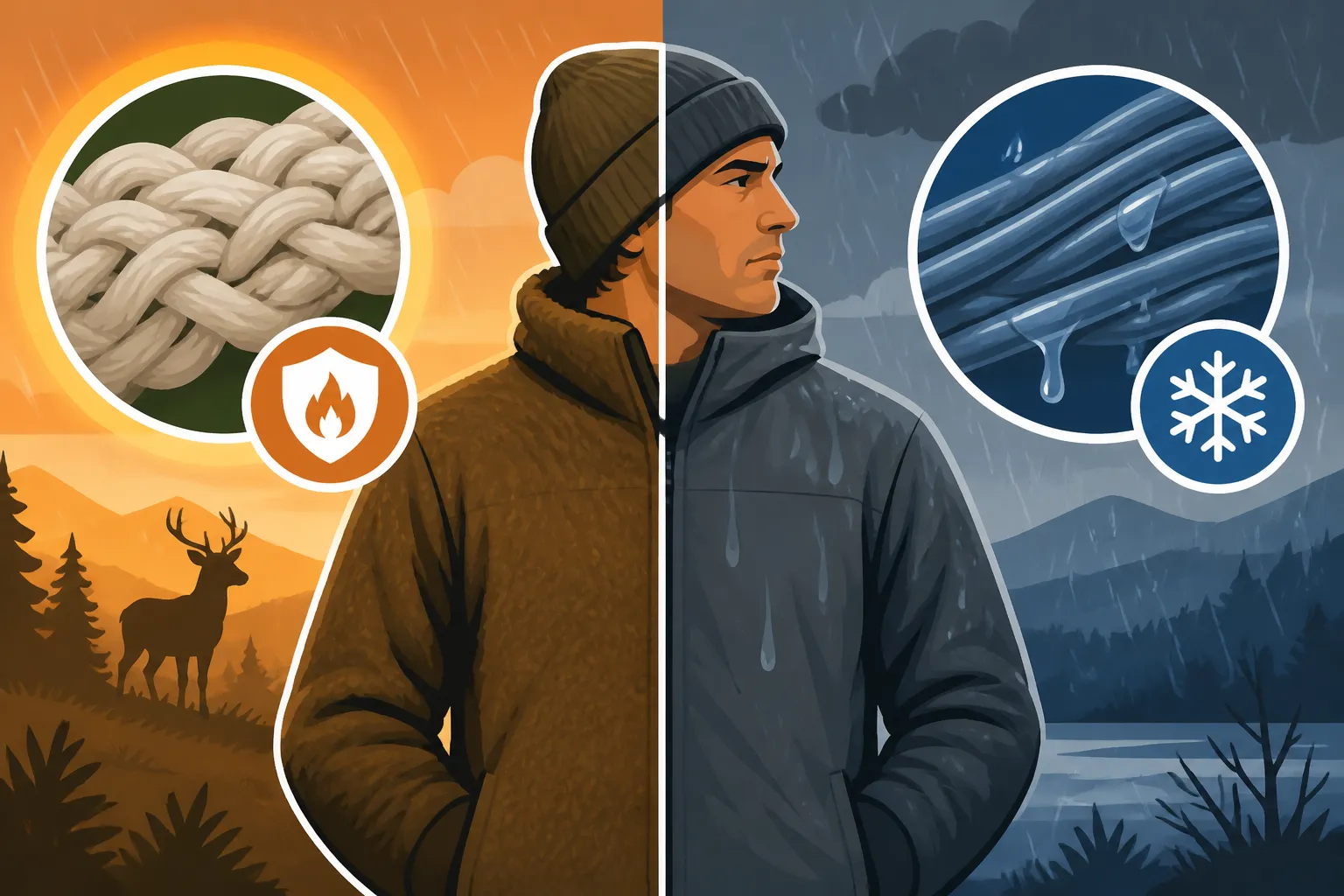
When most hunters talk about wool today, they're often referring to merino wool, and for good reason. It's a game-changer compared to the scratchy, heavy wool of yesteryear. Merino fibers are incredibly fine, making them soft against the skin, virtually itch-free, and much lighter than traditional wool. But its real superpower in a wet-cold environment is its ability to retain warmth even when wet. Unlike many materials that completely lose their insulating value once saturated, wool fibers are hydroscopic. This means they can absorb a significant amount of moisture (up to 30% of their weight!) into their core structure without feeling damp to the touch, and crucially, they continue to generate heat through a chemical process called "heat of sorption." This makes it an absolute hero on a damp, foggy morning when other materials would leave you shivering.
Beyond warmth, merino wool is also a champion of odor control. Its complex fiber structure and natural lanolin content inhibit the growth of odor-causing bacteria. This is a huge benefit for multi-day hunts where laundry facilities are a distant dream, or for those long, quiet sits in a deer stand where any strong human scent can blow your chances. You can wear merino base layers for days, or even a week, and they'll still smell relatively fresh, a major advantage over synthetics for stealthy hunters. The breathability of merino also helps regulate body temperature, keeping you from overheating during a strenuous hike and then cooling down too quickly once you stop moving.
The Downsides and Care of Wool
While wool sounds like a miracle fiber, it does have its drawbacks. One of the biggest factors for many hunters is the cost. High-quality merino wool can be significantly more expensive than comparable synthetic options, especially when you're looking at multiple layers. This initial investment can be a hurdle, though many argue the durability and performance make it worthwhile in the long run.
Another consideration is its drying time. While wool continues to insulate when wet, it does take longer to dry out completely compared to many synthetics. If you get truly soaked, say from falling in a creek or getting caught in an hour-long downpour, your wool layers will feel heavy and will hold that moisture for a while. This isn't ideal if you need to dry your gear quickly between hunting days. You also have to be mindful of how you wash wool. It's prone to shrinking if exposed to high heat in a washer or dryer, so careful cold-water washing and air-drying are usually recommended. For hunters who aren't always diligent with their gear care, this can be a minor inconvenience. Finally, while generally durable, wool can be susceptible to abrasion in high-wear areas, especially if it’s a thinner weave, and it can be a tasty snack for moths if not stored properly.
Synthetics: Modern Marvels of Insulation
In the mid-20th century, scientists began developing synthetic fibers that would revolutionize outdoor clothing. Designed to mimic and even surpass natural fibers in certain aspects, synthetics have become a staple in every hunter's wardrobe, offering different benefits for tackling Tennessee's varied conditions.
The Science Behind Synthetic Materials
Modern synthetic materials like polyester fleeces, proprietary insulating fills (think brands like Primaloft or Thinsulate), and advanced polyester blends are engineered for performance. Unlike wool, which relies on its natural crimp and structure, synthetics are often designed with specific fiber shapes and constructions to create pockets of air that trap warmth. Polyester, a common base for many synthetic layers, is hydrophobic, meaning it actively repels water. This is a huge advantage for rapid drying. When a synthetic layer gets wet, the moisture tends to sit on the surface or between the fibers, rather than being absorbed into the core. This allows it to shed water quickly and dry much faster than wool.
The breathability of synthetics can also be excellent, especially in well-designed fabrics that allow sweat vapor to escape while still providing warmth. Many synthetic mid-layers are incredibly lightweight for the amount of warmth they provide, making them a great choice for hunters who prioritize packability and minimal bulk for long hikes to a remote treestand. For instance, a quality synthetic puffer jacket can compress down to almost nothing in your pack, ready to deploy once you stop moving. This makes synthetics particularly versatile, whether you're climbing up a steep ridge or sitting for hours on a cold morning.
Advantages and Disadvantages of Synthetics
The main advantages of synthetics really shine in specific conditions. Their quick-drying nature is paramount if you anticipate getting soaked or need your gear to be ready for the next day after a wash or a sudden downpour. They are generally more affordable than comparable merino wool, allowing hunters to build a comprehensive layering system without breaking the bank. Synthetics also tend to be highly durable and resistant to abrasion, making them a good choice for outer layers or garments that will see a lot of abuse in thick brush. They maintain their shape well and are easy to care for, often requiring nothing more than a standard wash and dry cycle, which is a major convenience after a long, muddy day of Tracking a Deer Through Tennessee Leaf Litter.
However, synthetics aren't without their drawbacks. The biggest complaint often revolves around odor retention. While many modern synthetics incorporate antimicrobial treatments to combat this, they still tend to hold onto body odor much more readily than wool. After a few days in the field, especially with strenuous activity, synthetic base layers can become quite pungent. This is a significant concern for hunters relying on scent control. Furthermore, while they dry quickly, most synthetics lose a substantial amount of their insulating value once truly wet, potentially leaving you much colder than wool would in similar conditions. They can also feel clammy against the skin if you sweat profusely and the fabric isn't designed for optimal wicking, leading to that uncomfortable chilled feeling.
Performance Comparison: Head-to-Head in the Field
When it comes down to making a choice, it's not simply a matter of "good" or "bad." Both wool and synthetics excel in different areas, and understanding these nuances will help you build the best system for your specific hunting style and the conditions you expect to face in Tennessee.
Warmth-to-Weight Ratio and Packability
This metric is vital for hunters who cover a lot of ground or need to carry their gear into remote spots. Traditionally, synthetics have held the edge here, particularly with advanced insulation like Primaloft, which offers incredible warmth for minimal weight and compresses exceptionally well. You can often get more warmth from a lighter synthetic puffy jacket than an equivalent wool piece, and it will pack down smaller into your hunting pack. This is a huge plus when you're hiking into the Cherokee National Forest or trying to keep your load light for a full day of still-hunting.
Wool, especially merino, has made significant strides in this department, with ultra-fine weaves and blended fabrics that offer impressive warmth without excessive bulk. However, pure wool layers generally won't compress quite as small as their synthetic counterparts, and for the same warmth, they might be slightly heavier. If you're comparing a heavy wool mid-layer to a synthetic puffy, the synthetic will almost always win on packability. For hunters needing to optimize every ounce and cubic inch in their pack, especially for long sits or when carrying gear for Cold-Weather Sitting Strategy in Tennessee, synthetics often have a slight advantage in the mid and outer insulation layers.
Moisture Management and Drying Speed
This is arguably the most critical difference for Tennessee's wet-cold environment. As we discussed, wool's standout feature is its ability to insulate even when damp. If you're dealing with light rain, mist, or internal sweat that doesn't fully saturate your layers, wool will keep you warmer. It pulls moisture into the fiber's core, keeping the surface dry and continuing to generate heat. This makes it a fantastic choice for base layers, where consistent next-to-skin warmth is paramount.
Synthetics, by contrast, are fantastic at moving moisture away from the body and drying quickly. They don't absorb water; instead, they wick it along their fibers to the surface where it can evaporate. If you get completely drenched, a synthetic layer will dry out much faster than wool, which can be a lifesaver if you need to dry your clothes by a campfire (carefully!) or overnight. However, if a synthetic layer does get saturated, its insulating properties drop off dramatically, potentially leaving you colder than wool would. This is a key trade-off: wool insulates better when damp, while synthetics dry faster when truly wet.
| Feature | Merino Wool | Synthetics (e.g., Polyester, Fleece) |
|---|---|---|
| Warmth When Wet | Excellent (insulates well even when damp) | Poor (insulating value drops significantly when wet) |
| Drying Time | Slower | Faster |
| Odor Control | Excellent (naturally resists bacteria) | Good to Fair (often requires antimicrobial treatment) |
| Softness | Excellent (fine fibers, non-itchy) | Varies (can be soft, but some feel "plasticky") |
| Durability | Good (can be prone to abrasion in thin weaves) | Excellent (highly resistant to wear and tear) |
| Cost | Higher | Lower to Moderate |
| Noise | Very Quiet (soft, natural drape) | Varies (some can be noisy, but many are quiet) |
| Weight/Bulk | Moderate (good, but can be slightly heavier) | Excellent (very lightweight for warmth, highly compressible) |
Odor Control and Durability
For hunters, scent control is paramount. Wool, specifically merino, has a clear advantage here. Its natural properties make it highly resistant to odor-causing bacteria, meaning you can wear it for extended periods in the field without your scent becoming a major giveaway. This is incredibly valuable, especially during the rut when bucks are hypersensitive to foreign odors. If you use a system like GoHunt to scout your areas, you'll know exactly how critical scent control is in those high-traffic zones.
Synthetics, while constantly improving with advanced treatments, generally cannot match wool's inherent odor resistance. After a few hard days, synthetic base layers will often retain a noticeable smell, even with washes. This means you might need to carry more changes of clothes or accept a higher scent profile if you opt for all-synthetic base layers.
In terms of durability, synthetics typically win the long game against abrasion and tearing. Their fibers are engineered for toughness, making them ideal for bushwhacking through thick briars or scrambling over rocky terrain. While merino wool is durable, especially in thicker weaves, finer garments can be more susceptible to snags and holes. However, advancements in wool technology, including blends and reinforced zones, are constantly closing this gap. For a serious hunter who expects their gear to endure season after season of abuse, the robust nature of synthetics in outer layers is a strong selling point.
Making the Right Choice for Your Tennessee Hunt
So, after all that, which is better: wool or synthetics? The truth is, there's no single "best" answer. The ideal choice depends entirely on your specific hunting style, the conditions you anticipate, and your personal preferences. Many experienced Tennessee hunters, myself included, find that a hybrid approach offers the most effective solution.
Tailoring Your System to the Specific Hunt and Season
Consider the specific demands of your hunt. Are you planning a rigorous Run-and-Gun Turkey Tactics on Public Land where you'll be constantly moving, sweating, and potentially encountering unpredictable spring showers? In this scenario, fast-drying, lightweight synthetics might be a better choice for your base and mid-layers, as they'll wick sweat rapidly and dry quickly if you get caught in a pop-up storm. The high activity level means you're generating a lot of body heat, so rapid moisture management is key.
Conversely, if you're settling in for a long, cold sit in a Treestand Setups in Cherokee National Forest during late muzzleloader season, where temperatures are hovering near freezing and moisture could come in the form of freezing fog or light sleet, wool's ability to retain warmth when damp could be a lifesaver. Your activity level is low, so maintaining core temperature without relying solely on external heat sources is paramount. For example, my personal GoHunt gear list for late-season deer always includes a merino base. If you're scouting Finding Sign in Big Cherokee Forest Timber, where you might hike hard, then sit to glass, then hike again, you'll need versatility.
The Hybrid Approach: Best of Both Worlds
For many, the ultimate solution is to strategically combine wool and synthetics to leverage the strengths of each. This often looks like a merino wool base layer for its superior odor control and ability to keep you warm even with a bit of sweat. Then, for mid-layers, you might opt for a lightweight synthetic fleece for its warmth-to-weight ratio and quick-drying properties, or a synthetic puffy jacket for packable insulation. Finally, your outer shell would be a waterproof and windproof synthetic fabric to provide ultimate protection from the elements.
This hybrid system allows you to manage sweat and scent effectively with wool closest to your skin, provide versatile and packable insulation with synthetics, and maintain a robust barrier against wind and rain with a durable outer shell. It's about building a system that allows your body to regulate its temperature efficiently, regardless of whether you're climbing up Reading a Ridge for East Tennessee Deer or sitting motionless in a frosty field edge. This kind of thoughtful gear selection is a hallmark of truly prepared hunters.
Don't Forget the Accessories: Headwear, Gloves, and Socks
While we often focus on the core layers, don't underestimate the importance of your accessories. Your extremities are often the first to get cold, and they can significantly impact your overall comfort and ability to stay in the field.
- Socks: This is a classic battleground for wool versus synthetics. Many hunters swear by merino wool socks for their cushioning, warmth (even when damp), and odor resistance. They can keep your feet surprisingly warm even if your boots get a little wet from slush or heavy dew. However, some synthetics offer superior wicking for incredibly sweaty feet, and they'll definitely dry faster if they get soaked. Again, a blend or a strategic choice based on expected conditions often works best. For long days on your feet, Boots for Tennessee Hollows and Creek Bottoms paired with quality socks are crucial.
- Gloves: Similar to socks, you want warmth, dexterity, and moisture management. Thin merino liner gloves can provide surprising warmth and maintain dexterity, while synthetic insulated gloves offer bulkier warmth and often better water resistance. Again, layering thin merino gloves under a waterproof synthetic shell glove is a popular and effective strategy for maximum versatility.
- Headwear: Your head is a major source of heat loss. A good wool or synthetic beanie can make a huge difference in overall warmth. Consider a balaclava in really bitter cold. The choice here often comes down to personal preference for feel and coverage.
No matter your choice, remember that the best system is the one that keeps you comfortable, focused, and effective in the field. Experiment, learn what works for your body and your hunting style, and don't be afraid to mix and match to find your perfect combination of wool and synthetics.
Disclaimer
This article is for general informational purposes only and does not constitute professional advice. Laws, prices and regulations vary by location and change over time. Consult a qualified professional for guidance on your specific situation.