Boots for Tennessee Hollows and Creek Bottoms
There's nothing quite like that feeling of a perfect morning in the Tennessee woods – crisp air, the promise of a big buck, or a gobbler sounding off. But that magic can disappear faster than a deer in thick cover if your feet aren't happy. Trudging through a muddy creek bottom or a soaked hollow with leaky boots is a special kind of misery, leaving you cold, wet, and often giving up on the hunt prematurely. This guide is all about helping you find the right footwear to tackle the unique, often damp, challenges of Tennessee's diverse hunting landscapes, ensuring your focus stays on the hunt, not on your soggy socks.
The Unique Challenges of Tennessee's Wet Terrain
Tennessee is a beautiful state, no doubt about it, with its rolling hills, vast forests, and winding waterways. But for hunters, all that beauty often translates into some serious wetness underfoot. It’s not just rain; it’s the constant presence of creeks, springs, boggy areas, and low-lying bottomlands that can turn a great hunting day into a miserable slog if you’re not prepared.
Navigating Mucky Creek Beds
Anyone who's spent time hunting the hollows and ravines of the Cumberland Plateau or the eastern mountains knows the pain of mucky creek beds. What might look like a dry gravel bar from a distance often turns into a boot-sucking quagmire once you step into it. These areas are notorious for their soft, silty bottoms where water slowly seeps, creating traps that can pull a poorly fitted boot right off your foot. It's not just about getting wet; it's about the effort expended to pull your foot free with every step, the risk of a twisted ankle on unseen submerged rocks, and the sheer noise you make as you struggle, sending every deer in the county scattering. The cold, wet mud seeping over the top of your boots can chill you to the bone, making long waits on stand unbearable.
The Slog of Flooded Bottomlands
Hunting in West Tennessee often means dealing with low-lying areas, river bottoms, and cypress swamps that can be completely inundated, especially during late season or after heavy rains. These aren't just puddles; we're talking about vast expanses of flooded timber and fields where the water might be ankle-deep, knee-deep, or even higher in places. Imagine trying to still-hunt for deer through standing water for hours, every step a splash, every submerged log a tripping hazard. If your boots aren't completely sealed and tall enough, that water will find its way in, leaving your feet not just wet but also chafed and blistered. These conditions demand more than just "waterproof"; they demand a truly submersible solution, otherwise, you'll be cutting your hunt short or facing some serious discomfort and potential foot issues. This is especially true if you're venturing into areas like the Hatchie Refuge for a deer quota hunt or chasing Hunting West Tennessee Bottomland Deer.
Dealing with Unexpected Stream Crossings
It happens to the best of us: you're following a promising game trail, a fresh scrape line, or a string of rubs, and suddenly you're faced with a wider-than-expected stream. Sometimes you can rock-hop, sometimes you can find a downed log, but often, especially in the rugged terrain of Cherokee National Forest or the deep hollers, you're forced to wade. If your boots can't handle a quick dip, you're faced with a tough choice: turn back and abandon the promising sign, or risk soaking your feet for the rest of the day. These aren't always major rivers; sometimes it's just a small spring-fed branch that's deeper than it looks after a night of rain. A solid pair of boots means you can commit to the hunt without hesitation, knowing a little water won't derail your plans.
Understanding Boot Types for Tennessee Hunters
When you start looking at hunting boots, it can feel overwhelming with all the different styles and materials out there. But for Tennessee's varied and often wet terrain, it really boils down to a few main categories, each with its own strengths and weaknesses. Choosing the right type isn't just about comfort; it's about matching your gear to the specific conditions you expect to face.
Rubber Boots: The Waterproof Workhorses
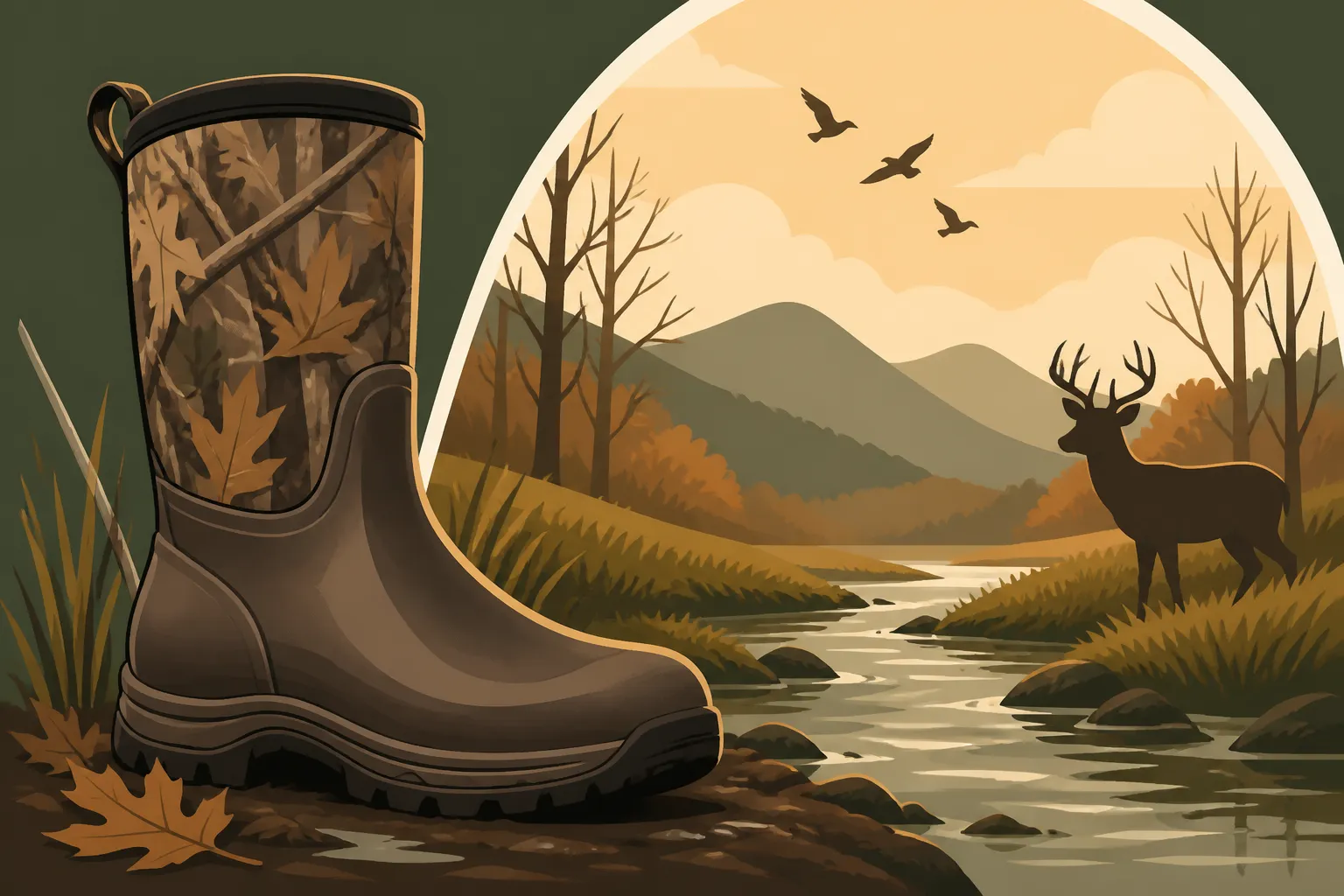
For sheer waterproof capability in consistently wet environments, nothing beats a good pair of rubber boots. These are the undisputed champions for places like flooded timber, muddy creek bottoms, or when Waterfowl Hunting Reelfoot Lake and Beyond. Modern rubber boots have come a long way from the clunky, uncomfortable versions of old. Many now feature neoprene insulation, which provides surprising warmth even when submerged, and they offer a much more athletic fit. The key advantage here is the seamless, impermeable barrier they create against water. No stitching to leak, no membranes to fail – just solid rubber (or a similar synthetic polymer) keeping the wet out. They are also fantastic for scent control, as rubber doesn't absorb human odors like fabric or leather, giving you an edge when stalking wary whitetails. The downside? They can be less breathable than other options, leading to sweaty feet in warmer weather if not properly ventilated or if you choose too much insulation. They also might not offer the same ankle support for extremely rugged, uneven terrain, but for pure wet protection, they are hard to beat.
Leather/Synthetic Hiking Boots: When Durability Matters
For hunters who spend more time on dry ridges, rocky inclines, or uneven terrain where ankle support and durability are paramount, traditional leather or high-quality synthetic hiking boots are often the preferred choice. Think of tackling the steep slopes of the Cumberland Plateau or navigating the rocky trails of the eastern mountains. These boots typically offer superior ankle support, crucial for preventing twists and sprains when carrying a heavy pack or tracking a deer across uneven ground. They often incorporate advanced waterproofing membranes like Gore-Tex or similar technologies to keep moisture out while still allowing your feet to breathe, reducing sweat buildup. While excellent for general hiking and moderate wetness, their stitched construction means they might eventually leak if repeatedly submerged in standing water, and mud can get trapped in the seams. However, for hunters covering miles over varied upland terrain, their comfort, support, and long-term durability often make them the go-to. If you're focusing on Hunting the Cumberland Plateau Ridgelines or similar areas, these might be your best bet.
Hybrid Options: Blending the Best of Both Worlds
In recent years, boot manufacturers have gotten smart, recognizing that many hunters face a mix of conditions. This has led to the rise of hybrid boots, which try to combine the best attributes of rubber and traditional hiking boots. You might find boots with a waterproof rubber lower section that extends well above the ankle, providing solid waterproof protection in shallow standing water and mud, combined with a more breathable, supportive upper made from leather or synthetic materials. Other hybrids might feature a full leather or synthetic upper with an extremely robust waterproof membrane and a taller shaft, offering more submersion protection than a standard hiking boot but retaining the flexibility and support of a traditional design. These boots are fantastic for areas where you anticipate some wetness but also need good ankle support for varied terrain, making them a versatile choice for many Tennessee hunts. They aim to strike a balance, offering more protection than a typical hiking boot without the bulk or lack of breathability that can sometimes plague full rubber options.
| Boot Type | Best For | Pros | Cons |
|---|---|---|---|
| Rubber Boots | Flooded timber, muddy creek bottoms, swamps | 100% waterproof, excellent scent control, often insulated | Less breathable, can be bulky, less ankle support on rough terrain |
| Leather/Synthetic Hiking Boots | Dry ridges, rocky terrain, moderate wetness | Superior ankle support, breathable, durable, comfortable for miles | May leak if submerged for long periods, can be heavy |
| Hybrid Boots | Mixed terrain with anticipated wetness | Combines waterproofing with support/breathability, versatile | Can be a compromise, might not excel in extreme conditions |
Key Features to Look for in Hunting Boots
Beyond just the basic type of boot, there are specific features that can make or break your hunting experience in Tennessee. Ignoring these details can lead to cold feet, blisters, or even a dangerous slip, so paying close attention to the construction and materials is crucial.
Waterproofing Technologies That Actually Work
When a boot says "waterproof," what does that actually mean? For serious Tennessee hunting, you need more than just a water-resistant coating. True waterproofing usually involves a membrane, often a proprietary material like Gore-Tex, eVent, or a manufacturer's own branded equivalent. This membrane is a thin layer sandwiched between the boot's outer material and the inner lining. It has microscopic pores small enough to block liquid water molecules from entering, but large enough to allow water vapor (sweat) to escape, which is what helps keep your feet dry from the inside out.
However, even the best membranes can fail if the boot isn't constructed properly. Look for boots with minimal seams, as every seam is a potential point of failure. Seams should be taped or sealed to prevent leakage. For rubber boots, the inherent seamless design is their biggest advantage. When considering leather or synthetic boots, pay attention to the height of the waterproof membrane; often, it only extends a certain distance up the shaft, meaning if you step into water deeper than that, you're going to get wet. Always check the specific boot's waterproof rating and construction. It's an investment, and a leaky "waterproof" boot is simply an expensive pair of regular boots in the field.
Traction and Outsole Design for Slippery Surfaces
Tennessee's hunting terrain can be incredibly varied, from slick, muddy creek beds to moss-covered rocks, wet leaves, and frozen ground. The outsole – the bottom of your boot – is your primary point of contact and needs to provide reliable grip across all these surfaces. Look for aggressive lug patterns with deep, widely spaced lugs that can shed mud easily. Packed mud can turn even the best-looking tread into a slick surface. Multi-directional lugs, which grip in different directions, are also beneficial for navigating uneven slopes.
Additionally, consider the compound of the rubber itself. Softer rubber compounds tend to offer better grip on wet and rocky surfaces, but they may wear down faster. Harder compounds are more durable but can be less grippy. Many quality hunting boots use a blend to optimize both. Don't overlook the heel design either; a pronounced heel can provide crucial braking power when descending steep, slippery hills. When you're Tracking a Deer Through Tennessee Leaf Litter or making your way down a steep hollow after dark, reliable traction isn't just a comfort feature; it's a safety necessity. Many hunters consult resources like GoHunt to research specific boot models and read reviews on their outsole performance in real-world conditions.
Insulation Levels for Varying Seasons
Tennessee's hunting seasons span a wide range of temperatures, from warm and humid August archery hunts to frigid January muzzleloader weeks. Your boot's insulation level should match the expected conditions. Insulation is typically measured in grams (e.g., 200g, 400g, 800g, 1000g, 1200g, 1600g).
- Uninsulated or Lightly Insulated (0-200g): Ideal for early archery season, spring turkey hunts, or high-activity hunts where you're moving a lot. These boots prioritize breathability and prevent overheating. You can always add warmth with thicker socks if needed.
- Moderate Insulation (400-800g): A versatile choice for most of Tennessee's deer season, covering early fall to late fall. This range offers a good balance of warmth without excessive bulk, suitable for active hunting in cooler temperatures or shorter sits in cold weather.
- Heavy Insulation (1000g+): Reserved for late-season gun hunts, especially when temperatures dip below freezing and you anticipate long, stationary sits in a treestand or ground blind. While warm, these boots can be bulky and make long walks uncomfortable if the weather warms up. For Cold-Weather Sitting Strategy in Tennessee, this level of insulation is crucial.
Remember that insulation works best when paired with good circulation and dry feet. Even heavily insulated boots won't keep you warm if your feet are wet from sweat or external moisture. Consider layering socks and always err on the side of slightly less insulation if you're an active hunter, as you can always add more with socks.
Fitting Your Boots for Comfort and Performance
The best boot in the world is useless if it doesn't fit properly. A poor fit can lead to blisters, pain, cold feet, and ultimately, a ruined hunt. Taking the time to get the right fit is arguably more important than any specific feature.
Sizing for Socks and Swelling
When you try on hunting boots, don't do it with thin dress socks. Always wear the type of socks you'll actually hunt in – usually a good quality wool or synthetic blend that's thicker than your everyday socks. Your feet also tend to swell slightly throughout the day and with activity. So, it's a good idea to try on boots in the afternoon or after you've been on your feet for a while, mimicking real-world conditions.
You should have enough room to comfortably wiggle your toes, but not so much that your foot slides around inside the boot. Your heel should lift minimally as you walk, certainly no more than a quarter to a half-inch. Too much heel slip will cause blisters. Pay attention to pressure points, especially across the top of your foot and around the widest part of your foot (the ball). If it feels tight in the store, it will be agony in the woods. Conversely, boots that are too loose can lead to chafing and instability. Don't be afraid to try on multiple sizes and brands. A proper fit ensures comfort and prevents injuries, letting you focus on the hunt, not your aching feet. This kind of attention to detail is often highlighted in gear reviews on platforms like GoHunt, where hunters share their experiences with specific boot models and their fit.
Lacing Techniques for Different Foot Types
It might seem simple, but how you lace your boots can significantly impact comfort and support, especially over long hours in the field. Different lacing techniques can address common fit issues:
- Standard Criss-Cross: This is the most common method and works well for most foot types, distributing pressure evenly.
- Window Lacing: If you experience pressure or pinching across the top of your foot (your instep), skip the laces over that particular eyelet or pair of eyelets. This creates a "window" of slack that can relieve pressure.
- Surgeon's Knot: To lock your heel in place and prevent slippage, particularly if you have narrow heels, tie a surgeon's knot (an extra loop in the knot) after the two or three lowest eyelets. This creates a secure section that you can then lace normally above, providing independent tension in different parts of the boot.
- Heel Lock Lacing: For even more heel security, once you reach the top set of eyelets, loop the lace around the shaft of the boot before bringing it back through the eyelet and tying it off. This pulls the boot snug around your ankle and heel.
Experiment with these techniques. A well-laced boot can transform an uncomfortable fit into a manageable one, and a comfortable one into an exceptional one, allowing for greater stability and endurance when you're navigating rough terrain or traversing a logging road.
Breaking In New Boots the Right Way
Few things are worse than hitting the woods on opening day with brand new, stiff boots. Even the most comfortable boots need a break-in period to conform to your feet and loosen up. Skipping this step is a surefire way to get blisters and regret your purchase.
Start by wearing your new boots around the house for a few hours. Then, move to short walks around your neighborhood or local park. Gradually increase the duration and intensity of these walks, wearing your usual hunting socks. Take them on some scouting trips or trail hikes. Pay attention to any hot spots that develop and address them immediately – adjusting lacing, adding moleskin, or simply giving your feet a rest. By the time hunting season rolls around, your boots should feel like a natural extension of your feet, flexible and comfortable. A good break-in period allows the materials to soften, the soles to become more flexible, and the boot to mold to your foot's unique shape. Don't try to rush it; patience now will save you a world of pain later.
Maintenance and Longevity of Your Hunting Boots
You've invested time and money into finding the perfect pair of boots for Tennessee's hunting challenges. Now, it's crucial to protect that investment with proper care. Good maintenance doesn't just make your boots last longer; it ensures they perform at their best when you need them most.
Cleaning and Drying After Every Hunt
This might seem obvious, but it's often overlooked in the excitement or exhaustion after a hunt. Mud, dirt, debris, and moisture are the enemies of boot longevity and performance. As soon as you get home, take a few minutes to clean your boots.
- Remove surface dirt: Use a stiff brush or old rag to knock off loose mud and dirt from the upper and outsole. A hose can be used for heavy mud, but avoid blasting water directly into the boot opening.
- Clean the outsole: Pay special attention to the lugs on the sole, making sure they're clear of caked-on mud and debris. This maintains traction for your next outing.
- Rinse if necessary: If your boots are very muddy, a gentle rinse with water is fine. For rubber boots, a quick wash-down is often all they need. For leather/synthetic, use a damp cloth.
- Proper drying: This is critical. Never dry your boots by direct heat (fire, heater vents, direct sunlight). This can stiffen and crack leather, melt synthetic materials, and destroy waterproof membranes. Instead, remove insoles (if removable) and open the boots up as wide as possible. Stuff them loosely with newspaper or paper towels to absorb internal moisture; change these periodically. Air dry in a cool, well-ventilated area. Boot dryers with gentle, forced air are an excellent investment, especially if your boots frequently get soaked or if you're on a multi-day hunt like chasing Hog Hunting Tennessee's Wild Boar.
Conditioning Materials to Prevent Cracking
Leather, in particular, needs conditioning to remain supple and prevent drying out and cracking. Even some synthetic boots can benefit from treatments. After cleaning and drying, apply a quality leather conditioner or boot treatment designed for your specific boot material.
- Leather boots: Use a conditioner (like a wax or oil-based product) to moisturize the leather. This prevents it from drying out, which can lead to cracks and compromise its water resistance. Apply according to the product's instructions, usually a thin layer rubbed in and allowed to absorb. Some products also enhance waterproofing.
- Rubber boots: While less prone to drying out than leather, rubber can still benefit from a silicone-based treatment to keep it flexible and prevent micro-cracks over time, especially if exposed to harsh UV rays. This also helps maintain their appearance and protects against ozone degradation.
- Waterproof membranes: Be mindful of products that can clog the pores of breathable membranes. Always choose treatments that are compatible with Gore-Tex or similar technologies to ensure they continue to function as intended. Regular care significantly extends the life and performance of your boots, ensuring they're ready for every long walk in the woods or every wade across a Tennessee River Bottom Funnel.
When It's Time for a Replacement
Even with the best care, hunting boots don't last forever. Knowing when to replace them can save you from a miserable hunt or, worse, an injury.
- Leaky waterproofing: This is the most common reason. If your feet are consistently getting wet even after proper cleaning and conditioning, and you can't identify a simple fix (like a loose seam that can be re-sealed), the waterproof membrane or integrity of the boot has likely failed.
- Worn-out outsoles: If the lugs are significantly worn down, especially in critical areas, your traction will be compromised. This increases the risk of slips and falls, particularly on Tennessee's steep, often slick terrain.
- Lack of support: If the boot feels "sloppy" or no longer provides adequate ankle and arch support, it's no longer protecting your feet and joints effectively. This is especially important for Boots for Walking Tennessee Ridges.
- Cracked or delaminated materials: If leather is deeply cracked and beyond conditioning, or if the rubber has started to crack or separate from other materials, the boot's structural integrity is compromised.
- Persistent discomfort: If, despite proper break-in and lacing, your boots consistently cause pain, hot spots, or blisters, they simply aren't the right fit for your feet or have worn out in a way that creates issues.
Don't wait until the middle of deer season to realize your boots are shot. Regularly inspect your boots, especially before the season starts, and be honest with yourself about their condition. Replacing them proactively is a wise investment in your comfort, safety, and hunting success. Tools like GoHunt's gear reviews can provide insights into the typical lifespan of various boot models and help you gauge when others have found it necessary to replace their footwear.
Specialized Considerations for Specific Tennessee Hunts
Tennessee's hunting calendar presents a diverse range of conditions, and while a good general-purpose boot is great, sometimes specific hunts call for particular considerations. Tailoring your footwear to the exact demands of the season and game can make a significant difference.
Early Season Archery in Humid Swamps
When Tennessee's Archery Season Opens in late August or early September, temperatures can still be quite warm, often accompanied by high humidity. If you're hunting bottomlands or near swamps, you're looking at a double whammy: heat and standing water. For these conditions, you need boots that are waterproof, yes, but also as breathable as possible to prevent your feet from sweating profusely.
Lightly insulated or uninsulated rubber boots are often an excellent choice here. They provide absolute protection against standing water and mud, which is common in early season low-lying areas, while their uninsulated nature helps prevent overheating. Pair them with moisture-wicking synthetic or merino wool socks to draw sweat away from your skin. You're trying to prevent blisters caused by wet, chafed skin, even if that wetness is from your own sweat. The scent control benefits of rubber are also a huge plus for early-season archery when deer are less pressured and more wary of human odor.
Late Season Gun Hunts in Freezing Creek Bottoms
Fast forward to late December or January, and the picture changes entirely. Now, you're looking at potentially freezing temperatures, snow, ice, and creek bottoms that might be slushy or have thin ice. For Tennessee's Gun Deer Season Into January, especially if you're sitting for extended periods, warmth becomes paramount, second only to waterproofing.
This is where heavily insulated rubber boots or insulated, tall leather/synthetic waterproof boots shine. Look for insulation ratings of 800 grams or more, especially if you're not moving much. The key is to keep your feet both dry and warm. Cold, wet feet are not just uncomfortable; they can lead to dangerous conditions like frostbite. Consider layering a thin liner sock under a thick wool sock for maximum warmth and moisture management. Make sure there's still enough room in your boots for these layers without constricting your circulation, as tight boots can actually make your feet colder. When you're posting up for a Deer Drives on Tennessee Public Land or just settling into a stand overlooking a frosted creek, your feet will thank you for the extra warmth.
Turkey Hunting Through Wet Spring Woods
Spring turkey season brings its own unique set of challenges. April and May in Tennessee can be a mix of warm, sunny days, and sudden, heavy downpours. The woods are often wet from spring rains, and you'll be doing a lot of walking, often through thick brush, up and down hills, and across soggy fields. Durability, support, and decent waterproofing are all important.
For turkey hunting, a high-quality, waterproof hiking boot (leather or synthetic) with moderate insulation (200-400g or uninsulated) is often a great choice. These boots provide the ankle support needed for long miles over uneven terrain, and their breathable membranes help manage sweat on warmer days. They can handle unexpected stream crossings and wet undergrowth without soaking your feet. While full rubber boots could work, their lack of breathability might be a hindrance on warm, active days, and the superior ankle support of a hiking boot is often preferred for the constant movement and varied terrain involved in Run-and-Gun Turkey Tactics on Public Land. The ability to move quietly and comfortably through the woods is key to getting on a gobbler, and the right boots play a crucial role.
Disclaimer
This article is for general informational purposes only and does not constitute professional advice. Laws, prices and regulations vary by location and change over time. Consult a qualified professional for guidance on your specific situation.