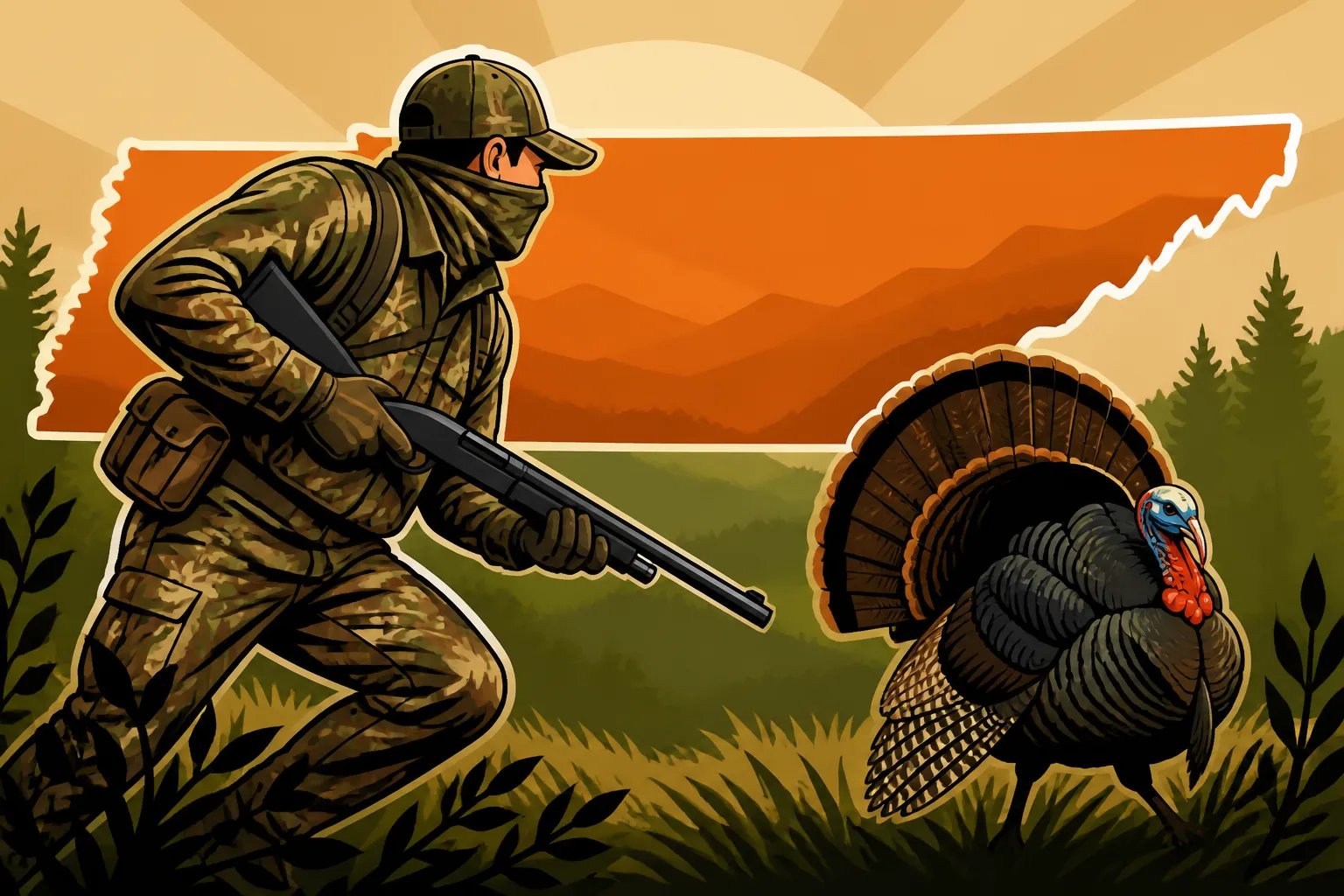
Run-and-Gun Turkey Tactics on Public Land
It's a familiar scenario for many Tennessee turkey hunters: you scout your public land spot, get set up well before dawn, listen intently, and… nothing. Or maybe a distant gobble, but it's way off in the next hollow, seemingly impossible to reach before he flies down and vanishes. This frustration of quiet mornings or birds that refuse to budge from a single spot, especially on pressured public land, is exactly what makes the "run-and-gun" approach not just an option, but often your best bet. This guide will dive deep into how to effectively employ these mobile tactics to find and engage those elusive Tennessee longbeards.
Why Embrace the Run-and-Gun for Tennessee Turkeys?
Sitting patiently for hours can be incredibly rewarding when a gobbler finally commits, but on public lands, especially after opening day, that patience can often feel like wasted time. Turkeys on public property quickly become savvy to stationary hunters and predictable calling. They learn to gobble less, move more silently, and avoid areas where they've encountered pressure. This is where a dynamic, aggressive run-and-gun strategy truly shines, allowing you to adapt to the birds' behavior rather than hoping they'll conform to yours.
The Challenge of Pressured Public Land Birds
Tennessee's public hunting lands offer incredible opportunities, but they also see significant hunting pressure, particularly during the early weeks of spring turkey season. Those gobblers you heard hammering every morning during pre-season scouting often go silent or become "call shy" once they've been shot at, or even just encountered other hunters. They learn quickly, and their survival instincts kick into high gear. Expecting a bird that's been educated by multiple hunters to march right into your static setup is often a recipe for disappointment. You might hear them gobble once or twice, but they're often moving away, silently, or holding up just out of sight, trying to determine if that hen they heard is legitimate or a threat.
Furthermore, these pressured birds often have established escape routes and know exactly which thickets or ridgelines offer safety. They might gobble from a distant roost, but once on the ground, they can melt into the landscape, leaving stationary hunters scratching their heads. Their home range might encompass thousands of acres of tough terrain, and expecting them to traverse that to your single setup is unrealistic. You need to be prepared to go to them, to cover the distance they won't.
Covering More Ground Efficiently
The core principle of run-and-gun is exactly what it sounds like: moving through the woods, calling, listening, and then moving again. This active approach is a stark contrast to more stationary methods like Roost Hunting Tennessee Gobblers where you commit to a specific area before daylight. Instead of hoping a bird passes by your stand, you're proactively searching for turkeys across a broader area, increasing your odds of encountering a responsive gobbler. This is especially critical on expansive tracts like portions of the Cherokee National Forest or even smaller Wildlife Management Areas (WMAs) where birds are spread out.
By covering more ground, you're not only increasing your chances of bumping into a bird but also of finding areas that might be less frequented by other hunters. These hidden pockets, often in tougher-to-access terrain, can hold older, less pressured gobblers. It’s about understanding that turkeys are constantly on the move, and your strategy should mirror that mobility. The more ground you can cover, the more information you gather about bird locations, travel corridors, and potential setup spots for later in the day.
Finding Responsive Gobblers
A key aspect of run-and-gun hunting is identifying which birds are "hot" and willing to play the game. Not every gobble means a bird will commit. Some might be shock gobbling, others might just be asserting dominance, or they might already have hens. The run-and-gun strategy allows you to quickly assess a gobbler's temperament. You can call, move, call again, and listen for changes in his gobble intensity, direction, or frequency. If he sounds like he's moving away or losing interest, you don't waste precious time with him. You move on.
This constant assessment helps you prioritize your efforts. You might locate several birds throughout the morning, but you'll focus your energy on the one that seems most interested in your calls. This efficiency is paramount when you're working against the clock on a limited hunting window. You're trying to find that one bird whose internal clock and desires align with yours, making him susceptible to your aggressive approach. It's an active form of prospecting, constantly searching for that gold nugget among many lesser finds.
Essential Gear for the Mobile Turkey Hunter
When you're planning to cover miles of Tennessee public land, every ounce of gear matters. The goal isn't to carry everything you might need, but everything you will need, and nothing more. Efficiency and comfort are paramount. Think minimalist, functional, and rugged. Your gear should facilitate silent movement, quick setups, and effective communication with both birds and, if necessary, your hunting partners.
Lightweight Shotgun and Ammunition
Your shotgun is your primary tool, and for run-and-gun, a lighter model is a blessing when you're walking five or ten miles. While heavier guns absorb recoil better, the trade-off in maneuverability and fatigue over rough terrain isn't worth it for a mobile strategy. Consider specific choices like Turkey Shotguns and Chokes that balance maneuverability with pattern density. A 12-gauge is standard, but some hunters find a 20-gauge equally effective, especially with modern tungsten super shot (TSS) loads, and significantly lighter.
Along with a lighter gun, carry only the ammunition you realistically need. Three to five shells are usually more than enough. One for the chamber, two in the tube, maybe a couple spares in a shell holder on your sling or belt. This saves weight and reduces bulk. Every shell, every ounce adds up over a long day. Practice with your chosen setup beforehand to ensure you're confident with its pattern at various ranges, especially if you're switching to a lighter gauge or different shot type.
Calls and Decoys for Mobility
A truly mobile hunter needs a versatile array of calls that are easy to carry and quick to deploy. Skip the bulky box calls that require two hands and can be cumbersome when you're moving fast. Instead, focus on a good mouth call (diaphragm call), a slate or glass call, and a reliable locator call. These are detailed further in guides like Turkey Calls Worth Carrying in Tennessee.
- Mouth Calls: Hands-free operation is king for run-and-gun. You can call while scanning for birds, adjusting your setup, or even shouldering your gun. Carry a couple of different cuts to vary your sound.
- Slate/Pot Calls: These offer realistic hen sounds and excellent volume control. They fit easily in a vest pocket and can be operated with one hand if needed, or set on your knee for two-handed control.
- Locator Calls: An owl hooter, crow call, or even a hawk screamer are essential for getting shock gobblers to reveal their positions without tipping them off to your presence as a hen.
When it comes to decoys, think sparse. A full strut gobbler decoy is often too bulky. A single, collapsible hen decoy or even just a fan can be effective. Many run-and-gunners carry just a Montana Decoy or similar lightweight, packable hen decoy, or simply rely on their calling and stealth. If you do carry a decoy, consider how quickly and quietly you can deploy and retrieve it. For more specific advice, check out Decoy Placement for Pressured Tennessee Birds.
Navigation and Communication Tools
Knowing where you are, where you're going, and where property lines lie is non-negotiable on public land. A reliable GPS unit or a smartphone with a robust mapping app is absolutely critical. Many hunters rely on mapping apps like OnX or even dedicated hunting platforms such as GoHunt to meticulously plan their routes, mark gobbling trees, and find subtle terrain features that might concentrate birds. These apps often feature public land boundaries, which is invaluable. Remember to download maps for offline use, as cell service can be spotty in remote parts of Tennessee. Using the Go Outdoors Tennessee Map Tool can also be a great resource for WMA specific information.
In addition to navigation, consider communication. If you're hunting with a partner, two-way radios can be a lifesaver, allowing you to coordinate movements or share information about bird locations without spooking animals. A fully charged power bank for your phone is also a smart addition. A small headlamp is also crucial, not just for predawn movements, but for navigating out of the woods if you punch your tag late in the day.
| Item | Description | Why it's essential for Run-and-Gun |
|---|---|---|
| Lightweight Shotgun | 12 or 20 gauge, often shorter barrel | Reduces fatigue over miles, easier to maneuver in dense cover. |
| Minimal Ammo | 3-5 shells, often high-density like TSS | Saves weight and bulk. Focus on quality, not quantity. |
| Mouth Calls (2-3) | Various cuts (e.g., diaphragm calls) | Hands-free calling, versatile sounds, small and durable. |
| Pot Call (Slate/Glass) | Versatile, realistic hen sounds, good volume control | Easy to carry, can be operated with one hand, effective in various situations. |
| Locator Call | Owl hooter, crow call, or hawk screamer | Provokes shock gobbles without revealing your position as a hen. |
| Packable Decoy | Single hen or fan, collapsible (e.g., Montana Decoy) | Minimal weight/bulk, quick to deploy for visual appeal to a committing gobbler. |
| Mapping App/GPS | OnX, GoHunt, Garmin GPS, or similar with offline maps | Navigation, identifying property lines, marking hotspots, vital for planning and safety. |
| Small Day Pack | Lightweight, holds essentials, silent fabric | Carries water, snacks, extra layers, first aid without being cumbersome. |
| Water Bottle | Hydration is key, especially on warm spring days. | Prevents dehydration, maintains energy for continuous movement. |
| Charged Power Bank | For phone/GPS | Ensures your navigation and communication tools stay operational. |
Scouting and Interpreting Sign for Active Gobblers
Run-and-gun isn't just aimless wandering; it's highly strategic. Effective scouting, both before and during the hunt, is the backbone of success. You're looking for patterns, travel routes, and current activity. You need to be a detective, reading the story the woods tell you to narrow down where a gobbler is likely to be, and more importantly, where he's likely to be responsive.
Pre-Season Digital and Boots-on-the-Ground Scouting
Your run-and-gun strategy begins long before opening day. Digital scouting with platforms like GoHunt allows you to identify potential public land hotspots, locate terrain features that funnel turkeys, and pinpoint likely roosting and feeding areas. Look for:
- Ridge Tops and Saddles: Gobblers often roost on high points and travel along ridges.
- Creek Bottoms and River Corridors: These areas provide water, insects, and often dense cover for turkeys. Check out Hunting Tennessee River Bottom Funnels for related deer scouting advice that often applies to turkeys too.
- Timber Transitions: Where different timber types meet, or where old growth meets new clear-cuts, can be excellent travel corridors.
- Food Sources: Look for areas with open woods and plenty of mast crops (acorns, beech nuts), or agricultural fields bordering public land where turkeys might feed.
Pair this digital reconnaissance with actual boots-on-the-ground scouting, preferably without a shotgun in hand, to confirm what you see on the map. Walk the roads, listen for distant gobbles, and look for physical sign. Scouting for turkeys is similar to Scouting Tennessee Public Land Before Season for deer, as you're looking for general animal movement patterns.
Reading Fresh Sign for Active Roosting and Feeding Areas
Once the season starts, or even during your pre-season scouting, it's crucial to be able to identify fresh turkey sign. This is your real-time intelligence.
- Droppings: Fresh droppings indicate recent activity. Gobbler droppings are typically J-shaped or curled, while hen droppings are more blob-like. Pay attention to size; larger droppings mean larger birds.
- Feathers: Look for primary wing feathers or body feathers. A fresh gobbler feather, especially iridescent breast feathers, is a great sign.
- Tracks: While often hard to read in leaf litter, fresh tracks in mud or soft earth near creek beds or field edges are golden. Large tracks with long, straight toes belong to gobblers.
- Scratchings: Turkeys are constantly scratching through leaves for insects, nuts, and seeds. Fresh scratchings, especially large, fan-shaped patterns, indicate active feeding areas.
- Dusting Bowls: Shallow depressions in dry soil or dust are where turkeys "dust" themselves to remove parasites. Fresh, soft dust is a good indicator.
Finding a concentration of these signs points you to areas where turkeys are actively feeding, strutting, or roosting. These are the places you want to hit early and often with your run-and-gun approach. If you're finding these signs, you're in the right general neighborhood.
Locating Gobblers Off the Roost
Perhaps the most critical part of run-and-gun is locating a gobbler, especially after fly-down. You're not necessarily waiting for him to gobble on his own. You're provoking him.
- Start with Locator Calls: As daylight breaks, but before turkeys are typically on the ground, use an owl hooter or crow call. These sounds are natural and often elicit a "shock gobble" from a roosting bird without him associating it with a hen. This helps you pinpoint his exact location.
- Listen Intently: After a locator call, pause for a full minute or two. Don't rush. Turkeys can gobble a moment after the initial shock.
- Move and Call: Once you've heard a distant gobble, plot your approach. Move quickly and quietly in that direction. Every 100-200 yards, stop in a good listening position and let out a series of yelps or cuts. The key is to sound like a hen moving through the woods, looking for a mate. Be ready for an immediate response.
- Map Your Movements: Use your mapping app (like GoHunt) to mark where you hear gobbles, where you've called, and where you plan to go next. This helps you cover ground systematically and avoid wasted effort. You might even find success adapting strategies from Reading Aerial Photos for Cumberland Plateau Deer to identify prime turkey travel corridors.
The Art of Calling on the Move
Calling is the heart of turkey hunting, but "on the move" calling requires a different rhythm and intensity than static setups. You're trying to project confidence, urgency, and appeal, while also being ready to quickly silence and set up if a bird responds hot. It's a delicate balance of aggression and restraint.
Aggressive Locators and Soft Hen Talk
When you're covering ground, your initial calls should be designed to get a reaction. Hard, sharp yelps and cuts, interspersed with locator calls, are your go-to. You're basically yelling "Hey, where are you, big boy?" to anyone in earshot.
- Loud, Aggressive Yelp Sequences: Use your mouth or pot call to belt out 5-7 sharp yelps. Follow this with a few clucks and purrs. Wait. Listen. If nothing, move 50-100 yards, stop, and repeat.
- Cutting: Short, sharp, loud "cutts" on a mouth call can be incredibly effective at irritating a gobbler into a response. This sounds like an excited, possibly bossy, hen.
- Locator Call Intervals: In between your hen calling, especially if you're not getting a response, hit your owl hooter or crow call. Sometimes a bird that won't gobble at a hen will shock gobble at a perceived "intruder" in his woods.
Once you get a response, the dynamic shifts. You immediately want to gauge his interest. If he's gobbling hard and repeatedly, or sounds like he's closing the distance, it's time to transition to softer, more enticing hen talk. Gentle tree yelps, soft clucks, and purrs become your new language. You're trying to convince him that the "boss hen" he heard is now playing hard to get and he needs to come find her.
Varying Call Volume and Frequency
Monotony is the enemy of the run-and-gun turkey hunter. You need to keep things fresh and unpredictable. Think of yourself as a dynamic, living, breathing hen moving through the woods.
- Change It Up: Don't use the same call in the same way every time. Rotate between your mouth calls and your pot call. Vary the pitch, tone, and cadence of your yelps. Sometimes a high-pitched, excited series of yelps works, other times a raspy, slower rhythm is more effective.
- Volume Control: Start loud to reach out, then gradually decrease your volume as you get closer to a responsive bird. If he's gobbling his head off, you might even go silent for a few minutes to make him wonder where you went, forcing him to come investigate. Conversely, if he's distant and losing interest, a sudden increase in volume and aggression might reignite his curiosity.
- Frequency: When you're actively searching, call every 50-100 yards, or every 5-10 minutes. Once you've located a bird and are trying to work him, listen to his responses. If he's gobbling every minute, you might respond every 2-3 minutes. If he's gobbling every five minutes, you might call every 7-10 minutes. Let him dictate the conversation, but always leave him wanting more. Remember, When Tennessee Gobblers Go Quiet in May sometimes less calling is more.
Reading the Gobbler's Response (or Lack Thereof)
The gobbler's response is your roadmap. Every gobble tells a story if you learn to listen.
- Intensity: A loud, booming gobble right on top of your call means he's hot and interested. A weak, distant, or infrequent gobble suggests he's not very enthusiastic or has other things on his mind (like real hens).
- Direction: Is the gobble getting closer or moving away? Is he staying put? Use your ears to pinpoint his exact location and direction of travel. If he's circling, you need to adjust your position.
- Frequency: A bird that gobbles every time you call, or even unsolicited, is probably lonely and looking. A bird that only gobbles occasionally, or after a long pause, is tougher to work.
- Cutting You Off: If he's gobbling over your calls, that's a sign of a very aggressive, interested bird. Get ready, he's likely coming fast.
- Silence: This is the trickiest to read. Sometimes silence means he's lost interest. Other times, it means he's closing the distance silently, trying to sneak in and surprise the "hen." If he goes silent after gobbling hot, get ready, get set up, and assume he's coming. Do not call again for a while; let him search for you.
Setting Up and Executing the Shot
The beauty of run-and-gun is its adaptability, but this also means you need to be lightning fast and strategic in your setups. You won't always have a perfectly brushed-in blind or a comfortable seat. You'll be using the natural terrain and cover to your advantage, often making split-second decisions as a gobbler closes in.
Quick Setups in Natural Cover
Once you get a hot response from a gobbler, especially one that sounds like he's closing fast, your priority is to get concealed and ready to shoot, immediately. Don't spend minutes trying to build the perfect hide.
- Back to a Big Tree: This is classic turkey hunting advice for a reason. Find a tree wide enough to break up your outline and protect your back from any unseen approach. You want to be comfortable enough to stay still, but more importantly, safe.
- Use Existing Terrain: A fallen log, a thick cluster of cedars, a brush pile, or even a depression in the ground can provide quick, effective concealment. Look for natural breaks in the woods that allow you to sit still and blend in.
- Clear Your Lane: Quickly clear any small sticks or leaves from your immediate shooting lane. A small twig can deflect a shot, and the rustle of leaves can give you away. Ensure you have a clear view in the direction you expect the turkey to approach.
- Position for the Shot: If possible, face the general direction of the gobbler. If you're right-handed, slightly angle your body to the left, allowing for a smooth swing of your shotgun. Get your gun up and settled, resting on your knee or elbow if possible, to minimize movement when the bird appears.
- Stay Ready: The moment you sit down, assume the bird is already looking for you. Be absolutely still. Even a slight head turn can blow your cover.
Decoy Placement for Pressured Birds
For run-and-gun, decoys are optional and often used sparingly. If you choose to deploy one, speed and simplicity are key. A single hen decoy or even just a realistic fan can sometimes be enough to seal the deal, especially if the gobbler is a bit hesitant to commit fully.
- Visibility is Key: Place your decoy where it can be seen from the direction you expect the gobbler to come. It doesn't need to be perfectly centered, but it needs to be visible.
- Shooting Lane: Set the decoy slightly to the side of your primary shooting lane, but close enough that the gobbler will come into comfortable shotgun range (20-30 yards) when he approaches it. You want him focused on the decoy, not you.
- Keep it Simple: Don't mess with multiple decoys or elaborate setups. A simple stake-in-the-ground hen that's easy to deploy and retrieve is ideal.
- No Decoy Option: Many successful run-and-gun hunters forego decoys entirely. On public land, where other hunters might be present, removing the visual element reduces the risk of being mistaken for a turkey. This is a personal preference, but always err on the side of safety. When hunting areas with high pressure, less is often more.
Patience and Shot Opportunities
Once you're set up and the gobbler is closing in, patience becomes your greatest asset. This is where many hunters blow it, getting antsy and making a move too soon.
- Let Him Come: Don't call excessively once he's close. Let him search. He's looking for the hen he heard. Any further calling can give away your exact location too soon. If he hangs up, a soft cluck or purr might coax him closer, but don't overdo it.
- Identify Your Target: Wait until the gobbler is well within range and offering a clear, ethical shot. Aim for the head and neck, not the body. Make sure you can clearly identify beard and spurs if you're targeting an adult gobbler, especially in a two-bird limit scenario, as discussed in Making the Most of a Two-Bird Season Limit.
- Wait for the Right Angle: Turkeys are constantly moving their heads. Wait for him to extend his neck, looking around, providing a stationary target. Don't rush a shot at a bobbing head.
- Safety First: Always be aware of your surroundings and any other hunters that might be in the area. Ensure your target is clearly a turkey and that you have a safe backdrop before pulling the trigger. This is particularly important on shared public lands where Hunting Pressure on Tennessee Public Land can be high.
Adapting to Pressure and Weather on Public Land
Public land turkey hunting, especially with a run-and-gun strategy, often means dealing with factors beyond the gobbler's behavior. Other hunters, unpredictable Tennessee weather, and the mid-day lull all require tactical adjustments and a resilient mindset. The ability to adapt quickly is a hallmark of a successful mobile hunter.
Dealing with Other Hunters on Public Land
One of the biggest realities of public land hunting is sharing the woods. While ethical hunters respect space, encounters are inevitable, especially when you're moving aggressively.
- Situational Awareness: Always be aware of your surroundings. Use your mapping app to see parking areas and popular access points. Listen for human sounds – footsteps, talking, distant vehicle doors slamming.
- Wear Blaze Orange (When Permitted/Recommended): While not always required for turkey hunting in Tennessee, especially when actively calling, carrying a blaze orange vest or hat to wear when moving between spots is a smart safety measure, particularly during gun deer seasons that might overlap. Be mindful of Tennessee's Tennessee Blaze Orange Requirements.
- Communicate, Don't Confront: If you encounter another hunter, a friendly wave and a quiet "Good morning" is usually sufficient. If you realize you're working the same bird, a polite discussion about who got there first or who will back out is best. Remember, everyone is out there to enjoy the outdoors. If you see signs of unethical behavior or poaching, report it to the TWRA.
- Hunt the Unpopular Spots: The run-and-gun method allows you to explore areas deeper in the woods, further from roads and common trails. These "walk-in" spots often hold less-pressured birds because most hunters don't want to put in the effort. This is where your aggressive mobility pays dividends. Don't be afraid to put some serious miles on your boots.
Hunting During Tough Weather Conditions
Tennessee weather in spring can be fickle. One day it's sunny and 70 degrees, the next it's raining and chilly. Run-and-gun tactics need to flex with the forecast.
- Rain: Turkeys often gobble less in heavy rain, but they still move and feed. Focus on areas with good overhead cover, like dense pine stands or thick canopies, where birds might seek shelter. Also, after a heavy rain, listen for birds dusting in sandy areas or along logging roads. Your calls might need to be louder to cut through the rain. Your Rain Gear for a Tennessee Downpour is crucial here.
- Wind: Wind can make hearing gobbles incredibly difficult. On windy days, try to hunt sheltered creek bottoms, leeward sides of ridges, or hollows where the wind is less impactful. You'll need to move closer to birds to hear them, and your calling volume might need to be increased slightly, but not so much that it sounds unnatural. Pay extra attention to potential travel corridors that offer birds a break from the wind.
- Cold Fronts: Following a cold front, turkeys can sometimes get a little quiet as they adjust. Focus on primary food sources as birds might prioritize feeding. They might also be more willing to move and respond once the sun has warmed things up a bit. Be prepared with appropriate Cold-Weather Sitting Strategy in Tennessee if you do manage to set up on a bird.
Adjusting Tactics for Midday Lulls
Many hunters head out of the woods by 10 or 11 AM if they haven't tagged a bird. This is a mistake for the dedicated run-and-gun hunter, as the midday period can be surprisingly productive, especially on public land where pressure subsides.
- Go Deep, Go Silent: While morning might be about aggressive calling to locate birds, the midday often calls for a quieter approach. Head into deeper, less accessible areas. Turkeys might retreat to these spots to escape pressure, dust, and feed.
- "Power Napping" and Stealthy Movement: Instead of continuous loud calling, move stealthily through known turkey hangouts, pausing frequently to listen. Use soft clucks and purrs every 15-20 minutes. You might catch a gobbler off guard who is silently cruising for hens.
- Focus on Feeding and Dusting Areas: Turkeys, especially gobblers that have been with hens all morning, will often break off and head to feeding or dusting areas in the late morning and early afternoon. Look for fields, open woods with mast, or dry, dusty areas.
- Re-Evaluate Roost Sites: If you heard birds gobbling on the roost in the morning but couldn't get them to commit, sometimes returning to that general area around midday can pay off. A lonely gobbler might circle back through, or be more susceptible to calling once he's by himself. This contrasts with waiting for them to fly down in the morning, which is covered more in Hunting the Statewide Turkey Opener in April. Don't be afraid to revisit a promising area later in the day.
Disclaimer
Hunting is an inherently dangerous activity. Always prioritize safety, follow all Tennessee Wildlife Resources Agency (TWRA) regulations, and respect private property. This guide is for informational purposes only and does not replace official hunter education or regulations. Be aware of your surroundings, identify your target positively, and exercise ethical hunting practices at all times.